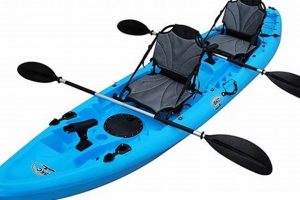
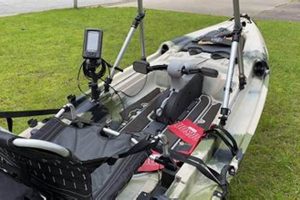
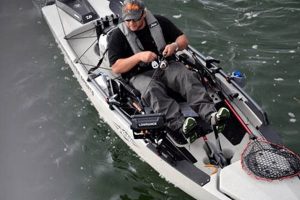
A high-quality, motor-ready kayak designed for angling offers significant advantages over traditional paddling or non-motorized fishing kayaks. These watercraft are typically built with stability and load capacity in mind, accommodating the weight of a trolling motor, battery, and fishing gear. Features like integrated motor mounts, wiring channels, and reinforced hulls are common. This allows anglers to cover more water, conserve energy, and position themselves precisely for optimal fishing. For example, an angler might choose a wider, flatter-bottomed kayak with a transom mount for a powerful trolling motor, enabling them to navigate larger bodies of water or strong currents efficiently.
The ability to add a trolling motor to a fishing kayak dramatically expands angling possibilities. It provides hands-free navigation, enabling anglers to focus on fishing rather than paddling. This is particularly beneficial in challenging conditions, such as strong winds or currents. Furthermore, motorized kayaks grant access to previously unreachable fishing spots, expanding the range and potentially improving catch rates. Historically, anglers were limited by physical exertion in paddling kayaks; the advent of suitable trolling motors and kayak designs has revolutionized the sport, opening up new horizons for fishing enthusiasts.
This discussion will further explore key factors to consider when selecting a suitable motorized fishing kayak, including hull design, weight capacity, motor compatibility, and additional features that contribute to a successful and enjoyable fishing experience. Specific models and manufacturers will also be examined to provide a comprehensive understanding of the current market landscape.
Tips for Selecting a Motorized Fishing Kayak
Choosing a kayak optimized for a trolling motor requires careful consideration of several factors to ensure optimal performance, stability, and fishing success. The following tips offer guidance for selecting the right watercraft.
Tip 1: Consider Hull Design: Kayak hull design significantly impacts stability and tracking. Wider, flatter hulls offer greater stability, crucial for standing and fishing while using a trolling motor. A longer kayak generally tracks straighter, making it easier to control with a motor. For example, a pontoon-style hull provides exceptional stability but sacrifices maneuverability.
Tip 2: Evaluate Weight Capacity: Ensure the kayak’s weight capacity accommodates the combined weight of the angler, the trolling motor, the battery, fishing gear, and any potential catch. Exceeding the weight capacity compromises stability and performance.
Tip 3: Check Motor Compatibility: Verify that the kayak is designed for a trolling motor and that it has appropriate mounting points, such as a transom mount or bow mount. Consider the motor’s thrust and power requirements to ensure compatibility with the kayak’s size and intended use.
Tip 4: Assess Battery Requirements: Choose a battery with sufficient capacity to power the trolling motor for the desired fishing duration. Consider the battery’s weight and dimensions to ensure proper fit and balance within the kayak.
Tip 5: Examine Additional Features: Look for features that enhance fishing functionality, such as rod holders, storage compartments, anchor trolleys, and integrated wiring channels for the trolling motor. These features can significantly improve the overall fishing experience.
Tip 6: Prioritize Comfort and Ergonomics: A comfortable seat, adjustable footrests, and a well-designed cockpit contribute to a more enjoyable and less fatiguing fishing experience, especially during longer outings.
Tip 7: Research Reputable Brands and Models: Investigate reputable kayak manufacturers known for quality construction and reliable performance. Reading reviews and comparing different models can aid in making an informed decision.
By carefully considering these factors, anglers can select a motorized fishing kayak that meets their specific needs and enhances their fishing experience. A well-chosen kayak provides a stable and efficient platform for accessing prime fishing locations and maximizing angling success.
The following section will conclude with a summary of key considerations and recommendations for making the best possible choice.
1. Stability

Stability is paramount when selecting a fishing kayak designed for a trolling motor. A stable platform is essential for safe and effective angling, particularly when standing to cast, retrieve, or maneuver with a motor. Compromised stability can lead to discomfort, difficulty fishing, and even capsizing, especially in challenging conditions like wind or current. Understanding the factors that contribute to kayak stability is crucial for making an informed purchasing decision.
- Primary Stability:
Primary stability refers to a kayak’s initial resistance to tipping. A wider, flatter hull provides greater primary stability, making it ideal for calm water and activities like standing to fish. A kayak with high primary stability feels very stable and resistant to tipping at small angles, making it easy to maintain balance. This is particularly important when using a trolling motor, which can introduce additional forces and movement to the kayak.
- Secondary Stability:
Secondary stability describes a kayak’s ability to resist capsizing when leaned at greater angles. Kayaks with rounded or flared hulls typically offer better secondary stability. While feeling less stable initially, these kayaks provide a reassuring resistance to tipping at higher angles, allowing for confident maneuvering in rougher conditions. A motorized fishing kayak benefits from a balance of primary and secondary stability for both calm and choppy waters.
- Impact of Weight Distribution:
Weight distribution significantly influences stability. Properly distributing weight within the kayak, including gear, battery, and the angler’s own weight, is critical. A low center of gravity enhances stability. Uneven weight distribution can negatively impact both primary and secondary stability, making the kayak prone to tipping. Motorized kayaks require careful weight management due to the added mass of the motor and battery.
- Influence of Hull Design:
Different hull designs exhibit varying stability characteristics. Pontoon-style hulls offer exceptional primary stability, making them well-suited for motorized fishing. V-shaped hulls, while efficient for paddling, offer less initial stability but can provide good secondary stability. Catamaran-style hulls, featuring two separate hulls, provide high stability and are gaining popularity for motorized fishing applications. The chosen hull design directly affects how the kayak responds to the forces exerted by the trolling motor.
By understanding the interplay of these factors, anglers can select a motorized fishing kayak that provides the optimal level of stability for their individual needs and fishing style. Prioritizing stability ensures a safe, comfortable, and successful fishing experience. A stable kayak allows for confident operation of the trolling motor, enhancing maneuverability and control on the water.
2. Motor Compatibility

Motor compatibility is a critical factor when selecting a fishing kayak intended for use with a trolling motor. Compatibility encompasses several key aspects, including mounting options, weight capacity, and wiring considerations. A kayak’s inherent design must accommodate the physical mounting of the motor, typically via a transom mount or bow mount. Insufficient structural support or incompatible mounting points render a kayak unsuitable for motorization. Furthermore, the kayak’s weight capacity must accommodate the added weight of the motor, battery, and associated wiring. Exceeding the weight capacity can negatively impact stability and performance. Proper wiring channels and integrated systems for routing and securing electrical connections contribute to a safe and efficient setup. For instance, a kayak specifically designed for a trolling motor often features reinforced mounting points and integrated wiring channels, while a recreational kayak might lack these essential features, leading to instability or damage.
The practical significance of motor compatibility extends beyond mere functionality. A compatible system ensures efficient power transfer from the motor to the water, optimizing performance and battery life. Incompatible systems can result in reduced thrust, decreased battery efficiency, and potential damage to the kayak or motor. Furthermore, a well-integrated motor system contributes to the overall fishing experience. A stable and efficiently functioning motor allows anglers to focus on fishing rather than managing equipment issues. For example, a correctly matched motor and kayak combination allows for precise maneuvering in challenging conditions, such as strong currents or wind, enhancing fishing success. Conversely, an incompatible setup might struggle in such conditions, limiting access to prime fishing locations.
In summary, motor compatibility is not simply a technical specification but a crucial factor determining the overall effectiveness and enjoyment of a motorized fishing kayak. Careful consideration of mounting options, weight capacity, and wiring requirements ensures a safe, reliable, and high-performing system. Understanding these aspects empowers anglers to select a kayak and motor combination that maximizes their fishing potential and provides a seamless on-the-water experience. Neglecting motor compatibility can lead to a range of issues, from diminished performance to potential safety hazards, underscoring the importance of this aspect in the selection process.
3. Weight Capacity

Weight capacity is a critical factor influencing the performance and safety of a fishing kayak, especially when integrating a trolling motor. It dictates the total load a kayak can safely carry without compromising stability or structural integrity. This includes the combined weight of the angler, the motor, the battery, fishing gear, and any potential catch. Understanding weight capacity and its implications is crucial for selecting a kayak suitable for motorized fishing.
- Total Weight Limit:
Every kayak has a specified maximum weight limit determined by its design and construction. This limit represents the absolute maximum weight the kayak can safely support. Exceeding this limit significantly compromises stability, making the kayak prone to tipping, and can even lead to structural damage. For motorized kayaks, calculating the total weight includes the motor, battery, and all gear, in addition to the angler’s weight.
- Impact on Stability and Performance:
Operating a kayak near its maximum weight capacity diminishes stability and responsiveness. The kayak sits lower in the water, increasing drag and making it more susceptible to wind and waves. Maneuverability is also affected, particularly when using a trolling motor. An overloaded kayak can struggle to track straight and respond effectively to steering inputs, impacting the overall fishing experience. For example, a kayak overloaded with gear might become sluggish and difficult to control with a motor, particularly in windy conditions.
- Calculating Realistic Load:
Accurately estimating the total weight to be carried is crucial. This involves considering not only the angler’s weight but also the combined weight of the trolling motor, battery, fishing rods, tackle boxes, coolers, and other equipment. Adding a safety margin to this calculation is prudent, ensuring the kayak isn’t operated at its absolute limit. This margin accounts for potential variations in gear weight and allows for a safer, more stable fishing experience.
- Relationship with Hull Design:
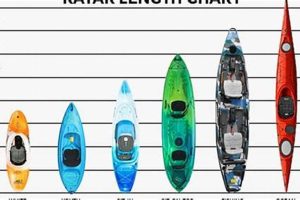
Weight capacity is intrinsically linked to hull design. Wider and longer kayaks generally have higher weight capacities due to their larger displacement. However, hull shape also plays a role. Kayaks with flatter hulls tend to offer greater stability at higher loads compared to those with more rounded or V-shaped hulls. Selecting a hull design appropriate for the anticipated weight load is essential for optimal performance and stability.
Choosing a kayak with adequate weight capacity is essential for safe and effective motorized fishing. A kayak overloaded beyond its limits compromises stability, performance, and ultimately, safety. Accurately calculating the anticipated load and selecting a kayak with sufficient capacity ensures a stable and enjoyable fishing experience. This allows anglers to confidently use their trolling motor, access desired fishing locations, and focus on the sport without concerns about stability or performance limitations. Neglecting weight capacity can lead to a compromised and potentially dangerous experience on the water.
4. Hull Design

Hull design plays a pivotal role in determining the suitability of a fishing kayak for use with a trolling motor. Specific hull characteristics directly influence stability, tracking, speed, maneuverability, and overall performance, especially when integrating a motor. The interplay of these factors significantly impacts the angler’s experience and fishing success. For example, a wider, flatter hull, like a pontoon hull, offers exceptional stability, a crucial attribute for standing and fishing while using a trolling motor. This stability comes at the expense of speed and maneuverability, making it ideal for calm waters and slow trolling. Conversely, a V-shaped hull, commonly found in touring kayaks, prioritizes speed and efficient tracking but compromises stability, potentially making it less suitable for standing or fishing in rough conditions while using a motor. A tunnel hull, characterized by a recessed channel running the length of the hull, offers a compromise between stability and tracking, providing adequate stability for motor use while maintaining reasonable speed.
The practical implications of hull design become apparent when considering real-world fishing scenarios. Imagine navigating a shallow, weedy area with a flat-bottomed kayak equipped with a trolling motor. The shallow draft and stable platform allow anglers to maneuver effectively through vegetation and access hard-to-reach fishing spots. In contrast, a V-shaped hull might struggle in such environments, getting caught in weeds or becoming unstable in shallow water. Consider another scenario involving open water with moderate chop. A kayak with a moderate V-hull or a tunnel hull, combined with a trolling motor, provides efficient tracking and stability, allowing anglers to cover larger distances and maintain a comfortable fishing position. A wider, flatter hull, while stable, would be slower and less efficient in such conditions. Choosing the appropriate hull design significantly impacts the effectiveness and enjoyment of motorized kayak fishing.
Selecting the optimal hull design requires careful consideration of the intended fishing environment and style. Prioritizing stability necessitates a wider, flatter hull, whereas prioritizing speed and tracking favors a V-shaped or tunnel hull. Understanding the inherent trade-offs between stability, speed, and maneuverability empowers anglers to select a kayak that best suits their specific needs. A well-chosen hull design, matched with an appropriate trolling motor, enhances fishing efficiency, access to fishing grounds, and overall enjoyment on the water. The connection between hull design and motor compatibility is paramount for maximizing the benefits of a motorized fishing kayak.
5. Battery Life

Battery life is a critical consideration when selecting a fishing kayak for use with a trolling motor. The duration a battery can power the motor directly impacts the range and fishing time available before requiring a recharge. This factor significantly influences the choice of battery and its integration within the kayak system. Understanding the relationship between battery life, motor power, and fishing style is crucial for maximizing on-the-water efficiency and enjoyment.
- Amp-Hour Rating:
The amp-hour (Ah) rating quantifies a battery’s capacity. A higher Ah rating indicates a larger capacity and longer potential run time. However, higher Ah ratings often correlate with increased battery size and weight. Balancing capacity needs with weight considerations is crucial for optimal kayak performance. For example, a 50 Ah battery will theoretically provide 25 amps for two hours, or 5 amps for ten hours. Selecting the appropriate Ah rating depends on the intended fishing duration and motor power requirements.
- Motor Power and Consumption:
The trolling motor’s power consumption directly influences battery life. Higher thrust motors generally draw more current, reducing run time. Operating the motor at lower speeds conserves battery power, extending fishing time. Matching motor power to the intended fishing style and battery capacity is essential for maximizing efficiency. For instance, a high-thrust motor used for trolling in strong currents will deplete a battery faster than a lower-thrust motor used in calm waters.
- Environmental Factors:
Environmental conditions, such as wind, current, and water temperature, can impact battery performance and life. Strong headwinds or currents require higher motor output, increasing battery drain. Extreme temperatures can also affect battery efficiency. Factoring these variables into battery selection and usage is essential for reliable performance. For example, extended use in cold water can reduce battery capacity, shortening the effective fishing time.
- Battery Type and Chemistry:
Different battery chemistries, such as lead-acid and lithium-ion, offer varying performance characteristics and lifespans. Lithium-ion batteries are generally lighter, more efficient, and have longer lifespans than lead-acid batteries but come at a higher cost. Selecting the appropriate battery type involves balancing cost, weight, performance, and longevity. For instance, a lithium-ion battery, while more expensive, might be preferred for its lighter weight and longer lifespan, particularly for longer fishing trips.
Battery life significantly influences the practicality and enjoyment of a motorized fishing kayak. Careful consideration of amp-hour rating, motor power consumption, environmental factors, and battery type ensures optimal performance and maximizes fishing time on the water. A well-matched battery and motor system, integrated effectively within the kayak, provide a reliable and efficient platform for extended fishing adventures. Ignoring battery life can lead to premature depletion, limiting fishing range and potentially stranding anglers far from shore.
Frequently Asked Questions
This section addresses common inquiries regarding fishing kayaks designed for trolling motors, providing concise and informative responses to assist in the selection and utilization of these specialized watercraft.
Question 1: What type of hull design is best suited for a motorized fishing kayak?
Optimal hull design depends on the intended fishing environment and personal preferences. Wider, flatter hulls (like pontoon styles) maximize stability, beneficial for standing and fishing. V-shaped hulls prioritize speed and tracking in open water but sacrifice some stability. Tunnel hulls offer a compromise between stability and performance.
Question 2: How is weight capacity calculated for a motorized fishing kayak?
Weight capacity must encompass the combined weight of the angler, trolling motor, battery, fishing gear, and potential catch. Exceeding the manufacturer’s specified limit compromises stability and performance. Accurate weight estimation is crucial for safe operation.
Question 3: What are the key considerations for selecting a trolling motor battery?
Battery selection depends on the motor’s power requirements and desired fishing duration. The amp-hour (Ah) rating indicates capacity. Higher Ah ratings offer longer run times but increase battery size and weight. Lithium-ion batteries provide higher energy density and longer lifespans than lead-acid batteries.
Question 4: How does motor compatibility influence kayak performance?
Motor compatibility ensures proper mounting, efficient power transfer, and overall system integrity. Kayaks designed for trolling motors often feature reinforced mounting points and integrated wiring channels for optimal performance and safety.
Question 5: What safety precautions should be observed when using a trolling motor on a fishing kayak?
Always wear a personal flotation device (PFD). Adhere to local boating regulations. Carry a fully charged spare battery and essential safety gear, including a whistle, signaling device, and first-aid kit. Understand proper motor operation and safety procedures before embarking on the water.
Question 6: What maintenance is required for a trolling motor on a fishing kayak?
Regularly inspect the motor, propeller, and mounting hardware for damage or wear. Rinse the motor with fresh water after each use, especially in saltwater environments. Store the battery properly according to manufacturer recommendations to maximize lifespan and ensure safe operation. Consult the motor’s owner’s manual for specific maintenance guidelines.
Careful consideration of these frequently asked questions ensures informed decisions regarding the selection, operation, and maintenance of motorized fishing kayaks. Understanding these aspects contributes to a safer and more productive fishing experience.
The next section will offer concluding remarks and summarize the essential aspects of choosing the right kayak for your needs.
Best Fishing Kayak for Trolling Motor
Careful selection of a fishing kayak designed for a trolling motor involves a comprehensive evaluation of several key factors. Hull design dictates stability, tracking, and maneuverability. Weight capacity considerations ensure safe and efficient operation with the added weight of the motor and gear. Motor compatibility guarantees proper mounting, function, and system integration. Battery life significantly influences fishing range and duration. Understanding the interplay of these elements empowers informed decision-making, optimizing kayak selection for individual needs and fishing styles. Additional features, such as rod holders, storage compartments, and integrated wiring, further enhance the overall fishing experience.
The integration of trolling motors into fishing kayaks has revolutionized angling possibilities. Enhanced maneuverability, access to previously unreachable fishing grounds, and reduced physical exertion expand opportunities for anglers of all skill levels. As technology continues to advance, further innovations in kayak design, motor efficiency, and battery technology promise to further refine the motorized kayak fishing experience, opening new horizons for anglers seeking to maximize their time and success on the water. Diligent research and careful consideration of individual needs and fishing styles are essential for harnessing the full potential of these advanced angling platforms.