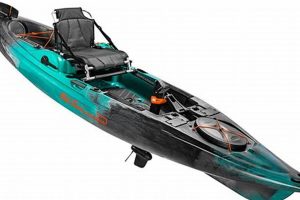
A high-quality paddle designed for kayak fishing enhances angler performance and enjoyment. It facilitates efficient movement across the water, allowing anglers to reach desired fishing spots quickly and quietly. Specialized features, such as drip rings and feathered blades, minimize noise and water disturbance, crucial for a successful fishing experience. A comfortable, lightweight, and durable paddle is essential for prolonged use and effective maneuvering in various water conditions.
Choosing the right paddle significantly impacts fishing success and overall comfort. An ergonomic design and appropriate length reduce fatigue and potential strain during long hours on the water. The ability to maneuver efficiently conserves energy, allowing anglers to focus on fishing. Historically, kayak fishing paddles have evolved from basic designs to incorporate specialized features that cater to the specific needs of anglers. Innovations in materials and blade design contribute to improved performance, durability, and user comfort.
This article will delve into the critical factors to consider when selecting a fishing kayak paddle, including blade shape, shaft material, length adjustment options, and other important features that contribute to an enhanced fishing experience. Understanding these aspects will empower anglers to make informed decisions and maximize their time on the water.
Tips for Selecting a Kayak Fishing Paddle
Choosing the appropriate paddle is crucial for an enjoyable and productive kayak fishing experience. These tips offer guidance in selecting a paddle optimized for performance and comfort.
Tip 1: Consider Blade Shape. Asymmetrical or dihedral blade shapes are often preferred for kayak fishing due to their smooth and stable stroke, minimizing splashing and maximizing efficiency.
Tip 2: Evaluate Shaft Material. Lightweight yet durable materials like fiberglass or carbon fiber offer optimal performance. Fiberglass provides a good balance of affordability and durability, while carbon fiber prioritizes lightweight performance at a higher price point.
Tip 3: Determine Appropriate Length. Paddle length depends on factors such as kayak width, angler height, and paddling style. Consulting a paddle sizing chart or an expert can help determine the correct length.
Tip 4: Assess Adjustability. Adjustable-length paddles offer versatility for different paddling conditions and allow for fine-tuning based on individual preferences. Ferrule systems should be secure and easy to operate.
Tip 5: Evaluate Drip Rings. Drip rings prevent water from running down the shaft, keeping hands drier and reducing paddle weight during use.
Tip 6: Consider Feathering Angles. Feathered blades reduce wind resistance and can improve paddling efficiency, particularly in windy conditions. Adjustable feathering angles allow customization based on personal preference.
Tip 7: Check Grip Style. Ergonomic grips enhance comfort and reduce hand fatigue during long paddling sessions. Consider palm grips or other specialized designs tailored for kayak fishing.
By considering these factors, anglers can select a paddle that optimizes performance, enhances comfort, and contributes to a more enjoyable fishing experience overall.
These insights should assist in making informed decisions when selecting a kayak fishing paddle. The next section will discuss specific paddle models recommended for various fishing scenarios.
1. Lightweight Construction

Lightweight construction is a critical factor in determining the best paddle for fishing kayaks. Reduced swing weight translates directly to less fatigue and greater endurance, allowing for longer, more productive fishing trips. This is particularly important in kayak fishing, where anglers often paddle considerable distances and make frequent, short strokes for maneuvering.
- Reduced Fatigue
A lighter paddle requires less effort to move through the water, minimizing strain on muscles and joints. This is especially beneficial during long paddling sessions or when battling strong currents or winds. The reduced exertion allows anglers to focus on fishing rather than battling fatigue. For example, switching from an aluminum shaft to a carbon fiber shaft can significantly decrease fatigue over the course of a day.
- Improved Maneuverability
A lighter paddle enables quicker and more precise movements. Rapid adjustments in direction and speed become easier, enhancing control and responsiveness on the water. This is crucial for navigating tight spots, following fish, or reacting quickly to changing conditions. The difference is noticeable when making quick turns or maneuvering through obstacles.
- Enhanced Endurance
Lower swing weight contributes to increased endurance, allowing anglers to paddle further and fish longer without tiring. This is especially important for covering larger areas of water or reaching distant fishing spots. A lightweight paddle can make a significant difference in extending the duration of a fishing trip.
- Material Considerations
Achieving lightweight construction often involves utilizing advanced materials like carbon fiber or high-grade fiberglass. These materials offer excellent strength-to-weight ratios, providing both durability and reduced weight. While often more expensive than aluminum or plastic, the performance benefits justify the investment for serious kayak anglers. The choice of material often involves balancing cost and performance.
Ultimately, the lighter weight of a paddle translates to greater efficiency and enjoyment on the water. By minimizing fatigue and maximizing maneuverability, a lightweight paddle becomes an invaluable tool for serious kayak anglers looking to optimize their performance and extend their time on the water. Investing in a lightweight paddle is a key step towards enhancing the overall fishing experience.
2. Durable Materials

Paddle durability is paramount in kayak fishing, where paddles endure significant stress from repeated strokes, contact with the water, and potential impacts against obstacles. A durable paddle ensures longevity and consistent performance, minimizing the risk of breakage during critical moments. Material selection plays a crucial role in determining a paddle’s ability to withstand the rigors of kayak fishing.
- Fiberglass
Fiberglass offers a balance of durability, performance, and affordability. Its inherent strength resists impacts and flexes under pressure, providing a responsive and efficient stroke. Fiberglass paddles are a popular choice for recreational and serious kayak anglers alike due to their versatility and reliability. They are generally more resistant to damage than plastic paddles but lighter than aluminum.
- Carbon Fiber
Carbon fiber represents the premium choice for paddle construction. Its exceptional strength-to-weight ratio delivers a lightweight yet incredibly durable paddle. This reduces fatigue and enhances paddling efficiency. While carbon fiber paddles command a higher price, their superior performance and longevity make them a worthwhile investment for dedicated kayak anglers. They are less prone to breakage than fiberglass but require careful handling.
- Aluminum
Aluminum shafts offer excellent durability and affordability. While heavier than fiberglass or carbon fiber, aluminum provides robust construction capable of withstanding harsh conditions. Aluminum paddles are a practical choice for anglers prioritizing durability and value. However, the increased weight can contribute to fatigue during extended paddling sessions.
- Plastic/Composite Blends
Plastic and composite blend paddles provide an entry-level option, often included with recreational kayaks. While generally less expensive, they offer lower performance and durability compared to fiberglass or carbon fiber. These paddles are suitable for casual use but may not withstand the demands of regular or serious kayak fishing. They are more susceptible to breakage under stress.
Choosing a paddle constructed from durable materials directly impacts the longevity and reliability of the equipment. Investing in a robust paddle built with quality materials ensures consistent performance and reduces the risk of failure during crucial fishing moments. The selection of appropriate materials is essential for a positive and productive kayak fishing experience.
3. Efficient Blade Design
Blade design significantly influences a fishing kayak paddle’s performance. An efficient blade maximizes propulsion while minimizing effort, allowing anglers to cover more water with less fatigue. Optimal blade design considers factors like shape, size, and angle to achieve a smooth, powerful stroke. Understanding these elements is crucial for selecting a paddle best suited for the demands of kayak fishing.
- Asymmetrical Blades
Asymmetrical blades, characterized by a non-uniform curvature, are designed to move efficiently through the water. The uneven shape reduces flutter and cavitation, resulting in a smoother, more powerful stroke. This design minimizes energy expenditure and maximizes propulsion, allowing for greater speed and distance with less effort. Many high-performance kayak fishing paddles utilize asymmetrical blade designs for enhanced performance.
- Dihedral Blades
Dihedral blades feature a ridge or “power face” down the center. This design further enhances stability and reduces flutter, especially during powerful strokes. Dihedral blades contribute to a more predictable and controlled stroke, improving tracking and minimizing wasted energy. This is particularly beneficial in challenging conditions like wind or currents.
- Blade Size and Surface Area
Blade size affects the amount of water moved with each stroke. Larger blades generate more power but require greater effort, while smaller blades are better suited for shorter, quicker strokes and maneuvering. The optimal blade size depends on the angler’s strength, paddling style, and intended use. Kayak fishing often benefits from mid-sized blades that balance power and control.
- Blade Angle (Feathering)
Feathering refers to the angle between the two blades. A feathered angle reduces wind resistance on the blade out of the water, particularly beneficial in windy conditions. Adjustable feathering allows anglers to customize the angle based on their preference and prevailing conditions. Proper feathering can significantly improve paddling efficiency and reduce fatigue on longer trips.
Selecting a paddle with an efficient blade design directly impacts kayak fishing performance. By minimizing wasted energy and maximizing propulsion, an optimized blade allows anglers to cover more water, reach desired fishing spots faster, and conserve energy for the task at hand. Careful consideration of blade design features is essential for selecting the best paddle for a given kayak fishing scenario and individual paddling style.
4. Comfortable Grip
A comfortable grip is integral to the best paddles for fishing kayaks, directly impacting performance and enjoyment. Extended paddling sessions inherent to kayak fishing necessitate a grip that minimizes hand fatigue and strain. An uncomfortable grip can lead to blisters, cramps, and decreased paddling efficiency, detracting from the overall fishing experience. Proper grip design considers hand anatomy, pressure points, and the dynamics of paddling to maximize comfort and control.
Ergonomic grips, often contoured to fit the natural shape of the hand, distribute pressure evenly, reducing strain on specific points. Materials like textured rubber or specialized composites enhance grip security, even when wet. The grip’s diameter also plays a crucial role; a grip too large or too small can compromise comfort and control. For example, smaller grips are often preferred for enhanced wrist articulation during maneuvering, while larger grips provide a more secure feel for powerful strokes. Anglers with pre-existing hand conditions, like arthritis, benefit significantly from ergonomic grips designed to minimize stress on joints. Choosing a paddle with an appropriate grip material and diameter is essential for long-term comfort and efficient paddling.
A comfortable grip translates to improved paddling performance and overall enjoyment on the water. Reduced hand fatigue allows for longer paddling sessions, enabling anglers to reach distant fishing spots and explore larger areas. Enhanced grip security promotes confident and efficient strokes, even in challenging conditions. Ultimately, a comfortable grip contributes significantly to a positive and productive kayak fishing experience, allowing anglers to focus on the task at hand without the distraction of hand discomfort.
5. Appropriate Length

Appropriate paddle length is a critical factor in determining the best paddle for a fishing kayak. Paddle length directly influences paddling efficiency, comfort, and overall performance on the water. An incorrectly sized paddle can lead to fatigue, reduced power, and potential strain on joints. Selecting the correct length requires considering factors such as kayak width, angler height, and paddling style.
A paddle that is too short necessitates excessive reaching and bending, resulting in wasted energy and potential back strain. Conversely, a paddle that is too long can be difficult to control, leading to inefficient strokes and potential shoulder discomfort. For example, a taller angler in a wider kayak requires a longer paddle than a shorter angler in a narrower kayak. High-angle paddlers, who hold their paddles more vertically, generally prefer longer paddles than low-angle paddlers. Understanding the interplay of these factors is essential for selecting the appropriate paddle length. Using online paddle sizing charts or consulting with experienced kayak anglers can provide valuable guidance in determining the optimal length.
Selecting the appropriate paddle length significantly enhances kayak fishing performance. An optimized paddle length promotes efficient energy transfer, allowing anglers to cover greater distances with less fatigue. Improved control and maneuverability facilitate precise adjustments and quicker reactions, essential for navigating challenging waters or pursuing fish. Ultimately, the correct paddle length contributes to a more comfortable and enjoyable kayak fishing experience, allowing anglers to focus on the sport rather than battling discomfort or inefficient equipment. Choosing the right length is an investment in both performance and long-term physical well-being.
6. Adjustable Features
Adjustable features significantly contribute to a fishing kayak paddle’s versatility and adaptability to varying conditions and angler preferences. These features allow for customization, optimizing performance and comfort across a range of scenarios. A paddle with adjustable features offers distinct advantages for serious kayak anglers seeking to maximize efficiency and enjoyment on the water.
- Adjustable Length
Adjustable length allows fine-tuning paddle length to suit different kayak widths, angler heights, and paddling styles. This adaptability is crucial for optimizing stroke mechanics and minimizing strain. For example, a shorter length might be preferred for maneuvering in tight quarters, while a longer length suits open water paddling. This adjustability also allows a single paddle to be used across multiple kayaks or by multiple paddlers.
- Adjustable Feathering Angle
Adjustable feathering angles allow customization of the angle between paddle blades. This feature reduces wind resistance on the blade out of the water, improving efficiency, particularly in windy conditions. Anglers can adjust the feathering angle to suit their paddling style and the prevailing environmental factors. Some prefer a higher feathering angle for minimizing windage, while others prefer a lower angle for greater control.
- Convertible Design (Four-Piece/Two-Piece)
Convertible designs, often featuring two or four-piece construction, offer enhanced portability and storage convenience. This is especially beneficial for anglers who travel frequently or have limited storage space. A four-piece paddle can be broken down into smaller components, easily fitting within luggage or a kayak hatch. This portability expands the possibilities for kayak fishing adventures.
- Adjustable Ferrule System
The ferrule system, responsible for locking the adjustable components in place, directly impacts the paddle’s performance and longevity. A robust and secure ferrule system ensures consistent blade alignment and minimizes play or slippage during paddling. High-quality ferrule systems contribute to the overall durability and reliability of the adjustable paddle, ensuring long-term performance and reducing the risk of failure in demanding conditions. Button or lever-lock systems offer quick and easy adjustments, while some systems allow for micro-adjustments for precise customization.
The presence of adjustable features elevates a fishing kayak paddle from a simple tool to a versatile and adaptable piece of equipment. The ability to customize length, feathering angle, and breakdown configuration significantly enhances comfort, efficiency, and portability. By optimizing the paddle to suit individual needs and varying conditions, adjustable features contribute significantly to a positive and productive kayak fishing experience. Investing in a paddle with these features allows for greater adaptability and personalization on the water.
Frequently Asked Questions about Kayak Fishing Paddles
This section addresses common inquiries regarding the selection and use of paddles specifically designed for kayak fishing. Understanding these key aspects empowers informed decisions and enhances on-the-water performance.
Question 1: What is the ideal paddle length for kayak fishing?
Optimal paddle length depends on factors including kayak width, angler height, and paddling style (high-angle or low-angle). Utilizing a paddle sizing chart or consulting with a kayak specialist is recommended for accurate determination.
Question 2: What are the benefits of a feathered paddle?
Feathered blades reduce wind resistance on the blade out of the water, enhancing efficiency and reducing fatigue, particularly in windy conditions. The degree of feathering can often be adjusted to suit individual preferences.
Question 3: What materials are best suited for kayak fishing paddle construction?
Fiberglass and carbon fiber offer excellent durability, lightweight performance, and efficient energy transfer. Fiberglass provides a balance of performance and affordability, while carbon fiber prioritizes lightweight performance at a higher price point.
Question 4: How does blade shape affect paddling performance in a fishing kayak?
Asymmetrical and dihedral blade shapes are designed to minimize flutter and cavitation, resulting in smoother, more efficient strokes and reduced energy expenditure. These designs contribute to enhanced propulsion and control.
Question 5: Are adjustable paddles worthwhile for kayak fishing?
Adjustable paddles offer versatility by accommodating various kayak widths, angler heights, and changing conditions. They also facilitate customized feathering angles and often offer breakdown functionality for convenient transport and storage.
Question 6: How does grip design impact comfort during long paddling sessions?
Ergonomic grips, contoured to the natural shape of the hand, distribute pressure evenly, reducing strain and enhancing comfort. Textured materials enhance grip security, even when wet. The appropriate grip diameter also plays a crucial role in comfort and control.
Careful consideration of these factors ensures selection of a paddle optimized for individual needs and enhances overall kayak fishing performance and enjoyment. Understanding these elements empowers informed decision-making and contributes to a positive experience on the water.
The next section will explore recommended paddle models categorized by fishing style and budget.
Conclusion
Optimal kayak fishing paddle selection hinges on a comprehensive understanding of key features and their impact on performance. Blade shape, shaft material, length, and adjustability significantly influence paddling efficiency, comfort, and overall on-the-water experience. Prioritizing lightweight yet durable materials, such as fiberglass or carbon fiber, minimizes fatigue and ensures longevity. Efficient blade designs, like asymmetrical or dihedral shapes, maximize propulsion and reduce wasted energy. A comfortable, ergonomic grip contributes to reduced hand strain during long paddling sessions. Appropriate paddle length, determined by individual factors and kayak dimensions, optimizes stroke mechanics and comfort. Adjustable features offer adaptability to varying conditions and angler preferences.
Investing in a high-quality paddle tailored to individual needs and fishing style represents a significant contribution to overall kayak fishing success and enjoyment. A well-chosen paddle enhances maneuverability, reduces fatigue, and allows anglers to focus on the pursuit of fish. The insights provided within this article empower informed decisions, ensuring selection of the best paddle to maximize performance and elevate the kayak fishing experience.