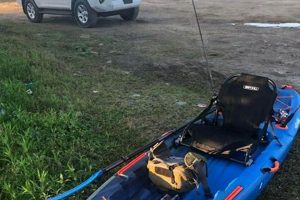
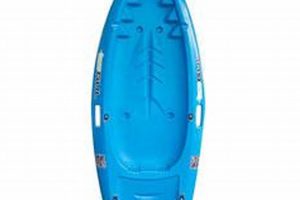
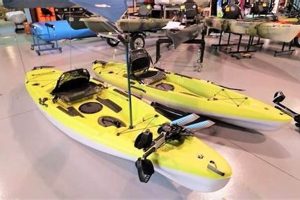
Budget-friendly kayaks designed for angling represent an accessible entry point into the sport. These vessels typically feature simpler designs and constructions compared to premium models, often utilizing durable, lightweight materials like high-density polyethylene. An example might be a sit-on-top kayak with molded-in rod holders and storage compartments, offered at a price point significantly below specialized fishing kayaks.
Affordability opens up kayaking and fishing to a wider audience. This can be particularly impactful for beginners exploring the activity or those seeking a recreational option without a substantial financial commitment. Historically, specialized fishing kayaks carried a premium price tag, limiting access. The emergence of more economical options has democratized the sport, allowing more individuals to experience the joys of angling from the water.
The following sections will delve into key considerations for selecting an appropriate budget-friendly fishing kayak, including factors such as stability, features, materials, and intended fishing environment. Further discussion will cover essential accessories, safety guidelines, and maintenance tips to ensure a safe and enjoyable experience on the water.
Tips for Selecting a Budget-Friendly Fishing Kayak
Choosing an appropriate, affordable fishing kayak requires careful consideration of several factors. The following tips offer guidance for making an informed purchasing decision.
Tip 1: Define Fishing Needs: Clarify the intended fishing environment (calm lakes, rivers, or open ocean) and target species. This informs hull design selection (e.g., sit-on-top vs. sit-in) and required stability.
Tip 2: Prioritize Stability: Look for wider, flatter hulls for enhanced stability, particularly for stand-up fishing. Consider the kayak’s weight capacity and its impact on stability when loaded with gear.
Tip 3: Evaluate Features: Essential features include rod holders, storage compartments, and paddle holders. Prioritize necessary features while avoiding unnecessary extras that can inflate costs.
Tip 4: Consider Materials: High-density polyethylene offers durability and affordability. Evaluate the material’s thickness and UV resistance for long-term performance.
Tip 5: Research Brands and Reviews: Investigate reputable brands known for quality construction, even in their budget lines. Consult online reviews for insights into real-world performance and potential issues.
Tip 6: Assess Transportation and Storage: Factor in the kayak’s weight and length for ease of transport and storage. Consider roof racks, trailers, or compact, inflatable options.
Tip 7: Factor in Accessories: Budget for essential accessories, including a paddle, personal flotation device (PFD), and appropriate fishing gear.
Careful consideration of these factors will lead to a more satisfactory purchase. Selecting a kayak that aligns with individual needs and budget ensures optimal performance and enjoyment on the water.
By following these guidelines, anglers can confidently select a budget-friendly kayak that meets their needs and opens up a world of fishing opportunities. The next section will explore essential safety precautions and maintenance practices.
1. Stability

Stability is a critical factor in evaluating budget-friendly fishing kayaks. Compromised stability negatively impacts angling effectiveness and safety, potentially leading to capsizing. A stable platform allows anglers to cast, reel, and land fish effectively, even in challenging conditions such as windy days or choppy water. It also permits maneuvers like reaching for gear or changing fishing positions without risking overturning. For example, a wider, flatter hull design generally provides greater initial stability compared to a narrower, V-shaped hull, though maneuverability might be reduced.
While cost is a major consideration, stability should not be sacrificed. Budget-friendly kayaks can achieve acceptable stability through design choices such as wider hulls, strategically placed seating, and appropriate weight distribution. Examining manufacturer specifications for maximum weight capacity and recommended usage conditions helps determine a kayak’s stability limitations. Reading user reviews can also provide practical insights into real-world stability performance. Choosing a kayak with adequate stability prevents accidents and allows anglers to focus on fishing rather than constantly battling to maintain balance. Prioritizing stability enhances the overall fishing experience and improves safety.
In conclusion, while budget constraints may limit options, stability remains a paramount concern when selecting a fishing kayak. Careful evaluation of design features, weight capacity, and user feedback informs an appropriate balance between cost and stability. Prioritizing stability ultimately improves on-the-water safety, enhances fishing effectiveness, and contributes to a more enjoyable angling experience.
2. Durability

Durability is a critical factor influencing the long-term value of a low-priced fishing kayak. While budget constraints often necessitate compromises, durability should not be significantly sacrificed. A less durable kayak may require frequent repairs or replacement, ultimately negating initial cost savings. Repeated exposure to sunlight, water, and physical stresses necessitates robust construction. Compromised durability manifests as cracks, leaks, and structural weakening, impacting performance and safety. For example, a kayak constructed from thin, low-grade polyethylene may crack under stress or prolonged sun exposure, leading to leaks and eventual failure. Conversely, a kayak made from thicker, high-density polyethylene with UV protection offers better resistance to such damage, ensuring a longer lifespan.
Several factors contribute to kayak durability, including material quality, construction methods, and user maintenance. High-density polyethylene (HDPE) is a common material in budget-friendly kayaks, offering a balance of affordability and durability. Rotational molding creates a seamless, more robust hull compared to other manufacturing processes. Proper storage and regular cleaning further extend a kayak’s lifespan. Neglecting proper care, such as leaving the kayak exposed to direct sunlight for extended periods, accelerates material degradation, reducing its useful life. Investing in a slightly more expensive kayak constructed from higher-quality materials and employing appropriate maintenance practices often results in better long-term value.
Durability directly impacts a low-priced fishing kayak’s overall cost-effectiveness. While initial purchase price remains a significant factor, long-term durability considerations are essential for maximizing value. Selecting a kayak built with durable materials and construction techniques, coupled with appropriate user care, minimizes repair or replacement costs, ensuring years of reliable service. Balancing initial investment with long-term durability considerations allows anglers to maximize their budget without compromising performance, safety, or longevity.
3. Features
Features significantly influence a low-priced fishing kayak’s functionality and overall value. While cost considerations often limit the range of available features, careful selection ensures essential functionalities are present without unnecessary expense. Prioritizing essential features optimizes the fishing experience while remaining within budget.
- Rod Holders
Rod holders are essential for securing fishing rods, freeing hands for paddling, maneuvering, and other tasks. Basic flush-mounted rod holders are commonly found in budget-friendly models. Adjustable or rotating rod holders offer increased versatility but may come at a higher cost. The number and placement of rod holders should align with individual fishing styles and preferences. For instance, a kayak angler targeting multiple species might prioritize a model with multiple rod holders to accommodate different rod setups.
- Storage
Storage capacity is crucial for carrying tackle, gear, and personal items. Budget-friendly kayaks often feature molded-in storage compartments, including tank wells and hatches. While larger storage compartments offer greater capacity, they can impact maneuverability and stability. Selecting a kayak with appropriate storage capacity depends on the duration and type of fishing trips undertaken. For example, a kayak angler planning overnight trips requires significantly more storage than someone fishing for a few hours near shore.
- Seating and Comfort
Seat design significantly impacts comfort during long fishing trips. Basic molded-in seats are common in budget-friendly models, while adjustable or padded seats offer enhanced comfort, often at an additional cost. Consider seat adjustability, back support, and material breathability when evaluating comfort features. Kayak anglers experiencing back pain might prioritize a model with adjustable back support for improved comfort and reduced strain during extended fishing sessions.
- Paddle Holders/Leashes
Paddle holders or leashes secure the paddle when not in use, preventing loss and freeing hands for fishing activities. Integrated paddle holders or leash attachment points are simple yet valuable features commonly found in budget-friendly kayaks. These features enhance convenience and safety on the water, ensuring the paddle remains readily accessible while preventing accidental loss. A secure paddle ensures anglers can quickly resume paddling when needed, enhancing overall safety and efficiency on the water.
Balancing cost and functionality is key when considering features in a low-priced fishing kayak. Prioritizing essential features such as rod holders, appropriate storage, and a comfortable seating system improves the overall fishing experience without exceeding budget limitations. Careful evaluation of these features ensures the chosen kayak aligns with individual fishing needs and preferences.
4. Material
Material selection significantly influences a low-priced fishing kayak’s performance, durability, and overall value. Budgetary constraints often necessitate compromises; however, careful consideration of material properties ensures an appropriate balance between cost and functionality. Understanding the characteristics of common kayak materials allows informed decisions aligned with individual needs and budget.
- High-Density Polyethylene (HDPE)
HDPE is the most prevalent material in budget-friendly fishing kayaks. Its affordability, durability, and resistance to impact and UV degradation make it a practical choice. HDPE kayaks are relatively easy to repair and maintain, contributing to their long-term value. For example, a recreational angler fishing in calm waters might find an HDPE kayak perfectly suitable. However, HDPE’s weight can make transport and handling more challenging compared to lighter materials.
- Linear Low-Density Polyethylene (LLDPE)
LLDPE offers increased flexibility and impact resistance compared to HDPE, often making it a preferred choice for kayaks used in rocky or shallow environments. This flexibility comes at the cost of reduced stiffness, which can impact tracking and speed. An angler frequently navigating rocky rivers would benefit from LLDPE’s enhanced impact resistance. However, LLDPE kayaks typically carry a slightly higher price tag than HDPE models.
- UV-Stabilized Polyethylene
Prolonged exposure to sunlight degrades polyethylene over time, leading to brittleness and cracking. UV-stabilized polyethylene incorporates additives that protect against UV degradation, extending the kayak’s lifespan. Anglers storing their kayaks outdoors benefit significantly from this added protection. While UV stabilization adds to the cost, it often represents a worthwhile investment, particularly in regions with intense sunlight.
- Inflatable Kayaks (PVC, Hypalon, Nitrylon)
Inflatable kayaks, constructed from materials like PVC, Hypalon, or Nitrylon, offer portability and storage convenience. While typically less durable than hard-shell kayaks, advancements in materials and construction techniques have improved their robustness. An angler with limited storage space might opt for an inflatable kayak, recognizing its portability benefits outweigh potential durability trade-offs. However, inflatable kayaks require inflation and deflation before and after each use.
Understanding material properties is crucial when selecting a low-priced fishing kayak. HDPE offers an excellent balance of affordability and durability for general recreational use. LLDPE provides enhanced impact resistance for challenging environments. UV stabilization is a valuable feature for kayaks stored outdoors, protecting against sun damage. Inflatable options offer portability advantages, but require inflation and deflation. Considering these factors allows informed decisions, balancing cost with performance and durability for a satisfying fishing experience.
5. Weight Capacity

Weight capacity is a critical specification impacting a low-priced fishing kayak’s performance, stability, and safety. This metric represents the maximum combined weight of the angler, gear, and any additional cargo the kayak can safely support. Exceeding the specified weight capacity compromises stability, increases the risk of capsizing, and can even damage the kayak’s structure. Manufacturers determine weight capacity through testing and calculations, considering factors such as hull design, material strength, and intended usage. Understanding this specification’s implications is crucial for informed purchasing decisions.
A kayak’s weight capacity directly influences its on-the-water performance. Reduced stability resulting from exceeding weight limits hinders maneuverability and compromises fishing effectiveness. For example, a kayak rated for 250 lbs. carrying 300 lbs. will sit lower in the water, reducing freeboard and increasing the likelihood of water ingress. This lower profile also increases susceptibility to wind and waves, making paddling more challenging and increasing capsize risk. Moreover, overloading stresses the kayak’s structure, potentially leading to cracks, leaks, or even catastrophic failure. Selecting a kayak with ample weight capacity ensures safe and effective operation, accommodating the angler’s weight, essential gear, and potential catches.
Careful consideration of weight capacity is essential when selecting a low-priced fishing kayak. Understanding this specification’s implications for stability, performance, and safety allows informed decisions. Choosing a kayak with sufficient weight capacity ensures optimal performance, minimizes risks, and contributes to a more enjoyable and productive fishing experience. Neglecting this critical factor can compromise safety and detract from the overall angling experience.
Frequently Asked Questions
This section addresses common inquiries regarding budget-friendly fishing kayaks, providing concise and informative responses to facilitate informed purchasing decisions.
Question 1: Are inexpensive fishing kayaks durable enough for regular use?
Durability varies significantly among budget-friendly kayaks. While some models utilize robust materials and construction techniques ensuring long-term performance, others may compromise durability to achieve a lower price point. Careful examination of materials, construction methods, and user reviews helps assess a kayak’s likely durability.
Question 2: What essential features should one prioritize in a budget-friendly fishing kayak?
Essential features include sufficient rod holders, adequate storage compartments for tackle and gear, and a comfortable seating system. Prioritizing these features ensures basic functionality and enhances the overall fishing experience without incurring excessive costs. Additional features, while potentially beneficial, can often be added later as budget allows.
Question 3: Do low-priced fishing kayaks offer adequate stability for fishing?
Stability is a crucial factor often overlooked in budget-conscious purchases. While some inexpensive kayaks offer surprisingly good stability due to design features like wider hulls, others may compromise stability for cost reduction. Thoroughly researching specific models, paying attention to hull design, and consulting user reviews helps determine a kayak’s stability characteristics.
Question 4: How does weight capacity affect a low-priced fishing kayak?
Weight capacity dictates the maximum combined weight of the angler, gear, and any catch the kayak can safely support. Exceeding this limit compromises stability, increases the risk of capsizing, and potentially damages the kayak. Careful consideration of weight capacity is essential for safe and effective operation.
Question 5: Are inflatable fishing kayaks a viable option for budget-conscious anglers?
Inflatable kayaks offer portability and storage advantages, often at lower price points than hard-shell kayaks. While advancements in materials and construction have improved their durability, they typically remain less robust than hard-shell alternatives. Inflatable options are best suited for anglers prioritizing portability and storage convenience over long-term durability.
Question 6: What are the long-term cost implications of choosing a very inexpensive fishing kayak?
While the initial purchase price is attractive, excessively low-priced kayaks may incur higher long-term costs due to potential durability issues, requiring frequent repairs or premature replacement. Balancing initial investment with reasonable quality and durability considerations minimizes potential long-term expenses.
Careful consideration of these frequently asked questions empowers informed decision-making. Balancing budget constraints with essential features, durability considerations, and safety requirements ensures a satisfactory and cost-effective purchase.
The next section will offer concluding thoughts and recommendations for selecting the best budget-friendly fishing kayak.
Conclusion
Budget-friendly fishing kayaks offer an accessible entry point into the sport, enabling a wider audience to experience the joys of angling from the water. Careful consideration of factors like stability, durability, essential features, appropriate materials, and weight capacity is crucial for informed purchasing decisions. Balancing cost with functionality ensures a satisfying and safe on-the-water experience without compromising performance or longevity. Prioritizing these key aspects empowers anglers to select a vessel that aligns with individual needs and budgetary constraints.
The evolving landscape of kayak design and manufacturing continues to expand options within the budget-friendly segment. As technology advances and manufacturing processes become more efficient, the value proposition offered by these kayaks is likely to improve further. Informed consumers, equipped with the knowledge presented herein, can confidently navigate this market, selecting a kayak that provides years of enjoyment and successful angling adventures. Ultimately, the emphasis remains on balancing affordability with functionality and safety, ensuring a fulfilling experience on the water for anglers of all skill levels and budgets.