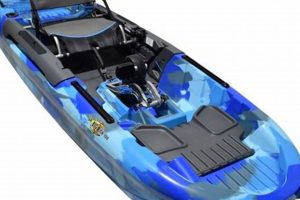
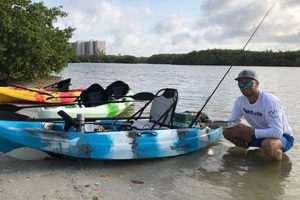
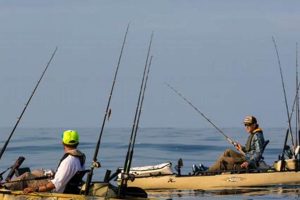
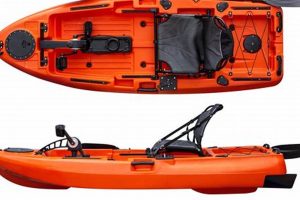
Devices designed to secure and position rods on kayaks come in various forms, including rod holders, mounts, and leashes. These accessories typically attach to the kayak’s hull or deck and offer features such as adjustable angles and secure locking mechanisms. A common example is a flush-mounted rod holder allowing anglers to troll or store rods safely while paddling.
Secure rod management contributes significantly to a safer and more enjoyable kayaking fishing experience. These specialized accessories free an angler’s hands for paddling, landing fish, and other essential tasks, minimizing the risk of losing valuable equipment overboard. Historically, kayak anglers relied on improvised methods, but the development of purpose-built equipment has greatly enhanced convenience and safety on the water.
This article will explore various types of rod securing devices available, discuss their features and benefits, offer guidance on selecting the right equipment for specific needs, and provide instructions on installation and proper usage.
Tips for Utilizing Rod Securing Devices on Kayaks
Proper use of rod-holding equipment is crucial for maximizing safety and efficiency while kayak fishing. The following tips offer guidance for selecting and utilizing these devices effectively.
Tip 1: Consider Fishing Style: Different fishing techniques necessitate different rod placements. Anglers trolling for fish benefit from adjustable rod holders positioned for optimal line retrieval. Still-fishing, on the other hand, may require holders capable of securing rods vertically.
Tip 2: Choose Appropriate Mounting Hardware: Select mounting hardware compatible with the kayak’s construction. Track-mounted systems offer flexibility, while flush-mounted holders provide a lower profile. Ensure hardware is corrosion-resistant for saltwater environments.
Tip 3: Prioritize Stability and Security: Rod holders should securely hold rods, even in rough conditions. Locking mechanisms and adjustable tensioning ensure rods remain in place during strikes or while navigating challenging waters.
Tip 4: Plan Rod Placement Carefully: Consider paddle strokes and casting motions when positioning rod holders. Avoid placements that interfere with paddling or create entanglement hazards.
Tip 5: Regularly Inspect and Maintain Equipment: Check rod holders and mounting hardware for wear and tear regularly. Tighten loose screws and replace any damaged components promptly.
Tip 6: Use Rod Leashes for Added Security: Rod leashes provide a secondary safety measure, preventing rod loss in the event of a capsize or unexpected strike. Attach leashes securely to both the rod and the kayak.
Tip 7: Practice Deploying and Retrieving Rods: Familiarize oneself with retrieving and storing rods quickly and efficiently, especially in challenging conditions.
By following these guidelines, anglers can significantly enhance safety and enjoyment while kayak fishing. Correct use of rod-holding devices allows for efficient fishing techniques and minimizes the risk of equipment loss.
This comprehensive understanding of selecting and utilizing rod-holding equipment contributes to a more rewarding and successful kayak fishing experience.
1. Security

Security is a paramount concern in kayak fishing, directly impacting equipment preservation and angler safety. A secure fishing pole attachment system prevents accidental rod loss due to sudden strikes, unexpected maneuvers, or capsizing. Consider a scenario where a large fish strikes unexpectedly; a poorly secured rod could easily be pulled overboard. Conversely, a secure locking mechanism or leash system retains the rod, safeguarding valuable equipment. This mitigates financial loss and prevents potentially hazardous debris in waterways. Furthermore, a secure rod minimizes the risk of entanglement, enhancing overall safety during navigation and fish landing.
The practical implications of rod security extend beyond preventing equipment loss. Securely held rods facilitate efficient handling, allowing anglers to focus on fishing techniques rather than constantly managing their equipment. This is particularly crucial in challenging conditions, such as strong currents or rough waters, where maintaining control and balance is essential. Secure attachments also contribute to a less cluttered kayak deck, improving maneuverability and reducing trip hazards. Different attachment mechanisms offer varying levels of security; choosing the right system depends on the fishing environment and targeted species. For instance, a heavy-duty locking mount is ideal for offshore fishing, while a simpler, adjustable holder might suffice for calmer inshore waters.
In summary, prioritizing security when selecting and installing fishing pole attachments contributes significantly to a safer and more successful kayak fishing experience. A secure system safeguards valuable equipment, reduces potential hazards, and enhances overall efficiency on the water. Understanding the diverse range of available security features empowers anglers to make informed decisions tailored to their specific needs and fishing environments.
2. Stability
Stability in a kayak fishing setup is paramount, directly influencing angling success and safety. A stable fishing pole attachment system minimizes unwanted rod movement caused by waves, currents, or fish strikes. This stability allows for precise line control, accurate casting, and effective hooksets. Consider the scenario of battling a strong fish in choppy water. A stable rod holder maintains the rod’s position, preventing it from being jerked from its mount, which could lead to line breakage or even capsizing. Conversely, an unstable setup compromises an anglers ability to effectively manage the fish, increasing the risk of losing the catch and potentially jeopardizing stability. This stability extends beyond fish fighting; it contributes to a more comfortable and less fatiguing experience, especially during long fishing trips.
The practical implications of stability in rod attachments are numerous. Secure and stable rod holders prevent accidental rod displacement during paddling or maneuvering through tight spaces. This reduces the risk of entanglement with other gear or the kayak itself, enhancing overall safety. Furthermore, stable attachments allow for hands-free fishing, enabling anglers to adjust lures, bait hooks, or manage other tasks without constantly gripping the rod. This is particularly beneficial when trolling or still-fishing, where hands-free operation maximizes efficiency. Choosing attachments that prioritize stability, such as those with wide bases or multiple mounting points, contributes significantly to improved performance and a less stressful fishing experience. For example, track-mounted systems provide numerous mounting options, allowing anglers to customize rod placement for optimal stability based on kayak design and fishing style.
Stable fishing pole attachments form a cornerstone of effective kayak angling. They contribute to improved fishing performance, enhanced safety, and a more comfortable overall experience. Understanding the significance of stability and selecting appropriate attachment systems empowers anglers to maximize their time on the water, focusing on the pursuit of fish rather than managing unstable equipment. This translates to greater enjoyment and increased success on the water, highlighting the crucial role stability plays in kayak fishing.
3. Accessibility

Accessibility in kayak fishing refers to the ease and speed with which anglers can deploy, retrieve, and adjust their fishing rods. Efficient access to rods is crucial for maximizing fishing time and responding effectively to changing conditions or fish strikes. A well-designed attachment system contributes significantly to a more streamlined and productive fishing experience.
- Reach and Positioning:
Rod holders should be positioned within easy reach, allowing anglers to grab rods quickly and securely without excessive stretching or awkward movements. Optimal placement prevents interference with paddling and casting, enhancing both safety and efficiency. For example, angled rod holders positioned near the cockpit offer convenient access without compromising paddling strokes. Improperly positioned holders can lead to delays in reacting to strikes, hindering hooksets and potentially leading to lost fish.
- Ease of Use:
Attachment mechanisms should be simple to operate, even with wet hands or in challenging conditions. Intuitive designs, such as quick-release locks or adjustable clamps, minimize fumbling and allow for swift rod deployment and retrieval. Complex or fiddly mechanisms can be frustrating and time-consuming, especially when a fish is on the line. Streamlined designs contribute to a more fluid and enjoyable fishing experience.
- Adjustability:
Adjustable rod holders cater to diverse fishing techniques and preferences. Features like adjustable angles and rotations accommodate various rod lengths and fishing styles, from trolling to still-fishing. This adaptability allows anglers to customize their setup for optimal performance in different scenarios. Fixed or limited-adjustability holders restrict versatility and may not be suitable for all fishing applications.
- Clearance and Obstruction:
Rod holders should be positioned to minimize interference with other equipment, such as paddles, tackle boxes, or fish finders. A cluttered deck hinders access and can lead to tangles or equipment damage. Careful planning and strategic placement of rod holders are crucial for maintaining a clear and efficient workspace. For instance, elevated rod holders or those positioned behind the seat can free up valuable deck space. Obstructed access can lead to frustration and wasted time, detracting from the overall fishing experience.
These facets of accessibility contribute significantly to a more efficient and enjoyable kayak fishing experience. A well-designed rod attachment system allows anglers to focus on fishing rather than wrestling with their equipment. Prioritizing accessibility when selecting and installing rod holders enhances overall performance, safety, and satisfaction on the water.
4. Adjustability
Adjustability in fishing pole attachments for kayaks is crucial for optimizing angling effectiveness across diverse fishing styles and conditions. Adjustable features, such as angle and rotation, allow anglers to tailor rod positioning to specific techniques and target species. For instance, trolling requires a different rod angle compared to jigging or bottom fishing. The ability to easily modify rod position enhances lure presentation, hookset effectiveness, and overall fishing success. Furthermore, adjustability accommodates varying water depths and currents. A shallow-water angler might position rods at a steeper angle, while deeper water necessitates a shallower angle. This adaptability maximizes lure depth control and minimizes snags. Moreover, adjustable attachments cater to individual angler preferences and kayak configurations, ensuring comfortable and efficient rod handling regardless of body type or kayak design. Without adjustability, anglers are limited in their ability to adapt to changing circumstances, potentially compromising fishing success and enjoyment.
Consider a scenario where an angler transitions from trolling for pelagic fish to bottom fishing for reef dwellers. An adjustable rod holder allows for quick and efficient repositioning of the rod, optimizing line angle and presentation for the new target species. Similarly, changing wind or current conditions might necessitate adjustments to rod angle to maintain proper lure action and prevent excessive line drift. The ease with which these adjustments can be made directly impacts fishing efficiency and success. Furthermore, adjustable attachments can be reconfigured for different rod lengths and types, expanding their versatility and overall value. This flexibility is particularly valuable for anglers who target a variety of species or fish in diverse environments. Investing in adjustable rod holders empowers anglers to adapt to changing conditions and pursue different fishing techniques without compromising effectiveness.
In conclusion, adjustability is a critical feature in kayak fishing pole attachments, significantly impacting angling success and versatility. The ability to fine-tune rod positioning according to fishing technique, water conditions, and individual preferences optimizes lure presentation, hooksets, and overall fishing efficiency. This adaptability empowers anglers to tackle diverse fishing scenarios with confidence, maximizing their enjoyment and success on the water. Recognizing the importance of adjustability and selecting attachments with appropriate features is a crucial step in outfitting a kayak for optimal fishing performance.
5. Durability

Durability is a critical factor in selecting fishing pole attachments for kayaks, directly influencing the longevity and reliability of the equipment in demanding marine environments. Exposure to saltwater, UV radiation, and physical stress necessitates robust construction and corrosion-resistant materials. A durable attachment system ensures consistent performance over time, minimizing the risk of failure at critical moments and reducing the need for frequent replacements.
- Material Selection
The choice of materials significantly impacts the durability of fishing pole attachments. Marine-grade stainless steel, anodized aluminum, and high-impact plastics are preferred for their corrosion resistance and strength. Inferior materials, such as non-marine-grade metals or low-quality plastics, are susceptible to rust, degradation, and breakage, compromising the integrity of the attachment system and potentially leading to equipment failure. For instance, stainless steel fasteners and mounting hardware offer superior longevity compared to standard steel components, which can quickly rust in saltwater environments.
- Construction Quality
Robust construction techniques, such as reinforced joints, welded connections, and high-quality molding processes, contribute significantly to the overall durability of fishing pole attachments. Well-designed attachments withstand repeated stress and impacts without cracking, bending, or loosening. Conversely, poorly constructed attachments with weak points or inadequate reinforcement are prone to failure, particularly during intense fish fights or rough conditions. For example, a rod holder with a reinforced base and a secure locking mechanism offers greater durability compared to a flimsy holder with a weak locking system.
- Weather Resistance
Resistance to UV radiation, saltwater exposure, and temperature fluctuations is essential for long-term durability. UV-stabilized plastics and corrosion-resistant coatings protect attachments from degradation and discoloration caused by prolonged sun exposure. Saltwater-resistant components prevent rust and corrosion, ensuring the continued functionality of moving parts and locking mechanisms. Attachments lacking adequate weather resistance can become brittle, corroded, or malfunctioning, reducing their lifespan and reliability.
- Maintenance and Care
Proper maintenance practices, such as regular rinsing with fresh water after saltwater exposure and periodic lubrication of moving parts, can significantly extend the lifespan of fishing pole attachments. Routine inspection for signs of wear and tear allows for timely replacement of damaged components, preventing more extensive failures. Neglecting maintenance can accelerate corrosion and wear, ultimately shortening the lifespan of even high-quality attachments. For example, rinsing rod holders with fresh water after each saltwater fishing trip helps remove salt deposits and prevent corrosion.
These facets of durability are interconnected and contribute to the overall performance and longevity of fishing pole attachments for kayaks. Selecting durable attachments constructed from high-quality materials and employing proper maintenance practices ensures reliable performance and minimizes the risk of equipment failure, enhancing safety and enjoyment on the water. Investing in durable equipment ultimately translates to a more cost-effective and rewarding kayak fishing experience.
Frequently Asked Questions
This section addresses common inquiries regarding fishing pole attachments for kayaks, providing concise and informative responses to facilitate informed decision-making.
Question 1: What types of fishing pole attachments are available for kayaks?
Various attachment types exist, including flush-mounted rod holders, adjustable track systems, and rail-mounted rod holders. Each offers specific benefits depending on fishing style and kayak design. Flush mounts offer a low profile, tracks provide versatility, and rail mounts accommodate existing kayak rails.
Question 2: How are fishing pole attachments installed on a kayak?
Installation varies depending on the attachment and kayak. Generally, it involves securing the mount to the kayak using screws, bolts, or specialized mounting hardware. Some attachments may require drilling into the kayak hull or deck, while others utilize existing tracks or rails. Consulting manufacturer instructions is crucial for proper installation.
Question 3: What materials are best for kayak fishing pole attachments?
Marine-grade materials are essential for durability and corrosion resistance. Stainless steel, anodized aluminum, and high-impact UV-resistant plastics are commonly used. These materials withstand saltwater exposure, UV radiation, and physical stress, ensuring long-term performance.
Question 4: How does one choose the right fishing pole attachment?
Selection depends on several factors, including fishing style, kayak type, and target species. Anglers trolling might prefer adjustable rod holders, while those still-fishing may opt for fixed mounts. Kayak design and available mounting space also influence the choice of attachment. Considering these factors ensures compatibility and optimal performance.
Question 5: Are rod leashes necessary when using fishing pole attachments?
Rod leashes provide an additional layer of security, preventing rod loss in the event of a capsize or a powerful fish strike. While not always mandatory, they are highly recommended, especially in challenging conditions or when using expensive rods. Leashes offer peace of mind and can prevent costly equipment loss.
Question 6: How does one maintain kayak fishing pole attachments?
Regular maintenance ensures optimal performance and longevity. Rinsing attachments with fresh water after each saltwater use removes corrosive salt deposits. Periodically inspecting for wear and tear and lubricating moving parts helps prevent malfunctions. Proper maintenance extends the lifespan of attachments and ensures reliable performance.
Understanding these aspects of fishing pole attachments allows for informed decisions, contributing to a safer and more productive kayak fishing experience. Choosing appropriate attachments tailored to individual needs enhances enjoyment and success on the water.
The subsequent section will provide a detailed overview of popular fishing pole attachment models available in the market.
Fishing Pole Attachment for Kayak
Effective rod management is crucial for a safe and productive kayak fishing experience. This article has explored the essential aspects of fishing pole attachments, emphasizing the importance of security, stability, accessibility, adjustability, and durability. Each characteristic contributes significantly to overall performance, influencing an angler’s ability to effectively manage equipment, navigate various fishing scenarios, and maximize success on the water. Choosing appropriate attachments requires careful consideration of individual fishing styles, kayak types, and target species. Understanding the nuances of each feature empowers anglers to make informed decisions, leading to a more rewarding and efficient fishing experience.
The evolution of specialized equipment continues to enhance kayak fishing safety and performance. As technology advances and designs improve, anglers can expect even more innovative solutions for rod management. Prioritizing these key aspects when selecting fishing pole attachments ensures not only a productive fishing trip but also a safe and enjoyable experience on the water. Investing in well-designed, durable, and appropriate attachments is an investment in long-term fishing success and overall enjoyment of the sport.