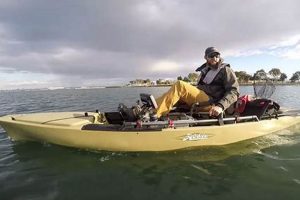
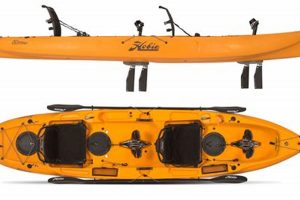
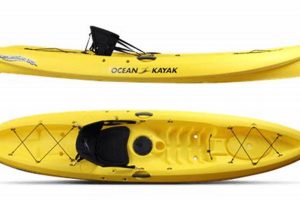
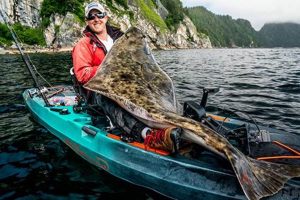
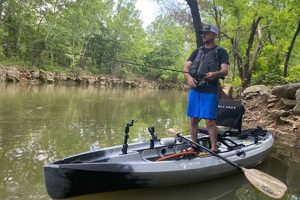
Customizing a fishing kayak through personal modifications offers anglers the opportunity to tailor their vessel to specific needs and preferences. This can involve adding rod holders, installing fish finders, creating storage solutions, or improving comfort and stability. For example, mounting a GPS unit allows for precise navigation, while adding a comfortable seat can enhance endurance during long fishing trips.
Enhanced functionality and cost savings are key drivers behind this practice. Anglers can achieve a highly personalized setup often at a fraction of the cost of purchasing a fully equipped model. Historically, kayak customization has evolved alongside advancements in fishing technology and materials, offering anglers progressively more sophisticated and accessible DIY options. This trend reflects a growing desire for greater control over equipment and a deeper connection with the sport.
This article will explore various modification categories, including electronics installations, storage enhancements, comfort improvements, and stability modifications. It will provide practical guidance, material recommendations, and safety considerations for each category, empowering anglers to undertake these projects confidently and effectively.
Tips for Kayak Fishing Enhancements
Careful planning and execution are crucial for successful kayak modifications. The following tips offer guidance for achieving optimal results and ensuring safety.
Tip 1: Plan Thoroughly: Before commencing any modifications, meticulous planning is essential. This includes sketching layouts, researching compatible equipment, and gathering necessary tools and materials. A well-defined plan minimizes errors and ensures efficient project completion.
Tip 2: Prioritize Stability: Maintaining stability is paramount. Avoid modifications that significantly raise the center of gravity or compromise the kayak’s balance. Testing stability in calm water after any modification is highly recommended.
Tip 3: Choose Marine-Grade Materials: Opting for marine-grade materials ensures durability and longevity in harsh aquatic environments. These materials resist corrosion and withstand exposure to sunlight and saltwater.
Tip 4: Seal All Openings Properly: Any penetrations made in the kayak’s hull must be sealed meticulously to prevent water ingress. Use appropriate marine sealant and ensure proper curing time before exposing the kayak to water.
Tip 5: Distribute Weight Evenly: Distribute added weight evenly throughout the kayak to maintain optimal balance and performance. Consider the impact of added equipment on the kayak’s handling and adjust storage accordingly.
Tip 6: Test in Controlled Environments: After completing modifications, conduct thorough testing in calm, shallow water before venturing into open waters. This allows for adjustments and ensures the kayak performs as expected.
Tip 7: Research Local Regulations: Certain modifications may be subject to local regulations. Researching and adhering to these regulations is essential for legal and safe operation.
By following these tips, modifications can enhance fishing experiences while maintaining safety and vessel integrity. Careful planning, appropriate material selection, and thorough testing contribute significantly to successful outcomes.
With these practical tips in mind, one can proceed with confidence toward a customized and effective fishing kayak setup.
1. Planning and Design

Effective planning and design form the cornerstone of successful DIY fishing kayak upgrades. A well-conceived plan mitigates potential issues, optimizes resource utilization, and ensures modifications align with the angler’s specific needs and the kayak’s structural limitations. Cause-and-effect relationships must be carefully considered. For instance, adding excessive weight to one side can compromise stability, while poorly positioned rod holders can hinder casting. A detailed plan, including scale drawings and equipment specifications, minimizes such complications.
Consider a scenario where an angler intends to install a fish finder, rod holders, and additional storage. Without proper planning, the angler might encounter wiring conflicts, insufficient storage space, or an unbalanced kayak. Careful consideration of component placement, wiring routes, and weight distribution beforehand allows for a streamlined installation process and a functional finished product. This preemptive approach saves time, resources, and frustration, ultimately contributing to a more enjoyable and productive fishing experience.
In conclusion, meticulous planning and design are not merely preliminary steps but integral components of successful DIY fishing kayak upgrades. They enable anglers to visualize the finished product, anticipate potential challenges, and execute modifications efficiently and effectively. This proactive approach optimizes kayak functionality, enhances safety, and ultimately contributes to a more rewarding angling experience. Careful consideration of these factors avoids costly rework and ensures modifications enhance, rather than detract from, the kayak’s performance and the angler’s enjoyment on the water.
2. Rod Holders & Storage

Effective rod storage and readily accessible fishing gear are essential components of a well-equipped fishing kayak. DIY upgrades in these areas significantly enhance organization, efficiency, and overall fishing experience. Optimized rod placement and secure storage solutions minimize equipment entanglement, maximize fishing time, and contribute to a safer, more productive outing. These modifications directly address the angler’s need to manage equipment efficiently in the confined space of a kayak.
- Flush Mount Rod Holders:
Flush mount rod holders offer a streamlined, space-saving solution, ideal for trolling or storing rods when not in use. Recessed into the kayak’s gunwale or deck, they minimize obstructions and reduce the risk of line entanglement. Anglers often choose to install multiple flush mount holders to accommodate different rod types and fishing techniques. This customization provides a dedicated and secure location for rods, freeing up valuable deck space.
- Adjustable Rod Holders:
Adjustable rod holders provide versatility by allowing anglers to change rod angles and positions. This adaptability proves advantageous in various fishing scenarios, from trolling to casting. For example, an adjustable holder can be positioned to keep a rod at the optimal angle for trolling while maintaining clear visibility. This flexibility enhances fishing effectiveness and allows for quick adjustments to changing conditions.
- Tackle Storage Solutions:
Customizing tackle storage involves integrating waterproof boxes, trays, or bags within easy reach. This ensures lures, hooks, and other essential gear remain organized and protected from the elements. For instance, installing a tackle box within arm’s reach of the angler eliminates the need to rummage through larger storage compartments, saving valuable time and minimizing disruptions during critical fishing moments.
- Creative Storage Integrations:
Creative storage solutions, such as utilizing bungee cords, nets, or milk crates, can further optimize space utilization within the kayak. These adaptations offer cost-effective ways to secure additional gear, such as dry bags, anchors, or paddle leashes. A strategically placed bungee net can secure a dry bag containing essential items like a first-aid kit or extra layers, maximizing space efficiency and ensuring accessibility.
Strategic rod holder placement and efficient storage solutions significantly enhance the overall fishing experience. By optimizing equipment organization and accessibility, these DIY upgrades allow anglers to focus on fishing rather than managing gear, leading to a more productive and enjoyable time on the water. These modifications transform the kayak into a personalized and highly functional fishing platform.
3. Electronics Integration

Integrating electronics significantly enhances the capabilities of a DIY fishing kayak. This process involves incorporating devices like fish finders, GPS units, and communication systems to improve angling effectiveness and safety. Cause-and-effect relationships are central to successful integration. For example, proper transducer placement directly impacts fish finder accuracy, while efficient wiring prevents system failures and ensures reliable operation. A clear understanding of these relationships is crucial for achieving desired outcomes.
Fish finders provide real-time underwater insights, enabling anglers to locate fish, identify structures, and understand bottom contours. Integrating a GPS unit facilitates precise navigation, route tracking, and waypoint marking, valuable assets for exploring new waters or returning to productive fishing spots. Furthermore, incorporating communication devices enhances safety, allowing anglers to stay connected in case of emergencies. For example, mounting a VHF radio provides access to weather reports and emergency channels, crucial for solo fishing trips in remote locations. These practical applications illustrate the significant impact of electronics integration on fishing success and safety.
Successful electronics integration requires careful planning, appropriate material selection, and meticulous execution. Challenges include ensuring waterproof installations, managing wiring effectively, and positioning devices for optimal performance and accessibility. Overcoming these challenges yields a highly functional and customized fishing platform. The ability to locate fish effectively, navigate accurately, and communicate reliably transforms the kayak into a sophisticated angling tool, significantly increasing the likelihood of a successful and safe fishing experience.
4. Comfort & Seating

Comfort and seating modifications are integral to DIY fishing kayak upgrades, directly impacting angler endurance and overall fishing experience. Extended periods on the water necessitate a comfortable and supportive seating arrangement to minimize fatigue and maximize fishing effectiveness. Cause and effect relationships are clearly evident: an uncomfortable seat leads to discomfort, reduced focus, and a shortened fishing trip. Conversely, a well-designed seating system promotes prolonged comfort, allowing anglers to concentrate on fishing and enjoy their time on the water. For example, replacing a basic kayak seat with an adjustable, padded model can significantly improve posture and reduce back strain, enabling longer, more comfortable fishing sessions.
Several DIY upgrades address seating comfort. These include adding aftermarket kayak seats designed for enhanced support, incorporating cushions or padding to existing seats, and modifying seat backs for improved lumbar support. Each modification offers specific benefits and addresses particular comfort challenges. An angler experiencing lower back pain, for instance, might benefit from adding lumbar support, while another angler might prioritize enhanced cushioning for overall comfort. Choosing the right modification depends on individual needs and preferences. Furthermore, adjusting seat height and position can optimize paddling ergonomics and improve overall comfort and efficiency. Practical applications include using adjustable risers to elevate the seat for better visibility or modifying the seat position to improve balance and stability.
Addressing comfort and seating through DIY upgrades transforms the fishing kayak into a personalized and ergonomic platform, enabling extended and enjoyable fishing trips. While challenges such as finding compatible seating solutions and ensuring proper installation exist, the resulting improvement in comfort and fishing performance makes these efforts worthwhile. These modifications directly contribute to a more positive and productive fishing experience, emphasizing the importance of comfort and seating within the broader context of DIY fishing kayak upgrades. Prioritizing these elements allows anglers to maximize their time on the water, enhancing both comfort and fishing success.
5. Stability Enhancements
Stability enhancements play a crucial role in DIY fishing kayak upgrades, directly influencing safety and performance. Modifications impacting stability alter the kayak’s center of gravity and its resistance to tipping. Cause-and-effect relationships are paramount: increased stability improves angler confidence and safety, particularly when fishing in challenging conditions such as rough water or strong currents. Conversely, compromised stability can increase the risk of capsizing, especially when combined with factors like angler movement or external forces. Consider adding outriggers or widening the kayak’s beam. These modifications increase stability by broadening the base of support, allowing for more secure and confident fishing, especially in turbulent waters. Conversely, adding excessive weight high on the kayak raises the center of gravity, potentially decreasing stability and increasing the risk of tipping.
Several DIY modifications enhance kayak stability. Outriggers, stabilizers, and wider hulls expand the kayak’s footprint, increasing its resistance to rolling. Adding ballast low in the hull lowers the center of gravity, further improving stability. Each modification offers distinct advantages and suits specific needs. An angler fishing in calm, protected waters might prioritize maneuverability over extreme stability, while an angler frequently navigating choppy conditions would benefit significantly from enhanced stability features. Understanding these considerations allows for informed decisions aligned with individual fishing environments and preferences. Practical applications include adding inflatable outriggers for enhanced stability when fishing offshore or incorporating a weighted keel for improved tracking in windy conditions.
Prioritizing stability enhancements within DIY fishing kayak upgrades is fundamental for safe and effective angling. While modifications can improve stability, they must be implemented thoughtfully, considering potential impacts on performance characteristics like maneuverability and speed. Challenges include achieving optimal balance between stability and performance, ensuring modifications do not compromise the kayak’s structural integrity, and selecting appropriate materials for durability and longevity. Addressing these challenges successfully leads to a stable, safe, and high-performing fishing kayak tailored to individual needs and preferences. This understanding of stability’s importance contributes significantly to a more confident and enjoyable fishing experience. A stable platform allows anglers to focus on fishing, rather than constantly managing balance, ultimately enhancing both safety and fishing success.
6. Safety Equipment

Integrating appropriate safety equipment is paramount when undertaking DIY fishing kayak upgrades. Modifications, while enhancing functionality, can inadvertently introduce new risks if safety considerations are not prioritized. Cause-and-effect relationships are evident: neglecting safety protocols can lead to accidents, injuries, or even fatalities. Conversely, incorporating appropriate safety measures significantly reduces risks and promotes a secure fishing environment. Consider a kayak modified with increased storage capacity. Without proper weight distribution and stability considerations, this upgrade could compromise balance and increase the risk of capsizing. Integrating safety equipment alongside such modifications mitigates these risks.
Essential safety equipment includes personal flotation devices (PFDs), visual signaling devices (such as flares or a whistle), communication tools (like a VHF radio or a waterproof cell phone case), and navigation aids (including a compass and GPS). Practical applications demonstrate the importance of this equipment. A PFD is critical should an angler capsize, while a VHF radio allows communication in emergencies. A signaling device can attract attention if an angler becomes stranded, and navigation aids help maintain bearings in challenging conditions. These examples underscore the direct impact of safety equipment on angler well-being.
Prioritizing safety within DIY fishing kayak upgrades is not merely advisable; it is crucial for responsible angling. While modifications enhance the fishing experience, they must not come at the expense of safety. Challenges include selecting appropriate safety gear for specific fishing environments, ensuring proper installation and maintenance of equipment, and developing a comprehensive safety plan that addresses potential risks. Addressing these challenges strengthens the connection between modifications and angler safety, contributing to a more secure and enjoyable fishing experience. A well-equipped and safety-conscious approach ensures that DIY upgrades enhance, rather than detract from, the overall angling experience.
7. Material Selection
Appropriate material selection is fundamental to the success and longevity of DIY fishing kayak upgrades. Chosen materials directly influence the modification’s durability, performance, and resistance to the harsh marine environment. Careful consideration of material properties is crucial for ensuring upgrades withstand exposure to saltwater, sunlight, and physical stresses encountered during fishing trips. Material selection impacts not only the functionality of the modification but also the overall safety and longevity of the kayak.
- Marine-Grade Hardware:
Utilizing marine-grade stainless steel screws, bolts, and other hardware is essential for preventing corrosion and ensuring structural integrity. Non-marine-grade hardware will quickly rust and degrade in saltwater environments, compromising the modification and potentially damaging the kayak. For instance, using marine-grade stainless steel screws to mount a rod holder ensures long-lasting performance and prevents rust from weakening the attachment points. This careful selection of hardware is critical for maintaining the kayak’s structural integrity and the longevity of the modification.
- UV-Resistant Materials:
Components exposed to sunlight, such as deck rigging, storage compartments, and seating materials, require UV resistance to prevent degradation and maintain functionality. Prolonged exposure to UV radiation can cause non-UV-resistant materials to become brittle, crack, and lose their structural integrity. Employing UV-resistant materials ensures that these components maintain their strength and appearance over time. For example, using UV-resistant bungee cords for deck rigging ensures they retain their elasticity and strength, even after prolonged sun exposure. This resistance to UV degradation is crucial for preserving the functionality and aesthetics of DIY modifications.
- Waterproof Sealants & Adhesives:
Creating waterproof seals is essential when installing components that penetrate the kayak’s hull, such as rod holders or electronics mounts. Proper sealing prevents water ingress, which can lead to structural damage, mold growth, and compromised buoyancy. Utilizing marine-grade sealants and adhesives designed specifically for aquatic environments ensures a durable and waterproof seal. For example, applying marine-grade sealant around a through-hull transducer mount prevents water from entering the kayak’s hull, protecting its structural integrity and preventing potential safety hazards.
- Durable Plastics & Composites:
Constructing storage compartments, mounting platforms, or other structural modifications often involves using durable plastics or composites. These materials offer a balance of strength, lightweight, and resistance to water damage. Selecting appropriate plastics or composites ensures the modification’s durability and contributes to the overall performance of the kayak. Using high-density polyethylene (HDPE) for a custom storage compartment, for example, provides a robust and waterproof solution that withstands the rigors of the marine environment. The thoughtful selection of these materials contributes significantly to the long-term success of DIY modifications.
Careful material selection ensures DIY fishing kayak upgrades remain functional, durable, and safe over time. Choosing appropriate materials based on their specific properties and intended application prevents premature wear, protects the kayak’s integrity, and ensures modifications contribute positively to the overall fishing experience. Ultimately, appropriate material selection is an investment in the long-term success and enjoyment of DIY kayak modifications, enabling anglers to confidently customize their vessels for enhanced fishing performance and enjoyment.
Frequently Asked Questions
This section addresses common inquiries regarding fishing kayak modifications, providing concise and informative responses to assist anglers in making informed decisions.
Question 1: How does weight capacity affect stability after modifications?
Added weight reduces the kayak’s reserve buoyancy and can impact stability. Careful weight distribution and staying within the manufacturer’s specified weight capacity are crucial for maintaining safe handling.
Question 2: What are the most important safety considerations for DIY kayak modifications?
Maintaining stability and ensuring watertight integrity are paramount. Modifications should not compromise the kayak’s structural integrity or create potential safety hazards. Thorough testing after any modification is essential.
Question 3: What materials are best suited for marine environments?
Marine-grade stainless steel, UV-resistant plastics, and specialized marine sealants are essential for withstanding saltwater exposure and ensuring longevity.
Question 4: How can one determine the best placement for rod holders and other accessories?
Placement should optimize accessibility while maintaining balance and minimizing interference with paddling or casting. Consider individual fishing styles and preferences when determining optimal placement.
Question 5: What are the common pitfalls to avoid during DIY kayak upgrades?
Common pitfalls include compromising stability through improper weight distribution, creating leaks through inadequate sealing, and using unsuitable materials that degrade rapidly in marine environments. Careful planning and execution mitigate these risks.
Question 6: Where can one find reliable information and resources for DIY kayak modifications?
Reputable online forums, instructional videos, and kayak outfitting guides offer valuable insights and guidance. Consulting experienced kayak anglers can also provide practical advice and recommendations.
Understanding these common concerns and potential challenges empowers anglers to approach DIY modifications with informed awareness, prioritizing safety and functionality. Careful planning, appropriate material selection, and thorough testing are consistently emphasized as crucial factors for successful outcomes.
The following section will offer step-by-step guides for specific DIY fishing kayak upgrades, providing practical instructions and detailed illustrations to assist anglers in undertaking these projects confidently.
DIY Fishing Kayak Upgrades
Customizing fishing kayaks through thoughtful modifications empowers anglers to optimize their vessels for individual needs and preferences. This article explored key upgrade categories, including rod holders and storage, electronics integration, comfort and seating enhancements, stability modifications, safety equipment integration, and material selection. Each aspect contributes significantly to improved fishing performance, enhanced comfort, and increased safety on the water. Emphasis was placed on careful planning, appropriate material selection, and thorough testing to ensure modifications achieve desired outcomes without compromising the kayak’s structural integrity or the angler’s safety.
Strategic modifications unlock the full potential of a fishing kayak, transforming it into a personalized and highly effective fishing platform. Anglers willing to invest time and effort in DIY upgrades reap substantial rewards in terms of enhanced functionality, improved comfort, and increased fishing success. The potential for customization is vast, allowing for a truly bespoke fishing experience tailored to individual preferences and fishing styles. This pursuit of continuous improvement through thoughtful modification lies at the heart of DIY fishing kayak upgrades.