Anglers choosing between a canoe and a kayak for fishing face a decision based on several key factors, including stability, maneuverability, storage capacity, and the type of water being fished. Canoes, open vessels propelled by single-bladed paddles, offer excellent stability and ample space for gear and multiple anglers. Kayaks, closed-deck vessels propelled by double-bladed paddles, provide superior maneuverability and speed, particularly in flowing water or windy conditions. Each vessel type presents distinct advantages and disadvantages depending on individual fishing styles and preferences.
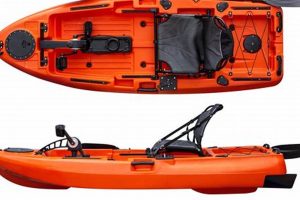
The choice between these two watercraft has evolved alongside the development of fishing techniques and materials technology. Historically, canoes served as primary fishing platforms in many cultures, prized for their carrying capacity and stability. The increasing popularity of kayaks for angling stems from advancements in design and materials, resulting in lighter, more durable, and specialized fishing kayaks equipped with features like rod holders, live wells, and anchor systems. Selecting the appropriate vessel can significantly enhance fishing success and overall enjoyment on the water.
Exploring these differences further will illuminate the specific strengths and weaknesses of each craft, facilitating an informed decision based on individual angling needs and preferences. Factors like intended fishing location, target species, and personal comfort will be examined to provide a comprehensive comparison.
Tips for Choosing Between a Canoe and Kayak for Fishing
Selecting the appropriate fishing vessel requires careful consideration of various factors. The following tips offer guidance for anglers deciding between a canoe and a kayak.
Tip 1: Consider the fishing environment. Calm lakes and ponds favor canoe stability, while rivers and oceans, often subject to wind and currents, benefit from kayak maneuverability.
Tip 2: Evaluate storage needs. Canoes offer greater capacity for gear, coolers, and even additional anglers. Kayaks provide more limited storage, often requiring waterproof bags and compartments.
Tip 3: Factor in angler mobility. Canoes allow for standing and repositioning, beneficial for casting and sight fishing. Kayaks, while requiring more balance, offer a lower center of gravity for increased stability in rough water.
Tip 4: Account for fishing style. Trolling and still-fishing benefit from the stability and spaciousness of a canoe. Kayak anglers often favor casting and jigging due to increased maneuverability.
Tip 5: Assess transportation and storage logistics. Canoes typically require roof racks or trailers due to their size and weight. Kayaks, often lighter and more compact, offer easier transport and storage options.
Tip 6: Consider experience level. Beginners might find the stability of a canoe more forgiving. Kayaks, while requiring more practice to master, offer greater control in challenging conditions.
Tip 7: Think about intended catch. Larger fish often require the stability and space afforded by a canoe for landing and handling. Kayaks excel when targeting smaller species in tighter spaces.
Careful consideration of these factors will ensure selection of the optimal vessel for individual fishing needs and preferences, ultimately contributing to a more successful and enjoyable experience on the water.
By understanding the unique attributes of each craft, anglers can confidently choose the best platform to meet their specific fishing objectives.
1. Stability

Stability plays a crucial role in the “canoe fishing vs. kayak fishing” debate. A vessel’s stability directly impacts angler safety, comfort, and fishing effectiveness. Canoes, with their wider beam and open design, generally offer greater initial stability. This allows anglers to stand and cast with more confidence, particularly in calm water conditions. However, this initial stability can be compromised by higher center of gravity, making canoes more susceptible to tipping in rough water or when significant weight shifts occur. Kayaks, conversely, possess a lower center of gravity due to their closed design and the seated position of the angler. While initial stability might feel less pronounced, kayaks offer greater secondary stability resistance to capsizing once tilted due to their lower profile and contact with the water. This makes them well-suited for navigating choppy waters and handling unexpected movements, such as fighting a strong fish.
The practical implications of stability differences are significant. An angler targeting large fish from a canoe might appreciate the platform for battling and landing, yet must exercise caution when moving within the vessel. A kayak angler navigating swift currents benefits from the lower risk of capsizing but might find casting while seated more challenging. Choosing the appropriate vessel depends on the specific fishing environment and individual preferences. For example, an angler fishing in sheltered bays or slow-moving rivers might prioritize the casting platform offered by a canoe. An angler fishing in open ocean or whitewater rapids, however, would likely prioritize the kayak’s ability to handle unpredictable conditions.
In summary, stability considerations represent a critical factor in the canoe versus kayak decision for anglers. Canoes generally offer greater initial stability, benefiting casting and stationary fishing in calm waters, while kayaks provide superior secondary stability, advantageous in rougher conditions and dynamic angling situations. Evaluating the target fishing environment, intended fishing style, and personal comfort level regarding stability is essential for selecting the most suitable and safe watercraft.
2. Maneuverability

Maneuverability represents a critical differentiator between canoes and kayaks for fishing applications. The ability to precisely and efficiently position the vessel significantly impacts fishing success, particularly in dynamic environments or when targeting specific locations. Factors influencing maneuverability include hull design, water resistance, and propulsion methods.
- Hull Design
Canoes typically feature a shallow-arch hull design, maximizing stability but creating greater surface area contact with the water. This increases water resistance, requiring more effort to turn and maneuver. Kayaks, conversely, often employ a V-shaped hull, minimizing water contact and enhancing maneuverability, especially in currents or windy conditions. A kayak’s sleeker profile allows for quicker turns and more precise adjustments in position.
- Water Resistance
The broader profile and higher freeboard of a canoe present greater windage, making them susceptible to drift and more challenging to control in windy conditions. Kayaks, sitting lower in the water and presenting a smaller profile, experience less wind resistance, enhancing control in open water. This difference becomes particularly pronounced when paddling into headwinds or navigating across strong currents.
- Propulsion
The single-bladed paddle used in canoeing requires alternating strokes on either side of the vessel to maintain a straight course, making precise maneuvering and quick turns more complex. Kayak paddles, with blades on both ends, allow for continuous paddling on either side, enabling tighter turns and more efficient directional changes. This advantage becomes especially significant when navigating tight spaces, such as narrow creeks or around obstacles like submerged logs or rocks.
- Practical Implications
These maneuverability differences translate directly to fishing effectiveness. Kayaks excel in navigating swift rivers, allowing anglers to position themselves precisely in current seams or eddy lines. Their responsiveness also facilitates quick adjustments to target moving fish or changing water conditions. Canoes, while less agile, offer a stable platform for trolling or still-fishing in calmer environments. The increased space within a canoe also permits greater freedom of movement for casting, although turning the entire vessel to reposition requires more effort.
Ultimately, the choice between a canoe and a kayak depends on the specific fishing environment and the angler’s priorities. Kayaks offer superior maneuverability for dynamic fishing situations and navigating challenging waters, while canoes provide stability and casting space in calmer settings. Careful consideration of these maneuverability factors will ensure the selected vessel aligns with the angler’s intended fishing style and target environment.
3. Storage Capacity

Storage capacity represents a significant factor differentiating canoes and kayaks for fishing purposes. The volume and accessibility of storage space directly impact the amount and type of gear anglers can carry, influencing both fishing effectiveness and overall comfort. Canoes, with their open design and generally larger size, inherently offer significantly greater storage capacity than kayaks. This allows for carrying larger items such as coolers, tackle boxes, camping gear, and even additional anglers. The open configuration also facilitates easier access to stored items during a fishing trip. Kayaks, designed for maneuverability and speed, inherently possess less storage space. Their closed decks and streamlined profiles necessitate careful packing and utilization of specialized storage compartments, often requiring waterproof bags and smaller containers to protect gear from water exposure. While some fishing kayaks incorporate built-in storage wells and hatches, they remain inherently limited in volume compared to canoes.
The practical implications of these storage differences are substantial. Anglers embarking on multi-day fishing trips or those requiring specialized equipment, like large landing nets or fish finders, benefit significantly from the ample storage offered by canoes. The ability to transport larger coolers also enhances comfort and food preservation on extended outings. Kayak anglers, however, must prioritize and minimize gear selection, focusing on essential items and utilizing compact storage solutions. Those prioritizing mobility and minimalist fishing approaches might find the limited storage capacity of a kayak conducive to a streamlined and efficient angling experience. For instance, a fly fisherman wading shallow streams might prefer a kayak’s maneuverability and reduced gear requirements, while a bass angler targeting larger fish in open water might opt for a canoe’s stability and capacity for carrying livewells and additional tackle.
In conclusion, storage capacity considerations play a key role in selecting between a canoe and a kayak for fishing. Canoes offer greater volume and accessibility, accommodating diverse gear and enhancing comfort on extended trips. Kayaks necessitate strategic packing and gear minimization, aligning with minimalist fishing approaches and emphasizing maneuverability over carrying capacity. Analyzing individual fishing needs, target species, and typical trip duration clarifies the importance of storage capacity, ultimately guiding the choice towards the optimal vessel.
4. Cost

Cost represents a significant factor influencing the decision between a canoe and a kayak for fishing. Budget considerations impact not only the initial purchase price of the vessel but also ongoing expenses associated with accessories, maintenance, and transportation. A comprehensive cost analysis requires evaluating various facets beyond the initial price tag to determine the true long-term investment associated with each option.
- Initial Purchase Price
Canoes generally exhibit a wider price range than kayaks. Basic recreational canoes can be relatively affordable, while specialized fishing models with advanced features command higher prices. Similarly, entry-level recreational kayaks are often less expensive than high-end fishing kayaks equipped with specialized seating, rod holders, and pedal-drive systems. Material construction significantly influences cost; polyethylene kayaks and canoes tend to be more budget-friendly, while composite or fiberglass options are generally more expensive but offer performance advantages.
- Accessories
Both canoes and kayaks require specific accessories for fishing. Essential items include paddles, personal flotation devices (PFDs), and appropriate fishing gear. Kayak anglers often invest in specialized accessories like rod holders, anchor trolleys, and fish finders, potentially increasing overall cost. Canoes may require additional accessories like seats, yokes, and motor mounts, depending on the intended usage and fishing style. The cumulative cost of these accessories can significantly impact the overall budget.
- Maintenance and Repairs
Both canoes and kayaks require regular maintenance to ensure longevity and performance. Canoes might require occasional repairs to the hull or seats, while kayaks might necessitate replacing rigging components or sealing hatches. The frequency and cost of repairs depend on usage, storage conditions, and the material construction of the vessel. Composite kayaks and canoes can be more expensive to repair than those made from polyethylene.
- Transportation and Storage
Transportation costs vary depending on the size and weight of the chosen vessel. Kayaks, often smaller and lighter, might be transported on car roof racks, minimizing additional expenses. Larger canoes frequently necessitate trailers, incurring purchase or rental costs, as well as increased fuel consumption during transport. Storage costs also factor into long-term expenses, with larger canoes potentially requiring more extensive storage space than compact kayaks.
Ultimately, the true cost of canoe or kayak fishing extends beyond the initial purchase price. Evaluating accessory needs, potential maintenance expenses, and transportation/storage costs provides a more complete financial picture. Anglers should consider their budget constraints and long-term fishing goals when making a decision. While a basic recreational canoe might offer the lowest initial investment, a fully equipped fishing kayak, despite a higher upfront cost, might provide greater value and fishing effectiveness in the long run, depending on individual needs and preferences.
5. Fishing Style

Fishing style significantly influences the suitability of canoes versus kayaks for angling. Different techniques require varying degrees of stability, maneuverability, and access, impacting vessel choice. Understanding how fishing style interacts with vessel characteristics enables informed decisions, optimizing angling effectiveness and enjoyment.
- Trolling
Trolling involves dragging lures or bait behind a moving vessel. Canoes, with their inherent stability and ample space for gear, offer a comfortable platform for trolling, particularly in calm waters. Their greater carrying capacity accommodates multiple rods and downriggers. Kayaks, while capable of trolling, require more attention to balance and tracking, particularly in windy conditions or when turning. Specialized trolling motor setups are available for both vessel types, but canoes generally offer more space and stability for such systems.
- Casting and Spinning
Casting and spinning techniques require precise boat positioning and frequent adjustments. Kayaks, with their superior maneuverability, excel in this fishing style, allowing anglers to quickly and accurately target specific locations like weed beds, submerged structures, or pockets in moving water. Canoes, while less agile, provide a stable platform for casting in calm water, although repositioning the entire vessel for repeated casts can be more cumbersome. Standing to cast in a canoe offers increased visibility and casting range but requires careful weight distribution to maintain balance.
- Fly Fishing
Fly fishing often involves wading in shallow water or navigating tight quarters. Kayaks, due to their maneuverability and shallow draft, provide excellent access to these areas, enabling anglers to approach fish stealthily. Specialized fly fishing kayaks offer features like elevated seating and gear tracks for optimized fly casting. Canoes, while generally less suited to shallow water navigation, can be effective in larger rivers or stillwaters where casting from a seated position is feasible. However, their size and draft can limit access to prime fly fishing locations.
- Still-Fishing
Still-fishing, involving stationary fishing with lines suspended in the water, benefits from the stability provided by canoes. Anglers can comfortably sit or stand while monitoring multiple lines, and the open design facilitates easy access to bait, tackle, and landed fish. Kayaks can also be used for still-fishing, but their smaller size and lower seating position might restrict movement and access to gear. However, a kayak’s maneuverability can be advantageous for repositioning to access different depths or structures in a still-fishing scenario.
Selecting the appropriate vessel for a given fishing style requires careful consideration of individual preferences and the target fishing environment. While kayaks excel in maneuverability and access for techniques like casting and fly fishing, canoes offer stability and space advantageous for trolling and still-fishing. Understanding the interplay between fishing style and vessel characteristics empowers anglers to optimize their fishing experience, maximizing both effectiveness and enjoyment on the water.
6. Transportation

Transportation logistics represent a crucial factor in the canoe versus kayak fishing debate. Vessel transport significantly impacts accessibility to fishing locations and overall trip preparation. Consideration of vehicle capacity, storage solutions, and ease of loading/unloading is essential for efficient and stress-free fishing excursions.
- Vehicle Capacity
Vehicle size and configuration directly influence transport options. Kayaks, generally smaller and lighter, frequently fit atop standard car roof racks or within truck beds, simplifying transport and minimizing fuel consumption. Larger canoes, depending on length and material, often necessitate specialized trailers, increasing transport complexity and cost. Assessing vehicle limitations and compatibility with chosen vessel dimensions is crucial for seamless transport.
- Storage Solutions
Efficient storage solutions streamline transport and protect vessels during transit. Kayak cradles and tie-down straps secure kayaks to roof racks, minimizing movement and potential damage. Canoe trailers equipped with bunks or saddles provide stable transport platforms. Proper securing techniques prevent shifting during transit, ensuring vessel safety and minimizing risk to other vehicles. Storage considerations extend beyond transport; off-season storage requires adequate space and protection from the elements.
- Loading and Unloading
Vessel weight and design influence loading/unloading ease. Lighter kayaks often permit single-person handling, simplifying launch preparation. Heavier canoes, particularly those constructed from dense materials, might require two or more individuals for safe lifting and maneuvering. Specialized loading aids, such as kayak carts or canoe loaders, can significantly reduce strain and facilitate independent handling. Considering physical limitations and available assistance ensures efficient and safe handling during loading and unloading processes.
- Distance to Fishing Location
Transport distance significantly impacts vessel choice. Short distances to local fishing spots favor simpler solutions like roof-mounted kayaks, minimizing setup and transit time. Longer journeys to remote locations might necessitate the increased carrying capacity of a canoe and trailer setup, allowing transport of additional gear and supplies. Evaluating travel distance and anticipated gear requirements informs decisions regarding transport efficiency and overall trip logistics. Fuel costs associated with towing larger canoes should also be factored into long-distance transport considerations.
Efficient transportation directly influences fishing accessibility and enjoyment. Kayaks offer portability advantages for shorter distances and smaller vehicles, while canoes, often requiring trailers, accommodate larger payloads for extended trips and remote locations. Careful evaluation of transport logistics, considering vehicle limitations, storage solutions, and loading/unloading procedures, ensures seamless transitions between transport and fishing, optimizing valuable time on the water.
Frequently Asked Questions
This section addresses common inquiries regarding the choice between canoes and kayaks for fishing, providing concise and informative responses to facilitate informed decision-making.
Question 1: Which is more stable, a canoe or a kayak?
Canoes generally offer greater initial stability due to their wider beam and open design. Kayaks, however, possess superior secondary stability, meaning they are less likely to capsize once tilted, due to their lower center of gravity.
Question 2: Which is better for fishing in rivers, a canoe or a kayak?
Kayaks generally excel in rivers due to their maneuverability and ability to navigate currents and obstacles effectively. Canoes can be suitable for slow-moving rivers but are less adept at handling swift currents or tight turns.
Question 3: Which offers more storage space for fishing gear?
Canoes offer significantly more storage space than kayaks, accommodating larger coolers, tackle boxes, and other equipment. Kayaks require more strategic packing and utilization of specialized waterproof storage solutions.
Question 4: Which is easier to transport, a canoe or a kayak?
Kayaks are generally easier to transport due to their smaller size and lighter weight. Many kayaks can be transported on car roof racks, while larger canoes often require trailers.
Question 5: Which is better for beginners, a canoe or a kayak?
Beginners might find the initial stability of a canoe more forgiving. However, mastering a kayak’s balance and paddling technique can lead to greater confidence and control in various water conditions.
Question 6: Which is more affordable, a canoe or a kayak?
Both canoes and kayaks offer a range of price points depending on features and materials. Basic recreational models of both can be relatively affordable, while specialized fishing versions with advanced features command higher prices.
Careful consideration of individual fishing needs, target environments, and budget constraints is essential for selecting the optimal vessel. Neither option universally surpasses the other; the ideal choice depends on the specific angler’s priorities and intended usage.
Further research into specific canoe and kayak models, along with seeking expert advice from experienced anglers or retailers, can provide valuable insights and guidance in making an informed decision.
Canoe Fishing vs Kayak Fishing
The “canoe fishing vs kayak fishing” debate ultimately hinges on individual angler priorities and intended usage. This exploration highlighted key differentiators, including stability, maneuverability, storage capacity, cost considerations, fishing style compatibility, and transportation logistics. Canoes offer enhanced stability and greater storage, benefiting anglers prioritizing comfort and carrying capacity, particularly in calm waters. Kayaks excel in maneuverability and portability, advantageous for navigating challenging waters and accessing remote locations. Cost considerations encompass not only initial purchase price but also accessories, maintenance, and transportation expenses, requiring a comprehensive assessment aligned with budget constraints. Fishing style compatibility further influences vessel choice; trolling and still-fishing benefit from canoe stability, while casting, spinning, and fly fishing leverage kayak maneuverability.
Optimal vessel selection hinges on a thorough assessment of these factors in relation to individual angling needs. Careful consideration ensures an informed decision, maximizing both enjoyment and effectiveness on the water. The evolving landscape of fishing kayak and canoe design continues to refine these platforms, offering anglers increasingly specialized options catering to diverse fishing styles and preferences. Continued exploration of these advancements empowers anglers to refine their approach, optimizing their pursuit of angling success and fostering a deeper connection with the aquatic environment.