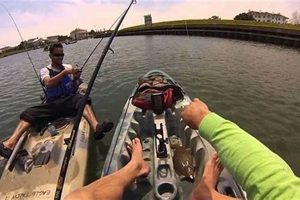
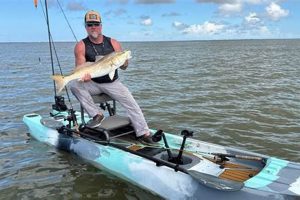
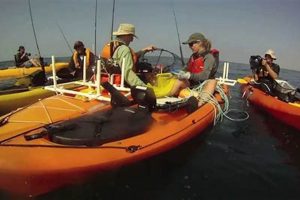
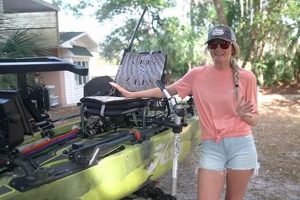
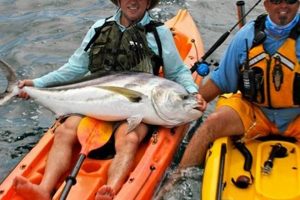
This specialized vessel represents a convergence of design elements tailored for angling enthusiasts. A small, maneuverable watercraft, it typically features specialized seating, rod holders, and storage compartments optimized for tackle and equipment. Such vessels allow anglers access to shallow waters and hard-to-reach fishing spots often inaccessible to larger boats. Consider, for example, the advantage of navigating a densely vegetated shoreline or a secluded cove.
The popularity of these compact watercraft stems from their portability, stability, and affordability compared to larger, motorized boats. They empower anglers with a self-propelled, eco-friendly means of enjoying their sport while minimizing environmental impact. Historically, smaller fishing boats have played a crucial role in communities reliant on aquatic resources, evolving over time from simple canoes and rafts to the sophisticated designs available today. This reflects a continued drive towards efficiency and a closer connection with nature.
This discussion will further explore the nuanced aspects of design, material selection, and the diverse range of features available within this category of watercraft. Considerations for safety, maintenance, and responsible usage will also be addressed to provide a comprehensive understanding.
Tips for Optimized Kayak Fishing
Effective angling from a kayak requires a combination of skill, preparation, and an understanding of specific techniques. The following tips offer guidance for enhancing performance and maximizing enjoyment on the water.
Tip 1: Prioritize Stability: Vessel stability is paramount. Select a kayak with a hull design appropriate for anticipated water conditions. Consider stability enhancements such as outriggers or stabilizers for added security.
Tip 2: Master Paddle Strokes: Efficient paddling conserves energy and reduces disturbances. Practice various strokes for maneuvering in different environments, including forward, reverse, and sweep strokes.
Tip 3: Organize Tackle Strategically: Arrange fishing gear for easy access and minimize clutter. Utilize storage compartments and tackle boxes designed specifically for kayaks. Secure loose items to prevent loss or entanglement.
Tip 4: Employ Proper Anchoring Techniques: Secure anchoring prevents drifting and maintains position in desired locations. Use an appropriate anchor type and deployment method suitable for the bottom composition and water depth.
Tip 5: Understand Water Conditions: Evaluate wind, currents, and tides before embarking. Adjust fishing strategies accordingly, considering drift patterns and optimal casting locations.
Tip 6: Practice Catch and Release Techniques: Minimize the impact on fish populations by employing proper catch and release methods. Use appropriate hooks and handling techniques to ensure fish survival.
Tip 7: Prioritize Safety Precautions: Wear a personal flotation device (PFD) at all times. Carry essential safety equipment, including a whistle, signaling device, and first-aid kit. Inform someone of your fishing plans and estimated return time.
Adhering to these guidelines will contribute to a safer, more productive, and enjoyable kayak fishing experience. Careful planning and mindful execution enhance angling success and promote responsible interaction with the aquatic environment.
Through a combination of preparation, technique, and respect for the environment, anglers can derive maximum benefit and enjoyment from this unique pursuit.
1. Stability

Stability forms a cornerstone of a successful fishing experience from a kayak. A stable platform allows anglers to focus on fishing, rather than constantly correcting balance. This is particularly crucial when casting, retrieving, and landing fish, as these actions often shift the center of gravity. For a macski fishing kayak, stability directly impacts safety, comfort, and overall fishing effectiveness.
- Hull Design:
The hull design significantly influences stability. Wider, flatter hulls generally provide greater initial stability, making them suitable for calmer waters. However, they may be less maneuverable. Longer, narrower hulls tend to track better and handle waves more effectively but offer less primary stability. The specific hull design of a macski fishing kayak will contribute to its overall performance characteristics and suitability for different water conditions.
- Center of Gravity:
Maintaining a low center of gravity is paramount for stability. Sitting low in the kayak and distributing weight evenly helps to prevent capsizing. Adding weight low in the hull can further enhance stability. The design of the macski fishing kayak plays a role in how effectively an angler can manage their center of gravity, influencing stability in various fishing situations.
- Water Conditions:
Calm lakes and slow-moving rivers present different stability challenges compared to choppy bays or open ocean. Wind and waves can significantly impact stability, requiring adjustments in positioning and paddling technique. The intended use environment for the macski fishing kayak should be a primary consideration in evaluating its stability characteristics.
- Angler Experience:
An experienced angler may comfortably handle a less stable kayak, utilizing their skill and balance to compensate. However, less experienced anglers benefit significantly from a more stable platform. The design of a macski fishing kayak may cater to different experience levels by offering varying degrees of stability.
Ultimately, the stability of a macski fishing kayak represents a critical factor influencing angling success and safety. Careful consideration of hull design, weight distribution, water conditions, and angler experience are essential for ensuring a stable and productive fishing platform.
2. Maneuverability

Maneuverability represents a critical performance attribute, directly influencing the effectiveness and efficiency of a fishing kayak. The ability to precisely navigate varied water conditions and access secluded fishing spots significantly impacts angling success. A highly maneuverable kayak enables anglers to respond quickly to changing currents, wind conditions, and fish behavior, optimizing casting opportunities and overall fishing performance. Consider, for instance, navigating through dense vegetation or precisely positioning the kayak in a swift current for optimal lure presentation. These scenarios underscore the practical significance of maneuverability in a macski fishing kayak.
Several factors contribute to a kayak’s maneuverability, including hull design, length, and waterline width. Shorter kayaks with a rockered hull (curved from bow to stern) tend to turn more easily than longer, flatter hulls. A shorter waterline width also reduces drag and enhances responsiveness. However, these design features often come at the expense of tracking performance (the ability to maintain a straight course). Finding an optimal balance between maneuverability and tracking is crucial, depending on the intended fishing environment and angler preferences. For example, a kayak designed for navigating tight creeks and rivers will prioritize maneuverability over tracking, while one intended for open water fishing may favor tracking performance for efficient paddling over longer distances.
The interplay between maneuverability and hull design within the context of a macski fishing kayak underscores the importance of selecting a vessel tailored to specific fishing needs and environments. Prioritizing maneuverability allows anglers to exploit diverse fishing opportunities and maximize their time on the water. However, a balanced approach, considering both maneuverability and tracking performance, often yields the most versatile and effective fishing platform. This understanding enables informed decision-making and enhances the overall fishing experience.
3. Storage Capacity

Adequate storage capacity represents a critical factor influencing the functionality and practicality of a macski fishing kayak. Efficient organization and accessibility of essential gear, including tackle, safety equipment, and personal items, directly impacts angling success and overall enjoyment on the water. Insufficient storage can lead to clutter, hindering casting and retrieval, while compromising safety and efficiency. A well-designed storage system allows anglers to focus on fishing, rather than managing gear, maximizing time and effectiveness on the water.
- Dedicated Tackle Storage:
Specialized compartments designed for tackle boxes, lures, and tools maintain organization and prevent entanglement. Easy access to frequently used items streamlines fishing processes and minimizes disruptions. Consider, for instance, readily accessible compartments for various lure types, ensuring quick changes based on fish behavior or water conditions.
- Dry Storage Compartments:
Protecting sensitive items, such as electronics, phones, and wallets, from water damage is crucial. Watertight hatches and sealed compartments offer secure storage for these essential belongings, ensuring peace of mind during excursions.
- Rod Holders and Management Systems:
Securely storing and accessing fishing rods is essential for efficient angling. Dedicated rod holders, strategically positioned for easy reach and minimal interference, enhance casting and retrieval processes. Furthermore, integrated rod management systems prevent tangling and damage during transport and storage.
- Cargo Space and Bungee Systems:
Larger items, such as coolers, dry bags, and additional gear, require designated cargo space. Secure bungee systems provide flexible storage options, accommodating various item sizes and shapes while ensuring stability during transport. This adaptability proves invaluable for longer trips or diverse fishing scenarios.
The strategic integration of these storage features within a macski fishing kayak contributes significantly to its overall practicality and effectiveness. Ample and well-organized storage enables anglers to carry essential gear, maintain order, and access items efficiently, ultimately enhancing the fishing experience and maximizing time spent pursuing their passion.
4. Material Durability
Material durability represents a critical factor influencing the longevity, performance, and overall value of a macski fishing kayak. The chosen construction materials directly impact the vessel’s resistance to abrasion, impact, UV degradation, and other environmental stressors. A durable kayak withstands the rigors of regular use, including transport, launching, and navigation through diverse water conditions, ensuring a reliable and long-lasting investment for anglers. This discussion explores key facets of material durability relevant to macski fishing kayaks.
- Polyethylene Plastic:
High-density polyethylene (HDPE) is a common material choice for its impact resistance, affordability, and UV stability. HDPE kayaks can withstand considerable abuse, making them suitable for navigating rocky shorelines or shallow waters. However, HDPE can be heavier than other materials, potentially impacting portability.
- Cross-Linked Polyethylene:
Cross-linked polyethylene (XLPE) offers enhanced durability and stiffness compared to standard HDPE. The cross-linking process increases molecular bonding, resulting in a tougher, more rigid material that resists deformation and impact damage. This added durability often comes at a higher price point.
- Thermoformed ABS:
Acrylonitrile butadiene styrene (ABS) plastic is a lightweight and durable material often used in thermoformed kayak construction. This process involves heating a sheet of ABS and molding it over a mold, creating a strong, uniform hull. ABS kayaks offer a good balance of durability, weight, and affordability.
- Composite Materials (Fiberglass, Carbon Fiber):
Composite materials, such as fiberglass and carbon fiber, offer superior strength-to-weight ratios, resulting in lighter and more responsive kayaks. However, composite construction typically comes at a premium cost and requires more specialized care and maintenance. These materials offer enhanced performance but may be less resistant to impact damage compared to polyethylene-based kayaks.
The selection of materials directly influences the long-term durability and performance of a macski fishing kayak. Understanding the properties and characteristics of different construction materials allows anglers to make informed decisions based on their individual needs, budget, and intended usage. Balancing durability, weight, cost, and performance ensures optimal selection and maximizes the lifespan of the kayak.
5. Seat Comfort

Seat comfort represents a pivotal factor influencing the overall fishing experience from a macski fishing kayak. Extended periods on the water, often in demanding conditions, necessitate a comfortable and supportive seating system. An uncomfortable seat can lead to fatigue, back pain, and diminished focus, hindering angling performance and overall enjoyment. This discussion explores key facets of seat comfort within the context of macski fishing kayaks.
- Ergonomic Design:
Ergonomically designed seats conform to the natural contours of the body, providing proper support and minimizing pressure points. Features such as adjustable backrests, lumbar support, and contoured seating surfaces contribute to enhanced comfort and reduced fatigue during extended fishing trips. An ergonomic design promotes proper posture, reducing strain and enhancing overall comfort.
- Cushioning and Padding:
Adequate cushioning and padding absorb shock and vibrations, enhancing comfort and minimizing discomfort from prolonged sitting. High-quality padding materials, such as closed-cell foam, resist water absorption and maintain their supportive properties over time. Consider, for instance, the difference between a thin, unpadded seat and a well-cushioned seat during a long day on the water.
- Breathability and Ventilation:
Breathable seat materials and ventilation systems promote airflow, reducing heat buildup and moisture accumulation, particularly in warm or humid conditions. This enhances comfort and prevents discomfort associated with prolonged contact with a damp seat surface. Mesh panels or strategically placed ventilation channels contribute to improved airflow and overall comfort.
- Adjustability and Customization:
Adjustable seat features, such as forward/backward positioning and backrest angle adjustment, allow anglers to customize the seating position for optimal comfort and fishing efficiency. This adaptability accommodates individual preferences and varying fishing styles, ensuring a personalized and comfortable experience. The ability to fine-tune the seat position can significantly impact long-term comfort and reduce fatigue.
The integration of these comfort-focused features within a macski fishing kayak significantly enhances the overall angling experience. A comfortable and supportive seat promotes proper posture, reduces fatigue, and allows anglers to focus on fishing, maximizing enjoyment and success on the water. Prioritizing seat comfort contributes to longer, more productive, and ultimately more rewarding fishing excursions. This translates directly into a more positive and fulfilling experience on the water.
6. Portability
Portability represents a significant factor influencing the practicality and accessibility of a macski fishing kayak. The ease with which a kayak can be transported and launched directly impacts the range of fishing locations accessible and the overall convenience of the angling experience. Consider the difference between easily loading a kayak onto a car roof rack versus requiring a trailer or specialized transport. This aspect of portability significantly influences the types of fishing environments accessible and the overall logistics of planning a fishing excursion. The following facets explore key components of portability related to macski fishing kayaks.
- Weight and Dimensions:
The kayak’s weight and dimensions directly influence ease of handling and transport. Lighter kayaks are easier to lift, carry, and load onto vehicles, requiring less physical exertion. Compact dimensions further simplify transport and storage, allowing for greater flexibility in choosing fishing locations. Consider the difference between maneuvering a lightweight, compact kayak through dense vegetation versus a larger, heavier model.
- Hull Design and Construction:
The hull design and construction materials impact overall weight and structural integrity. Lightweight materials, such as thermoformed ABS or composite construction, contribute to increased portability. However, material choice must also consider durability and resistance to damage during transport and handling.
- Transportation Accessories:
Accessories such as roof racks, kayak carts, and trailers facilitate transport and minimize physical strain. Well-designed transportation systems simplify loading, unloading, and maneuvering the kayak, expanding access to diverse fishing locations. Consider the convenience of a kayak cart for traversing uneven terrain or launching from remote locations.
- Storage Considerations:
Storage dimensions influence the practicality of storing the kayak when not in use. Compact kayaks require less storage space, accommodating limited storage options such as garages, apartments, or smaller vehicles. This aspect of portability influences long-term storage solutions and overall convenience.
These facets of portability collectively contribute to the overall convenience and accessibility of a macski fishing kayak. Careful consideration of weight, dimensions, transportation solutions, and storage requirements ensures a seamless and enjoyable fishing experience, expanding access to diverse waterways and maximizing angling opportunities. A portable kayak empowers anglers to explore a wider range of fishing environments and pursue their passion with greater ease and efficiency.
7. Specialized Features
Specialized features distinguish fishing kayaks from recreational models, enhancing angling effectiveness and overall experience. These features cater specifically to the needs of anglers, optimizing functionality and performance on the water. They represent a crucial consideration for anglers seeking to maximize their time and success while fishing from a macski fishing kayak.
- Rod Holders:
Rod holders secure fishing rods, freeing hands for paddling, maneuvering, and other tasks. Various types exist, including flush-mounted, adjustable, and rotating holders. Multiple rod holders allow anglers to employ diverse fishing techniques simultaneously, increasing catch potential. Their strategic placement minimizes interference and maximizes accessibility.
- Anchor Trolleys:
Anchor trolleys enable controlled positioning in currents or wind. They allow adjustment of the anchor point along the kayak’s length, optimizing boat angle and drift control. This precise positioning enhances fishing effectiveness, particularly in challenging conditions.
- Paddle Parks/Leashes:
Paddle parks or leashes secure the paddle when not in use, preventing loss and freeing hands for fishing. This feature enhances safety and convenience, ensuring the paddle remains readily accessible without hindering fishing activities. Secure paddle storage minimizes distractions and allows for quick transitions between paddling and fishing.
- Fish Finders and Electronics Mounts:
Integrated mounts accommodate fish finders, GPS units, and other electronics, providing valuable information about water depth, fish location, and navigation. These technologies enhance fishing efficiency and situational awareness. Dedicated mounts ensure secure placement and easy viewing of electronic displays, optimizing their utility on the water.
These specialized features, integrated into a macski fishing kayak, transform it from a simple vessel into a dedicated fishing platform. They enhance angling efficiency, improve safety, and contribute to a more productive and enjoyable experience on the water. The selection and utilization of these features should align with individual fishing styles, target species, and the specific demands of the fishing environment. This targeted approach optimizes performance and maximizes the overall effectiveness of the macski fishing kayak as a specialized angling tool.
Frequently Asked Questions
This section addresses common inquiries regarding specialized fishing kayaks, providing concise and informative responses to facilitate informed decision-making and enhance understanding.
Question 1: What differentiates a fishing kayak from a recreational kayak?
Fishing kayaks incorporate specialized features like rod holders, tackle storage, and anchor trolleys, optimizing them for angling. Recreational kayaks prioritize stability and comfort for general paddling and exploration.
Question 2: How is stability affected by kayak width and hull design?
Wider kayaks generally offer greater initial stability. Hull design, including flat bottoms versus rounded or pontoon styles, further influences stability and performance in various water conditions.
Question 3: What materials are commonly used in fishing kayak construction?
Common materials include high-density polyethylene (HDPE), known for durability and affordability, and thermoformed ABS, offering a balance of weight and strength. Composite materials like fiberglass and carbon fiber provide lighter, higher-performance options.
Question 4: What safety precautions should one take when kayak fishing?
Essential safety measures include wearing a personal flotation device (PFD), carrying a whistle and signaling device, informing someone of fishing plans, and checking weather conditions before embarking.
Question 5: How does one choose the right paddle length for a fishing kayak?
Appropriate paddle length depends on factors like torso height, kayak width, and paddling style. Consulting retailer recommendations or utilizing online paddle sizing charts assists in determining the correct length.
Question 6: What maintenance is required for a fishing kayak?
Regular maintenance includes rinsing the kayak after each use, especially in saltwater environments, inspecting for damage, and storing it properly away from direct sunlight and extreme temperatures.
Understanding these key aspects contributes to informed selection, safe operation, and proper maintenance of a fishing kayak, ensuring an enjoyable and successful angling experience.
The following section delves further into advanced techniques for optimizing kayak fishing performance.
Conclusion
This exploration has provided a comprehensive overview of the specialized fishing kayak, encompassing key aspects such as stability, maneuverability, storage capacity, material durability, seat comfort, portability, and specialized features. Each element contributes significantly to the overall performance, practicality, and suitability of these vessels for angling purposes. Understanding the interplay of these factors empowers informed selection and optimized usage, maximizing effectiveness and enjoyment on the water.
The evolution of specialized fishing kayaks reflects a continuous refinement of design and functionality, driven by the pursuit of enhanced angling experiences. As technology advances and angling techniques evolve, further innovation within this specialized category of watercraft is anticipated. Anglers seeking to maximize their potential on the water benefit significantly from a thorough understanding of these specialized vessels and their capacity to enhance fishing success. Consideration of these key features ensures a well-informed purchase decision and fosters a deeper appreciation for the role of specialized equipment in optimizing angling pursuits.