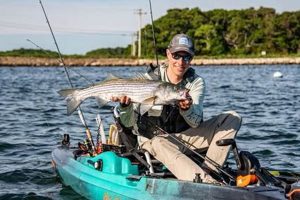
This activity involves pursuing crustaceans from a small, human-powered watercraft. Typically, it entails using traps, nets, or lines deployed from the vessel in calm, shallow waters. A successful outing might yield a variety of edible species, depending on the location and regulations.
This method offers a sustainable, low-impact approach to harvesting seafood. It provides an intimate connection with nature and allows access to areas often unreachable by larger vessels, potentially resulting in higher catch rates. Historically, small boats have been used for fishing in various cultures, demonstrating the enduring practicality of this approach. The relatively low cost of entry compared to motorized boating makes it an accessible recreational activity.
Further exploration will cover essential equipment, effective techniques, relevant regulations, and preferred locations for a rewarding experience.
Tips for Successful Outings
Careful planning and execution are crucial for a productive and enjoyable experience. The following tips offer guidance for maximizing success and ensuring safety.
Tip 1: Check Regulations. Local regulations dictate catch limits, permitted gear, and licensing requirements. Consulting official resources before embarking ensures compliance and helps preserve resources.
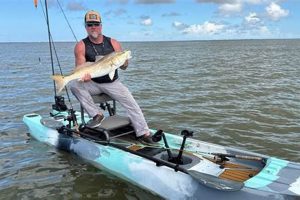
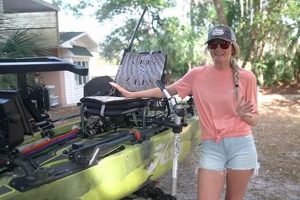
Tip 2: Choose Stable Watercraft. A wider, sit-on-top kayak provides greater stability, especially when handling traps or nets. This is particularly important in areas with currents or boat traffic.
Tip 3: Utilize Appropriate Gear. Select traps, nets, or lines designed for the target species and water conditions. Durable, corrosion-resistant materials are essential for saltwater environments.
Tip 4: Prioritize Safety. A personal flotation device and appropriate safety equipment are essential. Informing someone of the planned location and return time enhances safety protocols.
Tip 5: Research Optimal Locations. Shallow, sheltered areas with eelgrass or other vegetation are often productive. Local knowledge from bait shops or experienced anglers can prove invaluable.
Tip 6: Employ Effective Baiting Strategies. Fresh, oily fish or chicken parts can attract crustaceans. Properly securing bait within traps or on lines maximizes effectiveness.
Tip 7: Practice Proper Handling Techniques. Careful handling minimizes stress on captured animals and reduces the risk of injury to the handler. Quick, efficient sorting ensures compliance with regulations.
Adhering to these guidelines promotes a safe, ethical, and productive outing, enhancing enjoyment and ensuring the sustainability of this rewarding activity.
These insights offer a comprehensive foundation for embarking on this unique pursuit. The following section concludes with additional resources and further exploration opportunities.
1. Stable Kayak

Stability is paramount in kayak crab fishing due to the inherent challenges posed by the activity. Retrieving crab traps, often heavy and cumbersome, requires a stable platform to prevent capsizing. The act of leaning over the side to deploy or retrieve traps shifts the center of gravity, increasing the risk of tipping. A stable kayak mitigates this risk, allowing for safe and efficient trap management. For example, a wider, sit-on-top kayak offers greater stability compared to a narrower, sit-inside model, particularly in choppy water or when handling multiple traps simultaneously. This inherent stability translates directly to increased safety and efficiency during the crabbing process.
Furthermore, a stable kayak enhances the overall fishing experience. Reduced wobble allows for smoother, more controlled movements, facilitating accurate trap placement and retrieval. This is particularly important in areas with strong currents or tidal flows. Moreover, a stable platform allows for more comfortable and prolonged fishing sessions, reducing fatigue and maximizing enjoyment. Consider the scenario of a heavily loaded kayak in shallow water. A stable hull allows for navigation through shallows without grounding or tipping, enabling access to prime crabbing locations often inaccessible to larger vessels. This enhanced maneuverability contributes significantly to the success of the crabbing endeavor.
In conclusion, kayak stability plays a crucial role in successful crab fishing. It directly impacts safety, efficiency, and overall enjoyment. Choosing a kayak designed for stability, such as a wider sit-on-top model, is essential for mitigating the risks associated with trap retrieval and maneuvering in varying water conditions. This consideration enhances not only the productivity of the outing but also the overall safety and enjoyment of the experience.
2. Appropriate Traps

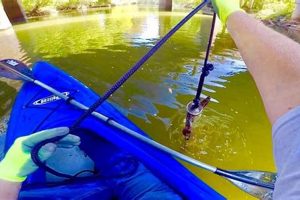
Trap selection significantly influences effectiveness and legality in kayak crab fishing. Utilizing appropriate traps aligns with conservation efforts and maximizes catch potential within legal limits. Different trap designs, sizes, and entrance configurations cater to specific target species and local regulations. For instance, collapsible traps are favored by kayak anglers due to their space-saving design, crucial in the limited confines of a kayak. Ring nets, another option, require active participation, allowing for selective capture and immediate release of undersized or unintended catches. Choosing traps constructed from durable, corrosion-resistant materials, like wire mesh or heavy-duty plastic, ensures longevity and withstands the harsh saltwater environment. Ignoring size and design regulations may lead to legal penalties and negatively impact crustacean populations.
The importance of trap appropriateness extends beyond legality to practical effectiveness. Trap size directly correlates with the size of the target species. Smaller traps are suitable for smaller crabs, while larger traps target larger species. Entrance size and configuration also play a crucial role. Funnel-shaped entrances facilitate entry while hindering escape, maximizing catch rates. Furthermore, baiting strategies vary with trap design. Some traps incorporate bait holders, while others require securing bait directly to the trap structure. Understanding these nuances allows anglers to optimize their approach, increasing the likelihood of a successful harvest. For example, using a large trap with small entrances in an area populated by smaller crabs may result in reduced catches, as the crabs struggle to enter. Conversely, using a small trap in an area with larger crabs may lead to escapes or damage to the trap.
In summary, selecting appropriate traps is crucial for ethical and productive kayak crab fishing. Choosing traps that align with regulations and target species, while considering practical aspects like size, entrance configuration, and material durability, contributes to a successful outing. Understanding the interplay of these factors ensures compliance, maximizes catch potential, and minimizes environmental impact. This informed approach underscores the importance of responsible fishing practices and ensures the sustainability of this rewarding activity.
3. Legal Requirements

Adherence to legal requirements is paramount in kayak crab fishing, ensuring the sustainability of crab populations and the preservation of the ecosystem. Regulations vary significantly by jurisdiction, often encompassing licensing, catch limits, size restrictions, permitted gear, and designated fishing areas. For example, some regions may mandate specific trap designs or limit the number of traps deployed per person. Size restrictions ensure that juvenile crabs reach maturity and contribute to the breeding population. Designated fishing areas may protect sensitive habitats or ensure fair access to resources. Ignoring these stipulations can result in fines, confiscation of equipment, or even suspension of fishing privileges. Consequences extend beyond individual penalties, potentially impacting crab populations and disrupting the delicate balance of the marine environment.
Understanding and complying with these regulations contributes directly to responsible resource management. License fees often support conservation efforts, such as habitat restoration and research programs. By adhering to catch limits and size restrictions, anglers play a crucial role in preventing overfishing and ensuring the long-term viability of crab populations. For instance, exceeding catch limits can deplete local crab stocks, impacting not only the ecosystem but also the livelihoods of those who rely on crabbing for sustenance or income. Respecting designated fishing areas protects vulnerable habitats, such as seagrass beds and spawning grounds, essential for the lifecycle of various marine species. This conscientious approach fosters a sustainable balance between recreational fishing and environmental preservation.
In conclusion, legal requirements in kayak crab fishing serve a crucial function in balancing recreational activities with conservation efforts. Understanding and adhering to these regulations ensures the long-term health of crab populations and the marine ecosystem. Familiarization with local regulations, including licensing, catch limits, size restrictions, permitted gear, and designated fishing areas, is an essential responsibility of every angler. This proactive approach contributes to the sustainability of this rewarding pastime and safeguards the natural resources for future generations.
4. Safe Handling

Safe handling practices in kayak crab fishing are essential for preventing injuries to both the angler and the crustaceans. Crabs possess powerful claws capable of inflicting painful pinches. Incorrect handling can lead to lacerations, punctures, and even crushed fingers. Furthermore, improper handling can stress or injure the crabs, impacting their survival upon release. Effective handling techniques minimize these risks. Using specialized tools, like crab tongs or gripping mitts, provides a safe barrier between hands and claws. Grasping the crab firmly from behind the rear legs, avoiding the claws altogether, offers another safe approach. Minimizing handling time reduces stress on the crab and expedites the sorting process, ensuring compliance with regulations regarding size limits and catch quotas.
The confined space of a kayak further emphasizes the importance of safe handling. Sudden movements or unexpected shifts in weight can compromise stability, especially when dealing with a feisty crab. A secure grip on the crab, combined with a stable kayak position, prevents accidental drops or escapes, which could disrupt the fishing process or even lead to capsizing. Moreover, safe handling contributes to the ethical treatment of captured animals. Minimizing stress and avoiding unnecessary injury aligns with responsible fishing practices. For instance, quickly and efficiently sorting crabs, releasing undersized or unwanted individuals promptly, minimizes their time out of the water, increasing their chances of survival. This conscientious approach reflects a respect for the resource and contributes to the long-term sustainability of crab populations.
In summary, safe handling in kayak crab fishing is paramount for both angler safety and crustacean welfare. Employing appropriate techniques and tools minimizes the risk of injury while promoting ethical treatment. This mindful approach enhances the overall fishing experience and contributes to the conservation of this valuable resource. Integrating these practices ensures a rewarding and sustainable pursuit of this unique fishing style.
5. Tidal Awareness
Tidal awareness plays a crucial role in successful kayak crab fishing. Tides, the periodic rise and fall of sea levels caused by the gravitational forces of the moon and sun, significantly influence crab behavior and accessibility. Crabs are more active during higher tides, venturing into shallower waters to forage. Understanding tidal cycles allows anglers to predict peak activity periods and optimize trap placement for maximum effectiveness. For example, setting traps during an incoming tide, just before high tide, allows crabs to readily access baited traps as they move into shallower feeding grounds. Conversely, retrieving traps during an outgoing tide simplifies the process as receding waters concentrate crabs in deeper channels, making them easier to collect. Ignoring tidal patterns might result in wasted effort, with traps set in unproductive areas or difficult retrieval due to fluctuating water depths.
Furthermore, tidal currents, the horizontal movement of water associated with changing tides, impact kayak navigation and trap placement. Strong currents can make paddling challenging, especially for less experienced kayakers. Deploying traps strategically in relation to current flow maximizes their effectiveness. Positioning traps perpendicular to the current allows the current to carry scent and attract crabs from a wider area. Additionally, tidal awareness contributes to safety. Strong currents or rapidly changing tides can create hazardous conditions, particularly in shallow water or near inlets. Understanding tidal predictions allows anglers to plan outings during calmer periods, avoiding potentially dangerous situations. For instance, attempting to paddle against a strong outgoing tide in a narrow channel could lead to exhaustion or difficulty returning to shore.
In conclusion, tidal awareness is an essential element of successful and safe kayak crab fishing. Understanding tidal cycles and currents allows anglers to predict crab activity, optimize trap placement, and navigate safely. This knowledge enhances efficiency, maximizes catch potential, and minimizes risks associated with changing water levels and currents. Integrating tidal awareness into planning and execution elevates the experience from a simple outing to a strategic pursuit, reflecting a deeper understanding of the interplay between nature and this rewarding recreational activity.
6. Bait Selection
Bait selection significantly influences success in kayak crab fishing. Crabs exhibit preferences for specific bait types based on availability and seasonal factors. Effective bait choices maximize catch rates, while unsuitable options can result in wasted effort. Oily fish, such as menhaden or bunker, often prove highly effective due to their strong scent, which disperses readily in the water, attracting crabs from a wider area. Chicken parts, another popular choice, offer a cost-effective alternative, although their scent may not be as potent. Freshness is paramount, as crabs typically favor fresh bait over decaying matter. For instance, using fresh menhaden versus week-old chicken parts in identical traps deployed in the same location may yield significantly different results, highlighting the impact of bait quality on catch rates.
The type of bait employed can also influence the species of crab attracted. Certain crab species exhibit dietary preferences for specific prey items. Using a variety of baits allows anglers to target specific species or explore the diversity of the local crab population. Furthermore, bait presentation impacts effectiveness. Securing bait within the trap prevents crabs from consuming it without entering the trap itself. Using bait bags or tying bait securely to the trap structure maximizes its attractiveness while minimizing waste. For example, placing loose bait within a trap allows crabs to consume the bait without triggering the trap mechanism, reducing catch rates. Conversely, securely attaching bait within a bait bag ensures that crabs must enter and interact with the trap to access the bait, increasing the likelihood of capture.
In conclusion, bait selection is a crucial factor in successful kayak crab fishing. Careful consideration of bait type, freshness, and presentation maximizes catch potential and contributes to a more rewarding experience. Understanding the interplay between bait choice and crab behavior enables anglers to make informed decisions, increasing efficiency and optimizing their approach. This strategic approach highlights the importance of bait selection as a key component of successful kayak crab fishing, influencing not only catch rates but also the overall effectiveness and enjoyment of the activity.
7. Location Scouting
Location scouting represents a critical preparatory stage in kayak crab fishing, directly influencing catch success. Suitable locations maximize catch potential, while poorly chosen sites often yield disappointing results. Effective scouting involves identifying areas that align with crab habitat preferences. Crabs favor sheltered environments with submerged structures like vegetation, rocks, or pilings. These structures offer protection from predators and provide ample foraging opportunities. Shallow, brackish waters, particularly estuaries and bays, often harbor abundant crab populations. Water clarity also plays a role, as murky water can hinder crab visibility and foraging activity. Analyzing nautical charts, consulting local fishing reports, or observing tidal flows can reveal promising locations. For instance, a shallow bay with abundant eelgrass and moderate tidal flow presents an ideal crabbing habitat compared to a deep, open channel with strong currents and limited vegetation.
Practical scouting methods further enhance location selection. Physical observation offers invaluable insight. Examining shorelines for signs of crab activity, such as burrows or molted shells, provides direct evidence of their presence. Deploying test traps in various locations allows for assessment of crab abundance and species composition. Moreover, local knowledge from experienced crabbers or bait shops can provide valuable insights into productive areas and seasonal variations. Integrating these methods allows for informed decisions, maximizing the probability of success. Consider the scenario of two prospective locations: a sheltered cove with observed crab activity and a seemingly similar cove lacking such signs. Choosing the former, based on direct observation, significantly increases the likelihood of a productive outing.
In conclusion, location scouting is a crucial element of successful kayak crab fishing. Informed site selection, based on habitat analysis, practical scouting methods, and local knowledge, significantly enhances catch potential. Understanding the connection between location and crab behavior allows anglers to make strategic decisions, maximizing efficiency and minimizing wasted effort. This preparatory step, while often overlooked, represents a significant investment in the overall success and enjoyment of the crabbing experience.
Frequently Asked Questions
This section addresses common inquiries regarding kayak crab fishing, providing concise and informative responses.
Question 1: What type of kayak is best suited for crab fishing?
Wider, sit-on-top kayaks offer enhanced stability, crucial for handling traps and navigating shallow waters. Their open design allows for easy access to gear and facilitates quick adjustments during the crabbing process.
Question 2: What are the essential pieces of equipment for kayak crab fishing?
Essential equipment includes a stable kayak, appropriate traps or nets, bait, measuring tools, a personal flotation device, and a signaling device. Local regulations may mandate additional safety equipment.
Question 3: How does one locate productive crabbing areas from a kayak?
Productive areas often exhibit specific characteristics, including shallow, brackish water, submerged vegetation, and moderate tidal flow. Consulting nautical charts, local fishing reports, and observing signs of crab activity, like burrows or molted shells, can aid in identifying promising locations.
Question 4: What are effective baiting strategies for crab traps?
Effective baits include oily fish like menhaden or bunker, and chicken parts. Freshness is crucial. Securing bait within the trap or utilizing bait bags maximizes effectiveness and minimizes waste.
Question 5: What safety precautions should one take while kayak crab fishing?
Wearing a personal flotation device is paramount. Informing someone of the planned location and return time is crucial. Carrying a signaling device and checking weather conditions before embarking enhances safety protocols.
Question 6: How does tidal flow influence crabbing success from a kayak?
Tidal flow impacts crab activity and accessibility. Incoming tides often bring crabs into shallower feeding areas, while outgoing tides concentrate them in deeper channels. Understanding tidal cycles optimizes trap placement and retrieval efficiency.
This FAQ section provides a concise overview of essential considerations for kayak crab fishing. Adhering to safety guidelines and understanding relevant regulations contributes to a rewarding and sustainable experience.
The following section offers further resources and concluding remarks.
Conclusion
This exploration has provided a comprehensive overview of the multifaceted nature of kayak crab fishing. Key aspects, including equipment selection, legal adherence, safe handling practices, tidal awareness, bait strategies, and location scouting, contribute significantly to a successful and rewarding experience. Emphasis on stability, appropriate gear, regulatory compliance, and ethical handling underscores the importance of a responsible approach to this recreational activity. The interplay between these elements dictates not only catch success but also the long-term sustainability of crab populations and the preservation of the marine environment.
The integration of these principles fosters a deeper appreciation for the delicate balance between human interaction and the natural world. Continued learning and adaptation to evolving environmental conditions ensure the enduring enjoyment and ecological responsibility of kayak crab fishing for generations to come. This pursuit offers not merely a recreational pastime but an opportunity to connect with nature, fostering respect for its resources and promoting sustainable practices.