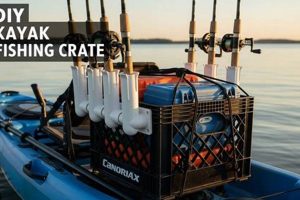
Customizable storage solutions for kayaks designed for angling offer a range of configurations for tackle, rods, and other fishing gear. These systems typically involve crates, often milk crates or purpose-built alternatives, secured to the kayak for readily accessible and organized equipment. Examples include mounting crates behind the seat for easy reach, or forward for balance and additional storage.
Effective organization of equipment is paramount for successful angling from a kayak. Dedicated storage systems enhance safety by minimizing clutter and maximizing space, allowing anglers to focus on fishing. Historically, anglers improvised with readily available containers; however, the growing popularity of kayak fishing has driven innovation in specialized storage solutions, including customizable crate systems designed for specific needs and kayak models.
This article will explore various crate system designs, materials, mounting methods, and customization options, offering readers a comprehensive guide to optimizing their kayak fishing experience through efficient storage.
Tips for Optimizing Kayak Crate Systems
Careful planning and execution are crucial for maximizing the utility of kayak crate systems. The following tips offer guidance for creating an efficient and effective setup.
Tip 1: Prioritize Stability: Weight distribution significantly impacts kayak stability. Distribute weight evenly, avoiding excessive weight at either end. Consider the combined weight of crates and their contents.
Tip 2: Secure Attachment: Ensure crates are securely fastened to the kayak using robust straps, bungee cords, or specialized mounting hardware. Loose crates can shift during paddling or in rough waters, compromising stability.
Tip 3: Accessibility is Key: Position frequently used items within easy reach. Less frequently accessed gear can be stored in less accessible locations.
Tip 4: Customize for Specific Needs: Rod holders, tackle organizers, and other accessories can be integrated into crate systems for enhanced functionality. Select components based on individual fishing styles and target species.
Tip 5: Consider Crate Material: Plastic crates offer durability and affordability, while aluminum or other metal crates provide greater strength for heavier loads but at increased cost.
Tip 6: Drainage Matters: Opt for crates with drainage holes to prevent water accumulation and minimize weight gain from retained water. Alternatively, drill drainage holes if necessary.
Tip 7: Regular Inspection and Maintenance: Periodically inspect straps, buckles, and mounting hardware for wear and tear. Replace damaged components promptly to ensure continued safety and functionality.
By following these tips, anglers can create efficient and safe kayak crate systems tailored to their specific needs and enhance their overall fishing experience.
This information provides a foundation for designing effective kayak crate systems. Subsequent sections will detail specific crate options and mounting strategies.
1. Customization

Customization is paramount in optimizing fishing kayak crate systems. Anglers’ needs vary significantly based on fishing style, target species, and kayak model. A customizable system allows for the integration of specific accessories and configurations tailored to individual requirements. This may involve incorporating rod holders, tackle trays, bait wells, or specialized mounts for fish finders or cameras. For instance, a bass angler might prioritize readily accessible lure storage, while a fly fisherman might require a system designed to accommodate fly boxes and tools. Similarly, kayak dimensions and layouts influence crate placement and configuration options.
The ability to adapt a crate system offers significant practical advantages. Customizing storage solutions ensures essential gear is readily available, minimizing time spent searching for equipment and maximizing time spent fishing. Moreover, it promotes safety by reducing clutter and improving weight distribution, enhancing kayak stability. For example, integrating rod holders directly onto a crate system keeps rods secure and organized, preventing entanglement and facilitating quick access. Similarly, customizing crate placement optimizes weight distribution, preventing instability.
Ultimately, the capacity to customize a fishing kayak crate system is essential for maximizing efficiency, safety, and enjoyment on the water. It allows anglers to create personalized setups that cater to their unique needs and enhance their fishing experience. Successfully integrating customized systems requires careful consideration of factors such as kayak dimensions, fishing style, and target species, thereby maximizing functionality and promoting a safe and productive fishing environment.
2. Secure Mounting

Secure mounting is paramount for fishing kayak crate systems, directly impacting safety and functionality. A stable crate system ensures equipment remains in place during paddling, maneuvering, and encountering rough water. This stability prevents gear loss, protects the kayak from damage, and, crucially, maintains the angler’s balance and safety.
- Attachment Points & Methods
Multiple attachment points distribute stress and provide redundancy. Straps, bungee cords, and specialized mounting hardware offer various attachment methods, each with benefits and drawbacks. Straps offer adjustability, while bungee cords provide flexibility. Specialized hardware, such as track systems or anchor points, allows for precise crate placement and quick release mechanisms. Selecting the appropriate method depends on the crate type, kayak design, and intended use.
- Weight Capacity & Distribution
Consider the combined weight of the crate and its contents. Exceeding the kayak’s weight capacity or uneven weight distribution compromises stability and maneuverability. Secure mounting systems must withstand the forces generated by the loaded crate during movement. Evenly distributed weight enhances stability and prevents tipping. For instance, a heavily loaded crate positioned too far aft can cause the kayak to sit low in the water, increasing the risk of swamping.
- Material Durability & Resistance
Mounting hardware and attachment points must withstand exposure to saltwater, UV radiation, and temperature fluctuations. Durable materials such as marine-grade stainless steel, high-strength nylon, or UV-resistant plastics ensure longevity and reliable performance. Rust-resistant hardware is crucial for saltwater environments. Regular inspection and maintenance of mounting hardware are essential for identifying wear and tear and preventing failures.
- Integration with Kayak Design
Consider the kayak’s design features when selecting mounting locations and methods. Some kayaks offer integrated track systems or designated mounting points, facilitating secure and streamlined crate installation. Avoid drilling holes or modifying the kayak’s structure unless specifically recommended by the manufacturer, as this could compromise its integrity. Utilizing existing features or manufacturer-approved modifications ensures compatibility and maintains the kayak’s structural integrity.
Effective crate mounting directly contributes to a safe and productive kayak fishing experience. By carefully considering these facetsattachment points, weight capacity, material durability, and integration with kayak designanglers can create secure and functional crate systems tailored to their specific needs, enhancing both safety and fishing effectiveness.
3. Accessibility

Accessibility is a critical aspect of effective fishing kayak crate systems. Efficient access to essential gear directly impacts angling success and safety. A well-designed system prioritizes frequently used items, placing them within easy reach while maintaining kayak stability. For example, lures, pliers, and line cutters should be readily accessible, minimizing time spent searching for equipment and maximizing fishing time. Conversely, less frequently used items, such as spare tackle or safety gear, can be stored in less accessible locations. Prioritizing accessibility streamlines the fishing process, allowing anglers to focus on the task at hand.
Several factors influence accessibility in crate systems. Crate placement, size, and configuration play significant roles. Positioning crates within arm’s reach eliminates the need for excessive stretching or bending, reducing the risk of capsizing. Smaller crates dedicated to frequently used items enhance organization and accessibility compared to larger, multi-purpose containers. Furthermore, integrating specialized organizers or compartments within crates improves access to specific items. For instance, a dedicated compartment for pliers ensures they are readily available when needed, preventing fumbling and potential line tangles. Careful consideration of these factors optimizes accessibility and contributes to a more efficient and enjoyable fishing experience.
Optimizing accessibility in fishing kayak crate systems significantly enhances angling effectiveness and safety. Strategic placement, thoughtful organization, and specialized compartments minimize wasted time and effort, allowing anglers to focus on fishing. Moreover, improved accessibility reduces the risk of accidents caused by reaching or stretching for equipment. Understanding and implementing these principles are essential for creating a functional and safe kayak fishing setup.
4. Weight Distribution

Weight distribution is a critical factor influencing the performance and safety of fishing kayaks equipped with crate systems. Proper weight distribution ensures stability, maneuverability, and efficient paddling. Understanding the principles of weight distribution and their application to crate systems is essential for a successful and safe kayak fishing experience.
- Impact on Stability
Uneven weight distribution compromises kayak stability, increasing the risk of capsizing. Concentrated weight at either end reduces the kayak’s ability to self-right and maintain balance. Distributing weight evenly across the kayak’s length and width maximizes stability. For example, positioning a heavy crate too far forward or aft can cause the kayak to tip or become difficult to control. Balancing the weight of crates with gear stored in other locations promotes optimal stability.
- Influence on Maneuverability
Weight distribution significantly affects kayak maneuverability. Excessive weight at the stern hinders turning and responsiveness, while excessive weight at the bow increases drag and reduces tracking. Balanced weight distribution allows for efficient turning and predictable tracking. Consider the placement of crates in relation to the kayak’s center of gravity and the angler’s position. Positioning heavier items lower in the kayak improves stability and maneuverability.
- Effects on Paddling Efficiency
Proper weight distribution optimizes paddling efficiency. A level kayak with evenly distributed weight reduces drag and requires less effort to propel. Uneven weight distribution creates drag and requires increased paddling effort, leading to fatigue. Balancing the weight of crates and other gear allows for efficient paddling and conserves energy. Consider the combined weight of the angler, crates, and other equipment to achieve optimal weight distribution and efficient paddling.
- Considerations for Crate Systems
When planning crate systems, carefully consider the weight and placement of each crate. Distribute the weight of multiple crates evenly across the kayak. Position heavier items lower in the crate and closer to the kayak’s center. Avoid overloading individual crates or concentrating excessive weight in one area. Integrating smaller, specialized crates can aid in weight distribution and improve overall balance. Meticulous planning and execution are key to achieving optimal weight distribution and maximizing kayak performance.
Effective weight distribution is fundamental to a safe and successful kayak fishing experience. Understanding the impact of weight distribution on stability, maneuverability, and paddling efficiency allows anglers to optimize crate systems and enhance their overall performance on the water. By carefully considering these factors, anglers can create balanced and efficient kayak setups that promote safety and maximize enjoyment on the water.
5. Durable Materials

Material durability is a critical factor in the efficacy of fishing kayak crate systems. Exposure to harsh environmental conditionssaltwater, UV radiation, and temperature fluctuationsnecessitates the use of robust materials capable of withstanding these elements without degradation. Crate material selection directly impacts system longevity and the security of stored equipment. High-density polyethylene (HDPE) offers excellent impact resistance and UV stability, making it a popular choice for crate construction. Similarly, marine-grade aluminum provides strength and corrosion resistance, albeit at a higher cost. Selecting appropriate materials ensures the crate system remains functional and reliable over extended periods, protecting stored gear from damage or loss.
Beyond the crate itself, hardware durability is equally crucial. Stainless steel fasteners and marine-grade hardware resist corrosion and maintain structural integrity in saltwater environments. UV-resistant straps and bungee cords secure crates to the kayak, ensuring they remain firmly in place during transport and use. Using substandard materials in these components compromises system integrity, potentially leading to crate failure, gear loss, or even kayak damage. For example, non-marine-grade hardware can quickly corrode in saltwater, weakening attachments and potentially leading to crate detachment. Investing in high-quality, durable materials for both crates and hardware ensures long-term reliability and protects against equipment failure in demanding conditions.
Understanding the importance of durable materials contributes significantly to the successful implementation of fishing kayak crate systems. Material selection directly influences system longevity, resistance to environmental factors, and the security of stored equipment. Choosing robust materials and hardware ensures the crate system withstands the rigors of kayak fishing, providing reliable performance and safeguarding valuable gear. This careful consideration ultimately enhances safety and contributes to a more productive and enjoyable fishing experience.
Frequently Asked Questions
This section addresses common inquiries regarding the implementation and utilization of fishing kayak crate systems.
Question 1: What are the most common materials used for fishing kayak crates?
Plastic crates, often repurposed milk crates, offer a cost-effective and readily available option. Purpose-built fishing crates constructed from high-density polyethylene (HDPE) provide enhanced durability and UV resistance. Aluminum crates offer superior strength but at a higher cost.
Question 2: How are crates typically secured to a fishing kayak?
Common methods include straps, bungee cords, and specialized mounting hardware. Straps offer adjustability, bungee cords provide flexibility, and specialized hardware allows for precise crate placement. The optimal method depends on the crate type, kayak design, and intended usage.
Question 3: How does crate placement impact kayak stability?
Weight distribution significantly influences kayak stability. Placing heavy crates too far forward or aft can compromise balance. Distributing weight evenly and considering the combined weight of the crate and contents is crucial for maintaining stability.
Question 4: What are the benefits of a customized crate system?
Customization allows anglers to tailor systems to their specific fishing styles and needs. This may involve integrating rod holders, tackle trays, or other specialized equipment directly onto the crate for improved organization and efficiency.
Question 5: How can water accumulation in crates be prevented?
Selecting crates with drainage holes or drilling holes in existing crates allows water to drain, preventing weight gain and potential gear damage. Regularly emptying crates after use also minimizes water retention.
Question 6: How does one determine the appropriate crate size for a kayak?
Crate size should be determined based on available kayak space, intended storage needs, and weight capacity considerations. Larger crates offer more storage but may compromise stability if overloaded or improperly positioned.
Careful consideration of these frequently asked questions facilitates informed decision-making regarding the selection, installation, and utilization of fishing kayak crate systems. Addressing these common concerns promotes safety and enhances the overall fishing experience.
The next section will explore advanced techniques for customizing kayak crate systems.
Fishing Kayak Crate Ideas
Exploration of fishing kayak crate systems reveals their significance in optimizing angling experiences. Careful consideration of material durability, secure mounting techniques, strategic weight distribution, and accessibility enhances both safety and fishing efficacy. Customization options allow tailoring systems to individual needs and kayak configurations. From initial planning through implementation and maintenance, informed decisions regarding crate systems contribute significantly to successful kayak fishing.
Strategic implementation of thoughtfully designed crate systems elevates kayak fishing. Investing time and effort in optimizing these systems yields significant returns in terms of efficiency, safety, and overall enjoyment on the water. The evolution of kayak fishing necessitates continuous adaptation and refinement of equipment and techniques, with crate systems playing a crucial role in this ongoing advancement.