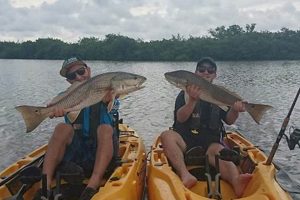
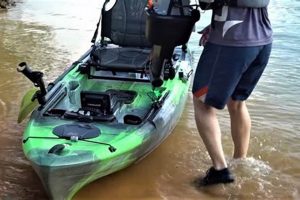
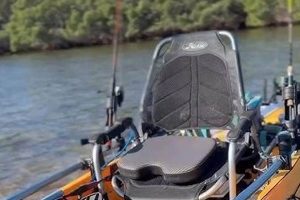
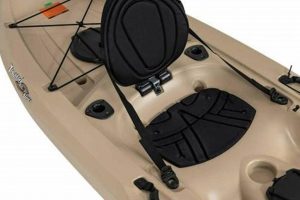
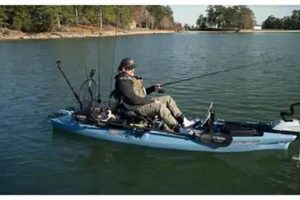
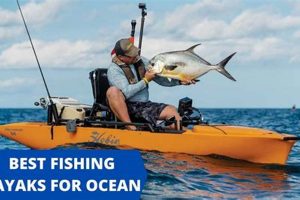
This specific model of recreational watercraft is designed for angling activities. It is typically constructed from high-density polyethylene (HDPE) for durability and affordability. Common features often include built-in rod holders, storage compartments for tackle and gear, and a stable hull design suitable for calmer waters like lakes and slow-moving rivers. This type of kayak frequently serves as an entry point for individuals new to kayak fishing due to its relatively low cost and ease of use.
Affordable, stable platforms for fishing enhance accessibility to this popular pastime. They offer a maneuverable and quiet approach to angling, allowing exploration of shallow waters and hard-to-reach fishing spots often inaccessible to larger boats. The simplicity and ease of transport also contribute to their popularity, eliminating the need for trailers and large launch ramps. Furthermore, the stability offered by these wider, flatter-hulled designs can be particularly appealing to beginners.
The following sections will delve into specific aspects of choosing, using, and maintaining this type of kayak. Topics will include selecting the right paddle, essential safety gear, basic fishing techniques from a kayak, and proper storage and maintenance practices to ensure longevity.
Tips for Kayak Fishing
Proper preparation and technique enhance safety and enjoyment while on the water. The following tips offer guidance for a successful fishing excursion.
Tip 1: Check Local Regulations. Research permits, licensing requirements, and any area-specific fishing regulations before embarking on a fishing trip.
Tip 2: Prioritize Safety. Always wear a personal flotation device (PFD). Carry a whistle for emergencies and inform someone of your fishing plans, including location and expected return time.
Tip 3: Plan for Proper Gear. Select appropriate fishing rods, reels, and tackle based on targeted species. Organize gear within easy reach for efficient retrieval.
Tip 4: Practice Paddling Technique. Efficient paddling conserves energy and allows for greater maneuverability. Consider practicing basic paddle strokes before venturing out.
Tip 5: Understand Water Conditions. Check weather forecasts and be aware of potential hazards such as currents, wind, and changing tides. Avoid fishing in conditions beyond one’s skill level.
Tip 6: Respect the Environment. Adhere to “catch and release” practices when appropriate. Properly dispose of fishing line and other waste to protect the waterway.
Tip 7: Stay Hydrated and Sun-Protected. Pack plenty of water and apply sunscreen, even on cloudy days, to prevent dehydration and sunburn.
Following these guidelines can contribute to a safe and productive fishing experience. Preparation and awareness are key elements of enjoyable and responsible angling.
By incorporating these tips, anglers can maximize their time on the water and contribute to the preservation of aquatic environments.
1. Stability

Stability is a critical factor in kayak fishing, directly impacting safety, comfort, and angling success. For the Lifetime 100 fishing kayak, stability is a defining characteristic influencing its suitability for various fishing environments and angler experience levels. Understanding the factors contributing to stability enhances informed decision-making and safe operation.
- Hull Design
The Lifetime 100 typically features a flat-bottomed hull. This design provides a wider base of support, increasing primary stability resistance to initial tipping. This wider platform provides a stable feeling, particularly beneficial for beginners or when fishing in calmer waters. However, flatter hulls can be more susceptible to wind drift.
- Width and Length
The kayak’s width directly correlates with stability. Wider kayaks offer more initial stability. The Lifetime 100’s relatively shorter length contributes to maneuverability but can slightly reduce directional stability (tracking) in comparison to longer kayaks. The balance between width and length influences both stability and handling characteristics.
- Center of Gravity
A lower center of gravity enhances stability. The seated position in a kayak naturally lowers the center of gravity. Distributing weight evenly within the kayak, especially heavier items like tackle boxes, further contributes to stability. Sudden movements or uneven weight distribution can negatively impact stability.
- Water Conditions
While the kayak’s design influences inherent stability, external factors like water conditions play a significant role. Calm lakes and slow-moving rivers provide a more stable fishing platform. Rougher waters, strong currents, or wind can significantly challenge stability, requiring greater experience and careful maneuvering.
Consideration of these facets reveals how stability contributes to the Lifetime 100’s suitability for recreational fishing. While the inherent stability offered by the hull design makes it beginner-friendly, awareness of factors like weight distribution and water conditions ensures safe and successful fishing excursions.
2. Durability (HDPE)

High-density polyethylene (HDPE) construction is a defining feature of the Lifetime 100 fishing kayak, directly influencing its longevity and resilience in various on-the-water conditions. Understanding the properties and implications of HDPE provides valuable insights into the kayak’s suitability for recreational fishing and its overall value.
- Impact Resistance
HDPE exhibits excellent impact resistance, protecting the kayak from damage caused by collisions with rocks, submerged logs, or accidental impacts during transport and storage. This inherent durability minimizes the risk of cracks or punctures, contributing to a longer lifespan. This resilience is particularly advantageous in shallow water environments or when encountering unforeseen obstacles.
- UV Resistance
Exposure to ultraviolet (UV) radiation from sunlight can degrade many plastics, leading to brittleness and weakening. HDPE, however, possesses inherent UV resistance. This characteristic protects the kayak from sun damage, preserving its structural integrity and color over extended periods, even with frequent outdoor use.
- Resistance to Chemicals and Corrosion
HDPE is resistant to a wide range of chemicals and environmental factors, including saltwater, most cleaning agents, and common fishing-related substances like bait and fish slime. This resistance minimizes the risk of corrosion or material degradation, maintaining the kayak’s structural integrity and aesthetic appearance over time.
- Lightweight and Recyclable Nature
While contributing to durability, HDPE remains relatively lightweight, facilitating transport and maneuverability. Furthermore, HDPE is recyclable. This eco-friendly aspect reduces environmental impact at the end of the product’s lifecycle, aligning with sustainable practices.
The utilization of HDPE in the construction of the Lifetime 100 fishing kayak directly contributes to its durability and longevity. These factors, combined with its affordability, position it as a practical choice for recreational anglers seeking a resilient and low-maintenance watercraft.
3. Compact Design
The compact design of the Lifetime 100 fishing kayak significantly influences its portability, maneuverability, and storage practicality. Shorter than many traditional kayaks, its length typically falls within a range conducive to easier transport and handling. This attribute reduces the challenges associated with loading, unloading, and maneuvering the kayak, especially for individuals with limited storage space or without access to specialized transport equipment like roof racks. The compact nature facilitates car-topping or storage in smaller spaces, broadening accessibility for individuals with limited storage options such as apartments or smaller vehicles. For example, its reduced length often eliminates the need for a trailer, simplifying transport logistics. This characteristic expands the potential user base to include those without the means or infrastructure to manage larger, more cumbersome watercraft.
The compact design’s influence extends beyond transport and storage. On the water, the shorter length enhances maneuverability, particularly in confined areas such as narrow creeks, shallow waters, or densely vegetated shorelines. The reduced length facilitates tighter turns and quicker directional changes, advantageous when navigating complex or obstacle-rich environments. This attribute also simplifies launching and landing, particularly in areas with limited access points. While the compact design prioritizes maneuverability and ease of transport, it can impact tracking performance. Shorter kayaks may require more frequent corrective strokes to maintain a straight course, especially in windy conditions or open water.
The compact dimensions of the Lifetime 100 fishing kayak represent a strategic design choice prioritizing accessibility and ease of use. This emphasis on portability and maneuverability broadens the kayak’s appeal to individuals seeking a simplified approach to on-the-water recreation, particularly those with limited storage or transport capabilities. While this design choice influences tracking performance, it enhances usability in various fishing environments, contributing to the overall versatility and practicality of the kayak. Balancing portability with performance considerations remains crucial when selecting a kayak, and the Lifetime 100’s compact design presents a compelling option for anglers prioritizing ease of transport and maneuverability in diverse aquatic settings.
4. Weight Capacity
Weight capacity is a critical specification for the Lifetime 100 fishing kayak, directly impacting safety and performance. This metric represents the maximum combined weight of the angler, gear, and any additional cargo the kayak can safely support. Exceeding this limit compromises stability, potentially leading to capsizing or structural damage. Understanding and adhering to the specified weight capacity is paramount for safe and effective operation. Manufacturers typically provide this information in the product specifications. For the Lifetime 100, the weight capacity generally falls within a range suitable for single-person use with moderate gear. This capacity accommodates most average-sized anglers and their essential fishing equipment. However, heavier individuals or those planning to carry substantial gear should carefully evaluate the specified limit to ensure safe operation.
Practical implications of weight capacity extend beyond mere flotation. Overloading reduces freeboardthe distance between the waterline and the top edge of the kayak’s hull. Reduced freeboard increases susceptibility to swamping, especially in choppy water or when encountering waves. Furthermore, exceeding the weight capacity can negatively impact maneuverability and tracking, making the kayak sluggish and difficult to control. Consider, for example, an angler exceeding the weight limit by carrying excessive gear. This overload would not only increase the risk of capsizing but also hinder paddling efficiency and responsiveness to changing water conditions. Conversely, operating well within the weight capacity enhances stability, maneuverability, and overall performance, contributing to a more enjoyable and safer fishing experience.
Understanding and respecting the weight capacity of the Lifetime 100 fishing kayak is fundamental for safe and effective operation. Careful consideration of this factor, along with prudent packing and weight distribution practices, ensures optimal performance and mitigates potential risks associated with overloading. Operating within the specified weight range contributes to enhanced stability, maneuverability, and overall safety, allowing anglers to focus on the enjoyment of their fishing experience. Neglecting this crucial specification can compromise safety and detract from the overall on-the-water experience.
5. Tracking
Tracking, the ability of a kayak to maintain a straight course with minimal corrective strokes, significantly influences paddling efficiency and overall performance. For the Lifetime 100 fishing kayak, tracking characteristics directly impact the angler’s experience, particularly during longer paddles or when navigating currents or wind. Understanding the factors influencing tracking allows for informed decision-making and optimized on-the-water performance. Hull design, length, and water conditions play crucial roles in determining a kayak’s tracking capabilities.
- Hull Design
The hull design of the Lifetime 100, often characterized by a flatter bottom for enhanced stability, typically prioritizes stability over tracking performance. Flatter hulls tend to be more susceptible to wind drift and require more frequent corrective strokes to maintain a straight line. This design choice reflects a prioritization of stability for fishing activities, recognizing that precise tracking may be less critical than a stable platform for casting and reeling. For example, in windy conditions, anglers might experience greater difficulty maintaining a desired course compared to kayaks with a more pronounced keel or V-shaped hull.
- Length
Shorter kayaks, like the Lifetime 100, generally exhibit less inherent tracking ability than longer kayaks. The shorter length reduces the kayak’s overall contact with the water, making it more susceptible to deviations from a straight path. This characteristic necessitates more frequent corrective strokes, potentially increasing paddling effort, especially over longer distances. Consider an angler paddling against a current; the shorter length might require greater effort to maintain the intended direction compared to a longer kayak.
- Water Conditions
Environmental factors such as wind, currents, and waves significantly impact tracking performance. While inherent design characteristics influence tracking tendencies, external forces can exacerbate or mitigate these effects. Strong winds or currents can easily deflect a shorter, flatter-hulled kayak like the Lifetime 100, necessitating more active paddling to counteract these forces. Calm water conditions, however, minimize the impact of these external factors, allowing for more efficient and predictable tracking. For instance, paddling in a sheltered cove on a calm day will result in significantly better tracking performance than paddling across a large, windswept lake.
- Modifications and Accessories
While the inherent design of the Lifetime 100 prioritizes stability over tracking, certain modifications or accessories can enhance tracking performance. Adding a rudder or skeg can improve directional stability, reducing the need for constant corrective strokes. These additions provide additional control and efficiency, especially in challenging conditions. However, they introduce added complexity and potential maintenance requirements.
Understanding the interplay between these factors provides a comprehensive perspective on the tracking characteristics of the Lifetime 100 fishing kayak. While its design prioritizes stability, awareness of its tracking tendencies and the influence of external factors allows anglers to adapt their paddling techniques and optimize their on-the-water experience. The potential benefits of modifications or accessories further expand options for enhancing tracking performance, allowing individuals to tailor the kayak to their specific needs and preferences, balancing stability with directional control for a more efficient and enjoyable fishing experience.
6. Storage Options

Storage capacity significantly influences the practicality and utility of a fishing kayak, impacting the angler’s ability to transport essential gear and personal items. The Lifetime 100 fishing kayak, while compact, incorporates various storage solutions designed to accommodate the needs of recreational anglers. Understanding these storage options allows for efficient organization and maximization of available space, contributing to a more productive and enjoyable fishing experience.
- Tankwell Storage
The rear tankwell, an open storage area located behind the seat, provides ample space for larger items such as tackle boxes, coolers, or dry bags. Bungee cords typically secure these items, preventing shifting or loss during transport. This open design facilitates easy access to frequently used gear. For example, anglers might store a tackle box and a small cooler in the tankwell, keeping essential gear readily available. However, items stored in the tankwell are exposed to the elements, requiring waterproof containers or dry bags for protection in wet conditions.
- Hatch Storage
Some models of the Lifetime 100 incorporate a front hatch, providing a sealed compartment for storing items requiring protection from water or the elements. This compartment is ideal for storing sensitive electronics, wallets, keys, or other valuables. The sealed hatch maintains a dry environment, safeguarding items from splashes, rain, or even brief submersion. For instance, anglers can safely store their phones, cameras, or fishing licenses in the hatch, ensuring their protection throughout the fishing trip.
- Small Storage Compartments
Smaller compartments, often located within reach of the seating area, provide convenient storage for frequently accessed items like lures, pliers, or sunscreen. These compartments may be molded into the kayak’s deck or incorporated into accessory mounts. Their strategic placement minimizes the need to reach into larger storage areas during active fishing, enhancing efficiency and reducing disruptions. An angler might keep frequently used lures and tools in these smaller compartments, ensuring quick access without needing to dig through a larger tackle box.
- Rod Holders
Integrated rod holders, typically flush-mounted or adjustable, offer dedicated storage solutions for fishing rods. These holders secure rods during transport and provide convenient access while fishing. They minimize the risk of rod entanglement or damage and allow anglers to keep multiple rods rigged and ready for action. For example, an angler might have two rods rigged with different lures, readily available in the rod holders for quick changes based on fishing conditions.
The combination of these storage options enhances the overall practicality and versatility of the Lifetime 100 fishing kayak. Efficient organization of gear within these designated storage areas contributes to a more streamlined and enjoyable fishing experience. Understanding the specific capabilities and limitations of each storage area allows anglers to maximize available space and ensure the safety and accessibility of essential gear and personal belongings. This thoughtful approach to storage solutions contributes to the kayak’s overall functionality and reinforces its suitability for recreational angling.
7. Affordability
Affordability positions the Lifetime 100 fishing kayak as an accessible entry point into the sport of kayak angling. Its price point often falls significantly below that of higher-end fishing kayaks constructed from more expensive materials like fiberglass or composites. This lower cost of entry removes a significant financial barrier, making kayak fishing accessible to a broader range of individuals. The affordability factor allows newcomers to experience the sport without a substantial initial investment, facilitating exploration and development of skills before potentially upgrading to more specialized equipment. For example, a family looking to try kayak fishing could purchase two Lifetime 100 kayaks for roughly the same price as one high-end model, enabling participation for multiple family members simultaneously. This affordability also benefits experienced anglers seeking a secondary kayak for specific conditions or as a backup option.
The impact of affordability extends beyond initial purchase considerations. The durable HDPE construction contributes to lower long-term costs by minimizing repair and replacement needs. Its resilience to impact and environmental factors reduces the likelihood of costly damage, contributing to overall value. Furthermore, the simplified design often translates to lower maintenance requirements compared to kayaks with more complex features. For instance, the absence of sophisticated rudder systems or electronic components reduces potential repair or replacement expenses. This combination of lower initial cost and reduced maintenance contributes to the Lifetime 100’s overall affordability over its lifespan.
While affordability is a key advantage, it is essential to consider potential trade-offs. Features found in higher-priced kayaks, such as advanced seating systems, integrated electronics, or premium paddling accessories, may be absent or less refined in the Lifetime 100. However, the core functionality required for recreational fishing remains present, providing a balanced approach between cost and essential features. Understanding this balance allows individuals to make informed purchasing decisions aligned with their budget and performance expectations. The affordability of the Lifetime 100 democratizes access to kayak fishing, making it a viable option for individuals seeking an economical entry point to the sport without compromising essential functionality.
Frequently Asked Questions
This section addresses common inquiries regarding the Lifetime 100 fishing kayak, providing concise and informative responses to facilitate informed decision-making and enhance user understanding.
Question 1: What is the maximum weight capacity of the Lifetime 100 fishing kayak?
Weight capacity varies slightly depending on the specific model but generally falls within the range of 275-300 pounds. Consulting the manufacturer’s specifications for the exact model is recommended.
Question 2: Is the Lifetime 100 fishing kayak suitable for ocean use?
While designed primarily for calm waters like lakes and slow-moving rivers, the kayak can handle sheltered coastal bays or estuaries under appropriate conditions. Use in open ocean or rough seas is not recommended due to its shorter length and susceptibility to wind and waves. Careful consideration of weather forecasts and water conditions is paramount.
Question 3: What materials are used in the construction of the Lifetime 100 fishing kayak?
The Lifetime 100 is typically constructed from high-density polyethylene (HDPE), a durable and UV-resistant plastic known for its impact resistance and longevity.
Question 4: Does the Lifetime 100 fishing kayak come with paddles?
Paddles are not always included. Verifying inclusion with the specific retailer or consulting product descriptions is recommended. Aftermarket paddles, sized appropriately for the user, are readily available.
Question 5: How does the tracking performance of the Lifetime 100 compare to longer kayaks?
Due to its shorter length, the Lifetime 100’s tracking performance is generally less efficient than that of longer touring or sea kayaks. More frequent corrective strokes may be required, especially in windy conditions. However, its maneuverability in tighter spaces benefits from the shorter length. A rudder or skeg can enhance tracking.
Question 6: What maintenance is required for a Lifetime 100 fishing kayak?
Routine maintenance includes rinsing with fresh water after each use, especially after exposure to saltwater, and periodic cleaning with mild soap and water. Storing the kayak out of direct sunlight when not in use prolongs its lifespan.
Understanding these key aspects contributes to realistic expectations and informed purchasing decisions. Prioritizing safety and adhering to manufacturer guidelines ensures enjoyable and responsible use.
The subsequent section offers insights into choosing essential accessories to enhance the fishing experience with the Lifetime 100 kayak.
Conclusion
This exploration of the Lifetime 100 fishing kayak has highlighted its key features, benefits, and considerations for potential users. Its affordability, stability, and compact design position it as an accessible entry point for recreational anglers. The durable HDPE construction contributes to longevity and resilience, while integrated storage options and specialized features cater to fishing-specific needs. Understanding weight capacity limitations, tracking characteristics, and appropriate usage environments ensures safe and effective operation. While trade-offs exist compared to higher-priced models, the Lifetime 100 offers a balanced approach, providing essential functionality at a cost-effective price point.
The Lifetime 100 fishing kayak empowers individuals to explore the rewarding pursuit of angling from a unique and accessible perspective. Its design and features facilitate connection with aquatic environments, fostering appreciation for natural resources. Responsible use and adherence to safety guidelines ensure both personal enjoyment and the preservation of these valuable ecosystems. This model represents a gateway to enriching experiences on the water, fostering a deeper understanding of the interconnectedness between recreation and environmental stewardship.