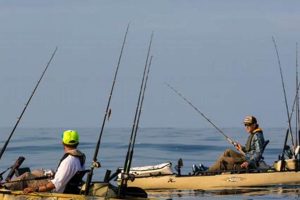
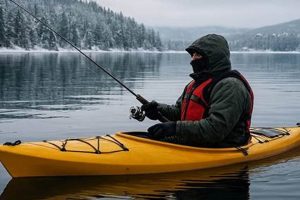
Human-powered kayak propulsion using leg-driven pedals offers a hands-free approach to angling. This method typically employs a pedal drive system integrated into the kayak, converting cyclical leg motion into rotational force, propelling the vessel forward or backward. This leaves the angler’s hands free for fishing activities like casting, retrieving, and landing fish.
Hands-free propulsion provides significant advantages for anglers. Maintaining lure or bait presentation while simultaneously maneuvering the kayak becomes easier, increasing fishing efficiency. The continuous and relatively quiet nature of pedal propulsion can also minimize disturbance to fish, potentially improving catch rates. Additionally, this method can be less physically taxing on the upper body compared to traditional paddling, allowing for longer fishing trips. While relatively recent compared to paddle-powered kayaks, pedal-driven systems are rapidly gaining popularity in the fishing community.
This article will delve into the key aspects of this fishing style, exploring various pedal drive systems, suitable kayak designs, recommended fishing techniques, and essential safety considerations.
Tips for Pedal Kayak Fishing
Optimizing the pedal kayak fishing experience requires attention to several key factors. The following tips offer guidance for improved efficiency, safety, and overall enjoyment.
Tip 1: Choose the Right Pedal Drive System: Consider factors like propulsion efficiency, maintenance requirements, and noise levels when selecting a pedal drive. Fin designs impact performance in various water conditions; weedless fins are beneficial in heavily vegetated areas.
Tip 2: Select a Stable Kayak Platform: Wider kayak hulls generally offer greater stability, crucial for standing and casting. Consider the kayak’s length and weight capacity in relation to anticipated fishing conditions and gear requirements.
Tip 3: Master Pedal Steering and Control: Practice maneuvering the kayak using the pedal drive system before venturing into challenging waters. Understand the turning radius and the effects of wind and current on kayak control.
Tip 4: Employ Appropriate Anchoring Techniques: Utilize a stake-out pole or anchor system suitable for the fishing environment. Consider anchor weight and line length to ensure secure positioning while minimizing disturbance to the fishing area.
Tip 5: Organize and Secure Fishing Gear: Utilize rod holders, tackle storage compartments, and gear tracks to maintain a clutter-free and efficient fishing platform. Secure loose items to prevent loss or interference during operation.
Tip 6: Prioritize Safety Precautions: Always wear a personal flotation device and carry essential safety equipment, including a whistle, signaling device, and first-aid kit. Inform someone of planned fishing locations and estimated return times.
Tip 7: Respect the Environment: Adhere to local fishing regulations and practice responsible angling techniques. Minimize disturbance to wildlife and avoid littering or damaging natural habitats.
By adhering to these guidelines, anglers can significantly enhance their pedal kayak fishing experience, improving both safety and fishing success while fostering responsible enjoyment of the natural environment.
This information provides a solid foundation for successful pedal kayak fishing. The next section will offer further insights into advanced techniques and specialized equipment.
1. Hands-free Fishing

Hands-free fishing represents a significant advantage afforded by pedal-driven kayaks. This capability distinguishes it from traditional paddle kayaks and impacts various aspects of the fishing experience.
- Enhanced Lure Control:
Maintaining precise lure presentation and depth becomes significantly easier without the need to manage a paddle. This allows for subtle manipulations and adjustments, crucial for enticing fish, particularly in challenging conditions or when targeting specific species. For example, anglers can maintain a consistent retrieve speed and depth while simultaneously adjusting rod position and navigating tight spaces.
- Improved Hookset Ratio:
Reacting quickly to a fish strike is crucial for a successful hookset. With hands readily available, anglers can set the hook immediately, increasing the likelihood of landing the fish. This responsiveness is particularly beneficial in fast-action fishing scenarios or when using techniques requiring immediate reaction, such as topwater fishing.
- Efficient Tackle Management:
Hands-free operation simplifies tasks like changing lures, retying knots, and adjusting tackle without requiring the angler to stop paddling or secure the paddle. This efficiency streamlines the fishing process, minimizing downtime and maximizing time spent actively fishing.
- Increased Safety and Stability:
Having both hands available enhances stability and control, especially in challenging conditions such as wind, current, or rough water. This contributes to safer navigation and maneuvering within the kayak, reducing the risk of capsizing or losing balance. Furthermore, hands are free to react to unexpected situations, enhancing overall safety on the water.
These combined benefits of hands-free fishing contribute significantly to the increased popularity and effectiveness of pedal-driven kayaks in the angling community. The freedom to focus on fishing techniques rather than paddle management optimizes the overall experience, leading to improved catch rates and greater enjoyment on the water.
2. Pedal-powered propulsion

Pedal-powered propulsion forms the core of the foot paddle kayak fishing experience. This system converts cyclical leg motion into propulsive force, eliminating the need for traditional paddling. The direct drive connection between angler and vessel offers distinct advantages in fishing contexts. Several propulsion systems exist, each with varying designs and mechanisms, but all share the common goal of hands-free kayak navigation. Rotary pedal drives utilize a bicycle-like pedaling motion linked to a propeller beneath the water. Some systems employ flippers or fins mimicking the motion of a penguin’s feet. The choice of system influences performance characteristics like speed, maneuverability, and efficiency in different water conditions. For example, propeller-based systems excel in open water, while fin-based systems demonstrate superior performance in shallow or vegetated areas due to their weedless design.
The impact of pedal-powered propulsion extends beyond simply freeing the hands for fishing. The continuous and relatively quiet nature of these systems minimizes disturbance to fish compared to the intermittent splashing of a paddle. This stealth contributes to increased fishing success, particularly in clear, shallow waters. Furthermore, the physical demands differ from traditional paddling. Pedal drives engage larger leg muscles, reducing strain on the upper body and allowing for longer periods on the water. However, this requires a different set of physical conditioning and awareness of potential muscle fatigue. Practical applications include extended trolling runs, precise positioning in currents, and maintaining stability while casting and retrieving.
In summary, pedal-powered propulsion is integral to foot paddle kayak fishing. Understanding the mechanics, advantages, and limitations of various drive systems allows anglers to make informed choices based on individual needs and fishing environments. This technology expands fishing opportunities, enhances angler efficiency, and contributes to a more immersive and physically sustainable experience. The ongoing development of propulsion systems promises further refinements and advancements in kayak fishing technology.
3. Kayak Stability
Kayak stability is paramount in foot paddle kayak fishing, directly influencing angling effectiveness and safety. A stable platform is essential for comfortable standing, casting, and fighting fish, particularly in challenging conditions. Stability is influenced by hull design, kayak width, and the angler’s center of gravity. Wider, flatter hulls generally offer greater initial stability, making them suitable for calmer waters and stand-up fishing. Longer, narrower hulls prioritize tracking and speed but may sacrifice some stability. Anglers benefit from understanding these design trade-offs to select kayaks appropriate for their fishing style and environment. For example, fishing in rough open water necessitates a stable platform to maintain balance and minimize the risk of capsizing, while fishing in shallow, protected areas might prioritize maneuverability over absolute stability. The act of pedaling itself introduces a rhythmic shifting of weight, potentially affecting stability. Therefore, kayaks designed for pedal propulsion often incorporate features to mitigate this effect, such as a lower center of gravity and wider beam. The angler’s position and weight distribution within the kayak further impact stability. Maintaining a low center of gravity and distributing weight evenly enhances balance, particularly during dynamic movements like casting or landing fish.
Consider the scenario of an angler hooking a large fish while standing in a pedal kayak. A stable platform allows the angler to maintain balance and effectively fight the fish without the risk of capsizing. Conversely, an unstable kayak might lead to loss of balance, jeopardizing both the catch and the angler’s safety. Furthermore, kayak stability significantly influences casting accuracy and distance. A stable base allows for controlled casting motions, improving lure placement and presentation. In contrast, an unstable kayak can hinder casting performance, limiting reach and reducing accuracy. The practical significance of this understanding extends to kayak selection, modification, and on-the-water techniques. Choosing a kayak with appropriate stability characteristics for the intended fishing environment is crucial. Adding stability-enhancing features like outriggers or stabilizers can further improve performance and safety. Practicing balance and weight distribution techniques within the kayak enhances stability and control during fishing activities.
In summary, kayak stability is an integral consideration in foot paddle kayak fishing. Understanding the factors influencing stability, including hull design, weight distribution, and the impact of pedal propulsion, allows anglers to make informed decisions regarding kayak selection and on-the-water practices. Prioritizing stability enhances safety, improves fishing performance, and ultimately contributes to a more enjoyable and productive angling experience.
4. Fishing Access
Foot paddle kayak fishing significantly expands fishing access compared to traditional shore-based angling or motorized boats. This enhanced accessibility stems from the kayak’s shallow draft, maneuverability, and quiet propulsion system. These combined attributes allow anglers to reach previously inaccessible fishing grounds, opening new opportunities and diversifying angling experiences.
- Shallow Water Penetration:
Kayaks, particularly those designed for fishing, possess a shallow draft, enabling navigation in inches of water. This allows access to shallow flats, creeks, and backwaters often inaccessible to larger vessels. These shallow areas frequently serve as prime feeding grounds for various fish species, providing anglers with unique opportunities to target them. For instance, pursuing bonefish on shallow flats or exploring secluded mangrove creeks becomes feasible with a pedal kayak.
- Stealth and Minimal Disturbance:
Foot-powered propulsion offers a stealthy approach to fishing. The quiet operation of pedal drives minimizes noise and vibration, reducing disturbance to fish compared to motorized boats. This is especially advantageous in clear, shallow waters where fish are easily spooked. Consequently, anglers can approach fish more closely and discreetly, increasing chances of a successful catch. Consider sight fishing for redfish in a clear, shallow bay: a pedal kayak’s quiet approach significantly enhances the likelihood of success.
- Navigation in Vegetated Areas:
Many pedal kayaks feature weedless fin designs, minimizing entanglement in vegetation. This capability allows anglers to navigate through dense weed beds, lily pads, and submerged timber, opening access to prime ambush points for predatory fish. For example, fishing for bass in heavily vegetated lakes or targeting pike in weedy backwaters becomes significantly easier with a weedless pedal drive system. This advantage extends beyond mere access, also reducing the frustration and time wasted freeing entangled propellers or paddles.
- Independence and Portability:
Foot paddle kayaks offer a degree of independence not always possible with larger boats. Launching and retrieving a kayak is often simpler and requires less infrastructure than launching a motorized boat. This allows anglers to access smaller, less frequented bodies of water, including those inaccessible by larger vessels. The portability of many kayaks further expands fishing access, as they can be transported to remote locations atop a vehicle or even carried short distances, opening up fishing possibilities in areas otherwise unreachable.
These facets of increased fishing access collectively enhance the appeal of foot paddle kayak fishing. Reaching secluded fishing spots, approaching fish stealthily, and navigating challenging environments expand angling opportunities significantly. This enhanced access not only increases the potential for catching fish but also deepens the connection with nature and provides a more immersive fishing experience.
5. Physical Demands

Foot paddle kayak fishing presents distinct physical demands compared to traditional paddling or shore-based angling. While relieving strain on the upper body, it engages different muscle groups and requires specific physical conditioning. The primary exertion shifts to the legs and core, driving the pedal propulsion system. Sustained leg movement, even with efficient biomechanics, can lead to fatigue, particularly during long fishing trips or against strong currents. Core strength is essential for maintaining balance and stability, especially when standing or casting. Moreover, maneuvering the kayak, especially in windy or challenging conditions, necessitates additional physical effort. For example, navigating through strong headwinds or traversing swift currents demands increased leg power and core engagement. Launching and landing the kayak, transporting gear, and repeated casting motions further contribute to the overall physical workload.
The practical significance of understanding these physical demands is crucial for both safety and enjoyment. Anglers should assess their physical capabilities and prepare accordingly. Building leg and core strength through targeted exercises enhances endurance and reduces the risk of fatigue-related injuries. Stretching before and after fishing trips improves flexibility and minimizes muscle soreness. Proper hydration and nutrition are essential for maintaining energy levels and preventing dehydration, especially during prolonged outings. For instance, an angler planning a multi-day fishing expedition in a remote area should prioritize physical conditioning and pack sufficient supplies to maintain energy levels throughout the trip. Recognizing the physical challenges associated with this activity allows anglers to prepare adequately, minimize risks, and maximize their time on the water.
In summary, while foot paddle kayak fishing offers advantages in terms of hands-free angling and access to diverse fishing locations, it presents specific physical challenges. Addressing these demands through appropriate physical conditioning, preparation, and on-the-water practices enhances safety, improves performance, and contributes to a more enjoyable and sustainable fishing experience. Understanding these aspects allows anglers to engage in the activity responsibly and minimize the risk of injuries, ensuring long-term enjoyment of this unique angling style.
Frequently Asked Questions
This section addresses common inquiries regarding foot paddle kayak fishing, offering concise and informative responses to clarify potential uncertainties.
Question 1: What are the primary advantages of foot paddle kayak fishing over traditional paddling?
Key advantages include hands-free fishing, enabling simultaneous casting, retrieving, and lure manipulation; enhanced maneuverability and boat control; increased stealth due to quieter propulsion; and potential for greater fishing access to shallow or vegetated areas.
Question 2: How stable are pedal kayaks, especially when standing to fish?
Stability varies depending on kayak design and hull characteristics. Wider, flatter hulls generally offer greater stability. Kayaks specifically designed for pedal fishing often incorporate features to enhance stability while standing. Individual angler balance and weight distribution also play crucial roles.
Question 3: Are pedal kayaks more difficult to transport and launch than traditional kayaks?
Pedal kayaks tend to be heavier and slightly more complex to transport due to the pedal drive system. However, specialized trailers and launching techniques minimize these challenges. The added weight can also contribute to increased stability on the water.
Question 4: What maintenance is required for pedal drive systems?
Regular rinsing with fresh water after each use, especially in saltwater environments, is crucial. Periodic lubrication and inspection of moving parts, as outlined in the manufacturer’s instructions, ensures optimal performance and longevity.
Question 5: What are the typical costs associated with purchasing a pedal kayak fishing setup?
Costs vary significantly based on kayak brand, features, materials, and included accessories. Generally, pedal kayaks represent a higher initial investment than traditional paddle kayaks due to the integrated drive technology.
Question 6: Are there any specific safety considerations unique to pedal kayak fishing?
Understanding the pedal drive system’s operation and potential impact on maneuverability is essential. Practicing deploying and retrieving the drive system in various conditions enhances safety. Standard kayak safety precautions, such as wearing a personal flotation device and carrying essential safety gear, remain crucial.
Addressing these common questions provides a clearer understanding of foot paddle kayak fishing. This information assists potential users in making informed decisions about equipment choices and on-the-water practices.
Further sections will delve into advanced techniques, specific gear recommendations, and practical tips for maximizing fishing success using pedal kayaks.
Conclusion
Human-powered kayak propulsion using leg-driven pedals offers a unique approach to angling, distinguishing itself through hands-free operation and enhanced access to diverse fishing environments. This article explored key aspects of this evolving fishing style, examining the benefits of hands-free fishing, the mechanics of pedal-powered propulsion, the critical role of kayak stability, and the expanded fishing access it provides. Physical demands and essential safety considerations were also addressed. Understanding these core elements provides a foundational framework for engaging with this specialized angling method.
The continuous advancement of pedal-drive technologies and kayak designs promises further refinement and diversification within this specialized fishing domain. As technology progresses and angler understanding deepens, human-powered kayak fishing with pedal propulsion will likely occupy an increasingly prominent role in the angling landscape. This evolution necessitates ongoing exploration of techniques, equipment, and best practices to fully realize the potential of this dynamic and engaging approach to fishing.