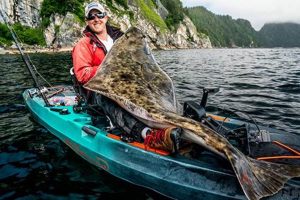
A specialized set of angling equipment designed for use in kayaks typically includes a shorter, more robust rod paired with a reel featuring a smooth drag system and corrosion-resistant materials. This integrated setup facilitates maneuverability and efficient fish retrieval within the confined space of a kayak.
This type of fishing gear enhances the angling experience from a kayak by addressing specific challenges posed by the environment. Compactness and balance are paramount for safe casting and retrieval in a small watercraft. Durable construction withstands the rigors of saltwater exposure and frequent use. The targeted design promotes efficient hooksets and battles with fish, ultimately contributing to a more productive and enjoyable fishing trip. The evolution of this equipment reflects the growing popularity of kayak fishing and the demand for purpose-built tackle.
Further exploration will delve into specific rod and reel characteristics, selection criteria, popular models, and maintenance practices. Subsequent sections will also cover appropriate fishing techniques and safety considerations related to utilizing this equipment on the water.
Tips for Selecting and Using Kayak Fishing Equipment
Choosing and employing appropriate gear contributes significantly to a successful kayak fishing excursion. Consider these recommendations to optimize equipment performance and overall angling experience.
Tip 1: Rod Length Matters: Opt for shorter rods (typically between 6 and 7.5 feet) for improved control and maneuverability within a kayak’s limited space. Longer rods can be cumbersome and difficult to manage effectively.
Tip 2: Reel Choice is Crucial: Select a reel with a smooth, reliable drag system capable of handling hard-fighting fish. A sealed drag system offers added protection against saltwater intrusion and corrosion.
Tip 3: Consider Rod Power and Action: Match the rod’s power and action to the target species and fishing techniques. A medium-power, fast-action rod offers versatility for a range of situations.
Tip 4: Line Selection is Key: Choose a braided fishing line for its strength, sensitivity, and low stretch, allowing for better hooksets and control over fish. Fluorocarbon leader can be added for abrasion resistance and stealth.
Tip 5: Prioritize Corrosion Resistance: Select equipment constructed from corrosion-resistant materials, particularly in saltwater environments. Regular maintenance and rinsing with freshwater after each trip prolongs equipment lifespan.
Tip 6: Balance and Comfort are Paramount: Ensure the chosen setup balances well with the kayak and personal paddling style. A comfortable grip and lightweight design minimize fatigue during long fishing trips.
Tip 7: Practice Makes Perfect: Before venturing onto the water, practice casting and retrieving within the confines of the kayak to develop proficiency and avoid tangles.
Careful consideration of these factors ensures suitable equipment selection, leading to enhanced performance, efficiency, and enjoyment on the water.
By incorporating these tips, anglers can maximize their chances of a successful and enjoyable fishing experience.
1. Compactness
Compactness represents a critical characteristic of fishing equipment designed for kayaks. Limited space within a kayak necessitates gear tailored for maneuverability and efficient storage. Longer rods, typical of shore or boat fishing, become cumbersome and potentially hazardous within the confined area of a kayak. A shorter rod (typically between 6 and 7.5 feet) facilitates casting, retrieval, and fish fighting without interfering with paddling or other onboard equipment. Similarly, a compact reel design minimizes snagging and contributes to overall balance within the kayak.
The benefits of compactness extend beyond physical convenience. Shorter rods provide enhanced control over fish, particularly in close-quarters combat around structures or vegetation. This control translates to higher hook-up ratios and improved landing success. Furthermore, compact gear reduces fatigue during long fishing trips by minimizing the effort required for casting and retrieving. For example, navigating through narrow mangrove tunnels or battling strong currents becomes significantly more manageable with a compact setup. The practical implication is a more efficient and enjoyable fishing experience overall.
In summary, compactness directly addresses the spatial constraints inherent in kayak fishing. This characteristic contributes to safety, maneuverability, and efficient angling within the limited confines of a kayak. Selecting appropriately sized gear ultimately enhances performance and enjoyment on the water. This understanding underscores the importance of prioritizing compactness when choosing a kayak fishing rod and reel combination.
2. Durability
Durability represents a critical factor influencing the lifespan and performance of a kayak fishing rod and reel combo. Exposure to harsh environmental conditions, including saltwater, UV radiation, and physical impacts, necessitates robust construction. Choosing durable equipment minimizes repair and replacement costs while ensuring reliable performance during demanding fishing expeditions.
- Material Selection
Rod and reel components constructed from high-strength materials, such as graphite or fiberglass blanks for rods and aluminum or stainless steel for reels, significantly enhance durability. Graphite offers a lightweight yet strong foundation for the rod, while stainless steel components resist corrosion in saltwater environments. For example, a reel with sealed stainless steel bearings provides smoother operation and extended lifespan compared to standard bearings.
- Construction Techniques
Manufacturing processes, including reinforced joints and robust reel seat designs, contribute to overall durability. Quality bonding agents and precision assembly techniques ensure the rod and reel can withstand the stresses of casting, retrieving, and fighting fish. For instance, a rod with reinforced ferrules (joints) resists breakage under pressure.
- Protective Coatings and Finishes
Specialized coatings and finishes provide an additional layer of protection against corrosion, UV damage, and abrasion. These protective layers help maintain the structural integrity and cosmetic appearance of the equipment over time. For example, a reel with a corrosion-resistant coating withstands saltwater exposure better than an untreated reel.
- Maintenance Practices
Regular maintenance, including rinsing with freshwater after each use and periodic lubrication, extends the lifespan of fishing equipment. Proper care mitigates the effects of saltwater exposure and prevents corrosion. For instance, regularly rinsing a reel with fresh water after each saltwater trip helps remove corrosive salt deposits and prolong its lifespan.
Prioritizing durability in rod and reel selection ensures reliable performance and longevity. The combined effect of robust materials, quality construction, protective coatings, and diligent maintenance contributes to a dependable and cost-effective fishing setup, allowing anglers to focus on the pursuit of fish rather than equipment failure. Investing in durable equipment ultimately enhances the overall fishing experience by providing consistent performance in challenging environments.
3. Balance

Balance represents a crucial factor influencing performance and comfort in kayak fishing. A balanced rod and reel combination, proportionate to the kayak’s size and the angler’s physique, minimizes fatigue and maximizes control. An unbalanced setup can lead to discomfort, reduced casting accuracy, and difficulty managing fish. Consider a lightweight rod paired with a heavier reel; this combination can create a tip-heavy feel, making it tiring to hold and challenging to manipulate precisely. Conversely, a heavier rod paired with a lightweight reel may feel awkward and difficult to cast effectively.
The importance of balance extends beyond mere comfort. A properly balanced setup enhances casting accuracy and efficiency. It allows for precise lure placement and reduces the likelihood of errant casts, particularly in windy conditions or tight quarters. Furthermore, a balanced setup aids in effectively fighting and landing fish. It provides the angler with greater leverage and control, reducing strain on the wrist and forearm. For example, battling a strong fish alongside a kayak requires a balanced setup to maintain leverage and avoid capsizing. An unbalanced setup could compromise stability and control, increasing the risk of losing the fish or even capsizing the kayak.
Achieving optimal balance requires considering several factors. Rod length, reel weight, and overall setup weight contribute to the perceived balance. Shorter rods generally offer better balance in a kayak, particularly when combined with lightweight reels. Anglers should experiment with different combinations to find a setup that feels comfortable and allows for effortless casting and retrieval. Moreover, distributing weight evenly within the kayak itself, including tackle boxes and other gear, further enhances stability and balance. This holistic approach to balance optimizes performance, comfort, and safety on the water, leading to a more enjoyable and productive fishing experience.
4. Smooth Drag

Smooth drag functionality in a fishing reel is paramount for successful kayak angling. A smooth drag system allows line to be released under tension in a controlled manner, preventing line breakage and lost fish, particularly when battling strong or fast-running species. In the confined space of a kayak, where maneuverability is limited, a smooth drag becomes even more critical. For instance, when a hooked fish makes a sudden run under the kayak, a jerky or inconsistent drag could result in a snapped line. A smooth drag, however, allows the angler to maintain tension and control, increasing the likelihood of landing the fish.
Several factors contribute to a reel’s drag smoothness. High-quality drag washers, constructed from materials like carbon fiber or felt, provide consistent resistance. Sealed drag systems further enhance performance by preventing water and debris from compromising the drag mechanism, ensuring reliable operation in harsh saltwater environments. Regular maintenance, including cleaning and lubrication of the drag system, also contributes to long-term smoothness and efficiency. Consider a scenario where an angler hooks a large fish near a reef or structure. A smooth drag allows the angler to apply consistent pressure, guiding the fish away from potential snags and increasing the chances of a successful retrieval.
The practical significance of a smooth drag system in a kayak fishing setup cannot be overstated. It directly impacts the angler’s ability to manage powerful fish in a challenging environment. The ability to apply consistent pressure without jerky or unpredictable releases significantly improves the chances of landing a fish. Furthermore, a smooth drag reduces stress on the line, minimizing the risk of breakage, especially with lighter lines often preferred for finesse fishing. Ultimately, investing in a reel with a smooth, reliable drag system is a crucial step towards a more successful and enjoyable kayak fishing experience. This understanding reinforces the importance of smooth drag as a key component of a well-rounded kayak fishing rod and reel combo.
5. Corrosion Resistance

Corrosion resistance stands as a critical factor in the longevity and performance of kayak fishing rod and reel combos. The constant exposure to saltwater, spray, and humidity inherent in the kayak fishing environment necessitates equipment specifically designed to withstand these corrosive elements. Compromised structural integrity due to corrosion can lead to equipment failure at crucial moments, resulting in lost fish and potentially hazardous situations. Understanding the various facets of corrosion resistance helps anglers make informed decisions regarding equipment selection and maintenance.
- Material Selection
The inherent corrosion resistance of the materials used in rod and reel construction plays a vital role in overall durability. Marine-grade aluminum alloys, stainless steel, and specialized composites offer superior protection against the corrosive effects of saltwater. For example, anodized aluminum reels provide a hardened surface layer that resists oxidation. Similarly, stainless steel components, such as reel seats, guides, and fasteners, maintain structural integrity even with prolonged saltwater exposure. Choosing components made from these materials significantly extends the lifespan of the equipment.
- Protective Coatings and Sealants
Specialized coatings and sealants provide an additional barrier against corrosion. These coatings, often applied to reel components and exposed metal parts, create a protective layer that prevents saltwater intrusion and inhibits the oxidation process. For example, some reels feature sealed drag systems that prevent saltwater from entering the drag mechanism, preserving smooth operation and preventing corrosion. Similarly, rods often feature protective coatings on the guides to minimize corrosion and maintain smooth line flow.
- Maintenance Practices
Diligent maintenance practices significantly enhance the corrosion resistance of fishing equipment. Regular rinsing with fresh water after each use removes residual salt and minimizes the potential for corrosion. Periodic lubrication of moving parts, such as reel bearings and drag systems, further protects against corrosion and ensures smooth operation. Neglecting these maintenance procedures can accelerate corrosion and significantly shorten the lifespan of the equipment.
- Environmental Factors
The specific environment in which the equipment is used also influences the rate of corrosion. Saltwater environments, particularly those with higher salinity levels, are inherently more corrosive than freshwater environments. Similarly, warm, humid climates accelerate corrosion compared to cooler, drier climates. Understanding these environmental factors helps anglers choose appropriate equipment and adopt suitable maintenance practices to mitigate the effects of corrosion. For instance, anglers fishing frequently in tropical saltwater environments might choose higher-end equipment specifically designed for maximum corrosion resistance.
The cumulative effect of these factors directly impacts the lifespan, performance, and reliability of kayak fishing rod and reel combos. Investing in equipment designed and maintained for optimal corrosion resistance ensures dependable performance and minimizes the risk of equipment failure in challenging saltwater environments. This knowledge empowers anglers to make informed choices that maximize the longevity and value of their fishing investments, contributing to more successful and enjoyable experiences on the water.
6. Appropriate Action
Appropriate rod action represents a crucial element within a kayak fishing rod and reel combo. Rod action, referring to the rod’s bending characteristic under load, directly impacts casting distance, lure presentation, hook-setting power, and the ability to manage fish effectively from a kayak. Selecting the appropriate action depends on several factors, including target species, fishing techniques, and the specific environment. A fast-action rod, bending primarily in the tip section, provides greater sensitivity for detecting subtle bites, enhanced hook-setting power, and increased casting accuracy with lighter lures. This makes it well-suited for techniques like drop-shotting or finesse fishing for species such as bass or crappie. Conversely, a slower-action rod, bending throughout a greater portion of its length, offers increased casting distance with heavier lures and provides a more forgiving action for fighting larger, more powerful fish like catfish or saltwater species. The slower action absorbs shock, reducing the risk of line breakage and pulled hooks.
Consider a scenario targeting speckled trout in shallow saltwater flats. A medium-fast action rod, offering a balance between sensitivity and power, would be appropriate. This action allows for accurate casts with light to medium-weight lures and provides sufficient backbone to set the hook effectively. The medium-fast action also provides enough give to absorb the runs of a hooked trout, minimizing the risk of the hook pulling free. Alternatively, if targeting larger offshore species like kingfish from a kayak, a heavier, slower-action rod becomes necessary. This action provides the strength and lifting power required to manage these powerful fish in open water. The slower action also helps absorb the shock of powerful strikes and prevents line breakage during long fights.
Understanding the relationship between rod action and kayak fishing techniques is fundamental for maximizing success on the water. Choosing a rod with appropriate action enhances casting accuracy, improves hook-setting effectiveness, and provides the necessary leverage to control fish effectively from the confined space of a kayak. This targeted approach optimizes the angler’s ability to present lures effectively, detect strikes, and ultimately land fish, contributing to a more rewarding and productive kayak fishing experience. The practical implications of this understanding are significant, transforming equipment selection from a matter of preference to a strategic decision based on specific fishing scenarios.
Frequently Asked Questions
This section addresses common inquiries regarding kayak fishing rod and reel combinations, providing concise and informative responses to facilitate informed equipment selection and enhance angling experiences.
Question 1: What rod length is optimal for kayak fishing?
Rods between 6 and 7.5 feet generally provide the best balance of maneuverability and casting performance within a kayak’s confined space. Shorter rods offer increased control, while longer rods can become cumbersome.
Question 2: What reel features are essential for kayak fishing?
A smooth, reliable drag system is crucial for managing hard-fighting fish. Sealed drag systems and corrosion-resistant components are highly recommended, particularly for saltwater environments.
Question 3: Does rod power and action influence kayak fishing techniques?
Rod power and action should align with the target species and fishing style. A medium-power, fast-action rod offers versatility, while heavier power and slower action are suitable for larger fish and specific techniques.
Question 4: What fishing line is best suited for kayak fishing?
Braided line offers strength, sensitivity, and low stretch, benefiting hooksets and fish control. Fluorocarbon leader enhances abrasion resistance and stealth when desired.
Question 5: How does one maintain a kayak fishing rod and reel combo?
Regular rinsing with freshwater after each use, especially in saltwater, is essential. Periodic lubrication of moving parts and attention to drag systems ensures optimal performance and longevity.
Question 6: How can balance be optimized in a kayak fishing setup?
Balancing the rod and reel weight relative to the kayak and angler’s physique promotes comfort and control. Distributing weight evenly within the kayak further enhances stability.
Careful consideration of these factors ensures appropriate equipment selection and contributes to a more enjoyable and successful kayak fishing experience. Addressing these common questions equips anglers with the knowledge necessary to make informed decisions about their gear.
The following section delves into specific rod and reel recommendations tailored for various kayak fishing scenarios.
Kayak Fishing Rod and Reel Combo
Effective kayak angling hinges upon selecting appropriate equipment. Compactness, durability, balance, a smooth drag system, corrosion resistance, and appropriate rod action are critical factors. These elements contribute significantly to maneuverability, longevity, and efficient fish management within a kayak’s limited space. Understanding these aspects empowers informed decisions, transforming equipment selection from a matter of preference to a strategic advantage. Careful consideration of these interconnected factors ensures a setup optimized for performance, efficiency, and enjoyment on the water.
Ultimately, the synergy between angler, kayak, and a well-chosen rod and reel combo unlocks the full potential of this dynamic fishing style. This knowledge equips anglers to navigate the complexities of equipment selection, fostering a deeper connection with the sport and maximizing success on the water. Mastery of these principles promises enhanced angling experiences and a more profound appreciation for the challenges and rewards inherent in kayak fishing.