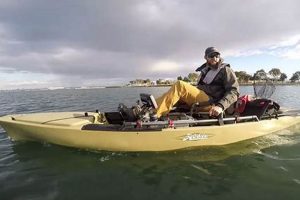
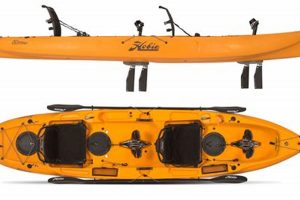
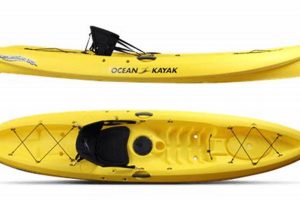
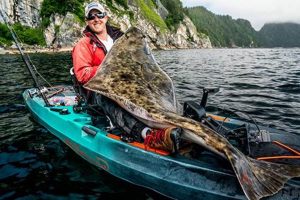
A specialized seat designed for kayaks used in angling provides comfort and support during extended fishing trips. These seats are often elevated and adjustable, allowing anglers to maintain a comfortable posture while casting, reeling, and landing fish. They may incorporate features like breathable fabrics, adjustable backrests, and even rod holders for added convenience. For example, a high-back seat with adjustable lumbar support might be preferable for long days on the water.
Enhanced comfort and stability contribute to a more enjoyable and productive fishing experience. An angler seated comfortably can focus on the task at hand, improving casting accuracy and reaction time. Historically, kayak anglers often made do with basic seating or modifications, but the development of purpose-built seating has significantly improved the ergonomics and overall experience of kayak fishing. This improvement has broadened the appeal of the sport, allowing individuals of varying physical abilities to participate comfortably.
This article will further explore the various types of specialized kayak seating available, discuss key features to consider when selecting one, and offer guidance on proper installation and maintenance.
Tips for Selecting Appropriate Kayak Angling Seating
Choosing suitable seating is crucial for comfort and stability while kayak fishing. The following tips offer guidance for selecting and utilizing specialized kayak seating.
Tip 1: Consider the Kayak’s Design: Seat compatibility with the kayak’s dimensions and attachment points is paramount. Ensure the chosen seat fits securely and allows for proper balance.
Tip 2: Evaluate Seat Height and Adjustability: Higher seats facilitate easier casting and improve visibility. Adjustable backrests and lumbar support enhance comfort during prolonged fishing trips.
Tip 3: Prioritize Durable and Weather-Resistant Materials: Marine-grade materials resist wear and tear from sun, water, and fishing gear. Look for UV-resistant fabrics and corrosion-resistant hardware.
Tip 4: Assess Weight Capacity and Stability: Ensure the seat’s weight capacity accommodates the angler’s weight and gear. A stable seat base is crucial for maintaining balance, especially in challenging conditions.
Tip 5: Think About Portability and Storage: Some seats offer foldable designs for easier transport and storage. Detachable seats simplify cleaning and maintenance.
Tip 6: Explore Additional Features: Integrated features like rod holders, pockets, and cup holders enhance convenience and organization while on the water.
Tip 7: Test the Seat Before Purchasing: Whenever possible, try out the seat in a kayak to assess comfort and fit. Consider factors like legroom and back support.
Selecting the right kayak angling seat significantly enhances comfort, stability, and overall fishing experience. Careful consideration of these factors contributes to more productive and enjoyable time on the water.
By understanding the nuances of kayak angling seating, anglers can make informed decisions leading to improved performance and enjoyment on the water. This knowledge translates to a more comfortable and ultimately successful fishing experience.
1. Comfort

Comfort plays a pivotal role in the effectiveness and enjoyment of kayak fishing. Discomfort can lead to fatigue, reduced concentration, and a diminished ability to react quickly to fish strikes. A comfortable seating arrangement allows anglers to maintain focus and maximize fishing time on the water. Consider the scenario of an angler battling a strong fish. An uncomfortable seat can exacerbate the physical strain, potentially leading to premature fatigue and a lost fish. Conversely, a supportive and comfortable seat allows the angler to maintain proper posture and leverage, increasing the likelihood of a successful landing.
Several factors contribute to seated comfort in a kayak. These include adequate back support, breathable fabrics, and the ability to adjust the seat’s position. Kayak fishing often involves prolonged periods in a seated position, sometimes in challenging weather conditions. A well-designed seat mitigates the physical strain associated with these conditions, allowing anglers to fish longer and more effectively. For example, features like adjustable lumbar support and breathable mesh fabric can significantly improve comfort, especially during hot weather or long fishing trips. Proper cushioning also plays a critical role, reducing pressure points and promoting better circulation.
The importance of comfort in kayak fishing cannot be overstated. It directly influences an angler’s ability to focus, react, and endure the physical demands of the sport. Investing in a comfortable and supportive kayak fishing chair represents a significant investment in overall fishing success and enjoyment. Ignoring comfort can detract from the overall experience, leading to shorter trips, reduced effectiveness, and ultimately, a diminished appreciation for the sport.
2. Stability
Stability forms a cornerstone of effective kayak fishing. A stable platform is essential for casting accuracy, hook setting, and fighting fish. Compromised stability diminishes an angler’s ability to perform these actions effectively, impacting overall fishing success. Consider the scenario of an angler attempting a long cast in windy conditions. An unstable seating position increases the likelihood of an off-balance cast, reducing accuracy and potentially spooking nearby fish. Conversely, a stable and secure seating arrangement allows the angler to maintain balance and execute the cast with precision. This stability is particularly crucial when battling larger fish, where sudden movements and shifts in weight can easily destabilize a kayak with a poorly designed or improperly installed seat.
The stability offered by a fishing kayak chair is influenced by several factors, including the chair’s base design, its attachment points to the kayak, and the angler’s center of gravity. A wide, stable base and secure attachment points contribute significantly to overall stability. Furthermore, a chair that positions the angler’s center of gravity low in the kayak enhances stability. For example, a chair with a low-profile base and multiple attachment points distributes the angler’s weight more evenly across the kayak, minimizing the risk of tipping or capsizing, especially in rough water or when landing a fish. Adjustable chairs offer further benefits, allowing anglers to fine-tune their seating position to optimize balance and comfort. This customization can be especially important for anglers of different sizes and weights.
A stable fishing kayak chair is not merely a comfort feature; it is a critical component impacting fishing performance and safety. It allows anglers to focus on the task at hand, enhancing their ability to cast accurately, set hooks effectively, and land fish successfully. Understanding the factors influencing stability and choosing a chair that prioritizes this aspect are crucial for maximizing both fishing success and safety on the water. Neglecting stability can lead to not only decreased fishing effectiveness but also potentially dangerous situations, particularly when fishing in challenging conditions.
3. Adjustability

Adjustability in a fishing kayak chair is paramount for comfort, performance, and accommodating diverse anglers and fishing styles. A chair offering multiple adjustment points allows for personalized positioning, optimizing comfort and stability while facilitating various fishing techniques. A static, non-adjustable chair can lead to discomfort, reduced fishing efficiency, and potential physical strain. This exploration delves into the key facets of adjustability in fishing kayak chairs.
- Seat Height
Seat height adjustability allows anglers to customize their position relative to the waterline. A higher seat position can improve visibility and facilitate easier casting, while a lower position enhances stability, especially in windy or choppy conditions. For example, sight fishing benefits from a higher vantage point, whereas bottom fishing might necessitate a lower, more stable position. This adjustability becomes crucial when accommodating anglers of different heights, ensuring optimal paddling leverage and fishing comfort.
- Backrest Angle
An adjustable backrest allows anglers to fine-tune back support, reducing fatigue during long hours on the water. The ability to recline slightly can offer relief for back strain, while a more upright position facilitates active paddling and casting. Consider the difference between trolling and actively jigging; the former might benefit from a more relaxed recline, while the latter demands an upright, engaged posture. Adjustable backrest angles cater to these diverse fishing styles and individual comfort preferences.
- Lumbar Support
Adjustable lumbar support is critical for maintaining proper posture and preventing back pain, especially during extended fishing trips. The ability to customize lumbar support accommodates individual body types and preferences. An angler with pre-existing back issues, for example, requires more substantial lumbar support than an angler without such concerns. This customization contributes significantly to long-term comfort and injury prevention.
- Leg Position
Adjusting leg position influences both comfort and paddling efficiency. Adjustable footrests or leg braces allow anglers to maintain a comfortable and biomechanically sound paddling position, reducing fatigue and maximizing power transfer. Longer legs require more extended legroom than shorter legs, highlighting the importance of adjustability. This customization ensures optimal paddling performance and overall comfort throughout the fishing trip.
These adjustable features, when combined, contribute significantly to the overall fishing experience. A highly adjustable fishing kayak chair accommodates diverse body types, fishing styles, and on-the-water conditions. This adaptability maximizes angler comfort, enhances fishing performance, and promotes long-term enjoyment of the sport. Investing in a chair with comprehensive adjustability is an investment in both immediate and long-term fishing satisfaction.
4. Durability
Durability is a critical factor in fishing kayak chair selection, directly impacting the chair’s lifespan and long-term value. Kayak fishing exposes equipment to harsh conditions, including saltwater, UV radiation, and physical stress. A durable chair withstands these rigors, providing reliable performance and longevity. This exploration delves into key facets of durability concerning fishing kayak chairs.
- Material Selection
The materials used in the chair’s construction significantly influence its durability. Marine-grade materials, such as UV-resistant fabrics and corrosion-resistant hardware, are essential for withstanding the harsh marine environment. For example, solution-dyed fabrics resist fading and degradation from prolonged sun exposure, while anodized aluminum or stainless steel hardware prevents rust and corrosion from saltwater. Inferior materials quickly succumb to these elements, leading to premature wear and tear.
- Construction Quality
High-quality construction techniques, such as reinforced stitching, robust welding, and well-designed joints, contribute significantly to a chair’s durability. Double-stitched seams, for example, resist tearing under stress, while properly welded frame components ensure structural integrity. Subpar construction techniques often result in weak points that fail under pressure, compromising the chair’s overall lifespan.
- Weight Capacity
The chair’s weight capacity should comfortably exceed the combined weight of the angler and any carried gear. Exceeding the weight limit can strain the chair’s structure, leading to premature failure. A chair with a generous weight capacity provides a margin of safety and ensures long-term reliability. A higher weight capacity often indicates a more robust construction, further enhancing durability.
- Maintenance Requirements
While some maintenance is inevitable, a durable chair minimizes maintenance requirements. Features like removable and washable fabrics simplify cleaning, while corrosion-resistant hardware reduces the need for frequent replacements. A chair requiring excessive maintenance not only consumes time and resources but also increases the likelihood of component failure due to neglected upkeep. Durable materials and construction minimize these concerns.
Investing in a durable fishing kayak chair represents a long-term investment in comfort, performance, and safety. A chair built to withstand the rigors of kayak fishing provides years of reliable service, maximizing value and minimizing the need for frequent replacements. Prioritizing durability ensures that the chair remains a functional and dependable asset throughout its lifespan, contributing to countless enjoyable and successful fishing trips.
5. Installation

Proper installation is crucial for the safety, performance, and longevity of a fishing kayak chair. A correctly installed chair ensures stability, comfort, and efficient use of the kayak’s features. Conversely, improper installation can compromise stability, leading to discomfort, decreased fishing effectiveness, and potential safety hazards. This exploration delves into key facets of fishing kayak chair installation.
- Compatibility and Fit
Ensuring compatibility between the chair and the kayak is paramount. The chair’s mounting system must align with the kayak’s design and designated attachment points. Some kayaks feature integrated track systems for easy adjustability, while others require specific mounting brackets. Using incorrect hardware or forcing a chair onto incompatible mounting points can damage the kayak and compromise the chair’s stability. For example, attempting to install a chair designed for a track system onto a kayak without tracks will likely lead to an unstable and unsafe seating arrangement.
- Secure Attachment
Secure attachment is critical for safety and performance. All mounting hardware must be correctly installed and tightened according to the manufacturer’s instructions. Loose hardware can lead to instability, discomfort, and potentially dangerous situations, especially when battling a strong fish or navigating rough water. Using appropriate hardware, such as stainless steel bolts and locking nuts, ensures a secure and lasting connection between the chair and the kayak. Neglecting proper tightening procedures can result in a wobbly and unsafe seat.
- Positioning and Adjustability
Correct positioning of the chair influences both comfort and fishing effectiveness. The chair should be positioned to allow for comfortable paddling, easy access to fishing gear, and optimal casting angles. Many chairs offer adjustable positioning, allowing anglers to customize their setup based on individual preferences and fishing styles. Proper positioning also considers the kayak’s center of gravity and balance. Positioning the chair too far forward or backward can negatively impact the kayak’s handling characteristics. Careful consideration of these factors ensures a comfortable and efficient fishing experience.
- Pre-Installation Inspection
Before installation, thoroughly inspect both the chair and the kayak’s mounting area for any damage or defects. Look for cracks, loose hardware, or any signs of wear and tear. Addressing these issues before installation prevents further damage and ensures a safe and secure setup. For example, identifying a damaged mounting point on the kayak before installing the chair allows for timely repair and prevents potential safety hazards on the water. Ignoring pre-installation inspection can lead to further damage and compromise safety.
Proper installation is essential for maximizing the benefits of a fishing kayak chair. A correctly installed chair ensures stability, comfort, and efficient use of the kayak’s features, contributing to a more enjoyable and successful fishing experience. By understanding and following the manufacturer’s instructions and considering the factors outlined above, anglers can ensure a safe, comfortable, and productive time on the water. Neglecting proper installation procedures can not only diminish the fishing experience but also create potential safety risks.
6. Materials

Material selection significantly influences a fishing kayak chair’s comfort, durability, performance, and overall lifespan. Careful consideration of material properties, such as breathability, water resistance, UV resistance, and structural integrity, is essential for choosing a chair suited to the demands of kayak fishing. This exploration delves into the critical material considerations for fishing kayak chairs.
- Frame Materials
The chair’s frame provides structural support and must withstand stress from the angler’s weight, movement, and environmental factors. Common frame materials include aluminum and various plastics. Aluminum offers strength and corrosion resistance but can be heavier than plastic alternatives. High-density polyethylene (HDPE) is a popular plastic option due to its lightweight nature, durability, and resistance to UV degradation. For example, a powder-coated aluminum frame offers enhanced corrosion resistance in saltwater environments, while a reinforced HDPE frame provides a lightweight yet durable option for freshwater fishing. The choice of frame material directly impacts the chair’s weight, strength, and resistance to environmental factors.
- Fabric Materials
The fabric covering the chair’s frame and padding significantly influences comfort and durability. Breathable mesh fabrics enhance airflow, preventing overheating and promoting comfort during long fishing trips, especially in warm climates. Closed-cell foam padding provides cushioning and buoyancy but can retain water and become heavy if saturated. Solution-dyed fabrics offer superior UV resistance, preventing fading and degradation from prolonged sun exposure. For instance, a chair constructed with a breathable mesh back and a closed-cell foam seat provides a balance of comfort and buoyancy. Choosing appropriate fabric materials ensures comfort, durability, and resistance to water and UV exposure.
- Hardware Materials
Hardware components, such as screws, bolts, rivets, and hinges, contribute to the chair’s structural integrity and adjustability. Corrosion-resistant materials, such as stainless steel or anodized aluminum, are essential for preventing rust and degradation in saltwater environments. Using non-corrosion-resistant hardware in saltwater can lead to rapid deterioration and potential failure. For example, stainless steel hinges and fasteners ensure reliable performance and longevity in saltwater, while nylon hardware offers a lightweight and corrosion-resistant alternative for freshwater applications. Selecting appropriate hardware materials ensures the chair’s long-term durability and functionality.
- Padding Materials
Padding materials influence comfort and support. Closed-cell foam padding offers buoyancy and resistance to water absorption, while open-cell foam provides greater comfort but can absorb water and become heavy. Some chairs utilize inflatable bladders for adjustable firmness and support. For example, an inflatable seat allows for personalized comfort and pressure adjustment, while closed-cell foam provides consistent support and buoyancy. The choice of padding material directly affects the chair’s comfort, weight, and water resistance.
The careful selection of materials in a fishing kayak chair is integral to its overall performance and longevity. Understanding the properties and benefits of various materials allows anglers to choose a chair that balances comfort, durability, and functionality, ultimately enhancing their fishing experience. A well-constructed chair, built with appropriate materials, contributes significantly to comfort, stability, and long-term enjoyment on the water.
Frequently Asked Questions
This section addresses common inquiries regarding specialized kayak fishing seating, providing concise and informative responses.
Question 1: How does specialized seating differ from standard kayak seats?
Specialized angling seats prioritize comfort, stability, and adjustability for enhanced fishing performance. They typically offer elevated positions, improved back support, and features tailored to angling, unlike basic kayak seating designed primarily for paddling comfort.
Question 2: What are the key features to prioritize when selecting seating for kayak fishing?
Key considerations include adjustability (height, backrest, lumbar support), material durability and weather resistance, weight capacity, compatibility with the kayak’s design, and additional features such as rod holders or storage compartments.
Question 3: How does one ensure proper installation of a specialized kayak fishing seat?
Consult the manufacturer’s instructions for specific guidance. Generally, proper installation involves securely attaching the seat to designated mounting points on the kayak using appropriate hardware and ensuring proper alignment and stability.
Question 4: Can any kayak accommodate specialized fishing seating?
While many kayaks are designed or adaptable for specialized seating, compatibility varies. Verify compatibility with the specific kayak model before purchasing a specialized seat. Consider factors like mounting points and available space.
Question 5: What maintenance is required for kayak fishing seating?
Regular cleaning with mild soap and water removes dirt and grime. Rinse with fresh water after saltwater exposure to prevent corrosion. Inspect hardware regularly for tightness and signs of wear. Specific maintenance requirements vary depending on the seat’s materials and construction.
Question 6: How does seat selection impact overall fishing success?
Appropriate seating enhances comfort and stability, contributing to improved casting accuracy, reaction time, and overall endurance, enabling anglers to fish more effectively and comfortably for extended periods.
Careful consideration of these frequently asked questions facilitates informed decision-making regarding kayak fishing seating, leading to improved comfort, performance, and enjoyment on the water.
The next section offers an in-depth review of several leading fishing kayak seat models currently available.
Conclusion
Specialized kayak angling seating demonstrably enhances on-the-water experiences. From improved comfort and stability to increased fishing efficacy, the benefits of utilizing a purpose-built design are significant. Choosing appropriate seating requires careful consideration of factors including the kayak’s design, individual needs, and intended fishing style. Prioritizing materials, construction, adjustability, proper installation, and regular maintenance ensures long-term performance and value. This exploration has highlighted the crucial role specialized seating plays in maximizing both comfort and effectiveness in kayak angling.
Anglers are encouraged to prioritize informed decision-making when selecting specialized kayak seating. Understanding the nuances of design, materials, and compatibility ensures an investment that enhances the overall angling experience. This thoughtful approach contributes to greater comfort, improved performance, and ultimately, a deeper appreciation for the sport of kayak fishing. The evolution of kayak angling seating continues, promising further innovation and refinement in designs that prioritize both angler comfort and fishing success.