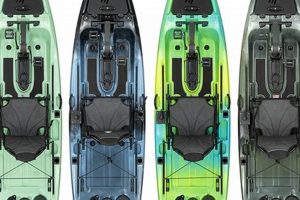
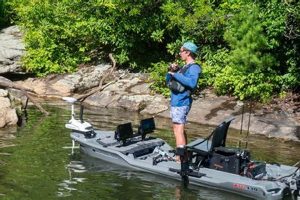
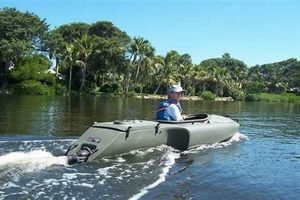
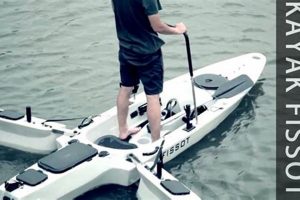
Compact, easily transportable vessels designed for angling offer anglers enhanced access to diverse waterways, from small ponds and creeks to larger lakes and rivers. These watercraft prioritize portability and ease of handling without sacrificing stability or storage capacity for fishing gear.
The reduced weight of these specialized boats significantly simplifies transport and launch, making them particularly appealing to individuals with physical limitations or those lacking access to vehicle-assisted launching. This ease of use broadens fishing opportunities, allowing exploration of remote or otherwise inaccessible locations. Historically, fishing from small, personally propelled watercraft has been a common practice. Modern materials and design innovations now provide anglers with significantly improved performance and comfort compared to traditional options.
This discussion will further explore the advantages and disadvantages of these modern fishing platforms, consider key features and selection criteria, and examine the evolving landscape of these specialized vessels.
Tips for Selecting and Using Compact Fishing Kayaks
Choosing and utilizing a compact, easily-transported fishing kayak effectively requires careful consideration of several factors. The following tips offer guidance for maximizing the benefits of these specialized vessels.
Tip 1: Consider Transportation Logistics. Vehicle type and storage space should influence kayak selection. Roof racks, trailers, or even inside storage might be necessary, depending on hull size and weight.
Tip 2: Evaluate Water Conditions. Intended fishing locations impact the optimal hull design. Calm lakes and ponds suit shorter, wider hulls, while rivers and open water necessitate longer, narrower designs for tracking and stability.
Tip 3: Prioritize Stability and Capacity. Balance and sufficient space for gear are crucial. Consider weight capacity and hull design features impacting stability, particularly when standing to cast.
Tip 4: Research Material and Construction. Durability and weight are directly affected by material choice. Common options include rotomolded polyethylene, thermoformed ABS, and inflatable designs, each with varying performance characteristics.
Tip 5: Assess Feature Integration. Rod holders, paddle clips, and storage compartments enhance fishing efficiency. Evaluate pre-installed features or adaptability for aftermarket additions.
Tip 6: Practice Launching and Maneuvering. Familiarization with kayak handling before venturing into open water is essential. Practice entering, exiting, and paddling in a controlled environment.
Tip 7: Prioritize Safety Equipment. A personal flotation device (PFD) is paramount. Additional safety gear, including a whistle, signaling device, and first-aid kit, enhances preparedness for unforeseen circumstances.
Careful consideration of these elements significantly contributes to a positive and productive fishing experience. Addressing these factors ensures safe and efficient operation, optimizing time spent on the water.
By understanding these practical considerations, anglers can confidently select and utilize a vessel best suited to their individual needs and fishing style. This informed approach enhances enjoyment and success on the water.
1. Portability

Portability represents a defining characteristic of lightweight fishing kayaks, directly influencing their appeal and practicality. Reduced weight simplifies transport, allowing individuals to easily manage the vessel without specialized equipment or assistance. This ease of handling expands access to diverse waterways, including those inaccessible with larger, heavier boats. For instance, carrying a lightweight kayak across a portage between lakes, or launching from a remote shoreline without a boat ramp, becomes significantly more feasible. This enhanced accessibility broadens fishing opportunities, enabling anglers to explore previously unreachable waters.
The practical implications of this portability extend beyond simply reaching the water. Storage and off-season care are simplified, requiring less space and effort. The reduced weight minimizes strain during loading, unloading, and carrying, making the overall experience more enjoyable, particularly for individuals with physical limitations. Consider the angler who lives in an apartment without dedicated boat storage; a lightweight, easily disassembled or compact kayak provides a practical solution. This portability also expands transport options; smaller vehicles or even public transportation become viable, further reducing barriers to entry for aspiring anglers.
In essence, portability serves as a cornerstone of the lightweight fishing kayak’s utility. This defining characteristic expands access, simplifies logistics, and enhances the overall fishing experience. While other factors such as stability and storage capacity remain important considerations, the inherent portability of these vessels distinguishes them within the broader kayaking landscape, making them a valuable tool for anglers seeking versatile and accessible fishing opportunities.
2. Maneuverability

Maneuverability represents a critical performance attribute in lightweight fishing kayaks, directly influencing angling effectiveness and overall on-the-water experience. Precise and responsive handling allows anglers to navigate complex waterways, position themselves strategically for optimal casting, and efficiently respond to changing fish behavior. This agility proves particularly advantageous in challenging environments such as shallow creeks, winding rivers, and areas with dense vegetation or submerged obstacles.
- Navigating Tight Spaces
Lightweight kayaks excel in confined areas due to their reduced inertia and responsiveness to paddle input. Navigating narrow channels, maneuvering through fallen trees, or approaching shallow banks becomes significantly easier. This agility allows anglers to access prime fishing spots often inaccessible to larger, less nimble vessels. Consider a shallow, overgrown creek teeming with bass; a lightweight kayak enables precise navigation through the tangled waterway, granting access to otherwise unreachable fish-holding areas.
- Current and Wind Response
Lightweight hulls can be susceptible to wind and current drift, requiring more frequent corrective strokes. However, this responsiveness also translates to quicker turns and adjustments, advantageous when fishing in dynamic conditions. Anglers can rapidly reposition themselves to maintain optimal casting angles or adjust to changing current patterns. For example, in a flowing river, a lightweight kayak allows for swift adjustments to maintain position and presentation, maximizing fishing effectiveness.
- Tracking and Speed
Hull design significantly impacts tracking the kayak’s ability to maintain a straight course. While lightweight kayaks may not track as efficiently as longer, heavier touring kayaks, modern designs incorporate features like tracking fins and defined keels to improve straight-line performance. This balance between maneuverability and tracking ensures efficient paddling while maintaining the agility required for fishing. Consider a longer, narrower lightweight kayak designed for open water; integrated design features enhance tracking, minimizing paddling effort while retaining the responsiveness needed for maneuvering around structure or pursuing fish.
- Paddle Effort and Efficiency
The reduced weight of these kayaks minimizes paddling effort, particularly beneficial during long fishing trips or when navigating against current or wind. This efficiency allows anglers to cover more water and conserve energy for fishing, rather than expending excessive effort on propulsion. For an angler spending hours on the water, reduced paddling fatigue translates to more time focused on fishing and less on simply maintaining position or reaching desired locations.
The maneuverability of lightweight fishing kayaks significantly contributes to their overall effectiveness and versatility. This agility, coupled with considered hull design and paddling technique, empowers anglers to navigate diverse environments, access prime fishing locations, and maximize their time on the water. While factors like wind and current can influence performance, understanding the nuances of maneuverability allows anglers to select and utilize their kayaks effectively, enhancing both fishing success and overall enjoyment.
3. Stability
Stability forms a critical cornerstone in the design and effective use of lightweight fishing kayaks. Maintaining balance while casting, retrieving, and landing fish is paramount for both angler safety and fishing success. Compromised stability can lead to capsizing, gear loss, and potentially dangerous situations, particularly in challenging conditions such as windy days or moving water. Conversely, a stable platform allows anglers to confidently focus on fishing, maximizing their effectiveness and enjoyment. Several factors influence stability, including hull design, kayak width, and the angler’s center of gravity. Wider, flatter hulls generally offer greater initial stability, resisting tipping when at rest. However, they may be less maneuverable than narrower designs. Hull shapes incorporating features like chines, which are angled edges along the bottom of the hull, enhance secondary stability, the kayak’s ability to resist tipping when leaned. Angler behavior also plays a crucial role; keeping a low center of gravity and distributing weight evenly within the kayak significantly improves stability. For example, an angler standing to cast in a narrow, lightweight kayak needs to maintain a balanced posture and avoid sudden movements to prevent capsizing. Understanding these principles allows anglers to select a kayak appropriate for their intended use and fishing style while practicing techniques that maximize on-water safety and confidence.
The interplay between stability and lightweight design presents inherent trade-offs. Reducing weight often necessitates narrower hulls, potentially compromising stability. However, modern design innovations and materials allow manufacturers to create lightweight kayaks that prioritize stability without sacrificing portability. Features like outriggers, inflatable sponsons, and wider, flatter hull designs enhance stability while maintaining manageable weight. Furthermore, the choice of fishing technique influences stability requirements. Anglers practicing fly fishing, which involves frequent casting and line management, benefit from enhanced stability offered by wider platforms. Conversely, anglers trolling or casting lures might prioritize maneuverability over absolute stability, opting for a narrower, more responsive hull design. Consider an angler targeting large fish in open water; a stable platform capable of handling the forces exerted during a fight is essential for both success and safety. In contrast, an angler fishing in sheltered, shallow water might prioritize maneuverability over maximum stability, allowing for easier navigation through tight spaces.
Achieving optimal stability in a lightweight fishing kayak requires careful consideration of hull design, angler behavior, and intended fishing environment. Understanding these interconnected factors empowers anglers to make informed decisions regarding kayak selection and on-water practices. Prioritizing stability enhances safety, improves fishing effectiveness, and allows for a more confident and enjoyable experience on the water. While lightweight design inherently presents stability challenges, innovative design features and informed decision-making enable anglers to effectively balance portability and performance, maximizing their time on the water.
4. Material Selection
Material selection significantly influences the performance, durability, and cost of lightweight fishing kayaks. The chosen material directly impacts the vessel’s weight, resistance to impact and abrasion, and overall lifespan. Understanding the properties and trade-offs associated with various materials empowers informed purchasing decisions, aligning kayak characteristics with individual needs and fishing styles.
- Rotomolded Polyethylene
Rotomolded polyethylene represents a prevalent choice due to its durability, impact resistance, and relatively low cost. This process creates a seamless, one-piece hull with consistent wall thickness, enhancing structural integrity. Rotomolded kayaks withstand impacts and abrasion well, making them suitable for navigating rocky shorelines or shallow, obstacle-filled waters. While generally heavier than other materials, advancements in rotomolding technology allow for thinner walls and lighter overall weights without sacrificing durability. For example, a rotomolded kayak might endure scrapes against rocks with minimal damage, demonstrating its robust nature.
- Thermoformed ABS
Thermoformed ABS (Acrylonitrile Butadiene Styrene) offers a lighter weight option compared to rotomolded polyethylene while maintaining reasonable durability. This process involves heating a sheet of ABS plastic and molding it over a mold. Thermoformed kayaks often exhibit sharper lines and sleeker aesthetics. However, they may be less resistant to impact and abrasion than rotomolded counterparts, making them better suited for calmer waters with fewer obstacles. Consider a thermoformed kayak navigating a shallow, sandy-bottomed river; while durable enough for such environments, it requires more cautious handling than a rotomolded kayak in rocky terrain.
- Inflatable Kayaks (PVC, Hypalon, Nitrylon)
Inflatable kayaks constructed from materials like PVC, Hypalon, or Nitrylon prioritize portability and storage convenience. These kayaks deflate and pack down into a compact size, ideal for individuals with limited storage space or those reliant on public transportation. While highly portable, inflatable kayaks typically sacrifice some performance aspects compared to rigid hulls. Tracking and speed can be affected by wind and current, and durability, while improving with advanced materials like Nitrylon, remains a consideration in harsh environments. An inflatable kayak excels for an angler accessing remote fishing spots via hiking or backpacking, where portability is paramount.
- Composite Materials (Fiberglass, Carbon Fiber)
Composite materials like fiberglass and carbon fiber offer the lightest weight options and often deliver superior performance in terms of speed and efficiency. These materials, however, come at a premium cost and require specialized care and maintenance. Composite kayaks offer excellent responsiveness and glide, making them appealing to anglers seeking high performance. However, their susceptibility to damage from impacts necessitates cautious handling and limits their suitability for rocky or shallow environments. A carbon fiber kayak might be ideal for an angler prioritizing speed and efficiency on open water, but less practical for navigating rocky shorelines.
The choice of material ultimately depends on the angler’s individual needs and priorities. Balancing weight, durability, performance, and cost requires careful consideration of intended use, fishing environment, and storage limitations. Understanding the inherent trade-offs associated with each material empowers anglers to select a lightweight fishing kayak that aligns with their specific requirements, maximizing both performance and enjoyment on the water.
5. Storage Capacity

Storage capacity plays a vital role in the overall utility of lightweight fishing kayaks. Effective organization and sufficient space for essential gear, including tackle boxes, rods, and safety equipment, directly impact fishing efficiency and overall enjoyment. Balancing the need for ample storage with the desire for a lightweight, easily maneuverable vessel requires careful consideration of individual fishing styles and target species. Understanding storage solutions and their impact on kayak performance enables anglers to maximize their time on the water.
- Dedicated Storage Compartments
Purpose-built compartments, including hatches, tank wells, and dry storage areas, offer secure and organized storage for various items. Hatches located near the angler’s seating position provide quick access to frequently used items like lures and tackle boxes. Larger tank wells accommodate bulky items such as coolers or dry bags. Dry storage areas safeguard sensitive electronics and personal belongings from water damage. A well-designed hatch system with sealed compartments keeps essential gear dry and protected, even in challenging conditions.
- Deck Rigging and Bungee Systems
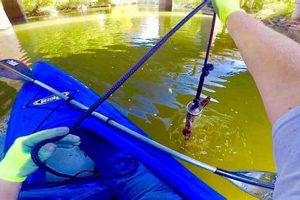
Deck rigging and bungee systems provide versatile storage options for items requiring quick access or those too large for internal compartments. Rod holders, paddle clips, and anchor trolleys secure essential equipment while keeping the deck clear and organized. Bungee cords create easily accessible storage areas for items like spare paddles, rain gear, or landing nets. A strategically placed bungee system secures a spare paddle within easy reach, ensuring preparedness for unexpected situations.
- Weight Distribution and Balance
Proper weight distribution within the kayak is crucial for both stability and performance. Overloading the kayak or concentrating weight in one area can compromise stability and make paddling more challenging. Distributing gear evenly throughout the kayak, utilizing both forward and rear storage areas, optimizes balance and tracking. An angler distributing weight evenly between front and rear hatches maintains optimal trim and enhances paddling efficiency.
- Storage Capacity vs. Kayak Weight
The desire for increased storage capacity can sometimes conflict with the goal of maintaining a lightweight vessel. Larger kayaks often offer more storage space but sacrifice portability. Anglers must carefully assess their storage needs and prioritize accordingly. Choosing a kayak with integrated storage features rather than relying solely on aftermarket add-ons can minimize added weight and optimize performance. An angler choosing a smaller, lighter kayak with limited storage for a day trip prioritizes portability over maximum gear capacity.
Storage capacity considerations significantly impact the functionality and overall effectiveness of lightweight fishing kayaks. Balancing the need for ample storage with the desire for a lightweight, maneuverable vessel requires careful planning and an understanding of individual fishing requirements. Prioritizing essential gear, utilizing integrated storage solutions, and maintaining proper weight distribution contribute to a more organized, efficient, and enjoyable fishing experience. Selecting a kayak with appropriate storage capacity directly influences time spent fishing versus managing gear, maximizing on-the-water productivity and enjoyment.
6. Fishing Features

Specialized features distinguish fishing kayaks from recreational models, enhancing angler efficiency and overall on-the-water experience. These integrated design elements cater specifically to the needs of anglers, optimizing functionality and promoting a more productive and enjoyable fishing outing. Careful consideration of these features during kayak selection is crucial, aligning kayak capabilities with individual fishing styles and target species.
- Rod Holders
Integrated rod holders, whether flush-mounted, adjustable, or rotating, provide secure storage and convenient access to fishing rods. Multiple rod holders allow anglers to carry various rod and reel combinations, adapting to changing fishing conditions or target species. Securely storing rods while paddling or maneuvering frees the angler’s hands and prevents rod entanglement. For example, a kayak equipped with adjustable rod holders accommodates different rod lengths and fishing techniques, from trolling to bottom fishing.
- Tackle Storage and Organization
Dedicated compartments, trays, and storage solutions designed specifically for tackle boxes, lures, and other fishing accessories enhance organization and streamline access to essential gear. readily accessible tackle storage minimizes time spent searching for specific items, maximizing fishing time. A well-organized tackle system allows anglers to quickly change lures or rigs, adapting to changing fish behavior or water conditions. Consider a kayak with a built-in tackle tray; lures and terminal tackle remain organized and within easy reach, enhancing fishing efficiency.
- Mounting Options for Fish Finders and Electronics
Integrated mounting platforms and transducer scuppers accommodate fish finders, GPS units, and other electronic devices crucial for locating fish and navigating waterways. Securely mounting electronics enhances their functionality while protecting them from damage. A dedicated transducer scupper allows for clean installation and optimal sonar performance. An angler utilizing a fish finder benefits from a stable mounting platform that provides clear visibility and protects the device from water spray.
- Anchor Systems and Trolling Motor Mounts
Integrated anchor trolleys, stake-out pole holders, and mounting provisions for trolling motors enhance boat control and positioning, crucial for techniques like still fishing or slow trolling. Maintaining position in current or wind allows anglers to effectively target specific areas or structures. A kayak equipped with an anchor trolley system allows for precise anchor deployment and controlled drifting, maximizing fishing effectiveness in various conditions. Similarly, a trolling motor mount expands fishing capabilities, enabling anglers to cover greater distances or maintain position effortlessly.
These specialized fishing features significantly contribute to the overall effectiveness and enjoyment of lightweight fishing kayaks. While a basic kayak can certainly be used for fishing, the integration of these purpose-built elements elevates the angling experience, enhancing efficiency, organization, and overall on-the-water performance. Careful consideration of these features during kayak selection empowers anglers to choose a vessel tailored to their specific needs and fishing style, maximizing their time and success on the water.
7. Affordability

Affordability often plays a decisive role in kayak selection, particularly for individuals entering the sport or those seeking a secondary vessel for specialized fishing scenarios. The price of lightweight fishing kayaks varies significantly based on material, features, and construction quality. Understanding the factors influencing cost allows for informed purchasing decisions, balancing budget constraints with desired performance characteristics and features.
- Material Costs and Manufacturing Processes
Material selection significantly impacts the final cost of a kayak. Rotomolded polyethylene kayaks generally represent a more budget-friendly option compared to those constructed from thermoformed ABS or composite materials like fiberglass or carbon fiber. Manufacturing processes also influence price; rotomolding, while producing durable kayaks, involves higher tooling costs, potentially impacting the final retail price. Thermoforming, while requiring less initial investment, can limit design complexity and material options. Inflatable kayaks, often constructed from PVC or similar materials, generally occupy the lower end of the price spectrum due to simpler construction and lower material costs.
- Features and Accessories
Integrated features, such as rod holders, specialized storage compartments, and mounting options for electronics, contribute to overall cost. Kayaks equipped with numerous pre-installed features typically command higher prices than basic models. Aftermarket accessories, while offering customization options, add to the overall investment. Anglers must carefully evaluate their needs and prioritize essential features versus optional add-ons to manage costs effectively. A basic kayak with minimal features offers an entry-level price point, while a fully equipped fishing kayak with integrated electronics and specialized storage solutions represents a larger investment.
- Brand Recognition and Reputation
Established brands with a reputation for quality and performance often command higher prices. This premium reflects factors such as advanced design, superior materials, and rigorous quality control processes. Lesser-known brands or newer entrants to the market may offer more competitive pricing, potentially representing a value-oriented option for budget-conscious buyers. However, thorough research and careful consideration of reviews are crucial when considering less established brands to ensure adequate quality and performance.
- Resale Value and Long-Term Costs
Considering the long-term costs associated with kayak ownership provides a comprehensive perspective on affordability. Durable, well-maintained kayaks from reputable brands often retain their value better, potentially offsetting the initial purchase price. Maintenance requirements and potential repair costs should also factor into the overall assessment of affordability. A well-built kayak requiring minimal maintenance represents a better long-term investment compared to a less durable option requiring frequent repairs or replacements.
Affordability in the context of lightweight fishing kayaks represents a complex interplay between material selection, features, brand reputation, and long-term costs. Understanding these factors allows anglers to make informed purchasing decisions that align with their budget and fishing requirements. While a higher price tag often reflects enhanced features, durability, and performance, budget-conscious buyers can find value-oriented options by prioritizing essential features, considering lesser-known brands, and carefully evaluating long-term costs. Ultimately, selecting a kayak that balances affordability with desired performance and features enhances the overall fishing experience without compromising on quality or functionality.
Frequently Asked Questions
This section addresses common inquiries regarding lightweight fishing kayaks, providing concise and informative responses to facilitate informed decision-making.
Question 1: What defines a “lightweight” fishing kayak?
Generally, kayaks weighing under 50 pounds are considered lightweight. This designation emphasizes portability and ease of handling.
Question 2: Are lightweight kayaks suitable for larger individuals or heavier loads?
Weight capacity varies significantly among models. Checking manufacturer specifications ensures the chosen kayak suits individual weight and gear requirements. Exceeding weight limits compromises stability and performance.
Question 3: Do lightweight kayaks sacrifice stability for portability?
While lighter materials can influence stability, modern designs incorporate features like wider hulls and strategic weight distribution to maximize stability without excessive weight. Individual paddling technique also significantly impacts stability.
Question 4: How durable are lightweight fishing kayaks?
Durability depends on material and construction quality. Rotomolded polyethylene kayaks generally offer excellent impact resistance, while thermoformed ABS and composite materials require more cautious handling. Inflatable kayaks, while durable within their design parameters, require attention to proper inflation and avoidance of sharp objects.
Question 5: What are the primary advantages of choosing a lightweight fishing kayak?
Key advantages include ease of transport and launch, expanded access to diverse waterways, simplified storage, and reduced physical strain during handling. These benefits enhance fishing accessibility and overall enjoyment, particularly for individuals with physical limitations or limited storage space.
Question 6: Are lightweight fishing kayaks more expensive than traditional kayaks?
Pricing varies based on material, features, and brand. Lightweight kayaks can be more expensive than basic recreational models due to specialized features and advanced materials. However, budget-friendly options exist, particularly within the inflatable and rotomolded polyethylene categories.
Careful consideration of these frequently asked questions provides a foundational understanding of the key aspects related to lightweight fishing kayaks. This knowledge equips individuals to make informed purchasing decisions aligned with their individual needs and fishing preferences.
The subsequent section will explore popular models and brands within the lightweight fishing kayak market, offering further insights into specific product offerings and their respective features.
Lightweight Fishing Kayaks
Lightweight fishing kayaks represent a significant advancement in angling accessibility and versatility. Their reduced weight enhances portability and ease of transport, expanding fishing opportunities in diverse environments previously challenging to access with traditional watercraft. Careful consideration of material selection, hull design, storage capacity, and integrated fishing features remains crucial for optimizing performance and ensuring angler safety. Balancing these factors alongside individual needs and budgetary constraints allows for informed purchasing decisions that maximize on-the-water effectiveness and enjoyment.
The evolution of lightweight fishing kayak design continues to refine the balance between portability, performance, and affordability. As material science and manufacturing processes advance, anglers can anticipate further innovation in hull design, feature integration, and overall kayak functionality. This ongoing development promises to further enhance the angling experience, providing increasingly specialized and accessible tools for exploring the diverse world of fishing from a lightweight, human-powered perspective.