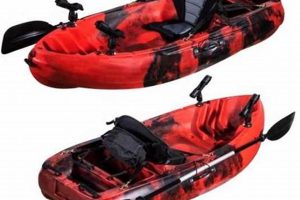
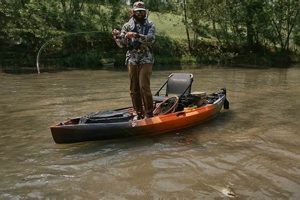
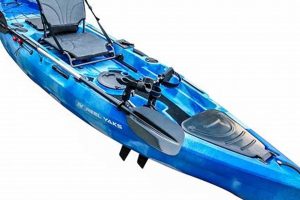
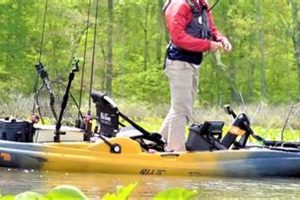
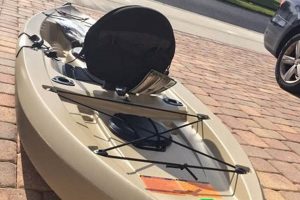
This pursuit involves angling for bluefish from a kayak. It combines the maneuverability and stealth of kayak angling with the exciting challenge of targeting a hard-fighting, predatory species. A typical scenario might involve paddling a kayak equipped with specialized fishing gear in nearshore ocean waters, inlets, or bays known to hold bluefish.
This approach offers a unique blend of sport and accessibility. The relatively low cost of entry compared to larger boat ownership makes it attainable for many anglers. Furthermore, the kayak’s shallow draft allows access to shallower areas often inaccessible to larger vessels, potentially placing anglers closer to their target species. The quiet movement of a kayak minimizes disturbance to the fish, potentially improving catch rates. Historically, smaller vessels have played a role in fishing communities worldwide, and the modern adaptation with kayaks carries on this tradition in a contemporary, sport-focused way.
The following sections will explore specific techniques, recommended equipment, and ideal locations for successful outings. Additionally, aspects of safety and conservation will be addressed to ensure a responsible and rewarding experience on the water.
Tips for Pursuing Bluefish from a Kayak
Effective techniques are essential for a successful and enjoyable experience targeting bluefish by kayak. The following tips offer valuable insights into optimizing this unique angling pursuit.
Tip 1: Choose Appropriate Tackle: Medium-heavy spinning or casting rods paired with robust reels spooled with braided line (30-50 lb test) are recommended. Braided line offers superior sensitivity and strength, crucial for detecting strikes and handling powerful runs.
Tip 2: Employ Effective Lures and Bait: Bluefish are aggressive predators. Metal lures like spoons and jigs, as well as topwater plugs, can effectively trigger strikes. Cut bait, such as menhaden or mullet, is also a proven option.
Tip 3: Understand Tidal Influence: Incoming and outgoing tides create currents that concentrate baitfish and, consequently, bluefish. Fishing during tide changes often yields the best results.
Tip 4: Locate Structure and Baitfish: Bluefish often congregate around structures like reefs, wrecks, and channel edges. Look for signs of baitfish activity such as diving birds or surface disturbances.
Tip 5: Prioritize Safety: Always wear a personal flotation device (PFD). Carry a whistle, VHF radio, and a signaling device for emergencies. Check weather conditions before embarking and inform someone of your fishing plans.
Tip 6: Practice Proper Fish Handling: Bluefish possess sharp teeth. Use pliers or a lip gripper to safely handle and release or harvest them.
Tip 7: Respect Local Regulations: Adhere to size and bag limits. Practice catch-and-release whenever possible to contribute to the conservation of this valuable species.
By implementing these strategies, anglers can significantly enhance their success and overall experience on the water. These practices promote not only effective fishing but also responsible angling that prioritizes safety and conservation.
The following section will summarize key considerations and offer concluding remarks about this dynamic and rewarding angling pursuit.
1. Stable Kayak Platform

Stability forms the foundation of successful bluefish angling from a kayak. A stable platform is paramount for several key reasons. Casting accuracy, particularly when using heavier lures or battling strong winds, relies heavily on a stable base. The sudden, powerful strikes characteristic of bluefish can easily destabilize a less stable kayak, potentially leading to capsizing. Furthermore, a stable platform allows anglers to effectively fight and land these powerful fish without compromising balance. For instance, a stable kayak enables anglers to utilize leverage and maintain control during prolonged fights, minimizing the risk of line breakage or losing the fish.
The inherent instability of a kayak compared to larger vessels necessitates careful consideration of stability features. Wider kayaks generally offer greater primary stability, resisting initial tipping. Longer kayaks, while potentially less maneuverable, provide enhanced secondary stability, recovering more effectively from larger disturbances. Kayak design elements like pontoon hulls or outriggers contribute significantly to overall stability. Practical considerations include weight distribution within the kayak. Centering weight low and evenly distributes the load, enhancing stability. External factors such as wind, waves, and currents also influence stability and must be factored into kayak selection and on-the-water decision-making. Experienced anglers often recommend testing different kayak models in controlled environments to assess stability before committing to a purchase.
In summary, stability is a critical factor influencing success and safety when targeting bluefish from a kayak. Careful consideration of kayak design, weight distribution, and environmental conditions contributes significantly to maintaining a stable platform. This understanding allows anglers to maximize their effectiveness while minimizing risks associated with the dynamic nature of this fishing style.
2. Appropriate Tackle and Gear
The selection of appropriate tackle and gear directly impacts success and safety when pursuing bluefish from a kayak. These powerful fish, known for their aggressive strikes and strong runs, necessitate robust equipment capable of withstanding the demands of this dynamic fishing style. Specialized gear enhances an angler’s ability to effectively hook, fight, and land bluefish while maintaining balance and control within the confines of a kayak. For example, a medium-heavy rod with a fast action provides the backbone necessary to set the hook and control the fish during the fight, while a durable reel with a smooth drag system prevents line breakage under pressure.
Braided fishing line, typically in the 30-50 lb test range, is often preferred for its high tensile strength and low stretch, allowing for direct contact and control over the fish. Leaders of fluorocarbon or wire are crucial to prevent bite-offs, as bluefish possess sharp teeth. Appropriate lures and baits also play a significant role. Metal lures such as spoons and jigs mimic the appearance and movement of baitfish, effectively attracting bluefish. Topwater plugs, designed to create surface commotion, can trigger explosive strikes. Cut bait, such as menhaden or mullet, presents a natural and enticing offering.
Beyond rods, reels, and terminal tackle, additional gear considerations enhance safety and efficiency. A landing net with a long handle assists in safely securing and unhooking bluefish alongside the kayak. Pliers or a lip gripper are essential for handling these toothy fish without risk of injury. A well-organized tackle box ensures quick access to essential gear while maintaining a clutter-free kayak environment, promoting stability and balance. In summary, the judicious selection of appropriate tackle and gear contributes significantly to a safe, efficient, and successful bluefish kayak fishing experience. This specialized equipment allows anglers to confidently target these challenging fish while mitigating risks and maximizing the enjoyment of this unique angling pursuit.
3. Effective Retrieval Techniques

Effective retrieval techniques are crucial for enticing strikes and maximizing hookup ratios when kayak fishing for bluefish. These predatory fish, known for their aggressive feeding habits, respond to various retrieve styles that mimic the movement of injured baitfish or trigger their predatory instincts. The speed, rhythm, and action imparted to the lure play a significant role in eliciting strikes. For example, a fast, erratic retrieve can trigger a reaction strike, while a slower, more deliberate presentation might entice a following bluefish to commit. Varying the retrieve throughout the fishing session often proves effective in determining the preferred presentation on any given day. Factors such as water temperature, current, and clarity influence bluefish behavior and, consequently, their response to different retrieval techniques.
Specific retrieval techniques often prove effective when targeting bluefish. A “lift-and-drop” technique, involving raising the rod tip and allowing the lure to fall back down, can mimic a wounded baitfish struggling in the water column. A “stop-and-go” retrieve, incorporating pauses and bursts of speed, can trigger aggressive strikes as the lure momentarily disappears and reappears in the bluefish’s field of vision. When using topwater lures, a “walk-the-dog” retrieve, achieved by rhythmically twitching the rod tip, creates an enticing side-to-side action that mimics a fleeing baitfish. Matching the retrieval technique to the prevailing conditions and observed fish behavior significantly enhances the likelihood of success. For instance, in calmer waters, a slower, more subtle retrieve might prove more effective, while in choppy conditions, a faster, more aggressive retrieve might be necessary to cut through the surface disturbance and attract the bluefish’s attention.
Mastering effective retrieval techniques provides a significant advantage when kayak fishing for bluefish. The ability to present lures in a lifelike and enticing manner directly influences the number of strikes and ultimately the overall success of the fishing trip. Adapting the retrieve based on observed fish behavior and environmental conditions further refines the approach and maximizes the chances of hooking into these powerful predators. This skill, combined with other essential elements like proper kayak positioning and fish handling techniques, contributes to a more rewarding and productive kayak fishing experience. Understanding and implementing these techniques effectively is crucial for anglers seeking to maximize their success in this exciting and challenging pursuit.
4. Bluefish Location Strategies
Effective bluefish location strategies are integral to successful kayak fishing. Because kayaks offer a stealthy and maneuverable approach, understanding bluefish behavior and habitat preferences becomes paramount. Targeting specific locations frequented by bluefish maximizes angling opportunities. Cause-and-effect relationships drive these strategies. For example, bluefish prey on smaller fish, so locating areas with abundant baitfish often leads to bluefish concentrations. Similarly, bluefish are attracted to structure, such as reefs, wrecks, and channel edges, which provide ambush points and shelter. Tidal currents influence bluefish movement by concentrating baitfish and creating feeding opportunities. Consequently, fishing near inlets, points, and rips during tide changes often proves productive. Real-life examples illustrate this connection: during a falling tide, bluefish might congregate near a breachway where strong currents funnel baitfish, presenting a prime feeding opportunity for kayak anglers positioned strategically downstream.
Understanding bluefish location strategies as a core component of kayak fishing yields several practical advantages. Anglers can optimize time on the water by focusing efforts in areas with higher probabilities of encountering bluefish. This targeted approach conserves energy and resources, particularly important in kayak fishing where physical exertion and limited storage space are factors. Furthermore, understanding the interplay between environmental factors, such as tides, currents, and water temperature, and bluefish behavior allows for more informed decision-making regarding location selection. For instance, during periods of warmer water temperatures, bluefish might move into shallower waters in pursuit of prey, prompting kayak anglers to adjust their search patterns accordingly. Knowledge of local bathymetry, including underwater structures and drop-offs, further refines location strategies, particularly when combined with electronic tools like fish finders, which can identify baitfish concentrations and potential bluefish holding areas.
In summary, effective bluefish location strategies are fundamental to successful kayak fishing. Understanding the ecological factors influencing bluefish distribution empowers anglers to make informed decisions about where to fish. This knowledge, combined with practical on-the-water observation and the application of appropriate techniques, significantly increases the likelihood of encountering and catching bluefish. Challenges such as changing weather patterns and fluctuating baitfish populations necessitate continuous adaptation and refinement of location strategies, emphasizing the importance of ongoing learning and observation for consistent success in this dynamic fishing environment. This understanding allows for a more targeted and efficient approach, maximizing both catch rates and the overall enjoyment of the kayak fishing experience.
5. Safety Precautions and Equipment
Safety precautions and appropriate equipment are paramount when kayak fishing for bluefish. The dynamic nature of this activity, often taking place in open water and involving the pursuit of a powerful fish, necessitates careful consideration of potential hazards and proactive measures to mitigate risks. Prioritizing safety ensures a positive and enjoyable experience while minimizing the potential for accidents or injuries.
- Personal Flotation Device (PFD)
A properly fitted PFD is non-negotiable. It provides essential buoyancy in the event of capsizing or unexpected immersion, particularly crucial when battling strong currents or adverse weather conditions. Selecting a PFD specifically designed for paddling allows for greater freedom of movement while casting and reeling. Real-world scenarios underscore the importance of PFDs; an angler unexpectedly hooked into a large bluefish might experience a sudden shift in weight distribution, potentially leading to capsize. A PFD provides immediate flotation, preventing a potentially life-threatening situation.
- Communication and Signaling Devices
Maintaining communication and the ability to signal for assistance are crucial safety considerations. A waterproof VHF radio allows for direct communication with the Coast Guard and other vessels in case of emergencies. A whistle, attached to the PFD, serves as an audible signaling device. Carrying a signaling mirror or flares provides additional means of attracting attention if needed. Consider a situation where a kayak experiences mechanical issues far from shore; a VHF radio facilitates contacting assistance, while a signaling mirror aids in visual detection by rescue personnel.
- Weather Awareness and Trip Planning
Checking weather forecasts before embarking on a kayak fishing trip is essential. Sudden changes in weather conditions, such as strong winds or thunderstorms, can create hazardous situations on the water. Informing someone of planned fishing locations and estimated return times allows for timely assistance in case of unexpected delays or emergencies. For instance, an angler venturing out on a seemingly calm day might encounter unexpected fog, reducing visibility and increasing the risk of disorientation or collision. Having filed a float plan ensures that someone is aware of their location and can initiate a search if necessary.
- Kayak Stability and Handling
Understanding kayak stability and proper handling techniques contributes significantly to safety. Maintaining a low center of gravity within the kayak enhances stability, particularly when fighting a powerful fish. Practicing self-rescue techniques, such as re-entering the kayak after a capsize, prepares anglers for unexpected situations. For example, an angler unfamiliar with proper kayak handling techniques might lean too far over the side when reaching for a dropped item, leading to capsize. Prior practice in self-rescue techniques facilitates a swift and safe return to the kayak, minimizing the risk of prolonged immersion or drifting away from the vessel.
These interconnected safety precautions and equipment considerations significantly mitigate risks inherent in kayak fishing for bluefish. By prioritizing safety, anglers create an environment conducive to enjoyment and success on the water. Understanding the dynamic nature of this activity and the potential for unexpected events underscores the importance of comprehensive preparation and a proactive approach to risk management. This mindset contributes not only to personal safety but also to a more confident and ultimately more rewarding fishing experience.
6. Respectful Fish Handling Practices
Respectful fish handling practices are essential for maintaining healthy bluefish populations and ensuring the sustainability of this exciting kayak fishing pursuit. Minimizing stress and injury to the fish during handling promotes their survival after release. Bluefish, known for their hard-fighting nature, often expend significant energy during the capture process. Proper handling techniques mitigate further stress, increasing post-release survival rates. Cause-and-effect relationships are evident. For example, using wet hands or a rubberized landing net reduces the removal of the fish’s protective slime coat, minimizing susceptibility to infection and disease. Avoiding excessive air exposure, especially in warmer water temperatures, helps maintain proper oxygenation and reduces physiological stress. Rapid and efficient unhooking further reduces handling time and minimizes the overall impact on the fish. A real-life scenario illustrates this connection: an angler quickly removing a hook with pliers and immediately releasing a bluefish back into the water increases the likelihood of its survival compared to an angler who holds the fish out of the water for an extended period for photos or other non-essential handling.
The importance of respectful fish handling practices as a component of kayak fishing for bluefish extends beyond immediate survival rates. It contributes to the long-term health and viability of the fishery. Healthy fish populations ensure continued angling opportunities for future generations. Furthermore, ethical considerations underscore the importance of minimizing suffering and treating captured fish with respect. Practical applications of respectful fish handling techniques include using barbless hooks for easier removal, minimizing handling time by keeping essential tools readily accessible, and supporting the fish’s body weight during handling to prevent injury. Employing these techniques demonstrates a commitment to responsible angling practices that prioritize the well-being of the target species.
In summary, respectful fish handling practices are integral to the sustainability and ethical practice of kayak fishing for bluefish. Minimizing stress and injury to captured fish promotes their survival and contributes to the long-term health of the fishery. Challenges such as increasing fishing pressure and changing environmental conditions underscore the growing importance of responsible angling practices. By prioritizing respectful fish handling, kayak anglers actively contribute to the conservation of bluefish populations and the continued enjoyment of this exciting and rewarding pursuit. This conscientious approach ensures that future generations can experience the thrill of targeting these powerful fish from the unique perspective of a kayak while maintaining the ecological balance necessary for their long-term survival.
7. Adherence to Regulations
Adherence to regulations is fundamental to the ethical and sustainable practice of kayak fishing for bluefish. Regulations, such as size and bag limits, as well as seasonal closures, are implemented to protect fish populations and ensure their long-term viability. These regulations are based on scientific assessments of fish stocks and their ability to withstand fishing pressure. Cause-and-effect relationships are clear: exceeding bag limits depletes fish populations faster than they can replenish, potentially leading to declines in overall abundance. Ignoring size restrictions removes larger, reproductively mature individuals from the population, impacting future recruitment and potentially altering the genetic structure of the stock. A real-life example illustrates this connection: if anglers consistently harvest undersized bluefish, the remaining population might shift toward smaller individuals, reducing the overall biomass and potentially impacting the ecosystem dynamics.
The importance of adhering to regulations as a component of kayak fishing for bluefish extends beyond immediate conservation implications. It fosters a culture of responsible angling, demonstrating respect for the resource and a commitment to its long-term health. Practical applications include familiarizing oneself with current regulations before each fishing trip, as regulations can change seasonally or in response to changing stock assessments. Carrying a measuring device and accurately assessing the size of captured fish ensures compliance with size limits. Practicing catch-and-release, even when within legal limits, further reduces pressure on fish populations and promotes their long-term sustainability. Supporting organizations dedicated to fisheries conservation and advocating for responsible regulations reinforces a commitment to sustainable angling practices.
In summary, adherence to regulations is a non-negotiable aspect of ethical and sustainable kayak fishing for bluefish. Regulations are designed to protect fish stocks and maintain the ecological balance of marine environments. Challenges such as illegal fishing and non-compliance underscore the importance of individual responsibility and a collective commitment to conservation. By adhering to regulations, kayak anglers actively contribute to the preservation of bluefish populations and ensure the continued enjoyment of this pursuit for future generations. This commitment to responsible angling practices safeguards not only the target species but also the broader marine ecosystem, preserving its health and biodiversity for years to come.
Frequently Asked Questions
This section addresses common inquiries regarding bluefish kayak angling, providing concise and informative responses to enhance understanding and preparedness.
Question 1: What type of kayak is best suited for pursuing bluefish?
Stable kayaks, such as sit-on-tops or wider, more stable sit-inside models, are recommended due to the potential for rough conditions and the strong fighting ability of bluefish. Maneuverability is also a factor to consider, particularly when fishing in tighter spaces like inlets or bays.
Question 2: What essential safety gear should one carry when kayak fishing for bluefish?
Essential safety gear includes a properly fitted personal flotation device (PFD), a whistle, a VHF radio, and a signaling device such as a mirror or flares. A first-aid kit and appropriate clothing for prevailing weather conditions are also recommended.
Question 3: What are effective techniques for locating bluefish from a kayak?
Effective techniques include observing bird activity, which can indicate baitfish schools targeted by bluefish, looking for surface disturbances, and targeting areas with structure like reefs, wrecks, or channel edges. Utilizing fish finders or depth charts to identify potential bluefish holding areas can also prove beneficial.
Question 4: What are appropriate leader materials for bluefish fishing due to their sharp teeth?
Wire leaders or heavy fluorocarbon are recommended to prevent bite-offs. These materials offer abrasion resistance and strength necessary to withstand the sharp teeth and powerful jaws of bluefish.
Question 5: How does tidal influence affect bluefish behavior and fishing success?
Tidal currents concentrate baitfish, influencing bluefish feeding patterns. Fishing during tide changes, particularly incoming and outgoing tides, often increases the likelihood of encountering actively feeding bluefish.
Question 6: What conservation practices should anglers observe when targeting bluefish from a kayak?
Practicing catch-and-release whenever possible, adhering to size and bag limits, and handling fish carefully to minimize stress and injury contribute to bluefish conservation. Utilizing appropriate gear and techniques also minimizes the risk of lost tackle, reducing potential environmental impact.
Careful consideration of these frequently asked questions enhances angler preparedness and contributes to safer, more successful, and sustainable kayak fishing experiences. Understanding the nuances of this pursuit empowers anglers to make informed decisions and maximize their enjoyment on the water while respecting the resource.
The subsequent section will offer concluding thoughts and summarize key takeaways regarding this dynamic and rewarding fishing style.
Kayak Fishing for Bluefish
This exploration of kayak fishing for bluefish has highlighted key elements contributing to a successful and rewarding experience. From the selection of appropriate tackle and kayaks to the implementation of effective retrieval techniques and location strategies, each aspect plays a crucial role. Emphasis on safety precautions and respectful fish handling practices underscores a commitment to responsible angling. Adherence to regulations ensures the sustainability of this pursuit, preserving the resource for future generations. The dynamic interplay of angler skill, environmental awareness, and conservation ethics shapes the overall experience, demanding continuous adaptation and a dedication to ongoing learning.
Kayak fishing for bluefish offers a unique connection with the marine environment, blending the thrill of the pursuit with the tranquility of navigating coastal waters. The challenges inherent in this activity necessitate careful preparation and a proactive approach to safety and conservation. As angling pressure increases and environmental conditions evolve, the importance of responsible angling practices becomes increasingly critical. Continued education and a commitment to ethical angling will ensure that this rewarding pursuit remains accessible and sustainable for years to come.