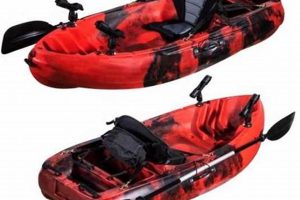
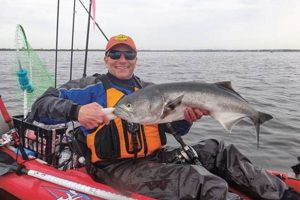
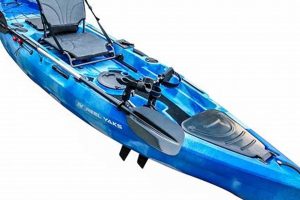
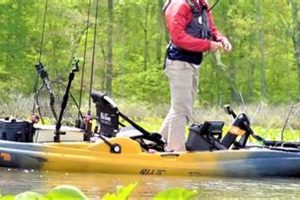
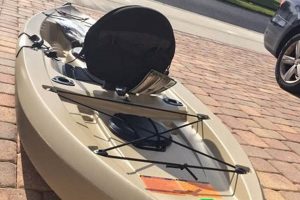
The concept of angling from specialized watercraft designed for stability and equipment carriage will likely evolve considerably by 2025. Advanced materials, integrated technology, and refined designs are expected to contribute to improved performance, comfort, and user experience in future models. Imagine a vessel seamlessly integrating fish-finding technology, electric propulsion, and personalized configurations. This provides a glimpse into the potential advancements anticipated within the next few years.
Such advancements hold significant implications for the angling community. Enhanced stability and maneuverability translate to improved fishing success, while integrated technologies could offer greater efficiency and situational awareness on the water. The evolution from basic, manually powered craft to technologically sophisticated platforms has been driven by the pursuit of improved angling experiences. These ongoing advancements are expected to further transform the way people interact with their aquatic environment for recreational and sporting purposes.
This anticipated progress warrants further exploration into specific areas of development. Subsequent sections will delve into predicted advancements in kayak design, propulsion systems, integrated electronics, and sustainable manufacturing processes. Understanding these anticipated changes provides valuable insight into the future of angling from these specialized vessels.
Strategic planning and informed decision-making are crucial for prospective kayak anglers looking towards 2025. The following insights are designed to provide guidance for selecting and utilizing future kayak fishing platforms.
Tip 1: Research Emerging Technologies: Thorough investigation of upcoming propulsion systems, integrated electronics, and construction materials will empower informed purchasing decisions.
Tip 2: Prioritize Sustainability: Opting for kayaks manufactured with recycled materials and eco-friendly processes contributes to environmental preservation.
Tip 3: Consider Modular Designs: Kayaks with adaptable configurations offer flexibility for diverse fishing styles and evolving needs.
Tip 4: Evaluate Technological Integration: Assess the compatibility and utility of integrated fish finders, GPS systems, and other electronic enhancements.
Tip 5: Emphasize Safety Features: Focus on advancements in stability, visibility, and emergency preparedness for enhanced on-water safety.
Tip 6: Explore Electric Propulsion Options: Electric motors offer advantages in range, maneuverability, and reduced physical exertion. Consider the trade-offs against traditional paddling.
Tip 7: Seek Expert Advice: Consult experienced anglers and industry professionals for insights on emerging trends and suitable kayak selections.
Careful consideration of these factors will contribute to a more informed purchasing decision and a more rewarding fishing kayak experience in the coming years. These considerations empower anglers to make informed choices aligned with individual needs and environmental responsibility.
By embracing these recommendations, anglers can ensure an optimal experience on the water. The following section concludes this exploration of future trends in fishing kayaks, providing a concise summary of key takeaways.
1. Advanced Materials
Material science advancements play a crucial role in the evolution of fishing kayak design. By 2025, the incorporation of novel materials is expected to significantly impact performance, durability, and sustainability within the industry. These materials offer potential improvements over traditional kayak construction, addressing limitations and enhancing key features.
- Graphene Composites
Graphene, renowned for its exceptional strength and lightweight properties, offers potential for creating highly durable yet lightweight kayaks. Incorporating graphene into composite materials can enhance hull stiffness, impact resistance, and overall structural integrity. This translates to improved performance and longevity, potentially reducing the need for frequent repairs or replacements. Kayaks incorporating graphene composites could become increasingly prevalent by 2025.
- Recycled Plastics
Utilizing recycled plastics in kayak construction addresses environmental concerns and promotes sustainability. High-density polyethylene (HDPE) and other recycled polymers can be effectively incorporated into kayak hulls and components, reducing reliance on virgin plastics. This contributes to a circular economy and minimizes the environmental footprint of kayak manufacturing. Increased consumer demand for eco-conscious products may drive wider adoption of recycled materials by 2025.
- Thermoformed Composites
Thermoforming offers efficient and cost-effective manufacturing processes for complex kayak shapes. This technique involves heating thermoplastic sheets and molding them over a mold, allowing for intricate hull designs and integrated features. Thermoforming can enhance production efficiency and customization options, potentially leading to more specialized kayak designs tailored to specific fishing styles. This manufacturing technique is predicted to gain prominence in the coming years.
- Bio-Based Polymers
Derived from renewable resources, bio-based polymers offer an environmentally friendly alternative to traditional petroleum-based plastics. These materials can reduce reliance on fossil fuels and offer comparable performance characteristics. While current applications are limited, ongoing research and development suggest increased potential for bio-based polymers in kayak manufacturing by 2025, driven by sustainability initiatives.
The integration of these advanced materials has the potential to transform the fishing kayak landscape. Lighter, stronger, and more sustainable kayaks will likely become increasingly prevalent, enhancing the overall angling experience while minimizing environmental impact. The convergence of these materials with other technological advancements points towards a future of enhanced performance, durability, and eco-consciousness within the fishing kayak industry.
2. Integrated Technology

Technological advancements are poised to revolutionize the fishing kayak experience by 2025. Integration of electronics and smart features will enhance angling effectiveness, navigation, and overall user experience. These integrated systems offer a range of functionalities designed to improve performance and enjoyment on the water.
- Fish Finding and Sonar Systems
Integrated sonar and fish-finding technology provide real-time underwater insights, enabling anglers to locate fish, identify underwater structures, and assess water depth and temperature. Advanced systems may offer features like side-scan imaging and 3D mapping, providing a comprehensive view of the underwater environment. This data enhances angling precision and efficiency, optimizing strategies for increased success. Integration eliminates the need for external transducers and displays, streamlining the kayak setup.
- GPS and Navigation Tools
Integrated GPS systems offer precise location tracking, route planning, and navigation assistance. Anglers can mark waypoints, track their movements, and navigate safely in unfamiliar waters or challenging conditions. Integration with mapping software allows for pre-trip planning and real-time route adjustments, improving navigational efficiency and safety. Combined with fish-finding data, GPS provides a powerful tool for locating and returning to productive fishing spots.
- Electric Motor Integration and Control
Integrated electric motors provide efficient and effortless propulsion, allowing anglers to cover greater distances, conserve energy, and navigate against currents or wind. Smart control systems allow for precise speed adjustments, hands-free operation, and automated anchoring. Integration simplifies kayak operation and expands accessibility for anglers with physical limitations, allowing them to enjoy longer excursions and explore wider areas.
- Connectivity and Data Management
Integrated connectivity features allow for data sharing, communication, and remote device control. Anglers can share fishing data, access real-time weather information, and connect with other anglers through integrated communication systems. Data logging capabilities enable tracking of fishing patterns, environmental conditions, and other relevant information for performance analysis and future trip planning. Integration with mobile devices and cloud platforms streamlines data management and enhances the overall fishing experience.
By 2025, these integrated technologies are anticipated to become increasingly prevalent in fishing kayaks, offering anglers enhanced capabilities and a more seamless, connected experience on the water. This integration will not only improve fishing effectiveness but also enhance safety, navigation, and overall enjoyment of the angling experience. The convergence of these technologies promises to transform fishing kayaks into highly sophisticated and connected angling platforms.
3. Enhanced Stability

Enhanced stability represents a critical element in the evolution of fishing kayaks towards 2025. Improved stability directly influences angler safety, comfort, and fishing effectiveness. A stable platform allows for more confident casting, reeling, and landing of fish, particularly in challenging conditions such as rough water or strong currents. Furthermore, enhanced stability enables anglers to stand up and fish, providing a better vantage point for spotting fish and improving casting accuracy. This is particularly advantageous in shallow water or when sight fishing.
Several design innovations contribute to enhanced stability. Wider hulls and outrigger systems provide increased primary stability, resisting initial tipping. Multi-hull designs, such as catamarans and trimarans, offer exceptional stability even in rough conditions. Advanced hull designs incorporating features like chines and tunnels improve secondary stability, helping the kayak recover from tipping. Integration of ballast systems or adjustable seating positions allows for personalized weight distribution and balance optimization. These advancements collectively contribute to a more stable and secure platform for anglers.
The practical significance of enhanced stability is evident in improved angler confidence and safety. A stable kayak reduces the risk of capsizing, particularly for less experienced anglers or those fishing in challenging conditions. This enhanced safety allows anglers to focus on the fishing experience rather than constantly managing balance. Furthermore, increased stability facilitates more active fishing techniques, such as stand-up fishing and aggressive casting, expanding angling possibilities. These advancements in stability are crucial for making kayak fishing more accessible and enjoyable for a wider range of individuals, further driving the popularity of this activity towards 2025.
4. Electric Propulsion

Electric propulsion systems are anticipated to play a significant role in the evolution of fishing kayaks by 2025. Offering distinct advantages over traditional paddle propulsion, electric motors enhance on-water mobility, expand fishing range, and improve overall angler experience. This technology addresses key limitations of paddle-powered kayaks, opening new possibilities for diverse angling styles and extended excursions.
- Enhanced Range and Efficiency
Electric motors enable anglers to cover greater distances with reduced physical exertion. This expanded range allows access to more remote fishing locations and facilitates longer trips. Variable speed control optimizes efficiency, balancing speed and battery life for extended operation. Compared to paddling, electric propulsion offers consistent speed and reduces fatigue, allowing anglers to focus on fishing rather than navigation.
- Improved Maneuverability and Control
Precise control over speed and direction enhances maneuverability in tight spaces, currents, and windy conditions. Features like GPS-guided autopilot and automated anchoring further enhance control, allowing for hands-free operation and precise positioning. Electric propulsion offers greater control compared to paddling, particularly in challenging environments, allowing for more precise boat handling and enhanced fishing opportunities.
- Integration and System Design
Integration of electric motors with kayak design is crucial for optimal performance and user experience. Factors such as motor placement, battery integration, and control systems influence efficiency, maneuverability, and ease of use. Well-integrated systems minimize drag, maximize battery life, and provide intuitive control, enhancing the overall usability and performance of the fishing kayak. Seamless integration is key to providing a cohesive and user-friendly experience.
- Environmental Considerations
Electric propulsion offers a quieter and more environmentally friendly alternative to gasoline-powered outboard motors. Reduced noise pollution minimizes disturbance to aquatic ecosystems and enhances the overall angling experience. Electric motors produce zero emissions, contributing to cleaner waterways and preserving natural habitats. This environmentally conscious approach aligns with growing concerns about sustainability within the fishing community.
By 2025, the integration of electric propulsion systems is expected to become increasingly prevalent in fishing kayaks. These systems offer significant advantages in terms of range, maneuverability, and environmental impact, contributing to a more efficient, comfortable, and sustainable angling experience. This technology represents a significant advancement in kayak fishing, expanding possibilities and enhancing accessibility for a wider range of anglers.
5. Sustainable Manufacturing

Sustainable manufacturing practices are becoming increasingly crucial for the fishing kayak industry, driven by growing environmental awareness and consumer demand for eco-conscious products. By 2025, sustainability is expected to be a defining factor in kayak production, influencing material selection, manufacturing processes, and overall product lifecycle. Adoption of sustainable practices contributes to resource conservation, reduced pollution, and minimized environmental impact throughout the kayak’s lifespan.
- Recycled Materials
Utilizing recycled plastics and other reclaimed materials minimizes reliance on virgin resources and reduces landfill waste. Incorporating recycled high-density polyethylene (HDPE) into kayak hulls provides a durable and sustainable alternative to virgin plastics. This reduces the demand for new plastic production, conserving fossil fuels and reducing greenhouse gas emissions. The use of recycled materials aligns with circular economy principles, promoting resource efficiency and waste reduction within the kayak manufacturing process. Examples include kayaks made from recycled fishing nets and plastic bottles.
- Bio-Based Resins and Composites
Employing bio-based resins and composites derived from renewable resources, such as plant-based oils, offers an environmentally friendly alternative to traditional petroleum-based materials. These materials reduce reliance on fossil fuels and often have a lower carbon footprint. Research and development in bio-based polymers are continuously expanding their potential applications in kayak construction, offering promising avenues for further reducing environmental impact. Examples include flax fiber reinforcement and bio-derived epoxy resins.
- Reduced Energy Consumption and Emissions
Implementing energy-efficient manufacturing processes minimizes energy consumption and associated greenhouse gas emissions. Optimizing production workflows, utilizing renewable energy sources, and adopting lean manufacturing principles contribute to reducing the environmental footprint of kayak production. This includes minimizing waste generation, optimizing material usage, and reducing transportation distances. Such efforts contribute to a more sustainable manufacturing ecosystem.
- Product Lifecycle Management
Considering the entire product lifecycle, from material sourcing to end-of-life disposal, is essential for minimizing environmental impact. Designing kayaks for durability and recyclability extends product lifespan and reduces waste generation. Implementing take-back programs and promoting responsible disposal methods further contribute to a circular economy approach. This holistic approach ensures that environmental considerations are integrated throughout the kayak’s existence, from production to disposal or repurposing.
By 2025, these sustainable manufacturing practices are expected to become increasingly integrated into the fishing kayak industry. This shift toward greater sustainability not only minimizes environmental impact but also aligns with consumer preferences for eco-conscious products, contributing to a more responsible and environmentally sound approach to kayak production and consumption. The adoption of these practices will be a defining characteristic of leading kayak manufacturers, signifying a commitment to environmental stewardship and a recognition of the interconnectedness between recreational activities and environmental preservation.
6. Personalized Design
Personalized design represents a significant trend influencing the future of fishing kayaks. By 2025, customization options are expected to expand significantly, allowing anglers to tailor kayaks to individual needs, preferences, and fishing styles. This shift acknowledges the diverse requirements of anglers, ranging from physical limitations and preferred fishing techniques to specific gear storage needs. Modular designs and adaptable components are key enablers of personalized design. Imagine interchangeable seating systems, adjustable footrests, and customizable mounting rails. These features empower anglers to optimize kayak configuration for comfort, stability, and efficient access to essential gear. Consider a kayak tailored for fly fishing, incorporating specialized rod holders and line management systems. Conversely, a kayak designed for trolling might prioritize rod holders, electronic mounts, and storage for larger tackle boxes. Such specialized configurations optimize the angling experience for specific techniques and preferences.
The practical implications of personalized design are substantial. Enhanced comfort and ergonomics reduce fatigue during long fishing trips, promoting enjoyment and focus. Optimized gear organization and accessibility improve efficiency, allowing anglers to focus on fishing rather than managing equipment. Consider an angler with limited mobility benefiting from a customized seating system and adaptive paddling mechanisms. Similarly, an angler specializing in a particular technique can tailor their kayak to perfectly accommodate the required gear and movements. This level of customization significantly enhances angling effectiveness and overall satisfaction. Moreover, modular designs offer adaptability over time. As angling preferences evolve, kayak configurations can be adjusted, maximizing the lifespan and versatility of the investment. This adaptability proves particularly valuable as anglers explore new techniques or adapt to changing physical needs.
Personalized design represents a paradigm shift in fishing kayak manufacturing, moving away from one-size-fits-all models toward customized solutions that cater to individual needs. This trend empowers anglers to optimize their equipment for enhanced comfort, efficiency, and enjoyment on the water. By 2025, the ability to personalize kayaks will be a crucial factor for anglers seeking a truly tailored and optimized fishing experience. The increasing availability of customizable options underscores the industry’s recognition of diverse angling needs and its commitment to providing tailored solutions for enhanced performance and satisfaction.
Frequently Asked Questions
This section addresses common inquiries regarding the anticipated advancements in fishing kayaks leading up to 2025. Understanding these projections can assist prospective buyers in making informed decisions and anticipating future trends.
Question 1: How will advancements in materials impact the durability and lifespan of fishing kayaks by 2025?
Utilization of materials like graphene composites and recycled plastics is projected to increase kayak durability and lifespan. These materials offer superior resistance to impact, abrasion, and UV degradation, potentially extending the usable life of kayaks compared to models constructed with traditional materials.
Question 2: What role will integrated technology play in enhancing the fishing experience by 2025?
Integrated technology, including fish finders, GPS, and electric motor control systems, will likely transform the fishing experience. These advancements offer enhanced navigational capabilities, improved fish-finding accuracy, and greater control over kayak movement, resulting in a more efficient and informed angling approach.
Question 3: How will enhanced stability features improve angler safety and performance by 2025?
Enhanced stability features, such as wider hulls and outrigger systems, are expected to significantly improve angler safety and performance. Increased stability allows for more confident casting, reeling, and even stand-up fishing, expanding angling possibilities and reducing the risk of capsizing, especially in challenging conditions.
Question 4: What are the potential environmental benefits of sustainable manufacturing practices in kayak production by 2025?
Sustainable manufacturing, including the use of recycled materials and bio-based resins, is expected to significantly reduce the environmental impact of kayak production. These practices contribute to resource conservation, reduced reliance on fossil fuels, and minimization of waste generation, promoting a more environmentally responsible approach to kayak manufacturing.
Question 5: How will personalized design and modularity impact the customization options available to anglers by 2025?
Personalized design and modularity are anticipated to provide anglers with unprecedented customization options. Interchangeable components, adjustable seating systems, and adaptable mounting rails will allow individuals to tailor their kayaks to specific needs, preferences, and fishing styles, enhancing comfort, efficiency, and overall angling experience.
Question 6: What are the key factors one should consider when investing in a fishing kayak in anticipation of these 2025 advancements?
Prospective buyers should carefully consider factors such as material durability, integrated technology features, stability enhancements, manufacturer commitment to sustainability, and available customization options. Evaluating these aspects ensures alignment with individual angling needs and preferences, maximizing the long-term value and enjoyment of the investment.
Understanding these anticipated advancements empowers informed decision-making for prospective kayak buyers. Careful consideration of these factors will contribute to a more rewarding and future-proof fishing kayak experience.
The subsequent section explores further considerations relevant to the future of fishing kayaks.
Fishing Kayak 2025
This exploration of “fishing kayak 2025” has revealed significant anticipated advancements across various aspects of design, technology, and manufacturing. Material innovations promise enhanced durability and reduced environmental impact. Integrated technologies offer increased angling efficiency and situational awareness. Improved stability and electric propulsion systems expand accessibility and enhance the on-water experience. Sustainable manufacturing practices reflect a growing commitment to environmental responsibility. Personalized design empowers anglers with customized configurations tailored to individual needs and preferences. These advancements collectively point towards a future where fishing kayaks are more specialized, efficient, comfortable, and environmentally conscious.
The convergence of these advancements signifies a transformative period for the fishing kayak industry. Anglers stand to benefit from significant improvements in performance, comfort, and environmental consciousness. Embracing these advancements through informed purchasing decisions and responsible usage will shape the future of angling from these specialized vessels, ensuring a sustainable and rewarding experience on the water for years to come.