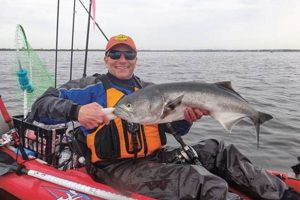
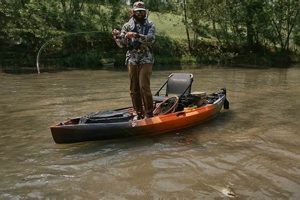
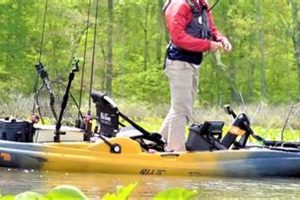
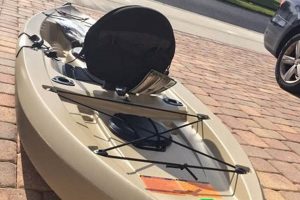
Budget-friendly fishing kayaks offer anglers the opportunity to explore waterways and access prime fishing spots without a significant financial investment. These vessels are typically designed with features like rod holders, storage compartments, and comfortable seating, making them well-suited for angling. An example might be a sit-on-top kayak constructed from durable, lightweight plastic, equipped with built-in rod holders and a rear cargo area for tackle and gear.
The rising popularity of kayak fishing can be attributed, in part, to the availability of less expensive options. This allows more individuals to participate in the sport, promoting outdoor recreation and connection with nature. Historically, fishing was often limited to those with access to boats or expensive equipment. The development and proliferation of lower-cost fishing kayaks have democratized the activity, opening it up to a wider range of enthusiasts. This accessibility contributes to conservation efforts by increasing awareness and appreciation for aquatic environments.
This article will delve into key considerations when selecting a fishing kayak in a lower price range. Topics covered will include hull design, materials, essential features, and recommended accessories. Readers will gain insights into identifying a suitable kayak based on their individual fishing style, target species, and preferred waterways.
Tips for Selecting Affordable Fishing Kayaks
Choosing a budget-friendly fishing kayak requires careful consideration of various factors to ensure the vessel meets specific angling needs and provides adequate performance on the water.
Tip 1: Prioritize Stability: Wider, flatter hulls offer greater stability, especially for stand-up fishing. Consider a pontoon-style hull for maximum stability.
Tip 2: Evaluate Storage Capacity: Ample storage for tackle, gear, and catches is crucial. Look for kayaks with dedicated compartments and bungee cords for securing items.
Tip 3: Consider Weight Capacity: Ensure the kayak’s weight capacity accommodates the angler’s weight, plus gear and potential catches.
Tip 4: Assess Material Durability: High-density polyethylene (HDPE) offers a good balance of durability and affordability. Consider UV resistance for longevity.
Tip 5: Examine Seating Comfort: A comfortable seat is essential for longer fishing trips. Look for adjustable backrests and padding.
Tip 6: Factor in Transportation: Consider the kayak’s weight and length for ease of transport. Roof racks or trailers may be necessary.
Tip 7: Research Rod Holder Options: Built-in rod holders are essential. Consider the number and placement for convenient access.
Tip 8: Check for Additional Features: Paddle holders, anchor trolleys, and scupper plugs can enhance the fishing experience.
By considering these factors, anglers can select a cost-effective fishing kayak that provides optimal performance, comfort, and functionality on the water. A well-chosen kayak enhances fishing experiences and allows for greater exploration of diverse aquatic environments.
This information provides a solid foundation for informed decision-making. The subsequent section will offer specific product recommendations and further guidance on maximizing the value of an affordable fishing kayak investment.
1. Price

Price represents a critical factor influencing the accessibility and adoption of kayak fishing. Understanding the relationship between cost and value is essential for making informed purchasing decisions that align with budgetary constraints without compromising functionality or enjoyment.
- Initial Purchase Cost
The initial outlay for a kayak represents the most significant expense. Prices vary considerably based on material, features, and brand reputation. Entry-level kayaks constructed from high-density polyethylene (HDPE) generally offer lower price points compared to higher-end models made from composites or specialized plastics. Evaluating features against cost is crucial; prioritizing essential features like rod holders and storage over non-essential add-ons can help manage expenses.
- Long-Term Costs
Beyond the initial purchase, ongoing expenses must be factored into the overall cost assessment. These may include necessary accessories like paddles, personal flotation devices (PFDs), and storage solutions. Maintenance costs, such as repairs or replacements, should also be considered. Selecting durable materials and performing regular maintenance can minimize long-term expenses.
- Value Proposition
Assessing value involves evaluating the kayak’s features, performance, and durability in relation to its price. A less expensive kayak offering adequate functionality for a specific fishing style may represent a better value proposition than a higher-priced model with unnecessary features. Researching reviews, comparing specifications, and considering long-term costs contribute to informed value assessments.
- Resale Value
While often overlooked, resale value can be a relevant consideration, particularly for anglers anticipating upgrading or transitioning to different fishing styles. Kayaks from reputable brands with durable construction tend to retain value better than less established brands or models prone to wear and tear. Factoring in potential resale value contributes to a comprehensive cost analysis.
Ultimately, a thorough understanding of pricing dynamics empowers anglers to make informed decisions, balancing budgetary constraints with functionality requirements. This careful consideration ensures access to the sport of kayak fishing without compromising long-term enjoyment and value.
2. Stability
Stability represents a critical performance attribute in affordable fishing kayaks, directly influencing angling success and overall safety. A stable platform allows anglers to cast, reel, and land fish effectively, minimizing the risk of capsizing, especially in challenging conditions. Kayak stability is primarily determined by hull design, width, and length. Wider, flatter hulls generally offer greater initial stability, making them suitable for calmer waters and stand-up fishing. Longer, narrower hulls tend to track better and handle chop more effectively but sacrifice some initial stability. Understanding the relationship between hull design and stability is crucial for selecting a kayak appropriate for intended fishing environments and techniques.
Budget-friendly kayaks often prioritize stability due to their target audience, which frequently includes novice or recreational anglers. Manufacturers achieve this through wider hull designs, sometimes incorporating pontoon-style hulls for enhanced stability. While these designs may compromise maneuverability or speed compared to higher-end models, they provide a secure platform for anglers prioritizing stability over performance. For example, an angler targeting panfish in a small pond benefits from a highly stable kayak that allows for comfortable casting and retrieval, whereas an angler targeting larger gamefish in open water might prioritize a kayak with greater speed and maneuverability, accepting a trade-off in stability. Real-world scenarios illustrate the importance of selecting a kayak with stability characteristics aligned with specific fishing needs and environmental conditions.
The practical significance of understanding stability in affordable fishing kayaks lies in selecting a vessel appropriate for individual skill levels and fishing styles. Prioritizing stability enhances safety, improves casting accuracy, and contributes to a more enjoyable and productive fishing experience. Evaluating stability features alongside budgetary constraints empowers anglers to make informed decisions, balancing performance characteristics with affordability. This knowledge enables informed selection of kayaks suitable for various fishing environments, from calm ponds to choppy bays, ensuring both safety and angling success.
3. Durability
Durability represents a critical factor in the value proposition of affordable fishing kayaks. Kayaks face exposure to various environmental stressors, including UV radiation, saltwater, and impacts from rocks or submerged objects. A durable kayak withstands these challenges, minimizing maintenance and replacement costs, thus maximizing the long-term return on investment. Material selection significantly influences durability. Lower-priced kayaks often utilize high-density polyethylene (HDPE), a robust material offering good impact resistance and UV stability. However, HDPE’s susceptibility to scratches and abrasion necessitates careful handling and storage. Understanding the trade-offs between material cost and durability is crucial in the selection process. For instance, a kayak frequently used in rocky rivers requires greater abrasion resistance than one used primarily in calm lakes. The practical implication is that evaluating durability based on intended usage patterns optimizes material selection within budget constraints.
Manufacturing processes also impact durability. Rotational molding, commonly used for affordable kayaks, produces a seamless, uniform hull, enhancing structural integrity and resistance to leaks. However, variations in molding quality can influence long-term performance. Examining weld lines and stress points during inspection can help identify potential weaknesses. For example, poorly executed welds can become stress points, increasing the risk of cracks or leaks over time. Recognizing such manufacturing details empowers informed decision-making, ensuring the selected kayak meets expected durability standards. Ultimately, selecting a durably constructed kayak, even within a budget, minimizes long-term costs and maximizes the lifespan of the investment.
Durability directly impacts the long-term cost-effectiveness of affordable fishing kayaks. A well-maintained, durable kayak provides years of reliable service, minimizing repair or replacement expenses. This consideration is particularly relevant for anglers on a budget, as it allows them to maximize their investment and enjoy extended access to the sport. While initial purchase price remains important, considering long-term durability ensures a more cost-effective approach to kayak ownership. Understanding the interplay between material selection, manufacturing quality, and intended use empowers anglers to make informed purchasing decisions that balance budget constraints with long-term durability requirements.
4. Features

Features distinguish fishing kayaks from recreational models, enhancing angling effectiveness and overall experience. While affordability often necessitates compromises, essential features remain crucial for functionality. Rod holders, strategically positioned for easy access and secure rod storage, are fundamental. Storage compartments, whether integrated hatches or bungee systems, accommodate tackle, gear, and personal items. A comfortable seat, often overlooked in budget models, significantly impacts long-term comfort, especially during extended fishing trips. Footrests or adjustable foot braces contribute to paddling efficiency and stability. These core features, while sometimes simplified in affordable kayaks, remain essential for a productive and enjoyable fishing experience. For example, an angler targeting bass in a river system benefits from multiple rod holders for diverse lure presentations, ample storage for tackle organization, and a comfortable seat for extended fishing sessions.
Beyond essential features, optional additions enhance functionality based on specific fishing styles and preferences. Paddle holders free hands for fishing tasks, preventing paddle loss. Anchor trolleys facilitate controlled drift fishing, maintaining position in currents. Rudders improve tracking and maneuverability in windy conditions. While these features might represent added costs, their value depends on individual fishing needs. An angler fishing in sheltered bays may find a rudder unnecessary, while one frequently battling wind and currents might consider it essential. The practical implication is that prioritizing essential features within budget constraints allows for selective addition of optional features based on individual requirements and fishing environments.
Features in affordable fishing kayaks represent a balance between essential functionality and cost constraints. Prioritizing core features, like rod holders and storage, ensures effective angling within a budget. Careful consideration of optional features, like rudders or anchor trolleys, based on specific fishing needs, optimizes value without unnecessary expense. Understanding this balance empowers informed decision-making, resulting in a kayak equipped to meet individual angling requirements while remaining affordable. Ultimately, feature selection determines the kayak’s effectiveness as a fishing platform, influencing angling success and overall enjoyment on the water.
5. Comfort

Comfort significantly influences angling effectiveness and enjoyment, particularly during extended fishing trips. While affordability often necessitates compromises, prioritizing essential comfort features enhances on-the-water experiences. Discomfort can detract from focus and endurance, impacting fishing success. Understanding the interplay between comfort and affordability allows anglers to make informed decisions, maximizing both enjoyment and performance without exceeding budgetary constraints.
- Seating
Seat design plays a pivotal role in overall comfort. Affordable kayaks might feature basic molded seats, often lacking adequate padding or back support. Upgrading to an aftermarket seat with enhanced cushioning and adjustable backrests can significantly improve comfort, particularly for individuals with back issues or those undertaking longer fishing trips. A comfortable seat allows anglers to maintain focus and endurance, maximizing fishing time and enjoyment. Consider seat breathability, especially in warmer climates, to minimize discomfort from perspiration. Features like adjustable straps and lumbar support contribute to personalized comfort, accommodating individual preferences and physical characteristics.
- Legroom and Footrests
Adequate legroom and adjustable footrests contribute to both comfort and paddling efficiency. Restricted legroom can cause cramping and discomfort, hindering mobility and casting. Adjustable footrests allow for customized positioning, promoting efficient power transfer during paddling and enhancing stability. Proper leg and foot positioning also reduces fatigue, enabling longer fishing sessions without discomfort. In affordable kayaks, footrests might be simpler or fixed, potentially limiting adjustability. Evaluating legroom and footrest options based on individual height and paddling style ensures optimal comfort and performance.
- Backrests
Back support is crucial for maintaining posture and minimizing strain during long hours on the water. Affordable kayaks often compromise on backrest features, impacting long-term comfort. Investing in an aftermarket backrest with adjustable lumbar support and adequate padding can significantly improve comfort and reduce back fatigue. Consider backrest materials that offer breathability and resistance to moisture and mildew. Adjustable backrests allow anglers to customize support based on individual preferences and fishing styles. Prioritizing back support enhances overall comfort, promoting focus and endurance throughout the fishing trip.
- Standing Platform (if applicable)
Some affordable fishing kayaks offer standing platforms or integrated features that facilitate stand-up fishing. These platforms provide greater visibility and casting range, but stability and comfort while standing are paramount. A stable platform, often achieved through wider hull designs, allows anglers to confidently stand and fish without compromising balance. Non-slip surfaces on the standing area enhance safety and security. Evaluating the stability and comfort of the standing platform is essential for anglers who prefer this fishing style, as it directly impacts both performance and safety. While not all affordable kayaks offer dedicated standing platforms, those that do should be assessed for their stability and comfort features.
Comfort considerations in affordable fishing kayaks require balancing cost constraints with essential features that enhance on-the-water experiences. Prioritizing seating comfort, legroom, and back support within budget limitations improves endurance, reduces fatigue, and maximizes fishing enjoyment. Evaluating these comfort features in relation to individual fishing styles and physical needs empowers informed decision-making, ensuring a comfortable and productive experience on the water.
Frequently Asked Questions
This section addresses common inquiries regarding the selection and use of budget-friendly fishing kayaks.
Question 1: What is the typical price range for an affordable fishing kayak?
Prices typically range from $300 to $800, depending on features, materials, and brand. Thorough research and comparison shopping are recommended to identify the best value within this range.
Question 2: Are affordable fishing kayaks less durable than higher-priced models?
Not necessarily. Many affordable kayaks utilize durable materials like high-density polyethylene (HDPE). However, manufacturing quality can vary, so careful inspection and research are essential.
Question 3: What essential features should one look for in an affordable fishing kayak?
Essential features include rod holders, storage compartments, and a comfortable seat. Prioritizing these features ensures functionality without exceeding budgetary constraints.
Question 4: Can affordable kayaks be used in both freshwater and saltwater environments?
Generally, yes. However, saltwater exposure necessitates thorough rinsing after each use to prevent corrosion or damage. Specific models may be better suited for certain environments.
Question 5: How does one choose the right size and weight capacity for a fishing kayak?
Consider the angler’s weight, gear, and potential catches. The kayak’s weight capacity should accommodate the combined weight of all onboard items for safe and stable performance. Longer kayaks generally offer higher weight capacities but can be more challenging to transport.
Question 6: What safety precautions should be taken when using an affordable fishing kayak?
Always wear a personal flotation device (PFD). Check weather conditions before embarking on a fishing trip. Inform someone of your intended location and return time. Carry essential safety gear, including a whistle, signaling device, and first-aid kit.
Understanding these frequently asked questions facilitates informed decision-making regarding the selection and safe operation of affordable fishing kayaks. Thorough research, combined with careful consideration of individual needs and intended usage, empowers anglers to acquire a suitable kayak within budget constraints.
The next section will delve into specific product recommendations and reviews, offering further guidance in selecting the ideal affordable fishing kayak.
Affordable Kayaks for Fishing
Careful selection of budget-friendly fishing kayaks involves balancing cost with essential features like stability, durability, and comfort. Prioritizing these aspects ensures a functional and enjoyable on-the-water experience without excessive financial investment. Understanding the relationship between price, material selection, and intended usage empowers informed decision-making, leading to a kayak well-suited for individual angling needs. Feature considerations, such as rod holders, storage compartments, and seating comfort, contribute significantly to overall fishing effectiveness and enjoyment.
The increasing accessibility of kayak fishing through affordable options fosters greater participation in outdoor recreation and connection with aquatic environments. Informed purchasing decisions based on the principles outlined herein contribute to responsible resource management and promote sustainable enjoyment of the sport. Investing wisely in a well-equipped, budget-friendly fishing kayak unlocks opportunities for enriching experiences in the natural world.