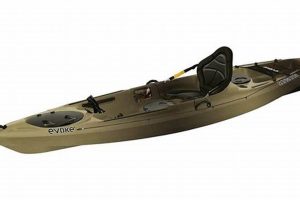
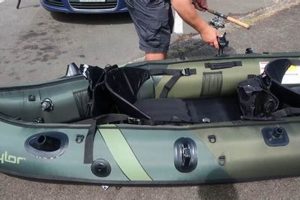
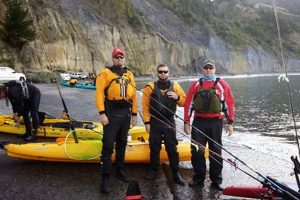
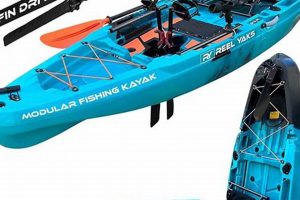
This type of watercraft blends the stability of a kayak with the elevated perspective and casting ease of a stand-up paddleboard. It is designed specifically for angling, offering features like rod holders, gear tracks, and often a higher weight capacity to accommodate anglers and their equipment. These vessels provide a stable platform for sight fishing and casting, allowing anglers to navigate shallow waters and access areas unreachable by larger boats.
The elevated vantage point afforded by this specialized craft gives anglers a significant advantage in spotting fish and navigating tricky waterways. The design prioritizes stability, crucial for casting and landing fish while standing. Historically, fishing kayaks were primarily sit-on-top or sit-in models. The evolution to incorporate stand-up capability has significantly enhanced the angler’s experience, offering improved visibility and casting range. This adaptation reflects a growing demand for versatility and performance in fishing kayaks.
This discussion will further explore specific features, benefits, and considerations for choosing a suitable watercraft for stand-up fishing, covering topics like hull design, stability, propulsion, and essential accessories.
Tips for Stand-Up Fishing Kayak Success
Optimizing the angling experience from this specialized platform involves understanding key techniques and equipment considerations.
Tip 1: Prioritize Stability: A wider, flatter hull design offers enhanced stability, crucial for standing and casting. Consider models specifically designed for stand-up fishing.
Tip 2: Practice Balance Techniques: Start in calm, shallow water to develop balance and comfort. Maintain a wide stance and centered weight distribution.
Tip 3: Choose Appropriate Paddles: A longer paddle, designed for stand-up paddling, provides greater reach and leverage. Adjustable paddles offer versatility for different water conditions.
Tip 4: Utilize an Anchor or Stake-Out Pole: Maintaining position in current or wind is essential for effective fishing. An anchor or stake-out pole provides this stability.
Tip 5: Organize Gear Strategically: Utilize onboard storage compartments and gear tracks to keep essential equipment within easy reach. Prioritize weight distribution for optimal balance.
Tip 6: Wear a Personal Flotation Device (PFD): Safety is paramount. A PFD is essential equipment for any on-water activity.
Tip 7: Check Local Regulations: Familiarize oneself with local fishing regulations and licensing requirements before embarking on any fishing trip.
Implementing these practices can significantly enhance safety and fishing success. A stable platform, strategic gear placement, and a focus on balance contribute to a more productive and enjoyable experience on the water.
These tips offer a starting point for maximizing the potential of these versatile fishing platforms. The following section will delve into specific product recommendations and further considerations.
1. Stability

Stability is paramount for stand-up fishing kayaks, directly influencing angler safety and fishing effectiveness. A stable platform enables anglers to stand confidently, cast accurately, and fight fish effectively without compromising balance. This is particularly crucial in dynamic water conditions, where waves or currents can challenge stability. The following facets delve deeper into the components and considerations of stability in these specialized kayaks.
- Hull Design:
Hull design significantly impacts stability. Wider, flatter hulls generally offer greater primary stability (initial resistance to tipping), ideal for calm waters. Kayaks with a slight V-shape or multi-hull designs can provide enhanced secondary stability (resistance to capsizing after initial tipping), beneficial in choppy conditions. Pontoon-style hulls offer exceptional stability, particularly for larger anglers or those carrying substantial gear. The optimal hull design depends on the intended fishing environment and angler preferences.
- Weight Distribution:
Proper weight distribution is crucial for maintaining balance. Evenly distributing gear within the kayak minimizes the risk of tipping. Centering weight low in the hull further enhances stability. Anglers should consider the combined weight of their body, gear, and potential catch when assessing a kayak’s weight capacity.
- Standing Platform:
The standing platform’s size, shape, and surface texture contribute to stability. A larger platform provides more space for foot placement and movement. Non-slip surfaces enhance grip and reduce the risk of slipping, particularly in wet conditions. A well-designed standing platform promotes comfort and confidence while standing.
- Environmental Factors:
External factors like wind, waves, and currents significantly impact stability. Anglers should assess the prevailing conditions and choose a kayak with appropriate stability characteristics. In challenging conditions, adjusting stance, lowering the center of gravity, and using an anchor or stake-out pole can enhance stability.
These interconnected facets highlight the critical role of stability in stand-up fishing kayak design and utilization. Selecting a kayak with appropriate stability characteristics for the intended fishing environment is essential for a safe and successful angling experience. Prioritizing stability contributes to angler confidence, allowing for focused fishing and enhanced enjoyment on the water.
2. Maneuverability

Maneuverability is a critical performance attribute influencing the effectiveness and enjoyment derived from a stand up fishing kayak. Efficient navigation through diverse water conditions, from narrow creeks to open lakes, demands responsive handling. The ability to easily change direction, navigate obstacles, and position the kayak optimally for fishing significantly impacts angling success. This attribute becomes particularly crucial when sight fishing, pursuing moving targets, or navigating complex shorelines. For instance, a kayak with superior maneuverability enables anglers to quickly reposition for an optimal casting angle when targeting a school of fish or navigate tight mangrove tunnels to access secluded fishing spots. The interplay between hull design, length, and waterline directly impacts a kayak’s turning radius and responsiveness.
Shorter kayaks generally offer greater maneuverability in tight spaces, while longer kayaks excel in tracking and maintaining speed in open water. Hull design plays a crucial role; a flatter hull enhances maneuverability in shallow water, while a V-shaped hull improves tracking in deeper water. Consider a kayak designed for river fishing; its shorter length and flatter hull contribute to nimble handling in currents and around obstacles. Conversely, a longer kayak with a V-shaped hull performs efficiently in open lakes, providing better tracking and speed for covering greater distances. The relationship between maneuverability and kayak design depends on the intended fishing environment and individual paddling style. Understanding these factors is vital for selecting a kayak that balances maneuverability with other performance characteristics like stability and speed.
The practical significance of maneuverability in a stand up fishing kayak extends beyond simply reaching a fishing spot. It directly influences an angler’s ability to effectively present lures, control drift, and fight fish. Challenges arise when maneuverability is compromised; navigating strong currents, wind, or confined spaces becomes difficult, potentially hindering fishing success and even posing safety risks. Therefore, carefully considering maneuverability alongside other key attributes ensures the selection of a fishing kayak optimized for the intended environment and angling style. This informed decision ultimately contributes to a more efficient, enjoyable, and successful fishing experience.
3. Fishing Features
Specialized fishing features distinguish stand-up fishing kayaks from recreational models, optimizing them for angling effectiveness and convenience. These integrated design elements cater specifically to the needs of anglers, enhancing functionality and overall fishing experience. Understanding these features empowers informed decision-making when selecting a kayak tailored to specific fishing styles and target species.
- Rod Holders:
Rod holders secure fishing rods, freeing hands for paddling, landing fish, or other tasks. Flush-mounted rod holders offer a streamlined profile, minimizing line snags. Adjustable rod holders accommodate various rod lengths and angling techniques. Multiple rod holders allow anglers to carry different setups for diverse fishing scenarios. For example, trolling setups can be deployed while simultaneously having a rod rigged for casting readily available.
- Gear Tracks:
Gear tracks provide versatile mounting points for accessories like fish finders, GPS units, cameras, and other equipment. These tracks allow for customized configurations to suit individual angling preferences. The ability to easily reposition accessories enhances on-the-water adaptability. Mounting a fish finder directly within view, for example, facilitates real-time depth and fish location monitoring. This adaptability is crucial for adjusting tactics based on changing environmental conditions or fish behavior.
- Storage Compartments:
Dedicated storage compartments safeguard tackle, gear, and personal belongings. Dry storage protects sensitive electronics and other items from water damage. Accessible storage compartments allow for efficient gear retrieval without disrupting fishing flow. Ample storage capacity facilitates longer fishing trips and accommodates diverse gear requirements. This dedicated storage facilitates organization, keeping essential equipment readily available while maintaining a clutter-free deck for safe and efficient movement.
- Anchor Systems:
Anchor systems maintain kayak position in current or wind, crucial for targeted fishing techniques. Integrated anchor trolleys allow for controlled anchoring and precise positioning. Stake-out poles offer a shallow-water anchoring solution for anchoring in soft bottoms. Effective anchoring prevents unwanted drift, enabling anglers to focus on fishing specific areas or structures. Maintaining position enhances techniques like bottom fishing or targeting specific cover, where precise boat control is essential.
These specialized features significantly enhance the functionality of stand-up fishing kayaks, transforming them into efficient fishing platforms. The strategic integration of these elements streamlines angling processes, improves organization, and ultimately contributes to a more productive and enjoyable fishing experience. The careful consideration of these features during kayak selection ensures anglers acquire a vessel optimized for their specific fishing needs and preferences. Choosing a kayak equipped with appropriate features aligns the vessel’s capabilities with the angler’s fishing style, maximizing potential on the water.
4. Weight Capacity
Weight capacity is a critical specification for stand-up fishing kayaks, directly impacting safety, performance, and overall usability. This metric dictates the maximum combined weight the kayak can safely support, encompassing the angler, gear, and any potential catch. Understanding weight capacity and its implications is crucial for informed kayak selection and responsible on-water practices. Exceeding the specified weight capacity compromises stability, maneuverability, and can potentially lead to capsizing or structural damage.
- Angler Weight:
Angler weight constitutes a significant portion of the total load. Kayaks designed for larger individuals typically have higher weight capacities. Accurately assessing personal weight is crucial for selecting a kayak that provides adequate buoyancy and stability. Failure to consider angler weight can lead to decreased freeboard (distance between the waterline and the deck), increasing the risk of water intrusion and potentially impacting stability.
- Gear and Equipment:
Fishing gear, including rods, reels, tackle boxes, and other accessories, contributes to the overall weight. Kayaks designed for fishing often feature ample storage space, but the weight of this gear must be factored into the total load. Overloading with gear can negatively impact performance and stability, especially in challenging water conditions. Distributing gear evenly throughout the kayak helps maintain balance and optimize performance.
- Potential Catch:
The weight of landed fish, while often unpredictable, should be considered, particularly when targeting larger species. A kayak’s weight capacity must accommodate the potential additional weight of a successful fishing trip. Underestimating the potential catch can lead to instability and difficulty maneuvering back to shore, potentially compromising safety. This is especially relevant in offshore fishing scenarios where larger catches are more common.
- Performance Implications:
Operating a kayak near its maximum weight capacity impacts performance characteristics. Reduced freeboard affects maneuverability and increases susceptibility to wind and waves. Lowered stability compromises standing and casting, potentially increasing the risk of falling. Understanding the relationship between weight capacity and performance is crucial for safe and efficient kayak operation. Selecting a kayak with ample weight capacity ensures optimal performance and maximizes safety margins.
Careful consideration of weight capacity is essential for selecting a stand-up fishing kayak suited to individual needs and intended use. Accurately assessing angler weight, gear, and potential catch ensures safe and efficient operation. Prioritizing weight capacity during kayak selection contributes to a stable, maneuverable, and enjoyable on-water experience, allowing anglers to focus on fishing rather than managing an overloaded vessel.
5. Portability

Portability significantly influences the accessibility and overall usability of a stand-up fishing kayak. Transporting the kayak to and from launch sites, especially those inaccessible by vehicle, necessitates manageable weight and dimensions. Storage considerations further underscore the importance of portability, particularly for individuals with limited storage space. This aspect becomes paramount for anglers frequently changing fishing locations or requiring convenient storage solutions. The interplay between kayak dimensions, weight, and available transport/storage options dictates the practical limitations and convenience of portability.
- Weight:
Kayak weight directly impacts portability. Lighter kayaks are easier to carry, load onto vehicles, and maneuver in challenging terrain. Material selection significantly influences weight; lighter materials like fiberglass or carbon fiber contribute to increased portability but often come at a higher cost. Heavier kayaks may require assistance for transport or specialized loading equipment, potentially limiting access to certain fishing locations. Consider an angler needing to carry their kayak across a sandy beach or down a steep embankment; a lighter kayak significantly simplifies this process.
- Length and Width:
Kayak dimensions influence transport and storage requirements. Shorter kayaks fit more easily in vehicles and require less storage space. However, shorter length can compromise stability and tracking performance. Longer kayaks provide better tracking and glide but present greater logistical challenges for transport and storage. A shorter kayak might fit inside a standard SUV, while a longer kayak may require a roof rack or trailer, adding complexity to transport.
- Transportation Methods:
Available transportation methods impact portability considerations. Roof racks, trailers, and kayak carts facilitate transport, but each presents unique logistical challenges. Roof racks require lifting the kayak onto the vehicle, while trailers necessitate appropriate towing capacity. Kayak carts assist with ground transport but may not be suitable for all terrains. An angler living in an apartment building with limited parking might find a kayak cart more practical than a roof rack or trailer.
- Storage Solutions:
Storage space availability dictates practical portability limitations. Garages, sheds, or dedicated storage racks provide convenient storage options. However, individuals with limited space may require kayaks that can be easily disassembled or stored vertically. Wall-mounted storage racks optimize space utilization, but require appropriate mounting hardware and wall strength. Anglers living in small apartments might prioritize kayaks that can be disassembled or stored compactly to maximize available space.
Portability directly influences the practical accessibility of a stand-up fishing kayak. Balancing weight and dimensions with performance characteristics and transport/storage limitations is crucial for maximizing usability and enjoyment. A thorough assessment of individual needs and logistical constraints ensures the selection of a kayak that seamlessly integrates into an angler’s lifestyle, facilitating effortless transport and convenient storage. Prioritizing portability empowers anglers to explore diverse fishing locations without logistical constraints, enhancing the overall fishing experience.
6. Durability
Durability is a critical factor influencing the lifespan and overall value of a stand-up fishing kayak. These specialized kayaks are subjected to various stressors, including UV exposure, saltwater corrosion, impacts with obstacles, and abrasion from transport and storage. A durable kayak withstands these challenges, maintaining structural integrity and performance over extended periods. This translates to long-term cost savings and ensures consistent reliability on the water. The following facets delve into the key components and considerations of durability in relation to these specialized fishing platforms.
- Construction Materials:
Material selection significantly impacts kayak durability. High-density polyethylene (HDPE) offers excellent impact resistance and UV stability, making it a popular choice for fishing kayaks. Fiberglass kayaks offer higher strength-to-weight ratios but can be more susceptible to cracking or damage from impacts. Thermoformed ABS plastic provides a balance of durability and affordability. Composite constructions, like carbon fiber, offer exceptional strength and lightweight performance but typically come at a premium cost. The chosen material directly influences the kayak’s resistance to wear and tear, impacting its long-term performance and lifespan. For example, an HDPE kayak might better withstand impacts against rocks or submerged logs compared to a fiberglass kayak.
- Hull Thickness:
Hull thickness directly correlates with impact resistance and overall durability. Thicker hulls offer greater protection against punctures and abrasion, crucial for navigating shallow waters or rocky shorelines. However, increased hull thickness typically adds weight, potentially impacting portability and maneuverability. Manufacturers balance hull thickness with performance characteristics to optimize durability without compromising other essential attributes. A kayak intended for rocky river environments would likely benefit from a thicker hull compared to one used primarily in calm lakes.
- Hardware and Fittings:
The quality and construction of hardware components, such as handles, latches, and D-rings, contribute to overall durability. Marine-grade stainless steel hardware resists corrosion, ensuring long-term functionality in saltwater environments. Reinforced attachment points provide added strength and security for accessories and gear. High-quality hardware and fittings withstand stress and maintain functionality over extended periods, contributing to the kayak’s overall lifespan. Rust-resistant hardware is particularly crucial for saltwater anglers, preventing premature degradation and maintaining functionality over extended periods.
- UV Resistance:
Ultraviolet (UV) radiation from sunlight can degrade kayak materials over time, causing fading, brittleness, and reduced structural integrity. UV-resistant coatings and additives protect against these damaging effects, extending the lifespan of the kayak. Proper storage practices, such as covering the kayak when not in use, further mitigate UV degradation. This protection preserves the kayak’s appearance and structural integrity, ensuring long-term performance and value. Kayaks stored outdoors in sunny climates benefit significantly from UV-resistant materials and protective covers.
Durability is a crucial investment consideration for stand-up fishing kayaks. Selecting a kayak constructed from robust materials, featuring durable hardware, and designed with UV resistance ensures long-term performance and value. Prioritizing durability minimizes the risk of premature wear and tear, maximizing the kayak’s lifespan and providing years of reliable service on the water. This long-term perspective benefits anglers by reducing replacement costs and ensuring consistent performance throughout the kayak’s life, ultimately contributing to a more satisfying and cost-effective ownership experience. Investing in a durable kayak translates to reliable performance and extended lifespan, allowing anglers to focus on fishing rather than equipment maintenance or replacement.
Frequently Asked Questions
This section addresses common inquiries regarding specialized fishing kayaks designed for stand-up angling.
Question 1: What are the key advantages of a stand-up fishing kayak over a traditional sit-on-top kayak?
Elevated visibility for spotting fish and navigating shallows, improved casting range and leverage, and enhanced maneuverability in tight spaces are key advantages. However, stand-up fishing kayaks typically require greater balance and coordination.
Question 2: How stable are these specialized kayaks, and are they suitable for beginners?
Stability varies depending on hull design, width, and length. Wider, flatter hulls offer greater stability. While some models cater to beginners, practicing balance in calm water is recommended before venturing into challenging conditions. Specialized training or guided instruction can benefit novice anglers.
Question 3: What factors should be considered when choosing the appropriate size and weight capacity?
Angler weight, gear weight, potential catch weight, and intended fishing environment influence size and weight capacity selection. Exceeding the manufacturer’s specified weight capacity compromises stability and performance. Careful consideration of these factors ensures safe and efficient operation.
Question 4: What are the essential safety precautions for stand-up fishing kayak angling?
Wearing a personal flotation device (PFD), carrying a whistle or signaling device, informing someone of the fishing plan, and checking weather conditions before embarking are essential safety precautions. Understanding self-rescue techniques and carrying a first-aid kit are also highly recommended.
Question 5: How do these specialized kayaks perform in different water conditions, such as rivers, lakes, and oceans?
Performance varies based on hull design and kayak length. Shorter, flatter hulls excel in rivers and shallow waters, while longer kayaks with V-shaped hulls track better in open lakes and oceans. Specific design features, like rudders or skegs, further enhance performance in specific conditions.
Question 6: What maintenance is required to ensure the longevity of this type of fishing kayak?
Regular rinsing with fresh water after each use, especially in saltwater environments, helps prevent corrosion and material degradation. Proper storage, protected from UV exposure, prolongs the lifespan of the kayak. Periodic inspection of hardware, fittings, and hull condition identifies potential issues early, preventing costly repairs. Following manufacturer recommendations for maintenance ensures optimal performance and longevity.
Addressing these common inquiries provides a foundational understanding of specialized fishing kayaks designed for the stand-up angling experience. Careful consideration of these aspects empowers informed decision-making and promotes safe and enjoyable on-water experiences.
The subsequent section delves into advanced techniques for maximizing fishing success from a stand-up kayak platform.
Conclusion
Exploration of this specialized fishing kayak reveals a compelling blend of stability, maneuverability, and purpose-built design. Key features like rod holders, gear tracks, and ample storage enhance angling effectiveness. Considerations of weight capacity, portability, and durability influence selection based on individual needs and intended usage. From calm lakes to challenging ocean environments, these versatile vessels offer anglers an elevated perspective and enhanced access to diverse fishing locations.
Choosing the appropriate kayak requires careful consideration of these interconnected factors. An informed decision empowers anglers to maximize their potential on the water, transforming fishing from a pastime into a truly immersive experience. As technology and design continue to evolve, these specialized kayaks will undoubtedly continue to refine the art of stand-up angling, further enhancing the pursuit of fishing success.