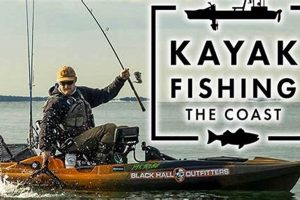
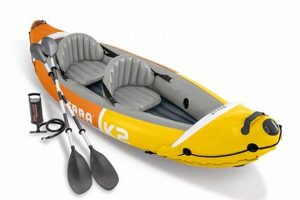
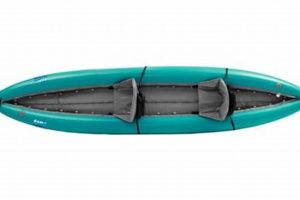
A tandem fishing kayak is designed for two paddlers, typically offering enhanced stability and load capacity compared to single-person models. These vessels often feature specialized seating arrangements and storage options tailored for angling equipment. An example would be a kayak with two adjustable seats, rod holders, and built-in dry storage compartments.
Tandem kayaks provide several advantages for fishing excursions. Sharing paddling responsibilities reduces individual exertion, enabling longer trips and exploration of more distant waters. The increased stability offered by a larger platform is beneficial when casting, landing fish, or navigating challenging conditions. Historically, shared watercraft played a crucial role in fishing communities worldwide, and modern tandem kayaks continue this tradition with improved designs and materials.
This article will further explore various aspects of tandem fishing kayaks, covering topics such as key features, popular models, essential accessories, and safety considerations for shared paddling experiences.
Tips for Tandem Kayak Fishing
Careful planning and execution are crucial for successful tandem kayak fishing trips. These tips offer guidance for a safe and productive experience.
Tip 1: Coordinate Paddling Strokes: Synchronized paddling is essential for efficient movement and maintaining a straight course. Practice paddling together beforehand to establish a rhythm and avoid collisions.
Tip 2: Distribute Weight Evenly: Proper weight distribution is vital for stability. Gear should be balanced throughout the kayak, avoiding overloading one side or the ends.
Tip 3: Establish Clear Communication: Open communication between paddlers is essential for navigation, fishing strategies, and safety. Agree on hand signals or verbal cues before embarking.
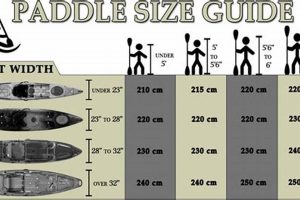
Tip 4: Select Appropriate Paddles: Paddle length and blade shape should be chosen based on individual paddler size and the kayak’s width. Properly fitted paddles enhance efficiency and reduce fatigue.
Tip 5: Prioritize Safety Equipment: Life jackets are mandatory and essential safety gear. A first-aid kit, whistle, and communication device should also be included for emergencies.
Tip 6: Respect Fishing Regulations: Adhere to all local fishing regulations, including licensing requirements and catch limits. Practice ethical angling and leave no trace behind.
Tip 7: Consider Specialized Features: When selecting a tandem kayak, consider features designed for fishing, such as rod holders, anchor trolleys, and dedicated storage compartments.
By following these guidelines, anglers can maximize their enjoyment and success on the water while ensuring a safe and memorable tandem kayaking experience.
This information provides a strong foundation for planning a tandem kayak fishing adventure. The following section will conclude the article with a summary of key points and resources for further exploration.
1. Stability

Stability is a paramount consideration in tandem fishing kayaks, directly influencing safety and angling success. A stable platform provides a secure foundation for casting, fighting fish, and navigating various water conditions. This section explores key facets contributing to stability in these vessels.
- Hull Design
Hull design plays a crucial role in determining stability. Wider, flatter hulls generally offer greater initial stability, resisting tipping during common fishing activities like casting or reeling. However, they may sacrifice maneuverability. A “catamaran” style hull, featuring two separate hulls connected by a platform, provides exceptional stability, making it suitable for challenging conditions.
- Weight Distribution
Proper weight distribution is essential for maintaining stability. Evenly distributing gear and passengers throughout the kayak prevents imbalances that can lead to capsizing. Centering heavier items low in the kayak also enhances stability. For instance, placing tackle boxes near the center of the vessel, rather than at the bow or stern, improves balance.
- Kayak Width and Length
Wider kayaks generally offer more stability than narrower models, providing a larger base of support. Length also influences stability; longer kayaks tend to track straighter, while shorter kayaks are more maneuverable but potentially less stable. A wider, shorter kayak might be ideal for calm lakes, while a longer, narrower design might suit rivers or coastal waters.
- Water Conditions
Calm water conditions naturally contribute to greater stability. However, factors like wind, waves, and currents can significantly impact stability, requiring increased vigilance and potentially specialized hull designs. For example, kayaks designed for ocean fishing often feature longer keels and higher sides to handle rougher waters.
Understanding these interconnected factors enables informed decisions when selecting and using a tandem fishing kayak. Prioritizing stability ensures a safer and more enjoyable fishing experience, allowing anglers to focus on their technique and the pursuit of their target species.
2. Capacity

Capacity, encompassing both weight and storage volume, significantly influences the practicality and functionality of a tandem fishing kayak. Weight capacity dictates the combined weight of passengers and gear the vessel can safely support. Exceeding this limit compromises stability and increases the risk of capsizing. Storage capacity determines the amount of fishing gear, personal items, and safety equipment that can be accommodated. A kayak’s intended use significantly influences its capacity requirements. For example, a kayak intended for short, leisurely fishing trips on calm lakes may require less capacity than one designed for multi-day expeditions in coastal waters. A longer fishing trip necessitates more storage for provisions, safety gear, and potentially camping equipment, impacting the choice of kayak.
Consider a scenario involving two anglers planning a weekend fishing trip. Their combined weight, along with fishing rods, tackle boxes, coolers, and camping gear, must fall within the kayak’s specified weight capacity. Insufficient weight capacity could necessitate multiple trips or force them to leave essential equipment behind. Similarly, inadequate storage space could limit the amount of bait, tackle, or extra clothing they can bring, potentially impacting the success and enjoyment of their trip. Alternatively, a group fishing for larger game fish, such as tuna or marlin, requires a kayak with a substantially higher weight capacity to handle the increased strain and potential for powerful runs. This reinforces the direct correlation between intended use and the required capacity of a tandem fishing kayak.
Careful consideration of capacity is essential when selecting a tandem fishing kayak. Accurately assessing the anticipated weight and storage needs for intended fishing excursions ensures safe and successful trips. Neglecting this aspect can lead to instability, compromised safety, and limitations in gear and provisions, ultimately hindering the overall fishing experience. Understanding the relationship between intended use, required capacity, and potential limitations empowers informed decision-making, ensuring the chosen vessel aligns with specific angling needs and enhances overall enjoyment on the water.
3. Maneuverability
Maneuverability in a tandem fishing kayak significantly impacts its effectiveness and suitability for various fishing environments. Navigating tight spaces, swiftly changing directions to follow fish, and efficiently handling currents or wind all rely on the vessel’s maneuverability. This characteristic becomes even more crucial in a two-person kayak, where coordinated paddling and balanced weight distribution play vital roles.
- Hull Design
Hull design directly influences maneuverability. Shorter kayaks with a more rounded or rockered hull tend to turn more easily, while longer, flatter hulls offer better tracking but may be less responsive. A kayak designed for river fishing often features a rockered hull for enhanced maneuverability in currents and around obstacles. Conversely, a kayak intended for open water might prioritize tracking over turning radius.
- Length and Width
Length and width are fundamental determinants of maneuverability. Shorter kayaks are generally more agile and responsive, allowing for quicker turns. Narrower kayaks tend to cut through the water more efficiently, requiring less effort to change direction. For example, a shorter, narrower kayak might be ideal for navigating mangrove tunnels or shallow creeks, while a longer, wider kayak might be preferred for stability in open water.
- Weight Distribution
Proper weight distribution significantly affects maneuverability. An unevenly loaded kayak becomes more challenging to turn and control, especially in windy conditions or currents. Distributing weight evenly and keeping heavier items low in the kayak enhances responsiveness and overall maneuverability. For instance, placing heavier gear towards the center of the kayak, rather than at the bow or stern, improves balance and control.
- Rudder or Skeg
Some tandem fishing kayaks feature a rudder or skeg to improve tracking and maneuverability. A rudder is a movable fin controlled by foot pedals, allowing for precise steering adjustments. A skeg is a fixed fin that enhances directional stability. These features are particularly helpful in windy conditions or when paddling against currents. For example, a rudder can assist in maintaining a straight course in strong winds, while a skeg helps prevent the kayak from being pushed sideways by currents.
The interplay of these factors determines a tandem fishing kayak’s overall maneuverability. Selecting a kayak with appropriate maneuverability for the intended fishing environment significantly impacts efficiency, enjoyment, and safety on the water. Choosing a kayak that balances maneuverability with other essential characteristics like stability and capacity ensures a vessel well-suited to specific fishing needs and preferences. For instance, a kayak designed for fishing in sheltered bays might prioritize maneuverability for navigating tight spaces and following fish, while a kayak intended for offshore fishing might prioritize stability and tracking in open water conditions. Balancing these characteristics is key to selecting the right kayak for a specific fishing style and environment.
4. Features (fishing-specific)
Specialized features distinguish tandem fishing kayaks from recreational models, enhancing their utility and angler effectiveness. These features directly impact fishing success and overall enjoyment on the water. Rod holders, strategically placed and readily accessible, secure rods while paddling or preparing tackle. Multiple rod holders accommodate diverse fishing techniques and target species. Integrated tackle storage compartments keep essential gear organized and within reach, minimizing disruption during critical moments. Anchor trolleys allow controlled anchoring and drifting, enabling precise positioning in desired fishing locations. These features are not merely conveniences but essential components that transform a standard kayak into a dedicated fishing platform. For example, a well-placed rod holder prevents rods from tangling or being damaged during transit, while readily accessible tackle storage streamlines lure changes and minimizes wasted time searching for equipment.
Consider the practical implications of these features. An angler battling a strong fish benefits significantly from a secure rod holder, freeing their hands to manage the line and reel. Quick access to tackle within a designated compartment enables swift adjustments to changing conditions, optimizing the chances of a successful catch. An anchor trolley allows controlled drifting along a weed bed or maintaining position in a current, maximizing fishing effectiveness. The absence of these features can lead to frustration, lost fishing opportunities, and compromised safety. For instance, an unsecured rod could easily be lost overboard in rough conditions, while scattered tackle creates inefficiency and potential safety hazards. The presence of specialized features enhances not just fishing effectiveness but also the overall experience, allowing anglers to focus on their technique and enjoy their time on the water.
The integration of fishing-specific features directly influences a tandem kayak’s suitability for angling. These features enhance efficiency, organization, and safety, contributing significantly to a more productive and enjoyable fishing experience. Understanding the purpose and practical applications of these features allows anglers to make informed decisions when selecting a kayak and optimize their use on the water. The presence and quality of these features often distinguish a dedicated fishing kayak from a recreational model, highlighting their critical role in successful angling pursuits.
5. Material (Durability)

Material selection directly impacts the durability and longevity of a tandem fishing kayak. The chosen material must withstand the rigors of on-water use, including exposure to UV radiation, abrasion from rocks and sand, and impacts from accidental collisions. Common materials include high-density polyethylene (HDPE), rotomolded polyethylene, and composites like fiberglass or carbon fiber. HDPE offers excellent impact resistance and affordability, while rotomolded polyethylene provides enhanced durability and UV resistance. Composites offer superior strength and lighter weight but often come at a higher cost. Selecting an appropriate material ensures the kayak can withstand regular use and various environmental challenges, maximizing its lifespan. For example, a kayak constructed from durable rotomolded polyethylene will likely resist cracking or fading from prolonged sun exposure better than a kayak made from a less UV-resistant material.
Durability considerations extend beyond the hull material. Hardware, such as handles, latches, and seat fittings, should also be constructed from corrosion-resistant materials like stainless steel or anodized aluminum. Seams and joints are critical points of vulnerability and require robust construction methods to ensure long-term watertight integrity. A kayak intended for use in saltwater environments demands higher corrosion resistance in its hardware compared to one used exclusively in freshwater. Similarly, a kayak frequently transported on a roof rack necessitates durable handles and tie-down points to withstand repeated stress. Attention to these details ensures that the kayak remains functional and safe throughout its intended lifespan. For example, using stainless steel hardware in a saltwater environment prevents rust and ensures the kayak’s components remain functional over time, whereas less durable materials might corrode quickly, compromising the kayak’s integrity.
Understanding the relationship between material selection and durability is essential for selecting a tandem fishing kayak that provides long-term value and reliable performance. The chosen materials and construction methods directly influence the kayak’s resistance to wear and tear, its ability to withstand various environmental conditions, and ultimately its overall lifespan. Investing in a kayak constructed from durable, high-quality materials ultimately reduces the need for frequent repairs or replacements, ensuring more time spent enjoying the water and less time addressing maintenance issues. This understanding empowers informed decision-making and contributes to a more satisfying and cost-effective long-term ownership experience.
6. Comfort (seating/space)

Comfort, encompassing seating and available space, directly influences the enjoyment and endurance of tandem fishing kayak excursions. Extended periods on the water necessitate supportive seating and ample space for movement and gear storage. Ignoring these factors can lead to discomfort, fatigue, and a diminished fishing experience. This section explores the crucial aspects of comfort within the context of tandem fishing kayaks.
- Seat Design and Adjustability
Ergonomic seat design, incorporating features like adjustable backrests and padded cushions, significantly impacts long-term comfort. Adjustable features accommodate individual preferences and body types, promoting proper posture and reducing strain. A well-designed seat mitigates fatigue and allows anglers to focus on fishing rather than discomfort. For example, a kayak with adjustable lumbar support caters to different back shapes and reduces the likelihood of developing back pain during extended trips.
- Legroom and Space
Adequate legroom and overall space within the kayak are essential for comfort, especially during long fishing trips. Sufficient space allows for changes in position, stretching, and easy access to gear. Restricted space can lead to cramps, discomfort, and hindered movement, impacting both fishing effectiveness and overall enjoyment. A kayak designed with ample legroom allows taller individuals to stretch their legs, reducing discomfort and promoting circulation during long hours on the water.
- Storage Accessibility
Convenient access to storage compartments contributes to both comfort and efficiency. Well-placed and easily accessible storage areas minimize the need for awkward reaching or stretching, reducing strain and interruptions during fishing. For instance, a kayak with readily accessible storage for tackle boxes and fishing gear allows anglers to quickly switch lures or adjust their setup without disrupting their fishing rhythm.
- Cockpit Design
The overall cockpit design, including the shape and height of the sides, influences comfort and ease of entry and exit. A well-designed cockpit provides adequate space for movement and a comfortable seating position while offering sufficient protection from the elements. For example, a kayak with a higher cockpit rim offers increased protection from waves and spray, contributing to a drier and more comfortable experience in rougher conditions. Conversely, a lower cockpit rim facilitates easier entry and exit, which is beneficial for anglers with mobility limitations.
Comfort considerations in tandem fishing kayaks are essential for maximizing enjoyment and endurance on the water. Prioritizing comfortable seating, ample space, and convenient storage access contributes significantly to a more positive and productive fishing experience. Selecting a kayak that prioritizes these elements ensures anglers can focus on their passion rather than battling discomfort, promoting longer, more enjoyable outings and ultimately enhancing the overall fishing experience. Neglecting these considerations can lead to a less satisfying experience, potentially cutting trips short due to discomfort and fatigue. Investing in a comfortable tandem fishing kayak enhances the overall enjoyment of shared fishing adventures, making every outing a more pleasurable and memorable experience.
Frequently Asked Questions About Tandem Fishing Kayaks
This section addresses common inquiries regarding tandem fishing kayaks, providing concise and informative responses to facilitate informed decision-making.
Question 1: What are the key advantages of choosing a tandem fishing kayak over two single kayaks?
Tandem kayaks offer increased stability, often carry a higher combined weight capacity, and can be more affordable than purchasing two single kayaks. They also promote collaborative fishing and shared paddling effort.
Question 2: How does the length of a tandem kayak affect its performance on the water?
Longer tandem kayaks generally track straighter and offer more storage space, while shorter models provide enhanced maneuverability, particularly in tight spaces or rivers. The optimal length depends on intended fishing locations and individual preferences.
Question 3: What weight capacity considerations are crucial when selecting a tandem fishing kayak?
The combined weight of all passengers, gear, and equipment should always remain well below the kayak’s maximum weight capacity. Exceeding this limit compromises stability and increases the risk of capsizing.
Question 4: Are tandem fishing kayaks suitable for use in both freshwater and saltwater environments?
Many tandem fishing kayaks are designed for use in both freshwater and saltwater. However, kayaks intended for saltwater use often feature corrosion-resistant hardware and fittings to withstand the harsher marine environment. Always verify a kayak’s suitability for the intended water type before purchase.
Question 5: What essential safety equipment should be carried on a tandem fishing kayak?
Essential safety equipment includes personal flotation devices (PFDs) for each paddler, a whistle, a first-aid kit, a communication device (such as a VHF radio or cell phone in a waterproof case), and navigation lights if paddling in low-light conditions.
Question 6: How does storage space in tandem kayaks compare to single kayaks?
While individual storage space per person may be slightly less than in two single kayaks, tandem kayaks usually offer greater overall storage capacity. This allows for carrying shared gear like coolers, tackle boxes, and safety equipment efficiently.
Addressing these frequently asked questions clarifies key considerations for selecting and using tandem fishing kayaks. Further research and consultation with experienced anglers can provide additional insights tailored to individual needs and preferences.
The concluding section will summarize the key benefits of using a tandem fishing kayak and offer resources for further exploration.
Tandem Fishing Kayaks
This exploration of tandem fishing kayaks has highlighted their unique advantages and considerations. From stability and capacity to maneuverability and specialized features, these vessels offer a distinct approach to angling. Material durability and comfort play crucial roles in long-term enjoyment and successful excursions. Understanding these elements empowers informed decisions, ensuring the chosen kayak aligns with specific fishing needs and preferences.
The shared experience of tandem kayaking enhances camaraderie and creates lasting memories on the water. Careful consideration of the factors presented here ensures not only a productive fishing experience but also a safe and enjoyable adventure. Continued exploration of available models, features, and safety practices further equips anglers to embark on rewarding shared fishing journeys.