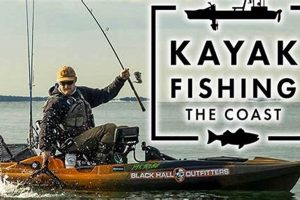
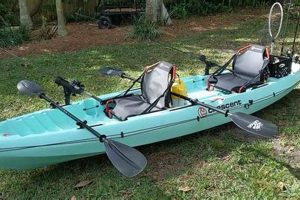
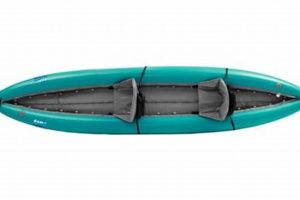
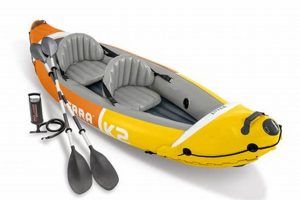
Recreational, portable vessels constructed of durable, flexible materials and filled with air offer anglers a convenient and affordable means of accessing various waterways. These craft are often lightweight, easily transported, and require minimal storage space compared to traditional hard-shell kayaks. Specific designs tailored for angling often incorporate features such as rod holders, storage compartments, and elevated seating positions.
The ease of use and portability of these watercraft have broadened participation in the sport of fishing. Their relatively low cost and minimal storage requirements remove significant barriers to entry, allowing a wider range of individuals to experience on-the-water angling. This accessibility fosters greater appreciation for natural environments and contributes to the growth of recreational fishing. Furthermore, the development of durable, high-performance materials has enhanced the performance and reliability of these vessels, establishing them as a viable alternative to traditional kayaks.
The following sections delve deeper into specific aspects of these specialized vessels, including construction materials, design variations, essential accessories, and safety considerations for anglers. This comprehensive guide aims to equip readers with the knowledge needed to make informed decisions regarding selection, use, and maintenance.
Tips for Utilizing Inflatable Fishing Kayaks
Proper preparation and mindful usage significantly enhance the performance and longevity of inflatable fishing kayaks. Adherence to the following guidelines contributes to safer and more enjoyable on-the-water experiences.
Tip 1: Inflation to Proper Pressure: Achieve optimal performance and rigidity by adhering to manufacturer-recommended inflation pressures. Under-inflation can lead to instability, while over-inflation risks damage.
Tip 2: Careful Selection of Launching Sites: Avoid areas with sharp rocks, submerged debris, or abrasive surfaces. Opt for smooth, gradually sloping shorelines or boat ramps to minimize the risk of punctures or abrasion.
Tip 3: Prudent Weight Distribution: Distribute gear and weight evenly within the vessel to maintain balance and stability. Avoid exceeding the manufacturer’s specified weight capacity.
Tip 4: Regular Inspection and Maintenance: Prior to each outing, inspect the vessel for any signs of wear, leaks, or damage. Thorough cleaning and proper drying after each use prevent mildew and extend the lifespan of the kayak.
Tip 5: Appropriate Safety Gear: Carry essential safety equipment, including a personal flotation device (PFD), a whistle, and a signaling device. Awareness of local regulations and weather conditions is paramount.
Tip 6: Secure Gear Storage: Utilize integrated storage compartments or waterproof bags to protect electronic devices, fishing tackle, and other essential items from water damage.
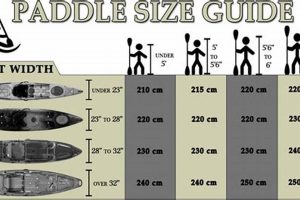
Tip 7: Mindful Paddling Technique: Employ efficient paddling techniques to conserve energy and maximize maneuverability. Awareness of wind and current conditions aids in navigation and control.
Adherence to these practical tips ensures safe and efficient operation, extending the lifespan of the inflatable fishing kayak and contributing to rewarding fishing experiences.
The following section concludes this comprehensive guide, offering final considerations for anglers exploring the benefits of inflatable fishing kayaks.
1. Portability

Portability represents a defining characteristic of inflatable fishing kayaks, significantly influencing their appeal and practicality. Unlike rigid kayaks, these inflatable vessels can be deflated and packed into a compact form, facilitating transport and storage. This characteristic expands angling opportunities by enabling access to remote or otherwise inaccessible waterways. Transporting a rigid kayak often requires specialized roof racks or trailers, adding complexity and cost. Inflatable kayaks, conversely, can be easily transported in the trunk of a car, eliminating the need for additional equipment and expanding access to diverse fishing locations, including small ponds, secluded rivers, and remote lakeshores.
The portability factor significantly reduces barriers to entry for individuals with limited storage space or transportation options. Apartment dwellers or individuals without dedicated storage facilities can easily store a deflated kayak, eliminating the constraints imposed by bulky, rigid hulls. This ease of storage and transport contributes to the growing popularity of inflatable kayaks among urban anglers and those seeking convenient, on-demand access to the water. Consider, for instance, an angler living in a city apartment. An inflatable kayak allows them to easily transport their vessel via public transportation to a local waterway, expanding their recreational opportunities without the need for vehicle ownership or dedicated storage.
While portability represents a substantial advantage, it’s essential to recognize the process of inflation and deflation. Though relatively straightforward, these processes require time and effort, representing a minor trade-off for the convenience of compact storage and transport. Overall, portability significantly enhances the versatility and accessibility of inflatable fishing kayaks, making them a practical choice for a wide range of angling scenarios.
2. Affordability

Affordability often motivates the purchase of inflatable fishing kayaks, particularly when compared to traditional hard-shell kayaks. Manufacturing inflatable kayaks generally involves lower material and labor costs, resulting in a lower price point for consumers. This cost-effectiveness opens up kayak fishing to a broader audience, including budget-conscious individuals and families. For example, an angler seeking a recreational fishing vessel might find an inflatable kayak fits their budget more comfortably than a comparably equipped hard-shell kayak. This accessibility fosters increased participation in the sport and promotes outdoor recreation without substantial financial barriers.
The lower initial investment cost doesn’t necessarily translate to compromised quality or features. Many inflatable kayaks offer durable construction, specialized fishing features, and ample storage capacity. This balance of affordability and functionality makes inflatable kayaks a compelling option for both novice and experienced anglers. Furthermore, the lower cost may also allow anglers to allocate more of their budget towards essential fishing gear, safety equipment, and other accessories. Consider an angler with a limited budget: an inflatable kayak may allow them to purchase higher-quality rods, reels, or fish finders, enhancing their overall fishing experience.
While affordability is a significant advantage, potential buyers should remain aware of long-term costs. While generally durable, inflatable kayaks may require occasional repairs or replacement parts. Factors like usage frequency, storage conditions, and environmental exposure influence the lifespan and overall cost of ownership. Understanding both the initial investment and potential long-term expenses provides a complete picture of the true cost of owning an inflatable fishing kayak, allowing informed purchasing decisions aligned with individual budgets and expectations.
3. Durability
Durability represents a critical factor in the evaluation of inflatable fishing kayaks, directly influencing their lifespan and overall value. Materials science plays a crucial role in the construction of these vessels, impacting their resistance to punctures, abrasion, and UV degradation. Modern inflatable kayaks often utilize multi-layer constructions incorporating robust materials like PVC (polyvinyl chloride) and reinforced fabrics. These materials, combined with advanced construction techniques, provide resilience against the rigors of on-water use, including encounters with rocks, submerged branches, and other potential hazards. For instance, some manufacturers employ a drop-stitch construction, interweaving thousands of fine threads between the inner and outer layers, creating a rigid, air-holding core that significantly enhances durability and impact resistance. This construction contributes to the kayak’s ability to maintain its shape and structural integrity even under pressure and challenging environmental conditions.
The durability of an inflatable fishing kayak extends beyond the core materials to include reinforced seams, robust valves, and well-designed attachment points. High-frequency welding and reinforced taping at stress points contribute to the overall structural integrity of the vessel, minimizing the risk of leaks and tears. Durable valves ensure efficient inflation and deflation while preventing air leakage during use. Reinforced attachment points for seats, accessories, and carrying handles provide secure and reliable connection points, further enhancing the kayak’s overall durability and functionality. A well-constructed inflatable kayak, utilizing high-quality materials and advanced construction techniques, can withstand regular use in diverse environments, offering anglers reliable performance over an extended period.
While modern inflatable kayaks exhibit impressive durability, understanding their limitations remains crucial for informed usage and proper maintenance. Avoiding contact with sharp objects or abrasive surfaces minimizes the risk of punctures and abrasions. Proper inflation and deflation techniques, along with regular cleaning and storage in a cool, dry environment, contribute to the long-term preservation of the kayak’s materials and structural integrity. Recognizing the factors that contribute to durability, coupled with appropriate care and maintenance practices, empowers anglers to maximize the lifespan of their inflatable fishing kayaks and enjoy countless hours on the water.
4. Stability

Stability represents a critical performance attribute in inflatable fishing kayaks, directly influencing angler safety, comfort, and fishing effectiveness. Several design elements contribute to the stability of these vessels, including hull design, width, and tube configuration. Wider kayaks generally exhibit greater primary stability, resisting initial tipping or rocking motions. A flat-bottomed hull design enhances initial stability, providing a secure platform for casting and reeling. However, a wider, flatter hull may compromise secondary stability, the ability to recover from larger destabilizing forces. Inflatable kayaks often utilize multiple air chambers, enhancing buoyancy and contributing to overall stability. The interplay of these design features dictates the kayak’s stability characteristics, influencing its suitability for various water conditions and fishing styles. For example, a wider, flatter hull kayak excels in calm lakes or slow-moving rivers, providing a stable platform for still fishing, while a narrower kayak with a more rounded hull may offer better performance in rougher water or when navigating swift currents. The Intex Excursion Pro K2, with its wider beam and three separate air chambers, exemplifies a design prioritizing stability for calm-water angling.
Angler actions and environmental factors also impact stability. Shifting weight, sudden movements, or external forces like wind and waves can compromise stability. Understanding the kayak’s stability characteristics allows anglers to adapt their movements and techniques to maintain balance and control. Distributing weight evenly within the kayak, avoiding sudden shifts in body position, and utilizing proper paddling techniques enhance stability and mitigate the risk of capsizing. Environmental awareness also plays a crucial role. Strong winds, choppy water, or swift currents can significantly impact stability, requiring increased caution and potentially limiting the safe operational range of the kayak. For example, an angler fishing in windy conditions might choose to position themselves facing the wind to minimize the kayak’s surface area exposed to the wind and maintain better control. Alternatively, they might choose to seek sheltered areas or postpone their fishing trip altogether if conditions pose a significant safety risk.
Careful consideration of stability characteristics during the kayak selection process is essential. Anglers should consider their intended use, target fishing locations, and anticipated water conditions. Manufacturers often provide stability ratings or recommendations, offering valuable guidance for prospective buyers. Matching the kayak’s stability profile to the angler’s skill level and intended use optimizes on-water safety, comfort, and overall fishing experience. Ultimately, understanding the factors influencing stability, adapting angling techniques accordingly, and respecting environmental conditions contributes to safe and successful kayak fishing experiences.
5. Fishing Features
Specialized features distinguish inflatable fishing kayaks from recreational models, enhancing their utility and angler effectiveness. These features directly address the unique needs of anglers, facilitating improved fishing experiences. Rod holders, strategically positioned to secure fishing rods while paddling or waiting for a bite, exemplify such specialized adaptations. Multiple rod holders accommodate diverse fishing techniques and allow for quick transitions between different rods and lures. Integrated mounting points accommodate fish finders, GPS units, and other electronic accessories, enhancing navigational capabilities and fish-finding precision. Built-in storage compartments and accessory attachment points provide organized storage for tackle boxes, fishing gear, and other essential items, streamlining access and maximizing on-water efficiency. Consider the Intex Excursion Pro K2, which offers adjustable rod holders, multiple storage compartments, and mounting points for accessories, demonstrating the practical integration of fishing-specific features within a popular inflatable kayak model. These features contribute to a more streamlined and productive fishing experience, differentiating inflatable fishing kayaks from general-purpose recreational models.
The presence and configuration of fishing features directly influence an inflatable kayak’s suitability for specific fishing styles and target species. Anglers targeting larger game fish, for instance, benefit from kayaks with robust rod holders capable of securing heavy-duty rods and reels. Kayak anglers practicing fly fishing may prioritize models with strategically placed D-rings or attachment points for securing fly fishing accessories and gear. Similarly, anglers focusing on trolling might favor kayaks with integrated track systems for mounting rod holders and other trolling-specific equipment. The selection of an inflatable fishing kayak should, therefore, align with the angler’s preferred fishing techniques and target species. A thorough understanding of available features and their practical applications empowers informed purchasing decisions, ensuring the selected kayak optimizes fishing effectiveness and overall satisfaction. For instance, an angler specializing in trolling would benefit from examining the track systems and rod holder mounting options available on various inflatable kayak models to determine the optimal setup for their specific needs.
The integration of fishing-specific features into inflatable kayaks significantly enhances their functionality and appeal to anglers. Careful consideration of these features during the selection process ensures alignment with individual fishing styles and preferences. Rod holders, mounting points, storage compartments, and other specialized adaptations contribute to increased efficiency, organization, and overall fishing success. Ultimately, the thoughtful integration of fishing features distinguishes specialized inflatable fishing kayaks from recreational models, establishing them as effective and versatile platforms for pursuing various angling disciplines. The evolution of inflatable kayak design continues to incorporate innovative features tailored to the evolving needs of anglers, further solidifying their position as a practical and accessible choice for on-the-water fishing adventures.
6. Storage Capacity
Storage capacity significantly influences the practicality and versatility of inflatable fishing kayaks. Adequate storage facilitates organized transport of essential gear, enhancing angler efficiency and overall fishing experience. Understanding the nuances of storage options in these kayaks proves crucial for informed purchasing decisions and effective utilization on the water.
- Dedicated Storage Compartments:
Many inflatable fishing kayaks incorporate dedicated storage compartments, often located within the bow, stern, or behind the seat. These compartments offer designated spaces for tackle boxes, dry bags containing electronic devices, and other essential gear. Sealed compartments provide protection from water damage, while strategically placed open compartments allow quick access to frequently used items. The Intex Excursion Pro K2, for example, features multiple storage compartments, including a large rear storage area and smaller compartments for readily accessible items.
- Bungee Cords and D-Rings:
Bungee cord systems and strategically placed D-rings provide additional storage options on inflatable fishing kayaks. Bungee cords secure larger items like spare paddles or dry bags to the deck, while D-rings offer attachment points for customized storage solutions. Anglers can utilize carabiners and accessory straps to secure additional gear or personalize their storage setup. These systems enhance versatility and accommodate diverse storage needs, maximizing available space and maintaining a clutter-free deck.
- Weight Capacity and Distribution:
Understanding the kayak’s weight capacity and the impact of weight distribution on performance is crucial. Exceeding the weight capacity compromises stability and maneuverability, potentially leading to safety risks. Evenly distributing gear within the kayak optimizes balance and tracking. Considering storage capacity in relation to weight capacity allows anglers to pack efficiently without compromising performance or safety. Manufacturers typically provide weight capacity specifications, guiding safe and effective loading practices.
- Storage Solutions for Specific Gear:
Specialized storage solutions cater to specific fishing gear and accessories. Tackle bags designed for kayak fishing often feature attachment points compatible with D-rings or bungee systems, optimizing organization and accessibility. Waterproof bags and cases protect electronic devices and sensitive items from water damage, while specialized rod holders secure fishing rods during transport and while on the water. Utilizing these specialized storage solutions maximizes space utilization and enhances overall fishing efficiency.
Careful evaluation of storage capacity and features contributes significantly to informed purchasing decisions regarding inflatable fishing kayaks. Understanding the types of storage available, their practical applications, and their influence on overall performance allows anglers to select a kayak that effectively meets their individual needs and fishing style. Adequate and well-designed storage solutions enhance organization, efficiency, and enjoyment on the water, maximizing the overall fishing experience. By prioritizing storage capacity alongside other key features, anglers equip themselves with a versatile and practical vessel ready to tackle any fishing adventure.
Frequently Asked Questions
This section addresses common inquiries regarding inflatable fishing kayaks, providing concise and informative responses to facilitate informed decision-making and enhance user understanding.
Question 1: How durable are inflatable fishing kayaks compared to hard-shell kayaks?
While hard-shell kayaks generally offer greater resistance to punctures and impacts, advancements in materials and construction techniques have significantly enhanced the durability of inflatable kayaks. High-quality inflatable kayaks constructed from durable PVC or reinforced fabrics demonstrate remarkable resilience against normal wear and tear. Proper care and maintenance further extend their lifespan.
Question 2: How stable are inflatable fishing kayaks, especially for standing and casting?
Stability varies depending on the kayak’s design, width, and hull configuration. Wider inflatable kayaks with flatter bottoms generally offer greater initial stability, making them suitable for standing and casting in calm water conditions. However, secondary stability, the ability to recover from tipping, may be compromised in rougher water or during dynamic movements.
Question 3: How much weight can an inflatable fishing kayak support?
Weight capacity varies significantly among models. Manufacturers specify weight limits, which include the combined weight of the angler, gear, and any additional passengers. Exceeding the specified weight capacity compromises stability and performance, potentially creating safety risks.
Question 4: How long does it take to inflate and deflate an inflatable fishing kayak?
Inflation and deflation times typically range from 5 to 15 minutes, depending on the kayak’s size and the type of pump used. High-volume pumps expedite the process. Practice improves efficiency.
Question 5: What essential accessories enhance the inflatable fishing kayak experience?
Essential accessories include a high-volume pump, a repair kit, a personal flotation device (PFD), and appropriate paddles. Additional accessories such as rod holders, fish finders, and dry bags further enhance functionality and convenience.
Question 6: How should an inflatable fishing kayak be stored and maintained?
Proper storage and maintenance extend the lifespan of inflatable kayaks. Cleaning the kayak after each use and allowing it to dry completely before storage prevents mildew and material degradation. Storing the kayak in a cool, dry place away from direct sunlight protects it from UV damage.
Addressing these common questions empowers informed decisions regarding the selection, use, and maintenance of inflatable fishing kayaks. Careful consideration of these factors contributes to enhanced safety, performance, and enjoyment on the water.
The following section provides concluding thoughts and recommendations for prospective inflatable kayak anglers.
Conclusion
Inflatable fishing kayaks manufactured by Intex present a compelling option for anglers seeking portable, affordable, and feature-rich vessels. Exploration of key aspectsportability, affordability, durability, stability, specialized fishing features, and storage capacityreveals their suitability for diverse fishing environments and angling styles. Careful consideration of these factors empowers informed purchasing decisions aligned with individual needs and preferences. The evolution of materials and construction techniques contributes to enhanced durability and performance, positioning these kayaks as viable alternatives to traditional hard-shell models. Understanding operational nuances, including inflation procedures, weight distribution, and safety considerations, optimizes on-water experiences and ensures angler safety. Addressing common inquiries clarifies potential concerns and facilitates informed evaluations of these versatile vessels.
Continued advancements in design and technology promise further enhancements in performance, functionality, and user experience. The accessibility and adaptability of Intex inflatable fishing kayaks contribute to the growth and diversification of recreational fishing, fostering greater appreciation for aquatic environments. Potential purchasers are encouraged to conduct thorough research, evaluate individual needs, and prioritize safety considerations when selecting and utilizing these innovative and versatile watercraft.