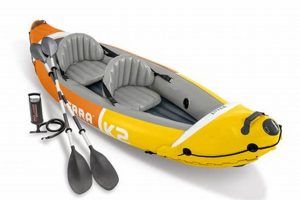
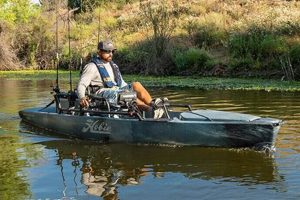
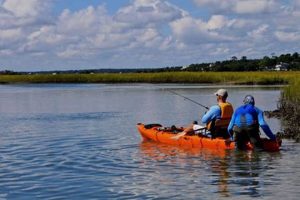
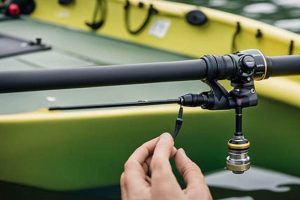
A small, relatively narrow watercraft, typically propelled by a paddle and designed for angling, in a distinct bluish-green color, offers a unique blend of aesthetics and functionality. This specific color choice can serve both as a matter of personal preference and as a means of enhanced visibility or camouflage in certain aquatic environments. Examples include sit-on-top models favored for their stability and ease of access to gear, as well as sit-inside designs preferred for colder climates due to their enclosed cockpits.
The increasing popularity of this particular type of watercraft stems from the combination of stability, maneuverability, and portability. These vessels are often lighter and easier to transport than larger boats, allowing access to remote fishing locations. Historically, kayaks have been used for fishing for centuries in diverse cultures, evolving from traditional designs to the modern, specialized versions now readily available. The specific color can be a differentiating factor, offering potential advantages in specific environments or aligning with individual aesthetic preferences.
This discussion will further explore the advantages and disadvantages of selecting this type of vessel, including factors such as material construction, key features, and popular brands, offering readers a comprehensive guide to making informed purchasing decisions.
Tips for Selecting a Kayak for Fishing
Choosing the right kayak for fishing requires careful consideration of several factors to ensure optimal performance, safety, and enjoyment on the water. These tips offer guidance through the selection process.
Tip 1: Consider Hull Design: Different hull designs (e.g., pontoon, sit-on-top, sit-inside) offer varying degrees of stability, speed, and maneuverability. A wider, flatter hull provides greater stability, while a longer, narrower hull offers better tracking and speed.
Tip 2: Evaluate Propulsion Systems: Paddle kayaks offer excellent exercise and control but require more physical effort. Pedal-driven systems offer hands-free fishing and greater speed, while motorized kayaks cover larger distances with ease.
Tip 3: Prioritize Storage Capacity: Ample storage space is crucial for carrying fishing gear, tackle boxes, and safety equipment. Look for kayaks with dedicated compartments, tank wells, and bungee cords for secure storage.
Tip 4: Assess Weight Capacity: Ensure the kayak’s weight capacity accommodates the combined weight of the angler, gear, and potential catch. Exceeding the weight capacity can compromise stability and safety.
Tip 5: Consider Comfort and Ergonomics: A comfortable seat, adjustable footrests, and a well-designed cockpit contribute to a more enjoyable fishing experience, especially during longer outings.
Tip 6: Factor in Transportation and Storage: Consider the kayak’s size and weight relative to transportation capabilities. Roof racks, trailers, or inflatable options might be necessary depending on the chosen model.
Tip 7: Research Color Choices: The color of the kayak can play a role in visibility and camouflage. Brighter colors enhance visibility for safety, while more subdued tones blend in with the natural surroundings.
By carefully considering these factors, anglers can select a kayak that meets their specific needs and enhances their fishing experience. A well-chosen vessel provides a stable, efficient, and enjoyable platform for pursuing their passion on the water.
This information serves as a starting point for further research and comparison of available kayak models, ultimately leading to a successful and fulfilling purchase.
1. Color
The color of a fishing kayak plays a significant role in both visibility and camouflage, influencing both safety and angling success. Teal, a bluish-green hue, occupies a middle ground in the spectrum of color choices, offering a blend of visibility and concealment depending on the specific aquatic environment. In clear, open water, the relative brightness of teal can enhance visibility, making the kayak easier to spot by other boaters, contributing to increased safety. Conversely, in murky waters or areas with abundant vegetation, such as riverbeds or lily pads, teal can offer a degree of camouflage, allowing anglers to blend in with the surroundings and approach fish without being easily detected.
The effectiveness of teal as camouflage depends largely on the specific shade and the prevailing environmental conditions. A deeper, more muted teal may offer better concealment in shadowed areas, while a brighter teal may be more visible against darker backgrounds. For instance, in heavily vegetated areas with dark, tannin-stained water, a darker teal can be quite effective at breaking up the kayak’s outline and blending with the surrounding foliage. However, in clear, shallow water with a light sandy bottom, a brighter teal might stand out, potentially spooking fish. The interplay of light, water clarity, and surrounding vegetation must be considered when assessing the effectiveness of teal as camouflage.
Ultimately, the choice of a teal fishing kayak involves balancing the need for visibility with the desire for camouflage. Anglers should carefully assess the typical fishing environments they frequent and consider the prevailing water conditions and vegetation. Understanding the interplay of color, environment, and fishing strategy is crucial for maximizing both safety and angling success. Choosing a color that enhances visibility can be paramount for safety in certain situations, while prioritizing camouflage can be a strategic advantage for approaching fish in others. Careful consideration of these factors contributes to a more informed and successful fishing experience.
2. Stability

Stability is a paramount consideration in fishing kayaks, directly impacting angler safety, comfort, and fishing effectiveness. A stable platform is crucial for casting, reeling, landing fish, and navigating various water conditions. For a teal fishing kayak, stability considerations are further nuanced by the potential for increased visibility in certain environments, making a stable platform even more critical for managing fish and gear without capsizing.
- Hull Design and Stability
Hull design significantly influences stability. Wider, flatter hulls provide primary stability, resisting initial tipping. Longer, narrower hulls enhance secondary stability, recovering from larger leans. A teal fishing kayak often benefits from a wider hull design, providing a secure platform for angling activities. A wider hull allows for more comfortable standing and casting, essential for sight fishing or fly fishing. However, this stability trade-off might reduce maneuverability compared to narrower hulls. Choosing the right hull design depends on the intended fishing style and environment.
- Center of Gravity and Balance
Maintaining a low center of gravity is key to stability. The angler’s position, gear placement, and kayak design all influence balance. Teal fishing kayaks, like other fishing kayaks, often feature lower seating positions and strategically placed storage compartments to optimize weight distribution and lower the center of gravity. This enhances stability, allowing anglers to move within the kayak without significantly compromising balance. Properly distributing gear within the kayak is crucial for maintaining stability, particularly when dealing with the added weight of a caught fish.
- Water Conditions and Stability
Water conditions significantly impact stability. Calm lakes and rivers present fewer challenges than choppy coastal waters or fast-flowing currents. A teal fishing kayak’s stability features become particularly important in challenging conditions. Features like outriggers or stabilizers can further enhance stability in rough waters, enabling safer and more effective fishing in challenging environments. Understanding the intended water conditions is essential for selecting a teal fishing kayak with appropriate stability characteristics.
- Stability and Angling Activities
Different angling activities require varying levels of stability. Still fishing requires less stability than active casting or fighting larger fish. A teal fishing kayak’s stability influences the types of fishing techniques that can be comfortably and safely employed. A stable platform allows for stand-up fishing, offering better visibility and casting angles, expanding the range of fishing techniques available to the angler. Considerations include whether the kayak will be used for trolling, fly fishing, or casting lures, each demanding specific stability characteristics.
The stability of a teal fishing kayak directly influences its suitability for different fishing styles and environments. Balancing stability with other factors like maneuverability and speed is key to selecting the right kayak. A well-chosen teal fishing kayak provides a secure and stable platform, enabling anglers to focus on the fishing experience rather than constantly managing balance, ultimately leading to a safer and more successful outing.
3. Storage

Adequate storage capacity is a defining feature of a successful fishing kayak, directly impacting an angler’s preparedness and efficiency on the water. A teal fishing kayak, despite its specific color designation, shares this critical requirement with all specialized fishing kayaks. The ability to organize and readily access essential gear, including rods, reels, tackle boxes, safety equipment, and personal items, significantly enhances the fishing experience. Insufficient storage can lead to cluttered decks, tangled lines, and lost opportunities, hindering an angler’s ability to effectively respond to changing conditions or fish behavior.
Several storage solutions are commonly integrated into fishing kayak designs. Dedicated compartments offer protected storage for sensitive electronics or valuable tackle. Tank wells, often located behind the seat, provide ample space for larger items like tackle crates or coolers. Bungee cord systems secure items on the deck, ensuring quick access to frequently used gear. Recessed rod holders keep rods organized and readily available, minimizing the risk of tangling or damage. The strategic placement and design of these storage features contribute to a streamlined and efficient fishing experience, enabling anglers to focus on the task at hand. For example, a teal fishing kayak intended for offshore fishing might prioritize larger storage compartments for safety gear and extra tackle, while a kayak designed for river fishing might emphasize readily accessible rod holders and smaller compartments for lures and flies.
The interplay between storage capacity and kayak color, in this case, teal, is indirect but relevant. While color itself does not dictate storage volume, the visibility or camouflage offered by teal influences the types of fishing environments where the kayak is most effectively used. This, in turn, impacts the storage needs. For instance, a teal kayak used in open water might require more storage for safety equipment due to increased visibility requirements, while a teal kayak used in vegetated areas might prioritize compact storage to avoid snagging on vegetation. Understanding these nuanced relationships between color, environment, and storage needs ultimately leads to a more informed and practical selection process, maximizing the utility and enjoyment of a teal fishing kayak.
4. Maneuverability
Maneuverability is a critical performance attribute for fishing kayaks, particularly when navigating diverse water environments. A highly maneuverable kayak allows anglers to efficiently explore various fishing spots, navigate tight channels or shallow areas, and respond effectively to changing currents or fish behavior. While the color of a fishing kayak, such as teal, does not directly impact its maneuverability, understanding the relationship between maneuverability and the intended fishing environment is crucial for selecting the appropriate kayak design and features. A teal fishing kayak, regardless of its color, must possess suitable maneuverability characteristics for the specific waters it will be used in.
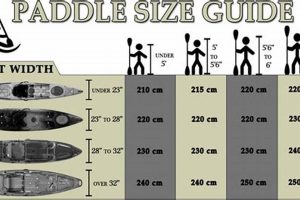
Several factors contribute to a kayak’s maneuverability. Hull design plays a significant role; shorter kayaks with a more rounded hull tend to turn more quickly, while longer, narrower kayaks track straighter and offer better speed but may be less agile in tight spaces. The presence of a rudder or skeg can enhance tracking and directional stability, particularly in windy conditions or moving water. Paddle type and technique also influence maneuverability; shorter, wider paddles provide more powerful strokes for quick turns, while longer, narrower paddles are better suited for sustained paddling. Consider a teal fishing kayak intended for use in mangrove tunnels or rocky streams; in these environments, high maneuverability is essential for navigating complex obstacles and accessing prime fishing locations. Conversely, a teal kayak designed for open lakes or coastal areas might prioritize tracking and speed over tight turning capabilities.
The practical significance of understanding maneuverability in the context of a teal fishing kayak lies in matching the kayak’s capabilities to the angler’s needs and the intended fishing environment. Choosing a highly maneuverable kayak for open water might result in a less efficient paddling experience, while selecting a less maneuverable kayak for confined spaces could limit access to productive fishing areas. Careful consideration of these factors, in conjunction with an assessment of the typical fishing conditions, ensures the selection of a teal fishing kayak that optimizes performance and enhances the overall fishing experience. This understanding translates to greater efficiency on the water, allowing anglers to cover more ground, access difficult-to-reach spots, and ultimately increase their chances of success.
5. Propulsion

Propulsion choice significantly impacts a fishing kayak’s performance, influencing speed, range, and fishing style. For a teal fishing kayak, this choice interacts with the color’s visibility and camouflage aspects, affecting how anglers approach fishing locations and manage their presence on the water. Understanding these propulsion options is crucial for selecting a teal fishing kayak tailored to specific needs and fishing environments.
- Paddle Propulsion
Traditional paddle propulsion offers excellent control and maneuverability, beneficial for navigating tight spaces and approaching fish stealthily. This aligns with a teal kayak’s potential camouflage advantages, allowing anglers to minimize disturbance. However, paddling requires physical exertion, potentially limiting range and fishing duration. Consider a teal kayak used for fly fishing in shallow, vegetated areas; paddle propulsion enables precise positioning and quiet movement, maximizing camouflage and minimizing disturbance to fish.
- Pedal Propulsion
Pedal-powered kayaks provide hands-free fishing, enabling anglers to focus on casting and reeling. This complements a teal kayak’s stability features, allowing for stand-up fishing and enhanced visibility for spotting fish. While faster than paddling, pedal drives can be less maneuverable in tight spaces. Imagine a teal kayak employed for trolling in open water; pedal propulsion allows for continuous movement while maintaining hands-free fishing, maximizing fishing time and coverage area.
- Motorized Propulsion
Motorized kayaks offer the greatest speed and range, ideal for covering large distances or navigating strong currents. This can extend a teal kayak’s reach into more remote fishing locations, but motor noise can potentially compromise stealth. Consider a teal kayak used for offshore fishing; motorized propulsion allows access to distant reefs or open-water structures, expanding fishing opportunities. However, the motor’s noise may require different angling strategies compared to quieter propulsion methods.
- Propulsion and Environment Interaction
The chosen propulsion method interacts with the environment and the teal color’s role. In shallow, clear water where teal might be more visible, a quiet paddle or pedal drive could minimize disturbance. In open water where visibility aids safety, a motorized teal kayak allows for efficient travel. Matching propulsion to the fishing environment and the teal color’s implications optimizes fishing effectiveness.
Selecting the appropriate propulsion system for a teal fishing kayak hinges on balancing desired speed, range, maneuverability, and stealth with the specific fishing environment and the angler’s physical capabilities. Considering these factors in conjunction with the teal color’s implications for visibility and camouflage ensures a harmonious integration of kayak features, maximizing fishing success and enjoyment on the water.
6. Material
Material selection significantly influences a fishing kayak’s durability, weight, performance, and cost. For a teal fishing kayak, material properties interact with the color’s visibility and intended usage, impacting transportation, maintenance, and longevity. Understanding these material implications is crucial for informed decision-making.
Common kayak materials include polyethylene, fiberglass, and composites. Polyethylene kayaks offer excellent impact resistance and affordability, suitable for recreational use and handling rocky terrain or shallow water. Fiberglass kayaks provide a balance of durability, performance, and lighter weight compared to polyethylene, ideal for longer expeditions or varied water conditions. Composite kayaks, utilizing materials like carbon fiber or Kevlar, offer the lightest weight and highest performance but come at a premium cost, favored by serious anglers seeking optimal speed and efficiency. Consider a teal polyethylene kayak used for river fishing; its impact resistance withstands encounters with rocks and submerged obstacles. A teal fiberglass kayak might suit coastal fishing, balancing durability with lighter weight for easier transport. A teal composite kayak could excel in competitive fishing, maximizing speed and efficiency.
The interplay between material and a teal fishing kayak’s color is subtle but relevant. A brightly colored teal kayak benefits from UV-resistant materials, preserving color vibrancy and preventing material degradation from sun exposure. The weight of the material influences transportation; lighter kayaks are easier to car-top or carry to remote fishing locations, a practical consideration regardless of color. Material durability directly impacts maintenance requirements and lifespan, contributing to long-term value. Understanding these material characteristics ensures selecting a teal fishing kayak that aligns with intended usage, environmental conditions, and desired longevity. This informed approach maximizes the kayak’s utility and contributes to a more rewarding and sustainable fishing experience.
7. Features
Specialized features distinguish fishing kayaks from recreational models, enhancing angling efficiency and enjoyment. For a teal fishing kayak, these features interact with the color’s visibility and camouflage aspects, influencing fishing strategies and overall experience. Understanding these feature integrations is crucial for selecting a kayak tailored to specific angling needs.
- Rod Holders
Rod holders secure fishing rods, freeing hands for paddling, maneuvering, and handling other gear. Flush-mounted rod holders minimize snag potential in vegetated areas, aligning with a teal kayak’s camouflage benefits. Adjustable rod holders offer versatile angling options, accommodating different fishing techniques and rod lengths. Multiple rod holders allow for diverse setups, targeting various species or depths. For a teal kayak used in tight spaces, recessed rod holders prevent entanglement.
- Fish Finders
Fish finders utilize sonar technology to locate fish and underwater structures, enhancing fishing success. Integrated fish finders streamline setup and minimize clutter on a teal kayak’s deck, preserving its clean profile and optimizing storage space. Transducers mounted on the hull or within a scupper hole minimize drag and maintain the kayak’s hydrodynamic efficiency. Screen size and resolution impact visibility and data interpretation, especially under varying light conditions encountered on the water. For a teal kayak used in open water, a larger screen enhances readability, while a smaller screen might suffice in shaded river environments.
- Other Electronic Enhancements
GPS units aid navigation and waypoint marking, particularly relevant for a teal kayak used in larger bodies of water or unfamiliar areas. Trolling motor mounts expand fishing range and efficiency, complementing a teal kayak’s potential for open-water angling. Integrated lighting enhances visibility in low-light conditions, increasing safety for a teal kayak, especially when its color might blend with the surroundings. These electronics, when strategically placed, enhance functionality without compromising the teal kayak’s design or performance.
- Feature Integration and Color Interaction
Feature choices interact with the teal color’s implications. Camouflage-oriented features, like recessed rod holders, complement a teal kayak’s potential concealment in vegetated areas. Visibility-enhancing features, such as integrated lighting, improve safety in open water where teal aids visibility. Balancing features with the teal color’s role in the fishing environment optimizes overall performance and angling effectiveness. This holistic approach ensures that features complement the kayak’s color and intended usage, maximizing fishing success.
The strategic selection and integration of features elevate a teal fishing kayak from a basic platform to a specialized angling tool. Considering these features alongside the teal color’s implications for visibility and camouflage ensures a synergistic relationship, maximizing fishing efficiency, enjoyment, and safety on the water. A thoughtfully equipped teal fishing kayak empowers anglers to confidently pursue their passion, adapting to diverse fishing environments and maximizing their chances of success.
Frequently Asked Questions
This section addresses common inquiries regarding kayaks designed for fishing in the distinct teal color, clarifying potential misconceptions and providing practical guidance for informed decision-making.
Question 1: Does the teal color affect fish behavior?
While some fish species possess color vision, the teal color’s impact on fish behavior is generally minimal, especially in deeper or murky water. Factors like water clarity, light penetration, and fishing technique exert greater influence than kayak color.
Question 2: Is teal a suitable color for both freshwater and saltwater fishing?
Teal can be suitable for both freshwater and saltwater environments. Its effectiveness depends on the specific shade and surrounding conditions. Lighter teals may offer enhanced visibility in open water, while darker teals may provide better camouflage in vegetated areas.
Question 3: How does the teal color affect kayak visibility in different light conditions?
Teal’s visibility varies with light intensity. It remains relatively conspicuous in daylight but may blend with darker surroundings in low-light conditions. Enhanced visibility features, such as reflective tape or integrated lighting, can further improve safety in low visibility.
Question 4: Are teal kayaks more susceptible to fading or discoloration from sun exposure?
Susceptibility to fading depends on the kayak’s material and manufacturing process. High-quality kayaks often incorporate UV-resistant pigments and protective coatings to minimize color fading from prolonged sun exposure.
Question 5: Does the teal color influence kayak maintenance requirements?
Color itself doesn’t significantly impact maintenance requirements. Standard kayak maintenance practices, such as cleaning and proper storage, apply regardless of color. Protecting the kayak from prolonged sun exposure helps preserve its overall appearance and material integrity, regardless of color.
Question 6: Are teal fishing kayaks readily available from major manufacturers?
Teal, a popular color choice, is often included in major kayak manufacturers’ product lines. Availability may vary depending on specific models and retailer inventory. Consulting manufacturer websites or contacting local dealers provides specific availability information.
These responses provide foundational knowledge for informed evaluations of teal fishing kayaks. Considering individual fishing preferences, target environments, and desired features alongside color considerations leads to optimal kayak selection and enhanced angling experiences.
The following section explores specific teal fishing kayak models available on the market, providing detailed comparisons of features, performance, and pricing.
Teal Fishing Kayak
This exploration of teal fishing kayaks has encompassed key aspects, from color considerations and stability to material selection and specialized features. The analysis has highlighted the interplay between color choice, fishing environment, and angler preferences. A teal kayak’s visibility and camouflage potential, combined with appropriate hull design, propulsion system, and storage solutions, contribute to a customized and effective fishing platform. Material durability and specialized features, such as rod holders and fish finders, further enhance performance and angling experience. The discussion addressed common inquiries, clarifying potential misconceptions surrounding teal kayaks in various fishing contexts.
The selection of a fishing kayak hinges on a comprehensive understanding of individual needs and intended usage. Careful consideration of factors beyond color, including stability, maneuverability, and propulsion, ensures informed decision-making. A teal fishing kayak, chosen with these considerations in mind, offers a unique blend of aesthetics and functionality, empowering anglers to pursue their passion with confidence and efficiency. Continued exploration of kayak features and advancements promises further refinement and specialization, enhancing the angling experience for enthusiasts of all levels.