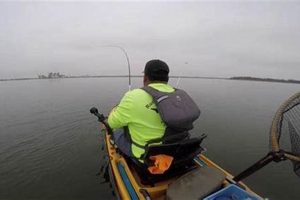
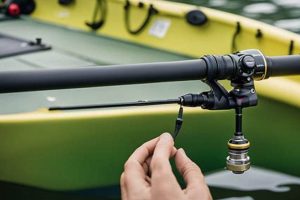
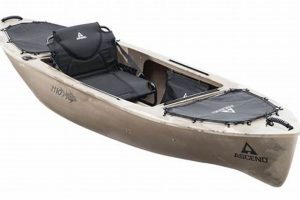
Kayak fishing involves angling from a kayak. It combines the serenity and access of kayaking with the challenge and reward of fishing. This approach allows anglers to reach shallow waters, navigate narrow waterways, and explore areas inaccessible to larger boats, potentially leading to unique fishing opportunities.
This method offers significant advantages. Its quiet approach minimizes disturbance to fish, increasing the chances of a successful catch. The low profile of a kayak provides a closer connection to the water, enhancing the overall fishing experience. Furthermore, kayak fishing represents a relatively affordable and environmentally friendly alternative to motorized boating, contributing to its growing popularity. Historically, kayaks have been used for fishing for centuries by various cultures. Modern kayak fishing, however, has evolved with specialized equipment and techniques, transforming it into a distinct and popular angling pursuit.
The following sections will delve into key aspects of this practice, including selecting appropriate gear, mastering essential techniques, prioritizing safety measures, understanding relevant regulations, and identifying productive fishing locations. These elements contribute to a safe, successful, and enjoyable kayak fishing experience.
Tips for Kayak Fishing Success
Effective kayak fishing requires careful planning and execution. The following tips offer guidance for anglers seeking to maximize their success and enjoyment on the water.
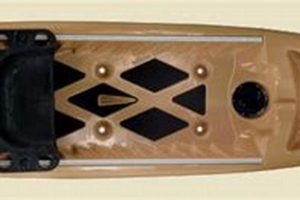
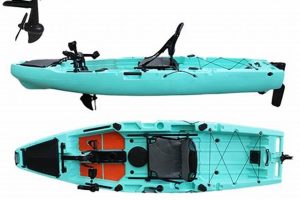
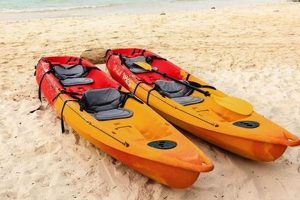
Tip 1: Choose the Right Kayak: Kayak selection significantly impacts fishing effectiveness. Sit-on-top kayaks offer stability and ease of re-entry after a water landing, while sit-inside kayaks provide better protection from the elements. Consider factors such as fishing style, water conditions, and storage needs when making a selection.
Tip 2: Utilize Specialized Gear: Employing equipment designed for kayak fishing can enhance performance. Rod holders, anchor trolleys, and fish finders facilitate efficient angling from a kayak. Compact and easily stowable gear is crucial for maintaining balance and organization.
Tip 3: Master Paddle and Pedal Techniques: Efficient paddling or pedaling allows anglers to cover more water and position the kayak effectively for casting. Practicing maneuvering skills enhances boat control and reduces disturbances that could frighten fish.
Tip 4: Employ Appropriate Fishing Techniques: Adjusting fishing techniques to suit the kayak environment is essential. Shorter rods and lighter lines are often preferred. Casting techniques should account for the limited space and movement within the kayak.
Tip 5: Prioritize Safety: Wearing a personal flotation device (PFD) is paramount for safety. Carrying a whistle, signaling device, and communication equipment is crucial in case of emergencies. Checking weather conditions and informing someone of the fishing plan are vital precautions.
Tip 6: Understand Local Regulations: Familiarizing oneself with fishing regulations, including licensing requirements and catch limits, ensures compliance and responsible angling. Respecting local ecosystems and practicing catch-and-release whenever appropriate promotes sustainable fisheries.
Tip 7: Research Fishing Locations: Identifying productive fishing spots enhances the chances of a successful outing. Researching areas known for target species, considering water depth and structure, and understanding tidal influences can significantly improve results.
Adhering to these tips can significantly increase success and enhance the overall kayak fishing experience. Careful planning, appropriate gear, and responsible practices contribute to a safe and rewarding time on the water.
By implementing these strategies, anglers can enjoy the unique blend of challenge, tranquility, and connection with nature that kayak fishing provides. The following section will offer a concluding perspective on this increasingly popular pursuit.
1. Kayak Choice

Kayak selection significantly influences the effectiveness and enjoyment of kayak fishing. The chosen vessel impacts stability, maneuverability, and access to fishing grounds. A stable kayak allows anglers to cast and reel effectively, even with larger fish, while maneuverability is crucial for navigating tight spaces and changing fishing locations efficiently. Access to shallow water, often teeming with fish, depends on the kayak’s draft and hull design.
Consider a scenario where an angler chooses a short, wide, sit-on-top kayak for fishing in calm, shallow lakes. This type of kayak offers excellent stability for casting and fighting fish, and its shallow draft allows access to areas inaccessible to larger boats. Conversely, an angler targeting offshore species in rougher waters might opt for a longer, sit-inside kayak with a rudder for improved tracking and seaworthiness. This example illustrates how kayak choice dictates fishing potential and safety.
Understanding the relationship between kayak selection and fishing success is paramount. Choosing a kayak tailored to the specific fishing environment and target species significantly enhances angling opportunities and overall enjoyment. Failing to consider these factors can lead to instability, limited access to fishing grounds, and a compromised fishing experience. Careful consideration of kayak characteristics based on individual needs and fishing goals remains crucial for a successful outing.
2. Tackle and Gear
Specialized tackle and gear significantly influence success when fishing from a kayak. Appropriate equipment enhances efficiency, improves fish-fighting capabilities, and contributes to a more organized and enjoyable experience. The connection between tackle and gear and the effectiveness of kayak angling hinges on several key factors. Rods and reels tailored to the target species and fishing environment are essential. Shorter rods, typically between six and seven feet, facilitate casting within the confined space of a kayak. Reels spooled with appropriate line weight and type match the targeted fish and fishing conditions. For instance, braided line offers increased sensitivity and strength, advantageous in heavier cover or when targeting larger species. A lightweight spinning reel paired with a six-foot, medium-power rod proves effective for targeting panfish and bass in calm waters.
Beyond rods and reels, specialized gear enhances kayak angling. Rod holders secure rods while paddling or preparing tackle, preventing loss and maximizing fishing time. An anchor trolley system allows anglers to control kayak position in current or wind, maintaining an optimal fishing presentation. A fish finder provides crucial underwater insights, revealing water depth, structure, and fish locations. These technological aids significantly improve the odds of success, particularly in unfamiliar waters. Consider a scenario where an angler uses a fish finder to locate a submerged drop-off. This angler can then position the kayak using an anchor trolley and target the drop-off with a jig and appropriately sized rod and reel combination, maximizing the chances of hooking fish holding near the structure.
Selecting and utilizing appropriate tackle and gear represents a crucial component of successful kayak fishing. Tailoring equipment choices to the target species, fishing environment, and personal preferences enhances efficiency, improves fish-fighting capabilities, and ultimately contributes to a more rewarding experience. Failing to consider these factors can lead to missed opportunities, lost fish, and frustration. Careful selection and appropriate utilization of tackle and gear, therefore, remain essential for maximizing angling success and enjoyment from a kayak.
3. Location Scouting
Location scouting plays a crucial role in successful kayak fishing. Effective scouting directly influences catch rates by identifying areas likely to hold target species. This process involves researching potential fishing spots, considering factors such as water depth, structure, vegetation, and prevailing currents. Understanding how these elements interact influences fish behavior and dictates productive fishing locations. For instance, locating a submerged point extending into a lake channel can reveal a prime ambush point for predatory fish. Similarly, identifying areas with significant weed growth in a river system can pinpoint locations where baitfish congregate, attracting larger game fish. Practical application of this understanding involves utilizing maps, online resources, and local knowledge to pinpoint such areas before launching the kayak, maximizing fishing time and increasing the likelihood of success.
The importance of location scouting as a component of kayak fishing stems from the inherent limitations of kayak angling. Kayaks, while offering excellent maneuverability and access to shallow waters, lack the range and speed of motorized boats. Therefore, efficient use of time on the water becomes paramount. Thorough pre-fishing scouting minimizes wasted effort by directing anglers to promising areas, allowing them to focus their efforts on locations with higher probabilities of holding fish. Consider a scenario where two anglers embark on a kayak fishing trip. One angler invests time in pre-trip scouting, identifying a creek mouth flowing into a larger river as a likely hotspot. The other angler, without prior scouting, paddles randomly along the riverbank. The angler who scouted has a higher probability of encountering actively feeding fish due to their targeted approach. This example highlights the practical significance of location scouting in maximizing fishing success from a kayak.
In summary, location scouting represents a critical element of successful kayak fishing. Understanding the relationship between environmental factors and fish behavior, coupled with effective research and planning, significantly increases the likelihood of locating and catching fish. This preparatory work maximizes on-the-water efficiency, a particularly crucial aspect of kayak angling. While challenges such as changing weather patterns and water conditions can influence fish behavior and necessitate adjustments to scouting strategies, the underlying principle of identifying high-probability areas remains constant. Thorough location scouting, therefore, provides a foundation for a productive and rewarding kayak fishing experience.
4. Kayak Control

Kayak control forms an integral component of successful fishing from a kayak. Precise boat maneuvering directly influences angling effectiveness by enabling accurate casting, optimal bait presentation, and efficient coverage of fishing areas. A kayak angler’s ability to position the vessel quietly and maintain its position against wind, current, or waves significantly impacts fish-catching potential. Consider the scenario of presenting a lure to a specific structure like a submerged log. Effective kayak control allows the angler to approach the target quietly, position the kayak upstream or upwind for a natural drift, and maintain the ideal casting angle throughout the presentation. Conversely, poor boat control can result in noisy approaches, inaccurate casts, and difficulty maintaining an effective fishing position, thus reducing the likelihood of a successful hookup. This cause-and-effect relationship underscores the importance of kayak control as a fundamental element of successful kayak angling.
The practical significance of mastering kayak control extends beyond individual casts. Efficient paddling techniques, including forward strokes, reverse strokes, and sweep strokes, allow anglers to cover water efficiently, explore different fishing locations, and adjust to changing conditions. Knowledge of anchoring systems and techniques further enhances control, allowing anglers to hold position in current or wind, maintaining a stationary fishing platform even in challenging environments. Consider an angler fishing a tidal river. Understanding how to utilize an anchor trolley system to control kayak position relative to the current allows for a consistent and effective presentation of bait or lures, regardless of tidal flow. This practical application demonstrates how kayak control enhances fishing effectiveness in dynamic environments.
In summary, kayak control represents a crucial skill set for anglers seeking to maximize their success on the water. Precise maneuvering, efficient paddling, and effective anchoring techniques translate directly into improved casting accuracy, optimal bait presentation, and efficient coverage of fishing areas. While environmental factors like wind and current present ongoing challenges, mastering kayak control provides anglers with the tools necessary to adapt and overcome these obstacles. This proficiency ultimately enhances fishing effectiveness and contributes significantly to a more rewarding and productive kayak angling experience.
5. Fishing Techniques

Fishing techniques employed from a kayak require adaptation and specialized approaches compared to traditional boat or shore fishing. The confined space and unique maneuverability of a kayak necessitate adjustments in casting, retrieval, and fish-fighting strategies. These specialized techniques directly influence angling success by maximizing efficiency and effectiveness within the kayak fishing environment.
- Casting Techniques
Casting from a kayak requires adjustments due to limited space and potential instability. Sidearm and underhand casts minimize the risk of snagging overhead obstacles or losing balance. Practicing these techniques on land before attempting them on the water improves accuracy and efficiency. A kayak angler targeting structure along a shoreline might employ a sidearm cast to accurately place a lure beneath overhanging branches, demonstrating the practical application of this adapted technique.
- Lure and Bait Presentation
Effective lure and bait presentation from a kayak considers the angler’s proximity to the water and the potential for subtle presentations. Drift fishing techniques, where bait or lures are allowed to drift naturally with the current, often prove highly effective. Similarly, vertical jigging techniques, where lures are presented directly below the kayak, capitalize on the close proximity to the target zone. An angler presenting a live shrimp under a popping cork to target redfish in shallow flats exemplifies the effectiveness of drift fishing from a kayak.
- Fish Fighting Strategies
Fighting fish from a kayak presents unique challenges and opportunities. The angler’s lower center of gravity provides leverage, while the kayak’s maneuverability allows for adjustments to fish movements. Using the kayak’s movement to tire larger fish proves advantageous. An angler battling a strong-running fish might use the kayak’s maneuverability to follow the fish and maintain tension on the line, demonstrating an effective fish-fighting strategy from a kayak.
- Tackle Management
Efficient tackle management is paramount within the limited space of a kayak. Organizing tackle boxes and utilizing readily accessible storage systems prevents tangles and maximizes fishing time. Keeping frequently used lures or baits within easy reach streamlines the fishing process. An angler quickly changing lures based on fish activity demonstrates the importance of efficient tackle management in maximizing fishing opportunities from a kayak.
Adapting these fishing techniques to the kayak environment significantly enhances angling effectiveness. By mastering specialized casting methods, understanding subtle presentation strategies, employing appropriate fish-fighting tactics, and maintaining organized tackle systems, kayak anglers maximize their chances of success. These specialized approaches ultimately contribute to a more productive and rewarding kayak fishing experience.
6. Safety Precautions

Safety precautions constitute a critical aspect of kayak fishing, directly influencing the ability to enjoy and sustain this activity. While the focus often rests on angling techniques and equipment, neglecting safety compromises not only the fishing experience but also the angler’s well-being. A comprehensive understanding of potential hazards and proactive implementation of safety measures are essential for a responsible and enjoyable kayak fishing outing. Ignoring these precautions can transform a recreational activity into a hazardous undertaking, potentially leading to serious consequences.
- Personal Flotation Devices (PFDs)
Wearing a properly fitted PFD is paramount. PFDs provide essential buoyancy in the event of capsizing or unexpected immersion, significantly increasing survival chances. Even strong swimmers can experience difficulties in cold water or challenging conditions. A PFD allows anglers to focus on self-rescue or awaiting assistance rather than struggling to stay afloat. This fundamental precaution differentiates a potentially life-threatening situation from a manageable incident, underscoring its importance in kayak fishing.
- Weather Awareness and Monitoring
Checking weather forecasts before embarking on a kayak fishing trip and continuously monitoring conditions during the outing are crucial. Sudden changes in weather, such as strong winds or thunderstorms, can create hazardous situations on the water. An angler caught unprepared in a squall faces significant risks, including capsizing and exposure. Monitoring weather radar and having a plan for seeking shelter are crucial components of responsible kayak fishing. This proactive approach minimizes potential dangers and contributes to a safer fishing experience.
- Communication and Signaling Devices
Carrying communication and signaling devices allows anglers to call for assistance in emergencies. A waterproof cell phone or VHF radio enables communication with emergency services or other boaters. Visual signals, such as flares or a signal mirror, enhance visibility and aid in locating the angler in distress. An angler experiencing equipment failure or requiring medical attention can utilize these tools to summon help, demonstrating their practical importance. These devices transform a potentially isolated incident into a situation where assistance can be readily summoned, significantly improving safety outcomes.
- Navigation and Trip Planning
Planning the fishing trip, including intended routes and estimated return times, informs others of the angler’s whereabouts. Informing a friend or family member of the float plan allows for notification of authorities if the angler fails to return as scheduled. This seemingly simple precaution can initiate timely search and rescue efforts, potentially saving lives. Consider an angler who becomes disoriented in fog or experiences an unexpected delay. A pre-filed float plan allows others to raise the alarm and direct rescuers to the general area, significantly increasing the chances of a positive outcome.
These safety precautions are inextricably linked to successful kayak fishing. While mastering angling techniques contributes to on-the-water success, prioritizing safety ensures the opportunity to continue enjoying the sport. These precautions minimize risks, mitigate potential hazards, and promote responsible angling practices. By integrating these safety measures into every kayak fishing trip, anglers create a foundation for a sustainable and enjoyable pursuit, emphasizing that safety is not merely a prerequisite but an integral component of successful kayak fishing.
Frequently Asked Questions
This section addresses common inquiries regarding kayak fishing, providing concise and informative responses to facilitate a better understanding of this specialized angling method.
Question 1: What type of kayak is best suited for fishing?
Kayak selection depends on individual needs and fishing environments. Sit-on-top kayaks offer stability and ease of re-entry, making them suitable for calmer waters. Sit-inside kayaks provide better protection from the elements and are often preferred for colder conditions or rougher waters. Pedal-driven kayaks offer hands-free fishing advantages, while paddle kayaks provide greater maneuverability in tight spaces. Careful consideration of fishing style, target species, and water conditions informs optimal kayak selection.
Question 2: What essential gear is required for kayak fishing?
Essential gear includes a personal flotation device (PFD), a paddle or pedal drive system, appropriate fishing rods and reels, tackle suited to the target species, a rod holder, and an anchor trolley system. Additional accessories, such as a fish finder, GPS unit, and dry storage compartments, enhance fishing effectiveness and safety. Careful selection of gear based on individual needs and fishing style maximizes efficiency and enjoyment.
Question 3: How does one locate productive fishing spots from a kayak?
Locating productive fishing areas involves researching potential locations using maps, charts, and online resources. Understanding the target species’ habitat preferences, such as water depth, structure, and vegetation, informs site selection. Observing bird activity, baitfish concentrations, and water movement provides further insights into potential fishing hotspots. Combining these research methods with on-the-water observation maximizes the likelihood of finding fish.
Question 4: What safety precautions should be taken when kayak fishing?
Essential safety precautions include wearing a PFD at all times, checking weather forecasts before and during the fishing trip, carrying communication and signaling devices, informing someone of the fishing plan and estimated return time, and being aware of boating regulations and navigation hazards. Adhering to these precautions minimizes risks and ensures a responsible approach to kayak fishing.
Question 5: How does wind and current affect kayak fishing?
Wind and current can significantly impact kayak control and fishing effectiveness. Strong winds can make paddling and maintaining position challenging, while currents influence drift fishing techniques and necessitate adjustments in anchoring strategies. Understanding how to utilize wind and current to one’s advantage, such as drifting along structure or anchoring in a current seam, enhances fishing opportunities. Proper kayak control and anchoring techniques are crucial for navigating these conditions safely and effectively.
Question 6: What are the advantages of fishing from a kayak?
Kayak fishing offers several advantages, including access to shallow waters and areas inaccessible to larger boats, a stealthy approach that minimizes disturbance to fish, a close connection to the water and surrounding environment, and a relatively affordable and environmentally friendly mode of fishing. These advantages contribute to the growing popularity of kayak fishing as a distinct and rewarding angling experience.
Addressing these frequently asked questions provides foundational knowledge for anglers seeking to explore kayak fishing. Understanding the nuances of this specialized angling method enhances safety, improves fishing effectiveness, and promotes responsible enjoyment of the sport.
This concludes the FAQ section. The following section will provide a summary of key takeaways and concluding thoughts on the subject of kayak fishing.
Conclusion
Successfully catching fish from a kayak necessitates a comprehensive understanding of specialized techniques, equipment selection, and safety considerations. Effective kayak angling hinges on selecting the appropriate vessel, utilizing specialized gear, mastering kayak control, adapting fishing techniques, scouting productive locations, and prioritizing safety precautions. Each element plays a crucial role in maximizing angling success and ensuring a responsible and enjoyable experience. From quiet approaches in shallow waters to navigating challenging currents, kayak fishing presents unique opportunities and rewards for anglers willing to adapt and refine their skills.
The evolving landscape of kayak fishing offers continuous opportunities for refinement and exploration. As technology advances and angling techniques evolve, kayak anglers stand to benefit from enhanced tools and strategies. Continued emphasis on safety, conservation, and ethical angling practices ensures the sustainability and enjoyment of this dynamic and rewarding pursuit. The future of kayak fishing hinges on responsible engagement and a commitment to preserving the delicate balance between angling success and environmental stewardship.