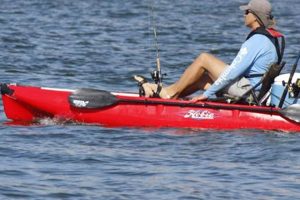
A specialized type of fishing equipment designed for use in kayaks combines a shorter, more robust build with features tailored to the unique challenges and opportunities of angling from a small, waterborne vessel. These typically range from 6 to 8 feet in length and are constructed from durable materials like graphite or fiberglass. A shorter length facilitates casting and maneuvering in the confined space of a kayak, while robust construction withstands the rigors of this active fishing style.
This specialized equipment enhances the kayak angler’s experience significantly. Compact dimensions improve casting accuracy and control in tight quarters, while a sturdy build handles larger fish and resists damage from impacts and abrasion common in kayak fishing. The evolution of these specialized tools reflects the growing popularity of kayak angling, providing anglers with the precision and durability needed to succeed on the water. Their development mirrors advancements in kayak design and fishing techniques, contributing to a more efficient and enjoyable fishing experience.
This discussion will further examine key aspects of these specialized fishing tools, including design variations, material selection, and recommended accessories for optimal performance. It will also explore the relationship between rod choice and targeted fish species, highlighting the importance of selecting the right tool for specific angling situations.
Tips for Selecting and Using Specialized Fishing Equipment for Kayaks
Choosing and utilizing appropriate fishing equipment designed specifically for kayaks is crucial for a successful and enjoyable angling experience. The following tips offer guidance on optimizing equipment selection and usage.
Tip 1: Consider Length and Action. Shorter rods (typically 6-7 feet) offer superior maneuverability in the confined space of a kayak. A fast-action rod provides greater sensitivity for detecting bites and setting hooks effectively.
Tip 2: Prioritize Durable Construction. Opt for robust materials like graphite or fiberglass composites designed to withstand the impacts and abrasions common in kayak fishing. Reinforced guides and reel seats contribute to longevity.
Tip 3: Match Rod Power to Target Species. Lighter power rods are suitable for smaller fish like panfish and trout, while heavier power rods are necessary for larger species such as bass or catfish. Aligning rod power with target species optimizes performance.
Tip 4: Choose a Comfortable Grip. Ergonomic grips enhance comfort and control during long fishing trips. Consider materials like cork or EVA foam that provide a secure and comfortable hold, even when wet.
Tip 5: Select a Balanced Rod and Reel Combination. A balanced setup reduces fatigue and improves casting accuracy. Ensure the reel weight complements the rod’s action and power for optimal performance.
Tip 6: Secure the Equipment Properly. Utilize rod holders and leashes to prevent loss or damage to equipment in case of capsizing or unexpected movement within the kayak. Secure storage solutions protect valuable gear.
Tip 7: Practice Casting Techniques. Refine casting techniques suited for the limited space and unique challenges of kayak fishing. Practicing accurate and controlled casts enhances fishing efficiency and minimizes tangles.
Adhering to these guidelines allows anglers to maximize their chances of success on the water, enhancing both efficiency and enjoyment. Selecting appropriate equipment tailored to the specific demands of kayak fishing contributes significantly to a positive and productive angling experience.
This information provides a foundational understanding of selecting and using specialized fishing equipment for kayaks. Further exploration of specific techniques and advanced strategies can further refine angling skills in this specialized environment.
1. Length

Rod length is a critical factor in kayak fishing, directly influencing casting accuracy, maneuverability, and overall fishing effectiveness. Choosing the appropriate length requires careful consideration of the kayak’s dimensions, the fishing environment, and target species. Understanding the nuances of rod length empowers anglers to optimize their kayak fishing experience.
- Maneuverability in Tight Spaces
Shorter rods, typically ranging from 6 to 7.5 feet, offer superior maneuverability within the confined space of a kayak. Longer rods can be cumbersome and difficult to manage, especially when fishing in tight quarters such as narrow creeks or mangrove tunnels. A shorter rod allows for easier casting, retrieving, and fish fighting without interference from the kayak’s structure or surrounding obstacles. For example, a 6.5-foot rod provides greater control when casting under overhanging branches compared to an 8-foot rod.
- Casting Accuracy and Control
While shorter rods enhance maneuverability, they can sometimes sacrifice casting distance. However, in kayak fishing, pinpoint accuracy often outweighs the need for long casts. Shorter rods provide increased control and precision, enabling anglers to place lures or bait precisely in targeted areas like pockets of water near structure or along weed lines. This precision is crucial for presenting lures effectively and triggering strikes from fish.
- Leverage and Fish Fighting
Rod length also affects leverage during the fight with a fish. Longer rods offer greater leverage, making it easier to control larger fish. However, in a kayak, the angler’s position and the kayak’s stability become more critical factors. A shorter rod can actually provide better leverage when fighting a strong fish in a kayak by allowing the angler to maintain a balanced and stable position. This leverage, combined with the kayak’s maneuverability, helps tire the fish efficiently.
- Relationship to Kayak Size and Type
The size and type of kayak also influence the ideal rod length. A smaller, sit-in kayak typically necessitates a shorter rod for optimal maneuverability. Conversely, a larger, sit-on-top kayak with more deck space might allow for a slightly longer rod. The kayak’s stability also plays a role; a less stable kayak benefits from a shorter rod that allows for quicker adjustments and better balance during the fight with a fish.
Selecting the correct rod length is a crucial step in optimizing kayak fishing performance. Balancing maneuverability, casting accuracy, and fish-fighting capability within the constraints of a kayak requires careful consideration of these factors. By understanding the impact of rod length, anglers can make informed decisions and enhance their success on the water.
2. Action
Rod action, referring to the rod’s bending point and speed of recovery, significantly impacts kayak fishing performance. A rod’s action dictates sensitivity, hook-setting power, casting accuracy, and lure presentation. Understanding the nuances of rod action enables informed decisions aligned with specific fishing techniques and target species.
Fast-action rods bend primarily in the tip section, recovering quickly. This characteristic translates to increased sensitivity, allowing anglers to detect subtle bites and react swiftly. The rapid recovery facilitates powerful hooksets, crucial for penetrating the bony mouths of fish like bass or walleye. Fast action also enhances accuracy in casting lightweight lures and provides better control during the retrieve. However, this stiffness can make casting heavier lures or baits more challenging and may result in lost fish if not managed carefully. For example, a fast-action rod paired with a braided line excels in detecting light strikes in clear water, while its quick recovery ensures secure hooksets.
Moderate-action rods bend further down the blank, offering a blend of sensitivity and casting versatility. This action provides a more forgiving feel, absorbing some of the shock during hooksets, which can be beneficial when targeting fish with softer mouths like trout or panfish. Moderate action facilitates longer casts with heavier lures or baits and provides greater control over larger fish during the fight. The trade-off is slightly reduced sensitivity compared to fast-action rods. For instance, a moderate-action rod proves effective when fishing with crankbaits or spinnerbaits, requiring casting distance and a controlled retrieve. Slow-action rods bend throughout their length, offering maximum flexibility and shock absorption. This action excels in absorbing the lunges of powerful fish and preventing line breakage, particularly with lighter lines. Slow action also provides a parabolic bend, enhancing casting distance and accuracy with heavier lures. The slower recovery, however, makes hooksetting more challenging and reduces sensitivity to subtle bites. This action is often preferred when fishing for larger saltwater species from a kayak or when using live bait.
Selecting the appropriate rod action depends on the specific techniques employed and target species. Matching rod action to fishing style optimizes performance and enhances the overall kayak angling experience. Understanding the impact of rod action empowers anglers to make informed decisions based on their individual needs and fishing conditions.
3. Power

Rod power, often referred to as rod weight, denotes a rod’s lifting strength and its ability to handle different line and lure weights. This characteristic significantly influences an angler’s ability to cast effectively, control fish, and ultimately, succeed in landing the target species. Appropriate power selection is crucial for preventing rod breakage, maximizing fishing efficiency, and ensuring an enjoyable kayak angling experience. The power rating of a rod, typically categorized as ultralight, light, medium-light, medium, medium-heavy, heavy, or extra-heavy, dictates its suitability for various fishing scenarios.
Ultralight rods are designed for finesse fishing with small lures and light line, typically targeting panfish or trout in smaller bodies of water. Using an ultralight rod with heavier lures or larger fish risks rod breakage. Conversely, a heavy-power rod, designed for larger saltwater species or muskie, would be excessively stiff and insensitive for targeting smaller freshwater fish. Matching the rod power to the target species and fishing conditions is paramount. For example, a medium-power rod provides the versatility to handle a range of lure weights and fish sizes commonly encountered in kayak fishing, striking a balance between strength and sensitivity.
The relationship between rod power and line weight is equally important. Using line that is too heavy for the rod can overload the blank and lead to breakage, particularly during casting or fighting a fish. Conversely, using line that is too light for the rod reduces casting performance and limits the angler’s ability to control larger fish. Manufacturers typically provide recommended line and lure weight ranges for each rod, guiding anglers toward optimal setups. Understanding rod power allows anglers to select appropriate tackle and techniques, maximizing their chances of success on the water. This knowledge facilitates efficient fish fighting, minimizes equipment failure, and enhances the overall kayak fishing experience.
4. Material
Material selection significantly influences a kayak fishing rod’s performance, durability, and sensitivity. The rod’s material composition dictates its weight, strength, and responsiveness, impacting casting distance, fish-fighting ability, and overall angling experience. Understanding the properties of different rod materials allows anglers to make informed decisions aligned with specific fishing styles and target species.
- Graphite
Graphite, a popular choice for kayak fishing rods, offers a high strength-to-weight ratio. This translates to lighter rods capable of handling substantial loads. Graphite’s sensitivity transmits subtle bites effectively, enhancing angler responsiveness. Higher-modulus graphite increases sensitivity and reduces weight, but typically comes at a higher price point. For example, a high-modulus graphite rod excels in detecting light strikes from wary fish, contributing to increased catch rates. However, graphite can be more brittle than other materials, making it susceptible to damage from impacts.
- Fiberglass
Fiberglass rods provide excellent durability and affordability, making them a suitable option for anglers seeking robust performance without a premium price tag. Fiberglass offers greater flexibility compared to graphite, forgiving occasional mishandling. While fiberglass may not possess the same sensitivity as graphite, it excels in casting heavier lures and handling larger fish. A fiberglass rod proves advantageous when targeting powerful species in challenging environments where durability is paramount. For instance, a fiberglass rod provides the strength and resilience needed to subdue large catfish or saltwater species from a kayak.
- Composite
Composite rods blend materials, typically fiberglass and graphite, to combine the benefits of both. These rods often offer a balance of sensitivity, durability, and affordability. The specific blend of materials dictates the rod’s overall performance characteristics. For example, a composite rod with a higher graphite content prioritizes sensitivity, while a fiberglass-dominant composite emphasizes durability. This versatility allows anglers to select a rod tailored to specific fishing techniques and target species. A composite rod with a balanced blend proves effective for a variety of kayak fishing applications.
- Other Materials
Other materials, such as bamboo or other specialty composites, also find application in rod construction. Bamboo rods, often handcrafted, offer a classic aesthetic and unique fishing experience. Other specialty composites may focus on specific performance characteristics like increased impact resistance or sensitivity. These niche materials cater to specialized angling styles and preferences, adding further diversity to the range of kayak fishing rods available.
Understanding the properties of each material empowers anglers to select a kayak fishing rod that aligns with their fishing style, target species, and budget. Choosing the right material contributes significantly to fishing success and overall enjoyment on the water.
5. Portability

Portability is a crucial factor in selecting a kayak fishing rod, directly influencing transportation, storage, and overall convenience. Given the inherent limitations of kayak storage and the need for efficient gear management, a rod’s portability significantly impacts the overall fishing experience. Understanding the elements contributing to portability allows anglers to make informed decisions that optimize their kayak angling adventures.
- Collapsed Length
The collapsed length of a multi-piece rod dictates its ease of transport and storage. Shorter collapsed lengths simplify stowing the rod within a kayak’s limited space, minimizing interference with paddling and other fishing activities. For example, a four-piece rod that collapses to 24 inches offers greater portability compared to a two-piece rod with a 48-inch collapsed length. This compact size simplifies transportation in vehicles and storage at home, making multi-piece rods ideal for kayak anglers.
- Weight and Balance
A lighter rod reduces fatigue during long fishing trips and enhances overall maneuverability within the kayak. Balanced rod construction contributes to comfortable handling and precise casting, further improving the fishing experience. Lighter materials, such as high-modulus graphite, contribute to reduced weight without sacrificing strength. For instance, a lightweight rod paired with a balanced reel minimizes strain on the angler’s wrist and forearm, allowing for extended fishing sessions.
- Case and Storage Solutions
Protective cases or storage solutions further enhance portability and protect the rod during transport and storage. A durable case safeguards the rod from impacts and prevents tangles with other fishing gear. Dedicated rod sleeves or tubes within the kayak provide organized storage and quick access during fishing. For example, a padded rod case with adjustable straps simplifies carrying the rod to and from the kayak launch, while dedicated rod holders within the kayak maintain organization and prevent damage.
- Rod Design and Features
Certain design features contribute to portability, such as removable handles or collapsible butt sections. These features further reduce the rod’s overall length for transport and storage, enhancing convenience for kayak anglers. For example, a travel rod with a removable handle and a collapsible butt section provides maximum portability, fitting easily into backpacks or smaller storage compartments. Such designs prove invaluable for anglers who frequently travel or have limited storage space.
Prioritizing portability in rod selection contributes significantly to a streamlined and enjoyable kayak fishing experience. Efficient transport, convenient storage, and effortless handling enhance angler mobility and maximize time spent fishing. Considering these aspects of portability ensures optimal gear management and allows anglers to focus on the thrill of the catch.
Frequently Asked Questions
This section addresses common inquiries regarding specialized fishing equipment designed for kayaks, providing concise and informative responses.
Question 1: What is the ideal length for a kayak fishing rod?
Optimal length depends on the kayak’s size, fishing environment, and target species. Generally, rods between 6 and 7.5 feet offer a balance of maneuverability and casting control within a kayak’s confined space. Shorter rods excel in tight quarters, while slightly longer rods offer increased casting distance when space allows.
Question 2: What rod action is best suited for kayak fishing?
Fast-action rods are generally preferred for their sensitivity and hook-setting power, crucial for detecting subtle bites and securing hookups. However, moderate-action rods offer greater versatility for casting a wider range of lures and handling larger fish. The best choice depends on specific fishing techniques and target species.
Question 3: How does rod power influence kayak fishing?
Rod power, or weight, dictates the rod’s lifting strength and its ability to handle various line and lure weights. Matching rod power to the target species prevents rod breakage and optimizes fishing performance. Lighter power rods suit smaller fish, while heavier power rods handle larger species.
Question 4: What materials are commonly used in kayak fishing rod construction?
Graphite and fiberglass are the most common materials. Graphite offers sensitivity and a lightweight feel, while fiberglass provides durability and affordability. Composite rods combine both materials for a balance of performance characteristics. Material choice depends on individual preferences and fishing styles.
Question 5: Why is portability an important factor for kayak fishing rods?
Kayaks offer limited storage, making portability essential. Multi-piece rods with shorter collapsed lengths simplify transport and storage. Lightweight construction minimizes fatigue during long fishing trips. Portability enhances convenience and allows anglers to focus on fishing.
Question 6: Are specialized rods essential for kayak fishing?
While not strictly essential, specialized rods significantly enhance the kayak fishing experience. Their design considerations cater specifically to the challenges and opportunities of angling from a kayak, improving efficiency, comfort, and overall success on the water.
Careful consideration of these factors contributes to informed equipment decisions and enhances the overall kayak angling experience. Selecting appropriate equipment tailored to individual needs and target species maximizes fishing enjoyment and success.
This FAQ section provides a foundation for selecting appropriate equipment. Further research into specific fishing techniques and target species will further refine equipment choices and maximize angling success.
Conclusion
Effective angling from a kayak hinges on appropriate equipment selection. Specialized rods, designed for the unique demands of this fishing style, offer significant advantages. Critical factors such as length, action, power, material, and portability influence performance and angler experience. Shorter lengths enhance maneuverability within limited spaces. Fast action provides sensitivity for bite detection and hook setting. Appropriate power ensures effective fish control. Durable materials like graphite and fiberglass contribute to longevity. Portability simplifies transport and storage. Careful consideration of these interconnected elements optimizes equipment selection and enhances angling success from a kayak.
The evolution of specialized kayak fishing rods reflects the growing popularity and increasing specialization within this angling discipline. As kayak fishing continues to evolve, further advancements in rod design and technology promise to enhance performance and angler experience. Choosing specialized equipment tailored to individual fishing styles and target species remains crucial for maximizing success and enjoyment on the water.