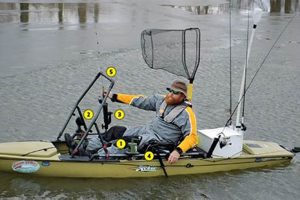
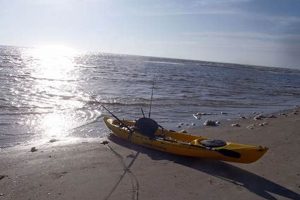
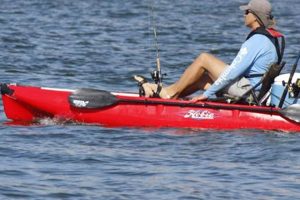
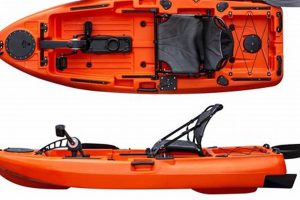
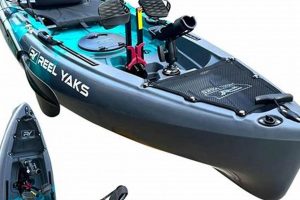
This phrase likely refers to a kayak designed for fishing in diverse aquatic environments, potentially including rivers, lakes, and coastal waters. The “120” likely designates a specific model or size, possibly relating to its length or weight capacity. Such a watercraft is typically built for stability and durability, often featuring specialized accessories like rod holders and storage compartments.
A fishing kayak tailored for varied water conditions offers significant advantages to anglers. Its versatility allows access to a wider range of fishing spots, from tranquil ponds to open bays. Enhanced stability contributes to a safer and more comfortable fishing experience, particularly in challenging conditions. Ample storage space and specialized features maximize efficiency, allowing anglers to carry essential gear and focus on the sport. This type of kayak represents an evolution in fishing equipment, providing greater accessibility and adaptability compared to traditional boats or shore fishing.
The following sections will delve deeper into the specifics of choosing a fishing kayak, including design considerations, essential features, and safety guidelines.
Tips for Selecting and Using a Fishing Kayak
Choosing and utilizing a fishing kayak effectively requires careful consideration of various factors. The following tips offer guidance for optimizing the fishing experience.
Tip 1: Consider Water Conditions: Evaluate the typical fishing environments. A shorter, more maneuverable kayak is suitable for rivers and creeks, while a longer, more stable kayak is preferable for open water or coastal fishing.
Tip 2: Assess Weight Capacity: Factor in the combined weight of the angler, fishing gear, and potential catch. Exceeding the kayak’s capacity compromises stability and safety.
Tip 3: Prioritize Stability: Stability is paramount, especially when fishing in challenging conditions. Look for features like a wider hull or outriggers for enhanced stability.
Tip 4: Evaluate Storage Options: Ample storage is essential for carrying tackle, rods, and other fishing gear. Consider dedicated compartments and storage hatches for organization and accessibility.
Tip 5: Choose Appropriate Features: Look for features tailored to fishing, such as rod holders, paddle clips, and anchor systems. These enhancements streamline the fishing process.
Tip 6: Practice Paddling and Maneuvering: Before venturing into open water, practice paddling and maneuvering the kayak in a controlled environment. This builds confidence and ensures safe handling.
Tip 7: Prioritize Safety: Always wear a personal flotation device (PFD) and carry essential safety equipment, including a whistle, signaling device, and first-aid kit.
Tip 8: Respect the Environment: Adhere to local fishing regulations and practice Leave No Trace principles. Pack out all trash and minimize disturbance to wildlife and habitats.
By carefully considering these factors, anglers can select and effectively utilize a fishing kayak suited to their specific needs and fishing style, leading to a more enjoyable and productive experience.
These tips provide a starting point for selecting and using a fishing kayak. Further research and consultation with experienced anglers are recommended before making a purchase.
1. Versatile Fishing Platform

The concept of a “versatile fishing platform” is central to the presumed design and functionality of a “three waters big fish 120 kayak.” This versatility stems from a combination of factors, including stability, storage, and specialized features. A stable hull design, potentially incorporating a wider base or outriggers, allows anglers to fish comfortably in various conditions, from calm lakes to choppy coastal waters. Ample storage, including dedicated compartments for tackle and gear, enables anglers to carry everything needed for diverse fishing styles and target species. Specialized features, such as adjustable rod holders, further enhance versatility by accommodating different fishing techniques.
Consider an angler targeting both bass in a shallow river and trout in a deeper lake. A versatile fishing platform allows seamless transition between these environments without requiring a different watercraft. The stability ensures safe casting and retrieval in both scenarios, while ample storage accommodates the different lures and tackle required for each species. Adjustable rod holders allow for optimal positioning whether trolling in the lake or casting along the riverbank. This adaptability maximizes fishing opportunities and overall success.
Understanding the versatility inherent in a fishing kayak such as the hypothetical “three waters big fish 120” allows anglers to make informed decisions about their equipment. Recognizing the interplay between stability, storage, and specialized features empowers anglers to choose a kayak that aligns with their specific needs and target fishing environments. While challenges such as weight capacity and maneuverability must be considered alongside versatility, a well-designed fishing platform ultimately enhances the angling experience by providing adaptability and maximizing fishing potential across diverse waters.
2. Ample Storage Capacity

Ample storage capacity is a critical feature in a fishing kayak, particularly one marketed as suitable for diverse environments (“three waters”) and targeting larger fish. The ability to carry a variety of tackle, gear, and potential catches directly impacts fishing success and overall experience. Consider the scenario of an angler pursuing different species across varied locations a river, a lake, and a sheltered bay. Each environment might necessitate specialized rods, reels, lures, and accessories. Without sufficient storage, anglers face limitations in their approach, potentially missing opportunities or compromising safety. For example, limited storage might force an angler to choose between bringing adequate safety equipment or a full complement of fishing gear, creating a potentially dangerous trade-off. A kayak designed with ample storage capacity mitigates this issue, allowing for the safe and efficient transport of all essential items.
The “big fish” aspect further emphasizes the importance of storage. Larger fish require heavier tackle and often necessitate specialized landing and handling equipment. A net, lip grippers, and potentially even a measuring board become essential for safe and responsible angling. Without adequate storage, these items become cumbersome or impossible to transport, limiting the angler’s ability to effectively target larger species. Furthermore, the “120” designation, likely related to size or capacity, suggests a kayak designed with larger fish and varied environments in mind. Therefore, ample storage becomes not just a desirable feature, but an integral component aligning with the kayak’s intended purpose.
In summary, ample storage capacity in a “three waters big fish 120 kayak” is not merely a convenience but a necessity. It enables anglers to safely and efficiently carry diverse gear, maximizing their adaptability across different fishing environments and target species. This understanding is crucial for selecting appropriate fishing kayaks and optimizing their usage for a successful and enjoyable experience. The challenge lies in balancing storage capacity with other critical factors like stability and maneuverability. Choosing a kayak with well-designed storage compartments and appropriate weight distribution becomes paramount for achieving optimal performance and safety on the water.
3. Enhanced Stability

Enhanced stability is paramount in a fishing kayak, especially one designed for diverse environments like the implied “three waters” (rivers, lakes, and coastal areas) and targeting larger fish. A stable platform is essential not only for angler comfort but also for safety and effective fishing. Maneuvering in varying water conditions, casting lines, and reeling in fish, particularly larger ones, can compromise stability. A kayak designed with enhanced stability mitigates these risks, enabling a more confident and successful fishing experience.
- Hull Design:
The hull design significantly influences stability. Wider hulls generally provide greater initial stability, reducing the likelihood of tipping, especially in calm water. However, wider hulls can sacrifice maneuverability. Longer kayaks tend to track straighter, helpful in currents or open water. A “big fish” kayak likely benefits from a wider, flatter hull for enhanced stability during the fight with a strong fish, while still offering sufficient length for tracking in diverse conditions. The hypothetical “120” designation, perhaps related to length, might indicate a balance between stability and maneuverability.
- Center of Gravity:
A lower center of gravity contributes significantly to stability. Features like a lower seating position and strategically placed weight distribution within the kayak help keep the center of gravity low, reducing the risk of capsizing. When battling a large fish, a lower center of gravity helps maintain balance against the strong pulling forces, preventing the kayak from tipping. This is especially critical in the potentially dynamic environments implied by “three waters.”
- Additional Stability Features:
Features like outriggers or pontoons can further enhance stability, particularly in rougher waters or when standing to cast. These additions provide extra support and buoyancy, increasing the kayak’s resistance to tipping. While these features can add complexity and potentially impact maneuverability in tight spaces, they are valuable assets for enhanced stability when fishing in open water or challenging conditions like those potentially encountered in “three waters.” The “big fish” aspect further highlights their importance, as the added stability aids in managing the powerful movements of a large fish.
- Weight Capacity and Distribution:
The kayak’s weight capacity and how the weight is distributed significantly affect its stability. Exceeding the weight capacity can compromise stability, making the kayak more prone to tipping. Evenly distributing the weight within the kayak, avoiding overloading one area, is crucial for maintaining balance and maximizing stability. This becomes especially critical when carrying fishing gear and potentially landing a large fish, as uneven weight distribution can create instability and increase the risk of capsizing. In a “three waters” scenario, where conditions can change rapidly, proper weight distribution becomes crucial for maintaining stability.
Considering these facets in the context of a “three waters big fish 120 kayak” underscores the importance of enhanced stability. A kayak intended for diverse environments and targeting larger fish must prioritize stability features without compromising maneuverability or performance. Choosing a design that balances hull characteristics, center of gravity, additional stability aids, and appropriate weight distribution is essential for maximizing both fishing success and safety on the water. The hypothetical “120” further emphasizes the need for a thoughtful approach to stability, as this designation likely relates to size or capacity, further influencing the kayak’s behavior in various water conditions.
4. Durable Construction
Durable construction is paramount for a “three waters big fish 120 kayak,” given the demanding nature of diverse aquatic environments and the potential strain of landing larger fish. “Three waters” suggests use in rivers, lakes, and potentially coastal areas, each presenting unique challenges. Rivers often contain rocks, submerged debris, and fluctuating currents, demanding a robust hull capable of withstanding impacts and abrasion. Lakes can expose the kayak to prolonged UV radiation and fluctuating temperatures, requiring materials resistant to degradation and warping. Coastal environments introduce saltwater and potentially harsher wave action, necessitating corrosion-resistant components and a structure capable of handling increased stress. Targeting “big fish” adds another layer of demand, as the forces exerted during a fight can strain the kayak’s structure. A durable construction, employing high-quality materials and robust manufacturing techniques, ensures the kayak can withstand these combined stresses, providing longevity and reliable performance.
Consider a scenario where an angler hooks a large fish in a fast-flowing river. The fish dives toward submerged branches, putting significant strain on the kayak’s hull and fishing line. A durable construction, incorporating impact-resistant materials like high-density polyethylene or reinforced composites, safeguards against damage and potential failure. Similarly, in a coastal environment, encountering a submerged rock or unexpected wave could prove disastrous without a robust hull and deck. Durable construction also extends to fittings and hardware. Corrosion-resistant stainless steel or marine-grade aluminum components ensure long-term functionality in saltwater environments, preventing critical failures in rod holders, hatches, or other essential features. The hypothetical “120” designation, potentially related to size or capacity, further emphasizes the need for durability, as larger kayaks experience greater stress and require robust construction to maintain structural integrity.
The practical significance of durable construction lies in its direct impact on safety, longevity, and overall performance. A kayak built to withstand the rigors of “three waters” and the strain of “big fish” offers a reliable platform for anglers, maximizing their time on the water and minimizing the risk of equipment failure. While durability typically comes at a cost, both in terms of initial investment and potentially added weight, its long-term benefits far outweigh the drawbacks. Choosing a kayak built with durable materials and construction ensures a sound investment, providing years of reliable service and peace of mind on the water. The challenge lies in balancing durability with other desirable characteristics like weight, maneuverability, and affordability. Careful consideration of materials, construction techniques, and intended usage allows anglers to select a kayak that strikes the optimal balance between durability and other essential performance factors, ultimately maximizing their fishing experience.
5. Targeted fishing design
Targeted fishing design differentiates a specialized fishing kayak from recreational models, optimizing its form and features for angling effectiveness. In the context of a “three waters big fish 120 kayak,” this targeted design becomes crucial for maximizing performance and success in diverse environments while pursuing larger species. Consider the impact of rod holders. A recreational kayak might lack them entirely or offer only basic placements. A fishing kayak, however, might incorporate multiple adjustable rod holders, strategically positioned for trolling, casting, or even specialized techniques like fly fishing. This targeted design allows anglers to manage multiple lines effectively and adapt to varying fishing styles across different waters, from rivers to open lakes, enhancing versatility in the “three waters” context. Similarly, storage compartments designed specifically for tackle boxes, fishing rods, and other gear ensure efficient organization and accessibility, crucial when changing lures or dealing with a large fish. A well-designed fishing kayak also incorporates features like anchor trolleys or stake-out systems, enabling precise positioning in currents or shallow water, especially important when targeting specific fish habitats.
The “big fish” element further underscores the importance of targeted design. Features like reinforced hulls and decks, heavy-duty rod holders, and strategically placed handles or cleats become essential for handling the increased stress and strain of fighting larger fish. Imagine landing a large salmon in a choppy coastal environment. A kayak without reinforced components risks structural damage, while a lack of strategically placed handles compromises the angler’s grip and control. Furthermore, the hypothetical “120” designation likely relates to size and capacity, influencing the design choices for optimal stability and performance. A longer kayak might offer increased tracking and speed for open water, while a wider beam enhances stability for battling strong fish in rivers or lakes. These design considerations become intertwined, resulting in a kayak tailored to specific fishing scenarios and target species within the “three waters” framework.
The practical significance of targeted fishing design lies in its direct contribution to angling success and overall experience. By optimizing features and construction for specific fishing styles and environments, these kayaks enhance efficiency, safety, and the angler’s ability to focus on the task at hand. The challenges lie in balancing specialized features with versatility and affordability. A highly specialized kayak might excel in one specific environment but lack adaptability for others. Understanding the nuances of targeted design empowers anglers to choose a kayak that aligns with their individual needs and target species, maximizing their enjoyment and success on the water within the context of diverse environments and the pursuit of “big fish.”
6. Potential size and capacity (120)

The “120” designation within the phrase “three waters big fish 120 kayak” likely denotes size and capacity, significantly influencing its suitability for diverse fishing scenarios. While the exact meaning requires further clarification from the manufacturer, it likely refers to either the kayak’s length in inches or its weight capacity in pounds. A 120-inch kayak offers advantages in terms of tracking and speed, beneficial in open water environments like lakes or coastal areas, implied by the “three waters” component. A longer kayak generally glides more efficiently and maintains momentum better than a shorter one, crucial for covering larger distances or navigating currents. However, increased length can compromise maneuverability in tight spaces like narrow rivers or creeks. Alternatively, “120” might represent a weight capacity of 120 pounds. This capacity dictates the combined weight of the angler, gear, and potential catch the kayak can safely support. A higher weight capacity is essential for anglers targeting larger fish, as indicated by “big fish,” as it allows them to carry heavier tackle and safely handle the increased strain during a fight. Insufficient weight capacity compromises stability and increases the risk of capsizing, particularly in dynamic environments like rivers or coastal waters.
Consider an angler targeting largemouth bass in a spacious lake. A 120-inch kayak provides the necessary length for efficient paddling and covering distance to reach prime fishing spots. Its enhanced tracking capabilities allow for precise trolling and maintaining position against wind or currents. Conversely, if the “120” refers to weight capacity, an angler carrying substantial fishing gear and aiming to land large bass requires sufficient capacity to avoid exceeding safe limits. Exceeding weight capacity compromises stability, particularly when fighting a strong fish, increasing the risk of capsizing. In a different scenario, an angler navigating a narrow, winding river might find a 120-inch kayak less maneuverable, hindering navigation through tight turns and shallow areas. A shorter kayak, even with a slightly lower weight capacity, might prove more suitable for such environments, prioritizing agility over open-water performance.
Understanding the “120” designation, whether related to length or weight capacity, becomes crucial for selecting the appropriate kayak for specific fishing scenarios within the “three waters big fish” framework. The interplay between length, weight capacity, stability, and maneuverability dictates a kayak’s performance and suitability for diverse environments and target species. The challenge lies in balancing these factors to choose a kayak optimized for individual needs and fishing styles. Clarifying the manufacturer’s specifications regarding the “120” designation is essential for making informed decisions and maximizing both safety and fishing success. The “three waters” and “big fish” elements further emphasize the importance of this understanding, as they highlight the need for a kayak capable of handling diverse conditions and the added strain of larger catches, making the “120” designation a pivotal factor in the selection process.
7. Suitable for Diverse Waters
The “suitable for diverse waters” characteristic is a core element of the presumed design and functionality of the “three waters big fish 120 kayak.” This adaptability is essential for maximizing fishing opportunities and accessing a wider range of habitats. “Diverse waters” implies suitability for various aquatic environments, each presenting unique challenges and requiring specific design considerations. This section explores the facets contributing to a kayak’s adaptability across diverse water bodies.
- Hull Design and Stability:
Hull design directly impacts performance and stability in different water conditions. A flatter, wider hull offers enhanced stability in calm lakes and slow-moving rivers, ideal for casting and reeling in larger fish. However, this design might compromise maneuverability in faster currents or tighter spaces. A more streamlined, V-shaped hull, conversely, tracks better in moving water and handles waves more effectively, but might sacrifice stability in calmer conditions. The optimal hull design for “diverse waters” often involves a compromise, balancing stability and maneuverability to accommodate various environments.
- Length and Maneuverability:
Kayak length influences maneuverability and tracking. Longer kayaks excel in tracking straight and covering distances efficiently in open water, but struggle in tight turns and shallow areas. Shorter kayaks, conversely, offer superior maneuverability in confined spaces, like narrow rivers or creeks, but sacrifice tracking and speed in open water. The “120” designation in the kayak’s name likely relates to its length, suggesting a design choice balancing these considerations for diverse waters.
- Propulsion System:
Different propulsion systems offer varying advantages across diverse waters. Paddle propulsion offers versatility and control, suitable for navigating both open water and confined spaces. Pedal-driven kayaks provide hands-free fishing and increased speed, advantageous in larger lakes or coastal areas. Motorized kayaks offer the greatest range and speed, but might be restricted in certain environments or require additional licensing. The choice of propulsion system depends on the specific “diverse waters” targeted and individual preferences.
- Storage and Features:
Sufficient storage and specialized features further enhance adaptability across diverse waters. Ample storage allows anglers to carry a variety of tackle and gear suited for different species and fishing techniques. Features like rod holders, anchor trolleys, and livewells cater to specific fishing styles and enhance success in varied environments. The inclusion of “big fish” in the kayak’s description suggests a focus on features and storage conducive to targeting larger species across different water bodies.
The “suitable for diverse waters” attribute, in the context of a “three waters big fish 120 kayak,” requires a balanced approach to design and features. No single design perfectly suits all environments. The optimal kayak balances stability and maneuverability, length and agility, propulsion efficiency, and storage capacity to maximize performance across a range of water conditions. The specific “diverse waters” targeted, the “big fish” objective, and the implications of the “120” designation influence the ideal balance, necessitating careful consideration of these interconnected factors when selecting a fishing kayak. The ultimate goal is to choose a kayak that offers sufficient adaptability to maximize fishing opportunities and success across the intended range of aquatic environments.
Frequently Asked Questions
This FAQ section addresses common inquiries regarding kayaks designed for diverse fishing environments, particularly those potentially suited for larger fish and varied water conditions.
Question 1: What does the “120” designation typically signify in a fishing kayak model?
The “120” typically refers to either the kayak’s length in inches or its maximum weight capacity in pounds. Consulting the manufacturer’s specifications confirms the precise meaning for a specific model. This dimension significantly influences the kayak’s suitability for different anglers, gear loads, and target fishing locations.
Question 2: What hull design features contribute to stability in a fishing kayak designed for “three waters”?
Wider hulls and flatter bottoms generally provide greater initial stability, beneficial in calm lakes and slow-moving rivers. However, this design can compromise maneuverability in tighter spaces or faster currents. Features like outriggers or pontoons can further enhance stability, particularly useful when fishing in open water or challenging conditions. The optimal hull design balances stability with maneuverability based on the specific fishing environments targeted.
Question 3: How does storage capacity impact fishing effectiveness in a “big fish” kayak?
Ample storage is crucial for carrying diverse tackle, gear, and potential catches, especially when targeting larger fish. Sufficient storage accommodates heavier tackle, specialized landing equipment, and safety gear, enhancing preparedness and overall fishing success. Efficient storage compartments also streamline organization and access to equipment, improving efficiency on the water.
Question 4: What materials are commonly used in durable fishing kayak construction, and why are they important in diverse environments?
High-density polyethylene (HDPE) and various composite materials are common choices for fishing kayak construction. HDPE offers excellent impact resistance and durability, while composites provide a balance of strength and lighter weight. Rotational molding and other advanced construction techniques further enhance durability. These materials and methods ensure the kayak withstands the rigors of diverse environments, including impacts, abrasion, UV exposure, and saltwater corrosion.
Question 5: How does the propulsion system choice (paddle, pedal, motor) affect suitability for different fishing environments?
Paddle propulsion offers versatility and control, ideal for navigating both open water and confined areas. Pedal drives provide hands-free fishing and increased speed, advantageous in larger lakes or coastal zones. Motorized kayaks offer the greatest range and speed, but might face restrictions in certain areas. The optimal propulsion system depends on angler preference, target fishing locations, and specific fishing styles.
Question 6: Why is a targeted fishing design important, and what features contribute to this specialization?
Targeted fishing design optimizes the kayak for angling effectiveness. Features like multiple rod holders, specialized storage compartments, anchor trolleys, and reinforced components cater to specific fishing needs. These features enhance efficiency, comfort, and success in various fishing scenarios, particularly when targeting larger fish in diverse environments.
Understanding these key aspects contributes to informed decisions regarding fishing kayak selection and optimal utilization in various water conditions and fishing styles. Careful consideration of these factors enhances both safety and enjoyment on the water.
The following section delves into specific kayak models and their respective features in greater detail.
Conclusion
Exploration of the hypothetical “three waters big fish 120 kayak” reveals the critical interplay of design, features, and intended usage. Key factors such as ample storage, enhanced stability, durable construction, and a targeted fishing design contribute significantly to its presumed suitability for diverse aquatic environments and the pursuit of larger fish. The “120” designation, likely pertaining to size or capacity, further underscores the importance of matching kayak specifications to individual angler needs and target fishing locations. Understanding these interconnected elements provides a comprehensive framework for evaluating fishing kayaks and optimizing their utilization.
Effective kayak selection hinges on a thorough assessment of individual fishing styles, target species, and the specific challenges posed by diverse aquatic environments. Careful consideration of these factors empowers anglers to choose equipment that enhances both safety and fishing success, fostering a deeper appreciation for the sport and the natural world.