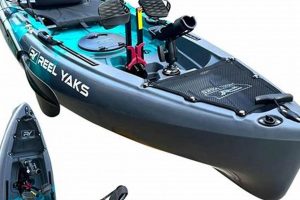
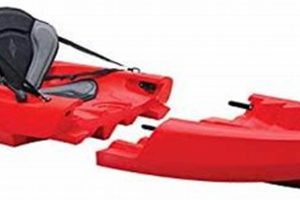
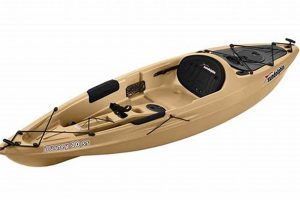
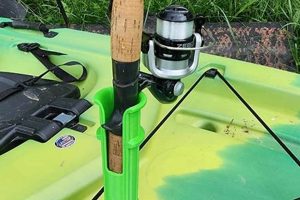
This sit-on-top style vessel, designed for angling, is constructed from high-density polyethylene for durability and stability. It typically features various amenities such as built-in rod holders, paddle cradles, and storage compartments, offering convenience and functionality for anglers. A comfortable seat and adjustable footrests contribute to enhanced user experience during extended fishing trips.
Such watercraft provide a stable and efficient platform for fishing in diverse environments, from calm lakes to slow-moving rivers. Their manageable size and relatively light weight often allow for easy transport and launching. The combination of durability, specialized features, and affordability makes these vessels a popular choice for both novice and experienced anglers. Historically, fishing kayaks have evolved from basic, utilitarian designs to the feature-rich models available today, reflecting advancements in materials and manufacturing techniques.
The subsequent sections will delve deeper into specific aspects of this type of watercraft, including its design features, performance characteristics, and suitability for various fishing styles and environments.
Tips for Kayak Fishing
Effective angling from a kayak requires preparation and technique. The following tips offer guidance for a successful and enjoyable experience.
Tip 1: Plan and research. Prior to launching, thoroughly research the intended fishing location. Understand local regulations, water conditions, and potential hazards. A well-defined plan contributes significantly to safety and angling success.
Tip 2: Prioritize safety. Always wear a personal flotation device (PFD). Carry essential safety equipment, including a whistle, signaling device, and first-aid kit. Inform someone of your fishing plans, including location and expected return time.
Tip 3: Organize gear strategically. Efficient organization within the kayak’s limited space is crucial. Utilize storage compartments and consider mounting rod holders and other accessories for easy access. Keeping essential gear readily available maximizes fishing time.
Tip 4: Practice paddling and maneuvering. Develop proficiency in paddling and maneuvering the kayak, especially in varying wind and current conditions. This allows for precise boat control and efficient navigation to target fishing spots.
Tip 5: Master basic fishing techniques from a kayak. Adapt casting and retrieval techniques to the seated position and limited space. Practice maintaining balance while casting and landing fish. Consider specialized kayak fishing rods and reels.
Tip 6: Respect the environment. Adhere to leave-no-trace principles. Properly dispose of all trash and avoid disturbing wildlife or sensitive habitats. Responsible angling ensures the preservation of natural resources.
Tip 7: Check and maintain equipment. Regularly inspect the kayak, paddle, and fishing gear for wear and tear. Perform necessary maintenance to ensure optimal performance and safety. This proactive approach prevents potential problems on the water.
By implementing these tips, anglers can enhance their kayak fishing experience, maximizing both enjoyment and success while prioritizing safety and environmental responsibility.
This information provides a solid foundation for successful kayak angling. The concluding section will reiterate key points and offer additional resources.
1. Stability

Stability forms a cornerstone of effective kayak fishing, directly influencing angler safety, comfort, and success. A stable platform is essential for casting, retrieving, and landing fish, particularly in challenging conditions. The hull design of a kayak significantly contributes to its stability. A wider, flatter hull generally provides greater primary stability, resisting initial tipping, while a rounded or V-shaped hull may offer superior secondary stability, recovering more readily from larger leans or waves. For the angler, this translates to a secure feeling and the ability to focus on fishing rather than constantly correcting balance. For example, an angler standing to cast in a stable kayak gains a significant advantage in sight fishing and casting distance. Conversely, a less stable kayak could lead to capsizing, gear loss, or even injury.
Specifically regarding the Lifetime Teton Pro, its wider, flat-bottom hull design prioritizes stability, making it suitable for relatively calm waters. This design provides a secure platform, even for less experienced kayakers. The trade-off for this enhanced stability might be slightly reduced maneuverability compared to kayaks with more streamlined hulls. However, for anglers prioritizing a stable and secure platform, particularly those new to kayak fishing, this design provides a significant benefit. Consider an angler fishing in a windy environment: a stable platform enables continued fishing while a less stable kayak might become unmanageable. Practical applications include comfortable seated casting, the ability to stand for sight fishing in calmer conditions, and a reduced likelihood of capsizing when encountering unexpected waves or wakes.
In summary, stability plays a crucial role in kayak fishing, impacting both safety and performance. The Lifetime Teton Pros focus on stability, through its wider hull design, makes it a suitable choice for anglers prioritizing a secure and predictable platform, especially in calmer waters. While potentially sacrificing some maneuverability, the enhanced stability provides tangible benefits in terms of angler confidence and safety. This understanding empowers anglers to make informed decisions regarding kayak selection based on individual needs and fishing conditions.
2. Durability

Durability represents a critical factor in evaluating the long-term value and performance of a fishing kayak. A durable vessel withstands the rigors of regular use, including transportation, launching, retrieval, and exposure to various environmental conditions. This characteristic directly impacts the kayak’s lifespan and overall cost-effectiveness. For the Lifetime Teton Pro fishing kayak, understanding its durability is essential for assessing its suitability for diverse fishing environments and usage patterns.
- Material Construction
High-density polyethylene (HDPE) is a common material for kayak construction due to its impact resistance, UV stability, and affordability. HDPE can withstand impacts from rocks, logs, and other obstacles encountered in various aquatic environments. Its resistance to UV degradation ensures the kayak maintains structural integrity even with prolonged sun exposure. In the context of the Lifetime Teton Pro, the utilization of HDPE contributes to its robust nature, enabling it to endure regular use and exposure to diverse environmental conditions.
- Hull Design and Thickness
The hull design and thickness influence a kayak’s ability to resist punctures and abrasion. A thicker hull generally offers greater protection against sharp objects and rough surfaces. The specific hull design of the Lifetime Teton Pro, while prioritizing stability, also considers durability. Its relatively thick hull provides enhanced resistance to punctures and abrasions, contributing to a longer lifespan.
- Hardware and Fittings
Durable hardware, such as stainless steel or corrosion-resistant alloys, ensures the kayak’s components remain functional and secure over time. High-quality fittings maintain the integrity of critical connection points, such as seat mounts and carrying handles. Examining the hardware and fittings of the Lifetime Teton Pro offers insights into its long-term durability and resistance to wear and tear in various environments.
- Maintenance Requirements
While HDPE requires minimal maintenance, proper care contributes to extended lifespan. Rinsing the kayak after use, especially in saltwater environments, and storing it away from direct sunlight when not in use helps preserve the material’s integrity. Understanding the maintenance requirements of the Lifetime Teton Pro allows owners to proactively protect their investment and maximize its lifespan. Simple cleaning and appropriate storage contribute significantly to preserving the kayak’s condition over time.
The durability of the Lifetime Teton Pro fishing kayak, influenced by factors such as material selection, hull design, hardware quality, and maintenance practices, ultimately contributes to its overall value. A durable kayak provides a reliable platform for fishing expeditions, minimizing the risk of damage and maximizing the return on investment. This translates to more time on the water and fewer interruptions due to maintenance or repairs. By understanding the elements contributing to durability, prospective buyers can make informed decisions based on individual needs and intended usage.
3. Maneuverability
Maneuverability in a fishing kayak directly impacts angling effectiveness and efficiency. The ability to precisely position the vessel, navigate tight spaces, and respond quickly to changing conditions significantly influences fishing success. Factors affecting maneuverability include hull design, length, and weight, as well as water conditions and paddling technique. A shorter, lighter kayak with a more streamlined hull generally offers greater maneuverability, enabling anglers to navigate shallows, weave through obstacles, and adjust position quickly when targeting fish. Conversely, a longer, heavier kayak designed for stability might be less responsive to paddle input, requiring more effort to turn or change direction.
Specifically regarding the Lifetime Teton Pro fishing kayak, its maneuverability reflects a balance between stability and agility. While the wider, flatter hull prioritizes stability, potentially impacting maneuverability in certain situations, it remains manageable for most fishing environments. In calm lakes or slow-moving rivers, the Teton Pro offers adequate maneuverability for navigating to desired fishing spots. However, in faster currents or confined spaces, its turning radius might be wider than kayaks designed specifically for agility. Consider an angler targeting fish near a submerged log: a highly maneuverable kayak allows precise positioning for optimal casting angles, while a less maneuverable one might require more effort and wider turns, potentially spooking the fish. Similarly, navigating through dense vegetation or shallow, rocky areas necessitates a degree of maneuverability to avoid grounding or entanglement.
Understanding the maneuverability characteristics of the Lifetime Teton Pro enables informed decisions regarding its suitability for specific fishing scenarios. While not designed for extreme whitewater or highly technical maneuvering, it provides adequate performance for most recreational fishing environments. Anglers prioritizing stability might accept the trade-off in maneuverability, while those frequently fishing in tight spaces or fast currents might consider kayaks designed for enhanced agility. Recognizing this balance allows anglers to select a kayak that aligns with individual fishing styles and target environments.
4. Storage Capacity
Storage capacity in a fishing kayak directly influences an angler’s ability to carry essential gear, impacting both comfort and preparedness on the water. Adequate storage facilitates organized access to tackle, safety equipment, and personal items, maximizing fishing efficiency and overall enjoyment. Understanding the storage options and capacity of the Lifetime Teton Pro fishing kayak allows anglers to assess its suitability for various fishing styles and trip durations. Insufficient storage can lead to cluttered decks, hindering movement and increasing the risk of lost or damaged gear, while ample, well-designed storage promotes a streamlined and efficient fishing experience.
- Tankwell Storage
The rear tankwell, a common feature in sit-on-top kayaks, provides open storage for larger items such as tackle boxes, coolers, or dry bags. Securing these items with bungee cords is essential to prevent loss in rough conditions. The Teton Pros tankwell offers sufficient space for essential gear, enabling anglers to bring necessary supplies for a day on the water. For example, a larger cooler allows for extended trips with food and drinks, while a dry bag protects sensitive electronics and personal items from water damage. The tankwells capacity directly impacts trip duration and the anglers ability to remain self-sufficient.
- Hatch Storage
Hatches provide protected storage compartments within the kayak’s hull, safeguarding valuables and smaller items from water and the elements. These compartments are ideal for storing items like phones, wallets, keys, and fishing licenses. While the Teton Pro may not feature a large front hatch, its rear tankwell access allows for stowing smaller items in dry bags. This protected storage ensures essential items remain dry and secure, even in challenging conditions.
- Rod Holders
Dedicated rod holders, often integrated into the kayak’s design, secure fishing rods while not in use, freeing the angler’s hands for paddling, maneuvering, or other tasks. Multiple rod holders allow anglers to carry different rod setups for various fishing techniques. The Teton Pro typically includes multiple flush-mounted rod holders, providing convenient storage and quick access to rods without hindering movement or requiring additional accessories. This feature enhances fishing efficiency and allows anglers to adapt to changing conditions or target different species.
- Side Storage and Deck Rigging
Side storage compartments and deck rigging offer additional options for organizing and securing smaller items, such as pliers, knives, and other tools. Bungee cords and D-rings provide attachment points for customizing gear storage and securing essential accessories within easy reach. The Teton Pro’s design incorporates these features, enabling anglers to personalize their setup and maximize efficiency. readily accessible tools and accessories streamline fishing processes and minimize time spent searching for essential gear.
The Lifetime Teton Pro fishing kayak offers a practical and balanced approach to storage, considering the needs of recreational anglers. While not designed for extended expeditions requiring vast amounts of gear, its storage capacity adequately accommodates essential equipment for day trips and shorter excursions. The combination of tankwell storage, integrated rod holders, and additional deck rigging provides sufficient space and organization for a comfortable and productive fishing experience. Understanding the storage features allows anglers to optimize gear organization and maximize their time on the water.
5. Comfort Features
Comfort features in a fishing kayak significantly influence the overall angling experience. Extended periods on the water necessitate a comfortable and supportive environment to minimize fatigue and maximize enjoyment. In the context of the Lifetime Teton Pro fishing kayak, comfort features contribute directly to angler satisfaction and the ability to focus on fishing rather than physical discomfort. Analyzing these features provides insights into the kayak’s suitability for various fishing styles and trip durations. A comfortable angler is a more effective angler, able to concentrate on the task at hand and react quickly to opportunities.
- Adjustable Seating
Adjustable seating systems allow anglers to customize the seat position and back support for optimal comfort and posture. Features like adjustable backrests and seat padding contribute to reducing strain and fatigue during long fishing trips. The Lifetime Teton Pro typically features an adjustable seat back, allowing anglers to fine-tune their position for individual preferences. This customization accommodates different body types and fishing styles, promoting comfort and reducing the likelihood of backaches or discomfort during extended periods on the water. A comfortable seating position also enhances stability and balance, crucial for casting and reeling effectively.
- Footrests
Adjustable footrests provide essential support and leverage for paddling and maneuvering. Proper foot placement enhances stability and control, particularly in challenging conditions. The Teton Pro typically incorporates multiple footrest positions, accommodating anglers of varying heights and leg lengths. Secure and comfortable foot bracing allows for efficient paddling and reduces leg fatigue, contributing to a more enjoyable and controlled kayaking experience. This feature becomes especially important during longer trips or when paddling against wind or current.
- Deck Padding and Ergonomics
Deck padding and ergonomic design elements enhance comfort and reduce fatigue by providing non-slip surfaces and strategically placed features. Textured padding offers secure footing while standing or moving around the kayak, while recessed areas or molded-in features accommodate specific movements and postures. The Teton Pros design often incorporates textured deck padding for enhanced grip and stability. This feature minimizes slippage and improves angler confidence, especially in wet conditions. Combined with other ergonomic considerations, such as the placement of handles and storage compartments, these features contribute to a user-friendly and comfortable experience.
- Weight Capacity and Stability
While not strictly a comfort feature, weight capacity and stability contribute to overall comfort and confidence. A kayak with adequate weight capacity and a stable platform provides a secure and predictable environment, allowing the angler to relax and focus on fishing. The Teton Pros weight capacity and stable hull design provide a reassuring platform for anglers of various sizes. This stability minimizes anxiety and allows anglers to move around the kayak with confidence, contributing to a more comfortable and enjoyable experience. A stable platform also reduces fatigue associated with constantly correcting balance, allowing for longer, more productive fishing trips.
The comfort features of the Lifetime Teton Pro fishing kayak contribute significantly to its overall appeal and suitability for recreational angling. While not as feature-rich as higher-end models, the Teton Pro strikes a balance between affordability and essential comfort elements, providing a pleasant and functional platform for anglers seeking a reliable and comfortable fishing kayak. By considering these features, prospective buyers can assess the kayak’s suitability for individual needs and preferences, ensuring a comfortable and enjoyable experience on the water.
6. Fishing-Specific Design
Fishing-specific design differentiates specialized fishing kayaks from recreational models, optimizing performance and enhancing angling effectiveness. In the context of the Lifetime Teton Pro fishing kayak, these design elements contribute directly to its suitability for angling activities. Understanding these features provides valuable insights into the kayak’s intended use and its potential advantages for anglers.
- Rod Holders
Integrated rod holders, strategically positioned for easy access and secure rod storage, represent a fundamental element of fishing kayak design. Multiple rod holders accommodate diverse fishing techniques and allow anglers to switch between setups efficiently. The Teton Pro typically features flush-mounted rod holders, minimizing obstruction and maximizing deck space. This allows anglers to troll, cast, or switch techniques without interference from protruding rod holders. For example, an angler trolling multiple lines benefits from secure rod storage while maintaining a clear casting area for other techniques.
- Tackle Storage
Dedicated tackle storage compartments provide organized and readily accessible storage for lures, hooks, weights, and other essential fishing gear. These compartments protect tackle from the elements and minimize clutter on the deck. While the Teton Pro may not offer specialized tackle storage compartments, its tankwell and deck rigging provide ample opportunities for customization. Anglers can utilize tackle boxes or bags secured within the tankwell or attach smaller containers to D-rings for quick access to frequently used items. This adaptability allows anglers to tailor their storage solutions to individual preferences and fishing styles.
- Paddle Parks
Paddle parks, or paddle cradles, secure the paddle while fishing, preventing loss and freeing the angler’s hands for casting, reeling, and other tasks. These features streamline the transition between paddling and fishing, enhancing efficiency and minimizing interruptions. The Teton Pro often includes molded-in paddle rests or utilizes bungee cords to secure the paddle when not in use. This feature allows anglers to quickly stow the paddle and focus on fishing without the risk of losing it overboard, particularly in challenging conditions. Secure paddle storage also minimizes clutter on the deck, maximizing fishing space.
- Stability and Hull Design
The hull design of a fishing kayak significantly influences stability, crucial for casting, landing fish, and even standing in certain models. The Teton Pros wider, flatter hull prioritizes stability, providing a secure platform for anglers in calm waters. This design caters to anglers seeking a stable and predictable fishing experience, particularly those new to kayak fishing or preferring to stand while casting. The enhanced stability allows anglers to focus on fishing rather than maintaining balance, ultimately improving casting accuracy and overall effectiveness. For example, sight fishing or fly fishing from a standing position benefits significantly from the enhanced stability provided by the Teton Pros hull design.
These fishing-specific design elements collectively contribute to the Lifetime Teton Pro’s suitability as a recreational fishing kayak. While not as specialized as high-end fishing kayaks, the Teton Pro provides essential features that enhance angling effectiveness and overall enjoyment. Understanding these design considerations allows anglers to appreciate the kayak’s strengths and make informed decisions based on individual fishing styles and preferences. The thoughtful integration of these features positions the Teton Pro as a practical and accessible option for anglers seeking a dedicated fishing platform.
7. Price Point

Price point significantly influences purchasing decisions, especially within the recreational fishing kayak market. Understanding the price point of the Lifetime Teton Pro fishing kayak requires considering its features, materials, construction, and target consumer. Analyzing its price relative to competitors and alternative angling platforms provides valuable context for evaluating its overall value proposition. Price influences accessibility and perceived value, directly impacting market positioning and consumer choice. A thorough examination of the price point illuminates the Teton Pro’s target market and its competitive standing within the broader landscape of fishing kayaks.
- Affordability and Target Market
The Lifetime Teton Pro generally occupies a price point catering to recreational anglers seeking an accessible and functional fishing kayak. Its price often falls within a range attractive to beginners and budget-conscious consumers, making it a popular entry-level option. This affordability broadens access to kayak fishing, enabling a wider range of individuals to experience the sport without a significant financial investment. For example, compared to high-end fishing kayaks with advanced features and materials, the Teton Pro’s price point allows more individuals to participate in kayak fishing, promoting accessibility and growth within the sport. This positions the Teton Pro as an attractive option for those seeking an introductory fishing kayak or a cost-effective alternative to traditional boat ownership.
- Value Proposition
The value proposition of the Lifetime Teton Pro lies in its balance of features, durability, and affordability. It provides essential fishing-specific design elements without the premium price tag associated with higher-end models. This balance makes it a compelling option for anglers seeking core functionality without unnecessary complexity or cost. For instance, while lacking some advanced features found in more expensive kayaks, the Teton Pro offers essential features such as multiple rod holders, a stable hull design, and ample storage, providing adequate functionality for most recreational fishing scenarios. This value-oriented approach focuses on delivering core features at a competitive price, appealing to budget-conscious anglers and those prioritizing practicality.
- Materials and Construction
The materials and construction of the Lifetime Teton Pro contribute to its price point. Utilizing high-density polyethylene (HDPE) allows for durable construction at a relatively low cost. While HDPE might not offer the same performance characteristics as higher-end materials, it provides adequate durability for recreational use, contributing to the kayak’s overall value. For example, compared to kayaks constructed from more expensive materials like fiberglass or composites, the Teton Pro’s HDPE construction allows for a lower price point while still providing sufficient durability for recreational fishing in calm waters. This cost-effective material choice aligns with the kayak’s target market and contributes to its accessibility.
- Competitive Landscape
Analyzing the Teton Pro’s price point within the competitive landscape of fishing kayaks provides valuable context. Comparing its price and features to those of similar models from other manufacturers reveals its competitive positioning and relative value. This analysis assists consumers in making informed decisions based on individual needs and budget constraints. For example, comparing the Teton Pro’s price and features to those of a similarly equipped fishing kayak from a different brand reveals its competitive standing and helps determine whether it offers a superior value proposition. This competitive analysis empowers consumers to make informed decisions and select the kayak that best aligns with their budget and desired features.
The Lifetime Teton Pro fishing kayak’s price point reflects a strategic balance of affordability, features, and construction, positioning it as an accessible and practical option for recreational anglers. Its value-oriented approach prioritizes essential functionality and durability at a competitive price, making it an attractive entry point into kayak fishing for budget-conscious consumers. Understanding the factors influencing its price point provides valuable context for evaluating its overall value proposition and making informed purchasing decisions. By analyzing its price relative to competitors and considering individual fishing needs, prospective buyers can determine if the Teton Pro aligns with their budgetary constraints and desired features, ultimately contributing to a satisfying and cost-effective kayak fishing experience.
Frequently Asked Questions
This section addresses common inquiries regarding the Lifetime Teton Pro fishing kayak, providing concise and informative responses to assist prospective buyers and current owners.
Question 1: What is the weight capacity of the Lifetime Teton Pro?
The weight capacity typically ranges from 275 to 300 pounds, accommodating a single adult angler and their gear.
Question 2: Is the Lifetime Teton Pro suitable for ocean use?
While designed primarily for calm waters such as lakes and slow-moving rivers, it can handle protected bays and estuaries with minimal chop. Open ocean use is generally not recommended.
Question 3: What materials are used in the construction of the Lifetime Teton Pro?
It is typically constructed from high-density polyethylene (HDPE), a durable and UV-resistant plastic known for its impact resistance and affordability.
Question 4: How does the Lifetime Teton Pro perform in windy conditions?
Due to its wider, stable hull design, it performs reasonably well in moderate wind. However, strong winds can impact tracking and maneuverability.
Question 5: What accessories are compatible with the Lifetime Teton Pro?
Various accessories, including aftermarket rod holders, fish finders, anchors, and storage crates, are compatible. Ensure compatibility before purchasing.
Question 6: How does one transport the Lifetime Teton Pro?
Its relatively lightweight design allows for transport on roof racks or in truck beds. Secure tie-down straps are essential for safe transport.
These responses aim to provide clarity regarding common queries. Consulting the owner’s manual and conducting further research is recommended for detailed information and specific use cases.
The following section offers concluding remarks and additional resources for prospective buyers and current owners of the Lifetime Teton Pro fishing kayak.
Conclusion
This exploration of the Lifetime Teton Pro fishing kayak encompassed key aspects relevant to prospective buyers and current owners. Analysis included design features impacting stability, maneuverability, and storage capacity. Comfort and fishing-specific design elements were evaluated, providing insights into the kayak’s intended use and target audience. Discussion of the price point provided context within the broader market of recreational fishing kayaks. Frequently asked questions addressed common inquiries, offering concise and practical information.
The Lifetime Teton Pro presents a balanced approach to recreational kayak fishing, prioritizing stability and affordability. Careful consideration of individual needs, fishing styles, and target environments remains essential for informed purchasing decisions. Further research and practical experience contribute significantly to maximizing enjoyment and effectiveness on the water. Diligent preparation and adherence to safety guidelines ensure a rewarding and safe kayak fishing experience.