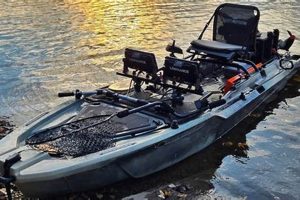
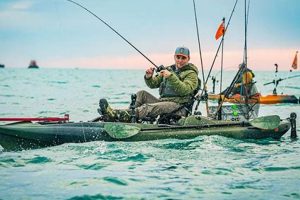
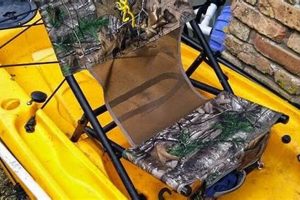
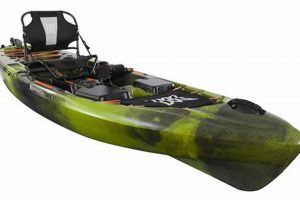
Angled, flush-mounted, and adjustable systems designed to secure fishing rods on kayaks enhance angler efficiency and safety. These specialized mounts allow for hands-free operation during paddling, lure changes, or landing fish. They also reduce the risk of losing valuable equipment overboard. Different designs cater to specific fishing styles and rod types, ranging from trolling to fly fishing.
Secure rod storage and easy access are paramount for a successful kayak fishing experience. Organized gear contributes to a safer and more enjoyable outing by preventing entanglement and allowing for quick reactions in dynamic fishing situations. The evolution of these specialized holders reflects the growing popularity and specialization within kayak fishing, providing anglers with improved ergonomics and functionality on the water.
This article will further explore the variety of mounting systems available, the materials used in their construction, and factors to consider when selecting the right equipment for specific fishing needs.
Tips for Optimized Kayak Fishing Rod Management
Proper rod management is crucial for a safe and productive kayak fishing experience. These tips offer guidance on selecting and utilizing equipment effectively.
Tip 1: Consider Fishing Style: Match the holder type to the intended fishing technique. Trolling requires sturdy holders capable of withstanding constant pressure, while fly fishing benefits from adjustable, easily accessible mounts.
Tip 2: Evaluate Kayak Compatibility: Ensure chosen holders are compatible with the kayak’s mounting system and hull design. Certain kayaks offer integrated tracks or mounting points, while others may require aftermarket adapters.
Tip 3: Prioritize Durability and Material: Opt for robust, corrosion-resistant materials like marine-grade stainless steel or high-impact plastic. Saltwater environments demand particularly durable equipment.
Tip 4: Adjust Positioning for Optimal Ergonomics: Position holders within easy reach to minimize strain and maximize responsiveness when a fish strikes. Consider the angler’s height and paddling style.
Tip 5: Secure Rods During Transit: Utilize rod leashes or straps to prevent loss during transport or unexpected events on the water.
Tip 6: Regularly Inspect and Maintain Equipment: Periodically check holders for signs of wear, tear, or loosening. Tighten screws and replace any damaged components promptly.
Tip 7: Balance Rod Placement for Stability: Distribute rod holders evenly to maintain kayak stability and prevent tipping. Avoid concentrating weight on one side.
Implementing these strategies promotes safety, improves fishing efficiency, and extends the lifespan of equipment. A well-organized kayak contributes to a more enjoyable and productive fishing experience.
By focusing on these essential elements, anglers can enhance their kayak fishing experience and focus on what truly matters: landing the next catch.
1. Secure Rod Storage

Secure rod storage is paramount in kayak fishing, directly impacting safety and efficiency. Specialized holders designed for kayaks offer a practical solution, safeguarding valuable equipment and streamlining the fishing process. Effective storage minimizes risks associated with loose rods while maximizing angler focus on fishing.
- Preventing Rod Loss:
Rods represent a significant investment. Secure storage prevents loss due to accidental slips, sudden movements, or strong currents. Dedicated holders firmly cradle rods, minimizing the risk of them going overboard, even in challenging conditions. This safeguards equipment and prevents environmental debris.
- Protecting Rod Integrity:
Beyond outright loss, unsecured rods are susceptible to damage. Impacts with the kayak, gear, or obstacles can lead to scratches, cracks, or broken guides. Specialized holders provide dedicated protection, mitigating the risk of damage during transport, paddling, and fishing. This preservation extends the lifespan of the equipment.
- Enhancing Angler Safety:
Loose rods present a safety hazard. Tangled lines or unexpected rod movements can impede paddling, interfere with landing fish, or even cause injury. Securely stored rods contribute to a safer environment, allowing for quick, unimpeded reactions in dynamic fishing situations. This is crucial for maintaining balance and preventing accidents.
- Improving Fishing Efficiency:
Fumbling for a rod wastes valuable time. Secure, readily accessible storage allows for swift transitions between paddling, casting, and landing. This efficiency maximizes fishing time and increases the likelihood of success, particularly in fast-paced scenarios where quick reactions are essential.
These facets of secure rod storage collectively contribute to a more streamlined and productive kayak fishing experience. By integrating specialized holders, anglers mitigate risks, protect their investment, and maximize their time on the water, ultimately enhancing the overall enjoyment and success of their fishing endeavors.
2. Hands-free Operation

Hands-free operation is a critical element of safe and effective kayak fishing, directly enhanced by the strategic use of dedicated rod holders. Maintaining control of the kayak and responding effectively to changing conditions or fish strikes necessitates keeping hands free from constantly gripping fishing rods. This capability significantly impacts both safety and fishing success.
- Improved Kayak Control:
Paddling, maneuvering, and maintaining balance are essential aspects of kayak fishing. Dedicated rod holders allow anglers to keep both hands on the paddle, ensuring optimal control, particularly in challenging conditions such as wind, currents, or navigating tight spaces. This enhanced control contributes significantly to safety and stability on the water.
- Enhanced Safety in Unexpected Situations:
Sudden shifts in weather, encounters with obstacles, or unexpected fish strikes require swift reactions. Having both hands available allows for immediate responses, mitigating potential risks and ensuring angler safety. Rapid access to essential gear, such as a paddle float or bilge pump, becomes crucial in emergencies, highlighting the importance of hands-free operation.
- Increased Fishing Versatility:
Hands-free operation enables techniques like trolling or drifting, where the rod remains in the water while the kayak moves. This expands fishing options and increases the likelihood of attracting fish without requiring constant rod manipulation. The ability to switch between techniques without cumbersome rod handling enhances overall fishing versatility.
- Facilitates Other Tasks:
Landing a fish, changing lures, operating electronic devices, or taking a photograph are all facilitated by hands-free operation. Without needing to constantly hold the rod, anglers can perform these tasks efficiently and safely, maximizing their time on the water and overall fishing experience.
By enabling these advantages, dedicated rod holders transform the kayak fishing experience. They contribute to a safer, more versatile, and ultimately more productive outing, highlighting the integral connection between hands-free operation and effective angling from a kayak.
3. Enhanced Stability
Enhanced stability is a critical factor in kayak fishing, directly influenced by the strategic placement and utilization of specialized rod holders. A stable kayak platform optimizes casting accuracy, facilitates fish fighting, and contributes significantly to angler safety. Proper rod management plays a key role in maintaining this stability, impacting performance and overall fishing experience. Distributing weight evenly and securing rods when not in use minimizes the risk of capsizing and maximizes control.
For instance, an angler fighting a large fish benefits from a stable kayak platform. Securely positioned rods prevent entanglement and allow for focused maneuvering during the fight. Conversely, loose rods shift the center of gravity, compromising stability and potentially leading to capsizing. Similarly, when paddling or casting, properly stored rods minimize interference and maintain a balanced platform. This stability is particularly crucial in challenging conditions such as wind or current, where even slight weight shifts can significantly impact kayak control. The ability to maintain balance and react swiftly to changing conditions contributes directly to angler safety and a more confident, controlled fishing experience.
In summary, achieving enhanced stability requires careful consideration of rod placement and secure storage. Specialized holders designed for kayaks provide designated locations for rods, optimizing weight distribution and preventing unwanted movement. This stability translates to improved casting accuracy, safer fish fighting, and increased confidence in maneuvering the kayak, ultimately enhancing the overall fishing experience and promoting angler safety. Neglecting proper rod management compromises stability, increasing the risk of capsizing, particularly in dynamic fishing scenarios or challenging environmental conditions. Understanding the relationship between stability and rod placement is therefore essential for a safe and successful kayak fishing outing.
4. Durable Construction
Durable construction is a critical aspect of specialized fishing rod holders designed for kayaks. The demanding environment of kayak fishing, characterized by exposure to water, sunlight, and physical stresses, necessitates robust materials and construction techniques. Holders crafted from high-quality materials, such as marine-grade stainless steel or reinforced polymers, resist corrosion and withstand impacts, ensuring longevity and reliable performance. This durability translates directly to enhanced safety and sustained functionality in challenging conditions.
For example, a rod holder constructed from inferior materials might corrode in saltwater environments, weakening its structure and potentially leading to failure during a critical moment, such as when fighting a fish. Conversely, a robust, corrosion-resistant holder maintains its integrity, ensuring secure rod storage and angler safety. Similarly, a holder designed with reinforced components can withstand accidental impacts or the stresses of heavy use, providing reliable performance over extended periods. This durability minimizes the need for frequent replacements, representing a long-term value for anglers. Furthermore, robust construction contributes to the overall perception of quality and reliability, instilling confidence in the equipment’s ability to perform consistently in demanding situations.
In summary, durable construction directly impacts the long-term functionality, safety, and overall value of specialized kayak fishing rod holders. Selecting holders built with robust materials and sound construction techniques is an investment in reliability and performance, ultimately contributing to a more positive and productive kayak fishing experience. This focus on durability aligns with the broader demand for dependable equipment capable of withstanding the rigors of the sport.
5. Customizable Positioning
Customizable positioning is a crucial feature of effective kayak fishing rod holders, significantly impacting angler comfort, efficiency, and safety. Adjustable holders allow for personalized configurations tailored to individual fishing styles, kayak layouts, and physical characteristics. This adaptability is essential for optimizing rod placement for efficient casting, retrieval, and fish fighting while minimizing strain and maximizing responsiveness.
Consider a scenario where an angler prefers trolling with multiple rods. Adjustable holders enable precise positioning, ensuring optimal rod angles and spacing for effective lure presentation and tangle-free retrieval. Conversely, a fly fisherman benefits from easily accessible, forward-positioned holders that facilitate quick casts and line management. Furthermore, customizable positioning accommodates varying angler heights and arm lengths, promoting ergonomic comfort and reducing fatigue during long fishing sessions. This adaptability extends to different kayak designs, allowing for optimal rod placement regardless of hull shape or available mounting space. For instance, an angler with a sit-on-top kayak might prefer higher-mounted holders for improved visibility and access, while a sit-in kayak user might opt for lower, more compact placements.
In conclusion, the ability to customize rod positioning is a defining characteristic of effective kayak fishing rod holders. This adaptability enhances comfort, efficiency, and safety, allowing anglers to tailor their setup to specific needs and preferences. Understanding the importance of customizable positioning contributes to a more personalized and productive kayak fishing experience, highlighting its crucial role in optimizing performance and maximizing enjoyment on the water. The flexibility afforded by adjustable holders ensures compatibility across various fishing styles, kayak designs, and individual physical characteristics, contributing to a more versatile and user-friendly experience.
6. Increased Fishing Efficiency
Specialized rod holders designed for kayaks directly contribute to increased fishing efficiency by optimizing gear organization, streamlining actions, and maximizing active fishing time. This enhanced efficiency translates to more casts, improved lure presentation, and quicker responses to fish strikes, ultimately increasing the likelihood of a successful catch. The strategic placement and utilization of these holders minimize wasted time and effort, allowing anglers to focus on the core elements of fishing.
- Reduced Gear Management Time:
Dedicated rod holders eliminate the need to constantly handle and adjust rods, reducing time spent on gear management. This allows anglers to focus on fishing rather than fumbling with equipment, maximizing active fishing time and increasing opportunities for catches. For example, having rods readily accessible in designated holders streamlines lure changes and facilitates quick responses to fish strikes.
- Improved Lure Presentation:
Strategically positioned rod holders facilitate optimal lure presentation by maintaining consistent depth and retrieval angles. This precision enhances lure action and attractiveness to fish, increasing the chances of a strike. For example, trolling multiple rods with adjustable holders allows for precise depth control and spread, covering a wider area and presenting lures effectively at different levels in the water column.
- Faster Hooksets and Fish Fighting:
Securely stored rods enable rapid responses to fish strikes, facilitating quicker hooksets and more effective fish fighting. The immediate availability of a rod allows for swift, decisive action, increasing the likelihood of landing the fish. For example, a rod readily accessible in a holder allows for a split-second reaction to a bite, maximizing the chances of a successful hookset and minimizing the risk of the fish escaping.
- Hands-Free Fishing Techniques:
Specialized rod holders enable hands-free fishing techniques, such as trolling or drifting, further maximizing fishing efficiency. These techniques allow for covering more water and presenting lures to a wider range of fish without requiring constant rod manipulation. This is particularly effective in situations where fish are actively feeding or scattered across a larger area.
In conclusion, the strategic integration of specialized kayak fishing rod holders significantly enhances fishing efficiency by optimizing various aspects of the angling process. From reducing gear management time to facilitating hands-free techniques, these holders contribute to a more streamlined and productive fishing experience, directly impacting the angler’s ability to maximize their time on the water and increase their chances of success. This connection between specialized equipment and enhanced efficiency underscores the importance of thoughtful gear selection for optimizing performance in kayak fishing.
7. Reduced Equipment Loss
Minimizing equipment loss is a significant economic and environmental consideration in kayak fishing. Specialized rod holders play a crucial role in preventing the loss of valuable rods and reels, contributing to both financial savings and responsible environmental stewardship. These holders provide secure storage, reducing the risk of equipment going overboard due to accidental slips, sudden movements, or unexpected encounters with obstacles. This protective function is particularly important in dynamic kayak fishing environments, where equipment is constantly exposed to the elements and various potential hazards.
- Financial Savings:
Fishing rods and reels represent a substantial investment for anglers. Losing these items due to accidents can incur significant replacement costs. Secure rod holders mitigate this risk, preserving investments and preventing unexpected financial burdens. The cost savings associated with preventing equipment loss can be substantial, especially considering the potential for losing multiple rods or high-end equipment in a single incident. This financial benefit directly contributes to the overall value and appeal of specialized rod holders.
- Environmental Responsibility:
Lost fishing equipment contributes to pollution and poses a threat to aquatic ecosystems. Rods and reels discarded in waterways can entangle marine life, damage habitats, and persist as environmental debris. Secure storage solutions, such as specialized rod holders, minimize the risk of adding to this pollution, promoting responsible environmental stewardship within the angling community. Preventing equipment loss aligns with the growing emphasis on sustainability and conservation in outdoor recreational activities.
- Peace of Mind:
Knowing that valuable equipment is securely stored allows anglers to focus on the fishing experience rather than worrying about potential loss or damage. This peace of mind enhances enjoyment and reduces stress, contributing to a more positive and immersive outing. The confidence instilled by secure storage allows anglers to fully engage with the activity, fostering a deeper appreciation for the sport and the surrounding environment.
- Improved Safety:
Loose rods in a kayak create a safety hazard, potentially interfering with paddling, tangling lines, or causing injury. Securely stored rods in designated holders create a safer environment, reducing the risk of accidents and promoting responsible kayak operation. This enhanced safety contributes to a more positive and enjoyable experience, allowing anglers to focus on fishing without the added concern of navigating a cluttered or hazardous environment within the kayak.
By mitigating the risk of equipment loss, specialized kayak fishing rod holders contribute to both the economic and environmental sustainability of the sport. These benefits, coupled with enhanced safety and peace of mind, underscore the significant role these holders play in optimizing the overall kayak fishing experience. Investing in secure storage solutions reflects a commitment to responsible angling practices and a dedication to preserving the enjoyment of the sport for future generations.
Frequently Asked Questions
This section addresses common inquiries regarding specialized fishing rod holders designed for kayaks, providing concise and informative responses to facilitate informed decision-making and optimal equipment utilization.
Question 1: What materials are most suitable for kayak fishing rod holders in saltwater environments?
Marine-grade stainless steel and high-impact, UV-resistant plastics are preferred for saltwater due to their corrosion resistance and durability. These materials withstand harsh marine conditions, ensuring long-term performance and structural integrity.
Question 2: How does one choose between flush-mount, angled, and adjustable rod holders?
Selection depends on fishing style and kayak layout. Flush-mount holders maximize deck space, angled holders offer specific rod orientations for techniques like trolling, and adjustable holders provide versatility for various fishing methods and rod types.
Question 3: Are aftermarket rod holders compatible with all kayaks?
Compatibility varies based on kayak design and mounting systems. Some kayaks feature integrated tracks or mounting points, while others may require adapters or specific mounting hardware. Careful consideration of kayak specifications and holder compatibility is essential.
Question 4: How many rod holders can be safely installed on a kayak?
The number depends on kayak size, stability, and intended fishing style. Overloading a kayak with excessive holders compromises stability and maneuverability. Careful consideration of weight distribution and balance is paramount.
Question 5: What maintenance is required for kayak fishing rod holders?
Regular inspection and cleaning are essential, especially in saltwater environments. Tightening screws, lubricating moving parts, and promptly replacing any damaged components ensures continued performance and safety.
Question 6: Can rod holders be used for other equipment besides fishing rods?
While designed primarily for fishing rods, some holders can accommodate other gear like landing nets or gaffs, provided they fit securely and do not compromise stability.
Understanding these key aspects of kayak fishing rod holders contributes to informed equipment selection and safe, efficient usage. Careful consideration of individual fishing needs and kayak compatibility ensures optimal performance and a positive on-the-water experience.
For further exploration of specific product options and installation guidance, consult detailed product specifications and manufacturer recommendations.
Conclusion
Specialized equipment designed for securing fishing rods on kayaks contributes significantly to angler safety, efficiency, and overall fishing success. From preventing equipment loss and enhancing stability to optimizing rod placement for specific techniques, these purpose-built holders offer numerous advantages. Material selection, mounting options, and adjustable features cater to diverse fishing styles and kayak configurations, enabling anglers to tailor their setups to individual needs and preferences. The discussion encompassed the critical role of secure rod storage in preserving valuable equipment and minimizing environmental impact, as well as the impact of hands-free operation on kayak control, safety, and fishing versatility. Furthermore, the importance of durable construction in withstanding demanding conditions and the adaptability offered by customizable positioning were highlighted as crucial factors in maximizing performance and comfort. Finally, increased fishing efficiency resulting from streamlined gear management and optimized rod placement, ultimately leading to more productive outings, underscores the significance of these specialized holders.
Strategic equipment choices significantly influence the kayak fishing experience. Prioritizing thoughtful selection based on individual needs and environmental conditions optimizes performance, safety, and long-term enjoyment on the water. Further exploration of available options and consultation with experienced anglers can provide valuable insights for tailoring equipment choices to specific fishing goals and maximizing success on the water.