Angling from small, human-powered vessels offers a unique blend of mobility and stealth. This approach allows access to shallow, secluded waters often unreachable by larger motorized boats, creating opportunities to target a variety of fish species. For instance, maneuvering a lightweight craft through a winding creek provides a distinct advantage for anglers pursuing bass or trout.
This specialized angling method offers a close-to-nature experience, promoting physical activity and a deeper connection with the aquatic environment. Historically, small boats have been utilized for fishing, evolving from rudimentary rafts to the sophisticated designs available today. The modern iteration combines stability, maneuverability, and specialized features for a more effective and enjoyable fishing experience. Its growing popularity reflects a desire for sustainable, accessible, and engaging outdoor recreation.
The following sections will delve into specific techniques, equipment choices, and safety considerations essential for successful and enjoyable on-the-water angling from these versatile vessels.
Tips for On-Water Angling
Proper planning and execution are crucial for a successful and safe fishing experience from a small, human-powered vessel. The following tips offer valuable insights for anglers of all skill levels.
Tip 1: Stability is Paramount: Prioritize vessel stability, especially when casting or reeling. Consider designs specifically engineered for angling, offering enhanced stability features.
Tip 2: Essential Gear Selection: Choose specialized rods, reels, and tackle appropriate for the target species and the confined space of the vessel. Compact and easily accessible gear is recommended.
Tip 3: Mastering Paddle or Pedal Propulsion: Practice efficient paddling or pedaling techniques to maintain control and navigate effectively, especially in challenging conditions like wind or current.
Tip 4: Strategic Positioning: Utilize the vessel’s maneuverability to position oneself advantageously, considering factors like water depth, structure, and the target species’ behavior.
Tip 5: Safety First: Always wear a personal flotation device and carry essential safety equipment, including a whistle, signaling device, and first-aid kit.
Tip 6: Respect Wildlife and the Environment: Practice catch-and-release whenever possible and adhere to all local fishing regulations. Minimize environmental impact by properly disposing of waste and avoiding disturbances to natural habitats.
Tip 7: Weather Awareness: Check weather forecasts before embarking and be prepared for changing conditions. Avoid venturing out in strong winds, lightning storms, or other hazardous weather.
By adhering to these guidelines, anglers can maximize their success, enhance their enjoyment, and ensure a safe experience on the water.
The insights shared throughout this article equip anglers with the knowledge and strategies needed for a rewarding fishing experience from a human-powered vessel.
1. Stable Kayak Platform

A stable kayak platform is fundamental to successful angling from a kayak. It directly impacts casting accuracy, fish fighting control, and overall safety. This stability allows anglers to focus on the fishing experience rather than constantly managing balance. Understanding the factors that contribute to platform stability is crucial for optimizing on-the-water performance.
- Hull Design and Stability:
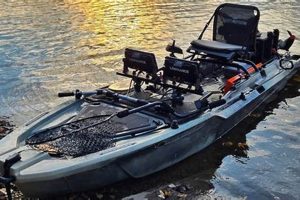
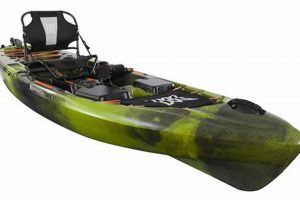
Hull design significantly influences stability. Wider, flatter hulls generally offer greater primary stability (initial resistance to tipping), beneficial for calmer waters. Longer, narrower hulls provide better secondary stability (resistance to capsizing once tipped), advantageous in rougher conditions. A kayak intended for fishing often incorporates a wider hull design for increased stability. For example, a pontoon-style hull provides exceptional primary stability, enabling anglers to stand and cast.
- Center of Gravity and Weight Distribution:
Maintaining a low center of gravity enhances stability. Distributing weight evenly within the kayak is crucial. Positioning heavier items lower in the hull and closer to the center improves balance. An angler sitting upright and centered within the kayak maintains optimal weight distribution, minimizing the risk of tipping. Leaning too far to one side elevates the center of gravity, increasing instability.
- Kayak Features and Modifications:
Certain kayak features enhance stability. Outriggers, stabilizers, or wider platforms provide additional support. These additions can be particularly helpful for anglers new to kayak fishing or those fishing in challenging conditions. Aftermarket stabilizers can be attached to improve the stability of existing kayaks. For example, adding inflatable outriggers significantly increases stability, allowing for more confident movement within the kayak.
- Environmental Factors and Water Conditions:
Water conditions like wind, currents, and waves impact stability. Understanding how these factors influence kayak behavior is essential for safe and effective fishing. Calm, flat water presents fewer stability challenges compared to choppy or fast-flowing water. For example, strong winds can significantly impact kayak stability, requiring adjustments in paddling technique and body positioning.
By carefully considering these facets of kayak stability, anglers can select the right platform and optimize its performance on the water. A stable kayak enhances fishing effectiveness by providing a secure and balanced base for casting, retrieving, and landing fish, ultimately contributing to a more successful and enjoyable angling experience.
2. Specialized fishing gear

Effective angling from a kayak necessitates specialized gear tailored to the unique demands of this approach. The confined space and the need for efficient maneuverability influence equipment choices, impacting both performance and safety. Understanding these specialized gear requirements is crucial for a productive and enjoyable fishing experience.
- Rods and Reels:
Shorter, more manageable rods are generally preferred for kayak fishing, facilitating casting and retrieval within the limited space. Rod holders mounted on the kayak provide convenient storage and quick access. Spinning and baitcasting reels are common choices, selected based on target species and fishing techniques. For example, a 7-foot medium-power spinning rod paired with a 2500-size reel offers versatility for various freshwater species.
- Tackle and Storage:
Kayak anglers often opt for lures and terminal tackle suited to the target species and the specific fishing environment. Compact tackle boxes and storage systems maximize space efficiency. Waterproof bags and containers protect gear from splashes and submersion. For instance, a small waterproof tackle box containing a selection of jigs, soft plastics, and hooks provides a versatile kit for targeting bass or panfish.
- Fishing Accessories:
Specialized accessories enhance kayak fishing experiences. A fish finder helps locate fish and identify underwater structures. An anchor or drift chute controls kayak positioning. A landing net assists in safely bringing fish onboard. For example, a portable fish finder mounted on the kayak provides real-time depth readings and identifies potential fishing hotspots.
- Safety Equipment:
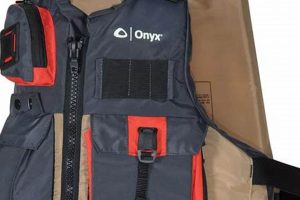
Safety equipment is paramount. A personal flotation device (PFD) is essential. A whistle, signaling device, and first-aid kit contribute to angler safety. These items should be readily accessible in case of emergencies. For example, a brightly colored PFD with attached pockets for a whistle and signaling device enhances visibility and preparedness in the event of an unforeseen circumstance.
The selection and proper utilization of specialized gear directly contribute to successful kayak angling. By choosing equipment tailored to this specific fishing style, anglers optimize efficiency, enhance safety, and maximize their chances of a productive and enjoyable experience on the water. The right gear allows for seamless integration with the kayak platform and the surrounding environment, contributing to a more fulfilling angling experience overall.
3. Efficient Paddling Technique

Efficient paddling technique is essential for successful kayak angling. It directly impacts maneuverability, positioning, and overall fishing effectiveness. A strong paddling technique allows anglers to navigate efficiently, reach desired fishing spots, and maintain optimal boat control while fishing, conserving energy for the main activity.
- Forward Stroke:
The forward stroke propels the kayak efficiently. It involves a combination of core rotation, arm extension, and a smooth blade entry and exit. A proper forward stroke maximizes power while minimizing effort and maintaining a straight tracking line. For example, rotating the torso engages larger muscle groups, increasing power and reducing strain on the arms. This efficient propulsion allows anglers to cover greater distances and access remote fishing areas with minimal exertion.
- Steering Strokes:
Steering strokes control kayak direction. Sweeps, draws, and rudders allow for precise maneuvering and adjustments in heading. Mastering these strokes is crucial for navigating tight spaces, avoiding obstacles, and maintaining desired positions in moving water or wind. For example, a sweep stroke near the stern efficiently turns the kayak, while a draw stroke pulls the kayak sideways towards the paddle. These techniques are vital for precise boat control when approaching fishing spots or adjusting position relative to structure or current.
- Bracing and Stability:
Bracing techniques maintain kayak stability. Low and high braces provide corrective support, preventing capsizing in rough water or during unexpected movements. These techniques are essential for maintaining balance while casting, fighting fish, or navigating challenging conditions. For example, a low brace involves quickly extending the paddle blade flat on the water’s surface to provide immediate support. This rapid corrective action is crucial for recovering balance and preventing capsizing when the kayak becomes unstable.
- Energy Conservation:
Efficient paddling conserves energy. Minimizing unnecessary movements and utilizing proper body mechanics reduces fatigue, allowing anglers to focus on fishing. This is especially important during long fishing trips or when navigating challenging conditions. For example, maintaining a relaxed grip on the paddle and utilizing core rotation reduces strain on the arms and shoulders, conserving energy for casting and retrieving. This efficient energy management is crucial for maintaining focus and maximizing fishing effectiveness throughout the day.
Proficient paddling technique is integral to successful kayak fishing. It provides the control and maneuverability necessary to reach prime fishing locations, maintain position, and effectively present lures or bait. By mastering these paddling techniques, anglers enhance their fishing experience, maximize their time on the water, and improve their chances of success. This efficiency directly translates to a more productive and enjoyable angling experience from a kayak.
4. Strategic Location Selection
Strategic location selection is paramount in kayak angling. Maximizing fishing success hinges on identifying areas likely to hold target species. Understanding fish behavior, habitat preferences, and environmental influences enables anglers to choose productive fishing spots, increasing the likelihood of successful catches and a more rewarding experience.
- Reading the Water:
Observing water characteristics provides clues to fish location. Changes in depth, current flow, and water clarity often indicate prime fishing areas. For instance, a drop-off where deeper water meets a shallower flat can concentrate fish, particularly predatory species. Similarly, areas with current breaks or eddies provide refuge for fish and concentrate food sources, making them attractive fishing spots.
- Identifying Structure and Cover:
Fish often congregate around structures like submerged logs, rocks, weed beds, and docks. These features provide shelter, ambush points, and foraging opportunities. Identifying these structures and understanding how fish utilize them is crucial for strategic location selection. For example, casting near submerged logs or weed beds increases the chances of encountering species that seek cover or ambush prey. Docks also attract fish, offering shade and a habitat for smaller organisms that serve as a food source.
- Understanding Fish Behavior:
Knowledge of fish behavior patterns influences location choices. Factors like water temperature, time of day, and seasonal changes impact fish activity and location. For instance, during warmer months, some species seek cooler, deeper water, while others remain in shallow areas near vegetation. Understanding these behavioral patterns enables anglers to target specific locations where fish are most likely to be present. Adapting fishing strategies based on these behavioral cues maximizes the chances of a successful catch.
- Utilizing Technology and Resources:
Tools like maps, fish finders, and local fishing reports provide valuable information for location selection. Maps reveal underwater topography and potential fish-holding structures. Fish finders identify fish concentrations and water depth. Local reports offer insights into recent catches and productive areas. Utilizing these resources enhances strategic planning and increases the likelihood of finding fish. Combining this information with personal observation and experience further refines location selection, leading to more productive fishing outings.
Strategic location selection is intrinsically linked to successful kayak fishing. By combining observation, knowledge of fish behavior, and available resources, kayak anglers can significantly enhance their fishing success. Choosing the right location positions anglers for optimal catch opportunities, transforming a simple fishing trip into a more rewarding and productive experience. This strategic approach not only increases the likelihood of catching fish but also deepens the angler’s understanding of the aquatic environment and the intricate relationship between fish and their habitat.
5. Safety Precautions

Safety is paramount in kayak angling. The inherent risks associated with on-water activities necessitate careful planning and adherence to safety guidelines. Understanding and implementing these precautions ensures a secure and enjoyable fishing experience, mitigating potential hazards and promoting responsible angling practices.
- Personal Flotation Devices (PFDs):
Wearing a properly fitted PFD is non-negotiable. PFDs provide essential buoyancy in the event of capsizing or accidental immersion, significantly increasing the chances of survival. Different PFD types exist, and selecting one appropriate for kayaking and fishing ensures optimal comfort and functionality. For example, an inflatable PFD allows for greater freedom of movement while fishing, but requires regular maintenance and inspection to ensure proper inflation in an emergency.
- Weather Awareness and Planning:
Checking weather forecasts before embarking is crucial. Sudden changes in weather conditions can create hazardous situations on the water. Strong winds, lightning storms, and rapid temperature drops pose significant risks to kayak anglers. Planning trips during calm and predictable weather windows minimizes these risks. For example, avoiding fishing during periods of high winds or approaching storms significantly reduces the risk of capsizing or encountering dangerous conditions on the water. Monitoring weather radar and having a plan for quick return to shore are essential safety practices.
- Communication and Signaling Devices:
Carrying communication and signaling devices is essential for emergencies. A waterproof cell phone or VHF radio allows for communication with shore or other boaters. A whistle, signal mirror, or flares can attract attention in distress situations. Ensuring these devices are readily accessible and functional is crucial for a timely response in case of an emergency. For instance, storing a waterproof cell phone in a readily accessible dry bag ensures it remains functional in the event of capsizing or water exposure, allowing for immediate communication with emergency services if needed.
- Navigation and Awareness:
Understanding navigational markers, water hazards, and local regulations enhances safety. Knowing one’s location and being aware of potential obstacles, such as shallow areas, submerged debris, or strong currents, prevents accidents. Carrying a map or chart of the fishing area and familiarizing oneself with local boating regulations promotes safe navigation. For example, understanding buoy markers and channel markings helps kayak anglers avoid hazardous areas and maintain safe passage through navigable waters. Staying clear of marked channels also minimizes interaction with larger motorized vessels, reducing the risk of collisions.
Prioritizing safety precautions in kayak angling significantly reduces risks and enhances the overall experience. By adhering to these guidelines and remaining vigilant on the water, anglers create a safer environment for themselves and fellow boaters. This focus on safety contributes to a more enjoyable and responsible approach to kayak fishing, allowing anglers to fully appreciate the sport while minimizing potential hazards. A proactive approach to safety fosters a culture of responsible angling, ensuring the long-term sustainability and enjoyment of this popular recreational activity.
Frequently Asked Questions
This section addresses common inquiries regarding angling from kayaks, providing concise and informative responses to facilitate a better understanding of this specialized fishing approach.
Question 1: What are the advantages of fishing from a kayak?
Kayak angling offers access to shallow, secluded waters often inaccessible to larger boats, allowing anglers to target specific species in their preferred habitats. The quiet, non-motorized approach minimizes disturbance, enhancing stealth and increasing chances of success. Kayaks also provide a cost-effective and environmentally friendly alternative to motorized vessels.
Question 2: What type of kayak is best suited for fishing?
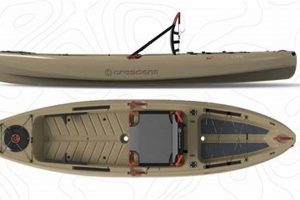
Sit-on-top kayaks are generally preferred for their stability, ease of entry and exit, and self-bailing capabilities. Specific fishing kayaks often feature specialized design elements like rod holders, tackle storage, and anchor systems, further enhancing their functionality and convenience.
Question 3: What essential safety equipment should one carry when kayak fishing?
Essential safety gear includes a personal flotation device (PFD), a whistle, a signaling device (such as a mirror or flare), a first-aid kit, and a communication device like a waterproof cell phone or VHF radio. Checking weather conditions before embarking and informing someone of the intended fishing location and return time are also crucial safety measures.
Question 4: What fishing techniques are effective from a kayak?
Effective techniques vary depending on the target species and environment. Popular methods include casting lures, trolling, still fishing with bait, and fly fishing. Adapting techniques to the specific conditions and utilizing the kayak’s maneuverability to access prime fishing spots maximizes success.
Question 5: How does one transport a kayak for fishing?
Kayaks can be transported using roof racks, trailers, or truck beds. Selecting a transportation method depends on vehicle type and kayak size. Proper securing techniques ensure safe and damage-free transport. Some kayaks are designed for easy disassembly, facilitating transport in smaller vehicles.
Question 6: What are the legal requirements for kayak fishing?
Regulations vary by location. Anglers should consult local authorities regarding licensing requirements, catch limits, and permitted fishing areas. Adhering to these regulations ensures responsible and legal angling practices.
Understanding these fundamental aspects of kayak angling promotes a safe, enjoyable, and successful experience on the water. Careful planning, appropriate equipment selection, and adherence to safety guidelines contribute to a rewarding pursuit of this specialized fishing style.
The information provided here serves as a starting point for those interested in exploring the world of kayak angling. Further research and practical experience will enhance knowledge and skill development in this rewarding outdoor activity.
Conclusion
Angling from kayaks offers a unique approach to fishing, blending accessibility with a close-to-nature experience. Success hinges on understanding key elements: platform stability, specialized gear selection, efficient paddling technique, strategic location identification, and unwavering adherence to safety precautions. These factors contribute significantly to a rewarding and productive experience on the water.
This specialized angling method presents an opportunity to connect with the aquatic environment in a sustainable and engaging manner. Continued exploration of advanced techniques and responsible angling practices will further enhance the enjoyment and preservation of this increasingly popular recreational pursuit.