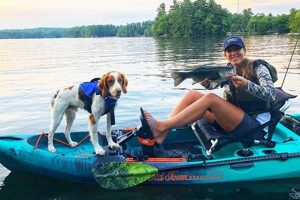
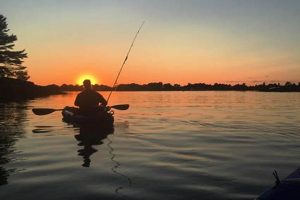
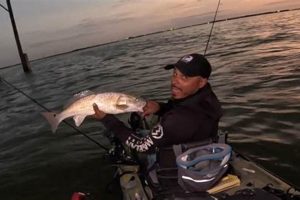
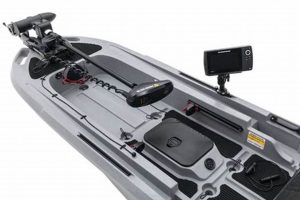
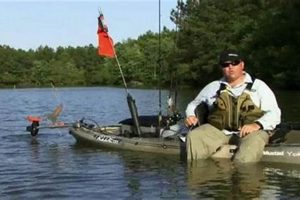
A small, self-propelled watercraft designed for a single angler offers a unique blend of mobility and stability specifically for angling. These vessels often feature specialized storage for rods, tackle, and even live bait, along with modifications like rod holders and anchor trolleys to enhance the fishing experience. An example would be a sit-on-top model with a molded-in seat and adjustable footrests for comfort during long hours on the water.
The popularity of these specialized craft stems from the advantages they offer over larger boats or shore fishing. Their compact size allows access to shallow waters and confined areas often teeming with fish but unreachable by larger vessels. Additionally, the quiet operation of a paddle or pedal-powered watercraft reduces disturbance to aquatic life, potentially improving fishing success. This approach to angling has evolved considerably from basic canoes and small boats, incorporating modern materials and designs for enhanced performance and user comfort.
This exploration will further examine the various types available, factors to consider when selecting one, essential safety guidelines, and popular fishing techniques best suited for this style of angling.
Tips for Solo Kayak Fishing
Preparation and awareness are crucial for a successful and safe solo kayaking fishing trip. These tips offer guidance for both novice and experienced anglers.
Tip 1: Check Weather Conditions: Prior to departure, thoroughly research marine weather forecasts, paying close attention to wind speed, direction, and potential changes. Avoid venturing out in adverse conditions.
Tip 2: File a Float Plan: Inform someone on shore of the intended fishing location, planned departure and return times, and personal contact information. This ensures someone is aware of the trip in case of emergencies.
Tip 3: Pack Essential Safety Gear: Carry a personal flotation device (PFD), a signaling whistle, a waterproof first-aid kit, and a communication device like a VHF radio or a waterproofed cell phone.
Tip 4: Dress Appropriately: Wear clothing suitable for the expected weather conditions, including layers for warmth and rain gear. Non-slip footwear and a wide-brimmed hat for sun protection are also recommended.
Tip 5: Distribute Weight Evenly: Load the kayak with gear distributed evenly for optimal balance and stability. Place heavier items closer to the center and secure all equipment to prevent shifting during movement.
Tip 6: Practice Self-Rescue Techniques: Before venturing out alone, practice re-entering the kayak from the water in a controlled environment. This skill is vital in case of capsizing.
Tip 7: Be Aware of Water Traffic: Maintain vigilance for other boats and watercraft. Understand navigational rules and rights of way to avoid collisions.
By adhering to these precautions, anglers can significantly increase their safety and enjoyment while solo kayak fishing, allowing for a more focused and rewarding experience.
Equipped with these tips, anglers can transition to selecting appropriate gear and exploring specific techniques further detailed in subsequent sections.
1. Stability

Stability represents a critical performance characteristic in single-person fishing kayaks, directly influencing angler safety and fishing effectiveness. A stable platform provides a secure base for casting, fighting fish, and making adjustments to tackle or equipment without the risk of capsizing. This is particularly important in challenging conditions such as windy weather or when navigating moving water. Compromised stability can lead to angler fatigue, decreased casting accuracy, and a heightened risk of tipping, potentially resulting in gear loss or personal injury. For example, a wider, flatter hull design generally offers greater primary stability (resistance to initial tipping), while a kayak with a pronounced keel or chines enhances secondary stability (resistance to further tipping once leaned). Understanding the interplay of these factors is crucial for informed kayak selection.
Several factors contribute to kayak stability, including hull design (width, shape, and length), weight distribution, and the angler’s center of gravity. Wider kayaks inherently offer more initial stability, making them suitable for calmer waters and less experienced paddlers. Longer, narrower kayaks prioritize speed and tracking but can feel less stable initially. Proper weight distribution within the kayak is crucial for maintaining balance. Positioning heavier items low and centrally optimizes stability. The angler’s body position and movements also play a role; sudden shifts in weight can compromise stability, emphasizing the importance of smooth, controlled movements while fishing. Consider, for instance, the difference between standing to cast in a wide, flat-bottomed kayak designed for stability versus attempting the same maneuver in a narrow, performance-oriented model. The former provides a more secure platform for this activity.
Prioritizing stability when choosing a fishing kayak contributes significantly to a safer and more productive angling experience. Assessing individual needs, anticipated fishing conditions, and intended fishing techniques will guide appropriate kayak selection. While a focus on stability is crucial, it must be balanced against other performance factors like maneuverability and speed, necessitating a comprehensive evaluation of available options based on individual angler requirements and preferences. This understanding forms the foundation for a safe and rewarding pursuit of on-the-water angling.
2. Maneuverability

Maneuverability in a one-person fishing kayak significantly impacts an angler’s ability to navigate various water conditions and access prime fishing spots efficiently. A highly maneuverable vessel allows for precise adjustments in position, crucial for navigating tight quarters, responding to changing currents, and approaching fish discreetly. This attribute becomes particularly relevant in environments like shallow creeks, winding rivers, and areas with dense vegetation or submerged obstacles.
- Hull Design and Length
Hull design plays a pivotal role in determining kayak maneuverability. Shorter kayaks generally turn more quickly than longer ones, making them ideal for navigating confined spaces. Longer kayaks, however, excel in tracking straight lines and covering distances efficiently. Hull shape also influences turning performance; a kayak with a more pronounced rocker (upward curve of the hull) will turn more readily than one with a flatter hull. Consider, for instance, the difference between navigating a narrow, twisting stream in a short, rockered kayak versus a long, flat-hulled model. The formers maneuverability provides a distinct advantage in such conditions.
- Water Conditions and Current
Maneuverability requirements vary depending on the intended fishing environment. Calm lakes and ponds demand less maneuverability compared to swiftly flowing rivers or tidal zones. Currents can significantly affect a kayak’s trajectory, emphasizing the importance of a vessel capable of precise adjustments. For example, a kayak with a rudder or skeg can enhance tracking and directional control in currents, improving maneuverability and reducing the need for constant corrective strokes.
- Fishing Techniques and Target Species
Specific fishing techniques often dictate the level of maneuverability required. Trolling, for instance, benefits from a kayak that tracks well in a straight line, while sight fishing or casting in tight spaces requires enhanced turning capabilities. The target species also influences maneuverability needs. Fishing for agile species in complex environments necessitates a highly responsive kayak capable of quick turns and precise positioning. Angling for larger, slower-moving species in open water might prioritize stability over intricate maneuverability.
- Paddle/Pedal Propulsion and Rudders/Skegs
The choice of propulsion system affects maneuverability. Paddle kayaks offer immediate directional control and allow for intricate maneuvering in tight spaces. Pedal-powered kayaks offer hands-free operation, beneficial for fishing techniques requiring constant adjustments in position. Rudders or skegs enhance tracking and directional control, particularly useful in windy conditions or currents, complementing either propulsion method and further refining maneuverability.
Considering these factors, optimal maneuverability in a one-person fishing kayak is a balance of hull design, propulsion choice, and adaptability to specific fishing environments and techniques. Selecting a kayak with appropriate maneuverability characteristics directly contributes to enhanced fishing effectiveness and overall on-the-water experience, enabling anglers to access desired locations, respond to changing conditions, and ultimately increase fishing success.
3. Storage Capacity

Adequate storage capacity is a defining feature of a well-equipped one-person fishing kayak, directly influencing an angler’s preparedness and overall fishing experience. Sufficient storage allows for the organized transport of essential gear, including tackle boxes, rods, safety equipment, and personal items, contributing to efficient angling and enhanced safety on the water. Insufficient storage can limit fishing options, necessitate multiple trips, or compromise safety by hindering access to essential equipment.
- Types of Storage
Fishing kayaks offer various storage solutions, each with specific advantages. Open storage areas, often located behind the seat, accommodate larger items like crates or tackle bags. Hatches provide waterproof compartments for sensitive electronics and valuables. Recessed storage areas, such as tank wells, secure items like rods and paddles. Specialized storage solutions like tackle box trays and rod holders further organize gear. For example, a dedicated compartment for a fish finder keeps electronics secure and readily accessible while a rod holder safeguards fishing rods and frees the angler’s hands.
- Capacity and Weight Considerations
The storage capacity required depends on the type of fishing pursued, the duration of outings, and the amount of gear needed. Longer expeditions or techniques requiring specialized equipment necessitate greater storage volume. However, increased storage capacity can contribute to added kayak weight, affecting maneuverability and portability. Balancing storage needs with overall kayak weight is critical for optimal performance. For instance, an angler planning an overnight trip needs more storage for camping gear than someone fishing for a few hours near shore.
- Accessibility and Organization
Well-designed storage facilitates easy access to frequently used items. Positioning essential gear within reach minimizes disruption during fishing. Organization systems, like dividers within storage compartments and strategically placed attachment points, further enhance efficiency. An angler can quickly locate and retrieve a lure without having to rummage through a disorganized storage area, thus maximizing fishing time and minimizing distractions.
- Material and Durability
Storage compartments in fishing kayaks are typically constructed from durable, weather-resistant materials designed to withstand exposure to the elements. High-quality hatches and seals prevent water intrusion, protecting valuable gear from damage. Reinforced storage areas can withstand the weight of heavy equipment and the rigors of transport and use. A robust storage system ensures the longevity of the kayak and the protection of stored items, contributing to long-term value and angler satisfaction.
In conclusion, prioritizing appropriate storage capacity when selecting a one-person fishing kayak is paramount. Balancing storage volume, accessibility, organization, and durability with overall kayak weight and performance characteristics contributes significantly to a successful and enjoyable fishing experience. By carefully considering these factors, anglers can choose a kayak that meets their specific needs and enhances their time on the water.
4. Propulsion (Paddle/Pedal)
Propulsion systems represent a critical distinction among one-person fishing kayaks, significantly influencing performance and angler experience. The primary methods paddle and pedal each offer distinct advantages and disadvantages, impacting speed, maneuverability, fishing technique, and overall physical exertion. Choosing the appropriate propulsion system depends on individual angler preferences, fishing style, and the intended environment.
Paddle propulsion, the traditional method, offers excellent maneuverability and control, allowing for precise adjustments in position and navigation through tight spaces. Paddle kayaks are generally lighter and less expensive than pedal-driven alternatives. However, paddling requires continuous physical effort, which can lead to fatigue, especially during long fishing trips or in challenging conditions. Consider a scenario involving fishing in a densely vegetated area requiring frequent changes in direction; paddle propulsion offers the responsiveness needed for such intricate navigation. Conversely, trolling in open water might benefit from the sustained, hands-free operation of a pedal kayak.
Pedal propulsion provides hands-free operation, a significant advantage for techniques requiring frequent adjustments to fishing rods or equipment. The sustained power delivery of pedal drives allows for greater speed and range, particularly beneficial in open water or when covering long distances. However, pedal kayaks tend to be heavier, more complex, and more expensive than paddle kayaks. Additionally, their maneuverability in tight spaces might be somewhat limited compared to paddle propulsion. An angler fishing in strong currents or covering substantial distances might prefer a pedal kayak for its enhanced speed and endurance, while an angler primarily fishing in shallow, confined areas might prioritize the maneuverability of a paddle kayak.
Ultimately, the choice between paddle and pedal propulsion depends on individual needs and priorities. Factors such as physical fitness, fishing style, target species, and the intended fishing environment should guide the decision-making process. A thorough understanding of the advantages and limitations of each propulsion system is essential for selecting the optimal kayak configuration and maximizing on-the-water fishing success. This informed selection contributes significantly to overall angler comfort, efficiency, and enjoyment, ensuring a rewarding fishing experience tailored to individual preferences and objectives.
5. Comfort & Ergonomics
Comfort and ergonomics are critical factors influencing performance and enjoyment in single-person fishing kayaks. Extended periods on the water, often in demanding conditions, necessitate a comfortable and supportive seating system. An ergonomic design minimizes fatigue, promotes proper posture, and reduces the risk of physical strain, allowing anglers to focus on fishing rather than discomfort. A poorly designed seating system can lead to back pain, stiffness, and reduced fishing effectiveness, potentially shortening trips and diminishing overall enjoyment. For example, a kayak with an adjustable seat back, padded seat cushion, and adjustable footrests allows anglers to customize their position for optimal comfort and support, reducing fatigue during long hours on the water. Conversely, a kayak with a rigid, unpadded seat and limited adjustability can lead to discomfort and hinder performance.
Several elements contribute to kayak comfort and ergonomics. Seat design, including cushioning, adjustability, and breathability, plays a crucial role. Adjustable footrests or foot braces provide essential support and leverage for paddling and casting. The cockpit dimensions, including legroom and width, influence overall comfort and freedom of movement. Features like integrated backrests and lumbar support further enhance comfort and promote proper posture. Consider the impact of these factors on different fishing styles: a kayak designed for sit-on-top fishing might prioritize a comfortable, highly adjustable seat, while a kayak intended for longer expeditions might emphasize a more supportive seat back and ample legroom for stretching.
Prioritizing comfort and ergonomics when selecting a fishing kayak is essential for maximizing enjoyment and performance on the water. A comfortable and supportive kayak enables anglers to fish longer, maintain focus, and fully appreciate the experience. Discomfort, conversely, can detract from the enjoyment of fishing and even compromise safety by hindering movement and responsiveness. Careful consideration of seat design, adjustability, and overall cockpit ergonomics is crucial for selecting a kayak that meets individual needs and promotes a positive and productive fishing experience. This understanding allows anglers to choose a kayak that aligns with their physical characteristics, fishing style, and anticipated duration of trips, ultimately enhancing their time on the water.
6. Fishing Features

Specialized features distinguish fishing kayaks from recreational models, optimizing them for angling effectiveness and enhancing the overall on-the-water experience. These features contribute directly to improved fish-catching capabilities, increased angler convenience, and enhanced safety during solo fishing excursions. Understanding these features and their functionalities is crucial for selecting the right kayak and maximizing angling success.
- Rod Holders
Rod holders are essential features, securing fishing rods while paddling, trolling, or attending to other tasks. Various types exist, including flush-mounted, adjustable, and rotating rod holders. Flush-mounted holders offer a streamlined profile but limit adjustability. Adjustable rod holders allow for customized positioning based on fishing techniques. Rotating holders facilitate quick rod retrieval and adjustments during active fishing. For example, trolling requires rod holders positioned for optimal line spread, while sight fishing benefits from readily accessible, vertically oriented rod holders.
- Tackle Storage
Dedicated tackle storage solutions keep essential gear organized and readily accessible. Integrated tackle trays, compartments, and storage bins provide designated spaces for lures, hooks, lines, and other small items. Easily accessible storage minimizes disruptions during fishing, allowing for quick lure changes and efficient tackle management. For instance, a well-organized tackle storage system allows anglers to quickly switch lures based on changing water conditions or fish behavior, maximizing fishing efficiency.
- Fish Finders & Electronics Mounts
Fish finders and GPS units significantly enhance fishing success by providing real-time information about water depth, bottom structure, and fish location. Dedicated mounting points and transducer scuppers facilitate seamless integration of these electronics. Properly mounted electronics provide clear visibility and easy access to crucial data, informing fishing strategies and improving catch rates. For example, a fish finder can reveal submerged structures or schools of baitfish, guiding anglers to promising fishing spots.
- Anchor Trolleys & Systems
Anchor trolleys allow for controlled positioning in currents or wind, keeping the kayak aligned with the desired fishing area. These systems facilitate precise anchor adjustments, allowing anglers to maintain optimal position relative to structure or cover. An effective anchor trolley system enhances fishing efficiency by preventing drift and keeping the angler positioned over productive fishing zones. For example, in a river current, an anchor trolley can keep a kayak positioned upstream of a likely fish-holding spot, allowing lures or bait to drift naturally through the target area.
These integrated fishing features enhance the overall angling experience, improving efficiency, safety, and ultimately, success. Selecting a kayak with the right combination of features depends on individual fishing styles, target species, and preferred techniques. By carefully considering these factors, anglers can create a customized on-the-water platform optimized for their specific fishing needs. The integration of these features transforms a basic kayak into a specialized fishing vessel, significantly improving angling effectiveness and overall enjoyment.
Frequently Asked Questions
This section addresses common inquiries regarding single-person fishing kayaks, providing concise and informative responses to assist in informed decision-making and enhance understanding of this specialized angling platform.
Question 1: What are the primary advantages of using a specialized fishing kayak over a standard recreational kayak?
Fishing kayaks offer specialized features like rod holders, tackle storage, and anchor trolleys, enhancing angling efficiency and convenience. Their design often prioritizes stability, crucial for casting and reeling. Some models incorporate pedal drives for hands-free propulsion, further enhancing fishing functionality.
Question 2: How does one choose the correct size and type of fishing kayak?
Selection depends on factors such as angler weight and size, intended fishing environment (calm lakes versus rivers), and preferred fishing style. Longer kayaks track better in open water, while shorter kayaks offer enhanced maneuverability in tight spaces. Sit-on-top kayaks provide greater stability and ease of entry/exit, whereas sit-inside kayaks offer protection from the elements.
Question 3: What essential safety equipment should be carried on a solo fishing kayak expedition?
Essential safety gear includes a personal flotation device (PFD), a whistle, a first-aid kit, a communication device (VHF radio or waterproofed cell phone), and navigation lights if fishing in low-light conditions. A float plan filed with a responsible individual ashore detailing trip plans is also highly recommended.
Question 4: How does one transport a fishing kayak?
Transport options include roof racks, trailers, and truck beds. Roof racks are a common solution for shorter distances, requiring appropriate tie-down straps and roof rack crossbars. Trailers accommodate larger kayaks and multiple vessels. Truck beds offer convenient transport, often utilizing kayak cradles or foam blocks for support and protection.
Question 5: What are the basic paddling techniques for a fishing kayak?
Basic paddling techniques include forward strokes for propulsion, reverse strokes for stopping or maneuvering backward, and sweep strokes for turning. Efficient paddling maximizes speed and minimizes fatigue, allowing anglers to cover greater distances and maintain focus on fishing. Specialized paddling techniques, like draw strokes and rudder strokes, further enhance maneuverability and control.
Question 6: How does one maintain and care for a fishing kayak?
Regular cleaning with mild soap and water removes dirt, grime, and saltwater residue, extending the kayak’s lifespan. Proper storage, protected from direct sunlight and extreme temperatures, prevents material degradation. Periodic inspection of hull, fittings, and safety equipment ensures optimal performance and safety. Addressing minor damage promptly prevents further deterioration.
Understanding these key aspects contributes significantly to informed kayak selection, safe operation, and ultimately, a more rewarding fishing experience.
This information provides a foundational understanding. Further research based on individual needs and intended fishing environments is encouraged.
Conclusion
Single-person fishing kayaks offer a unique approach to angling, blending mobility and specialized design. Considerations encompassing stability, maneuverability, storage, propulsion, comfort, and integrated fishing features are crucial for selecting the appropriate vessel. Prioritizing safety through proper planning, equipment, and awareness enhances the solo kayaking experience. Understanding these elements allows for informed decisions, maximizing both enjoyment and angling effectiveness on the water.
The evolution of kayak fishing design and technology continues to refine the angling experience, offering increasing opportunities for exploration and connection with the natural world. Careful selection and responsible use of these specialized vessels ensure the sustainability of this rewarding pursuit for future generations of anglers.