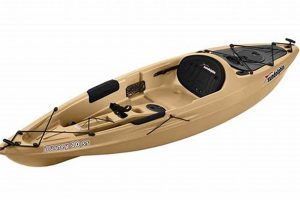
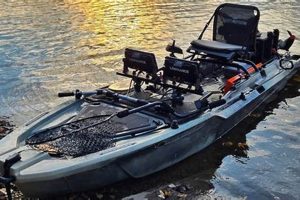
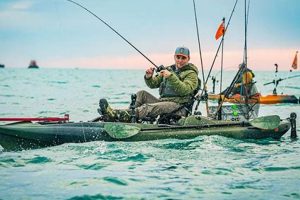
Retailer Dunham’s Sports offers a selection of kayaks designed for fishing. These typically include features like rod holders, storage compartments, and comfortable seating arrangements tailored for anglers. Specific models and availability may vary depending on location and season.
Anglers benefit from the stability and specialized design of fishing kayaks, allowing them to access fishing spots unreachable by larger boats. This accessibility, combined with the relatively low cost and ease of transport compared to motorized watercraft, makes these vessels a popular choice. The history of fishing from small, human-powered vessels stretches back centuries, but the modern fishing kayak, with its specialized features, is a relatively recent development catering to the growing popularity of this angling style.
Further exploration will cover topics relevant to selecting and using these specialized watercraft, including factors influencing purchase decisions, essential accessories, and popular fishing techniques employed from these platforms.
Tips for Kayak Fishing
Successful kayak angling requires careful planning and preparation. The following tips offer guidance for maximizing enjoyment and effectiveness on the water.
Tip 1: Research Local Regulations. Understanding licensing requirements and specific area restrictions is crucial before launching. Regulations regarding allowed fishing gear and catch limits vary.
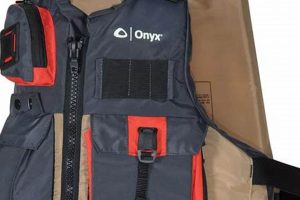
Tip 2: Prioritize Safety Equipment. A personal flotation device (PFD) is essential. Additional safety gear, including a whistle, signaling device, and first-aid kit, should be readily accessible.
Tip 3: Plan the Trip Carefully. Check weather forecasts, water conditions, and tide charts. Inform someone of the planned route and expected return time.
Tip 4: Choose Appropriate Attire. Dress in layers for changing weather conditions. Quick-drying fabrics and water-resistant outerwear are recommended. Consider polarized sunglasses for glare reduction and increased visibility in the water.
Tip 5: Organize Tackle and Gear. Utilize tackle boxes and storage solutions to keep essential gear organized and easily accessible. Prioritize essential lures and tackle relevant to the target species.
Tip 6: Practice Kayak Control. Familiarize oneself with basic paddling techniques and maneuvering before venturing into open water. Consider practicing self-rescue techniques in a controlled environment.
Tip 7: Respect the Environment. Practice Leave No Trace principles. Pack out all trash and avoid disturbing wildlife habitats.
Careful preparation contributes significantly to a safe and enjoyable fishing experience. By following these tips, anglers can enhance their time on the water and contribute to responsible angling practices.
These preparatory steps set the stage for a rewarding kayak fishing experience. The following sections will delve into specific techniques and strategies for success on the water.
1. Availability

Availability of fishing kayaks at Dunham’s Sports is a crucial factor influencing purchase decisions. Several elements impact product availability. Seasonal demand often leads to increased inventory during peak fishing seasons, potentially creating stock shortages during other times. Geographic location plays a role, with stores in regions with higher fishing participation likely stocking a wider selection. Supply chain disruptions, manufacturing delays, and overall market trends can also affect the availability of specific models. For example, a popular kayak model might be readily available in a coastal region during summer but scarce in a landlocked area during winter. Conversely, specialized ice fishing equipment might show the opposite availability pattern. Checking inventory online or contacting local stores directly can provide real-time availability information.
Understanding availability dynamics empowers consumers. Proactive planning, considering seasonal trends and regional variations, increases the likelihood of securing desired models. Exploring alternative models or brands within Dunham’s inventory offers flexibility when preferred choices are unavailable. This adaptability expands purchasing options and ensures anglers can acquire suitable equipment for their needs. Recognizing these factors allows informed decision-making and a more efficient purchasing process.
Ultimately, navigating the availability of fishing kayaks at Dunham’s requires awareness of interconnected factors. Proactive planning, leveraging online resources, and considering alternatives contribute to a successful acquisition process. This practical understanding enhances the consumer experience and facilitates informed choices aligned with individual angling needs and preferences. This knowledge complements the broader considerations of selecting appropriate fishing kayaks, emphasizing the practical significance of availability within the purchasing journey.
2. Affordability
Affordability often represents a primary concern for individuals considering kayak fishing. Examining the affordability of kayaks offered by Dunham’s Sports requires considering various interconnected factors. These factors influence the overall cost-effectiveness and accessibility of this recreational activity.
- Initial Purchase Price
The initial purchase price represents the most immediate financial consideration. Dunham’s typically offers a range of kayaks at varying price points, influenced by factors like size, features, and materials. Entry-level models provide a more accessible entry point, while higher-end kayaks command premium prices reflecting advanced features and construction. For example, a basic sit-on-top kayak might cost significantly less than a pedal-driven fishing kayak with advanced electronics. This tiered pricing structure allows consumers to select kayaks aligned with their budget.
- Long-Term Costs
Beyond the initial purchase, long-term costs include maintenance, storage, and transportation. Regular maintenance, such as cleaning and minor repairs, contributes to kayak longevity but incurs expenses. Storage solutions, whether at home or a dedicated facility, represent an ongoing cost. Transporting the kayak to fishing locations requires vehicle modifications or trailer rentals, adding to overall expenses. These recurring costs influence long-term affordability and should be factored into budget considerations.
- Value Proposition
Assessing the value proposition involves comparing the kayak’s features, durability, and performance against its price. A less expensive kayak lacking essential fishing features might prove less valuable in the long run compared to a slightly more expensive model with integrated rod holders and storage compartments. Durability influences long-term value, with robust construction minimizing repair costs and extending lifespan. Evaluating performance characteristics, such as stability and maneuverability, contributes to a comprehensive understanding of the kayak’s overall value. Balancing these factors aids in determining the true affordability of a specific kayak model.
- Financing Options
Available financing options can significantly impact affordability. Retailers like Dunham’s might offer payment plans, allowing customers to spread the purchase cost over time. Understanding the terms and conditions of these financing options, including interest rates and repayment schedules, is crucial. Exploring alternative financing options, such as personal loans or credit cards, provides further flexibility. Carefully considering available financing options allows consumers to manage the financial impact of the purchase and align it with their budget constraints.
Ultimately, determining the affordability of Dunham’s fishing kayaks requires a comprehensive evaluation of various interconnected factors. Considering initial purchase price, long-term costs, value proposition, and financing options enables informed decision-making aligned with individual budgetary constraints. Recognizing these interrelated elements allows prospective kayak anglers to assess the true cost of ownership and select a kayak that balances functionality, durability, and affordability.
3. Types/Models
Understanding the diverse types and models of fishing kayaks available at Dunham’s Sports is essential for selecting appropriate equipment. Kayak design influences performance characteristics, impacting stability, maneuverability, and suitability for specific fishing environments. Several key categories define these variations.
Sit-on-top kayaks offer inherent stability and ease of entry/exit, making them suitable for beginners and warm-water fishing. Their open design facilitates casting and re-entry after a water landing. Sit-inside kayaks provide better protection from the elements and often track more efficiently, advantageous for colder climates and longer paddling distances. These models require more experience for entry/exit and recovery from capsizing. Inflatable kayaks offer portability and convenient storage, ideal for anglers with limited storage space or transportation options. While generally less durable than rigid kayaks, they provide a versatile option for casual fishing. Pedal-driven kayaks allow hands-free fishing, increasing casting efficiency and maneuverability. These models often come equipped with advanced features but typically command a higher price point. For instance, a sit-on-top kayak suits anglers fishing in calm lakes, while a sit-inside model might be preferable for navigating rivers or coastal waters. An inflatable kayak offers portability for anglers accessing remote fishing spots, whereas a pedal-driven kayak caters to anglers prioritizing hands-free fishing. Dunham’s inventory often includes various models within each category, offering choices based on angler preferences and budget.
Considering the specific fishing environment, target species, and individual preferences guides selection. Coastal anglers might prioritize stability and maneuverability in rougher waters, while lake anglers may focus on comfort and storage capacity. Matching kayak type to intended use optimizes fishing effectiveness and enjoyment. Understanding the nuances of various types empowers informed purchasing decisions aligning equipment with individual needs and fishing styles. This informed approach ultimately enhances angler performance and overall fishing experience, bridging the gap between equipment selection and on-the-water success.
4. Features

Features distinguish fishing kayaks from recreational models, enhancing angler performance and comfort. Careful consideration of these specialized features contributes significantly to an effective and enjoyable fishing experience. Understanding their function and benefits aids informed purchasing decisions at retailers like Dunham’s Sports.
- Rod Holders
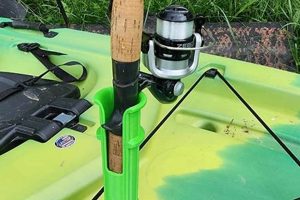
Rod holders secure fishing rods, allowing anglers to manage multiple lines or prepare tackle without constantly holding rods. Flush-mounted rod holders offer a streamlined profile, minimizing line entanglement. Adjustable rod holders provide flexibility for various fishing techniques. Recessed rod holders protect rods during transport. The number and placement of rod holders influence fishing style, with dedicated trolling anglers often prioritizing multiple holders. Selecting kayaks with appropriate rod holder configurations enhances angling efficiency and convenience.
- Storage Compartments
Storage compartments accommodate tackle boxes, safety gear, and personal items. Dry storage compartments protect sensitive electronics and gear from water damage. Large open storage wells accommodate bulky items like coolers or crates. Smaller compartments organize lures and tools. The size, accessibility, and location of storage compartments impact organization and efficiency on the water. Ample storage capacity allows anglers to carry essential gear comfortably, maximizing fishing time and preparedness.
- Seating Systems
Comfortable seating enhances endurance during long fishing trips. Adjustable seating allows anglers to customize back support and legroom. Elevated seating improves visibility and casting range. Padded seating provides cushioning and comfort. The seating system significantly impacts comfort and fatigue, especially during extended fishing sessions. Prioritizing ergonomic seating enhances angler comfort, reducing strain and maximizing time on the water.
- Other Features
Additional features further enhance fishing kayak functionality. Paddle holders secure paddles when not in use, preventing loss and maximizing deck space. Anchor trolleys control anchor deployment and retrieval, facilitating precise boat positioning. Rudders or skegs improve tracking and maneuverability in challenging conditions. These supplementary features contribute to overall performance and efficiency on the water. For example, a rudder enhances control in windy conditions, while an anchor trolley facilitates precise positioning for targeted fishing. Considering these additional features elevates the fishing experience and caters to specific angling styles.
Careful evaluation of these features ensures the selected kayak aligns with individual fishing needs and preferences. Prioritizing essential features within budget constraints optimizes the fishing experience, balancing functionality and affordability. Ultimately, selecting a fishing kayak with the right features contributes significantly to angling success and enjoyment on the water, making informed decisions at retailers like Dunham’s crucial for a rewarding fishing experience. Comparing various models based on these features allows anglers to select the optimal kayak from Dunham’s inventory, aligning equipment with specific angling needs and maximizing on-the-water performance.
5. Capacity

Capacity, concerning kayaks sold at Dunham’s Sports, directly impacts angler safety and comfort. Understanding weight capacity limitations is crucial for preventing unsafe conditions and ensuring optimal kayak performance. Exceeding stated capacity compromises stability, maneuverability, and potentially leads to capsizing. Evaluating capacity requires considering both angler weight and the combined weight of gear, including fishing equipment, personal items, and safety devices. Careful consideration of these factors ensures a safe and enjoyable kayaking experience.
- Maximum Weight Capacity
Manufacturers specify a maximum weight capacity for each kayak model. This figure represents the total weight the kayak can safely support, encompassing angler weight and all onboard gear. Exceeding this limit significantly increases the risk of capsizing and compromises kayak performance. Consulting product specifications before purchase is essential for matching kayak capacity to individual needs and intended use. For example, a kayak with a 300-pound capacity might be suitable for a smaller angler with minimal gear but insufficient for a larger angler carrying substantial equipment. Respecting these limits prioritizes safety and ensures optimal kayak performance.
- Gear Capacity
Beyond angler weight, the combined weight of all fishing gear, including rods, reels, tackle boxes, coolers, and safety equipment, must be factored into capacity calculations. Kayaks designed for fishing often feature ample storage compartments, but the total weight of these items must remain within the specified capacity. Distributing gear evenly within the kayak enhances stability and prevents imbalances that could lead to tipping. Careful consideration of gear weight, combined with angler weight, ensures safe operation within the kayak’s capacity limits.
- Performance Implications
Operating a kayak near or exceeding its capacity limits negatively impacts performance. Reduced maneuverability makes paddling more challenging, especially in windy or choppy conditions. Decreased stability increases the likelihood of tipping, particularly when casting or retrieving fish. A lower freeboard, the distance between the waterline and the kayak’s edge, increases the risk of water entering the cockpit. These performance compromises diminish the enjoyment and effectiveness of the fishing experience. Selecting a kayak with adequate capacity ensures optimal performance and maneuverability on the water.
- Legal and Safety Considerations
Overloading a kayak can have legal ramifications in some jurisdictions. Regulations often stipulate maximum capacity limits for watercraft, and exceeding these limits could result in fines or penalties. Moreover, overloading significantly compromises safety, increasing the risk of capsizing and potentially leading to serious accidents. Adhering to capacity limits demonstrates responsible boating practices and prioritizes angler safety. Understanding and respecting these legal and safety considerations ensures a safe and legal kayaking experience.
Selecting a kayak with appropriate capacity from Dunham’s Sports requires careful consideration of angler weight, gear weight, and desired performance characteristics. Prioritizing capacity ensures angler safety, maximizes kayak performance, and contributes to a more enjoyable fishing experience. Understanding the interplay of these factors empowers informed purchasing decisions aligned with individual needs and intended usage. This informed approach ultimately enhances safety and optimizes the overall kayak fishing experience.
6. Stability
Stability represents a critical performance characteristic influencing fishing kayak selection at Dunham’s Sports. Kayak stability directly impacts angler safety, comfort, and fishing effectiveness. A stable platform allows anglers to cast, reel, and land fish without compromising balance, reducing the risk of capsizing. Several factors influence kayak stability, including hull design, width, and length. Wider kayaks generally offer greater primary stability, resisting initial tipping, while longer, narrower kayaks tend to have better secondary stability, recovering more easily from larger leans. Hull shape also plays a significant role, with flat-bottomed hulls providing excellent primary stability but less maneuverability, while V-shaped hulls offer better tracking and maneuverability but reduced initial stability. For example, a wide, flat-bottomed kayak might be ideal for calm lakes and ponds, while a narrower, V-shaped hull might be better suited for navigating rivers or coastal waters. Matching kayak stability to intended fishing environments enhances safety and performance.
The practical implications of kayak stability extend beyond mere balance. Increased stability allows anglers to stand up and cast, expanding fishing range and visibility. It provides a secure platform for fighting larger fish, minimizing the risk of capsizing during intense angling moments. Enhanced stability contributes to angler confidence, particularly for beginners or those fishing in challenging conditions. This confidence translates to a more enjoyable and productive fishing experience. For instance, an angler fishing from a stable kayak can confidently focus on fishing techniques rather than constantly correcting balance, resulting in greater focus and fishing success. Understanding the nuances of kayak stability empowers informed decisions at Dunham’s, aligning equipment with individual needs and fishing styles.
Selecting a fishing kayak from Dunham’s Sports requires careful consideration of stability requirements. Balancing stability with other performance characteristics, such as maneuverability and speed, optimizes the kayak’s suitability for specific fishing environments and target species. Evaluating individual needs and fishing styles allows anglers to prioritize stability appropriately. For example, anglers targeting large fish in open water might prioritize secondary stability, while those fishing in calm, shallow waters might favor primary stability. Ultimately, understanding the significance of kayak stability empowers informed purchasing decisions, enhancing angler safety, comfort, and overall fishing effectiveness. This knowledge aids in selecting the optimal kayak from Dunham’s inventory, aligning equipment with specific needs and maximizing on-the-water performance.
7. Transportation

Transporting fishing kayaks purchased at Dunham’s Sports represents a crucial logistical consideration impacting accessibility to various fishing locations. Efficient transportation methods facilitate access to remote or otherwise inaccessible fishing spots, expanding angling opportunities. Understanding transportation options and their associated implications allows informed decisions aligning logistical practicality with individual needs and fishing preferences.
- Vehicle Considerations
Vehicle type and available space dictate suitable transportation methods. Roof racks represent a common solution for transporting kayaks on vehicles, requiring compatible crossbars and tie-down straps. Truck beds or trailers accommodate larger kayaks or multiple vessels, potentially necessitating specialized loading ramps or kayak cradles. Understanding vehicle limitations and investing in appropriate carrying accessories ensures safe and efficient kayak transportation. For example, a compact car might require a specialized kayak carrier for roof transport, while a pickup truck offers the convenience of bed loading. Matching transportation methods to vehicle capabilities streamlines transport logistics.
- Distance and Terrain
Transportation distance and terrain conditions influence equipment choices and travel time. Short distances to easily accessible launch points might allow simple roof-top transport. Longer distances or challenging terrain might necessitate trailers or specialized kayak carts for portaging between vehicle and launch site. For instance, accessing a remote mountain lake might involve a combination of vehicle transport and kayak cart portaging. Anticipating these logistical challenges ensures efficient transport to diverse fishing destinations.
- Storage Solutions
Storage considerations extend beyond immediate transportation. Long-term storage solutions, whether at home or dedicated facilities, influence kayak maintenance and longevity. Garages or sheds protect kayaks from the elements, while vertical or horizontal storage racks maximize space utilization. Investing in appropriate storage solutions preserves kayak condition and minimizes transport-related wear and tear. For example, storing a kayak outdoors exposed to the elements might lead to premature degradation, while proper indoor storage maintains its condition and extends its lifespan. Planning for long-term storage preserves kayak investment and ensures its readiness for future fishing excursions.
- Regulations and Safety
Adhering to local regulations and prioritizing safety precautions ensures legal and responsible kayak transportation. Regulations regarding oversized loads or protruding cargo vary by jurisdiction, requiring appropriate signage or permits in certain cases. Securely fastening kayaks to vehicles using appropriate tie-down straps prevents accidents and damage. For instance, transporting a kayak without proper securement could lead to legal penalties or dangerous road incidents. Understanding and adhering to these regulations ensures safe and legal kayak transportation.
Efficient kayak transportation expands angling possibilities, enabling access to diverse fishing locations. Careful consideration of vehicle limitations, distance, terrain, storage solutions, and safety regulations ensures seamless transport logistics. Aligning these considerations with individual fishing preferences maximizes accessibility and enhances the overall kayak fishing experience, enabling anglers to explore various waterways and pursue diverse fishing opportunities. Selecting appropriate transportation methods from Dunham’s Sports complements kayak selection, ensuring convenient and efficient access to desired fishing destinations.
Frequently Asked Questions
This section addresses common inquiries regarding fishing kayaks available at Dunham’s Sports, providing concise and informative responses to facilitate informed purchasing decisions and enhance the overall kayak angling experience.
Question 1: What types of fishing kayaks does Dunham’s Sports typically offer?
Dunham’s Sports typically offers a variety of fishing kayaks, including sit-on-top, sit-inside, and occasionally inflatable and pedal-driven models. Specific models and availability vary by location and season.
Question 2: How does one determine the appropriate kayak size and weight capacity?
Appropriate kayak size and weight capacity depend on individual angler size and the intended load, including gear and equipment. Consulting manufacturer specifications regarding maximum weight capacity is crucial for ensuring safe operation.
Question 3: What essential features should one consider when selecting a fishing kayak at Dunham’s Sports?
Essential features for fishing kayaks include rod holders, storage compartments, comfortable seating, and potentially specialized features like anchor trolleys or rudders, depending on individual fishing style and target species.
Question 4: What are the typical price ranges for fishing kayaks available at Dunham’s Sports?
Fishing kayak prices at Dunham’s Sports typically range from a few hundred dollars for basic models to over a thousand dollars for higher-end kayaks with advanced features. Specific pricing varies depending on model, features, and seasonal promotions.
Question 5: Does Dunham’s Sports offer accessories and safety gear for kayak fishing?
Dunham’s Sports generally offers a selection of kayak fishing accessories and safety gear, including paddles, life vests, dry bags, and fishing tackle. Availability may vary by location.
Question 6: What transportation options are suitable for transporting a fishing kayak purchased from Dunham’s Sports?
Suitable transportation options depend on kayak size and vehicle type. Common methods include roof racks, truck beds, and trailers. Specialized kayak trailers or carts might be necessary for longer distances or challenging terrain.
Careful consideration of these frequently asked questions, combined with thorough product research, facilitates informed purchasing decisions and contributes to a safe and enjoyable kayak fishing experience. Consulting with Dunham’s Sports staff can provide further assistance tailored to individual needs and preferences.
This FAQ section provides foundational knowledge for prospective kayak anglers. The subsequent section will offer further insights into selecting appropriate fishing locations and techniques.
Conclusion
Exploration of Dunham’s Sports’ fishing kayak offerings reveals key considerations for prospective buyers. Availability influenced by seasonality and location necessitates proactive planning. Affordability assessments require evaluating not only initial purchase price but also long-term costs encompassing maintenance, storage, and transportation. Diverse kayak types, including sit-on-top, sit-inside, inflatable, and pedal-driven models, cater to varying fishing styles and environmental conditions. Careful evaluation of features such as rod holders, storage compartments, and seating systems ensures alignment with individual angling needs. Understanding capacity limitations, concerning both angler weight and gear, is crucial for safety and optimal performance. Stability considerations, influenced by hull design and kayak dimensions, directly impact angler comfort and fishing effectiveness. Finally, efficient transportation solutions, encompassing vehicle compatibility, distance, and storage, facilitate access to diverse fishing locations.
Informed decision-making regarding Dunham’s fishing kayaks empowers anglers to select equipment optimized for individual needs and preferences. Careful consideration of these interconnected factors contributes to enhanced fishing experiences, promoting safety, efficiency, and enjoyment on the water. Ultimately, aligning kayak selection with specific angling goals maximizes the potential for successful and rewarding fishing excursions.