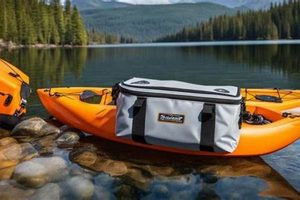
A high-quality paddle designed for kayak angling should be lightweight yet durable, offering efficient propulsion and maneuverability. Features like drip rings, feathered blades, and an adjustable ferrule contribute to a comfortable and effective paddling experience in a fishing context. Specialized kayak paddles often include features like integrated hooks, measuring tools, or even a camera mount, furthering their utility on the water.
The correct paddle significantly enhances a fishing kayak’s performance. A well-chosen implement reduces fatigue, enabling longer paddling sessions and broader access to fishing grounds. Precise control allows anglers to position themselves quietly and accurately near target areas, maximizing fishing opportunities. Historically, kayak paddles evolved from simple single-bladed designs to the more complex, efficient shapes available today, directly reflecting the growing demands of specialized activities like kayak fishing.
This exploration of essential equipment will delve into various paddle characteristics, including blade shape, shaft material, length adjustment mechanisms, and other important features impacting performance and comfort. It will also examine how these factors influence the overall fishing experience, from casting accuracy to overall enjoyment on the water.
Tips for Selecting an Optimal Kayak Fishing Paddle
Choosing the right paddle is crucial for efficient and enjoyable kayak fishing. Careful consideration of several factors will contribute to improved performance and comfort on the water.
Tip 1: Prioritize a Lightweight Design: A lighter paddle reduces fatigue during long paddling sessions, conserving energy for fishing. Carbon fiber paddles offer the lightest weight but come at a premium price. Fiberglass or composite options provide a balance of weight and affordability.
Tip 2: Consider Blade Shape: Shorter, wider blades offer powerful strokes for maneuvering in tight spaces, while longer, narrower blades provide efficiency for covering greater distances. Asymmetrical blades can enhance stroke smoothness and reduce flutter.
Tip 3: Choose the Correct Length: Paddle length depends on factors like kayak width, angler height, and paddling style. A properly fitted paddle allows for efficient paddling with minimal strain.
Tip 4: Evaluate Shaft Material: Aluminum shafts are durable and budget-friendly, but heavier than fiberglass or carbon fiber. Carbon fiber shafts provide the lightest weight and best performance, while fiberglass offers a compromise between weight and cost.
Tip 5: Explore Adjustable Ferrules: Adjustable ferrules allow for customized feathering angles and overall paddle length, accommodating various paddling styles and conditions.
Tip 6: Assess Drip Rings: Drip rings prevent water from running down the shaft onto your hands and into the kayak cockpit, improving grip and comfort, especially in colder climates.
Tip 7: Consider Fishing-Specific Features: Some paddles offer integrated features like hook retrievers, measuring scales, or camera mounts, adding convenience and functionality to a fishing-oriented setup.
By understanding the various features and characteristics of kayak fishing paddles, anglers can select the ideal tool to enhance their on-the-water experience. Proper paddle selection contributes significantly to efficient propulsion, reduced fatigue, and ultimately, a more productive and enjoyable fishing trip.
These considerations provide a foundation for informed paddle selection. The subsequent sections will delve deeper into specific paddle features and their impact on kayak fishing performance.
1. Lightweight Construction
Lightweight construction is a critical factor in selecting a good fishing kayak paddle. Reduced swing weight translates directly to less fatigue and greater endurance on the water, allowing for longer fishing trips and more efficient paddling. This is particularly important in kayak fishing, where anglers often paddle considerable distances and maneuver frequently.
- Reduced Fatigue:
A lighter paddle requires less effort to move through the water, minimizing muscle strain during long paddling sessions. This conserved energy can be crucial for other fishing activities like casting, reeling, and landing fish. The difference between a heavy and lightweight paddle becomes particularly noticeable during extended trips or when paddling against wind or current. For instance, a carbon fiber paddle significantly reduces fatigue compared to an aluminum paddle of the same length and blade size.
- Improved Efficiency:
A lighter swing weight allows for a quicker cadence and more responsive paddling. This translates to faster acceleration, easier maneuvering, and more efficient use of energy. The ability to quickly and easily adjust paddle position is beneficial for navigating tight spots, reacting to changing water conditions, or subtly positioning the kayak for optimal casting.
- Enhanced Control:
A lighter paddle allows for more precise control, crucial for subtle maneuvers and maintaining stability. This is especially important in challenging conditions or when fishing in close proximity to structure. Improved control facilitates accurate kayak positioning for casting, drift fishing, or trolling.
- Material Considerations:
The choice of materials significantly impacts paddle weight. High-end materials like carbon fiber offer the lightest option, followed by fiberglass and composite constructions. While aluminum paddles are generally the most affordable, they are also the heaviest. The selection of shaft and blade materials often involves a trade-off between weight, durability, and cost.
In conclusion, lightweight construction is a fundamental characteristic of a good fishing kayak paddle. By reducing fatigue, improving efficiency, and enhancing control, a lightweight paddle contributes significantly to a more enjoyable and productive fishing experience. The investment in a lighter paddle often translates to longer fishing trips, broader access to fishing grounds, and an overall improvement in on-the-water performance.
2. Efficient Blade Design
Efficient blade design is paramount in a good fishing kayak paddle, directly influencing propulsion, maneuverability, and overall paddling experience. Blade shape, size, and angle affect how the paddle interacts with water, impacting performance and minimizing energy expenditure. A well-designed blade generates power efficiently, allowing anglers to cover greater distances with less effort and maintain precise control for navigating various water conditions.
Blade characteristics significantly contribute to paddling efficiency. Asymmetrical blades, for example, are designed to reduce flutter and provide smoother strokes. The curvature and dihedral angle of the blade influence water flow, maximizing power transfer and minimizing turbulence. Shorter, wider blades offer greater power for maneuvering in tight spaces or against strong currents, while longer, narrower blades excel in open water for covering distances efficiently. The selection of blade shape and size depends on individual paddling style, kayak type, and intended fishing environment. For instance, a high-angle paddler in a wide kayak might benefit from a shorter, wider blade, while a low-angle paddler in a narrow kayak might prefer a longer, narrower design. The blade’s surface area and its interaction with water are crucial determinants of propulsion efficiency.
Understanding the relationship between blade design and paddling performance is crucial for selecting a suitable fishing kayak paddle. Choosing the right blade maximizes efficiency, reduces fatigue, and enhances control. This translates to more time fishing and less time battling inefficient paddling mechanics. A poorly designed blade can lead to increased effort, reduced speed, and unnecessary fatigue, hindering the overall fishing experience. Investing time in understanding blade design principles allows anglers to select a paddle that complements their individual needs and paddling style, contributing to a more productive and enjoyable time on the water.
3. Durable Shaft Material
Shaft material durability is a critical factor in determining a fishing kayak paddle’s longevity and performance. The shaft endures significant stress during paddling, including bending forces, impacts, and exposure to various environmental conditions. A durable shaft material resists breakage, maintains its structural integrity over time, and contributes to a reliable and consistent paddling experience. Frequent use, occasional impacts with underwater obstacles, and exposure to saltwater or UV radiation necessitate a robust shaft capable of withstanding these challenges. Choosing a paddle with a durable shaft ensures long-term performance and avoids premature failure, a crucial factor in remote fishing locations where a broken paddle could compromise safety.
Several materials are commonly used in kayak paddle shafts, each offering distinct durability characteristics. Aluminum shafts provide excellent strength and affordability but are susceptible to corrosion in saltwater environments. Fiberglass shafts offer a good balance of strength, weight, and resistance to corrosion, making them a popular choice for recreational and fishing kayaks. Carbon fiber shafts offer the highest strength-to-weight ratio, providing exceptional durability and a lightweight feel, but typically come at a higher price point. Selecting the appropriate shaft material depends on the intended use, environmental conditions, and budget. For example, a fiberglass or carbon fiber shaft is generally preferred for saltwater kayak fishing due to its corrosion resistance. The practical implications of shaft material selection are significant, affecting not only the paddle’s lifespan but also the angler’s safety and overall experience on the water.
A durable shaft is essential for maintaining reliable performance and ensuring the paddle’s longevity. The chosen material must withstand the rigors of regular use, including repeated stress cycles, occasional impacts, and exposure to various environmental factors. Understanding the properties of different shaft materials allows informed decision-making, ultimately leading to a more appropriate choice for individual fishing needs. This translates to increased confidence in the equipment, enhanced safety margins, and a more enjoyable and productive fishing experience. Investing in a paddle with a durable shaft ultimately minimizes the risk of equipment failure and ensures reliable performance over time, essential considerations for any serious kayak angler.
4. Adjustable Ferrule System

An adjustable ferrule system is a crucial element in a good fishing kayak paddle, offering customization options that significantly enhance performance and comfort. This system allows anglers to adjust feathering angles and overall paddle length, accommodating individual paddling styles, varying water conditions, and specific fishing techniques. The ability to fine-tune these parameters contributes to efficient propulsion, reduced fatigue, and improved control, crucial factors for a successful and enjoyable fishing experience. A properly configured ferrule system optimizes the paddle’s ergonomics, maximizing power transfer and minimizing strain on joints.
- Feathering Angle Adjustment:
Feathering, the offset angle between the paddle blades, influences wind resistance and paddling efficiency. An adjustable ferrule allows anglers to customize the feathering angle to suit their preferences and prevailing conditions. For instance, a higher feathering angle can reduce wind resistance in windy conditions, while a lower angle or no feathering might be preferred in calmer waters. This adjustability allows for personalized comfort and optimized performance in various environments.
- Paddle Length Adjustment:
Adjustable ferrules often allow for incremental changes in overall paddle length. This is particularly useful for accommodating different kayak widths, paddling styles, and angler heights. Proper paddle length ensures efficient stroke mechanics and minimizes strain on joints. The ability to fine-tune paddle length allows anglers to optimize their paddling posture and achieve maximum power transfer with each stroke.
- Improved Ergonomics and Comfort:
By allowing for personalized adjustments, an adjustable ferrule system contributes significantly to paddling comfort. Fine-tuning feathering and length reduces stress on wrists, elbows, and shoulders, minimizing fatigue and promoting a more enjoyable paddling experience. This is particularly important during long fishing trips where repetitive paddling motions can lead to discomfort or injury.
- Enhanced Performance and Efficiency:
An optimized paddling stroke, facilitated by a properly adjusted ferrule system, translates to increased efficiency and speed on the water. By minimizing wasted energy and maximizing power transfer, anglers can cover greater distances with less effort, conserving energy for other fishing activities. This efficiency is particularly valuable when paddling against wind or current, or when navigating long distances to reach desired fishing spots.
The adjustable ferrule system is a defining characteristic of a good fishing kayak paddle, allowing for personalized customization that enhances comfort, efficiency, and overall performance. The ability to adjust feathering angle and paddle length allows anglers to adapt to various conditions and optimize their paddling technique. This adjustability translates to reduced fatigue, improved control, and a more enjoyable and productive fishing experience, making it a crucial feature to consider when selecting a paddle.
5. Comfortable Grip

A comfortable grip is an essential attribute of a good fishing kayak paddle, directly influencing paddling comfort, control, and endurance. A secure and comfortable grip minimizes hand fatigue, prevents blisters, and allows for efficient power transfer during paddling. This is particularly crucial during long fishing trips where repetitive paddling motions can place significant stress on hands and wrists. Grip comfort directly impacts overall paddling experience and influences the angler’s ability to maintain focus and effectively manage the kayak.
- Material and Texture:
Grip material and texture significantly affect comfort and control. Materials like rubber, EVA foam, and cork offer varying degrees of cushioning, grip, and durability. Textured surfaces enhance grip, especially in wet conditions, preventing slippage and improving control. A paddle with a comfortable grip material and appropriate texture allows for a secure hold without excessive pressure, minimizing fatigue and maximizing control.
- Shape and Ergonomics:
Grip shape and ergonomics play a crucial role in hand comfort and overall paddling efficiency. Ergonomically designed grips conform to the natural contours of the hand, distributing pressure evenly and reducing strain on wrists and forearms. A properly shaped grip promotes a natural hand position, facilitating efficient power transfer and minimizing the risk of repetitive strain injuries.
- Diameter and Circumference:
Grip diameter and circumference influence how securely and comfortably the paddle fits in the hand. A grip that is too large or too small can lead to discomfort, reduced control, and increased fatigue. The ideal grip size depends on individual hand size and paddling style. A properly sized grip allows for a relaxed yet secure hold, maximizing comfort and control.
- Impact on Paddling Performance:
A comfortable grip directly translates to improved paddling performance. Reduced hand fatigue allows for longer paddling sessions and more efficient strokes. Enhanced control facilitates precise maneuvering and quicker adjustments to changing water conditions. A comfortable grip allows the angler to maintain focus on fishing rather than struggling with an uncomfortable paddle, contributing to a more productive and enjoyable experience.
A comfortable grip is a critical component of a good fishing kayak paddle, significantly influencing paddling comfort, control, and overall performance. Careful consideration of grip material, shape, size, and its impact on paddling performance allows anglers to select a paddle that enhances their on-the-water experience. Investing in a paddle with a comfortable grip minimizes fatigue, improves control, and contributes to a more enjoyable and productive fishing trip.
Frequently Asked Questions
This section addresses common inquiries regarding the selection and use of kayak fishing paddles, providing concise and informative responses to assist anglers in making informed decisions.
Question 1: How does paddle length affect kayak fishing performance?
Paddle length significantly influences paddling efficiency and comfort. A paddle that is too short requires more frequent strokes, leading to increased fatigue, while a paddle that is too long can be cumbersome and difficult to control. Proper paddle length depends on factors like kayak width, angler height, and paddling style. Consulting a paddle sizing chart or seeking expert advice can help determine the appropriate length.
Question 2: What are the advantages of a feathered paddle?
Feathered blades reduce wind resistance on the blade not submerged in the water, particularly beneficial in windy conditions. The offset angle minimizes wind interference, allowing for more efficient paddling and reduced fatigue. However, feathered paddles can require more wrist rotation and may feel less intuitive for beginners. The optimal feathering angle depends on individual preference and prevailing wind conditions.
Question 3: What are the key differences between carbon fiber, fiberglass, and aluminum paddle shafts?
Carbon fiber shafts are the lightest and strongest, but also the most expensive. Fiberglass shafts offer a balance of strength, weight, and affordability, while aluminum shafts are the most budget-friendly but also the heaviest and susceptible to corrosion in saltwater. Material selection involves a trade-off between weight, durability, cost, and intended use.
Question 4: How does blade shape affect paddling performance?
Blade shape impacts paddling efficiency and maneuverability. Shorter, wider blades provide more power for maneuvering in tight spaces, while longer, narrower blades are better suited for open water and covering distances efficiently. Asymmetrical blades can enhance stroke smoothness and reduce flutter. Blade selection should consider paddling style, kayak type, and intended fishing environment.
Question 5: Are adjustable ferrules worth the added cost?
Adjustable ferrules allow customization of feathering angle and paddle length, accommodating individual preferences and varying conditions. This versatility enhances comfort and efficiency, making them a worthwhile investment, especially for serious anglers. The ability to fine-tune the paddle setup optimizes performance in different environments and paddling styles.
Question 6: How to maintain a kayak fishing paddle?
Regular maintenance prolongs paddle lifespan. Rinsing the paddle with fresh water after each use, especially in saltwater environments, helps prevent corrosion. Inspecting the ferrule system for wear and tear and lubricating it periodically ensures smooth operation. Proper storage, avoiding extreme temperatures and direct sunlight, prevents material degradation and maintains paddle integrity.
Careful consideration of these frequently asked questions enables informed decisions regarding paddle selection, contributing to enhanced kayak fishing performance, comfort, and overall enjoyment on the water.
The following section will delve into specific paddle recommendations for various kayak fishing styles and budgets.
Conclusion
Optimal kayak fishing performance hinges on appropriate equipment selection, with the paddle playing a crucial role. This exploration has highlighted key features contributing to a paddle’s effectiveness: lightweight construction for reduced fatigue, efficient blade design for optimal propulsion, durable shaft material for longevity, an adjustable ferrule system for customized configuration, and a comfortable grip for enhanced control. Each characteristic contributes significantly to overall performance, influencing paddling efficiency, comfort, and ultimately, fishing success. A well-chosen paddle empowers anglers to navigate waters efficiently, conserve energy, and focus on the fishing experience.
Careful consideration of these factors ensures a harmonious connection between angler and kayak, maximizing enjoyment and success on the water. An investment in a high-quality, appropriately fitted paddle significantly enhances the kayak fishing experience, enabling anglers to explore further, fish longer, and connect more deeply with their aquatic environment. The pursuit of a superior fishing experience necessitates informed equipment choices, starting with the foundational tool: the paddle.