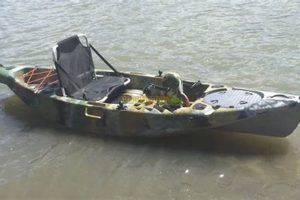
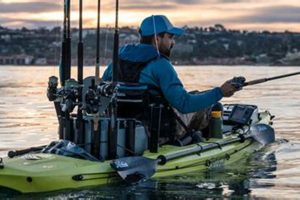
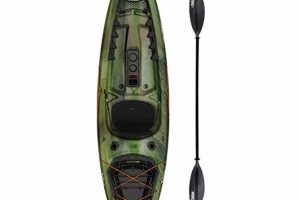
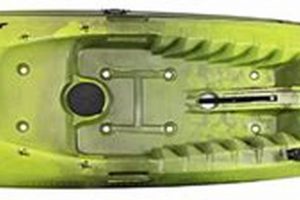
This specific model designates a sit-on-top kayak designed for angling. Such vessels typically feature specialized components like rod holders, storage compartments for tackle, and potentially anchor trolleys or other fishing-specific accessories. They offer stability and maneuverability suitable for navigating various water bodies, from calm lakes to slow-moving rivers.
The design prioritizes stability and functionality for anglers. Enhanced stability allows for casting and reeling without compromising balance, while specialized features streamline the fishing experience. The evolution of these vessels reflects advancements in materials and design, resulting in lighter, more durable, and feature-rich kayaks compared to earlier models. This particular model likely occupies a specific niche within the broader market of fishing kayaks, catering to anglers with specific needs and preferences.
This discussion will further examine the key attributes, performance characteristics, and potential advantages of this type of watercraft. Further topics will include appropriate usage scenarios, maintenance considerations, and comparisons with other relevant kayak models.
Tips for Utilizing Fishing Kayaks
Proper preparation and technique enhance safety and fishing success. These tips offer guidance for utilizing this specialized equipment effectively.
Tip 1: Pre-Trip Planning: Consult weather forecasts and water conditions before embarking. Inform someone of the intended location and return time. Pack essential safety gear, including a personal flotation device, signaling whistle, and navigation lights if applicable.
Tip 2: Proper Paddling Technique: Efficient paddling conserves energy and reduces strain. Maintain a proper grip and utilize core muscles for power. Practice different strokes for maneuvering in various conditions.
Tip 3: Effective Gear Storage: Organize tackle and equipment for easy access and to minimize clutter. Secure loose items to prevent loss or interference with paddling.
Tip 4: Safe Anchoring: Select an appropriate anchor and deployment technique for the specific water body. Ensure the anchor line is of sufficient length and strength. Be mindful of potential hazards, such as submerged objects or changing currents.
Tip 5: Fish Handling and Release: Utilize appropriate tools and techniques for handling fish safely and minimizing stress. Practice catch-and-release methods when conservation is a priority.
Tip 6: Kayak Maintenance: Regularly rinse the kayak with fresh water after each use, especially in saltwater environments. Inspect for damage and address any necessary repairs promptly. Store the kayak properly to protect it from UV exposure and other environmental factors.
Tip 7: Respect Wildlife and the Environment: Adhere to local regulations regarding fishing practices and protected areas. Minimize disturbance to wildlife and avoid littering.
Adherence to these guidelines promotes a safe, productive, and enjoyable fishing experience. Proper planning, technique, and respect for the environment contribute significantly to successful kayak angling.
By implementing these strategies, anglers can maximize their time on the water and contribute to the preservation of aquatic ecosystems.
1. Sit-on-top Design

The rs117 fishing kayak utilizes a sit-on-top design, a key feature influencing its functionality and suitability for angling. This design differs fundamentally from traditional sit-inside kayaks, where the user’s lower body is enclosed within the hull. The sit-on-top configuration positions the angler above the deck, offering several advantages specific to fishing applications.
This open design contributes significantly to stability, a crucial factor when casting, reeling, and landing fish. The higher center of gravity allows for greater freedom of movement and reduces the likelihood of capsizing, particularly in choppy water or when engaging with larger fish. Self-bailing scupper holes further enhance stability by allowing water to drain quickly from the deck, preventing accumulation that could compromise buoyancy. Consider a scenario where an angler hooks a sizable fish; the sit-on-top design provides the stability needed to manage the fight without compromising balance.
The sit-on-top design also facilitates easy entry and exit, a practical advantage for anglers frequently entering and exiting the kayak, such as when launching from shore or navigating shallow areas. Furthermore, this design simplifies re-entry in the event of an accidental capsize, a critical safety consideration. While the sit-on-top design offers numerous benefits for fishing, it may present some disadvantages in colder conditions due to greater exposure to the elements. Understanding these trade-offs informs appropriate usage scenarios and selection of suitable apparel for varying weather conditions.
2. Stability

Stability represents a critical performance characteristic in fishing kayaks, directly influencing angler safety, comfort, and fishing effectiveness. For the rs117 fishing kayak, stability considerations are paramount due to the dynamic movements inherent in angling activities, such as casting, retrieving, and landing fish. The following facets explore the key components contributing to stability in this specific kayak model.
- Hull Design:
The rs117 likely employs a hull design specifically engineered for stability. Wider hulls generally provide greater initial stability, resisting tipping, while specific hull shapes, such as a pontoon-style or flat-bottom design, can further enhance stability. The precise hull configuration impacts its performance in different water conditions, influencing its suitability for calmer lakes versus more challenging rivers or coastal waters.
- Center of Gravity:
The sit-on-top design of the rs117 positions the angler’s center of gravity higher than in traditional sit-inside kayaks. While this higher center of gravity might initially seem less stable, it allows for quicker recovery from tilting motions and reduces the chance of capsizing during dynamic movements like casting. The distribution of weight within the kayak also plays a role; proper gear placement enhances overall stability.
- Weight Capacity:
The rs117’s weight capacity dictates the maximum combined weight of the angler, gear, and any catch. Exceeding this capacity compromises stability and can lead to unsafe conditions. Understanding the weight capacity and distributing weight evenly within the kayak are essential for maintaining optimal stability.
- Water Conditions:
While the inherent design features of the rs117 contribute significantly to its stability, external factors like water conditions also play a crucial role. Calm, flat water presents fewer challenges to stability compared to choppy water or strong currents. Anglers must adapt their behavior and techniques based on prevailing water conditions to maintain stability and ensure safety.
These factors collectively influence the rs117’s stability profile. Understanding the interplay between hull design, center of gravity, weight capacity, and prevailing water conditions enables anglers to make informed decisions about usage and maximize their on-the-water safety and fishing effectiveness. Comparing the rs117’s stability characteristics with other kayak models further clarifies its position within the market and its suitability for specific angling needs.
3. Maneuverability
Maneuverability represents a critical performance attribute for fishing kayaks, particularly in environments requiring precise navigation. The rs117 fishing kayak’s maneuverability directly impacts its suitability for various fishing locations and techniques. Several factors influence a kayak’s maneuverability, including hull design, length, and the presence of a rudder or skeg.
Shorter kayaks generally exhibit greater maneuverability than longer ones, allowing for tighter turns and quicker adjustments in position. A shorter length facilitates navigation through narrow waterways, around obstacles such as submerged logs or vegetation, and in close proximity to shorelines. The rs117’s specific length and hull design contribute to its maneuverability profile, potentially favoring agility over straight-line tracking. Consider a scenario where an angler needs to navigate through a densely vegetated area; a highly maneuverable kayak proves advantageous for precise movement without disrupting the surrounding environment.
The presence of a rudder or skeg further influences maneuverability. A rudder provides directional control, enhancing tracking and minimizing the need for constant paddle adjustments, particularly in windy conditions or strong currents. A skeg, while primarily used for directional stability, can also impact turning performance. The rs117’s design may incorporate a rudder or skeg to enhance maneuverability and control in specific water conditions. Understanding the interplay between these design elements allows anglers to assess the rs117’s suitability for their intended fishing environments. Comparing the rs117’s maneuverability characteristics to other kayak models further informs selection based on specific angling needs and preferences.
4. Storage Capacity
Storage capacity represents a critical factor influencing the practicality and effectiveness of fishing kayaks. The rs117 fishing kayak’s storage solutions directly impact its ability to accommodate essential gear, influencing angling versatility and overall experience. Sufficient storage allows anglers to carry tackle boxes, rods, safety equipment, and other necessary items, contributing to a well-prepared and efficient fishing excursion. Inadequate storage can restrict the types of fishing possible, limiting the range of tackle and equipment carried. For example, an angler targeting larger species might require heavier tackle and specialized equipment, necessitating ample storage space.
Specific storage features common in fishing kayaks, and potentially present in the rs117, include dedicated compartments for tackle boxes, rod holders (flush-mounted or adjustable), and storage wells or hatches for larger items. The design and placement of these storage features influence accessibility and organization. Well-designed storage solutions maximize available space while minimizing interference with paddling and fishing activities. Consider a scenario where an angler needs quick access to a specific lure; readily accessible storage compartments enhance efficiency and minimize disruption to the fishing process.
The rs117’s storage capacity and design contribute significantly to its overall utility as a fishing platform. Anglers benefit from evaluating their specific gear requirements and comparing the rs117’s storage solutions to alternative kayak models. This informed approach ensures the selected kayak adequately supports the intended fishing style and contributes to a successful and enjoyable angling experience. Further considerations, such as the weight distribution implications of loaded storage compartments, impact overall kayak stability and performance, highlighting the interconnectedness of these design elements.
5. Fishing-Specific Features

Dedicated features distinguish fishing kayaks from recreational models. These specialized components enhance angling efficiency, comfort, and overall success. The rs117 fishing kayak likely incorporates several such features, each playing a crucial role in optimizing the angling experience.
- Rod Holders:
Rod holders secure fishing rods, freeing hands for paddling, baiting hooks, or landing fish. Various types exist, including flush-mounted, adjustable, and rotating rod holders. Multiple rod holders allow anglers to employ different fishing techniques simultaneously. The number, type, and placement of rod holders on the rs117 influence its suitability for specific fishing styles. For instance, trolling requires readily accessible rod holders positioned for optimal line retrieval, while still-fishing benefits from holders that keep lines clear of obstacles.
- Tackle Storage:
Organized tackle storage facilitates efficient lure and bait changes, minimizing time spent searching for specific items. Dedicated compartments, trays, and storage wells within easy reach streamline the fishing process. The rs117’s tackle storage solutions likely reflect its intended use, whether for freshwater or saltwater angling, where different tackle types and quantities are typical. A well-organized tackle system contributes directly to fishing success by enabling quick adaptation to changing conditions or fish behavior.
- Anchor Systems:
Anchor systems maintain position in desired fishing locations, particularly in currents or windy conditions. Anchor trolleys allow for controlled anchor deployment and retrieval, minimizing interference with fishing lines. The presence and type of anchor system on the rs117 influence its suitability for specific environments. River fishing, for instance, often necessitates a reliable anchor system to maintain position in the current, while lake fishing might require less sophisticated anchoring solutions.
- Other Specialized Features:
Additional features might include paddle parks, fish finders, mounting plates for accessories, or integrated livewells. These enhancements further refine the angling experience, catering to specific needs and preferences. The presence and design of these features on the rs117 contribute to its overall versatility and suitability for different fishing styles. For example, a built-in fish finder enhances the ability to locate fish, while a paddle park secures the paddle when not in use, preventing loss or interference with fishing activities.
The rs117 fishing kayak’s specific combination of features differentiates it within the broader market of fishing kayaks. Understanding these features and their implications allows anglers to assess the rs117’s suitability for their individual needs and fishing styles. Comparing these features with those of other kayaks clarifies the rs117’s position within the market and aids in informed purchasing decisions.
6. Durability
Durability constitutes a critical factor influencing the lifespan and overall value of a fishing kayak. The rs117 fishing kayak’s construction and material selection directly impact its resistance to wear and tear, affecting its long-term performance in various environments. Kayaks face potential damage from UV exposure, abrasion against rocks or other hard surfaces, and impacts during transport or launching. A durable construction minimizes these risks, ensuring the kayak remains functional and safe throughout its intended lifespan. Consider a scenario where a kayak is frequently used in rocky, shallow waters; a highly durable hull material, such as high-density polyethylene, better withstands abrasion compared to less robust materials.
Several factors contribute to kayak durability. Material selection plays a primary role; high-density polyethylene (HDPE) is a common choice due to its impact resistance and UV stability. Construction methods, such as rotomolding, influence structural integrity and resistance to cracking or deformation. Reinforcements in high-stress areas further enhance durability. The rs117 likely incorporates specific design elements and material choices aimed at maximizing durability for its intended usage scenarios. For instance, reinforced keel and stern areas protect against damage during beach landings or shallow-water maneuvering. The quality of hardware, such as handles, latches, and deck fittings, also influences overall durability; corrosion-resistant materials ensure long-term functionality in saltwater environments.
Understanding the rs117’s construction and materials provides insights into its expected durability. Comparing these aspects with other kayak models clarifies the rs117’s position within the market and informs purchasing decisions based on anticipated usage patterns and environmental conditions. Investing in a durable kayak minimizes repair costs and extends the kayak’s usable lifespan, contributing to a more cost-effective and enjoyable long-term angling experience. Regular maintenance, including proper cleaning and storage, further enhances durability and preserves the kayak’s structural integrity over time. This proactive approach maximizes the return on investment and ensures the kayak remains a reliable fishing platform for years to come.
7. Portability
Portability significantly influences the practical usability of a fishing kayak, impacting accessibility to various fishing locations. The rs117 fishing kayak’s portability characteristics determine ease of transport and deployment, affecting the range of fishing environments readily accessible. Factors influencing portability include weight, length, and the availability of transport accessories. A lighter kayak requires less effort to load, unload, and carry, expanding access to remote or difficult-to-reach fishing spots. Consider an angler who frequently fishes small ponds or rivers inaccessible by larger boats; a portable kayak significantly expands their fishing opportunities. The rs117’s specific weight and dimensions contribute to its portability profile, potentially favoring ease of transport over other performance characteristics. Kayak carts or roof racks further enhance portability, simplifying transport over longer distances or uneven terrain.
The rs117’s length influences storage and transport requirements. Shorter kayaks fit more readily on car roof racks or within vehicle interiors, streamlining transport logistics. Longer kayaks might necessitate specialized trailers or larger vehicles for transport, potentially limiting access to certain locations. The availability of transport accessories, such as purpose-built kayak carts or roof rack systems designed for kayaks, further enhances portability. These accessories minimize the physical strain associated with transporting the kayak, particularly over longer distances or uneven terrain. For example, a lightweight kayak cart with large wheels simplifies transport across sandy beaches or rough trails, expanding access to otherwise challenging fishing locations.
Understanding the rs117’s portability characteristics enables anglers to evaluate its suitability for their specific needs and target fishing environments. Comparison with other kayak models clarifies the trade-offs inherent in prioritizing portability versus other performance attributes such as stability or speed. Selecting a kayak with appropriate portability characteristics ensures convenient access to desired fishing locations, maximizing fishing opportunities and overall enjoyment. This practical consideration contributes significantly to the long-term value and utility of a fishing kayak, ensuring it remains a versatile and readily deployable tool for accessing diverse aquatic environments.
Frequently Asked Questions
This section addresses common inquiries regarding the rs117 fishing kayak, providing concise and informative responses.
Question 1: What differentiates the rs117 from other fishing kayaks?
Specific design elements, such as storage capacity, hull configuration, and included features, distinguish the rs117. Direct comparison with other models reveals its relative strengths and weaknesses, clarifying its suitability for particular angling styles and environments.
Question 2: What is the weight capacity of the rs117?
The rs117’s weight capacity dictates the maximum combined weight of the angler, gear, and catch it can safely support. Exceeding this limit compromises stability and safety. Manufacturer specifications provide precise weight capacity information.
Question 3: What materials comprise the rs117’s construction?
Material selection influences durability, weight, and performance. High-density polyethylene (HDPE) is commonly used for kayak construction due to its advantageous properties. Specific material information for the rs117 should be available from the manufacturer.
Question 4: Is the rs117 suitable for both freshwater and saltwater fishing?
Suitability for different water environments depends on design features and material choices. While many fishing kayaks function in both freshwater and saltwater, specific design elements, such as corrosion-resistant hardware, enhance suitability for saltwater environments. Manufacturer recommendations provide clarification regarding intended usage environments.
Question 5: What safety precautions should one observe when using the rs117?
Standard safety practices for kayaking apply, including wearing a personal flotation device, carrying appropriate signaling devices, and informing someone of the planned fishing location and return time. Adherence to these precautions enhances on-the-water safety.
Question 6: Where can one purchase the rs117 fishing kayak?
Authorized dealers and online retailers typically offer the rs117. Checking the manufacturer’s website often provides a list of authorized dealers or direct purchase options. Availability might vary based on geographic location and current market conditions.
Addressing these frequently asked questions provides a comprehensive overview of key considerations regarding the rs117 fishing kayak. Consulting manufacturer resources or contacting authorized dealers offers further clarification and detailed product information.
The following section delves into user reviews and experiences, offering practical insights into the rs117’s on-the-water performance.
Conclusion
This exploration of the rs117 fishing kayak encompassed key features impacting performance and suitability for various angling scenarios. Specific attributes, including stability, maneuverability, storage capacity, specialized fishing features, durability, and portability, contribute to its overall functionality. Understanding these elements allows for informed evaluation and comparison with alternative kayak models. The analysis considered design choices influencing performance in diverse water conditions and fishing styles.
Potential users benefit from thorough research and consideration of individual needs and preferences. Direct comparison with competing models, coupled with an assessment of intended usage scenarios, informs optimal kayak selection. Ultimately, informed decision-making ensures a suitable match between angler requirements and kayak capabilities, maximizing on-the-water effectiveness and enjoyment.