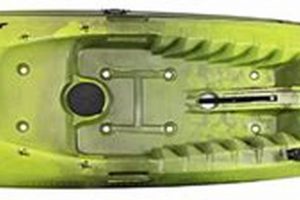
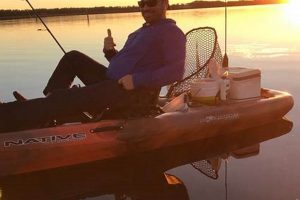
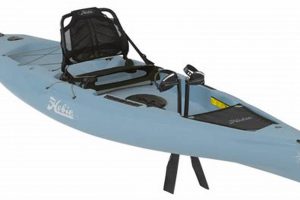
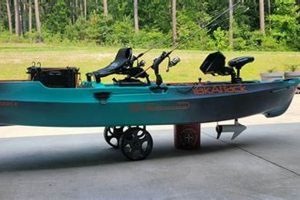
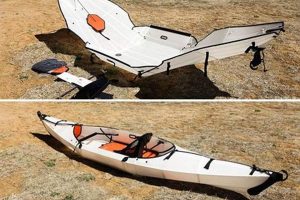
This pursuit involves angling for perch from a kayak. It combines the quiet, close-to-the-water approach of kayak angling with the accessibility and enjoyment of targeting perch, a popular freshwater game fish. A typical setup might include a sit-on-top or sit-inside kayak, light to medium spinning tackle, and live bait or small lures.
The advantages of this method include increased access to shallow, weedy areas often inaccessible by larger boats, offering anglers a distinct advantage when targeting perch. This maneuverability allows for precise casting and lure presentation in prime perch habitat. Furthermore, the low profile of a kayak minimizes disturbance to the fish, potentially increasing catch rates. Historically, smaller, human-powered vessels have been employed for fishing in sheltered waters, and the modern adaptation with specialized kayaks builds on this tradition, offering a contemporary approach to a classic angling experience.
Further exploration of this topic will cover essential equipment, effective techniques, suitable locations, and relevant regulations. Understanding these aspects will contribute to a successful and enjoyable experience on the water.
Tips for Successful Outings
Preparation and technique are crucial for a productive and enjoyable experience targeting perch from a kayak. The following tips offer guidance for anglers of all skill levels.
Tip 1: Stability is Paramount: Choose a kayak offering adequate stability, especially in choppy conditions or when battling larger fish. Wider, sit-on-top kayaks generally provide better stability than narrower, sit-inside models.
Tip 2: Light and Sensitive Tackle: Opt for light to medium-light spinning rods and reels spooled with 4-8 lb test line. This setup allows for delicate presentations and maximizes sensitivity for detecting subtle bites.
Tip 3: Lure Selection Matters: Small jigs, minnows, and soft plastic grubs are effective perch lures. Match lure color and size to local forage and water clarity.
Tip 4: Focus on Structure: Perch often congregate around submerged structure like weeds, rocks, and fallen trees. Target these areas for increased chances of success.
Tip 5: Slow and Steady Retrieves: Perch often prefer a slow, steady retrieve. Experiment with subtle twitches and pauses to entice strikes.
Tip 6: Anchor Effectively: Utilize a lightweight anchor or stake-out pole to maintain position in desired fishing areas, especially in current or wind.
Tip 7: Safety First: Always wear a personal flotation device (PFD) and inform someone of your fishing plans, including location and estimated return time.
Tip 8: Practice Catch and Release: Consider practicing catch and release to help conserve perch populations and ensure future angling opportunities.
By implementing these strategies, anglers can significantly improve their chances of a successful outing and contribute to a more enjoyable and responsible experience on the water.
These tips provide a foundation for a successful outing. Further sections will delve into specific techniques, equipment recommendations, and location selection.
1. Stable Kayak Platform

A stable kayak platform is fundamental to successful perch fishing from a kayak. It provides the foundation for accurate casting, effective fish fighting, and overall angler safety. Instability compromises these elements, hindering the angling experience and potentially creating hazardous situations. This section explores the key facets of kayak stability relevant to perch angling.
- Hull Design and Stability:
Kayak hull design significantly influences stability. Wider, flatter hulls generally offer greater primary stability (resistance to initial tipping), beneficial for calmer waters and stationary fishing. Longer, narrower hulls offer greater secondary stability (resistance to capsizing once tipped), which can be advantageous in rougher conditions. For perch fishing, prioritizing primary stability allows for comfortable casting and hooksets while minimizing the risk of tipping when reeling in fish.
- Center of Gravity and Balance:
Maintaining a low center of gravity is crucial for kayak stability. Sitting low in the kayak and distributing weight evenly enhances balance. Adding weight low in the hull can further improve stability. When fishing for perch, consider the placement of tackle and gear to maintain optimal balance and avoid sudden shifts in weight that could compromise stability.
- Water Conditions and Stability:
Water conditions significantly affect kayak stability. Calm, flat water presents fewer challenges compared to choppy or windy conditions. Current and waves can destabilize a kayak, requiring increased vigilance and potentially influencing kayak choice. Anglers targeting perch in moving water should choose kayaks with enhanced stability features and exercise extra caution.
- Kayak Features Enhancing Stability:
Certain kayak features contribute to enhanced stability. Outriggers, stabilizers, and wider beams increase stability, particularly helpful for anglers new to kayak fishing or those fishing in challenging conditions. These features provide additional support and can enhance confidence while focusing on fishing. While not always necessary for perch fishing, these features can be valuable additions for increased safety and comfort.
Understanding these facets of kayak stability is crucial for successful perch fishing. A stable platform enables anglers to focus on fishing techniques, presentation, and ultimately, catching more fish. By carefully considering hull design, weight distribution, water conditions, and potential stability-enhancing features, anglers can maximize their comfort, safety, and fishing effectiveness.
2. Lightweight Tackle System

A lightweight tackle system is integral to successful kayak perch fishing. It allows for delicate presentations, maximizes sensitivity for detecting subtle bites, and balances well with the lightweight nature of a kayak. Choosing the right combination of rod, reel, line, and terminal tackle significantly impacts fishing effectiveness and overall enjoyment.
- Rod Selection:
Rods ideally suited for kayak perch fishing typically range from 6 to 7 feet in length, with light to medium-light power and fast action. These characteristics allow for precise casting of lightweight lures and provide sufficient backbone for hooksets and fighting fish. Shorter lengths are advantageous in the confined space of a kayak, while the fast action allows for better sensitivity, transmitting even the faintest bites to the angler’s hand. Graphite or composite rods are generally preferred for their light weight and sensitivity.
- Reel Choice:
Spinning reels in the 1000 to 2500 size range are well-suited for perch fishing from a kayak. These reels balance lightweight construction with sufficient line capacity and smooth drag systems. A smooth drag is essential for preventing line breakage when fighting larger perch, especially around structure. Look for reels with a high gear ratio for quick line retrieval when fishing active fish.
- Line and Terminal Tackle:
Light line, typically in the 4 to 8-pound test range, is essential for maximizing casting distance and lure action. Braided line offers excellent sensitivity but can be more visible in clear water. Fluorocarbon line, while less sensitive, offers low visibility and abrasion resistance, making it a good choice for fishing around structure. Terminal tackle should also be scaled down, with small hooks, swivels, and weights appropriate for perch. Using light wire hooks ensures quick penetration, and small split shot weights can be used for added casting distance or to fine-tune lure depth.
- Balancing the System:
The components of the tackle system must be balanced to function effectively. A light rod paired with a heavy reel will feel unbalanced and cumbersome. Similarly, using heavy line on a light rod can overload the rod and lead to breakages. A well-balanced system allows for effortless casting, precise lure control, and efficient fish fighting. Consider the target species, fishing environment, and personal preferences when selecting components to create a cohesive and effective setup.
A properly configured lightweight tackle system enhances the kayak perch fishing experience. It allows anglers to detect subtle bites, present lures effectively, and handle fish efficiently, all while maintaining the balance and maneuverability crucial for kayak angling. The combination of a balanced rod and reel, appropriate line, and scaled-down terminal tackle significantly contributes to angling success and enjoyment on the water.
3. Effective Perch Lures
Lure selection plays a critical role in kayak perch fishing success. Because kayaks allow anglers to access shallow, often overlooked areas, choosing lures that effectively target perch in these specific environments is paramount. The following facets explore key considerations for selecting and utilizing effective perch lures from a kayak.
- Matching the Hatch:
Understanding the prevalent forage in the target water body informs lure choice. Perch are opportunistic feeders, consuming a variety of insects, crustaceans, and small fish. Matching lure profiles and colors to the local forage base increases the likelihood of attracting strikes. For example, if small minnows are the primary forage, using minnow-imitating lures in similar color patterns can be highly effective. Conversely, in areas where insects are abundant, small jigs or soft plastic grubs resembling aquatic insects can prove fruitful.
- Lure Size and Presentation:
Smaller lure sizes are generally preferred for perch, as they mimic the size of their natural prey. Presenting these lures naturally is crucial. Slow, steady retrieves with occasional pauses or twitches often entice strikes. In colder water, slower presentations are typically more effective, while faster retrieves can be productive in warmer water when perch are more active. The confined nature of a kayak allows for precise lure control, enabling anglers to work lures effectively in tight spaces and around structure.
- Lure Types:
Several lure types consistently prove effective for perch. Small jigs tipped with live bait or soft plastic grubs are versatile options. Minnow-imitating crankbaits and jerkbaits can also trigger strikes, particularly when perch are actively feeding. Spinnerbaits and inline spinners can be productive when covering water to locate schools of perch. The choice of lure type often depends on the specific fishing conditions, water clarity, and depth. From a kayak, anglers can effectively utilize all of these lure types due to the close proximity to the water and the ability to maneuver precisely.
- Color Considerations:
Lure color plays a significant role in attracting perch. Bright colors, such as chartreuse, orange, and yellow, are often effective in murky or stained water. Natural colors, like silver, white, and brown, tend to perform better in clear water conditions. Experimenting with different color combinations can help determine the most productive patterns on any given day. The low profile of a kayak allows anglers to observe water clarity and light penetration closely, informing color selection for optimal visibility and attractiveness.
Selecting effective perch lures enhances kayak angling success. By considering factors such as local forage, lure size and presentation, lure types, and color considerations, anglers can significantly improve their chances of enticing strikes. The unique advantages offered by kayak fishing, such as access to shallow water and precise lure control, further amplify the importance of lure selection in targeting perch effectively.
4. Locating Perch Habitats

Locating suitable perch habitat is fundamental to successful kayak perch fishing. Kayaks offer unique access to shallow, vegetated areas often inaccessible to larger boats, making habitat knowledge even more critical. Perch exhibit specific habitat preferences influenced by factors like water temperature, oxygen levels, cover, and food availability. Understanding these preferences and how they intersect with kayak angling opportunities significantly influences angling success. For instance, during warmer months, perch often inhabit shallow, weedy areas where kayaks excel in maneuverability and stealth, allowing anglers to target these prime locations effectively. Conversely, in cooler months, perch may move to deeper water near drop-offs or submerged structures. Kayak anglers, unburdened by deep drafts, can readily access these areas, presenting lures precisely where perch congregate. This dynamic interplay between perch habitat and kayak accessibility underscores the importance of habitat knowledge.
Specific examples illustrate this connection. In lakes with abundant lily pads, perch frequently ambush prey from beneath the cover. Kayak anglers can quietly navigate through these pads, presenting lures directly to these ambush points. Similarly, in rivers, perch often hold near submerged logs or rock piles. Kayaks allow anglers to position themselves upstream and drift lures naturally through these high-percentage areas. Failing to identify these prime locations significantly reduces the likelihood of encountering perch, highlighting the practical significance of habitat knowledge for kayak anglers. Understanding seasonal shifts in perch location is also critical. Spring often finds perch in shallow spawning areas, while fall may concentrate them near deeper structures as water temperatures cool. Adapting location strategies based on seasonal changes maximizes angling opportunities from a kayak.
Successful kayak perch fishing relies heavily on accurate habitat identification. The maneuverability and shallow draft of kayaks provide access to prime perch habitats often inaccessible to other angling methods. Understanding how perch behavior and seasonal changes influence habitat selection empowers kayak anglers to target these areas effectively. Combining this knowledge with appropriate lure selection and presentation techniques significantly increases the likelihood of a productive and rewarding fishing experience.
5. Refined Retrieval Techniques

Refined retrieval techniques significantly influence success when kayak perch fishing. Because kayaks offer a quiet, close-to-the-water approach, subtle lure presentations become paramount. Perch, often wary in shallow, clear water, respond more readily to nuanced manipulations of lures, making retrieval technique a critical factor in triggering strikes. A slow, steady retrieve might suffice in certain situations, but often, incorporating subtle variations produces significantly better results. These variations mimic the natural movements of perch prey, increasing lure attractiveness. For example, a series of slight twitches followed by a pause can imitate a wounded minnow, triggering a predatory response from nearby perch. Similarly, a slow, steady retrieve interspersed with occasional lifts and drops of the rod tip can simulate a struggling insect, enticing a strike. The direct connection between refined retrievals and increased catch rates underscores the importance of this skill in kayak perch fishing.
Several factors influence the choice of retrieval technique. Water temperature affects perch activity levels, dictating retrieval speed. In colder water, slower retrieves with minimal action often prove most effective. Conversely, warmer water temperatures allow for faster, more aggressive retrieves. Water clarity also plays a role. In clear water, subtle, finesse presentations generally outperform aggressive retrieves. Conversely, in murky water, more pronounced lure action can help attract perch from a greater distance. Understanding these nuances and adapting retrieval techniques accordingly elevates kayak perch fishing effectiveness. Practical examples demonstrate this connection. When fishing a small jig near submerged vegetation, a slow lift-and-drop retrieve can entice perch holding tight to cover. Alternatively, when fishing a crankbait in open water, a steady retrieve with occasional pauses and twitches can trigger reaction strikes from active perch. Mastering these techniques provides kayak anglers with a significant advantage.
Refined retrieval techniques are essential for maximizing success in kayak perch fishing. The quiet approach and close proximity to the water afforded by kayaks necessitate subtle lure presentations. Adapting retrieval speed and action to factors like water temperature and clarity further refines lure presentation, increasing the likelihood of enticing strikes from wary perch. Mastering these nuances significantly contributes to a more productive and rewarding kayak fishing experience. The ability to manipulate lures effectively in the strike zone, combined with the stealth and maneuverability of a kayak, provides a distinct advantage when targeting perch in their preferred habitats.
6. Essential Safety Practices

Safety is paramount in kayak perch fishing. The inherent risks associated with on-water activities necessitate a proactive approach to safety, minimizing potential hazards and ensuring an enjoyable experience. Understanding and implementing essential safety practices contributes significantly to angler well-being and preparedness for unforeseen circumstances. Neglecting these practices can jeopardize not only the fishing trip but also the angler’s safety and potentially the safety of others on the water. A comprehensive understanding of these practices forms the foundation for a responsible and enjoyable kayak fishing experience.
- Personal Flotation Devices (PFDs):
Wearing a properly fitted PFD is non-negotiable. PFDs provide essential buoyancy in the event of capsizing or accidental immersion, significantly increasing the chances of survival. Different PFD types exist, and selecting one appropriate for kayak fishing, offering comfort and freedom of movement while providing adequate flotation, is crucial. Statistics consistently demonstrate the life-saving efficacy of PFDs in boating accidents, underscoring their importance for kayak anglers.
- Weather Awareness and Planning:
Checking weather forecasts before embarking on a kayak fishing trip is essential. Sudden changes in weather conditions, such as strong winds, thunderstorms, or rapid temperature drops, can create hazardous situations on the water. Planning trips during periods of stable, favorable weather minimizes risks. Real-life examples abound of anglers caught unprepared in adverse weather, highlighting the critical nature of pre-trip planning and ongoing weather awareness. Kayak anglers should always have an exit strategy in case of unexpected weather changes.
- Communication and Float Plans:
Informing someone on shore of planned fishing locations, estimated return times, and emergency contact information is a crucial safety measure. This allows for prompt assistance in case of an emergency or overdue return. Float plans provide essential details to search and rescue teams, facilitating efficient response efforts. While seemingly simple, this practice can significantly expedite rescue operations and contribute to positive outcomes in emergency situations.
- Navigation and Awareness of Surroundings:
Maintaining awareness of surroundings, including boat traffic, submerged obstacles, and changing water conditions, is essential for safe kayak navigation. Carrying a map, compass, or GPS device aids in navigation and helps prevent disorientation. Understanding local boating regulations and right-of-way rules further contributes to safe navigation. Collisions with other vessels or submerged objects can pose significant risks to kayak anglers, emphasizing the importance of continuous vigilance and awareness.
These essential safety practices contribute significantly to a safe and enjoyable kayak perch fishing experience. By prioritizing these precautions, anglers mitigate potential risks and create a more responsible and rewarding on-water experience. Integrating these practices into pre-trip planning, on-water activities, and post-trip procedures establishes a culture of safety that benefits individual anglers and the broader kayaking community. A safe angling environment allows for greater focus on fishing techniques and enjoyment of the natural surroundings.
Frequently Asked Questions
This section addresses common inquiries regarding kayak perch fishing, providing concise and informative responses to facilitate a clearer understanding of this angling pursuit.
Question 1: What type of kayak is best suited for perch fishing?
Stable kayaks, such as wider sit-on-tops or shorter sit-in models, are generally preferred. Stability enhances casting accuracy and comfort while fighting fish.
Question 2: What essential gear is required for kayak perch fishing?
Essential gear includes a kayak, paddle, PFD, rod, reel, line, hooks, lures, and a landing net. Optional equipment includes an anchor, fish finder, and rod holders.
Question 3: Where are the best locations to find perch from a kayak?
Perch often inhabit shallow, weedy areas, submerged structures, and drop-offs. Kayaks excel in accessing these locations due to their maneuverability.
Question 4: What are the most effective techniques for catching perch from a kayak?
Effective techniques include slow, steady retrieves with occasional twitches, vertical jigging, and drifting live bait near cover.
Question 5: What safety precautions should one take when kayak perch fishing?
Essential safety precautions include wearing a PFD, checking weather forecasts, informing someone of fishing plans, and carrying a whistle or signaling device.
Question 6: What are the regulations regarding perch fishing limits and licensing requirements?
Regulations vary by location. Consulting local fish and wildlife agencies provides current information on licensing, size limits, and catch restrictions.
Addressing these common questions provides a solid foundation for planning and executing successful kayak perch fishing outings. Thorough preparation enhances both safety and angling effectiveness.
Further exploration of this topic may include detailed equipment reviews, advanced fishing techniques, specific location guides, and conservation practices.
Kayak Perch Fishing
This exploration of kayak perch fishing has highlighted the synergy between angler, equipment, and environment. Key elements contributing to success include selecting a stable kayak platform, utilizing lightweight and sensitive tackle, understanding perch behavior and habitat preferences, employing refined retrieval techniques, and prioritizing essential safety practices. The advantages offered by kayaks, such as access to shallow, vegetated areas and quiet maneuverability, provide distinct advantages when targeting perch. Effective lure selection, based on prevalent forage and water conditions, further enhances angling success.
The continued growth in popularity of kayak angling underscores the appeal of this accessible and engaging pursuit. As anglers seek closer connections with the natural world and explore new avenues for angling enjoyment, kayak perch fishing offers a rewarding experience, combining the challenge of angling with the tranquility of on-water exploration. Responsible angling practices, including catch-and-release principles and respect for aquatic ecosystems, ensure the sustainability of this pursuit for future generations. This mindful approach fosters a deeper appreciation for the delicate balance within aquatic environments and contributes to the long-term health of perch populations and their associated habitats.