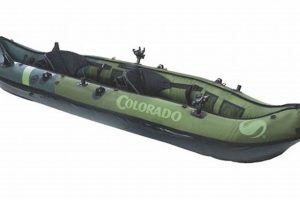
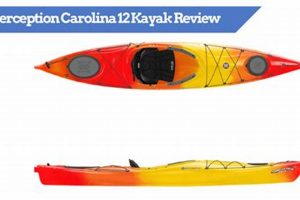
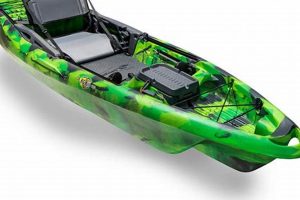
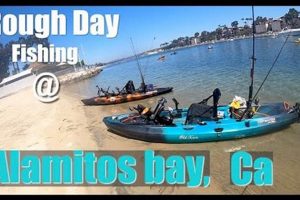
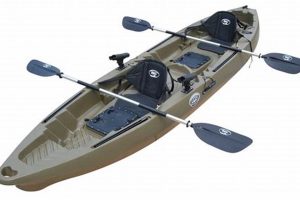
This specific model of recreational watercraft is designed for angling activities. Characteristically, it features a compact, sit-on-top design, measuring approximately 10 feet in length. Such vessels are typically constructed from rotomolded polyethylene for durability and stability, catering to anglers seeking a lightweight and maneuverable option for traversing lakes, rivers, and calm coastal waters.
Compact recreational fishing vessels offer significant advantages for anglers, including ease of transport and storage. Their relatively small size makes them car-toppable for many vehicles, eliminating the need for trailers. Furthermore, the stability offered by the sit-on-top design is beneficial for casting and landing fish, especially in calmer waters. The growing popularity of this type of watercraft reflects a broader trend toward more accessible and versatile personal fishing platforms.
This examination will further delve into topics relevant to small fishing watercraft, including selecting appropriate safety gear, recommended fishing accessories, essential paddling techniques, and suitable fishing locations for these vessels. Additional discussion will cover proper maintenance and storage procedures for ensuring longevity and optimal performance.
Tips for Utilizing a 10-Foot Sit-On-Top Fishing Kayak
Proper preparation and technique enhance safety and enjoyment on the water. The following tips offer guidance for utilizing compact fishing kayaks effectively.
Tip 1: Prioritize Safety Gear. Always wear a personal flotation device (PFD). Carry a whistle for signaling, a waterproof communication device, and a first-aid kit. Inform someone of the planned paddling route and expected return time.
Tip 2: Balance and Distribute Weight. Evenly distribute gear within the vessel to maintain stability. Avoid overloading, which compromises maneuverability and increases the risk of capsizing. Position heavier items low and centrally.
Tip 3: Practice Paddling Techniques. Mastering basic paddling strokes improves efficiency and control. Proper technique minimizes fatigue and allows for precise maneuvering in various water conditions.
Tip 4: Choose Appropriate Fishing Locations. Select calm waters, such as small lakes, slow-moving rivers, or sheltered bays, especially when starting. Avoid areas with strong currents, heavy boat traffic, or challenging weather conditions.
Tip 5: Utilize Essential Accessories. Equip the vessel with rod holders, an anchor trolley system, and a fish finder for enhanced fishing success. A crate or dry bag provides convenient storage for tackle and supplies.
Tip 6: Regularly Inspect and Maintain Equipment. Check the hull for damage before each use. Rinse the kayak with fresh water after each outing to prevent salt buildup and UV degradation. Proper maintenance prolongs the life of the vessel.
Tip 7: Dress Appropriately for the Conditions. Wear clothing suitable for the water temperature and weather forecast. Consider quick-drying fabrics and layers to adjust to changing conditions. Sun protection, including a hat and sunscreen, is crucial.
Adhering to these guidelines promotes a safe and rewarding experience on the water. Careful planning and preparation are key to maximizing enjoyment and ensuring successful fishing excursions.
By understanding these elements, individuals can fully appreciate the versatility and utility these vessels offer for anglers.
1. Stability

Stability is a critical factor influencing the performance and safety of an excursion 10 fishing kayak. A stable platform allows anglers to cast, reel, and land fish effectively while minimizing the risk of capsizing. Various design elements and user practices contribute to overall stability.
- Hull Design
The hull design significantly impacts stability. Wider hulls generally provide greater primary stability, resisting initial tipping. A flatter hull bottom enhances initial stability but can compromise secondary stability, the ability to recover from larger leans. The excursion 10 fishing kayak typically features a relatively wide and flat hull, prioritizing initial stability for fishing activities.
- Center of Gravity
Maintaining a low center of gravity is crucial for stability. Distributing weight evenly and storing heavier items low in the kayak improves balance. Anglers should avoid sudden movements or leaning too far to one side, as this can raise the center of gravity and increase the risk of capsizing. The sit-on-top design of this kayak inherently contributes to a lower center of gravity compared to sit-inside kayaks.
- Water Conditions
Calm water conditions contribute significantly to stability. Wind, waves, and currents can destabilize a kayak, requiring greater focus on balance and paddle control. Anglers using excursion 10 fishing kayaks should choose appropriate locations and avoid challenging conditions that could compromise stability. Understanding the limitations of the vessel in various water conditions is paramount.
- User Skill and Body Position
An angler’s skill level and body position influence stability. Maintaining a balanced and centered posture enhances stability, while sudden movements or leaning can compromise it. Experience and practice improve balance and control, allowing anglers to maintain stability in various conditions. Utilizing proper paddling techniques further contributes to overall stability on the water.
Understanding these factors and their interplay is crucial for maximizing stability and ensuring a safe and enjoyable fishing experience in an excursion 10 fishing kayak. Proper weight distribution, awareness of water conditions, and controlled movements contribute significantly to stability. Ultimately, stability contributes to the overall effectiveness and safety of this specific kayak model as a fishing platform.
2. Maneuverability

Maneuverability is a crucial performance characteristic for fishing kayaks, particularly in environments requiring precise navigation. For an excursion 10 fishing kayak, efficient maneuvering enables anglers to access shallow coves, navigate around obstacles, and position themselves effectively for casting. Several factors contribute to this vessel’s maneuverability profile.
- Hull Design
The hull design plays a significant role in maneuverability. Shorter kayaks generally turn more quickly than longer ones. The excursion 10 fishing kayak’s relatively short length contributes to its nimble handling. The hull shape also influences tracking, the kayak’s ability to maintain a straight course. While a flatter hull enhances initial stability, it can compromise tracking. A slightly curved hull, often found in this type of kayak, improves tracking while retaining acceptable stability. The specific hull design balances these competing performance characteristics.
- Water Conditions
Water conditions significantly impact maneuverability. Calm, flat water provides optimal conditions for precise maneuvering. Wind, currents, and waves can challenge maneuverability, requiring increased paddling effort and adjustments in technique. The excursion 10 fishing kayak, designed primarily for calmer waters, performs well in these conditions but may require more effort in challenging environments. Understanding the impact of water conditions is essential for safe and effective operation.
- Paddling Technique
Proper paddling technique enhances maneuverability. Efficient forward strokes propel the kayak smoothly, while sweep strokes facilitate turning. Draw strokes allow for lateral movement, enabling precise adjustments in position. Mastering these techniques maximizes the maneuverability potential of the excursion 10 fishing kayak. Practice and instruction can significantly improve paddling efficiency and control.
- Rudder or Skeg
Some excursion 10 fishing kayaks are equipped with a rudder or skeg to enhance tracking and maneuverability. A rudder provides directional control, particularly helpful in windy conditions. A skeg improves tracking by reducing yaw, the tendency of the kayak to veer off course. These features offer additional control and can be valuable in specific environments or situations. However, they also add complexity and potential points of failure.
The interplay of these factors determines the overall maneuverability of an excursion 10 fishing kayak. The vessel’s compact size and design prioritize maneuverability in calm water environments, enabling anglers to navigate effectively and position themselves optimally for fishing. Understanding the influence of hull design, water conditions, paddling technique, and optional features such as rudders or skegs provides a comprehensive perspective on the vessel’s maneuvering capabilities.
3. Portability
Portability significantly influences the practicality and appeal of the excursion 10 fishing kayak. The ease with which this vessel can be transported and stored directly impacts its usability, expanding access to diverse fishing locations and simplifying storage logistics. Several factors contribute to its portability profile.
Weight and Dimensions: The excursion 10 fishing kayak’s compact size and relatively lightweight construction are central to its portability. Typically weighing between 40 and 60 pounds, this kayak can be handled by a single individual, facilitating car-topping or carrying short distances. Its length of approximately 10 feet further simplifies transport and storage compared to larger kayaks. This combination of weight and dimensions allows for transport on roof racks without specialized trailers, broadening accessibility.
Construction Material: Rotomolded polyethylene, the predominant construction material for these kayaks, contributes to both durability and manageable weight. While durable enough to withstand impacts and abrasion, this material remains light enough for convenient handling. This material choice directly supports the portability objective, enabling convenient transport and storage while maintaining structural integrity.
Carrying Handles: Integrated carrying handles, typically located at the bow, stern, and sides, facilitate transport. These strategically placed handles allow for balanced lifting and carrying, minimizing strain and simplifying handling. Ergonomically designed handles further enhance portability, improving user experience during transport.
Practical Implications: Enhanced portability translates to greater access to fishing locations. Individuals without access to boat ramps or trailers can readily transport this kayak to smaller bodies of water, expanding fishing opportunities. Simplified storage, whether in a garage, shed, or even within a smaller living space, further contributes to the kayak’s practicality. Reduced logistical barriers encourage more frequent usage and broaden the range of accessible fishing environments.
In conclusion, the portability of the excursion 10 fishing kayak distinguishes it as a versatile and accessible fishing platform. The considered design choices regarding weight, dimensions, and construction materials prioritize ease of transport and storage. This emphasis on portability expands fishing opportunities and simplifies logistical considerations, contributing to the broader appeal and practicality of this kayak model for a wide range of anglers.
4. Fishing Features
Dedicated fishing features distinguish the excursion 10 fishing kayak from recreational paddling kayaks, optimizing its utility for angling activities. These integrated design elements enhance functionality, improve angler efficiency, and contribute to a more productive and enjoyable fishing experience. Examining these features reveals their practical significance within the context of this specialized kayak.
Rod Holders: Flush-mounted or adjustable rod holders provide secure storage for fishing rods, freeing hands for paddling, maneuvering, and other tasks. Multiple rod holders allow anglers to carry various rod and reel combinations, catering to different fishing techniques or target species. This feature eliminates the need to hold rods constantly, reducing fatigue and increasing responsiveness to strikes. Anglers targeting bass might utilize one rod with a topwater lure and another rigged for bottom fishing, benefiting directly from multiple rod holders.
Tackle Storage: Integrated storage compartments, often located within easy reach of the seating area, offer organized storage for tackle boxes, lures, and other fishing essentials. Dry storage compartments protect sensitive items from water damage. Accessible storage streamlines tackle management, minimizing disruptions during fishing and enabling efficient lure changes or adjustments. Anglers fly fishing, with their numerous small flies and accessories, particularly benefit from organized tackle storage.
Anchor Trolley System: An anchor trolley system allows for controlled anchoring from various positions on the kayak. This system enables anglers to position the vessel effectively in relation to currents, structure, or fish-holding areas. Maintaining an optimal fishing position enhances presentation and increases the likelihood of success. Anglers fishing in rivers or tidal areas leverage the anchor trolley to hold position effectively despite changing currents.
Other Features: Additional fishing-specific features may include paddle parks, gear tracks for mounting accessories, and fish finders. Paddle parks secure the paddle when not in use, preventing loss or interference with fishing lines. Gear tracks offer versatility for mounting rod holders, fish finders, cameras, and other equipment. Integrated fish finders provide real-time information about water depth, bottom structure, and fish location, enhancing angling success. These supplementary features further tailor the kayak to the specific needs of anglers.
The strategic incorporation of these fishing features directly impacts the excursion 10 fishing kayak’s effectiveness as an angling platform. These features not only enhance fishing functionality but also improve overall angler experience by promoting efficiency, organization, and comfort. The practical significance of these features underscores the specialized design and purpose of this kayak model within the broader recreational kayaking landscape.
5. Durability
Durability is a paramount attribute for excursion 10 fishing kayaks, directly influencing their lifespan and overall value. These vessels frequently encounter potentially damaging environments, including rocky shorelines, submerged obstacles, and transport-related wear and tear. A durable construction ensures the kayak withstands these challenges, maintaining its structural integrity and functional performance over extended periods. The material selection and construction methods employed significantly influence the kayak’s resistance to impact, abrasion, and UV degradation. Rotomolded polyethylene, the prevalent material for these kayaks, offers a robust balance of impact resistance, affordability, and UV stability, contributing significantly to their durable nature. This material’s inherent flexibility allows it to absorb impacts without cracking or deforming, a critical advantage in demanding environments. For example, landing on a rocky shore or colliding with a submerged log could severely damage a less durable kayak, while rotomolded polyethylene typically endures such impacts without significant structural compromise. This robust construction directly translates to a longer lifespan and reduced repair costs, enhancing the overall value proposition of the excursion 10 fishing kayak.
Beyond the core material, construction techniques further reinforce durability. Uniform wall thickness and robust seam welds contribute to structural integrity, minimizing weak points susceptible to stress cracking or leaks. Reinforced areas, such as the keel and seating area, further enhance resistance to abrasion and impact in high-wear zones. These construction details, while often unseen, play a crucial role in the kayak’s ability to withstand the rigors of regular use and environmental exposure. Consider an angler frequently launching from rocky shores; a reinforced keel significantly reduces the risk of damage during these repeated impacts. Similarly, reinforced seating areas withstand the constant pressure and movement of the angler, preserving the kayak’s structural integrity over time. These seemingly minor construction details contribute significantly to the long-term durability and sustained performance of the excursion 10 fishing kayak.
The practical significance of durability translates to a reliable and dependable fishing platform. Anglers can confidently navigate challenging environments, knowing their vessel is built to withstand potential impacts and abrasions. This durability not only minimizes repair costs but also ensures the kayak remains functional and safe throughout its lifespan. Investing in a durable excursion 10 fishing kayak represents a long-term commitment to reliable performance and continued enjoyment on the water. Ultimately, durability is a critical factor influencing the overall value and user experience, underscoring its importance as a core attribute for these specialized fishing vessels.
Frequently Asked Questions
This section addresses common inquiries regarding the excursion 10 fishing kayak, providing concise and informative responses to facilitate informed decision-making and enhance user understanding.
Question 1: What is the weight capacity of a typical excursion 10 fishing kayak?
Weight capacities typically range from 300 to 400 pounds, encompassing angler weight, gear, and any additional cargo. Exceeding this limit can compromise stability and performance.
Question 2: Is this type of kayak suitable for ocean use?
While designed primarily for calm waters like lakes and slow-moving rivers, careful consideration of weather and water conditions can permit limited coastal use in sheltered bays or estuaries. Open ocean use is generally discouraged due to potential stability issues in rougher conditions.
Question 3: What essential safety equipment is recommended for use with this kayak model?
Essential safety gear includes a personal flotation device (PFD), a whistle, a waterproof communication device, and a first-aid kit. Informing someone of the planned paddling route and expected return time is also crucial.
Question 4: How does one transport an excursion 10 fishing kayak?
Due to their compact size and relatively light weight, these kayaks are readily car-toppable using roof racks. Specialized kayak trailers offer another transport option.
Question 5: What maintenance is required for this type of kayak?
Regular rinsing with fresh water after each use, particularly in saltwater environments, prevents salt buildup and UV degradation. Periodic inspections for damage and proper storage practices contribute to longevity.
Question 6: Are modifications or additions, such as mounting fishing accessories, possible?
Many models feature gear tracks or mounting points designed for customization. Installing rod holders, fish finders, or other accessories enhances functionality, but modifications should not compromise the structural integrity of the kayak.
Understanding these key aspects promotes safe and informed usage, maximizing enjoyment and longevity of the excursion 10 fishing kayak.
The subsequent section delves further into specific models and manufacturer details.
Conclusion
The excursion 10 fishing kayak represents a specialized vessel designed for angling activities. Its compact size, stability, maneuverability, and specialized features cater to anglers seeking a portable and efficient fishing platform. The examination of its core attributesstability, maneuverability, portability, fishing features, and durabilityreveals a thoughtfully designed kayak optimized for diverse fishing environments and user needs. Understanding these elements provides a comprehensive perspective on the vessel’s capabilities and intended usage. Addressing frequent inquiries further clarifies practical aspects related to operation, maintenance, and safety considerations.
Careful consideration of these factors empowers informed purchasing decisions and promotes responsible usage. Ultimately, leveraging the excursion 10 fishing kayak’s inherent capabilities enhances angling experiences and fosters a deeper appreciation for the utility and versatility offered by this specialized watercraft. Continued exploration of kayak fishing techniques and responsible paddling practices will further enrich the experience and ensure the preservation of aquatic environments for future generations.