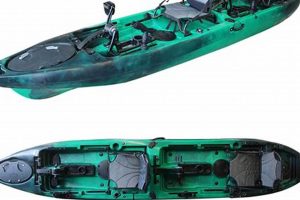
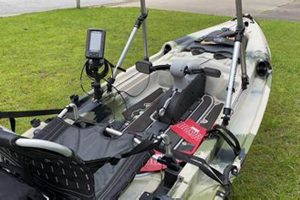
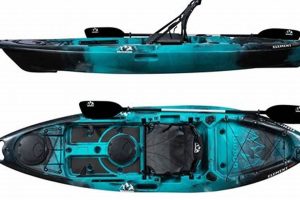
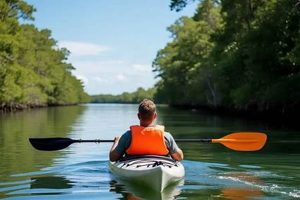
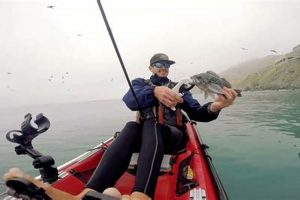
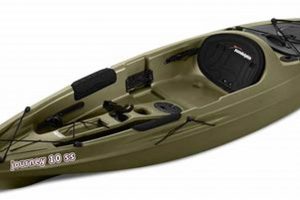
This activity involves using small, portable boats, often resembling canoes, to access fishing spots in various bodies of water. These vessels are propelled by paddles and offer a stable platform for anglers to cast lines and pursue their catch. This method allows access to shallow or otherwise difficult-to-reach areas, providing an alternative to traditional boat fishing or shore fishing.
Small boat angling provides numerous advantages. Its low environmental impact, affordability, and ease of transport make it a popular choice. Historically, small human-powered watercraft have been used for fishing for millennia, evolving from simple dugout canoes to the modern, specialized designs available today. This evolution reflects the enduring appeal of a close-to-nature fishing experience combined with increased maneuverability and accessibility.
The following sections will explore the various aspects of this fishing style in greater detail, covering topics such as equipment selection, suitable locations, effective techniques, and relevant safety considerations.
Tips for Small Boat Angling
Effective angling from small, paddle-powered boats requires careful planning and execution. The following tips offer guidance for a successful and enjoyable experience.
Tip 1: Stability is Paramount: Maintaining balance is crucial. Distribute weight evenly within the vessel and avoid sudden movements. Practice entering and exiting the boat in shallow water before venturing further.
Tip 2: Essential Gear Selection: Choose appropriate rods, reels, and tackle. Shorter rods are often preferable for confined spaces. Pack essential safety equipment, including a personal flotation device, a whistle, and a first-aid kit.
Tip 3: Location Scouting: Research potential fishing spots thoroughly. Consider water depth, currents, and potential obstacles. Utilize maps and local resources to identify productive areas.
Tip 4: Paddling Proficiency: Develop efficient paddling techniques to conserve energy and navigate effectively. Practice maneuvering in various wind and water conditions.
Tip 5: Respectful Angling Practices: Adhere to all local fishing regulations. Practice catch-and-release principles whenever possible to conserve fish populations. Minimize environmental impact by properly disposing of waste.
Tip 6: Weather Awareness: Check weather forecasts before embarking on any fishing trip. Avoid venturing out in adverse conditions such as strong winds, lightning storms, or heavy fog.
Tip 7: Navigation Essentials: Carry a compass or GPS device, especially when fishing in unfamiliar waters. Familiarize oneself with basic navigation principles.
By following these guidelines, anglers can enhance their safety, maximize their fishing success, and contribute to the preservation of aquatic environments. These practices promote responsible and enjoyable small boat fishing experiences.
This information provides a solid foundation for planning a successful small boat fishing outing. The following section will offer further insights into advanced techniques and specialized equipment.
1. Boat Selection

Appropriate boat selection is fundamental to successful and enjoyable small boat fishing. The vessel’s characteristics significantly impact stability, maneuverability, and overall fishing effectiveness. Choosing the right boat involves careful consideration of several key factors.
- Hull Design:
Hull design directly influences stability and tracking. Flat-bottomed hulls offer excellent stability, ideal for calm waters and stationary fishing. Rounded or V-shaped hulls provide better tracking and speed, suited for moving water or covering greater distances. Pontoon-style hulls offer exceptional stability, accommodating gear and multiple anglers. Understanding these design variations allows anglers to choose a hull type appropriate for their intended fishing environment and style.
- Length and Width:
Boat length and width impact maneuverability and storage capacity. Shorter boats are easier to maneuver in tight spaces, while longer boats track better in open water. Wider boats provide increased stability but sacrifice some maneuverability. Balancing these dimensions requires considering the typical fishing environment and the amount of gear to be carried.
- Weight Capacity:
Weight capacity dictates the safe limit for anglers, gear, and catch. Exceeding this limit compromises stability and can lead to capsizing. Anglers must accurately estimate the total weight they intend to carry and select a boat with sufficient capacity.
- Material and Construction:
Boat materials influence durability, weight, and cost. Common materials include polyethylene, fiberglass, and inflatable fabrics. Polyethylene offers durability and affordability. Fiberglass provides strength and a lighter weight. Inflatable boats are highly portable but require careful maintenance. Evaluating these materials helps anglers select a boat suited to their budget and transportation needs.
Careful consideration of these factors ensures the selected boat aligns with the angler’s specific needs and the demands of the fishing environment. A well-chosen vessel enhances safety, improves fishing effectiveness, and contributes to a more enjoyable experience on the water.
2. Paddle Technique
Paddle technique plays a crucial role in successful small boat fishing. Efficient paddling conserves energy, allowing anglers to cover greater distances and focus on fishing rather than exertion. Proper technique also enables precise boat control, crucial for navigating challenging waters, maintaining position against currents or wind, and approaching fish stealthily. A strong paddle stroke minimizes disturbance on the water’s surface, reducing the chances of spooking fish. Conversely, poor technique can lead to fatigue, reduced boat control, and a less productive fishing experience.
Several key elements contribute to effective paddling. A proper grip, with hands spaced slightly wider than shoulder-width apart, maximizes leverage. A smooth, controlled stroke, utilizing core muscles rather than just arms, improves efficiency and reduces strain. The paddle blade should enter the water cleanly and be fully submerged for maximum power. Feathering the paddle on the recovery stroke minimizes wind resistance. Understanding these elements and practicing them regularly significantly enhances paddling proficiency.
Mastery of paddle technique translates directly to improved fishing success. Anglers can reach desired locations quickly and quietly, maintain optimal boat position for casting, and adjust to changing water conditions with ease. This efficiency and control contribute to a more productive and enjoyable fishing experience, underscoring the vital connection between paddle technique and effective small boat angling.
3. Fishing Gear

Specialized fishing gear enhances success and safety in small boat angling. Equipment choices must consider the limited space and unique demands of this fishing style. Appropriate gear selection improves casting accuracy, fish retrieval, and overall angling effectiveness while ensuring safety and minimizing entanglement hazards within the confined boat environment.
- Rods and Reels:
Shorter, more versatile rods are preferable for maneuverability within the boat. Spinning or baitcasting reels, appropriately sized for target species, provide efficient line management and retrieval. Selecting a rod and reel combination suited to the target species and fishing technique maximizes effectiveness and control.
- Tackle and Lures:
Tackle choices should reflect the target species and fishing location. Lures, hooks, weights, and other terminal tackle should be organized and readily accessible within the limited boat space. A well-organized tackle system streamlines the fishing process and minimizes disruptions.
- Landing Tools:
Nets or grips facilitate safe and efficient fish handling. A compact net designed for kayak use allows controlled retrieval of fish while minimizing the risk of boat instability. Appropriate landing tools promote conservation and angler safety.
- Storage and Organization:
Efficient storage solutions maximize available space and maintain order within the boat. Tackle boxes, rod holders, and other storage accessories keep gear secure and easily accessible. Proper organization enhances safety and improves fishing efficiency.
Careful selection and organization of fishing gear significantly impact the overall small boat fishing experience. Appropriate gear enhances efficiency, improves safety, and maximizes the chances of a successful outing. Adapting gear choices to the unique constraints and demands of this fishing style is crucial for a positive and productive experience on the water.
4. Location Choice

Location choice significantly impacts the success and safety of small boat fishing excursions. Careful consideration of environmental factors, access points, and species-specific habitat preferences is crucial for a productive and enjoyable experience. Selecting a suitable location involves analyzing several key elements.
Water Type: Different bodies of water offer distinct fishing opportunities and challenges. Calm lakes and ponds provide stable fishing platforms but may require longer paddles to reach productive areas. Rivers and streams offer moving water and diverse habitats but necessitate careful navigation and awareness of currents. Coastal areas provide access to saltwater species but require heightened attention to tides and weather conditions. Matching water type to skill level and target species is essential.
Habitat Features: Identifying key habitat features within a chosen location increases the likelihood of encountering target species. Structures such as submerged vegetation, fallen trees, or rock formations attract fish and provide ambush points. Understanding the relationship between habitat and species distribution informs strategic location selection within a given body of water.
Accessibility and Safety: Access points should be safe and convenient. Launching from established boat ramps or designated access areas minimizes environmental impact and ensures safe entry and exit from the water. Evaluating potential hazards, such as strong currents, boat traffic, or submerged obstacles, is paramount for safe navigation. Prioritizing safety considerations enhances the overall fishing experience.
Regulations and Restrictions: Adhering to local fishing regulations, including licensing requirements, catch limits, and seasonal restrictions, is crucial. Researching and complying with these regulations ensures responsible fishing practices and contributes to the long-term health of fish populations.
Strategic location choice significantly enhances the effectiveness and enjoyment of small boat fishing. By considering factors like water type, habitat features, accessibility, and local regulations, anglers can maximize their chances of success while prioritizing safety and environmental responsibility. Informed decision-making regarding location selection contributes directly to a more rewarding and sustainable angling experience.
5. Safety Precautions
Safety precautions are paramount in small boat fishing, where anglers interact directly with the water environment and face inherent risks. Ignoring these precautions can lead to serious incidents, jeopardizing angler safety and potentially impacting others on the water. Understanding and implementing appropriate safety measures is crucial for a responsible and enjoyable fishing experience.
- Personal Flotation Devices (PFDs):
Wearing a properly fitted PFD is non-negotiable. PFDs provide essential buoyancy in the event of capsizing or accidental immersion, significantly increasing the chances of survival. Even strong swimmers can become incapacitated due to cold water shock or unexpected injuries. A PFD is the single most important piece of safety equipment for any small boat angler.
- Weather Awareness:
Checking weather forecasts before embarking on a fishing trip is essential. Sudden changes in weather conditions, such as strong winds, thunderstorms, or fog, can create hazardous situations on the water. Anglers should be prepared to postpone or cancel trips if adverse conditions are anticipated or encountered. Continuously monitoring weather conditions during the outing allows for timely adjustments and safe return to shore.
- Navigation and Communication:
Carrying a compass, GPS device, and communication tools enhances safety. A compass and GPS assist with navigation, especially in unfamiliar waters or during periods of reduced visibility. A fully charged mobile phone or VHF radio enables communication in case of emergencies or unforeseen circumstances. Informing someone on shore about the planned fishing location and expected return time adds another layer of safety.
- Emergency Preparedness:
Carrying a well-stocked first-aid kit and essential safety gear is crucial. A first-aid kit allows for immediate treatment of minor injuries. Essential safety gear includes a whistle for signaling, a bailing bucket for removing water from the boat, and a knife or multi-tool for various purposes. Knowing how to use these tools and practicing basic water safety procedures further enhances preparedness.
Implementing these safety precautions significantly mitigates risks inherent in small boat fishing. Prioritizing safety enhances not only personal well-being but also contributes to a more enjoyable and responsible angling experience. By integrating these practices into every fishing outing, anglers demonstrate a commitment to safe and sustainable engagement with the aquatic environment.
Frequently Asked Questions
This section addresses common inquiries regarding small boat fishing, providing concise and informative responses to clarify potential uncertainties and promote safe and responsible angling practices.
Question 1: What are the essential safety items for small boat fishing?
Essential safety items include a properly fitted personal flotation device (PFD), a whistle, a first-aid kit, a communication device (e.g., mobile phone or VHF radio), and navigation tools (e.g., compass or GPS). A bailing bucket, knife, and signaling mirror are also recommended.
Question 2: How does one choose an appropriate paddle?
Paddle selection depends on boat type and angler height. Generally, a longer paddle is suitable for wider boats. Anglers should grip the paddle with hands slightly wider than shoulder-width apart. Consulting with experienced paddlers or retailers can provide personalized recommendations.
Question 3: What are effective techniques for fishing from a small boat?
Effective techniques include maintaining a low center of gravity, minimizing sudden movements, and utilizing anchors or drift socks to control boat position. Casting techniques should be adapted to the confined space and potential overhead obstructions. Practicing these techniques in calm water enhances proficiency.
Question 4: What are the advantages of small boat fishing compared to shore fishing or larger boats?
Small boat fishing provides access to otherwise inaccessible areas, offers a closer-to-nature experience, and requires less investment than larger boats. Compared to shore fishing, it expands fishing range and allows for deeper water access.
Question 5: How does one transport a small boat?
Transport methods depend on boat type and vehicle capacity. Roof racks, trailers, or even carrying the boat by hand are viable options. Ensuring secure attachment and adhering to traffic regulations are crucial during transport.
Question 6: What are important environmental considerations for small boat fishing?
Minimizing environmental impact is essential. Proper disposal of waste, avoiding disturbance of sensitive habitats, and adhering to catch-and-release practices contribute to responsible angling. Respecting wildlife and minimizing noise pollution further enhance environmental stewardship.
Addressing these common inquiries promotes safe and responsible small boat fishing practices. Understanding these key aspects contributes to a more informed and enjoyable experience on the water.
The next section provides a comprehensive checklist for preparing for a small boat fishing trip.
Conclusion
This exploration of small, paddle-powered boat fishing has highlighted the multifaceted nature of this activity. From equipment selection and paddling technique to location choice and safety considerations, each aspect contributes significantly to a successful and rewarding experience. The discussion emphasized the importance of understanding boat design, efficient paddling, specialized gear choices, strategic location selection, and responsible angling practices. Furthermore, the critical role of safety precautions in mitigating inherent risks associated with on-the-water activities was underscored.
Small boat angling offers a unique opportunity to connect with nature while enjoying the challenge and tranquility of fishing. Careful preparation, informed decision-making, and a commitment to safety and environmental stewardship enhance this experience. As this method of fishing continues to gain popularity, embracing responsible practices ensures the preservation of aquatic ecosystems and the continued enjoyment of this rewarding pursuit for generations to come.