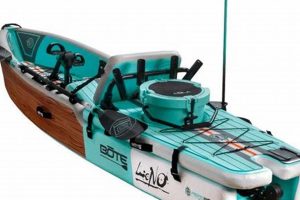
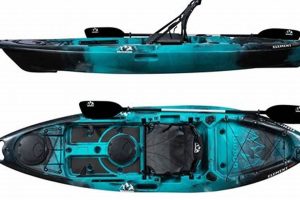
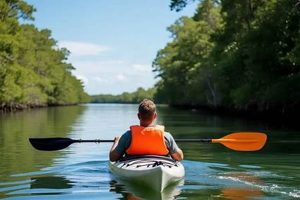
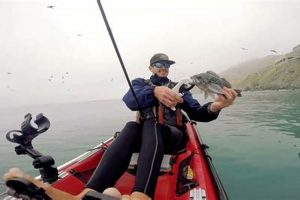
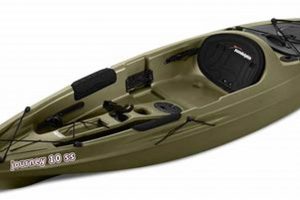
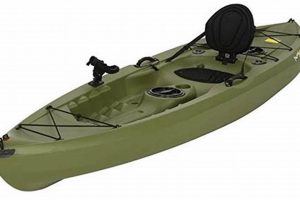
A large, stable fishing kayak designed for enhanced capacity and open-water performance typically features ample storage for gear and accessories, along with a wider hull for increased stability. These vessels are often chosen by anglers venturing offshore or tackling larger bodies of water. Imagine a kayak equipped to handle substantial fishing gear, electronics, and even larger catches comfortably.
The evolution of these specialized kayaks addresses the angler’s need for both stability and storage capacity in demanding environments. Their robust design allows for extended trips with ample provisions and equipment, providing anglers with a platform capable of handling diverse fishing styles and conditions. This advancement contributes significantly to improved safety and comfort, enabling more ambitious and rewarding fishing expeditions. These craft represent a significant advancement from smaller, less stable recreational kayaks, allowing anglers to explore new waters and target larger species.
This exploration will delve further into key features, popular models, essential accessories, and safety considerations relevant to this category of fishing kayak. Subsequent sections will address optimal paddling techniques, maintenance best practices, and responsible fishing guidelines.
Tips for Large, Stable Fishing Kayak Use
Effective use of a large, stable fishing kayak maximizes both safety and fishing success. These tips provide guidance for anglers seeking to optimize their experience on the water.
Tip 1: Prioritize Stability Over Speed: A wider, more stable hull sacrifices some speed but significantly improves safety and comfort, especially in challenging conditions. This is particularly important when standing to cast or fighting larger fish.
Tip 2: Distribute Weight Evenly: Careful distribution of gear and equipment maintains balance and maneuverability. Consider using dry bags and strategically placing heavier items lower in the hull.
Tip 3: Practice Self-Rescue Techniques: Re-entering a large kayak can be challenging. Regular practice of self-rescue techniques is crucial in the event of a capsize.
Tip 4: Utilize Anchor Systems Effectively: A well-placed anchor maintains position in currents or wind, allowing focused fishing in a specific area. Consider a drift chute for controlled drifting.
Tip 5: Invest in Essential Safety Equipment: Items such as a personal flotation device, a whistle, and a signaling mirror are crucial safety components for any on-water excursion.
Tip 6: Plan Routes Carefully: Consider weather conditions, tides, and potential hazards when planning fishing trips. Inform someone of the planned route and estimated return time.
Tip 7: Respect Local Regulations: Familiarize oneself with local fishing regulations, licensing requirements, and any area-specific restrictions.
Adhering to these guidelines enhances safety, improves fishing success, and promotes responsible enjoyment of the sport.
By understanding and applying these principles, anglers can confidently and safely utilize their vessels to explore new waters and pursue their fishing passions.
1. Stability

Stability forms a cornerstone of a successful fishing kayak experience, especially for larger platforms designed for open water or ambitious angling. A stable hull permits anglers to stand and cast, fight larger fish effectively, and navigate varied water conditions with confidence. This stability derives from factors like hull width, design, and weight distribution. Wider hulls displace more water, providing inherent stability. Specific hull designs, such as pontoon or catamaran styles, further enhance stability. Even weight distribution, achieved through strategic gear placement, contributes significantly to balance and performance. For example, a kayak with a wider, flatter hull will exhibit greater stability than a narrower, V-shaped hull, especially in chop or when encountering boat wakes. Compromised stability, conversely, can lead to difficulties in casting, landing fish, and even capsizing, underscoring the critical nature of this attribute.
The practical implications of stability become particularly apparent when considering real-world scenarios. Anglers fishing in offshore conditions, where swells and waves are common, require a highly stable platform to maintain balance and avoid capsizing. Similarly, when battling a strong fish, a stable kayak provides the necessary leverage and control to avoid being pulled overboard. Consider the contrast between landing a large fish from a stable platform versus a tippy one; the former allows controlled maneuvering while the latter risks angler and catch. Moreover, the ability to stand and sight-cast significantly expands fishing opportunities, allowing anglers to cover more water and spot fish more easily. This advantage is particularly pronounced in shallow-water environments or when targeting specific structures.
In summary, stability serves as a foundational element for effective and safe fishing kayak usage. Understanding its underlying principles, practical implications, and impact on overall performance enables informed decision-making when selecting a fishing kayak. While factors like speed and maneuverability are also important, stability remains paramount, particularly for larger platforms and challenging fishing environments. This emphasis on stability underpins a safe and rewarding angling experience, allowing anglers to focus on the pursuit of their catch with confidence and control.
2. Storage Capacity

Storage capacity is integral to the “big rig” fishing kayak concept. These kayaks are designed for extended trips, diverse fishing styles, and often, larger bodies of water. Ample storage accommodates essential gear, including rods, reels, tackle boxes, safety equipment, and personal provisions. Furthermore, dedicated storage for catches, whether live wells, coolers, or specialized compartments, preserves fish quality and reduces spoilage. The ability to carry a larger payload distinguishes these kayaks from smaller recreational models, directly impacting the range and duration of fishing excursions. For example, an angler targeting offshore species requires space for heavier tackle, downriggers, and potentially larger catches. Insufficient storage would necessitate multiple trips or compromise safety by overloading the vessel.
The practical implications of enhanced storage extend beyond simply carrying more items. Organized storage contributes to efficient retrieval of gear, minimizing time spent searching and maximizing time spent fishing. Dedicated compartments protect sensitive electronics and equipment from water damage, ensuring functionality and longevity. Consider the scenario of navigating rough waters; secure storage prevents gear from shifting, maintaining stability and preventing loss overboard. Moreover, adequate storage enables anglers to prepare for diverse fishing scenarios, carrying a wider range of tackle and adapting to changing conditions. This adaptability proves invaluable when targeting multiple species or encountering unexpected weather changes.
In conclusion, storage capacity is not merely a convenient feature but a defining characteristic of the “big rig” fishing kayak. It directly influences the feasibility of longer trips, the diversity of fishing styles supported, and the overall preparedness for varied conditions. Understanding the practical significance of ample and well-organized storage enables anglers to select a vessel aligned with their specific needs and maximize their time on the water. This emphasis on functionality underscores the purpose-driven design of these specialized kayaks, catering to the demands of serious anglers and enabling successful excursions.
3. Open-Water Performance
Open-water performance distinguishes specialized fishing kayaks from recreational models. Factors such as hull design, length, and tracking significantly influence a kayak’s ability to handle waves, currents, and wind. A “big rig” fishing kayak, intended for larger bodies of water and potentially challenging conditions, prioritizes stability and tracking. A longer hull typically tracks straighter and cuts through waves more effectively than a shorter hull. Specific hull designs, such as those with a pronounced keel or displacement hull, further enhance tracking and minimize lateral drift in windy conditions. Consider a scenario where an angler is paddling across a large lake with a steady headwind; a kayak with superior tracking will maintain its course more efficiently, conserving energy and reducing fatigue. Conversely, a kayak with poor tracking requires constant correction, hindering progress and potentially compromising safety.
The practical implications of open-water performance extend beyond simple navigation. A stable and predictable platform allows anglers to focus on fishing rather than constantly battling the elements. Efficient tracking conserves energy, enabling longer trips and exploration of more distant fishing grounds. Consider the scenario of trolling for offshore species; a stable, well-tracking kayak maintains the desired speed and direction, maximizing lure presentation and increasing the chances of a successful hookup. Furthermore, a kayak capable of handling rougher conditions expands fishing opportunities, allowing access to areas inaccessible to smaller, less stable craft. This expanded range provides access to potentially richer fishing grounds and diverse species.
In summary, open-water performance constitutes a critical aspect of the “big rig” fishing kayak design. It directly influences the ability to safely and effectively navigate larger bodies of water, handle challenging conditions, and access diverse fishing opportunities. Understanding the interplay of hull design, length, and tracking empowers anglers to select a vessel optimized for their intended fishing environment. This focus on performance underscores the specialized nature of these kayaks, catering to the needs of anglers seeking to explore beyond sheltered waters and pursue their passion in demanding conditions.
4. Durability
Durability is paramount for “big rig” fishing kayaks, given their exposure to harsh marine environments, heavy use, and the potential for impacts. These kayaks are often transported over rough terrain, launched from rocky shores, and subjected to the wear and tear of extended fishing trips. Construction materials, hull thickness, and hardware quality directly influence a kayak’s ability to withstand these rigors. A durable kayak minimizes the risk of damage from impacts, UV exposure, and saltwater corrosion, ensuring longevity and maintaining performance over time. Consider the scenario of navigating rocky shallows or dragging a loaded kayak across a sandy beach; a robust construction minimizes the risk of scratches, punctures, and structural damage. Conversely, a less durable kayak may quickly succumb to such stresses, requiring frequent repairs and potentially compromising safety.
The practical implications of durability extend beyond simply resisting damage. A robust kayak provides a reliable platform for anglers venturing into remote locations or challenging conditions. Consider an offshore fishing expedition; a durable kayak instills confidence in its ability to withstand rough seas and potential impacts with debris. Furthermore, durable construction minimizes maintenance requirements, reducing downtime and maximizing time on the water. The long-term cost-effectiveness of a durable kayak outweighs the potential short-term savings of a less robust option. Investing in a well-constructed kayak minimizes the need for frequent repairs or premature replacement, ultimately proving more economical over the lifespan of the vessel. This durability translates to peace of mind, allowing anglers to focus on the fishing experience rather than worrying about potential damage.
In summary, durability is not a mere desirable feature but a critical requirement for “big rig” fishing kayaks. It underpins the reliability, longevity, and overall performance of these specialized vessels. Understanding the connection between construction materials, usage scenarios, and long-term durability enables informed purchasing decisions. Prioritizing durability ensures a reliable platform for pursuing fishing passions in diverse environments, contributing to a safe and rewarding experience for years to come. This focus on robust construction reflects the demanding nature of the sport and the expectation that these kayaks will withstand the rigors of serious angling pursuits.
5. Customization Options
Customization options are integral to the “big rig” fishing kayak experience, enabling anglers to tailor their vessels to specific needs and fishing styles. These options extend beyond mere aesthetics, impacting functionality, efficiency, and overall fishing success. Modifying a kayak to match specific fishing techniques, target species, and environmental conditions enhances performance and comfort. The ability to personalize a “big rig” fishing kayak transforms it from a generic platform into a specialized tool optimized for individual angling pursuits.
- Rod Holders and Positioning
Rod holders are fundamental customization elements, enabling hands-free operation while trolling, drifting, or waiting for a bite. The number, placement, and type of rod holders directly influence fishing techniques and efficiency. Adjustable rod holders allow for precise positioning to accommodate different rod lengths and fishing styles. For example, an angler targeting large pelagic species might opt for heavy-duty rod holders positioned for optimal leverage, while a bass angler might prioritize multiple adjustable rod holders for various presentations. The strategic placement of rod holders maximizes fishing efficiency and minimizes line tangling.
- Electronics Integration
Integrating electronics, such as fish finders, GPS units, and trolling motors, significantly enhances fishing capabilities. Custom mounts and wiring solutions ensure secure and functional placement of these devices. A well-integrated fish finder provides crucial underwater insights, while a GPS assists with navigation and marking productive fishing spots. A trolling motor offers hands-free maneuverability, particularly useful in larger bodies of water or when fighting currents. These electronic enhancements extend fishing range, improve catch rates, and contribute to overall safety.
- Storage Solutions
Customizing storage solutions maximizes space utilization and organization within the kayak. Adding tackle boxes, dry bags, and specialized compartments keeps gear secure, accessible, and protected from the elements. Custom storage solutions cater to specific gear requirements, from fly fishing equipment to deep-sea tackle. For instance, a kayak angler might incorporate a dedicated compartment for a live bait tank, while a fly fisherman might prefer a system for organizing fly boxes and tools. Efficient storage contributes to a clutter-free and productive fishing environment.
- Comfort and Ergonomics
Customizing seating, footrests, and backrests significantly enhances comfort, particularly during long fishing trips. Adjustable seating systems accommodate different body types and preferences, reducing fatigue and promoting better posture. Ergonomically designed footrests improve paddling efficiency and control. Adding padding or specialized backrests further enhances comfort and support. These modifications enable anglers to focus on fishing rather than discomfort, maximizing enjoyment and endurance on the water.
These customization options, when strategically implemented, transform a “big rig” fishing kayak into a personalized fishing platform optimized for individual needs and preferences. The ability to tailor rod placement, electronics integration, storage solutions, and comfort features distinguishes these kayaks from standard recreational models, highlighting their adaptability and versatility. This inherent flexibility allows anglers to refine their approach, explore diverse fishing styles, and maximize their success on the water, underscoring the “big rig” concept’s focus on functionality and performance.
6. Specialized Features

Specialized features distinguish “big rig” fishing kayaks from recreational models, transforming them into purpose-built fishing platforms. These features enhance functionality, efficiency, and overall angling success. Consider the interconnectedness of these features; a livewell requires an efficient pump system, while rod holders benefit from strategic placement near electronics mounts. These integrated systems work synergistically to create a comprehensive fishing platform. For example, an angler targeting deep-sea species might equip their kayak with downrigger mounts, specialized rod holders, and a high-capacity fish finder, creating a cohesive system optimized for that specific fishing style. Conversely, a kayak angler fishing in shallow rivers might prioritize maneuverability and shallow-water anchors, highlighting the importance of feature selection aligned with fishing environments and target species.
Practical examples illustrate the significance of specialized features. Imagine an angler battling a strong fish in rough conditions; a securely mounted rod holder prevents rod loss, while an anchor system maintains position, enabling a controlled fight. Consider trolling for pelagic species; strategically placed rod holders, combined with a fish finder and GPS, maximize lure presentation and increase the likelihood of a successful hookup. These features contribute not only to increased catches but also to enhanced safety and overall enjoyment of the fishing experience. A stable, well-equipped kayak instills confidence and allows anglers to focus on the pursuit of their catch rather than managing equipment or struggling with an inadequate platform.
In summary, specialized features define the “big rig” fishing kayak, differentiating it from generic recreational kayaks. The strategic selection and integration of these features transform a basic hull into a high-performance fishing machine. Understanding the interplay between individual features and the overall fishing system is crucial for maximizing performance and achieving angling goals. This understanding allows for informed decisions regarding equipment choices and customization, ensuring that the kayak serves as an effective and reliable tool for pursuing specific fishing styles in diverse environments. The emphasis on specialized features underscores the serious nature of “big rig” fishing and the dedication to optimizing the angling experience.
Frequently Asked Questions
Addressing common inquiries regarding large, stable fishing kayaks provides clarity for anglers considering these specialized vessels.
Question 1: How does the stability of a larger fishing kayak compare to smaller recreational models?
Larger fishing kayaks, designed with wider hulls and often incorporating specialized design features, generally offer significantly greater stability than smaller recreational kayaks. This enhanced stability allows anglers to stand and cast, fight larger fish, and navigate challenging conditions with increased confidence.
Question 2: What are the key considerations for choosing an appropriate paddle length for a larger kayak?
Appropriate paddle length depends on factors such as angler height, kayak width, and paddling style. Consulting paddle sizing charts and considering individual preferences is essential for optimal performance and comfort. An incorrectly sized paddle can lead to inefficient paddling, fatigue, and potential strain.
Question 3: How does the weight capacity of these kayaks influence gear selection and overall performance?
Weight capacity dictates the total load a kayak can safely carry, encompassing angler weight, gear, and potential catches. Exceeding weight capacity compromises stability and performance. Understanding weight capacity limitations informs gear selection and ensures safe operation within design parameters.
Question 4: What are the essential safety precautions to take when fishing from a larger kayak in open water?
Essential safety precautions include wearing a personal flotation device, carrying communication devices (whistle, VHF radio), informing someone of trip plans, checking weather forecasts, and understanding self-rescue techniques. Prioritizing safety enhances preparedness for unexpected situations and mitigates potential risks.
Question 5: How does hull design impact the tracking and maneuverability of these kayaks in different water conditions?
Hull design significantly influences tracking and maneuverability. Longer, narrower hulls generally track straighter but sacrifice maneuverability. Wider, shorter hulls enhance maneuverability but may compromise tracking in windy or choppy conditions. Understanding the trade-offs between tracking and maneuverability informs kayak selection based on intended usage.
Question 6: What maintenance procedures are recommended to ensure the longevity and performance of a large fishing kayak?
Recommended maintenance procedures include regular cleaning, UV protection, proper storage, and periodic inspection of hardware and hull integrity. Proper maintenance prevents premature wear and tear, extends the kayak’s lifespan, and maintains optimal performance over time.
These responses address common concerns and misconceptions regarding large, stable fishing kayaks. Thorough research and consideration of individual needs are crucial for selecting the appropriate vessel and ensuring a safe and rewarding fishing experience.
The following section will delve into specific kayak models and their respective features, providing further guidance for prospective buyers.
Big Rig Fishing Kayak
This exploration has comprehensively examined the multifaceted nature of the big rig fishing kayak, emphasizing its distinctive attributes and their impact on angling pursuits. From stability and storage capacity to open-water performance and customization options, these specialized vessels cater to the demands of serious anglers seeking enhanced capabilities and extended fishing excursions. The analysis of specialized features, coupled with practical examples and frequently asked questions, provides a comprehensive understanding of the advantages and considerations associated with these purpose-built platforms. Durability and appropriate maintenance ensure long-term performance and value, further solidifying the investment in a big rig fishing kayak as a commitment to enhanced angling experiences.
The evolution of fishing kayak design reflects a growing appreciation for specialized equipment tailored to specific fishing styles and environments. The big rig fishing kayak embodies this trend, offering anglers a robust and adaptable platform for pursuing their passion. As technology continues to advance and angling techniques evolve, the future of big rig fishing kayaks promises further innovation and refinement, empowering anglers to explore new horizons and challenge conventional limitations. The informed selection and responsible use of these specialized vessels contribute to a more enriching and sustainable angling experience, fostering a deeper connection with the aquatic environment and its resources.