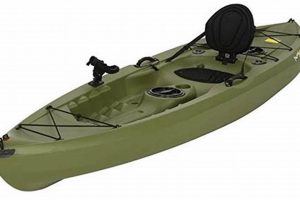
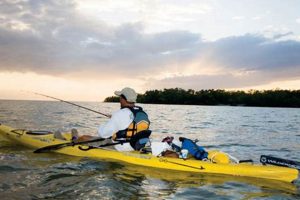
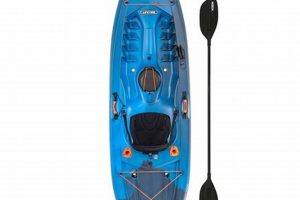
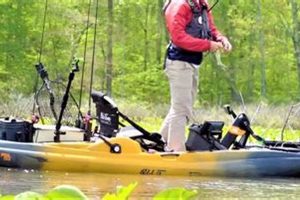
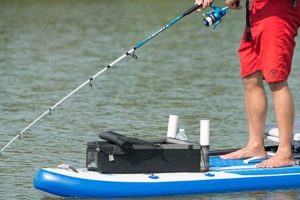
Specialized small watercraft designed for angling in the waters of New Jersey offer stability, portability, and access to diverse fishing locations. These vessels often feature specialized equipment such as rod holders, tackle storage, and even livewells for keeping catches fresh. For example, an angler might choose a sit-on-top model for stability in the ocean surf or a longer, sit-inside model for paddling the calmer waters of a lake or river.
The popularity of this mode of fishing stems from its affordability, ease of transport and launch, and environmentally friendly nature. It allows anglers to reach secluded fishing spots inaccessible to larger boats, offering a unique and immersive experience. Historically, kayaks have been used for fishing for centuries by indigenous cultures. Modern materials and designs have elevated their performance and comfort, broadening their appeal to a wider audience in New Jersey’s diverse aquatic environments, from the Delaware River to the Atlantic Ocean.
This article will explore key considerations for selecting the right vessel, including hull design, propulsion systems, and essential accessories. It will also delve into specific locations and techniques for successful angling in the Garden State. Furthermore, it will address relevant regulations, safety guidelines, and responsible practices to ensure enjoyable and sustainable fishing experiences.
Tips for Kayak Fishing in New Jersey
Successful kayak angling requires careful planning and preparation. The following tips offer guidance for enhancing safety and optimizing fishing success in New Jersey waters.
Tip 1: Choose the Right Kayak: Vessel selection depends on intended fishing locations and personal preferences. Shorter, wider kayaks offer greater stability in surf or choppy conditions, while longer, narrower designs provide better tracking and speed in calmer waters.
Tip 2: Prioritize Safety Equipment: A personal flotation device (PFD) is essential. Other important safety gear includes a whistle, visual distress signals, and a first-aid kit. Checking weather forecasts before embarking is crucial.
Tip 3: Plan Fishing Locations: Research potential fishing spots and consider factors like tides, currents, and accessibility. Local bait and tackle shops can offer valuable insights.
Tip 4: Organize Tackle and Gear: Efficient storage solutions keep essential fishing gear within easy reach. Dry bags protect electronics and other sensitive items from water damage.
Tip 5: Practice Paddling and Maneuvering: Becoming proficient in paddling techniques improves boat control and reduces fatigue. Practicing in calm water before venturing into more challenging conditions is recommended.
Tip 6: Respect Wildlife and the Environment: Practice catch-and-release whenever possible and adhere to all local fishing regulations. Proper disposal of fishing line and other waste helps preserve the natural environment.
Tip 7: Dress Appropriately for Conditions: Layered clothing provides adaptability to changing weather conditions. Sun protection, including hats and sunscreen, is essential, even on cloudy days.
By following these guidelines, anglers can maximize their enjoyment and success while promoting safe and responsible kayaking practices.
This information provides a solid foundation for planning a kayak fishing excursion in New Jersey. The subsequent sections will delve into specific equipment recommendations and popular fishing destinations within the state.
1. Kayak Selection

Appropriate kayak selection is crucial for successful and enjoyable fishing excursions in New Jersey. The diverse aquatic environments, ranging from the open ocean to calm lakes and rivers, necessitate careful consideration of vessel characteristics. Choosing the correct kayak directly impacts stability, maneuverability, and overall fishing performance. For example, ocean fishing requires a stable, seaworthy kayak capable of handling surf and waves, while a nimble, easily maneuverable kayak is better suited for navigating narrow creeks and rivers. Factors such as hull design, length, width, and weight capacity should align with the intended fishing location and angler’s physical attributes.
Different kayak types offer distinct advantages. Sit-on-top kayaks offer inherent stability and self-bailing capabilities, making them ideal for beginners and fishing in rougher conditions. Sit-inside kayaks provide better protection from the elements and often feature enhanced storage options. Pedal-powered kayaks allow hands-free fishing and increased range. Understanding these distinctions empowers anglers to make informed decisions based on their specific needs and target species. An angler targeting striped bass in the ocean surf might prioritize stability and choose a sit-on-top kayak with a wide beam, while an angler pursuing trout in a calm river might opt for a lighter, more maneuverable sit-inside model.
Careful consideration of kayak characteristics is essential for optimizing fishing success and safety in New Jersey waters. Matching the kayak to the specific fishing environment and personal preferences enhances stability, maneuverability, and overall enjoyment. Informed kayak selection ultimately contributes to a more productive and rewarding fishing experience. Neglecting these factors can lead to instability, difficulty maneuvering, and potentially hazardous situations.
2. Safety Gear

Safety gear is paramount for kayak fishing in New Jersey, directly impacting angler well-being and mitigating risks inherent to the activity. The state’s diverse waters, ranging from calm rivers to the dynamic Atlantic Ocean, present varying challenges requiring specific safety considerations. A personal flotation device (PFD) is legally required and fundamental for survival in case of capsizing or unexpected immersion. Selecting a comfortable, properly fitted PFD ensures unrestricted movement while paddling and casting. Furthermore, a whistle enables signaling for assistance in emergencies, while a visual distress signal, such as a flare or mirror, enhances visibility for rescue operations. For example, an angler drifting offshore in foggy conditions could utilize a visual distress signal to alert passing vessels. Carrying a waterproof first-aid kit allows immediate treatment of minor injuries, minimizing potential complications.
Beyond basic safety equipment, additional gear enhances preparedness for specific conditions. A leash secures essential items like paddles and rods, preventing loss in the event of a capsize. A bilge pump or sponge aids in removing water from the kayak’s cockpit, maintaining stability and buoyancy. Navigation lights are crucial for low-light conditions, increasing visibility to other boaters and aiding navigation. Checking weather forecasts before embarking is essential, enabling informed decisions about trip viability and appropriate safety precautions. For instance, strong winds or impending storms necessitate postponing the fishing trip. Communicating planned fishing locations and estimated return times with someone on shore enhances safety by ensuring prompt assistance if needed.
Prioritizing safety gear contributes significantly to responsible and successful kayak fishing excursions in New Jersey. Understanding the function and importance of each safety item empowers anglers to mitigate risks and respond effectively to unforeseen circumstances. Adequate preparation fosters a safe and enjoyable experience, allowing anglers to focus on the sport while minimizing potential hazards. Neglecting safety precautions can lead to severe consequences, impacting not only individual safety but also the safety of potential rescuers.
3. Location Scouting
Effective location scouting is integral to successful kayak fishing in New Jersey. The state’s diverse waterways, each with unique characteristics and fish populations, necessitate careful consideration of factors influencing angling success. Understanding these factors, such as water depth, current, structure, and prevailing weather patterns, allows anglers to target specific species effectively. For instance, scouting a tidal river involves identifying areas with optimal current flow and structure, like submerged rocks or fallen trees, where fish are likely to congregate. Similarly, exploring a lake requires identifying drop-offs, weed beds, or other underwater features that attract fish. Prior research, including consulting local fishing reports, nautical charts, and online resources, significantly enhances scouting efficiency and increases the likelihood of locating productive fishing grounds.
Practical considerations also play a crucial role in location scouting. Accessibility, including launch points and parking availability, influences site selection. Evaluating potential hazards, such as strong currents, boat traffic, or submerged obstacles, is essential for ensuring angler safety. For example, launching a kayak in a sheltered cove during high winds is preferable to attempting a launch from an exposed shoreline. Understanding tidal fluctuations is crucial in coastal areas, as they influence water depth and current patterns. Scouting during different tidal stages provides valuable insights into optimal fishing times and locations. Furthermore, respecting private property and adhering to access restrictions ensures legal and ethical fishing practices.
Thorough location scouting contributes significantly to optimizing fishing success and safety in New Jersey. Careful consideration of environmental factors and practical constraints allows anglers to identify promising fishing spots while mitigating potential risks. Prior research and on-site observation provide valuable insights, empowering informed decisions and enhancing the overall fishing experience. Neglecting this crucial preparatory step can lead to unproductive fishing trips and potentially hazardous situations.
4. Tackle Organization

Efficient tackle organization is crucial for successful kayak fishing in New Jersey. Limited space and the dynamic nature of the activity necessitate a streamlined and accessible system for managing fishing gear. Effective organization maximizes fishing time by minimizing the search for specific items and ensures essential equipment remains readily available. A well-organized tackle system contributes to a safer and more productive fishing experience, allowing anglers to focus on the task at hand.
- Storage Solutions
Utilizing appropriate storage solutions is fundamental. Tackle boxes with customizable compartments allow for segregation of lures, hooks, weights, and other small items. Dry bags protect sensitive electronics and essential gear from water damage. Mounting rod holders within easy reach facilitates quick rod changes and prevents tangling. For example, storing soft plastic lures in sealed bags prevents them from drying out, while keeping hooks organized by size and type streamlines rig tying.
- Accessibility and Ergonomics
Prioritizing accessibility and ergonomics enhances efficiency. Frequently used items should be placed within easy reach, minimizing the need to constantly shift position or rummage through storage compartments. Ergonomic tackle box designs and strategically placed rod holders contribute to a comfortable and efficient fishing setup. This is particularly important in the confined space of a kayak, where movement is restricted. Positioning pliers and cutters within easy reach allows for quick line management and hook removal, minimizing stress on the fish.
- Tackle Selection and Prioritization
Careful tackle selection based on target species and fishing location streamlines the organization process. Prioritizing essential items and leaving behind unnecessary gear reduces clutter and maximizes available space. For example, an angler targeting fluke in the ocean would prioritize jigs and bucktails, while an angler pursuing trout in a river might focus on smaller lures and flies. This focused approach minimizes the amount of tackle needing organization and reduces the risk of losing essential items.
- Regular Maintenance and Replenishment
Regular maintenance and replenishment of tackle contribute to sustained organizational efficiency. Periodically cleaning tackle boxes, discarding damaged lures, and restocking essential items ensures a consistently organized and functional system. This practice also provides an opportunity to evaluate tackle effectiveness and adjust selections based on past experiences. For example, replacing rusty hooks or damaged lures after each trip maintains tackle effectiveness and prevents wasted fishing time due to equipment failure.
These facets of tackle organization contribute significantly to a successful and enjoyable kayak fishing experience in New Jersey. A well-organized system streamlines the fishing process, maximizes efficiency, and enhances safety, allowing anglers to fully engage with the sport and the surrounding environment. By prioritizing organization, anglers can optimize their time on the water and improve their chances of a productive fishing trip.
5. Regulations/Licensing
Adherence to New Jersey fishing regulations and licensing requirements is essential for legal and responsible kayak angling. Regulations govern catch limits, size restrictions, and permitted fishing methods, ensuring sustainable fish populations and ecosystem health. Licensing provides funding for conservation efforts and supports the management of the state’s aquatic resources. Anglers using kayaks are subject to the same regulations as those fishing from shore or other vessels. For example, an angler targeting summer flounder from a kayak must adhere to the same size and catch limits as an angler fishing from a powerboat. Ignorance of regulations is not a valid defense against penalties, which can include fines and suspension of fishing privileges. Resources like the New Jersey Division of Fish and Wildlife website provide comprehensive information on current regulations and licensing procedures. Obtaining the appropriate license before embarking on a fishing trip ensures legal compliance and contributes to the preservation of New Jersey’s fisheries.
Specific regulations pertaining to kayak fishing often address safety requirements. While not all regulations directly mention kayaks, general boating safety regulations apply. These may include requirements for carrying a personal flotation device (PFD), a whistle, and navigation lights, especially during low-light conditions. Certain areas may also have specific restrictions on kayak usage, such as designated no-fishing zones or areas with motorboat traffic limitations. Understanding these area-specific regulations is crucial for safe and legal kayak operation. For example, some areas may prohibit anchoring within designated channels or require kayaks to yield right-of-way to larger vessels. Consulting local authorities or park regulations provides clarity on specific restrictions within intended fishing areas.
Compliance with regulations and proper licensing demonstrate responsible angling practices and contribute to the long-term sustainability of New Jersey’s aquatic ecosystems. Understanding and adhering to these regulations ensures legal compliance, promotes safety, and supports conservation efforts. This knowledge empowers anglers to enjoy the sport responsibly, minimizing negative impacts on fish populations and the environment. Failure to comply not only jeopardizes fishing privileges but also undermines the collective effort to preserve these valuable resources for future generations.
Frequently Asked Questions about Kayak Fishing in New Jersey
This section addresses common inquiries regarding kayak fishing in New Jersey, providing concise and informative responses to aid anglers in their preparation and decision-making.
Question 1: What type of kayak is best suited for fishing in the ocean surf in New Jersey?
Sit-on-top kayaks are generally recommended for ocean surf due to their inherent stability and self-bailing capabilities. Wider, shorter models offer enhanced stability in rough conditions.
Question 2: Are there specific licensing requirements for kayak fishing in New Jersey?
A valid New Jersey fishing license is required for all anglers, regardless of whether fishing from a kayak, shore, or other vessel.
Question 3: What safety equipment is essential for kayak fishing in New Jersey?
Essential safety equipment includes a properly fitted personal flotation device (PFD), a whistle, and a visual distress signal. A first-aid kit, leash for essential items, and bilge pump are also highly recommended.
Question 4: Where can reliable information on New Jersey fishing regulations be found?
The New Jersey Division of Fish and Wildlife website provides comprehensive information on current fishing regulations, including size and catch limits, permitted fishing methods, and closed seasons.
Question 5: What factors should be considered when choosing a kayak fishing location in New Jersey?
Factors to consider include target species, accessibility (launch points and parking), water conditions (tides, currents, depth), potential hazards, and local fishing reports.
Question 6: How can one find information on tides and currents for coastal kayak fishing in New Jersey?
Tide charts and current predictions are available from various online resources, nautical charts, and local bait and tackle shops. Understanding these factors is crucial for safe and successful coastal fishing.
Careful consideration of these frequently asked questions contributes significantly to angler preparedness and promotes safe and responsible kayak fishing practices in New Jersey. Understanding regulations, prioritizing safety, and selecting appropriate equipment enhances the overall fishing experience.
The following section will explore popular kayak fishing destinations within New Jersey, offering insights into specific locations and target species.
Fishing Kayaks NJ
This exploration of specialized fishing kayaks in New Jersey has highlighted their significance for anglers seeking enhanced access and unique experiences within the state’s diverse aquatic environments. Careful consideration of kayak selection, safety gear, location scouting, tackle organization, and adherence to regulations contributes significantly to successful and responsible angling practices. Matching vessel characteristics to specific fishing locations and personal preferences ensures optimal stability, maneuverability, and overall fishing performance. Prioritizing safety through appropriate equipment and informed decision-making mitigates risks and promotes angler well-being. Thorough preparation, including location scouting and efficient tackle organization, maximizes fishing time and enhances the likelihood of success.
The increasing popularity of kayak fishing underscores its value for anglers seeking immersive and sustainable fishing experiences. Informed participation, guided by responsible practices and a commitment to conservation, ensures the preservation of New Jersey’s valuable aquatic resources for future generations. Continued exploration of specific fishing locations, techniques, and species-specific strategies further enhances the enjoyment and success of this evolving angling discipline. Ultimately, informed decision-making and responsible practices contribute to a thriving kayak fishing community and the long-term health of New Jersey’s waterways.