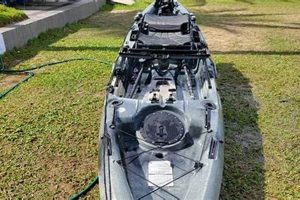
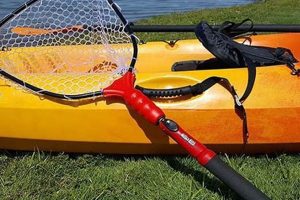
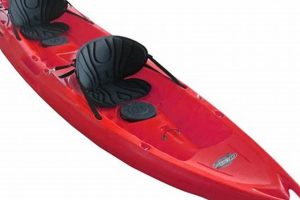
Specialized kayak configurations designed for angling often involve integrated rod holders, specialized seating, and storage for tackle and gear. These configurations might also include features like anchor trolleys, fish finders, and live wells, depending on the angler’s needs and the targeted species. An example might be a sit-on-top kayak with flush-mounted rod holders, a comfortable adjustable seat, and a crate system for storing tackle.
Optimized angling platforms offer significant advantages over general-purpose kayaks or other fishing methods from shore or larger boats. They provide increased access to shallow or otherwise hard-to-reach fishing grounds, enhanced maneuverability, and a stealthy approach that can be crucial for success. Furthermore, the evolution of kayak design and materials has led to increasingly stable, durable, and comfortable platforms specifically tailored for the demands of fishing. This specialization has opened up new possibilities for anglers of all skill levels.
This discussion will further explore key considerations for selecting and outfitting these specialized watercraft, encompassing topics such as hull design, propulsion systems, essential accessories, and safety equipment. It will also delve into various rigging techniques and strategies to maximize fishing success from a kayak.
Tips for Effective Kayak Fishing Setups
Careful consideration of individual needs and fishing styles is paramount when configuring a kayak for angling. The following tips offer guidance for optimizing performance and enhancing the fishing experience.
Tip 1: Prioritize Stability. Hull design significantly impacts stability. Wider, flatter hulls offer greater initial stability, beneficial for beginners and sight casting. Longer, narrower hulls track better and cover distance more efficiently but require more experience to balance.
Tip 2: Choose Appropriate Propulsion. Paddle propulsion offers excellent exercise and control in shallow water. Pedal drives provide hands-free fishing and faster speeds over longer distances. Motorized kayaks offer the greatest range but require battery management and may be restricted in certain areas.
Tip 3: Optimize Rod Holder Placement. Rod holders should be strategically positioned for easy access and to minimize interference while paddling or maneuvering. Anglers often prefer multiple rod holders to accommodate different fishing techniques.
Tip 4: Select Essential Electronics. Fish finders and GPS units can significantly improve angling success. Consider mounting options and power sources when integrating electronics into the setup.
Tip 5: Organize Tackle and Gear. Efficient storage solutions, such as tackle boxes, crates, and dry bags, keep essential gear readily accessible and protected from the elements.
Tip 6: Prioritize Safety Equipment. A personal flotation device (PFD) is crucial. Other essential safety items include a whistle, signaling device, and first-aid kit. Check local regulations for additional requirements.
Tip 7: Practice Proper Weight Distribution. Evenly distribute weight within the kayak to maintain stability and efficient tracking. Consider the placement of gear and how it affects the kayak’s center of gravity.
By addressing these key elements, anglers can create highly effective and enjoyable fishing platforms tailored to their specific needs and target species.
These tips offer a starting point for creating a personalized kayak fishing setup. Further research and on-the-water experience will further refine these principles and lead to increased angling success.
1. Kayak Selection

Kayak selection forms the foundation of any effective fishing kayak setup. The chosen vessel directly influences maneuverability, stability, and overall fishing experience. Careful consideration of hull design, size, and features is essential for maximizing performance and ensuring angler comfort and safety.
- Hull Design:
Hull design significantly impacts kayak performance. Sit-on-top kayaks offer inherent stability and self-bailing capabilities, making them popular choices for fishing. Sit-inside kayaks provide a drier ride and better protection from the elements, but they require more experience to manage in the event of a capsize. Specialized hull designs, such as pontoon hulls, offer exceptional stability for stand-up fishing. Selecting the appropriate hull design depends on the intended fishing environment and angler experience.
- Length and Width:
Kayak dimensions influence speed, maneuverability, and stability. Longer kayaks track better and cover distance more efficiently, while shorter kayaks are more maneuverable in tight spaces. Wider kayaks offer greater stability, while narrower kayaks are faster but less stable. The optimal length and width depend on the fishing environment and the angler’s preference for speed versus stability.
- Weight Capacity:
Weight capacity dictates the amount of gear and angler weight the kayak can safely support. Exceeding the weight capacity can compromise stability and performance. Anglers must consider the combined weight of themselves, their fishing gear, and any potential catch when selecting a kayak with appropriate weight capacity.
- Features and Accessories:
Integrated features, such as rod holders, storage compartments, and anchor trolleys, significantly influence a fishing kayak’s functionality. Pre-installed features can save time and expense compared to aftermarket additions. Evaluating the available features and their placement is crucial for optimizing the fishing experience.
The selection of a suitable kayak is paramount for creating an effective fishing platform. A well-chosen kayak, tailored to the angler’s specific needs and fishing style, enhances comfort, improves safety, and ultimately increases the likelihood of angling success. Careful consideration of hull design, dimensions, weight capacity, and integrated features ensures a harmonious balance between performance and practicality.
2. Rod Holder Placement

Strategic rod holder placement is a critical element of effective fishing kayak setups. Optimal placement maximizes fishing efficiency, minimizes interference with paddling and maneuvering, and enhances overall angler comfort. Careful consideration of fishing style, target species, and kayak layout informs effective rod holder positioning.
- Flush Mount Rod Holders:
Flush mount rod holders integrate seamlessly with the kayak’s deck, minimizing obstructions and offering a streamlined profile. These holders are ideal for trolling or drifting, keeping rods secure and readily accessible. Anglers targeting larger species often favor flush mount holders for their robust construction and ability to handle heavier tackle. Their placement near the stern or along the gunwales minimizes interference with paddling.
- Adjustable Rod Holders:
Adjustable rod holders offer versatility in positioning rods at various angles and heights. This adaptability is beneficial for different fishing techniques, such as jigging or casting. Anglers targeting specific depths or needing to adjust rod angles based on current or wind conditions benefit from the flexibility of adjustable holders. Placement considerations include accessibility and minimizing interference with other onboard equipment.
- Track-Mounted Rod Holders:
Track-mounted systems provide exceptional customization, allowing anglers to precisely position rod holders along a track system installed on the kayak. This flexibility accommodates various fishing styles and rod lengths. Anglers frequently utilize track systems to optimize rod placement for specific techniques or to accommodate multiple rods simultaneously. Careful planning of track placement ensures efficient use of deck space and minimizes interference with other gear.
- Specialty Rod Holders:
Specialty rod holders cater to specific fishing techniques or equipment. Examples include outrigger rod holders for trolling multiple lines and fly rod holders designed to accommodate the unique shape and balance of fly fishing rods. These specialized holders enhance fishing efficiency and cater to the specific needs of different angling disciplines. Their placement depends on the specific technique and the angler’s individual preferences.
Effective rod holder placement contributes significantly to an organized and efficient fishing kayak setup. By carefully considering fishing style, target species, and available kayak real estate, anglers can optimize rod holder positioning to maximize their fishing experience. Strategic placement not only improves fishing efficiency but also enhances safety and comfort on the water. A well-planned layout ensures that rods are readily accessible, secure, and positioned for optimal performance.
3. Tackle Organization

Efficient tackle organization is integral to successful fishing kayak setups. Limited space and the dynamic nature of kayak fishing necessitate a systematic approach to tackle storage and retrieval. A well-organized system minimizes wasted time searching for lures or tools, allowing anglers to focus on fishing and react quickly to changing conditions. Disorganization can lead to frustration, tangled lines, and lost fishing opportunities, especially in challenging environments. For example, an angler targeting multiple species might pre-rig leaders and lures, organizing them into labeled waterproof containers for quick access based on changing fish behavior or location.
Several practical strategies contribute to effective tackle organization in kayaks. Modular tackle boxes or trays allow customization based on specific needs. Utilizing waterproof bags and containers protects gear from the elements and potential submersion. Labeling systems enhance efficiency, enabling quick identification of specific items. Furthermore, integrating tackle storage within easy reach minimizes movement and maintains kayak stability. For instance, mounting a small tackle box within arm’s reach of the cockpit allows for efficient lure changes without compromising balance. Similarly, utilizing vertical storage solutions maximizes limited space within the kayak’s hull.
Effective tackle organization significantly contributes to a streamlined and productive fishing experience from a kayak. The combination of limited space and the need for quick access necessitates a thoughtful and organized approach. Implementing practical storage solutions, employing labeling systems, and prioritizing accessibility enhance fishing efficiency and minimize frustration. This meticulous approach allows anglers to focus on the task at hand, maximizing their time on the water and increasing the likelihood of success.
4. Safety Equipment

Safety equipment is paramount in fishing kayak setups, directly impacting angler well-being and successful trip completion. Proper safety measures mitigate inherent risks associated with on-the-water activities, allowing for a focused and enjoyable fishing experience. Neglecting safety protocols can lead to severe consequences, jeopardizing angler safety and potentially requiring costly rescue operations. Understanding and implementing appropriate safety measures are crucial for responsible kayak angling.
- Personal Flotation Devices (PFDs):
PFDs are essential for all kayak anglers, providing buoyancy and increasing survival chances in the event of capsizing or accidental immersion. Selecting a comfortable, properly fitted PFD designed for paddling ensures unrestricted movement while providing crucial flotation. Inflatable PFDs offer greater freedom of movement but require regular maintenance and inspection. Wearing a PFD is a non-negotiable aspect of responsible kayak fishing, regardless of experience level or perceived swimming ability.
- Signaling Devices:
Signaling devices, such as whistles, air horns, or flares, enable communication in emergencies, facilitating rescue efforts. A whistle attached to the PFD provides a readily accessible means of attracting attention. Visual distress signals, like flares or mirrors, enhance visibility over long distances. Carrying multiple signaling devices increases redundancy and the likelihood of successful communication in various situations.
- Communication Equipment:
Communication equipment allows anglers to contact emergency services or shore-based contacts in case of unforeseen circumstances. Waterproof VHF radios offer reliable communication, particularly in coastal or open-water environments. Mobile phones, stored in waterproof cases, provide an additional communication option but may have limited coverage depending on location. Informing someone of the planned fishing route and estimated return time enhances safety protocols and facilitates timely assistance if needed.
- First-Aid and Emergency Kit:
A well-equipped first-aid kit addresses minor injuries and provides essential supplies for managing more serious medical situations until professional help arrives. Items such as bandages, antiseptic wipes, pain relievers, and sunscreen address common on-the-water ailments. Including a waterproof pouch for storing essential medications or personal medical information further enhances preparedness. Regularly checking and replenishing the first-aid kit ensures readily available resources in case of emergencies.
Integrating appropriate safety equipment into fishing kayak setups is not merely a precaution but a fundamental requirement for responsible angling. Prioritizing safety enhances angler confidence, allowing for a more focused and enjoyable fishing experience. A comprehensive safety approach, encompassing PFDs, signaling devices, communication equipment, and a well-stocked first-aid kit, significantly mitigates potential risks associated with kayak fishing. This proactive approach ensures angler safety and promotes responsible enjoyment of the sport.
5. Propulsion Choice
Propulsion selection significantly influences fishing kayak setups, impacting maneuverability, speed, and overall fishing effectiveness. The chosen propulsion method dictates access to fishing grounds, fatigue levels, and the ability to adapt to changing conditions. Careful consideration of fishing style, target species, and environmental factors informs optimal propulsion selection. Understanding the nuances of each propulsion method empowers anglers to create kayak setups aligned with their specific needs and fishing goals.
- Paddle Propulsion:
Paddle propulsion offers traditional kayak control, utilizing a double-bladed paddle for maneuvering. This method provides excellent maneuverability in tight spaces, shallow water, and areas with dense vegetation. While effective for shorter distances and calm conditions, paddle propulsion can limit range and induce fatigue during extended trips or in challenging currents. Kayak anglers often employ paddle propulsion for its affordability, simplicity, and quiet operation, advantageous for stealthy approaches.
- Pedal Propulsion:
Pedal propulsion utilizes a foot-powered drive system, allowing hands-free fishing and increased speed. Pedal drives, either propeller-based or fin-driven, offer efficient and continuous propulsion, reducing fatigue and enabling anglers to cover greater distances. This method excels in open water or moderate currents, allowing for precise boat control while simultaneously fishing. The hands-free nature of pedal propulsion is particularly advantageous for techniques requiring constant rod manipulation or when battling larger fish.
- Motorized Propulsion:
Motorized propulsion employs electric trolling motors to propel the kayak, offering the greatest range and speed among the available options. Motors facilitate access to distant fishing grounds and provide an advantage in strong currents or windy conditions. However, motorized kayaks require battery management and may face restrictions in certain areas. Considerations include battery life, weight, and potential noise disruption, which can impact fish behavior. Anglers often choose motorized propulsion for covering vast distances or when targeting specific offshore locations.
- Combination Propulsion:
Some anglers opt for combination propulsion, integrating multiple methods for maximum adaptability. For example, combining paddle propulsion with a pedal drive provides flexibility for navigating diverse environments. Using paddles for close-quarters maneuvering in shallows and then switching to the pedal drive for open-water travel optimizes efficiency. This approach caters to anglers frequenting varied fishing grounds or adapting to changing conditions within a single trip.
Propulsion choice fundamentally shapes the fishing kayak experience, influencing accessibility, range, and overall fishing effectiveness. Each propulsion method presents distinct advantages and limitations, requiring careful consideration based on individual fishing styles and target environments. Selecting the appropriate propulsion method, whether paddle, pedal, motor, or a combination thereof, optimizes the kayak setup for specific fishing scenarios, enhancing both enjoyment and success on the water.
6. Electronics Integration
Electronics integration significantly enhances the effectiveness and strategic capabilities of fishing kayak setups. Incorporating electronic devices transforms the kayak into a sophisticated fishing platform, providing anglers with real-time data and enhanced navigational capabilities. This integration directly impacts fishing success by improving fish identification, location precision, and overall situational awareness on the water. Cause and effect relationships between electronics integration and fishing outcomes are evident. For example, integrating a fish finder enables anglers to locate underwater structures and fish concentrations, directly increasing the probability of successful hookups. Similarly, GPS integration enhances navigation, particularly in unfamiliar waters or low-visibility conditions, contributing to both safety and efficient exploration of potential fishing spots. These devices serve as crucial components of modern fishing kayak setups.
Real-world examples illustrate the practical significance of electronics integration. A kayak angler targeting offshore reefs can utilize a chartplotter with integrated GPS to navigate precisely to known fishing hotspots, maximizing fishing time and minimizing fuel consumption. Integrating a fish finder with down-imaging sonar provides detailed underwater views, enabling anglers to distinguish between different fish species and identify promising bottom structures. Furthermore, integrating a trolling motor with GPS-guided autopilot simplifies navigation, allowing anglers to focus on fishing while the kayak maintains a predetermined course. These practical applications underscore the transformative impact of electronics integration on fishing kayak setups.
Strategic electronics integration empowers anglers with enhanced decision-making capabilities and a more comprehensive understanding of the underwater environment. Challenges associated with integration include power management, device compatibility, and maintaining a clutter-free cockpit. However, the benefits of increased fishing efficiency, improved safety, and enhanced situational awareness significantly outweigh these challenges. Ultimately, electronics integration represents a pivotal advancement in fishing kayak setups, transforming traditional angling practices and optimizing the pursuit of targeted species.
Frequently Asked Questions about Fishing Kayak Setups
This section addresses common inquiries regarding the configuration and utilization of fishing kayaks, offering practical insights for anglers of varying experience levels. Understanding these key aspects contributes to informed decision-making and a more rewarding on-the-water experience.
Question 1: What type of kayak is best suited for fishing?
Sit-on-top kayaks are generally preferred for their stability, self-bailing capabilities, and ease of re-entry after a capsize. Sit-in kayaks offer a drier ride and better protection from the elements but require more experience to manage in the event of a capsize.
Question 2: How important is stability in a fishing kayak?
Stability is crucial, particularly for beginners or when fishing in rough conditions. Wider kayaks generally offer greater stability, while narrower kayaks prioritize speed. Finding a balance between stability and maneuverability is essential.
Question 3: What are essential safety considerations for kayak fishing?
Essential safety measures include wearing a personal flotation device (PFD), carrying signaling devices (whistle, mirror, flares), informing someone of the fishing plan, and having a well-stocked first-aid kit.
Question 4: How does one choose between paddle, pedal, and motor propulsion?
Paddle propulsion offers affordability and control but can be tiring. Pedal drives provide hands-free fishing and increased speed. Motors offer the greatest range but require battery management and may face restrictions. The choice depends on individual needs and fishing environments.
Question 5: What are the benefits of incorporating electronics into a fishing kayak setup?
Electronics, such as fish finders, GPS units, and chartplotters, enhance fish identification, improve navigation, and provide valuable underwater data, leading to increased fishing success and enhanced safety.
Question 6: How can tackle and gear be efficiently organized in a fishing kayak?
Efficient tackle organization involves utilizing modular tackle boxes, waterproof bags, and labeling systems. Prioritizing accessibility and minimizing movement within the kayak contribute to a streamlined and productive fishing experience.
Addressing these common questions provides a foundation for making informed decisions regarding kayak selection, setup, and safe operation. Further research and on-the-water experience will continue to refine these understandings and contribute to greater fishing enjoyment and success.
The subsequent sections will delve into specific kayak models and accessories, providing detailed guidance for customizing setups based on individual fishing styles and target species.
Fishing Kayaks Setups
Effective fishing kayak setups represent a culmination of thoughtful planning, strategic gear selection, and a dedication to safety. From hull design and propulsion choices to electronics integration and tackle organization, each element contributes to a cohesive and efficient angling platform. Optimizing these configurations unlocks the full potential of kayak fishing, providing enhanced access to diverse fishing grounds and a more immersive connection with the aquatic environment. Understanding the nuanced interplay of these components empowers anglers to tailor their setups to specific needs and target species.
The pursuit of refined fishing kayak setups is an ongoing evolution, driven by advancements in kayak design, materials technology, and a deeper understanding of fish behavior. As anglers continue to explore new techniques and push the boundaries of kayak fishing, the importance of adaptable and efficient setups will only continue to grow. Careful consideration of these elements enhances not only fishing success but also the overall enjoyment and safety of this dynamic and rewarding angling discipline.