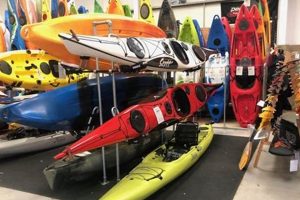
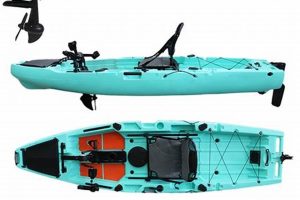
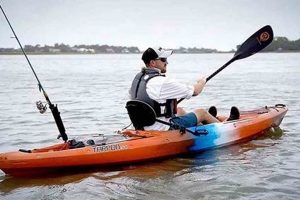
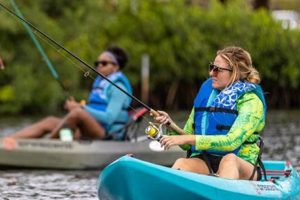
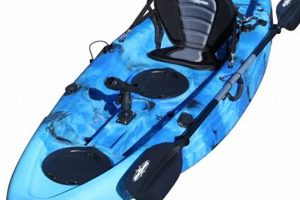
A fishing kayak designed for larger individuals typically features a higher weight capacity, a wider and more stable hull, and ample storage space for gear and equipment. These kayaks prioritize stability and comfort, often incorporating features like adjustable seating and footrests to accommodate taller or heavier paddlers. An example would be a kayak with a weight capacity exceeding 400 pounds, a beam width over 30 inches, and specialized storage compartments for fishing rods and tackle.
Kayaks tailored for larger paddlers provide enhanced safety and comfort on the water. The increased stability reduces the likelihood of capsizing, particularly in challenging conditions, while the extra space allows for a more comfortable and enjoyable fishing experience. Historically, kayak design often overlooked the needs of larger individuals. However, the growing popularity of kayak fishing has led to innovations specifically catering to this demographic, resulting in vessels that are both stable and performance-oriented.
The following sections will delve into specific features to consider when selecting a suitable vessel, including weight capacity, hull design, storage options, and seating configurations. Additionally, guidance will be provided on choosing appropriate paddles, personal flotation devices, and other essential accessories for a safe and successful fishing excursion.
Tips for Selecting a Fishing Kayak for Larger Individuals
Choosing the right kayak is crucial for a safe and enjoyable fishing experience. Careful consideration of several key factors will ensure a suitable vessel is selected.
Tip 1: Prioritize Weight Capacity: Never exceed the manufacturer’s stated weight limit. Include the weight of all gear and equipment in addition to body weight when calculating the total load. A safety margin is always recommended.
Tip 2: Consider Hull Design: Wider hulls generally offer greater stability, while longer hulls provide better tracking. A “pontoon-style” hull can be exceptionally stable. Consider the typical water conditions expected.
Tip 3: Evaluate Seating and Comfort: Look for adjustable seating and footrests to ensure proper posture and support. Adequate padding and back support are essential for longer trips.
Tip 4: Assess Storage Capacity: Ample storage is crucial for fishing gear, tackle boxes, and personal items. Consider specialized compartments for rods, electronics, and other equipment.
Tip 5: Choose a Suitable Paddle: Select a paddle appropriate for one’s height and the kayak’s width. A comfortable and efficient paddle will reduce fatigue and enhance performance.
Tip 6: Don’t Overlook Safety Gear: A properly fitted personal flotation device (PFD) is essential. A whistle, signaling device, and first-aid kit are also recommended.
Tip 7: Test Before Purchasing (If Possible): Testing a kayak before purchase allows one to assess its stability, comfort, and handling characteristics firsthand.
By carefully considering these factors, individuals can select a kayak that offers optimal stability, comfort, and performance on the water, enhancing safety and enjoyment during fishing excursions.
This information provides a solid foundation for making an informed decision. The concluding section will offer final recommendations and resources for further research.
1. Stability

Stability is a critical factor in kayak fishing, particularly for larger individuals. A stable platform allows anglers to focus on fishing, rather than constantly correcting balance. For individuals with larger frames, stability is even more crucial, impacting not only comfort but also safety. A stable kayak minimizes the risk of capsizing, especially in challenging conditions such as windy days or choppy water.
- Center of Gravity
A lower center of gravity contributes significantly to stability. Kayaks designed for larger individuals often feature wider beams and flatter hulls, lowering the center of gravity and increasing stability. This design characteristic minimizes rocking and tipping, allowing for easier casting, reeling, and landing fish. A kayak with a lower center of gravity is less likely to tip when shifting weight, such as when casting or reaching for gear.
- Hull Design
Hull design plays a vital role in stability. Wider, flatter hulls, sometimes referred to as “pontoon-style” hulls, offer excellent primary stability (initial resistance to tipping). While they may sacrifice some speed and maneuverability, they provide a significantly more stable platform, ideal for larger anglers. Conversely, narrower hulls, often preferred for speed and tracking, are generally less stable. The specific hull design should be chosen based on the intended fishing environment and the angler’s priorities.
- Weight Capacity
Exceeding a kayak’s weight capacity compromises stability. Kayaks designed for larger individuals typically boast higher weight capacities, accommodating not only the angler’s weight but also the combined weight of gear, tackle, and any potential catch. Respecting the manufacturer’s specified weight limit is crucial for maintaining optimal stability and ensuring safety. Overloading a kayak reduces freeboard and increases the risk of capsizing.
- Water Conditions
Calm, flat water requires less inherent stability than choppy or windy conditions. Kayaks designed for larger individuals, with their enhanced stability features, provide a safer and more comfortable experience in challenging environments. While a less stable kayak might suffice in calm conditions, rougher waters demand a more stable platform to prevent capsizing. Choosing a kayak with ample stability provides confidence and safety in various water conditions.
By understanding the interplay of these factors, individuals can select a kayak that offers the optimal balance of stability, comfort, and performance. Prioritizing stability, particularly for larger anglers, contributes significantly to a safer and more enjoyable fishing experience.
2. Weight Capacity

Weight capacity is a critical factor when selecting a fishing kayak, especially for larger individuals. It directly impacts safety, stability, and performance. A kayak’s weight capacity refers to the maximum combined weight of the paddler, gear, and any potential catch it can safely support. Exceeding this limit compromises stability, increases the risk of capsizing, and can even damage the kayak. For larger individuals, choosing a kayak with adequate weight capacity is non-negotiable. A kayak designed for a lighter paddler will sit lower in the water, reducing freeboard and increasing the likelihood of taking on water. This lower position also raises the center of gravity, making the kayak more prone to tipping. A kayak with insufficient weight capacity will feel less stable and less responsive, hindering maneuverability and overall fishing performance.
Consider a scenario where a 250-pound angler with 50 pounds of gear attempts to use a kayak with a 300-pound weight capacity. While seemingly sufficient, this leaves no margin for error. Adding a substantial fish to the equation could easily exceed the limit, jeopardizing stability. Conversely, a kayak with a 400-pound capacity provides ample margin, enhancing safety and performance. This additional capacity translates to increased freeboard, a lower center of gravity, and improved handling, even with a heavy load. This margin becomes particularly important in challenging conditions such as wind or choppy water. A kayak with sufficient weight capacity will provide a more secure and predictable platform, allowing the angler to focus on fishing rather than managing precarious balance.
Selecting a kayak with appropriate weight capacity is fundamental to a safe and enjoyable fishing experience. This is particularly crucial for larger individuals, as exceeding the limit significantly compromises stability and increases the risk of capsizing. Careful consideration of weight capacity, alongside other factors such as hull design and seating comfort, ensures the selection of a suitable vessel for enjoyable and safe fishing excursions.
3. Comfort
Comfort is paramount in kayak fishing, especially for extended trips. For larger individuals, comfort directly impacts not only enjoyment but also safety and performance. An uncomfortable seating position can lead to fatigue, back pain, and reduced focus, potentially compromising safety and hindering the ability to effectively fish. Proper ergonomics and ample space are crucial for larger anglers, allowing them to maintain a comfortable and stable position for hours on the water.
- Seat Design
Seat design is a critical comfort factor. Kayaks designed for larger individuals often feature wider, more supportive seats with adjustable backrests and ample padding. Look for features like adjustable straps and lumbar support to customize the fit and provide optimal back support. A well-designed seat distributes weight evenly, reducing pressure points and preventing discomfort during long fishing trips. High-back seats offer additional support and can significantly improve comfort, particularly for individuals with back problems.
- Legroom and Footrests
Adequate legroom and adjustable footrests are essential for comfort and stability. Larger individuals require ample space to stretch their legs and avoid cramped conditions. Adjustable footrests allow paddlers to customize the leg position for optimal comfort and paddling efficiency. This adjustability is crucial for maintaining a balanced and stable posture, reducing fatigue and improving control of the kayak. Proper leg positioning also contributes to better circulation and prevents numbness or cramping during long periods on the water.
- Cockpit Size and Design
The cockpit’s size and design contribute significantly to overall comfort. A larger cockpit provides easier entry and exit and offers more room to move around, which is particularly important for larger individuals. Consider the height and width of the cockpit opening, ensuring ample space for comfortable entry and exit without feeling restricted. A well-designed cockpit will also provide sufficient space for gear storage within easy reach.
- Standing Platform (Optional)
Some fishing kayaks offer a standing platform, which can significantly enhance comfort and fishing versatility. A stable standing platform allows anglers to sight fish, cast more effectively, and stretch their legs, reducing fatigue during long fishing trips. While not essential for all anglers, a standing platform can be a valuable feature for larger individuals, providing greater freedom of movement and improving the overall fishing experience.
By prioritizing comfort features like seat design, legroom, cockpit size, and optional standing platforms, larger individuals can significantly enhance their fishing experience. A comfortable kayak allows for longer trips with reduced fatigue and improved focus, contributing to a safer and more enjoyable time on the water. Investing in a kayak specifically designed for larger individuals often translates to a more comfortable and ultimately more successful fishing experience.
4. Storage Space

Ample storage space is a crucial factor when selecting a fishing kayak, particularly for larger individuals. Larger anglers often require more gear, including larger tackle boxes, extra clothing layers, and potentially specialized equipment. Sufficient storage ensures essential items are readily accessible, enhancing both convenience and safety on the water. A well-organized kayak allows for efficient retrieval of gear, minimizing distractions and maximizing fishing time.
- Types of Storage
Fishing kayaks offer various storage options, including open rear wells, sealed hatches, and dedicated compartments for specific items like rods and tackle boxes. Open wells accommodate larger items like crates and coolers, while sealed hatches protect sensitive electronics and gear from water damage. Dedicated compartments offer organized storage for smaller items, keeping them readily accessible and preventing clutter.
- Capacity and Accessibility
Storage capacity should be carefully considered based on individual needs and fishing style. Larger anglers carrying more gear require kayaks with greater storage capacity. Accessibility is equally important; storage compartments should be easy to reach and open, even while seated. Front-mounted hatches and side-access compartments provide convenient access to frequently used items.
- Weight Distribution
Proper weight distribution is essential for kayak stability and performance. Distributing gear evenly throughout the kayak prevents imbalance and ensures optimal tracking. Heavier items should be placed lower and towards the center of the kayak for improved stability. Proper weight distribution minimizes rocking and tipping, enhancing both safety and paddling efficiency.
- Gear Organization
Effective gear organization within the kayak enhances efficiency and reduces frustration. Utilizing dry bags, tackle boxes, and other organizational tools keeps gear secure, protected, and easily accessible. A well-organized kayak allows anglers to quickly locate and retrieve necessary items without disrupting their fishing rhythm.
Sufficient and well-organized storage space directly contributes to a more enjoyable and productive fishing experience, particularly for larger individuals. By carefully evaluating storage options, capacity, accessibility, and weight distribution considerations, anglers can select a kayak that meets their specific needs and enhances their time on the water. A well-equipped kayak allows for greater focus on fishing, contributing to a more successful and rewarding outing.
5. Durable Construction

Durable construction is paramount for kayaks designed for larger individuals, given the increased stresses and strains these vessels endure. Higher weight capacities necessitate robust materials and construction techniques to ensure longevity and safe operation. A kayak’s ability to withstand impacts, abrasion, and UV exposure directly impacts its lifespan and the safety of the angler. Durable construction translates to a kayak that can reliably handle the added weight and stress of a larger individual, along with gear and equipment, over extended periods and varied conditions. For instance, kayaks constructed from high-density polyethylene (HDPE) or reinforced composites offer superior durability compared to less robust materials. HDPE is known for its impact resistance and affordability, while composites provide exceptional strength-to-weight ratios, albeit at a higher price point. Selecting a kayak constructed from durable materials is a crucial investment, ensuring long-term performance and safety.
The connection between durable construction and kayaks designed for larger individuals extends beyond material selection to construction techniques. Reinforced seams, robust hull designs, and quality hardware contribute to overall structural integrity. Kayaks intended for larger paddlers often feature reinforced seating areas and enhanced attachment points for accessories, further bolstering durability. Consider a scenario where a kayak is frequently used in rocky or shallow environments. A durably constructed kayak with reinforced hull sections will better withstand impacts and abrasion, minimizing the risk of damage and ensuring longevity. Conversely, a less robust kayak might sustain cracks or punctures, compromising its structural integrity and potentially leading to safety issues. Therefore, understanding the construction techniques employed is crucial when evaluating a kayak’s durability.
Investing in a durably constructed kayak provides long-term value and peace of mind. While initial costs might be higher, the extended lifespan and reduced maintenance requirements ultimately justify the investment. A durable kayak withstands the rigors of regular use, including impacts, UV exposure, and the stresses exerted by larger individuals. This translates to a safer and more reliable vessel, ensuring enjoyable fishing experiences for years to come. Prioritizing durable construction is an essential aspect of selecting a suitable kayak for larger individuals, directly impacting both safety and long-term value.
6. Maneuverability
Maneuverability is a key consideration when selecting a fishing kayak, particularly for larger individuals. While stability remains paramount, the ability to efficiently navigate various water conditions and access desired fishing spots significantly impacts the overall experience. Larger kayaks, designed to accommodate higher weight capacities, often present inherent maneuverability challenges due to increased size and weight. However, specific design features and paddling techniques can mitigate these challenges, allowing larger anglers to effectively navigate diverse environments. For example, a shorter kayak with a more defined keel will generally turn more quickly than a longer, flatter-hulled kayak, even with a similar weight capacity. Understanding this relationship between length, hull design, and maneuverability empowers informed decision-making.
Several factors influence kayak maneuverability. Hull design plays a crucial role; kayaks with a pronounced keel or tracking fin track straighter and resist turning, while those with flatter hulls or rounded chines turn more easily but may sacrifice tracking performance. Kayak length also contributes; shorter kayaks are generally more maneuverable, while longer kayaks offer better tracking and speed. Paddle length and technique further influence maneuverability. Longer paddles provide more leverage, facilitating efficient turning, while proper paddling techniques, such as sweep strokes and rudder strokes, enhance control and precision. Consider a scenario where an angler needs to navigate through a narrow, winding creek. A shorter, more maneuverable kayak will allow for easier navigation through tight turns, while a longer kayak might struggle. Conversely, in open water conditions, the longer kayak’s tracking performance becomes advantageous. Therefore, choosing a kayak with appropriate maneuverability characteristics depends on the intended fishing environment.
Balancing maneuverability with stability is essential, particularly for larger individuals. While a highly maneuverable kayak might be desirable in certain situations, prioritizing stability is crucial for safety and comfort. Selecting a kayak that offers a suitable balance between these two attributes ensures both efficient navigation and a secure, stable platform for fishing. Further, understanding the factors influencing maneuverability, such as hull design, length, and paddling technique, empowers informed decisions tailored to individual needs and fishing preferences. This understanding translates to a more enjoyable and productive fishing experience, allowing larger anglers to confidently and effectively explore diverse waterways.
7. Specialized Features

Specialized features differentiate fishing kayaks from recreational models, enhancing angling effectiveness and overall experience. For larger individuals, these features become even more crucial, addressing specific needs and challenges. Selecting a kayak with appropriate specialized features contributes significantly to comfort, efficiency, and ultimately, fishing success. These features often cater to specific fishing styles and preferences, allowing anglers to customize their kayaks to suit individual needs.
- Rod Holders
Rod holders are fundamental features in fishing kayaks, providing secure storage and easy access to fishing rods. Various types exist, including flush-mounted, adjustable, and rotating rod holders. Flush-mounted holders offer a streamlined profile, minimizing interference while paddling. Adjustable holders allow for customized rod positioning, while rotating holders facilitate different fishing techniques. For larger anglers, the placement and accessibility of rod holders are particularly important, ensuring comfortable reach and minimizing the need for excessive movement. Multiple rod holders accommodate diverse fishing styles and allow for carrying multiple setups.
- Tackle Storage
Dedicated tackle storage is essential for maintaining organization and efficiency on the water. Specialized compartments, trays, and storage systems keep tackle readily accessible, minimizing time spent searching for lures and equipment. Larger anglers often require more tackle storage due to diverse fishing styles or larger tackle boxes. Features like waterproof compartments protect sensitive electronics and gear from water damage, while removable trays facilitate organization and customization. Efficient tackle storage contributes to a streamlined fishing experience, allowing anglers to focus on the task at hand.
- GPS and Fish Finder Mounts
Integrated mounts for GPS units and fish finders are increasingly common in fishing kayaks. These mounts provide secure and convenient placement for electronics, enhancing navigation and fish-finding capabilities. Larger individuals benefit from strategically positioned mounts that are easily visible and accessible without compromising stability. Consider mounts with adjustable angles for optimal viewing and glare reduction. Integrated wiring channels keep electronics neatly organized and protected, further enhancing the fishing experience.
- Anchor Trolleys
Anchor trolleys are valuable features for kayak anglers, allowing for controlled anchoring and positioning in various water conditions. These systems facilitate precise anchor deployment and retrieval, enabling anglers to maintain position in current or wind. For larger individuals, anchor trolleys are particularly useful, minimizing the effort required to manage an anchor and maintain stability. An efficient anchor trolley system contributes to a safer and more enjoyable fishing experience, allowing anglers to focus on fishing rather than constantly adjusting position.
These specialized features, while beneficial to all kayak anglers, hold particular relevance for larger individuals. Selecting a kayak equipped with features like strategically placed rod holders, ample tackle storage, integrated electronics mounts, and efficient anchor trolleys enhances comfort, efficiency, and overall fishing success. Consider individual fishing styles, preferences, and physical needs when evaluating specialized features, ensuring a customized and optimized fishing experience. Investing in a kayak with appropriate specialized features translates to enhanced enjoyment and productivity on the water, maximizing the rewards of kayak fishing.
Frequently Asked Questions
This section addresses common inquiries regarding kayaks designed for larger individuals, providing concise and informative responses to facilitate informed decision-making.
Question 1: What constitutes a “big man” fishing kayak?
Kayaks designed for larger individuals typically have a higher weight capacity, often exceeding 400 lbs, a wider beam (over 30 inches), and a more stable hull design. These features accommodate larger body weights and additional gear, ensuring stability and comfort.
Question 2: How is stability affected by weight capacity?
Exceeding a kayak’s weight capacity significantly compromises stability. A kayak loaded beyond its limit sits lower in the water, reducing freeboard and increasing the risk of capsizing. Choosing a kayak with ample weight capacity is crucial for safety and performance.
Question 3: Are sit-on-top kayaks more suitable for larger individuals?
Sit-on-top kayaks generally offer greater stability and easier entry/exit compared to sit-inside kayaks. This design is often preferred by larger individuals due to increased comfort and reduced risk of entrapment in case of capsize.
Question 4: How does paddle length affect performance for larger paddlers?
Paddle length should correlate with the paddler’s height and the kayak’s width. Larger individuals typically require longer paddles for efficient propulsion and maneuverability. Consult sizing charts and consider individual preferences when selecting paddle length.
Question 5: What safety precautions should larger kayakers take?
Wearing a properly fitted personal flotation device (PFD) is essential for all kayakers, regardless of size. Larger individuals should pay particular attention to PFD buoyancy and fit. Carrying a whistle, signaling device, and first-aid kit is also recommended.
Question 6: How does one determine the appropriate kayak width for enhanced stability?
Wider kayaks generally offer greater initial stability. However, excessive width can hinder maneuverability. Consider the intended fishing environment and personal preferences when selecting kayak width. A wider beam, typically over 32 inches, is often preferred by larger individuals for enhanced stability.
Careful consideration of these frequently asked questions empowers informed decisions regarding kayak selection, ensuring a safe, comfortable, and productive fishing experience tailored to the specific needs of larger individuals.
For further information and detailed product reviews, consult specialized kayak fishing resources and retailers. The next section will provide concluding remarks and additional resources.
Big Man Fishing Kayak
Selecting a fishing kayak tailored to the needs of larger individuals requires careful consideration of various factors. Weight capacity, stability, and comfort are paramount for safety and enjoyment. Hull design, storage space, and specialized features influence performance and fishing effectiveness. Durable construction ensures longevity and reliable performance in diverse conditions. Maneuverability considerations, balanced with stability requirements, allow for efficient navigation and access to desired fishing locations. Addressing these factors holistically empowers informed decision-making, resulting in a kayak optimized for the unique demands of larger anglers.
The pursuit of angling from a kayak offers a unique connection with nature and the thrill of the catch. Investing in a properly fitted and equipped vessel enhances not only fishing success but also safety and overall enjoyment. Prioritizing these considerations ensures a rewarding and sustainable approach to kayak fishing, allowing larger individuals to confidently explore and experience the tranquility and excitement of this popular pastime.