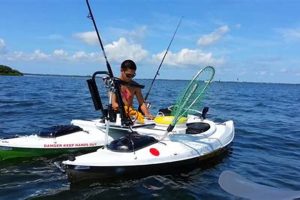
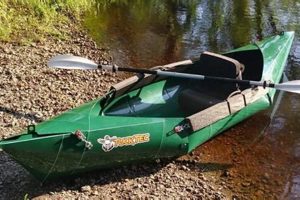
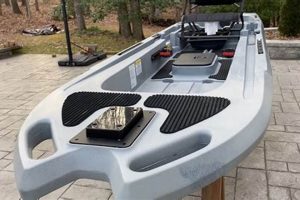
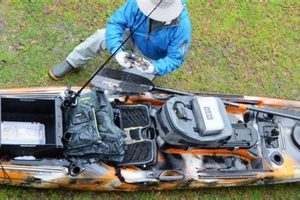
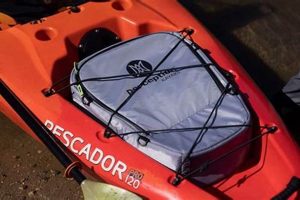
A high-performance vessel designed for angling offers stability, specialized features, and comfortable ergonomics for enhanced fishing experiences. These watercraft often incorporate features like rod holders, tackle storage, livewells, and even pedal or motor propulsion systems, enabling anglers to reach prime fishing locations efficiently and effectively.
The evolution of these specialized boats reflects the growing demand for optimized angling platforms. Enhanced stability allows anglers to cast and reel in larger fish with confidence, while integrated storage systems keep essential gear organized and readily accessible. These advantages contribute to improved fishing success and a more enjoyable experience on the water, making them a significant investment for serious anglers. Historically, fishing from kayaks was more basic, relying on simpler designs and less specialized equipment. Modern advancements have transformed the experience, providing greater comfort, functionality, and overall fishing effectiveness.
Further exploration of this topic will cover specific features, various types, and considerations for selecting the ideal vessel based on individual fishing styles and preferences.
Tips for Selecting a High-Performance Fishing Kayak
Choosing the right vessel is crucial for a successful and enjoyable fishing experience. Careful consideration of individual needs and preferences will ensure optimal performance and comfort on the water.
Tip 1: Stability is Paramount: Prioritize stability, especially when fishing in rough waters or standing to cast. Wider hulls generally offer greater stability.
Tip 2: Propulsion Matters: Consider paddle, pedal, or motor propulsion based on fishing locations and personal preferences. Each method offers distinct advantages and disadvantages.
Tip 3: Storage Capacity is Key: Adequate storage for tackle, rods, and other gear is essential. Evaluate storage compartments and their accessibility.
Tip 4: Comfort Enhances Endurance: A comfortable seat and ample legroom are crucial for longer fishing trips. Consider adjustable seating systems and footrests.
Tip 5: Material Affects Durability and Weight: Choose between polyethylene, fiberglass, or composite materials based on durability, weight, and budget considerations.
Tip 6: Features Enhance Functionality: Look for features like rod holders, livewells, and anchor trolleys that enhance fishing efficiency.
Tip 7: Budgetary Considerations: Establish a budget before exploring available options. Prices vary significantly based on features and materials.
By carefully evaluating these factors, anglers can select a vessel that maximizes their fishing potential and provides years of enjoyment on the water.
These tips offer valuable guidance for choosing the right vessel, leading to a more informed purchasing decision and a more rewarding fishing experience. The next section will explore specific models and brands in greater detail.
1. Stability

Stability forms a cornerstone of high-performance fishing kayak design. A stable platform is essential for various on-the-water activities, from casting and reeling to landing fish and navigating challenging conditions. Compromised stability negatively impacts fishing effectiveness and can pose safety risks. A stable hull allows anglers to stand comfortably, increasing casting range and visibility. Conversely, an unstable kayak limits movement and increases the risk of capsizing, particularly when battling strong currents or larger fish. Consider the scenario of an angler hooking a large fish in choppy water. A stable kayak provides the necessary platform to fight the fish effectively and safely, while an unstable one risks capsizing, losing the catch, and potentially endangering the angler.
Several factors contribute to kayak stability. Hull design plays a crucial role, with wider, flatter hulls generally offering greater initial stability. Outrigger systems and pontoons further enhance stability, especially in rough conditions. Weight distribution also influences stability; proper loading and balance are critical. For example, a kayak loaded with gear at the stern will be less stable than one with evenly distributed weight. Understanding these factors allows anglers to choose and utilize their kayaks effectively, maximizing stability and safety on the water. Features like strategically placed handles and non-slip surfaces also contribute to overall stability, especially when entering or exiting the water.
Prioritizing stability in kayak selection is paramount for a safe and successful fishing experience. While other factors like speed and maneuverability are important, stability remains the foundation upon which effective angling is built. Neglecting stability can compromise safety and hinder performance, ultimately detracting from the overall fishing experience. By understanding the factors that influence stability and choosing a kayak designed for optimal balance, anglers can confidently focus on the task at hand catching fish.
2. Propulsion

Propulsion systems represent a critical aspect of the ultimate fishing kayak, directly influencing an angler’s ability to cover water efficiently and position effectively. Optimal propulsion enables access to prime fishing locations, conserves energy, and enhances overall fishing success. The choice of propulsion system significantly impacts the fishing experience, demanding careful consideration based on individual needs and fishing styles.
- Paddle Propulsion
Traditional paddle propulsion remains a popular choice, offering affordability, simplicity, and a full-body workout. Paddle kayaks provide excellent maneuverability in shallow water and tight spaces, making them ideal for navigating complex waterways and exploring secluded fishing spots. However, paddling over long distances can be tiring, potentially limiting the range of exploration. Consider a paddle kayak for its affordability and maneuverability, especially in environments requiring intricate navigation.
- Pedal Propulsion
Pedal-powered kayaks offer hands-free operation, allowing anglers to focus on fishing while maintaining constant propulsion. This system provides a more efficient and less tiring alternative to paddling, enabling longer distances and increased fishing time. Pedal drives, however, can be more expensive and may have limitations in very shallow water or areas with dense vegetation. Consider a pedal kayak for its efficiency and hands-free operation, ideal for covering larger bodies of water and maximizing fishing time.
- Motorized Propulsion
Motorized kayaks provide the greatest speed and range, allowing anglers to cover vast distances quickly and effortlessly. This propulsion method excels in larger bodies of water and strong currents, offering unmatched access to distant fishing grounds. However, motorized kayaks require additional investment, maintenance, and adherence to specific regulations. Consider a motorized kayak for its speed and range, particularly for larger bodies of water or when covering significant distances is essential.
- Hybrid Propulsion
Some kayaks offer hybrid propulsion, combining paddle and pedal or paddle and motor systems. This versatility provides options for diverse fishing environments and conditions. Anglers can utilize pedal or motor power for long-distance travel and switch to paddle power for navigating shallows or maneuvering in tight spaces. This adaptability makes hybrid systems a valuable asset for anglers seeking maximum versatility. Consider a hybrid kayak for its adaptable propulsion system, enabling a balance of efficiency and maneuverability across varied fishing conditions.
The chosen propulsion system significantly influences the overall fishing experience, impacting speed, range, maneuverability, and fatigue levels. Careful evaluation of these factors, alongside individual fishing styles and target locations, ensures selection of the most effective propulsion method for maximizing on-the-water success. Each propulsion system offers unique advantages and disadvantages, highlighting the importance of aligning propulsion choice with specific fishing needs and preferences.
3. Storage
Ample and well-designed storage is integral to the concept of an ultimate fishing kayak. Efficient organization of tackle, rods, and other essential gear directly impacts fishing success and overall enjoyment on the water. Insufficient or poorly planned storage leads to frustration, wasted time, and compromised fishing effectiveness. Imagine an angler searching for a specific lure amidst a tangled mess of gear, losing precious fishing time and potentially missing crucial feeding windows. Conversely, a well-organized system allows for quick access to necessary equipment, maximizing fishing efficiency and enhancing the overall experience.
Several key considerations contribute to effective storage solutions. Dedicated compartments for tackle boxes, rod holders secured within easy reach, and dry storage areas for electronics and personal items exemplify crucial design elements. The positioning and accessibility of these storage spaces are equally vital. Rod holders placed strategically for efficient casting and retrieval, combined with readily accessible tackle compartments, optimize workflow and minimize disruption during critical fishing moments. For instance, recessed tackle trays within easy reach prevent the need for constant bending and rummaging, allowing anglers to maintain focus on the water. Integrating storage seamlessly into the kayak’s design contributes significantly to a streamlined and productive fishing experience.
Strategic storage solutions in fishing kayaks directly translate to enhanced angling performance. Efficient organization minimizes wasted time and maximizes time spent fishing. Accessible gear storage contributes to a more focused and enjoyable experience, reducing frustration and enhancing overall success on the water. The ability to quickly locate and deploy essential gear, from lures and lines to tools and safety equipment, can be the difference between a successful fishing trip and a frustrating one. Therefore, prioritizing effective storage solutions is crucial when selecting a fishing kayak designed for optimal performance and enjoyment.
4. Comfort

Comfort plays a pivotal role in the pursuit of the ultimate fishing kayak experience. Extended periods on the water demand a comfortable and supportive environment to minimize fatigue and maximize fishing effectiveness. Discomfort can detract from focus and enjoyment, hindering performance and potentially shortening fishing trips. A well-designed kayak prioritizes comfort, enabling anglers to remain engaged and productive throughout their time on the water.
- Seating
Proper seating is paramount for comfort, especially during long hours on the water. Ergonomically designed seats with adjustable backrests and ample cushioning provide crucial support and minimize strain. High-quality seating materials, such as breathable mesh or padded cushions, further enhance comfort and prevent discomfort caused by moisture and heat. An uncomfortable seat can lead to backaches, stiffness, and reduced fishing effectiveness, highlighting the importance of prioritizing seating design and materials when selecting a fishing kayak.
- Legroom and Footrests
Adequate legroom and adjustable footrests contribute significantly to overall comfort. Sufficient space allows anglers to change positions and maintain proper circulation, reducing fatigue and discomfort. Adjustable footrests accommodate varying leg lengths and paddling styles, promoting efficient paddling and enhancing stability. Restricted legroom can lead to cramping, numbness, and compromised paddling efficiency, underscoring the importance of spacious cockpit design and customizable footrests.
- Stability and Deck Design
A stable and well-designed deck contributes to comfort and confidence on the water. A stable platform allows anglers to move freely and confidently, while a clutter-free deck provides ample space for casting, reeling, and landing fish. Features like non-slip surfaces and strategically placed handles further enhance stability and safety, promoting a comfortable and secure fishing experience. An unstable or cramped deck can lead to anxiety, difficulty moving, and increased risk of falls, emphasizing the importance of stability and thoughtful deck design.
- Accessibility and Customization
Easy access to essential gear and customizable features contribute to both comfort and efficiency. Well-placed rod holders, readily accessible tackle storage, and customizable seating arrangements allow anglers to personalize their setup and maintain a comfortable and organized fishing environment. Difficulty reaching essential gear or a lack of customization options can lead to frustration, wasted time, and compromised fishing effectiveness, highlighting the importance of accessibility and customization in enhancing comfort and overall fishing performance.
Comfort in a fishing kayak directly translates to increased fishing time, enhanced focus, and a more enjoyable experience on the water. Prioritizing comfort features, from ergonomic seating and ample legroom to stability and accessibility, allows anglers to maximize their time on the water and fully immerse themselves in the pursuit of their catch. By understanding the elements that contribute to comfort and choosing a kayak designed with these factors in mind, anglers can ensure a more rewarding and productive fishing experience.
5. Durability

Durability is a critical factor in determining the long-term value and performance of a fishing kayak. A kayak’s ability to withstand the rigors of the environment, including impacts, abrasion, and UV exposure, directly impacts its lifespan and overall usability. A durable kayak maintains its structural integrity and functionality over time, providing a reliable platform for anglers season after season. Conversely, a less durable kayak may require frequent repairs, experience performance degradation, and ultimately necessitate premature replacement. Consider the impact of repeated rocky landings or dragging a kayak across abrasive surfaces; a durable hull will resist damage, while a less robust one may sustain cracks or punctures, compromising its watertight integrity and potentially leading to costly repairs or replacement.
Several factors contribute to kayak durability. Material selection plays a significant role; high-density polyethylene (HDPE) is known for its impact resistance and affordability, while fiberglass and composite materials offer higher strength-to-weight ratios but often come at a premium. Construction methods, including roto-molding and thermoforming, influence hull thickness and overall structural integrity. Reinforced areas, such as the keel and chines, further enhance durability in high-wear areas. UV resistance is crucial for preventing material degradation from prolonged sun exposure. For example, a kayak constructed with UV-stabilized polyethylene will resist fading and cracking, maintaining its structural integrity and aesthetic appeal over time, unlike a kayak lacking UV protection, which may become brittle and susceptible to damage with prolonged sun exposure.
Investing in a durable fishing kayak offers significant long-term benefits. Reduced maintenance and repair costs contribute to overall cost-effectiveness. Consistent performance and reliability enhance the fishing experience, allowing anglers to focus on their pursuit rather than equipment concerns. A durable kayak retains its value over time, offering a higher resale value compared to a less robust counterpart. Therefore, prioritizing durability during kayak selection represents a sound investment, ensuring long-term performance, reliability, and overall value. Understanding the factors that contribute to durability empowers informed decision-making, leading to a more satisfying and cost-effective ownership experience.
6. Customization
Customization represents a crucial element in achieving the ultimate fishing kayak, transforming a standard vessel into a personalized fishing platform optimized for individual needs and preferences. Adaptability to specific fishing styles, target species, and preferred techniques enhances efficiency, comfort, and overall fishing success. Customization options bridge the gap between a generic kayak and a purpose-built angling machine, empowering anglers to maximize their on-the-water potential.
- Rod Holder Placement and Configuration
Rod holders are fundamental components of a fishing kayak. Customization options allow anglers to strategically position rod holders based on preferred fishing techniques, from trolling to fly fishing. Adjustable mounts enable fine-tuning of rod angles, optimizing presentation and retrieval. Consider a kayak with adjustable tracks or mounts that allow for repositioning rod holders to accommodate different rod lengths or fishing styles. This adaptability ensures optimal rod placement for any fishing scenario.
- Tackle and Gear Storage Solutions
Efficient tackle organization is paramount for effective angling. Customizable storage solutions, including modular tackle boxes, specialized compartments for electronics, and integrated mounting systems for fish finders, maximize space utilization and streamline gear access. Consider a kayak with removable storage pods or customizable compartments to accommodate specific tackle and gear requirements. This flexibility allows anglers to tailor storage solutions to their individual preferences and fishing styles.
- Electronics Integration and Mounting
Modern fishing often incorporates electronics like fish finders, GPS units, and communication devices. Customization options facilitate seamless integration of these technologies, providing optimal placement for displays, transducers, and power sources. Dedicated mounting points and cable management systems maintain a clean and organized cockpit, maximizing functionality and minimizing clutter. Consider a kayak with pre-installed transducer mounts or integrated wiring systems to simplify electronics installation and enhance overall functionality. This streamlines the process of incorporating essential electronics into the fishing platform.
- Comfort and Ergonomics Enhancements
Customization extends to comfort features, allowing anglers to tailor the kayak to their physical needs and preferences. Adjustable seating systems, customizable footrests, and after-market accessories like backrests and thigh braces enhance comfort and support, promoting endurance during long fishing trips. Consider a kayak with adjustable seat positioning and customizable footrests to optimize comfort and paddling efficiency. This adaptability caters to individual body types and ensures a comfortable and supportive fishing experience.
Customization transforms a standard fishing kayak into a personalized fishing platform, optimized for individual needs and preferences. By tailoring rod holder placement, storage solutions, electronics integration, and comfort enhancements, anglers maximize efficiency, comfort, and ultimately, fishing success. The ability to personalize a kayak significantly contributes to the “ultimate” fishing experience, enhancing functionality and creating a seamless connection between angler and vessel. This symbiotic relationship between customization and performance underscores the importance of adaptability in achieving the ultimate fishing kayak setup.
Frequently Asked Questions
Addressing common inquiries regarding high-performance fishing kayaks provides clarity for informed decision-making and enhanced on-the-water experiences.
Question 1: What differentiates a high-performance fishing kayak from a recreational model?
Specialized features like rod holders, integrated tackle storage, enhanced stability, and advanced propulsion systems distinguish high-performance fishing kayaks from recreational models. These features cater specifically to angling needs, optimizing functionality and efficiency on the water.
Question 2: How does hull design impact stability and performance?
Hull design significantly influences stability and performance. Wider hulls generally offer greater stability, while longer, narrower hulls prioritize speed. Specialized hull designs, such as pontoon hulls or those with pronounced chines, offer specific performance advantages for various fishing conditions and styles.
Question 3: What propulsion system best suits diverse fishing environments?
Paddle propulsion excels in shallow water and tight spaces. Pedal drives offer hands-free operation for efficient covering of larger distances. Motorized propulsion provides unmatched speed and range for vast bodies of water. Hybrid systems combine advantages of multiple propulsion methods, offering adaptability for diverse conditions.
Question 4: How important is storage capacity and organization in a fishing kayak?
Effective storage solutions are crucial for organizing tackle, rods, and other gear, maximizing fishing efficiency and minimizing wasted time. Dedicated compartments, strategically placed rod holders, and readily accessible storage areas contribute significantly to a streamlined and productive fishing experience.
Question 5: What factors contribute to long-term durability and performance?
Material selection, construction methods, and UV resistance contribute to long-term durability. High-density polyethylene (HDPE) offers excellent impact resistance, while fiberglass and composites provide superior strength-to-weight ratios. Reinforced areas and UV-stabilized materials further enhance durability and longevity.
Question 6: How can customization enhance fishing effectiveness and enjoyment?
Customization options, including adjustable rod holders, modular storage systems, integrated electronics mounts, and comfort enhancements, allow anglers to personalize their kayaks to specific needs and preferences. This adaptability maximizes functionality, comfort, and overall fishing performance.
Understanding these key aspects of high-performance fishing kayaks empowers informed purchasing decisions and ensures a rewarding experience on the water.
The next section will explore specific models and brands, providing further guidance for selecting the ideal fishing kayak.
Ultimate Fishing Kayak
Exploration of the ultimate fishing kayak reveals a convergence of design, functionality, and angler-centric features. Stability, propulsion, storage, comfort, durability, and customization emerge as critical elements defining a superior on-the-water angling platform. Each component contributes significantly to enhanced fishing effectiveness, prolonged endurance, and a more rewarding overall experience. From navigating challenging waters with confidence to accessing remote fishing grounds efficiently, a well-equipped, purpose-built kayak elevates the pursuit of angling excellence.
The pursuit of the ultimate fishing kayak represents a continuous evolution, driven by advancements in materials, design, and technology. As angling techniques and preferences evolve, so too will the vessels that support them. Careful consideration of individual needs and priorities remains paramount in selecting the ideal kayak, ensuring a harmonious synergy between angler and vessel. This pursuit of optimization promises continued innovation and a future of enhanced angling experiences on the water.