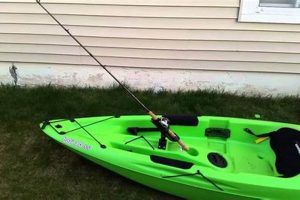
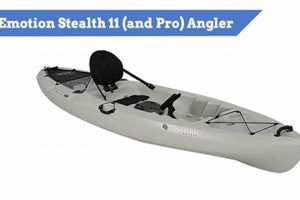
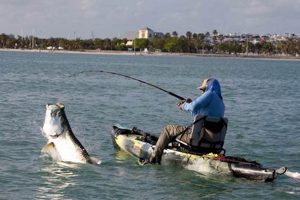
An evaluation of a kayak designed for angling typically assesses stability, maneuverability, storage capacity, and features like rod holders and mounting points for fish finders. For example, an evaluation might compare the tracking performance of a longer hull against the agility of a shorter one, considering their respective suitability for different fishing environments like rivers or open water.
Objective assessments provide prospective buyers with crucial information to make informed purchasing decisions. These analyses consider factors impacting on-the-water performance, angler comfort, and long-term durability, ultimately empowering consumers to choose equipment best suited to their individual needs and fishing styles. Historically, information sharing within the angling community relied heavily on word-of-mouth and print publications. The digital age has broadened access to detailed product analyses, facilitating more informed choices and driving manufacturers towards continual product improvement.
The subsequent sections will delve deeper into specific aspects of kayak evaluation, providing a framework for understanding key features and their impact on the overall fishing experience. This includes detailed explanations of hull designs, propulsion systems, and specialized fishing accessories.
Tips for Evaluating Fishing Kayaks
Careful consideration of key features ensures selection of a kayak optimized for individual angling needs and preferences.
Tip 1: Prioritize Stability. Assess primary and secondary stability. Primary stability refers to initial resistance to tipping, while secondary stability describes how stable the kayak feels when leaned. Anglers fishing in rougher conditions or standing to cast require higher stability.
Tip 2: Consider Maneuverability. Shorter kayaks offer greater agility, beneficial in tight spaces like creeks and rivers. Longer kayaks excel in tracking and covering distance efficiently in open water.
Tip 3: Evaluate Storage Capacity. Ample storage is crucial for tackle, safety gear, and catches. Consider dedicated compartments, tank wells, and bungee systems.
Tip 4: Examine Rod Holders and Mounting Points. Ensure sufficient rod holders are strategically positioned for easy access and different fishing techniques. Check for mounting points for fish finders, GPS units, and other accessories.
Tip 5: Assess Comfort and Ergonomics. A comfortable seat and adjustable footrests are essential for longer fishing trips. Consider the kayak’s weight capacity and ensure it accommodates the angler’s size and weight.
Tip 6: Research Hull Design. Different hull designs (e.g., sit-on-top, sit-inside) offer varying performance characteristics and suit different fishing styles. Sit-on-tops are generally more stable and self-bailing, while sit-insides offer better protection from the elements.
Tip 7: Consider Propulsion. Paddle kayaks offer excellent exercise and control, while pedal-driven kayaks allow hands-free fishing and cover greater distances. Motorized kayaks provide speed and efficiency, particularly in larger bodies of water.
By carefully evaluating these factors, anglers can select a fishing kayak that enhances their on-the-water experience and maximizes their fishing success.
Equipped with these insights, the final decision becomes a matter of aligning individual needs with the most appropriate kayak features.
1. Stability

Stability is a paramount consideration within any fishing kayak review, directly impacting angler safety, comfort, and fishing effectiveness. A stable platform is essential for casting, retrieving, and landing fish, particularly in challenging conditions. This section explores the key facets of kayak stability and their significance.
- Primary Stability
Primary stability describes the initial resistance to tipping. A kayak with high primary stability feels very stable when sitting flat, offering a secure feeling for less experienced anglers or those fishing calm waters. Wider hulls and lower centers of gravity contribute to higher primary stability. Reviews often assess this by describing how easily the kayak tips when subtle movements are made.
- Secondary Stability
Secondary stability describes the kayak’s resistance to tipping when leaned. This is crucial for anglers who fish standing, paddle in rough conditions, or make dynamic movements. Kayaks with rounded hulls typically offer higher secondary stability, providing a reassuring platform even when leaning. Reviews frequently discuss how far the kayak can be leaned before capsizing and how it recovers from a lean.
- Contributing Factors to Stability
Hull design, kayak width, and the angler’s center of gravity all influence overall stability. Wider, flatter hulls generally offer more stability than narrower, more pointed designs. Lower seating positions and proper weight distribution within the kayak enhance stability. Reviews will typically detail the kayak’s dimensions and design features that affect its stability.
- Impact on Fishing Performance
A stable kayak allows anglers to focus on fishing rather than constantly correcting balance. This is particularly important when fighting larger fish, standing to cast, or fishing in windy conditions. Reviews often describe how the kayak’s stability affects different fishing techniques and scenarios, such as sight fishing or trolling.
Understanding both primary and secondary stability, alongside contributing factors like hull design, provides crucial insights during a fishing kayak review. Evaluating stability ensures anglers select a kayak that matches their skill level and fishing style, maximizing both safety and fishing success.
2. Maneuverability

Maneuverability is a critical aspect of fishing kayak reviews, directly influencing an angler’s ability to navigate various water conditions and access prime fishing spots. Effective maneuvering allows for precise boat control in tight quarters, swift currents, and around obstacles. This section explores the key facets of kayak maneuverability and their implications for on-the-water performance.
- Tracking vs. Turning
Tracking refers to a kayak’s ability to maintain a straight course, while turning describes its responsiveness to paddle strokes or rudder input. Longer kayaks generally track better, making them suitable for open water paddling. Shorter kayaks offer enhanced turning performance, beneficial for navigating narrow waterways and maneuvering around structures. Reviews often compare a kayak’s tracking and turning capabilities to determine its suitability for different fishing environments.
- Hull Design Influence
Hull shape significantly impacts maneuverability. Flat-bottomed hulls offer greater initial stability and maneuverability in shallow water but may sacrifice tracking performance. V-shaped hulls improve tracking and cut through waves more effectively but can be less maneuverable in tight spaces. A review might analyze how a specific hull design balances these competing characteristics.
- Impact of Length and Width
Shorter kayaks are generally more agile, allowing for quick turns and easier navigation in confined areas. Longer kayaks, while less maneuverable, offer increased speed and glide. Wider kayaks provide more stability but sacrifice maneuverability. Reviews typically specify dimensions and discuss how they influence the kayak’s handling characteristics.
- Role of Rudders and Skegs
Rudders and skegs are control features that enhance tracking and maneuverability. Rudders provide directional control, particularly helpful in windy conditions. Skegs improve tracking in straight lines. Reviews often detail the effectiveness and usability of these features, noting their impact on overall performance.
Evaluating maneuverability within a fishing kayak review involves considering the interplay between hull design, length, width, and control features like rudders or skegs. Understanding these elements allows anglers to select a kayak optimized for their target fishing environments, from navigating tight rivers and streams to paddling across open lakes and coastal waters.
3. Storage Capacity

Storage capacity is a crucial element in fishing kayak reviews, directly impacting an angler’s ability to carry essential gear, tackle, and potential catches comfortably and efficiently. Adequate storage contributes significantly to a successful and enjoyable fishing experience, allowing anglers to remain organized and prepared on the water. This section explores the key facets of storage capacity and their implications.
- Types of Storage
Fishing kayaks offer various storage solutions, including open tank wells for larger items, sealed hatches for protecting valuables from water, and smaller compartments for organizing tackle and accessories. Reviews often detail the types, sizes, and locations of storage compartments, assessing their practicality and accessibility. For example, a dedicated tackle storage area with removable trays enhances organization, while a large rear tank well can accommodate a cooler or crate.
- Capacity and Weight Considerations
The overall storage capacity and weight limit of a kayak are important factors to consider. Anglers carrying heavier gear or planning longer expeditions require kayaks with higher weight capacities and ample storage space. Reviews typically specify the kayak’s weight capacity and the volume of its storage compartments, allowing potential buyers to assess suitability for their needs.
- Accessibility and Organization
Easy access to stored gear is vital for efficient fishing. Well-placed hatches, readily accessible compartments, and bungee systems for securing items contribute to a streamlined and organized experience. Reviews frequently evaluate the ease of access to different storage areas, highlighting designs that prioritize convenience and minimize disruption while fishing.
- Impact on Fishing Experience
Ample and well-organized storage allows anglers to bring necessary equipment, extra layers of clothing, food and water, and safety gear without feeling cramped or cluttered. This enhances comfort, safety, and overall fishing enjoyment. Reviews might describe how the kayak’s storage features contribute to a positive on-the-water experience, particularly during longer trips or in varying weather conditions.
Evaluating storage capacity within a fishing kayak review requires assessing the types of storage available, their overall volume and accessibility, and the kayak’s weight capacity. These factors directly influence the angler’s ability to carry essential gear and contribute significantly to a comfortable, organized, and successful fishing experience.
4. Features (e.g., rod holders)

Specialized features significantly influence a fishing kayak’s practicality and overall effectiveness, warranting careful consideration within any comprehensive review. Features like rod holders, paddle clips, anchor trolleys, and mounting points for fish finders or GPS units directly impact an angler’s ability to fish efficiently and comfortably. For example, strategically positioned rod holders allow anglers to troll multiple lines or keep rods readily accessible while managing other tasks. Similarly, integrated track systems provide versatile mounting options for electronics and accessories, customizing the kayak to individual preferences and fishing styles. A thorough review analyzes the availability, placement, and functionality of these features, assessing their contribution to the overall fishing experience. The absence or poor implementation of essential features can significantly detract from a kayak’s usability, highlighting the importance of this aspect within a comprehensive evaluation.
Practical considerations extend beyond the mere presence of features to encompass their design, durability, and integration with the kayak’s overall layout. Adjustable rod holders accommodate different rod lengths and fishing techniques, while robust construction ensures they can withstand the stresses of regular use. Well-designed paddle clips secure paddles efficiently, preventing loss and minimizing interference during casting or retrieving. An effective anchor trolley system facilitates controlled drifting and precise positioning in current, crucial for techniques like river fishing. Reviews benefit from real-world testing, evaluating how these features perform under various fishing conditions. For instance, assessing the stability of a mounted fish finder in choppy water or the ease of adjusting a rod holder while seated provides valuable insights into their practical utility.
Understanding the interplay between features and functionality is crucial for discerning a kayak’s suitability for specific fishing applications. A kayak designed for offshore trolling prioritizes features like multiple rod holders, ample storage for tackle, and a stable hull for navigating rougher waters. Conversely, a kayak intended for river fishing might emphasize maneuverability, a shallow draft, and strategically placed anchor points. Comprehensive reviews provide detailed analyses of these features, connecting their presence and design to specific fishing scenarios and highlighting their impact on overall performance. This nuanced approach empowers informed purchasing decisions, ensuring anglers select kayaks equipped to meet their individual needs and maximize their fishing success.
5. Comfort & Ergonomics
Comfort and ergonomics are critical factors in fishing kayak reviews, directly influencing angler endurance, focus, and overall enjoyment. Extended periods on the water, often in challenging conditions, necessitate a comfortable and supportive seating system. An ergonomic design minimizes strain and fatigue, allowing anglers to maintain focus on fishing rather than physical discomfort. A poorly designed seat can lead to back pain, stiffness, and reduced fishing effectiveness, highlighting the importance of this aspect within a comprehensive review. For example, a kayak with a high-backed, adjustable seat and ample legroom offers superior comfort compared to a basic molded seat, particularly during long fishing trips.
Key ergonomic considerations include seat adjustability, back support, legroom, and the positioning of footrests or pedals. Adjustable features cater to individual body types and preferences, ensuring a customized fit. Adequate back support promotes proper posture and reduces strain during extended paddling or fishing. Sufficient legroom allows for comfortable movement and stretching, minimizing stiffness and discomfort. Well-placed footrests or pedals provide essential leverage for paddling and enhance stability. Reviews often assess these features through practical on-the-water testing, evaluating their effectiveness in promoting comfort and minimizing fatigue during extended use. Specific examples might include analyzing the adjustability range of a seat, the level of lumbar support provided, or the ease of reaching footrests from various seating positions.
Understanding the interplay between comfort, ergonomics, and fishing performance is essential for making informed purchasing decisions. A comfortable and ergonomically sound kayak enhances endurance, allowing anglers to fish longer and more effectively. Reduced fatigue contributes to improved focus and concentration, increasing the likelihood of a successful fishing trip. Reviews that prioritize comfort and ergonomics provide valuable insights for anglers seeking kayaks optimized for long days on the water, ultimately contributing to a more enjoyable and productive fishing experience. The practical significance of this understanding extends beyond mere comfort to encompass factors like safety and overall well-being, reinforcing its importance within comprehensive fishing kayak evaluations.
6. Hull Design

Hull design plays a pivotal role in fishing kayak performance, significantly influencing stability, maneuverability, speed, and tracking. A comprehensive fishing kayak review must, therefore, include a thorough assessment of hull characteristics to determine suitability for specific fishing environments and techniques. Understanding the nuances of various hull designs empowers informed purchasing decisions, ensuring anglers select kayaks optimized for their individual needs.
- Displacement Hulls
Displacement hulls are characterized by a pointed bow and a distinct V-shape that extends along the length of the hull. This design efficiently cuts through water, promoting excellent tracking and speed, making them well-suited for open water paddling and covering longer distances. However, displacement hulls typically offer less initial stability compared to other designs, requiring more balance and control from the angler. Reviews often highlight the trade-off between speed and stability when evaluating kayaks with displacement hulls, noting their suitability for calmer waters and experienced paddlers.
- Planing Hulls
Planing hulls feature a flatter bottom with a defined chine, the point where the bottom meets the side. This design allows the kayak to rise up and plane on the surface of the water at higher speeds, increasing efficiency and reducing drag. Planing hulls generally offer greater stability than displacement hulls, making them suitable for stand-up fishing and maneuvering in shallower water. Reviews often emphasize the enhanced stability and maneuverability of planing hulls, noting their suitability for a wider range of fishing environments and angler skill levels.
- Pontoon Hulls
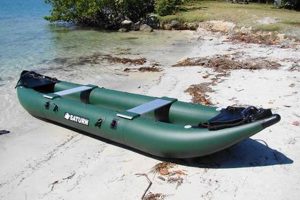
Pontoon hulls utilize two separate pontoons connected by a platform, providing exceptional stability and a wide, flat deck. This design maximizes stability, making it ideal for anglers who prioritize standing while fishing or require a secure platform for casting and retrieving. Pontoon hulls are typically less maneuverable than other designs and can be susceptible to wind drift. Reviews often focus on the exceptional stability offered by pontoon hulls, highlighting their suitability for specific fishing applications where stability outweighs maneuverability.
- Tunnel Hulls
Tunnel hulls incorporate a recessed channel or tunnel along the bottom of the hull. This design enhances stability, particularly in shallow water, and improves tracking in windy conditions. Tunnel hulls also create a shallow draft, allowing access to areas inaccessible to kayaks with deeper hulls. Reviews often discuss the enhanced shallow water performance and wind resistance of tunnel hulls, noting their suitability for specific fishing environments like shallow flats or windy estuaries.
Understanding the characteristics and performance implications of different hull designs is essential for interpreting fishing kayak reviews. By considering factors such as stability, maneuverability, speed, and tracking, anglers can select a kayak with a hull design optimized for their target fishing environments and techniques. This informed approach ensures a compatible and efficient platform for maximizing on-the-water success and enjoyment.
7. Propulsion Type
Propulsion type significantly influences a fishing kayak’s performance and suitability for specific fishing styles and environments, making it a critical aspect of any comprehensive fishing kayak review. The choice between paddle, pedal, and motor propulsion directly impacts speed, range, hands-free fishing capability, and overall fishing experience. Understanding the advantages and disadvantages of each propulsion system empowers informed purchasing decisions, aligning angler needs with appropriate kayak functionality. For example, a paddle kayak offers excellent maneuverability and exercise benefits for anglers fishing smaller bodies of water, while a pedal-driven kayak provides hands-free fishing and increased range for covering larger areas. Motorized kayaks excel in speed and efficiency, particularly in open water or strong currents, but may be restricted in certain areas due to noise or environmental regulations.
Evaluating propulsion type within a fishing kayak review necessitates considering factors beyond basic functionality. Paddle kayaks prioritize upper body strength and endurance, while pedal kayaks engage leg muscles, offering a different physical experience. Motorized kayaks minimize physical exertion, allowing anglers to focus on fishing rather than paddling or pedaling. The choice of propulsion also affects stealth and fishing approach. Paddle kayaks offer quiet operation, beneficial for stalking fish in shallow water, while motorized kayaks may spook fish with engine noise. Reviews often analyze the efficiency and suitability of different propulsion systems for specific fishing scenarios, considering factors like water conditions, fishing techniques, and angler preferences. Specific examples might include comparing the speed and range of a pedal kayak versus a motorized kayak for trolling in open water, or evaluating the maneuverability of a paddle kayak in tight, vegetated areas.
A thorough understanding of propulsion systems and their impact on fishing kayak performance is essential for interpreting reviews and making informed purchasing decisions. Considering factors such as speed, range, hands-free capability, physical exertion, and stealth allows anglers to select a kayak with a propulsion system tailored to their individual needs and fishing style. This informed approach enhances on-the-water efficiency, maximizes fishing success, and contributes to a more enjoyable and productive overall experience. Practical application of this knowledge extends to pre-purchase research, on-water testing, and long-term ownership satisfaction, reinforcing its importance within comprehensive fishing kayak evaluations.
Frequently Asked Questions about Fishing Kayak Reviews
This section addresses common inquiries regarding fishing kayak reviews, providing concise and informative responses to facilitate informed decision-making.
Question 1: What are the most critical factors to consider in a fishing kayak review?
Stability, maneuverability, storage capacity, features (e.g., rod holders), comfort, hull design, and propulsion type are key evaluation criteria. Each factor contributes to the kayak’s overall performance and suitability for specific fishing styles and environments.
Question 2: How do hull designs impact fishing kayak performance?
Hull design influences stability, maneuverability, speed, and tracking. Displacement hulls excel in tracking and speed, while planing hulls offer enhanced stability. Pontoon hulls maximize stability, and tunnel hulls improve shallow-water performance.
Question 3: What are the advantages and disadvantages of different propulsion systems?
Paddle propulsion offers maneuverability and exercise, while pedal propulsion allows hands-free fishing. Motorized kayaks provide speed and range but may be subject to restrictions. Each system presents distinct advantages and trade-offs depending on fishing style and environment.
Question 4: How does storage capacity affect the fishing experience?
Ample storage accommodates essential gear, tackle, and catches, enhancing comfort and organization on the water. Sufficient storage contributes to a more efficient and enjoyable fishing experience, especially during longer trips.
Question 5: Why are comfort and ergonomics important in a fishing kayak?
Comfort and ergonomics directly impact angler endurance and focus. A comfortable and supportive seating system minimizes fatigue, allowing for longer and more productive fishing trips. Proper ergonomics enhance overall fishing enjoyment and well-being.
Question 6: How can one determine the credibility of a fishing kayak review?
Seek reviews from reputable sources known for objective assessments. Consider reviews that provide detailed analyses of kayak features, performance, and suitability for specific fishing scenarios. Look for reviews based on real-world testing and experience.
Careful consideration of these frequently asked questions empowers informed evaluation of fishing kayak reviews, facilitating selection of a kayak optimized for individual needs and fishing preferences.
The following section will explore specific fishing kayak models and provide detailed reviews based on the criteria discussed above.
Fishing Kayak Review
Thorough fishing kayak reviews provide crucial insights into vessel selection, encompassing evaluations of stability, maneuverability, storage, features, comfort, hull design, and propulsion. Understanding these elements empowers informed purchasing decisions, aligning angler needs and fishing styles with appropriate kayak characteristics. Objective assessments consider performance in diverse environments, from calm lakes to challenging open water conditions, emphasizing the interplay between design and functionality.
Ultimately, comprehensive fishing kayak reviews equip anglers with the knowledge necessary to make informed investments, optimizing on-the-water experiences and maximizing fishing success. Careful consideration of these factors ensures a compatible and efficient platform, enhancing enjoyment and promoting long-term satisfaction with chosen equipment.