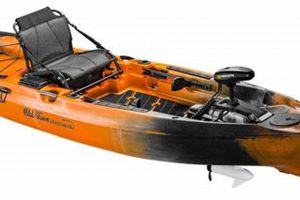
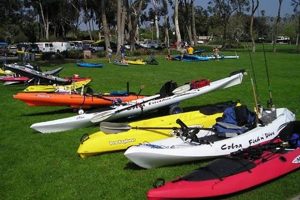
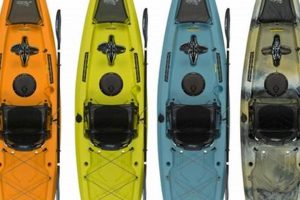
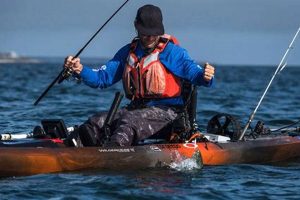
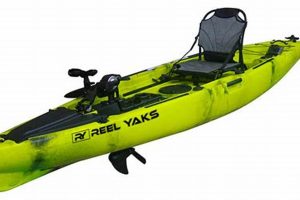
This sit-on-top style vessel, designed for angling, typically features a lightweight, durable construction suitable for recreational use in calm waters. Common features often include rod holders, storage compartments, and adjustable seating. It offers an affordable entry point into kayak fishing.
Small, stable watercraft provide anglers with access to shallow or heavily vegetated areas often unreachable by larger boats. Their portability and ease of use make them increasingly popular for recreational fishing. The relatively low cost of this particular model contributes to its appeal for budget-conscious anglers. This type of watercraft has become increasingly popular in recent decades, reflecting a growing interest in accessible, close-to-nature recreational activities.
Further exploration will cover topics such as selecting the right paddle, essential safety equipment, basic paddling techniques, and ideal fishing locations for this type of watercraft.
Tips for Sit-On-Top Kayak Fishing
Proper preparation and technique enhance safety and enjoyment on the water. The following tips offer guidance for a successful fishing excursion.
Tip 1: Check Local Regulations. Research permits and licensing requirements for the intended fishing area. Awareness of local regulations ensures a legal and ethical fishing experience.
Tip 2: Prioritize Safety. Always wear a personal flotation device (PFD). Carry a whistle for signaling and inform someone of the fishing plan, including location and expected return time. A fully charged mobile phone in a waterproof bag is recommended for emergencies.
Tip 3: Pack Appropriately. Essential gear includes appropriate fishing tackle, sunscreen, a hat, and drinking water. A dry bag protects valuables and electronics from splashes and unexpected submersion.
Tip 4: Practice Paddling Technique. Efficient paddling conserves energy and allows for greater maneuverability. Learning basic paddle strokes improves navigation and control on the water.
Tip 5: Understand Water Conditions. Check weather forecasts before embarking. Avoid strong currents and high winds, especially as a beginner. Be aware of potential hazards like submerged rocks or logs.
Tip 6: Respect the Environment. Practice Leave No Trace principles. Pack out all trash and avoid disturbing wildlife or vegetation. Responsible angling preserves the natural environment for future enjoyment.
Tip 7: Secure Equipment. Utilize bungee cords or other securing mechanisms to prevent gear loss during transport or while on the water. Rod leashes prevent valuable fishing rods from sinking if dropped overboard.
Careful planning and attention to detail contribute significantly to a safe and rewarding fishing trip. By following these guidelines, anglers can maximize their enjoyment and minimize potential risks on the water.
Following these tips provides a solid foundation for a safe and successful fishing experience. Next, explore techniques for landing your catch from a kayak.
1. Sit-on-Top Design

The sit-on-top design is a defining characteristic of the Ozark Trail 10-foot fishing kayak and significantly influences its functionality. This design eliminates the enclosed cockpit found in traditional sit-inside kayaks. Anglers sit above the hull on a molded seat, offering several key advantages for fishing. This open design facilitates easier entry and exit, a crucial factor for anglers frequently changing positions or needing to re-enter the kayak after a swim. Furthermore, the self-bailing scupper holes characteristic of sit-on-top kayaks allow water to drain quickly, enhancing stability and preventing the kayak from becoming swamped. This feature proves particularly beneficial in fishing scenarios where splashes or unexpected waves are common. For example, landing a large fish can often lead to water entering the kayak, and the self-bailing system ensures rapid drainage. The unrestricted seating position allows for greater freedom of movement, facilitating casting and reeling. This design also makes it simpler to access gear stored within easy reach.
The sit-on-top configuration offers considerable practical advantages for anglers. Its inherent stability, combined with the ease of recovery from a capsize, makes it a safer choice, particularly for beginners. The open design allows for better heat dissipation, increasing comfort during warm weather fishing trips. The simplicity of the design also translates to easier cleaning and maintenance. However, anglers using sit-on-top kayaks will inevitably get wet, requiring appropriate clothing choices. While offering excellent stability in calm water, these kayaks are generally less suited to rough conditions or long-distance paddling compared to sit-inside models.
The sit-on-top design, integral to the Ozark Trail 10-foot fishing kayak, directly addresses the specific needs of anglers. Its stability, ease of access, self-bailing capabilities, and freedom of movement contribute to a more comfortable and efficient fishing experience, especially in calm waters. Understanding these features empowers anglers to make informed choices regarding kayak selection and utilization. While the sit-on-top design may not be ideal for all kayaking situations, its advantages make it a practical and popular choice for recreational fishing.
2. Ten-foot length

The ten-foot length of the Ozark Trail fishing kayak represents a design choice balancing several crucial factors relevant to its intended use in calm, recreational fishing environments. This length influences maneuverability, stability, and portability, impacting the overall user experience.
- Maneuverability
A ten-foot kayak offers sufficient responsiveness for navigating inlets, weaving through vegetation, and making quick turns essential for pursuing fish in shallow waters. Compared to longer kayaks designed for open water or touring, a shorter length facilitates tighter turning circles and quicker course adjustments. This maneuverability proves advantageous when fishing in confined areas like small ponds or narrow creeks.
- Stability
While shorter kayaks are generally less stable than longer ones, the ten-foot length, combined with the typically wider beam of fishing kayak designs, provides adequate stability for casting, reeling, and landing fish. This balance is crucial for anglers who need a platform stable enough to maintain balance while performing fishing-related activities, but not so stable that it becomes difficult to maneuver quickly.
- Portability
The ten-foot length contributes to the kayak’s portability. It is manageable for transport on a car roof rack or in the bed of a pickup truck, often without requiring specialized trailers. This ease of transport makes it more accessible for individuals with limited storage space or smaller vehicles. Furthermore, its manageable size simplifies carrying the kayak short distances from vehicle to water access points.
- Storage Capacity
While not directly dictated by length, the ten-foot dimension often constrains the overall size and therefore the potential storage capacity of the kayak. Designers must balance the hull volume required for buoyancy and stability with the desire for integrated storage compartments for tackle, gear, and personal items. This often results in trade-offs, limiting the amount of gear that can be comfortably carried compared to larger kayaks designed for longer excursions.
The ten-foot length of the Ozark Trail fishing kayak represents a deliberate compromise optimized for its target use. It prioritizes maneuverability and ease of transport while maintaining sufficient stability for recreational fishing activities. Understanding these length-related performance characteristics allows anglers to assess its suitability for their specific needs and fishing environments. While ideal for calm, protected waters, the ten-foot length might present limitations in open water or challenging conditions where longer, more stable kayaks excel.
3. Fishing-Specific Features

Dedicated features distinguish fishing kayaks from recreational models. These features enhance angling effectiveness and overall user experience. The Ozark Trail 10-foot fishing kayak incorporates several such features, directly impacting its functionality and suitability for angling. These typically include built-in rod holders, strategically placed to keep lines in the water while paddling or at rest. Multiple rod holders accommodate diverse fishing techniques and allow for ready access to different rods. Storage compartments, often located within easy reach, provide designated space for tackle boxes, fishing tools, and personal items. These compartments help maintain organization and prevent gear from cluttering the deck, impacting stability. Many models also include paddle parks or clips, securing the paddle while fishing and preventing accidental loss. Some versions feature adjustable or elevated seating positions designed for angler comfort and visibility. Footrests or adjustable foot braces further enhance paddling efficiency and stability.
Consider an angler targeting panfish in a shallow pond. Multiple rod holders allow simultaneous use of different bait and lure presentations. Accessible storage compartments keep tackle organized and readily available. The secured paddle remains within easy reach, ready for quick repositioning. Stable seating and footrests provide a comfortable and secure platform for casting and reeling. These integrated features transform a basic kayak into a dedicated fishing platform, increasing efficiency and enjoyment. Conversely, a recreational kayak lacking these features would require adaptation and compromise, potentially hindering fishing performance and comfort.
The presence and quality of fishing-specific features contribute significantly to a kayak’s overall value and practicality for angling. Understanding these features allows informed purchasing decisions. Consider intended fishing styles and environments when evaluating the importance and utility of specific features. While the Ozark Trail 10-foot fishing kayak provides a basic set of features suitable for recreational fishing, advanced anglers might require specialized adaptations or higher-end models offering greater customization and functionality. Recognizing the limitations of basic features allows anglers to optimize their equipment choices and enhance on-the-water performance.
4. Stability

Stability is a critical performance characteristic for fishing kayaks, directly impacting safety and angling effectiveness. For the Ozark Trail 10-foot fishing kayak, stability influences user confidence, casting accuracy, and the ability to land fish effectively. Understanding the factors contributing to stability allows for informed decision-making regarding usage and limitations.
- Hull Design
The hull design, often a modified pontoon or flat-bottom shape, significantly influences stability. Wider beams generally increase primary stability (initial resistance to tipping), beneficial for stationary fishing. A shallow draft, while enhancing maneuverability in shallow water, can compromise secondary stability (resistance to capsizing after tipping). The Ozark Trail’s hull design prioritizes initial stability for activities like casting, but users should exercise caution when leaning or encountering external forces.
- Weight Distribution
Proper weight distribution is crucial for maintaining stability. Evenly distributing gear and maintaining a low center of gravity enhance stability. Positioning heavier items low and centrally within the kayak minimizes the risk of tipping. Shifting weight abruptly can compromise stability, leading to imbalance. Anglers must be mindful of weight distribution when moving within the kayak or retrieving gear.
- Water Conditions
Calm water conditions are ideal for maximizing the inherent stability of the Ozark Trail kayak. Wind, waves, and currents can significantly impact stability, particularly for shorter kayaks. Anglers should exercise caution in challenging conditions, recognizing the kayak’s limitations in rough water. Awareness of environmental factors and appropriate decision-making regarding launching and retrieval are essential.
- Angler Behavior
Angler movements and actions directly influence stability. Sudden movements, leaning over the side, or standing can compromise stability and increase the risk of capsizing. Smooth, deliberate actions maintain balance. Anglers should practice basic kayak handling skills and understand the impact of body movements on stability. Proper technique and cautious behavior enhance safety and overall control.
Understanding these factors provides a comprehensive perspective on the stability characteristics of the Ozark Trail 10-foot fishing kayak. While its design prioritizes stability for calm water fishing activities, acknowledging its limitations in rough conditions and practicing appropriate weight distribution and body movements are essential for safe and successful angling. Recognizing the interplay of these elements enables anglers to make informed decisions regarding usage and maximize their on-the-water experience while mitigating potential risks.
5. Portability

Portability significantly influences the practical usability of recreational fishing kayaks, impacting transport, launch access, and storage. The Ozark Trail 10-foot fishing kayak exhibits characteristics directly related to its portability. Its relatively short length and lightweight construction, often utilizing durable but less dense plastics, contribute to manageable transport. This facilitates loading and unloading from vehicle roof racks or truck beds, often without requiring trailers or specialized lifting equipment. This ease of transport expands access to diverse fishing locations, particularly those with limited access points or challenging terrain. Consider an angler seeking remote ponds or small streams. A portable kayak allows access beyond locations easily reached by larger boats or requiring long portages. The kayak’s manageable weight further contributes to its portability, simplifying carrying short distances from vehicle to water’s edge.
Enhanced portability translates to broader fishing opportunities. Transporting a kayak becomes feasible for individuals with smaller vehicles or limited storage space. Accessing secluded fishing spots becomes less arduous, expanding the range of fishable waters. Reduced transport burden allows anglers to dedicate more time and energy to the actual fishing experience rather than logistics. For instance, an angler living in an urban environment with limited storage can easily transport a portable kayak for weekend trips to nearby lakes or rivers. This accessibility promotes participation in recreational fishing, broadening its appeal.
Portability, as exemplified by the Ozark Trail 10-foot fishing kayak, expands fishing opportunities and simplifies logistical challenges associated with kayak ownership and usage. Its manageable size and weight contribute to ease of transport, launch access, and storage. This enhanced portability fosters broader participation in the sport by overcoming barriers related to transport and storage limitations. While prioritizing portability, inherent design trade-offs might limit capacity for extended trips or rough water performance, highlighting the importance of selecting a kayak appropriate for intended usage and environmental conditions.
6. Durability

Durability directly impacts the lifespan and overall value of a fishing kayak, influencing its resistance to wear, tear, and damage from various environmental factors and usage patterns. For the Ozark Trail 10-foot fishing kayak, durability considerations are particularly relevant due to its intended use in diverse aquatic environments and its affordability, which often implies material and construction trade-offs compared to higher-priced models. Understanding the factors affecting durability allows informed purchasing decisions and promotes appropriate care and maintenance practices.
- Material Selection
The Ozark Trail typically utilizes high-density polyethylene (HDPE) for its construction. HDPE offers a balance of durability, impact resistance, and UV resistance, contributing to its suitability for outdoor use. However, HDPE can be susceptible to scratches and abrasion from rocks, gravel, or improper handling during transport. While generally durable, HDPE’s performance characteristics influence long-term durability expectations compared to more robust (and expensive) materials like rotomolded polyethylene.
- Construction Quality
Manufacturing processes and construction techniques influence the kayak’s structural integrity and resistance to leaks or damage. Well-executed welds and joins between hull sections contribute to long-term durability. Reinforcements in high-stress areas, such as seating mounts and carrying handles, enhance resistance to cracking or deformation under load. Careful inspection of these areas can reveal potential weaknesses or manufacturing inconsistencies impacting long-term durability.
- UV Resistance
Exposure to ultraviolet radiation from sunlight can degrade plastics over time, leading to brittleness and cracking. HDPE possesses inherent UV resistance, but prolonged exposure without proper care can still lead to material degradation. Storing the kayak out of direct sunlight when not in use or utilizing UV-resistant covers or sprays can significantly extend its lifespan.
- Impact Resistance
Impacts from rocks, logs, or improper handling during transport can damage the kayak’s hull. HDPE provides reasonable impact resistance, protecting against minor collisions. However, severe impacts can cause cracks or punctures, compromising structural integrity and potentially leading to leaks. Careful handling during transport and launching, along with navigating shallow water cautiously, minimizes the risk of impact damage.
The Ozark Trail 10-foot fishing kayaks durability depends on a combination of material properties, construction quality, and user care. Understanding these factors enables realistic expectations regarding lifespan and performance. While HDPE offers a balance of affordability and durability suitable for recreational use, recognizing potential vulnerabilities and implementing appropriate preventative measures, such as proper storage and cautious handling, can significantly extend the kayaks usable life. Comparing the Ozark Trail’s durability characteristics to those of kayaks constructed from different materials or utilizing alternative manufacturing processes provides a more comprehensive understanding of its position within the broader kayak market.
7. Affordability
Affordability plays a crucial role in the appeal of the Ozark Trail 10-foot fishing kayak, positioning it as an accessible entry point into the sport. Cost considerations significantly influence purchasing decisions, especially for newcomers or budget-conscious individuals. Examining the factors contributing to its affordability provides insights into its market position and value proposition.
- Material Selection and Manufacturing
Utilizing high-density polyethylene (HDPE) contributes significantly to the kayak’s affordability. HDPE is a relatively inexpensive material compared to alternatives like rotomolded polyethylene or composites. Manufacturing processes optimized for high-volume production further reduce costs. While impacting durability and performance compared to higher-end materials, HDPE provides an acceptable balance for recreational use, making the kayak attainable for a wider audience.
- Feature Set and Design
The Ozark Trail kayak typically includes a basic set of features deemed essential for fishing functionality, such as rod holders and storage compartments. This targeted approach avoids the inclusion of premium features found in more expensive models, striking a balance between functionality and cost-effectiveness. The design prioritizes simplicity and practicality, streamlining manufacturing and reducing overall production expenses.
- Retail Strategy and Distribution
The Ozark Trail brand, often associated with value-oriented retailers, leverages large-scale distribution networks to minimize retail markups. This strategic approach contributes to competitive pricing, making the kayak readily accessible to a broader consumer base. Direct-to-consumer sales models or partnerships with large retailers further reduce distribution costs, contributing to the overall affordability.
- Target Market and Positioning
The Ozark Trail 10-foot fishing kayak targets recreational anglers seeking an entry-level option. Its affordability aligns with the needs of this market segment, providing access to the sport without requiring significant financial investment. This strategic positioning establishes the kayak as a viable alternative to more expensive models, particularly for beginners or casual anglers prioritizing affordability over premium features or performance characteristics.
The affordability of the Ozark Trail 10-foot fishing kayak stems from a combination of material choices, manufacturing efficiencies, retail strategies, and targeted market positioning. This cost-effectiveness expands access to kayak fishing, attracting a broader range of participants. While acknowledging potential trade-offs in terms of durability or advanced features compared to higher-priced models, the kayak’s affordability fulfills a crucial role in the market, providing a viable option for budget-conscious anglers seeking an entry point into the sport. This careful balance of cost and functionality contributes significantly to its popularity and market presence.
Frequently Asked Questions
This section addresses common inquiries regarding the Ozark Trail 10-foot fishing kayak, providing concise and informative responses.
Question 1: What is the weight capacity of this kayak?
Weight capacity varies slightly between specific models but generally ranges from 250 to 300 pounds. Exceeding the specified weight limit can compromise stability and safety. Consulting the manufacturer’s specifications for the specific model is crucial.
Question 2: Is this kayak suitable for ocean use?
This kayak is primarily designed for calm, inland waters such as lakes, ponds, and slow-moving rivers. Its shorter length and open design make it less suitable for ocean conditions or large bodies of water subject to strong winds, waves, or currents. Usage in such conditions is strongly discouraged.
Question 3: What materials are used in its construction?
The Ozark Trail 10-foot fishing kayak typically utilizes high-density polyethylene (HDPE). HDPE provides a balance of durability, impact resistance, and UV resistance at a cost-effective price point. This material choice contributes to the kayak’s affordability and suitability for recreational use.
Question 4: Does it come with a paddle?
Many models include a basic paddle. However, paddle inclusion can vary depending on specific retailers or promotions. Verifying paddle inclusion with the retailer before purchase is recommended. Upgrading to a higher-quality paddle might enhance paddling efficiency and comfort for extended use.
Question 5: How difficult is it to transport?
Its relatively lightweight and compact size facilitate transport on car roof racks or in truck beds. Its manageable weight allows for carrying short distances. While specialized trailers are generally unnecessary, securing the kayak properly during transport is crucial to prevent damage.
Question 6: What maintenance is required?
Rinsing the kayak with fresh water after each use removes dirt, salt, and debris, prolonging its lifespan. Storing the kayak out of direct sunlight, preferably in a covered area, minimizes UV degradation. Periodic inspections for damage and addressing minor repairs promptly prevent further deterioration.
Understanding these frequently asked questions provides a comprehensive overview of key aspects related to the Ozark Trail 10-foot fishing kayak. Careful consideration of these points facilitates informed purchasing decisions and promotes safe and enjoyable usage. Further research into specific model features and user reviews can provide additional valuable insights.
The next section explores practical tips and techniques for maximizing on-the-water experiences with this type of kayak.
Conclusion
This exploration has provided a comprehensive overview of the Ozark Trail 10-foot fishing kayak, encompassing its design, features, performance characteristics, and suitability for recreational angling. Key aspects discussed include the advantages of its sit-on-top design for angler accessibility and stability, the balance of maneuverability and portability offered by its ten-foot length, and the functionality provided by fishing-specific features like rod holders and storage compartments. Further analysis addressed stability considerations, portability advantages, durability expectations related to material and construction, and affordability factors contributing to its market appeal. Frequently asked questions provided concise answers to common inquiries, enhancing overall understanding.
The Ozark Trail 10-foot fishing kayak presents a viable entry point into the sport, offering a balanced combination of functionality, affordability, and portability. Recognizing its intended use in calm, inland waters and understanding its inherent limitations allows for informed decisions regarding its suitability for individual angling needs and preferences. Appropriate usage, coupled with proper care and maintenance, maximizes its lifespan and contributes to enjoyable on-the-water experiences. Continued exploration of kayak fishing techniques and responsible angling practices further enhances enjoyment and promotes the preservation of aquatic environments.