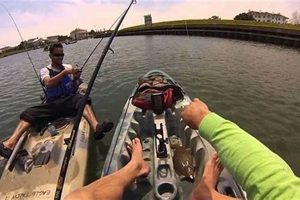
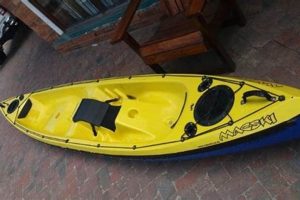
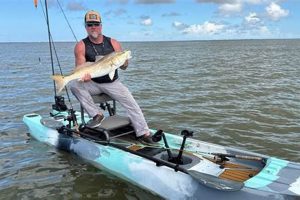
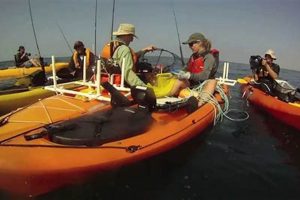
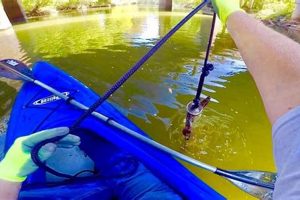
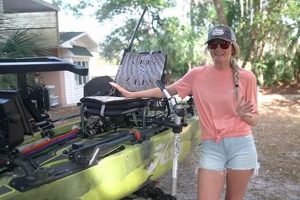
Kayaks designed specifically for angling in the 10-foot length range offer a balance of stability, maneuverability, and portability. These vessels typically feature specialized components like rod holders, tackle storage, and often anchor trolleys or mounting points for fish finders. They are suitable for a variety of water environments, from calm lakes and ponds to slow-moving rivers and protected coastal areas.
The compact size contributes to ease of transport and storage, making them attractive to anglers with limited space or those who frequently travel to different fishing spots. Their design emphasizes stability, a crucial factor for anglers casting lines, reeling in fish, and potentially standing while fishing. While not as fast as longer kayaks, their maneuverability excels in tighter spaces, allowing anglers to navigate shallow waters, weedy areas, and complex shorelines effectively. This length has become a popular choice in recent decades due to the increasing demand for versatile and easily transportable fishing platforms.
The following sections will delve deeper into specific features, advantages, and considerations related to selecting and utilizing kayaks in this size category for fishing purposes. Topics to be covered include hull design variations, material construction, essential accessories, and recommended fishing techniques.
Tips for Selecting and Using a 10-Foot Fishing Kayak
Choosing and utilizing a kayak of this size for fishing requires careful consideration of several factors. The following tips offer guidance for maximizing fishing success and overall enjoyment on the water.
Tip 1: Consider Hull Design: Kayak hull designs significantly impact stability and maneuverability. A flatter hull provides superior initial stability, ideal for calmer waters and stand-up fishing. A more rounded or V-shaped hull offers better tracking and performance in choppier conditions but may feel less stable initially.
Tip 2: Evaluate Weight Capacity: Ensure the kayak’s weight capacity accommodates the angler’s weight, fishing gear, and any potential catch. Exceeding the capacity can compromise stability and safety.
Tip 3: Prioritize Comfort and Ergonomics: A comfortable seat and adjustable footrests are essential for longer fishing trips. Test the seating and adjustability before purchase to ensure a proper fit.
Tip 4: Select Appropriate Accessories: Rod holders, paddle leashes, and anchor systems are crucial accessories. Consider adding a fish finder and storage solutions tailored to specific fishing needs.
Tip 5: Practice Paddling and Maneuvering: Before venturing into open water, practice paddling and maneuvering in a controlled environment. This builds confidence and improves efficiency on the water.
Tip 6: Understand Water Conditions: Always check weather forecasts and water conditions before heading out. Be aware of currents, tides, and potential hazards.
Tip 7: Prioritize Safety: Wear a personal flotation device (PFD) at all times. Carry a whistle, signaling device, and basic safety equipment. Inform someone of your fishing plans and expected return time.
By following these tips, anglers can enhance their fishing experience and ensure safety while utilizing a kayak in this size class.
These considerations are crucial for selecting the proper equipment and practicing safe and responsible kayaking. The following section will conclude with a summary of key findings and recommendations.
1. Length

The 10-foot length of these kayaks contributes significantly to their portability and ease of transport. Unlike longer kayaks that require specialized trailers or roof racks, a 10-foot kayak can often be transported on a car’s roof rack with readily available, affordable crossbars. This compact size also simplifies storage, allowing the kayak to fit in garages, sheds, or even within some apartments. Reduced length translates directly into lighter weight, making these kayaks easier to handle on land, especially for individuals kayaking solo. This combination of compact dimensions and lighter weight significantly expands accessibility for anglers limited by storage space or vehicle capacity.
The portability afforded by the 10-foot length opens up a wider range of fishing locations. Anglers can easily transport their kayaks to remote ponds, small lakes, or sections of rivers inaccessible to larger boats. This maneuverability extends to the water as well, enabling navigation through narrow channels and shallows, areas often teeming with fish but unreachable by larger craft. Consider a scenario where an angler wishes to fish a small, secluded mountain lake. Transporting a longer, heavier kayak to such a location might prove logistically challenging. A 10-foot kayak, however, can be easily transported, allowing the angler to access these otherwise inaccessible fishing grounds.
While the compact nature of 10-foot kayaks offers distinct advantages, anglers must balance portability with performance considerations. Shorter kayaks generally have less storage capacity than longer models, requiring careful gear selection and organization. They may also be less stable than longer kayaks, although advancements in hull design have mitigated this to a significant extent. Understanding these trade-offs is crucial for anglers evaluating their specific needs and fishing styles. Selecting a 10-foot kayak represents a strategic compromise, prioritizing portability and accessibility without excessively sacrificing stability or storage.
2. Stability
Stability is a paramount concern in fishing kayaks, particularly in the 10-foot category. Anglers frequently shift their weight while casting, reeling, and landing fish. A stable platform minimizes the risk of capsizing, ensuring angler safety and preserving valuable equipment. Kayak stability is influenced by several factors, including hull design, width, and weight distribution. Wider kayaks generally offer greater initial stability, providing a secure feeling for less experienced paddlers. Hull designs featuring a flatter bottom enhance stability, especially in calm water conditions, often preferred for fishing. Weight distribution within the kayak also plays a crucial role; proper loading and balancing of gear contribute significantly to overall stability.
Consider the scenario of an angler hooking a sizable fish. The struggle and sudden movements involved can destabilize a less stable kayak, potentially leading to capsizing. A kayak with a stable platform, however, allows the angler to manage the fish effectively without compromising balance. This enhanced stability becomes even more critical when fishing in challenging conditions, such as windy days or areas with currents. Moreover, stability contributes significantly to angler confidence, allowing for more focused fishing and greater overall enjoyment. For anglers venturing into stand-up fishing, stability becomes paramount. A stable platform is essential for maintaining balance while casting and retrieving, ensuring a safe and productive fishing experience.
While inherent stability is crucial, anglers can further enhance stability through technique and accessories. Maintaining a low center of gravity improves balance, as does proper paddling technique. Outriggers or stabilizers can be added for increased stability, particularly beneficial for anglers new to kayaking or those fishing in rougher conditions. Understanding the factors influencing stability empowers anglers to choose and utilize 10-foot fishing kayaks safely and effectively. Prioritizing stability, therefore, enhances not only safety but also the overall fishing experience, contributing to angler confidence, comfort, and ultimately, success on the water.
3. Maneuverability

Maneuverability is a defining characteristic of 10-foot fishing kayaks, directly influencing their suitability for specific fishing environments and techniques. Their compact size and lighter weight contribute to nimble handling, allowing anglers to navigate complex waterways and access hard-to-reach fishing spots. Understanding the factors affecting maneuverability is crucial for selecting and effectively utilizing these kayaks.
- Turning Radius and Tracking:
A shorter kayak generally exhibits a tighter turning radius, enabling swift changes in direction. This agility proves advantageous in confined spaces, such as narrow creeks, tight river bends, and areas with dense vegetation. Tracking, the kayak’s ability to maintain a straight course, can be influenced by hull design and water conditions. While shorter kayaks might require more frequent corrective strokes to maintain a straight line in open water, their responsiveness allows for quick adjustments and precise navigation in challenging environments. For instance, navigating a winding stream choked with fallen logs requires a kayak capable of rapid turns and precise maneuvering.
- Paddle Efficiency and Control:
The length and design of the paddle, combined with the kayak’s hull shape, influence paddling efficiency and control. Shorter kayaks often benefit from shorter paddles, allowing for quicker, more controlled strokes. This responsiveness translates to efficient maneuvering in tight spaces and rapid adjustments to changing currents or wind conditions. Consider an angler targeting fish holding near submerged structures. Precise paddle control enables subtle adjustments to position the kayak optimally for casting without spooking the fish.
- Influence of Water Conditions:
Water conditions, including current, wind, and waves, significantly impact maneuverability. While shorter kayaks might be more susceptible to wind drift in open water, their responsiveness allows for quicker corrections and adjustments to maintain desired positioning. In moving water, the ability to turn quickly and maintain control is essential for navigating rapids, eddies, and other challenging features. For example, fishing in a tidal river requires a kayak capable of handling changing currents and maintaining position near promising fishing spots.
- Impact on Fishing Techniques:
Maneuverability directly influences the effectiveness of various fishing techniques. For techniques like sight fishing or fly fishing, precise boat control is crucial for approaching fish stealthily and presenting lures or flies accurately. In situations requiring quick adjustments, such as pursuing actively feeding fish, a highly maneuverable kayak offers a distinct advantage. Consider a scenario where an angler spots a school of fish moving along a shoreline. A maneuverable kayak allows the angler to quickly position themselves for an optimal cast, maximizing the opportunity for a successful hookup.
The maneuverability of 10-foot fishing kayaks is a key attribute contributing to their versatility and effectiveness in a variety of fishing environments. By understanding the factors that influence maneuverability, anglers can select a kayak suited to their preferred fishing style and target species. The ability to navigate tight spaces, respond quickly to changing conditions, and position the kayak precisely enhances fishing success and overall enjoyment on the water. This agility ultimately translates to a more engaging and productive fishing experience.
4. Storage

Storage capacity directly impacts the practicality and effectiveness of 10-foot fishing kayaks. While their compact size emphasizes portability, careful consideration of storage solutions is essential for accommodating necessary fishing gear and ensuring a productive outing. Available storage space influences tackle organization, accessibility, and the overall fishing experience. Kayaks in this size category typically offer a combination of dedicated storage compartments, including hatches, tank wells, and side pockets. Understanding the types and volume of storage available is crucial for anglers selecting a kayak suited to their specific fishing needs. Consider a bass angler who requires space for multiple rods, tackle boxes, and live bait containers versus a fly fisherman with a more streamlined setup; the storage requirements differ significantly.
Effective organization within limited storage space maximizes efficiency on the water. Utilizing waterproof bags and containers protects sensitive equipment from moisture and facilitates efficient retrieval. Strategic placement of frequently used items within easy reach minimizes disruption during fishing. For example, storing lures and tools in readily accessible side pockets streamlines the process of changing lures or making tackle adjustments, allowing anglers to remain focused on fishing rather than rummaging through storage compartments. Furthermore, weight distribution within the kayak affects stability and performance. Distributing gear evenly throughout the available storage space optimizes balance and prevents the kayak from becoming unwieldy or unstable. Improper weight distribution can negatively impact tracking and maneuverability, hindering efficient paddling and navigation.
The interplay between storage capacity and portability presents a key consideration for anglers. While larger kayaks offer greater storage volume, they compromise portability. The 10-foot length represents a balance between these factors, prioritizing portability without significantly sacrificing storage potential. Successful kayak fishing hinges on efficient gear management and access, underscoring the practical significance of storage considerations in kayak selection and usage. Anglers must evaluate their individual fishing style, target species, and typical fishing environment to determine the appropriate balance between storage capacity and portability. This informed approach maximizes fishing efficiency and ensures a comfortable and productive experience on the water.
5. Features

Specialized features distinguish fishing kayaks from recreational models, enhancing angler efficiency and overall fishing experience. In the context of 10-foot fishing kayaks, these features are strategically integrated to maximize functionality within a compact and portable platform. Rod holders, arguably the most defining feature, secure rods, freeing hands for paddling, landing fish, and other essential tasks. Additional accessories further customize the kayak to specific fishing styles and target species. Examining these features provides insight into the thoughtful design considerations that cater to the needs of anglers.
- Rod Holders: Secure and Accessible Rod Storage
Rod holders are fundamental components of fishing kayaks, providing secure storage and quick access to fishing rods. Flush-mounted rod holders integrate seamlessly with the kayak’s deck, minimizing interference with paddling and casting. Adjustable rod holders offer flexibility in positioning rods at various angles, accommodating different fishing techniques and preferences. Multiple rod holders allow anglers to carry several rods rigged with different lures or lines, facilitating quick adaptation to changing fishing conditions. Consider a scenario where an angler trolls with one rod while having another rigged for casting; multiple rod holders streamline this approach. The strategic placement and type of rod holders significantly impact fishing efficiency and overall enjoyment.
- Paddle Holders and Leashes: Preventing Loss and Maintaining Order
Paddle holders and leashes prevent paddle loss and maintain an organized cockpit. Securely stowing the paddle while fishing or landing a fish frees both hands for these tasks. A leash ensures the paddle remains attached to the kayak, preventing loss in the event of a capsize or unexpected drop. This seemingly simple feature enhances safety and convenience, allowing anglers to focus on fishing without the constant concern of losing a vital piece of equipment. For example, when fighting a strong fish, having a secure location for the paddle prevents it from becoming entangled in the fishing line or drifting away.
- Anchor Systems: Maintaining Position and Controlled Drifts
Anchor systems, ranging from simple anchor trolleys to integrated anchor mounts, enable anglers to maintain position in current or wind. Controlling drift is crucial for techniques like still fishing or targeting specific structures. Anchor trolleys allow for adjustable anchor positioning, facilitating precise boat control and optimizing fishing presentation. Integrated anchor mounts provide dedicated storage and deployment points, streamlining anchor management. Consider an angler fishing a river channel; an anchor system allows them to hold position in the desired current seam, maximizing fishing effectiveness.
- Tackle Storage and Organization: Efficient Gear Management
Efficient tackle storage and organization is crucial for maintaining a productive and enjoyable fishing experience. Dedicated tackle compartments, often integrated into the kayak’s design, provide designated spaces for lures, tools, and other essential gear. Waterproof hatches protect sensitive equipment from moisture and splashes. Removable tackle boxes or trays further enhance organization and allow for pre-rigging setups for specific fishing scenarios. Consider an angler switching between different lure types throughout the day; organized tackle storage streamlines this process, minimizing time spent searching for specific items and maximizing time spent fishing.
The integration of specialized features, from rod holders to tackle storage solutions, distinguishes fishing kayaks and contributes significantly to their effectiveness on the water. These features are not merely add-ons but integral components designed to enhance angler efficiency, comfort, and overall fishing success. In the context of 10-foot fishing kayaks, where space is at a premium, the strategic incorporation of these features underscores the thoughtful design considerations that prioritize functionality within a compact and portable platform. The careful selection and utilization of these features empowers anglers to customize their kayaks to their specific needs and maximize their time on the water.
6. Fishing Style
The adaptability of 10-foot fishing kayaks to various fishing techniques contributes significantly to their versatility and appeal. Their compact size, stability, and maneuverability lend themselves to a range of approaches, from still fishing in calm ponds to trolling in open water. Understanding this adaptability empowers anglers to select a kayak suited to their preferred fishing styles and target species. The following facets explore the relationship between kayak characteristics and specific fishing techniques.
- Still Fishing and Drift Fishing: Stability and Controlled Movement
Still fishing and drift fishing benefit from the inherent stability of 10-foot kayaks. The stable platform allows anglers to maintain a comfortable and balanced position while waiting for a bite or drifting with the current. Anchor systems further enhance control, allowing anglers to hold position in desired locations or slow their drift. Consider an angler targeting panfish in a quiet cove; the stability of a 10-foot kayak enhances comfort and focus during extended periods of still fishing. Similarly, drift fishing along a riverbank requires a stable platform to maintain balance and control while presenting bait or lures naturally with the current.
- Trolling: Tracking and Rod Holder Placement
Trolling involves dragging lures or bait behind a moving kayak. Tracking performance, influenced by hull design and water conditions, directly impacts trolling effectiveness. Rod holder placement is crucial, ensuring lines remain clear of obstructions and allowing for optimal lure presentation. Multiple rod holders facilitate trolling with multiple lines, increasing the chances of attracting fish. Consider an angler trolling for trout in a lake; the kayak’s tracking performance and strategically placed rod holders maintain proper lure depth and separation, maximizing coverage and increasing the likelihood of strikes.
- Casting and Spin Fishing: Maneuverability and Accessibility
Casting and spin fishing require precise boat control and the ability to access tight spaces. The maneuverability of 10-foot kayaks allows anglers to navigate shallows, weedy areas, and other challenging environments where fish often congregate. The compact size facilitates access to smaller bodies of water or areas inaccessible to larger boats. Consider an angler targeting bass in a densely vegetated shoreline; the kayak’s maneuverability allows for precise casting to pockets and cover where bass often ambush prey.
- Fly Fishing: Stability and Casting Platform
Fly fishing from a kayak presents unique challenges related to balance and casting space. While specialized fly fishing kayaks exist, certain 10-foot fishing kayaks offer sufficient stability and an open deck layout conducive to fly casting. Anglers must consider stability as a primary factor when selecting a 10-foot kayak for fly fishing. Consider an angler fly fishing for trout in a slow-moving river; a stable kayak with ample deck space provides a secure platform for casting and maneuvering, enhancing the fly fishing experience.
The adaptability of 10-foot fishing kayaks across diverse fishing techniques reinforces their value as versatile fishing platforms. Their compact design, coupled with thoughtful features and considerations for stability and maneuverability, allows anglers to pursue a variety of fishing styles effectively. Understanding this adaptability and selecting a kayak optimized for preferred techniques enhances fishing success and overall enjoyment on the water. The convergence of size, features, and adaptability makes these kayaks suitable for both novice and experienced anglers across a spectrum of fishing disciplines.
Frequently Asked Questions
This section addresses common inquiries regarding kayaks designed for fishing in the 10-foot length range. Clear and concise responses aim to provide comprehensive information for informed decision-making.
Question 1: What are the primary advantages of a 10-foot kayak for fishing?
Key advantages include portability, maneuverability, and affordability. The compact size simplifies transport and storage, while the length facilitates navigation in tight spaces. These kayaks often represent a more budget-friendly option compared to larger models.
Question 2: Are 10-foot kayaks suitable for ocean fishing?
While some 10-foot kayaks can handle protected coastal waters or bays, they are generally not recommended for open ocean conditions. Longer kayaks offer greater stability and tracking performance necessary for navigating larger waves and currents.
Question 3: How much weight can a 10-foot fishing kayak typically hold?
Weight capacity varies depending on the specific model and design, typically ranging from 250 to 400 pounds. It’s crucial to consider the combined weight of the angler, gear, and potential catch when selecting a kayak.
Question 4: What essential features should one look for in a 10-foot fishing kayak?
Essential features include rod holders, comfortable seating, adequate storage compartments, and a stable hull design. Additional features like anchor systems, paddle holders, and mounting points for fish finders enhance functionality.
Question 5: What are the key differences between sit-on-top and sit-inside 10-foot fishing kayaks?
Sit-on-top kayaks offer superior stability and ease of entry/exit, making them suitable for warmer climates and calmer waters. Sit-inside kayaks provide better protection from the elements and offer a drier ride, making them suitable for colder conditions or rougher water.
Question 6: How does one transport a 10-foot fishing kayak?
Transporting a 10-foot kayak is typically achievable with standard roof racks readily available for most vehicles. Some models can even be transported in the bed of a pickup truck. The lighter weight often allows for single-person loading and unloading.
Careful consideration of these frequently asked questions aids in selecting the appropriate 10-foot fishing kayak to meet individual needs and preferences. Understanding the kayak’s capabilities and limitations contributes to a safe and productive fishing experience.
The following section offers concluding thoughts and recommendations for selecting and utilizing 10-foot fishing kayaks.
Conclusion
Exploration of 10-foot fishing kayaks reveals a compelling balance between portability, maneuverability, and fishing-specific functionality. Compact dimensions simplify transport and storage, expanding access to diverse fishing locations. Shorter lengths enhance maneuverability within confined spaces, while integrated features like rod holders, storage compartments, and anchor systems cater directly to angler needs. Careful consideration of hull design, weight capacity, and intended fishing techniques remains crucial for informed selection. The versatility inherent in these kayaks positions them as attractive options for anglers seeking efficient and adaptable fishing platforms.
Ultimately, the enduring appeal of 10-foot fishing kayaks stems from their capacity to enhance accessibility to the sport. Their blend of practicality and performance enables anglers to explore diverse waterways, pursue targeted species, and experience the tranquility and excitement of fishing in a personalized and engaging manner. Continued innovation in design and features promises further refinement of these versatile vessels, solidifying their role in the evolving landscape of recreational fishing.