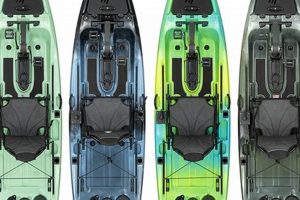
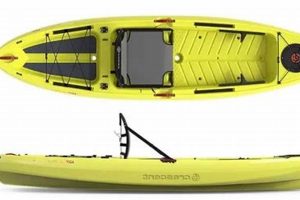
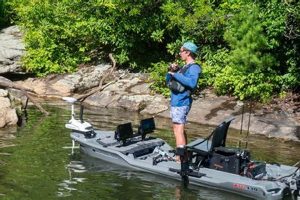
This type of watercraft, designed specifically for angling, blends the maneuverability of a kayak with features tailored to the needs of anglers. These features often include specialized seating, rod holders, storage compartments for tackle and gear, and even livewells or coolers for keeping catches fresh. An example would be a small, sit-on-top vessel equipped with multiple rod holders and a built-in sonar system for locating fish.
The stability and portability offered by these specialized vessels enhance the fishing experience. Anglers gain access to shallower waters and tighter spaces inaccessible to larger boats, expanding fishing opportunities. The compact nature of these kayaks allows for easier transport and launching, reducing the logistical barriers often associated with traditional boating. This specialized design represents a significant advancement in angling, offering a more intimate and efficient connection with the aquatic environment.
This discussion will further explore the various types, features, and accessories available for this type of watercraft, offering guidance for selecting the right vessel to match individual angling needs and preferences. Subsequent sections will delve into essential safety considerations and responsible kayaking practices.
Tips for Kayak Fishing
Effective angling from a kayak requires a blend of specialized techniques and careful preparation. The following tips offer guidance for enhancing safety and maximizing fishing success.
Tip 1: Prioritize Stability: Choose a kayak design offering ample stability, especially for beginners. Wider hulls and sit-on-top models generally provide greater stability than narrower or sit-inside designs. Consider adding outriggers for enhanced balance.
Tip 2: Master Basic Paddling Strokes: Efficient paddling conserves energy and allows for precise maneuvering. Practice forward, reverse, and turning strokes before venturing into fishing areas.
Tip 3: Organize Tackle and Gear: Efficient organization is crucial in the confined space of a kayak. Utilize tackle boxes, dry bags, and specialized storage compartments to keep essential gear readily accessible and protected from water.
Tip 4: Choose Appropriate Safety Equipment: Always wear a personal flotation device (PFD). Carry a whistle, signaling mirror, and a waterproof communication device. Inform someone of planned fishing locations and expected return times.
Tip 5: Understand Water Conditions: Check weather forecasts and tide charts before embarking on a fishing trip. Avoid paddling in strong winds, currents, or areas with heavy boat traffic. Be aware of potential hazards such as submerged rocks or debris.
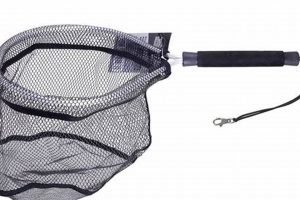
Tip 6: Practice Catch and Release Techniques: Handle fish carefully to minimize stress and ensure their survival upon release. Use appropriate hooks and landing nets. Keep fish in the water as much as possible during handling.
Tip 7: Respect the Environment: Pack out all trash and fishing line. Avoid disturbing wildlife or sensitive habitats. Adhere to local fishing regulations and licensing requirements.
By adhering to these guidelines, anglers can enhance their safety, improve their fishing success, and contribute to the preservation of aquatic environments.
These tips provide a foundation for safe and successful kayak fishing. Further exploration of specific techniques and regional considerations will enhance angling proficiency and contribute to a more rewarding experience on the water.
1. Targeted Design

Targeted design differentiates fishing kayaks from recreational models. Features like rod holders, strategically placed storage for tackle boxes, and integrated mounting points for fish finders exemplify this design focus. These elements are not merely additions but integral components conceived during the design phase. For example, recessed rod holders prevent interference during paddling, while strategically positioned storage compartments maintain balance and prevent capsizing. This targeted approach prioritizes angler needs, maximizing efficiency and enhancing the overall fishing experience.
Consider the impact of hull design. A wider, flatter hull provides superior stability for casting and reeling, particularly crucial in challenging conditions. Conversely, a narrower hull designed for speed might sacrifice stability, proving unsuitable for fishing. The design choice directly impacts performance. Similarly, specialized seating systems, often adjustable and ergonomically designed, provide crucial support for extended fishing trips. This attention to detail reflects the targeted nature of these kayaks, optimizing comfort and functionality for anglers.
Understanding the targeted design inherent in fishing kayaks enables informed purchasing decisions. Recognizing the purpose behind specific features allows anglers to select models best suited to their individual needs and fishing styles. Whether prioritizing stability for stillwater angling or maneuverability for navigating tight rivers, appreciating the targeted design philosophy underlying these vessels is essential for maximizing on-the-water effectiveness and enjoyment.
2. Enhanced Stability

Enhanced stability represents a critical design element within the pescador fishing kayak, directly influencing angler safety and fishing effectiveness. Stability derives from factors including hull design, kayak width, and center of gravity. Wider hulls generally provide greater initial stability, resisting tipping, while a lower center of gravity further enhances balance. This stability proves crucial during casting, reeling, and landing fish, particularly in challenging conditions like currents or wind. Consider the scenario of an angler battling a strong fish; a stable platform prevents capsizing, ensuring both angler safety and successful retrieval of the catch.
Specific design features contribute to this enhanced stability. For example, a flat-bottom hull offers exceptional initial stability, ideal for calm waters and stand-up fishing, while a pontoon-style hull provides maximum stability even in choppy conditions. Furthermore, features like outriggers or stabilizers can be added to enhance stability further, offering additional security for anglers in challenging environments or those seeking to maximize their range of motion while fishing. This tailored stability differentiates fishing kayaks from recreational models, reflecting the specific demands of angling.
The practical significance of enhanced stability cannot be overstated. It allows anglers to focus on fishing techniques rather than constantly battling to maintain balance. This enhanced stability translates to greater confidence on the water, facilitating more effective casting, hook setting, and fish fighting. Ultimately, a stable platform contributes significantly to a safer and more successful fishing experience, underscoring its crucial role in the pescador fishing kayak design.
3. Compact Portability

Compact portability stands as a defining characteristic of the pescador fishing kayak, significantly impacting its accessibility and usability. This attribute allows anglers to transport and launch their vessels in diverse locations, expanding fishing opportunities beyond the limitations of larger, less maneuverable boats. The following facets explore the components, examples, and implications of compact portability within the context of these specialized kayaks.
- Transportation Ease
Lightweight construction and manageable dimensions facilitate transport on roof racks, in truck beds, or even on trailers behind smaller vehicles. This ease of transport contrasts sharply with larger boats requiring specialized trailers and tow vehicles. An angler can easily transport a fishing kayak to remote lakes, rivers, or coastal areas, expanding their fishing range significantly. This aspect broadens access to previously inaccessible fishing grounds.
- Launch Simplicity
The compact nature of these kayaks simplifies launching procedures. They can be launched from shore, docks, or even shallow water, eliminating the need for boat ramps and complex maneuvering. This ease of launching expands fishing possibilities to smaller bodies of water and areas inaccessible to larger vessels. Consider launching from a secluded beach to access a remote fishing spot, a scenario easily achievable with a compact, portable kayak.
- Storage Convenience
Compact dimensions facilitate storage in garages, sheds, or even apartments. This contrasts with larger boats requiring dedicated storage facilities or marinas. This convenience reduces storage costs and simplifies maintenance. An angler can easily store their kayak at home, readily accessible for impromptu fishing trips, illustrating the practical benefits of compact portability.
- Navigational Agility
The compact size enhances maneuverability in narrow waterways, shallows, and areas with dense vegetation. This agility allows anglers to navigate tight corners and access hard-to-reach fishing spots, maximizing their angling opportunities. Consider navigating a narrow, winding creek; the compact kayak’s maneuverability proves essential for accessing prime fishing locations.
These facets of compact portability collectively enhance the versatility and usability of the pescador fishing kayak. By reducing logistical barriers associated with transportation, launching, and storage, these kayaks expand angling opportunities and provide greater freedom to explore diverse aquatic environments. This inherent portability distinguishes these vessels, making them a valuable tool for anglers seeking to maximize their reach and fishing potential.
4. Specialized Features

Specialized features distinguish pescador fishing kayaks from recreational counterparts, directly impacting angling effectiveness and overall experience. These features represent deliberate design choices catering specifically to the needs of anglers. Cause and effect relationships exist between these features and fishing outcomes. For example, integrated rod holders directly influence an angler’s ability to manage multiple lines and respond quickly to bites. Similarly, strategically placed storage compartments for tackle boxes and gear impact organizational efficiency, reducing time spent searching for equipment and maximizing time spent fishing. Built-in livewells or coolers maintain catch freshness, crucial for preserving the quality of harvested fish.
Consider the practical significance of these specialized features. Adjustable seating systems, often incorporating ergonomic design principles, provide crucial back support during extended fishing trips. This directly impacts angler comfort and reduces fatigue, allowing for longer, more productive outings. Similarly, integrated track systems or mounting points facilitate customization, enabling anglers to add accessories such as fish finders, GPS units, or camera mounts. This adaptability enhances the kayak’s versatility, catering to diverse fishing styles and technological preferences. Examples include dedicated storage for fishing rods, often positioned horizontally along the gunwales, and specialized compartments designed to accommodate tackle boxes securely, ensuring easy access while minimizing the risk of loss or damage.
Understanding the role of specialized features is crucial for selecting the right pescador fishing kayak. Analyzing individual fishing needs and matching them to specific features ensures optimal performance and enjoyment on the water. While some anglers may prioritize stability and ample storage, others might require enhanced maneuverability and compatibility with electronic fish-finding equipment. Recognizing the direct impact of these features on fishing outcomes enables informed decisions, maximizing the overall angling experience. This targeted approach to feature selection underscores the importance of aligning kayak capabilities with individual angling preferences and objectives.
5. Increased Accessibility
Increased accessibility significantly expands angling opportunities presented by the pescador fishing kayak. This concept encompasses physical access to diverse waterways, financial accessibility related to cost of ownership, and the ease of learning and mastering kayak fishing techniques. These factors collectively contribute to a more inclusive and versatile angling experience.
- Physical Access
Compact portability and maneuverability enable access to shallow waters, narrow creeks, and protected coastal areas often inaccessible to larger boats. This expands fishing opportunities beyond traditional boat ramps and marinas, allowing anglers to explore diverse ecosystems and target specific species in their preferred habitats. Imagine accessing a secluded cove teeming with fish, a location unreachable by conventional motorized craft. This exemplifies the expanded access offered by the pescador fishing kayak’s inherent portability and maneuverability.
- Financial Accessibility
Compared to motorized boats, fishing kayaks typically represent a lower initial investment and reduced ongoing maintenance costs. This financial accessibility removes significant barriers to entry for individuals interested in angling, broadening participation within the sport. Consider the difference between purchasing and maintaining a motorized boat versus a kayak; the latter presents a significantly lower financial hurdle, increasing the accessibility of fishing for a wider demographic.
- Ease of Learning
The basic techniques of paddling and maneuvering a fishing kayak are relatively easy to learn, even for beginners. This reduces the learning curve associated with traditional boating, encouraging broader participation and faster adoption. While mastering advanced techniques requires practice, the fundamental skills are readily accessible to individuals of varying physical abilities and experience levels. This contrasts with the complexity of operating and maintaining a motorized boat, which often requires specialized training and licensing.
- Adaptability for Diverse Needs
The pescador fishing kayak platform adapts to various fishing styles and physical limitations. Adaptive equipment and specialized seating arrangements cater to anglers with disabilities, further broadening inclusivity within the sport. This adaptability underscores the versatility of the platform, ensuring that individuals with varying needs and abilities can experience the joys of kayak fishing. Examples include specialized seating systems for individuals with mobility challenges and adaptive paddle designs for those with limited upper body strength.
Increased accessibility, encompassing physical access, affordability, ease of learning, and adaptability, distinguishes the pescador fishing kayak. These elements converge to create a more inclusive and versatile angling experience, opening up the sport to a wider audience and facilitating deeper exploration of diverse aquatic environments. This enhanced accessibility underscores the transformative potential of these specialized vessels within the realm of recreational fishing, fostering broader participation and appreciation for aquatic ecosystems.
6. Versatile Performance

Versatile performance defines the pescador fishing kayak, enabling diverse angling approaches across varied aquatic environments. This versatility stems from a combination of factors, including hull design, specialized features, and adaptability to changing conditions. Cause-and-effect relationships exist between these factors and the kayak’s performance. For instance, a stable hull design enables stand-up fishing, expanding casting angles and sight fishing opportunities. Specialized features like rod holders and anchor trolleys facilitate drift fishing or trolling, while adaptable seating configurations accommodate diverse paddling and fishing styles. Consider navigating a shallow, weedy river; the kayak’s maneuverability allows access to secluded pockets holding target species. Conversely, venturing into open, choppy waters, the same vessel’s stability and tracking capabilities become paramount.
Practical examples further illustrate this versatile performance. An angler might configure their kayak for a morning of trolling with multiple rods, then quickly reconfigure it for afternoon fly fishing in calmer waters. The adaptability extends to accommodating various fishing techniques, from jigging and bottom fishing to casting lures and fly fishing. This inherent versatility allows anglers to tailor their approach based on prevailing conditions, target species, and personal preferences. Consider the difference between targeting bass in a calm lake versus navigating swift currents for trout; the kayak’s adaptable configuration plays a crucial role in maximizing success in both scenarios.
Understanding the versatile performance inherent within the pescador fishing kayak is essential for maximizing its potential. Recognizing how specific features and design elements contribute to diverse angling approaches allows for informed decision-making and optimized on-the-water experiences. This adaptability empowers anglers to explore various fishing disciplines, expanding their skill sets and broadening their angling horizons. Ultimately, versatile performance defines the pescador fishing kayak’s adaptability and effectiveness across diverse aquatic environments and angling styles.
7. Effortless Maneuverability

Effortless maneuverability represents a defining characteristic of the pescador fishing kayak, directly influencing its effectiveness in diverse aquatic environments. This attribute allows anglers to navigate complex waterways, access secluded fishing spots, and position themselves strategically for optimal casting and retrieval. The following facets explore the components, examples, and implications of effortless maneuverability within the context of these specialized kayaks.
- Hull Design and Water Displacement
The hull design, specifically its length, width, and profile, directly impacts maneuverability. Shorter kayaks generally turn more quickly, while longer kayaks offer superior tracking in open water. The displacement hull, common in fishing kayaks, efficiently moves water aside, minimizing resistance and enhancing responsiveness to paddle strokes. This allows for precise adjustments in position and effortless navigation through tight spaces. Consider navigating a narrow, winding creek; a shorter kayak with a displacement hull proves highly maneuverable, enabling access to prime fishing locations inaccessible to larger vessels.
- Paddle Efficiency and Control
Efficient paddle strokes translate directly into effortless maneuverability. Proper paddling technique, combined with a well-designed paddle, maximizes propulsion and minimizes wasted energy. Asymmetrical paddle blades and lightweight construction further enhance control and responsiveness, allowing for quick turns and precise adjustments in direction. Consider maintaining position in a flowing river; efficient paddling technique and a responsive paddle are crucial for holding position and maximizing fishing effectiveness.
- Rudder and Skeg Systems
Rudders and skegs enhance directional stability and control, particularly in windy conditions or moving water. A rudder, controlled by foot pedals, provides active steering, while a skeg, a fixed or retractable fin, enhances tracking and reduces yaw (side-to-side movement). These features minimize the need for corrective paddle strokes, conserving energy and allowing anglers to focus on fishing rather than constant course correction. Imagine paddling across a windy lake; a rudder system maintains a straight course, minimizing drift and maximizing efficiency.
- Lightweight Construction and Balanced Design
Lightweight construction reduces overall inertia, making the kayak more responsive to paddle input. A well-balanced design, with the center of gravity positioned optimally, further enhances maneuverability, allowing for quick turns and changes in direction without sacrificing stability. Consider maneuvering through dense vegetation; a lightweight, balanced kayak responds quickly to paddle adjustments, enabling navigation through tight spaces without tipping or becoming entangled.
These facets of effortless maneuverability collectively contribute to the pescador fishing kayak’s effectiveness as a specialized angling platform. By facilitating precise navigation, efficient positioning, and reduced physical exertion, these attributes allow anglers to focus on the core aspects of fishing, maximizing their enjoyment and success on the water. This inherent maneuverability distinguishes these vessels, empowering anglers to explore diverse aquatic environments and access prime fishing locations with ease and precision.
Frequently Asked Questions
This section addresses common inquiries regarding specialized fishing kayaks, providing concise and informative responses to facilitate informed decision-making and enhance understanding of these vessels.
Question 1: What differentiates a fishing kayak from a recreational kayak?
Fishing kayaks incorporate specialized features like rod holders, tackle storage, and often enhanced stability for angling activities, distinguishing them from recreational models designed primarily for general paddling.
Question 2: Are these kayaks suitable for beginners?
Several models cater specifically to beginners, prioritizing stability and ease of use. Selecting a wider, sit-on-top design often proves beneficial for novice anglers.
Question 3: What safety precautions should one take when kayak fishing?
Wearing a personal flotation device (PFD) is paramount. Checking weather conditions, informing someone of planned fishing locations, and carrying essential safety gear like a whistle and signaling device are also crucial.
Question 4: How does one choose the right size and type of fishing kayak?
Consider individual needs, fishing style, and target water bodies. Longer kayaks track better in open water, while shorter models offer greater maneuverability in tight spaces. Weight capacity and storage needs also factor into selection.
Question 5: What essential accessories enhance the kayak fishing experience?
A comfortable seat, paddle leash, anchor, and appropriate fishing gear tailored to target species enhance comfort and effectiveness on the water. A fish finder and GPS unit can also prove beneficial.
Question 6: What are the typical maintenance requirements for a fishing kayak?
Regular rinsing with fresh water after each use, especially in saltwater environments, helps prevent corrosion and prolong the lifespan of the vessel. Proper storage out of direct sunlight also contributes to longevity.
Addressing these common inquiries provides a foundational understanding of specialized fishing kayaks. Further research based on individual needs and preferences will facilitate informed purchasing decisions and enhance on-the-water experiences.
The subsequent section will explore advanced techniques for kayak angling, covering topics such as drift fishing, trolling, and anchoring strategies specific to these vessels.
Conclusion
This exploration of specialized fishing kayaks has highlighted their unique design elements, versatile performance characteristics, and significant contributions to modern angling practices. From enhanced stability and maneuverability to specialized features and increased accessibility, these vessels represent a refined approach to fishing, enabling anglers to connect with aquatic environments in a more intimate and effective manner. The examination of hull design, specialized features like rod holders and storage compartments, and the adaptability of these kayaks to diverse fishing styles underscores their transformative impact on the angling experience.
The evolution of the fishing kayak continues to refine the angling experience. As technology advances and design innovations emerge, these specialized vessels will undoubtedly play an increasingly prominent role in shaping the future of recreational fishing. The adaptability and targeted design of these kayaks promise to further enhance angling opportunities, fostering a deeper connection between anglers and the aquatic ecosystems they explore. Careful consideration of individual needs, paired with informed selection, empowers anglers to maximize the potential of these remarkable vessels, enriching their fishing experiences and fostering a greater appreciation for the aquatic world.