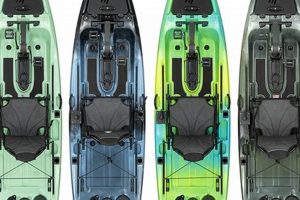
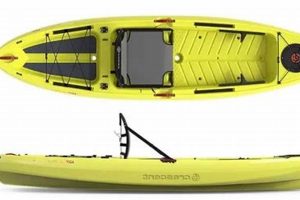
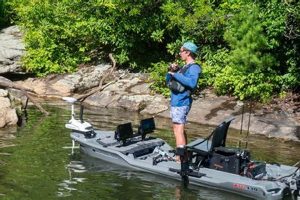
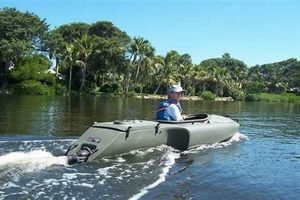
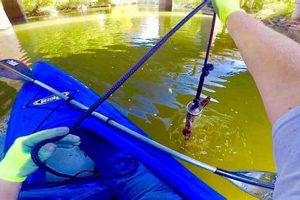
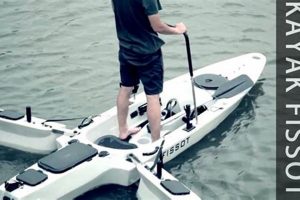
Compact, easily transportable kayaks designed specifically for angling represent a significant advancement in fishing accessibility. These vessels prioritize minimal weight without sacrificing stability or functionality, often incorporating specialized features like rod holders, gear tracks, and even livewells. A typical example might be a kayak weighing under 40 pounds, constructed from lightweight materials such as high-density polyethylene or carbon fiber.
The reduced weight facilitates easier car-topping, carrying across portages, and launching from diverse locations, including remote ponds, shallow creeks, and larger bodies of water inaccessible to heavier craft. This portability opens up new fishing opportunities, particularly for those without trailers or large vehicles. Historically, kayak fishing often involved heavier, less maneuverable boats. The development of lighter materials and construction techniques has revolutionized the sport, enabling anglers to explore previously unreachable waters with greater ease and efficiency.
This discussion will further explore various aspects of these specialized watercraft, including an examination of popular materials, design considerations, essential accessories, and recommended fishing techniques.
Tips for Utilizing Compact Fishing Kayaks
Optimizing the use of lightweight fishing kayaks involves careful consideration of several factors, from pre-trip planning to on-the-water techniques. These tips aim to enhance safety, efficiency, and overall fishing success.
Tip 1: Prioritize Stability Assessment: Before embarking on any fishing trip, conduct a thorough stability test in calm, shallow water. Understanding the vessel’s balance point is crucial, especially when adding gear or making casting movements.
Tip 2: Streamline Gear Selection: Minimize weight and maximize utility by selecting essential fishing gear and packing it efficiently. Utilize waterproof bags and consider gear tethers to prevent loss in case of capsizing.
Tip 3: Master Efficient Paddling Techniques: Proper paddling technique conserves energy and allows for greater maneuverability. Research and practice different strokes to optimize performance in various water conditions.
Tip 4: Employ Appropriate Anchoring Strategies: Lightweight anchors or stake-out poles are recommended for maintaining position in currents or wind. Understanding anchoring techniques specific to these kayaks is essential.
Tip 5: Practice Self-Rescue Procedures: Capsizing, while rare, is a possibility. Practicing self-rescue techniques in a controlled environment ensures preparedness and increases confidence on the water.
Tip 6: Observe Water Safety Guidelines: Adhering to established safety protocols, such as wearing a personal flotation device and carrying a whistle, is paramount. Check weather conditions before departure and be aware of potential hazards.
By integrating these practices, anglers can maximize the advantages offered by compact fishing kayaks while ensuring safe and productive fishing experiences.
These tips provide a foundation for successful kayak fishing excursions. Further research and practice will enhance proficiency and enjoyment on the water.
1. Portability

Portability stands as a defining characteristic of ultra light fishing kayaks, significantly impacting accessibility and the range of fishable waters. Reduced weight facilitates transport and deployment, opening up opportunities previously limited by heavier, less manageable craft. Understanding the facets of portability enhances appreciation for its role in transforming the kayak fishing experience.
- Reduced Weight:
The defining feature of portability. Kayaks under 40 pounds, sometimes even below 30, enable single-person carrying and eliminate the need for specialized trailers or rooftop assistance. This translates to easier loading, unloading, and navigating challenging terrain to reach secluded fishing spots. For example, an angler can easily carry a lightweight kayak across a portage between lakes or down a steep bank to a remote river access point.
- Compact Dimensions:
Length and width also contribute to portability. Shorter kayaks, while potentially sacrificing some tracking performance, are easier to maneuver on land and store in smaller spaces. Foldable or modular designs further enhance portability, allowing for compact storage and transport in vehicles with limited cargo capacity. A shorter kayak can be easily stored in a small apartment or car trunk, unlike longer, traditional kayaks.
- Carry Handles and Straps:
Ergonomically designed carry handles and integrated straps simplify transport. Well-placed handles distribute weight evenly, minimizing strain during portages. Some models incorporate backpack-style straps for hands-free carrying over longer distances. A comfortable carrying system can make a significant difference when hiking to a remote fishing destination.
- Launch and Retrieval Simplicity:
Lightweight construction simplifies launching and retrieving the kayak from the water. This ease of handling is particularly beneficial in shallow water or areas with limited access. The reduced weight requires less effort to slide the kayak into and out of the water, minimizing physical strain and maximizing fishing time.
These elements of portability, working in concert, significantly broaden the scope of kayak fishing, allowing anglers to explore diverse and previously inaccessible waterways. The ease of transport, combined with efficient launch and retrieval, maximizes fishing opportunities while minimizing logistical challenges, ultimately enhancing the overall fishing experience.
2. Maneuverability

Maneuverability represents a critical performance attribute in ultra light fishing kayaks, directly influencing navigation efficiency and angling effectiveness. The ability to precisely and effortlessly position the vessel is paramount for accessing prime fishing locations, navigating complex waterways, and responding to changing fish behavior. Understanding the factors contributing to maneuverability provides insights into its impact on the overall fishing experience.
- Hull Design:
Hull shape significantly impacts maneuverability. Shorter kayaks with flatter hulls generally turn more quickly, while longer, more streamlined hulls excel in tracking and maintaining straight-line speed. A shorter, wider hull allows for rapid turns in tight quarters, such as navigating through dense vegetation or swiftly changing direction to pursue a fish. Conversely, a longer, narrower hull provides superior stability and glide in open water but sacrifices turning responsiveness.
- Weight Distribution:
The distribution of weight within the kayak influences its responsiveness. A balanced load, with gear evenly distributed, promotes optimal maneuverability. Concentrating weight towards the center enhances stability but can reduce turning agility. Proper weight distribution, often achieved through strategic gear placement, allows for efficient changes in direction and maintains balance during casting or landing fish.
- Paddle Length and Blade Shape:
Paddle characteristics play a crucial role in maneuvering. Shorter paddles offer quicker strokes and enhanced control for precise movements, while longer paddles generate more power for covering distance. Blade shape also influences efficiency and control, with asymmetrical blades often preferred for their smoother, more powerful strokes. Selecting the appropriate paddle length and blade shape optimizes paddling efficiency and maneuverability.
- Water Conditions:
Maneuverability is influenced by prevailing water conditions. Currents, wind, and waves can significantly impact control and require adjustments in paddling technique and positioning. In strong currents or windy conditions, a shorter kayak with a flatter hull might be easier to control than a longer, more streamlined design. Understanding how water conditions affect maneuverability is crucial for safe and efficient navigation.
These interconnected elements demonstrate the multifaceted nature of maneuverability in ultra light fishing kayaks. Balancing these factors allows anglers to optimize performance, effectively navigating diverse water conditions and accessing prime fishing spots with precision and control, ultimately maximizing fishing success.
3. Stability

Stability constitutes a critical performance characteristic in ultra light fishing kayaks, directly influencing angler safety, comfort, and fishing effectiveness. Maintaining balance while casting, reeling, and landing fish is paramount, especially in challenging conditions. This exploration delves into the multifaceted nature of stability in these specialized vessels, highlighting its importance and examining key influencing factors.
- Hull Design:
Hull shape profoundly impacts stability. Wider, flatter hulls generally offer greater initial stability, resisting tipping during static activities like casting. However, they may be more susceptible to secondary stability issues, meaning they can feel less stable once tilted beyond a certain point. Conversely, narrower, more rounded or V-shaped hulls may feel less stable initially but often provide greater secondary stability, making them more resistant to capsizing in rougher water. Pontoon-style hulls, featuring outriggers for added stability, represent another approach, often found in specialized fishing kayak designs.
- Center of Gravity:
The kayak’s center of gravity and the angler’s position significantly influence stability. Sitting lower in the kayak lowers the overall center of gravity, increasing stability. Distributing weight evenly within the kayak also contributes to balance. Leaning too far to one side elevates the center of gravity and increases the risk of capsizing. Maintaining a low center of gravity, achieved through proper seating position and balanced gear distribution, is crucial for maximizing stability.
- Water Conditions:
Prevailing water conditions, including wind, waves, and currents, directly impact stability. Strong winds and choppy water can destabilize even the most stable kayak. Understanding how different hull designs perform in various conditions is crucial for safe operation. In rougher waters, kayaks with higher initial stability or specialized features like outriggers may offer a significant advantage, while in calmer conditions, the stability differences between hull types become less pronounced.
- Kayak Width and Length:
Wider kayaks inherently offer greater initial stability due to their increased beam (width). Longer kayaks, while potentially providing better tracking and speed, can be less maneuverable and more susceptible to windage (the effect of wind pushing on the kayak). Shorter kayaks, while often more maneuverable, can feel less stable due to their reduced length. The optimal length and width for stability depend on the intended use and the angler’s experience level. Wider kayaks are generally recommended for beginners or anglers prioritizing stability over speed and tracking.
These interconnected elements underscore the complex interplay of factors influencing stability in ultra light fishing kayaks. Careful consideration of hull design, weight distribution, water conditions, and kayak dimensions are essential for ensuring safe and effective operation. Selecting a kayak with appropriate stability characteristics for the intended fishing environment and angler experience level maximizes both safety and fishing success.
4. Durability

Durability represents a critical consideration in ultra light fishing kayaks, directly impacting lifespan, safety, and overall value. While minimizing weight is paramount in these designs, it cannot come at the expense of structural integrity. The inherent challenges lie in balancing lightweight construction with robust performance capable of withstanding the rigors of on-water use, including impacts, abrasion, and exposure to the elements. Choosing appropriate materials and construction techniques becomes paramount in achieving this balance.
Several factors influence durability. Material selection plays a primary role. High-density polyethylene (HDPE) offers excellent impact resistance and UV stability, making it a popular choice for budget-friendly kayaks. Thermoformed ABS, often employed in higher-end models, delivers enhanced rigidity and durability, albeit at a higher price point. Composite materials, such as fiberglass and carbon fiber, offer superior strength-to-weight ratios, enabling lighter yet robust constructions, but come with a premium cost. Construction techniques, including rotomolding, thermoforming, and hand-laid composites, each impart distinct durability characteristics. Rotomolded kayaks generally offer superior impact resistance, while thermoformed and composite kayaks excel in stiffness and structural integrity. Proper care and maintenance, including UV protection, proper storage, and timely repairs, further extend the lifespan of any kayak, regardless of material or construction.
Consider a scenario involving navigating shallow, rocky rivers. An ultra light fishing kayak constructed from durable HDPE can withstand minor impacts and abrasion, ensuring the angler’s safety and the kayak’s longevity. Conversely, a kayak constructed from a less durable material might sustain damage, potentially compromising its structural integrity and requiring costly repairs. Understanding the relationship between material selection, construction techniques, and real-world usage scenarios is crucial for informed purchasing decisions and maximizing the long-term value of an ultra light fishing kayak. Ultimately, durability ensures not only the vessel’s longevity but also the angler’s safety and continued enjoyment on the water.
5. Fishing Features

Specialized fishing features distinguish ultra light fishing kayaks from recreational models, enhancing angling efficiency and overall experience. These integrated features cater specifically to the needs of anglers, providing essential functionalities for tackle management, rod placement, and fish handling. Careful consideration of these features is crucial during kayak selection, aligning functionality with individual fishing styles and target species.
- Rod Holders:
Dedicated rod holders, often flush-mounted or adjustable, secure fishing rods while paddling, trolling, or rigging. Multiple rod holders accommodate diverse fishing techniques and allow for quick transitions between setups. For instance, a kayak with adjustable rod holders enables anglers to position rods at optimal angles for trolling or bottom fishing. This hands-free rod management enhances fishing efficiency and prevents rod loss.
- Tackle Storage:
Integrated storage compartments, including dry hatches, tackle boxes, and bungee cord systems, provide organized and accessible storage for lures, bait, and essential gear. Waterproof compartments protect sensitive electronics and gear from water damage. A well-designed storage system ensures efficient tackle management, minimizing clutter and maximizing fishing time. For example, a readily accessible tackle box allows for quick lure changes without disrupting fishing flow.
- Anchor Systems:
Anchor trolleys or stake-out pole systems allow for precise boat positioning in currents or wind, maintaining optimal fishing location over structure or cover. These systems prevent drifting and maximize fishing effectiveness in specific areas. For instance, an anchor trolley enables controlled drifting along a river channel, presenting lures effectively to target areas.
- Fish Finders and Electronics Mounts:
Mounting systems accommodate fish finders, GPS units, and other electronic devices, providing valuable information about water depth, fish location, and navigation. Integrated transducer scuppers simplify transducer installation and enhance sonar performance. For example, a fish finder mount allows for clear visibility of underwater structure and fish activity, informing fishing strategy and increasing catch rates. These integrated systems enhance situational awareness and optimize fishing effectiveness.
These specialized features, seamlessly integrated into ultra light fishing kayak designs, contribute significantly to enhanced angling performance. Selecting a kayak with the appropriate features tailored to specific fishing needs optimizes efficiency, organization, and overall fishing success. From hands-free rod management to strategic boat positioning and enhanced situational awareness, these features collectively elevate the kayak fishing experience, allowing anglers to focus on the pursuit of their target species.
6. Material Selection

Material selection represents a critical factor influencing the performance, durability, and cost of ultra light fishing kayaks. Balancing minimal weight with structural integrity and affordability necessitates careful consideration of available materials and their inherent properties. Understanding the characteristics of common kayak construction materials informs appropriate selection aligned with individual needs and budgetary constraints.
- High-Density Polyethylene (HDPE):
HDPE stands as a prevalent material in kayak construction due to its affordability, impact resistance, and UV stability. Rotomolded HDPE kayaks are exceptionally durable, capable of withstanding impacts and abrasion encountered in various on-water environments. While heavier than composite materials, HDPE offers a robust, cost-effective solution suitable for recreational anglers. For example, an HDPE kayak can withstand scraping against rocks or logs without sustaining significant damage, ensuring longevity and reliable performance in demanding conditions.
- Thermoformed ABS:
Thermoformed ABS (Acrylonitrile Butadiene Styrene) offers enhanced rigidity and lighter weight compared to HDPE. This process yields kayaks with precise shaping and improved structural integrity, often resulting in enhanced performance. While generally more expensive than HDPE, thermoformed ABS provides a balance of durability, performance, and cost, appealing to anglers seeking lighter weight without compromising structural integrity. For instance, an ABS kayak can track more efficiently and respond better to paddle strokes due to its increased rigidity.
- Composites (Fiberglass, Carbon Fiber):
Composite materials, such as fiberglass and carbon fiber, represent the premium segment in kayak construction. These materials offer superior strength-to-weight ratios, enabling the creation of exceptionally light and high-performance kayaks. However, this performance comes at a premium cost. Composite kayaks are generally the lightest option, offering enhanced speed, maneuverability, and portability. A carbon fiber kayak, for example, might weigh significantly less than a comparable HDPE kayak, enabling easier transport and enhanced paddling efficiency. However, the higher cost of composite materials reflects their advanced performance characteristics.
- Inflatable Kayaks (PVC, Hypalon):
While not as common for dedicated fishing kayaks, inflatable kayaks constructed from durable PVC or Hypalon offer exceptional portability and storage convenience. These materials allow the kayak to be deflated and packed into a compact size, ideal for anglers with limited storage space or those requiring ultimate portability. Inflatable kayaks are particularly suitable for calm water environments and offer a lightweight, easily transportable option. However, they typically do not match the performance or durability of rigid kayaks in demanding conditions. For instance, an inflatable kayak can be easily packed into a backpack for hiking to remote fishing locations, offering unparalleled portability.
The selection of kayak material directly impacts weight, performance, durability, and cost. Understanding the trade-offs between these factors is essential for informed decision-making. While HDPE offers a durable and affordable option, composite materials provide superior performance at a higher price point. Ultimately, the ideal material depends on individual fishing needs, budget, and intended usage scenarios, balancing weight, durability, and performance to create the optimal ultra light fishing kayak experience.
Frequently Asked Questions
This section addresses common inquiries regarding ultra light fishing kayaks, providing concise and informative responses to facilitate informed decision-making.
Question 1: What defines an “ultra light” fishing kayak?
The term typically refers to kayaks weighing under 45 pounds, often significantly less, designed specifically for fishing. This weight threshold prioritizes portability and ease of transport.
Question 2: Are these kayaks suitable for larger anglers or heavier loads?
Weight capacity varies significantly among models. It’s crucial to verify the manufacturer’s specified capacity to ensure safe and stable operation given individual angler weight and gear requirements. Exceeding the specified capacity can compromise stability and safety.
Question 3: Do these lighter kayaks sacrifice stability or durability?
Not necessarily. Modern designs and advanced materials often achieve both lightweight construction and robust performance. However, it remains essential to research specific models and consider individual needs regarding stability preferences. Reading reviews and conducting on-water tests can provide valuable insights.
Question 4: What are the primary advantages of choosing an ultra light model?
The key advantages lie in enhanced portability and ease of transport. These kayaks simplify car-topping, carrying across portages, and launching from diverse locations, expanding fishing access to remote or challenging-to-reach waters.
Question 5: Are specialized fishing features compromised in ultra light designs?
Many ultra light fishing kayaks incorporate specialized features such as rod holders, tackle storage, and anchor systems, designed to enhance angling efficiency. However, the extent of these features can vary between models, necessitating careful consideration based on individual fishing styles and preferences.
Question 6: What maintenance considerations apply to these kayaks?
Proper care and maintenance, including UV protection, appropriate storage practices, and timely repairs, contribute significantly to the longevity of any kayak. While specific maintenance requirements might vary depending on the construction material, general best practices apply to all kayaks to ensure optimal performance and extend lifespan.
Careful consideration of these frequently asked questions empowers informed selection and ensures the chosen kayak aligns with individual angling needs and priorities.
For further inquiries or specific product recommendations, consulting specialized retailers or experienced kayak anglers is recommended.
Ultra Light Fishing Kayaks
Exploration of ultra light fishing kayaks reveals a compelling blend of portability, maneuverability, and specialized fishing functionality. Careful consideration of material selection, hull design, and integrated features remains paramount for optimizing performance and ensuring angler safety. Balancing lightweight construction with durability and stability presents inherent design challenges, successfully addressed through advancements in materials science and kayak engineering. Ultimately, the ideal ultra light fishing kayak represents a synergy of these elements, tailored to individual angling styles and target waterways.
The increasing popularity of these specialized vessels underscores a broader trend towards accessible and versatile fishing experiences. As technology continues to advance, further refinements in design and materials are anticipated, promising even greater performance and expanded fishing opportunities. Informed selection, coupled with responsible on-water practices, empowers anglers to fully realize the potential of ultra light fishing kayaks, fostering a deeper connection with the aquatic environment and enhancing the pursuit of angling success.