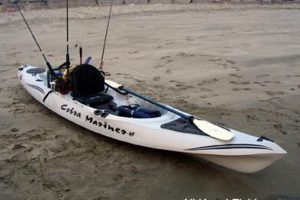
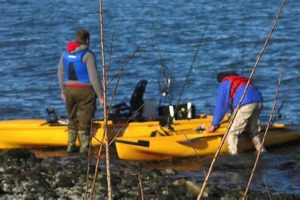
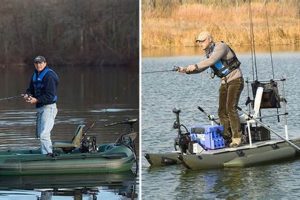
Specialized small watercraft designed for angling in river environments offer enhanced stability, maneuverability, and storage for fishing gear. These vessels are typically shorter and wider than traditional kayaks, allowing anglers to navigate shallow water and strong currents effectively while maintaining balance. Often equipped with features like rod holders, anchor trolleys, and specialized seating, they provide a platform for a comfortable and productive fishing experience in flowing waters.
River-specific small boat designs provide significant advantages to anglers. Their stability is crucial in navigating turbulent waters and maintaining balance while casting or reeling in fish. Enhanced maneuverability allows for precise navigation through narrow channels, around obstacles, and in swift currents. Integrated storage options keep essential gear organized and accessible, maximizing fishing efficiency. The development of these specialized vessels has expanded angling opportunities, allowing access to previously difficult-to-reach fishing grounds and fostering a more immersive connection with river ecosystems.
This exploration will delve into the key features that distinguish these specialized watercraft, including hull design, propulsion systems, and essential accessories. Furthermore, it will examine specific considerations for selecting an appropriate vessel based on river characteristics, target species, and individual angling styles.
Tips for River Kayak Fishing
Successful river kayak fishing requires careful planning and consideration of various factors, from vessel selection to safety precautions. The following tips offer guidance for a productive and enjoyable experience.
Tip 1: Understand River Dynamics: Research the specific river’s characteristics, including current speed, water levels, potential hazards (like strainers or rapids), and access points. This knowledge informs appropriate vessel selection and trip planning.
Tip 2: Choose the Right Vessel: Select a kayak designed for river environments, prioritizing stability and maneuverability. Consider features like a shorter length, wider beam, and a flatter hull for optimal performance in flowing water.
Tip 3: Prioritize Safety Gear: Always wear a personal flotation device (PFD). Carry essential safety equipment, including a whistle, first-aid kit, throw rope, and communication device. Inform someone of your fishing plans and expected return time.
Tip 4: Master Paddling Techniques: Develop proficient paddling skills, including eddy turns, ferries, and peel-outs, to navigate currents and river features effectively and safely.
Tip 5: Employ Appropriate Anchoring Techniques: Utilize an anchor trolley system for controlled anchoring in current, allowing the kayak to position naturally while fishing. Understand proper anchor deployment and retrieval techniques for different river conditions.
Tip 6: Select River-Specific Tackle and Techniques: Choose lures and tackle appropriate for the target species and river environment. Employ fishing techniques suited to flowing water, such as drifting, upstream casting, or anchoring and fishing eddies.
Tip 7: Respect the Environment: Practice Leave No Trace principles. Pack out all trash, avoid disturbing wildlife, and respect riparian habitats. Adhere to local fishing regulations and licensing requirements.
By adhering to these guidelines, anglers can enhance their river fishing experience while ensuring safety and environmental responsibility. Successful outings depend on preparation, informed decision-making, and a respect for the dynamic nature of river environments.
This foundational knowledge prepares anglers to explore advanced techniques and further refine their river fishing approach, leading to increased success and a deeper appreciation for this unique angling experience.
1. Stability

Stability represents a critical performance characteristic in fishing kayaks designed for river environments. Maintaining balance amidst moving water, varying currents, and the actions of casting and reeling requires a stable platform. A kayak’s inherent stability significantly impacts angler safety, fishing efficiency, and overall experience.
- Hull Design:
Hull design directly influences stability. Wider, flatter hulls provide primary stability, resisting initial tipping. Rounded or V-shaped hulls offer secondary stability, recovering balance after initial displacement. River fishing kayaks often feature wider, flatter hulls with a moderate rocker profile for enhanced primary stability in unpredictable currents.
- Center of Gravity:
A lower center of gravity contributes to increased stability. Kayak design and weight distribution influence the center of gravity. Sitting lower in the kayak and distributing weight evenly enhances stability. Specialized fishing kayaks often feature lower seating positions to optimize the center of gravity.
- Water Conditions:
River conditions directly impact stability requirements. Faster currents, turbulent water, and obstacles necessitate greater stability. Anglers should select a kayak with appropriate stability characteristics for the intended river environment. Calm, slow-moving rivers allow for kayaks with less pronounced stability features.
- Angler Actions:
Casting, reeling, and landing fish introduce dynamic movements that can compromise stability. A stable kayak minimizes the impact of these actions, reducing the risk of capsizing. Features like standing platforms, though potentially reducing initial stability, offer increased leverage and a wider base when engaged, aiding balance during dynamic angling activities.
The interplay of hull design, center of gravity, water conditions, and angler actions dictates a fishing kayak’s overall stability. Selecting a kayak with appropriate stability for the intended river environment significantly enhances angler safety, fishing efficiency, and the overall enjoyment of the experience. Prioritizing stability ensures a confident and productive outing on the water.
2. Maneuverability

Maneuverability in a river fishing kayak dictates its responsiveness and control within dynamic current flows. Efficient navigation through complex river environments, characterized by obstacles, narrow passages, and fluctuating currents, necessitates precise and agile handling. A highly maneuverable kayak allows anglers to position themselves effectively for optimal fishing presentations and respond quickly to changing river conditions, maximizing fishing success and ensuring safety.
- Hull Design:
Hull design significantly influences maneuverability. Shorter kayaks with a rockered hull (curved upwards at the bow and stern) typically offer enhanced maneuverability, enabling tighter turns and quicker responsiveness to paddle strokes. Conversely, longer kayaks with a flatter hull track straighter and glide more efficiently in open water but sacrifice agility in confined spaces. River-specific kayaks often prioritize a balance between maneuverability and tracking, incorporating a moderate rocker profile for versatile performance.
- Length and Width:
Shorter kayaks generally turn more quickly, while longer kayaks excel in tracking and maintaining momentum. Wider kayaks provide increased stability but may sacrifice some maneuverability. River fishing kayaks often favor a shorter length for enhanced agility in navigating obstacles and tight turns within the river’s course.
- Water Conditions:
Maneuverability requirements vary depending on the river’s characteristics. Fast-flowing rivers with obstacles and narrow channels demand higher maneuverability. Slower, wider rivers permit the use of kayaks with less emphasis on turning performance. Understanding the target river’s dynamics informs appropriate kayak selection.
- Paddling Technique:
While kayak design influences inherent maneuverability, paddling technique significantly impacts its practical application. Effective paddling strokes, such as sweep strokes and draws, enhance turning performance and allow for precise boat control. Developing proficient paddling skills complements a maneuverable kayak, maximizing its potential in challenging river environments.
The interplay between hull design, kayak dimensions, water conditions, and paddling technique determines a river fishing kayak’s overall maneuverability. Selecting a kayak optimized for the intended river environment empowers anglers to navigate effectively, position precisely, and respond efficiently to changing conditions. Prioritizing maneuverability contributes significantly to fishing success and overall safety in the dynamic environment of a river.
3. Storage Capacity

Storage capacity in a river fishing kayak directly impacts an angler’s preparedness and efficiency on the water. Adequate storage accommodates essential gear, including tackle boxes, rods, safety equipment, and personal items. Sufficient and well-designed storage allows for organized access to equipment, minimizing clutter and maximizing fishing time. For instance, a kayak with dedicated rod holders, dry storage compartments, and bungee rigging systems facilitates efficient tackle management and protects valuable gear from water damage. Conversely, limited storage capacity restricts the amount of gear an angler can carry, potentially hindering preparedness for diverse fishing scenarios or requiring multiple trips to transport equipment. Consider a scenario where an angler needs to switch from lure fishing to fly fishing mid-trip; ample storage allows for the organized transport of both sets of equipment, enabling a seamless transition. Insufficient storage might necessitate leaving essential gear behind, limiting adaptability and potentially compromising fishing success.
Practical applications of ample storage extend beyond simply carrying more gear. Organized storage contributes to angler safety by keeping essential safety equipment, like a first-aid kit or signaling devices, readily accessible in emergencies. Furthermore, dedicated storage compartments protect sensitive electronic devices, such as fish finders or GPS units, from water damage, ensuring their functionality throughout the fishing trip. Dedicated storage also minimizes clutter within the kayak’s cockpit, enhancing both comfort and safety by preventing entanglement with fishing lines or obstructions during casting or landing fish. The ability to stow gear securely also enhances stability by maintaining a balanced weight distribution within the kayak, particularly important in dynamic river currents.
In conclusion, adequate storage capacity represents a crucial factor in selecting a fishing kayak for rivers. It facilitates efficient gear management, enhances safety, and contributes to the overall fishing experience. Anglers should carefully consider their specific needs and the anticipated river environment when evaluating storage options. Prioritizing organized and accessible storage empowers anglers to focus on fishing, maximizing their time on the water and increasing their chances of success while ensuring safety and preparedness.
4. Durability
Durability represents a critical factor in fishing kayak selection, particularly for river environments. Rivers present unique challenges, including rocks, submerged debris, and fluctuating water levels, demanding a robust vessel capable of withstanding impacts and abrasion. A durable kayak ensures longevity, minimizes repair costs, and contributes to angler safety in demanding river conditions. Material selection, construction techniques, and overall design influence a kayak’s ability to withstand the rigors of river use.
- Material Selection:
Kayak construction materials directly impact durability. High-density polyethylene (HDPE) offers excellent impact resistance and durability, making it a popular choice for river kayaks. Thermoformed plastics provide enhanced rigidity and abrasion resistance but may be more susceptible to cracking under stress. Composite materials, such as fiberglass or carbon fiber, offer superior strength and lighter weight but often come at a higher price point. The chosen material must balance performance characteristics with durability requirements.
- Construction Techniques:
Manufacturing techniques influence a kayak’s structural integrity and resistance to wear. Rotomolding, a common process for HDPE kayaks, creates a seamless, highly durable hull. Thermoforming produces kayaks with a consistent thickness and precise shaping. Composite kayaks utilize layered construction methods, influencing strength and stiffness. Examining the construction details provides insights into a kayak’s long-term durability.
- Hull Design:
Specific hull designs contribute to durability in river environments. A multi-chine hull, featuring multiple angled surfaces, deflects impacts and enhances tracking in turbulent water. Rounded hulls offer better maneuverability but may be more susceptible to abrasion. Reinforced keels and chines provide additional protection against impacts from rocks and debris. The hull design should balance performance needs with the durability required for the intended river conditions.
- Fitting and Hardware:
Durable fittings and hardware contribute to the overall longevity and performance of a river fishing kayak. Stainless steel or marine-grade aluminum hardware resists corrosion in freshwater environments. High-quality hatches and seals prevent water intrusion, protecting stored gear and maintaining buoyancy. Reinforced carry handles and deck rigging provide secure attachment points for gear and facilitate transport. Attention to these details ensures reliable performance and extended kayak lifespan.
The combined influence of material selection, construction methods, hull design, and hardware quality determines a fishing kayak’s overall durability. Investing in a durable kayak minimizes the risk of damage and ensures reliable performance in demanding river environments. A robust and well-constructed kayak enhances angler safety, extends the vessel’s lifespan, and contributes to a more enjoyable and productive fishing experience on the river.
5. River Suitability
River suitability represents a critical factor in selecting a fishing kayak, dictating its effectiveness and safety in specific river environments. Matching kayak characteristics to the intended river’s dynamicsincluding water flow rate, obstacles, and overall sizedirectly impacts angling success and safety. A kayak well-suited to a slow-moving, wide river might perform poorly in a fast-flowing, narrow stream with numerous obstacles. For example, a longer, narrower kayak designed for tracking and speed in open water would be difficult to maneuver in a tight, technical stream requiring frequent turns and obstacle avoidance. Conversely, a shorter, wider kayak optimized for stability and maneuverability might lack the tracking and speed desired for covering longer distances on a larger river. Understanding the target river’s characteristics is therefore paramount in selecting an appropriate kayak.
Several key kayak features influence river suitability. Hull design plays a crucial role; a flatter hull with a pronounced rocker profile enhances maneuverability in technical rapids and shallow water, while a V-shaped hull improves tracking and speed in calmer, deeper rivers. Kayak length also factors significantly. Shorter kayaks offer enhanced agility in tight spaces, while longer kayaks provide better tracking and speed in open water. Weight capacity considerations extend beyond angler weight to include gear, influencing stability and performance. Finally, specialized features like anchor trolleys and rod holders enhance fishing efficiency and safety in specific river environments. For instance, an anchor trolley system allows controlled anchoring in current, essential for maintaining position while fishing in moving water. Understanding the interplay of these features in relation to the target river’s characteristics ensures optimal kayak performance and angler safety.
Careful consideration of river suitability optimizes fishing success and safety. Analyzing the target river’s flow rate, obstacles, width, and depth informs appropriate kayak selection. Matching kayak characteristics, such as hull design, length, weight capacity, and specialized features, to the river’s dynamics enhances maneuverability, stability, and overall fishing efficiency. Neglecting river suitability can lead to decreased fishing success, compromised safety, and a less enjoyable experience on the water. Therefore, prioritizing river suitability in kayak selection represents a critical step in preparing for a safe and productive river fishing adventure.
6. Comfort
Comfort in a river fishing kayak directly influences angler endurance, focus, and overall enjoyment. Extended periods on the water, often in challenging conditions, necessitate a comfortable seating arrangement and ergonomic design. Discomfort can detract from the fishing experience, leading to fatigue, reduced concentration, and a potentially shorter trip. Prioritizing comfort features ensures a more productive and enjoyable outing.
- Seat Design:
Seat design plays a crucial role in overall comfort. Adjustable seating systems accommodate varying body types and preferences, allowing anglers to customize back support, legroom, and seat height. High-back seats with lumbar support promote proper posture and reduce strain during long hours on the water. Breathable fabrics enhance comfort in warm weather, while padded seating surfaces cushion against impacts and vibrations. A well-designed seat minimizes fatigue and maximizes fishing time.
- Legroom and Footrests:
Adequate legroom and adjustable footrests contribute significantly to comfort and paddling efficiency. Proper leg positioning enhances stability and allows for effective paddle strokes. Adjustable footrests accommodate different leg lengths, ensuring a comfortable and biomechanically sound paddling position. Sufficient legroom prevents cramping and allows for changes in posture throughout the fishing trip.
- Kayak Width and Stability:
Kayak width and stability indirectly influence comfort. A stable kayak provides a secure and predictable platform, reducing anxiety and enhancing angler confidence. Increased stability allows for more freedom of movement within the kayak, facilitating comfortable casting and reeling. A wider kayak generally offers more space and stability, contributing to a more comfortable fishing experience.
- Deck Layout and Accessibility:
A well-designed deck layout with easy access to essential gear enhances comfort and efficiency. Strategically placed rod holders, tackle storage compartments, and accessory mounts keep essential items within easy reach, minimizing unnecessary movement and maximizing fishing time. A clutter-free deck enhances safety and promotes a more relaxed and comfortable fishing experience.
The combination of seat design, legroom, kayak stability, and deck layout contributes to the overall comfort of a river fishing kayak. Prioritizing these features allows anglers to maintain focus and energy throughout their fishing trip, enhancing enjoyment and maximizing time on the water. Investing in a comfortable kayak translates to a more productive and rewarding river fishing experience.
Frequently Asked Questions
This section addresses common inquiries regarding kayaks designed for river fishing, providing concise and informative responses to assist in informed decision-making.
Question 1: What key features distinguish a river fishing kayak from other kayak types?
River fishing kayaks typically feature shorter lengths, wider beams, and flatter hulls for enhanced maneuverability and stability in moving water. They often include specialized features such as rod holders, anchor trolleys, and ample storage for fishing gear.
Question 2: How does river flow rate influence kayak selection?
Faster currents necessitate kayaks with enhanced stability and maneuverability, allowing anglers to maintain control and navigate effectively. Slower rivers permit the use of kayaks with less emphasis on these characteristics, potentially prioritizing speed or tracking.
Question 3: What safety precautions are essential for river kayak fishing?
Wearing a personal flotation device (PFD) is paramount. Carrying essential safety equipment, including a whistle, first-aid kit, and communication device, is strongly recommended. Informing someone of fishing plans and expected return time enhances safety protocols.
Question 4: How does one choose an appropriate paddle length for a river fishing kayak?
Paddle length depends on factors including kayak width, angler height, and paddling style. Consult retailer recommendations or utilize online paddle sizing charts for guidance. Testing different paddle lengths can further refine selection.
Question 5: What maintenance practices ensure a river fishing kayak’s longevity?
Regular cleaning with mild soap and water removes dirt and grime. Storing the kayak out of direct sunlight and extreme temperatures prevents material degradation. Inspecting and addressing any damage promptly ensures continued performance and safety.
Question 6: How does one transport a river fishing kayak effectively?
Roof racks designed for kayaks provide secure transport on vehicles. Kayak trailers offer an alternative for transporting multiple kayaks or larger vessels. Properly securing the kayak with straps and tie-down points prevents damage and ensures safe transit.
Understanding these fundamental aspects of river fishing kayaks empowers informed purchasing decisions and contributes to safe and successful fishing experiences.
The next section delves into advanced techniques for river kayak fishing, building upon the foundational knowledge presented thus far.
Fishing Kayak for Rivers
Careful selection of a fishing kayak designed for river environments is crucial for a successful and safe angling experience. This exploration has highlighted the essential factors to consider, including stability, maneuverability, storage capacity, durability, river suitability, and comfort. Each characteristic plays a vital role in optimizing performance and ensuring angler safety in the dynamic conditions of a river. Prioritizing these elements empowers anglers to navigate effectively, access desired fishing locations, and manage gear efficiently, ultimately leading to a more productive and enjoyable outing.
The information presented here provides a foundational understanding of the specialized considerations for river kayak fishing. Further research into specific river characteristics, target species, and advanced angling techniques will enhance preparedness and contribute to successful river fishing experiences. Appropriate kayak selection, combined with responsible angling practices and respect for the river environment, ensures the continued enjoyment and preservation of this unique angling pursuit.