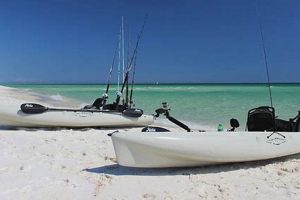
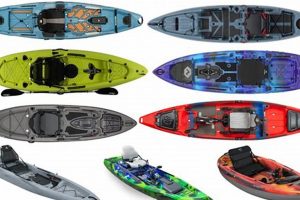
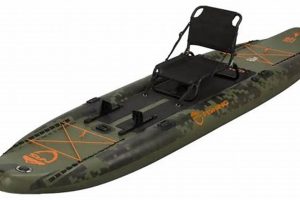
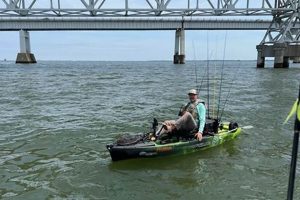
Entry-level kayaks designed for angling offer stability, simplicity, and affordability. These vessels often feature shorter lengths and wider beams, making them easier to maneuver and less prone to tipping, ideal for novice paddlers learning to balance while casting and reeling. They often come equipped with essential features like rod holders, storage compartments for tackle, and even pre-installed fish finders. An example would be a sit-on-top model with a paddle included, ready for use on calm waters.
Choosing an appropriate vessel significantly enhances the angling experience for newcomers to the sport. Enhanced stability builds confidence on the water, while integrated features streamline the process of fishing from a kayak. The relatively low cost of entry compared to larger, more specialized fishing boats makes it an accessible pathway into kayak angling. This growing popularity is driven by the combination of affordability, specialized design, and the unique, close-to-the-water experience it offers. Over time, advancements in materials and design have led to lighter, more durable, and feature-rich options tailored for beginner anglers.
This exploration into selecting the right kayak for beginning anglers will cover key factors such as hull design, essential features, and considerations for different fishing environments. Subsequent sections will delve into specific features, budget-friendly options, and tips for safe and successful kayak fishing excursions.
Tips for Selecting an Entry-Level Fishing Kayak
Choosing an appropriate vessel is crucial for a positive initial experience in kayak angling. The following tips offer guidance for selecting a kayak suited to the needs of novice anglers.
Tip 1: Prioritize Stability: Wider, shorter hulls offer greater stability compared to longer, narrower designs. A stable platform is essential for beginners still developing their balance and coordination while fishing.
Tip 2: Consider Sit-on-Top Kayaks: Sit-on-top models offer inherent stability and self-bailing capabilities, making them ideal for beginners and offering ease of entry and exit.
Tip 3: Look for Essential Features: Rod holders, paddle clips, and storage compartments streamline the fishing experience and keep essential gear organized and accessible.
Tip 4: Choose the Right Length and Weight Capacity: Kayak length influences maneuverability and tracking, while weight capacity should accommodate the angler’s weight, gear, and potential catch.
Tip 5: Start with Calm Waters: Initial kayaking experiences should take place on calm lakes, ponds, or slow-moving rivers to develop paddling skills and build confidence.
Tip 6: Research and Compare Different Models: Reading reviews, comparing specifications, and seeking advice from experienced anglers can inform purchasing decisions.
Tip 7: Test Before Buying (If Possible): Demoing a kayak, if feasible, provides valuable insight into its stability, comfort, and handling characteristics.
Selecting the right kayak dramatically improves the angling experience for newcomers. A stable and well-equipped vessel allows novice anglers to focus on fishing rather than managing the challenges of an unsuitable craft.
By considering these tips, prospective kayak anglers can make informed decisions, enhancing their safety and enjoyment on the water. The following section will offer further guidance on specific kayak features and budgeting considerations.
1. Stability

Stability stands as a paramount consideration for novice kayak anglers. A stable platform minimizes the risk of capsizing, particularly during activities that shift the center of gravity, such as casting, reeling, and landing fish. Beginners often lack the refined balance and paddling technique of experienced kayakers, making inherent stability a crucial safety and confidence-building feature. A stable kayak allows the angler to focus on fishing rather than constantly correcting balance, leading to a more enjoyable and productive experience. For example, a wider, flatter hull design inherently offers more initial stability than a narrower, V-shaped hull, reducing the likelihood of tipping, especially in calm water conditions.
The connection between stability and fishing kayak selection extends beyond simple safety. Increased stability translates directly to increased fishability. A stable kayak provides a secure platform for casting accurately, fighting fish effectively, and handling landing nets or other equipment. The angler can confidently stand up in some stable kayak models, significantly expanding fishing opportunities and enhancing sight fishing capabilities. Furthermore, a stable platform contributes to a more relaxed and enjoyable fishing experience, reducing anxiety and fatigue associated with constantly maintaining balance. Consider, for instance, a beginner angler attempting to land a sizeable fish in a less stable kayak; the precarious balance could lead to a lost catch or even a capsize, while a stable platform would allow the angler to focus on the task at hand.
In summary, prioritizing stability when selecting a fishing kayak for beginners is crucial for both safety and fishing effectiveness. A stable platform builds confidence, reduces the risk of capsizing, and enhances the overall fishing experience. While other factors like maneuverability and storage are important, stability remains a fundamental requirement for newcomers to the sport. This emphasis on stability often leads beginners towards sit-on-top kayaks with wider hulls, providing a secure and confidence-inspiring foundation for developing paddling skills and enjoying the sport of kayak angling.
2. Sit-on-Top Design

Sit-on-top kayak design offers significant advantages for novice anglers. The open deck provides inherent stability, reducing the likelihood of capsizing, a critical concern for those new to paddling and balancing while fishing. Self-bailing scupper holes further enhance stability by allowing water to drain away quickly, preventing the kayak from becoming swamped. This design also simplifies re-entry after an accidental capsize or intentional swim, a reassuring feature for beginners. The elevated seating position improves visibility, aiding in navigation and fish spotting. Consider a novice angler encountering unexpected chop or needing to retrieve a dropped lure; the inherent stability and self-bailing features of a sit-on-top design offer a significant safety advantage. Additionally, the ease of entry and exit makes launching and landing less daunting for beginners, particularly in shallow water or from a shoreline.
Beyond stability and safety, sit-on-top kayaks offer practical benefits for fishing. The open deck allows for greater freedom of movement, facilitating casting, reeling, and landing fish. Gear storage is often more accessible and customizable on sit-on-top kayaks, with readily available deck space for mounting rod holders, tackle boxes, and fish finders. The ability to quickly shift positions or even stand up, depending on the kayak’s design, enhances sight fishing and maneuverability. For example, an angler targeting shallow-water species benefits from the ability to stand and sight cast, a capability often easier in a sit-on-top design. Moreover, the simplified design of sit-on-top kayaks generally makes them more affordable and easier to maintain than sit-inside models, a significant consideration for beginners investing in their first fishing kayak.
In summary, sit-on-top kayak design offers a combination of stability, accessibility, and practicality that makes it particularly well-suited for beginner anglers. The enhanced stability and self-bailing features contribute to a safer and more confident on-the-water experience, while the open deck and adaptable storage options facilitate various fishing techniques. These advantages, coupled with often lower price points, contribute to the popularity of sit-on-top kayaks among those entering the sport of kayak angling. While specific features and designs vary, the fundamental advantages of sit-on-top construction offer a compelling starting point for newcomers seeking a stable and user-friendly platform for fishing.
3. Maneuverability
Maneuverability represents a critical factor influencing the suitability of a fishing kayak for beginners. Ease of turning and responsiveness to paddle strokes directly impacts the angler’s ability to navigate waterways effectively, position the kayak for optimal casting, and respond to changing conditions. Beginners often fish in protected environments such as ponds, small lakes, and slow-moving rivers, where obstacles like fallen trees, emergent vegetation, and shallow areas necessitate precise maneuvering. A highly maneuverable kayak allows novice anglers to navigate these complex environments safely and efficiently. For instance, a shorter kayak with a flatter hull design generally turns more quickly than a longer kayak with a pronounced keel, proving advantageous when navigating tight spaces or avoiding obstacles in shallow water. This responsiveness reduces frustration and allows beginners to focus on fishing rather than struggling to control the kayak.
The relationship between maneuverability and fishing success extends beyond basic navigation. Precise boat control enables anglers to position themselves effectively for casting to specific targets, whether that involves working along a weed bed, holding position in a current, or approaching a promising shoreline structure. Quick adjustments in kayak orientation are crucial for presenting lures effectively and responding to fish strikes. Consider a scenario where a fish strikes near a submerged log; a highly maneuverable kayak allows the angler to quickly reposition, minimizing the risk of snagging or losing the fish. Moreover, maneuverability plays a role in safety, enabling beginners to react quickly to unforeseen circumstances such as shifting winds, approaching boats, or sudden changes in water depth. The ability to turn quickly and efficiently can prevent collisions and minimize the risk of capsizing in challenging conditions.
In summary, prioritizing maneuverability when selecting a fishing kayak for beginners contributes significantly to both fishing success and overall safety. A kayak that responds easily to paddle input allows novice anglers to navigate complex environments, position themselves effectively for casting, and react safely to changing conditions. While factors such as stability and storage capacity remain important, the ease with which a kayak can be maneuvered should not be overlooked. This characteristic often leads beginners toward shorter, wider kayaks with a flatter hull design, offering a balance of stability and responsiveness well-suited to developing paddling skills and exploring various fishing locations.
4. Storage Capacity
Adequate storage capacity represents a crucial factor in selecting a fishing kayak suitable for beginners. Kayak angling necessitates carrying a variety of equipment, including tackle boxes, rods, reels, safety gear, and personal items. Insufficient storage leads to a cluttered deck, hindering movement, casting, and overall fishing effectiveness. Beginners, often still developing their organizational skills on the water, benefit significantly from ample storage options to keep gear secure, readily accessible, and protected from the elements. Consider a novice angler attempting to manage multiple rods, a tackle box, and a landing net in a cramped cockpit; the lack of organization can lead to tangled lines, lost gear, and a frustrating fishing experience. Ample storage compartments, bungee cords, and designated rod holders allow for efficient organization, promoting a safer and more productive outing. For example, dedicated storage for a tackle box keeps lures and terminal tackle organized and within easy reach, while rod holders secure rods, preventing them from being damaged or lost overboard.
The impact of sufficient storage extends beyond simple convenience. Organized storage contributes directly to safety by minimizing clutter and maximizing deck space for movement. A clear deck reduces tripping hazards and allows for quick adjustments in body position, crucial for maintaining balance and reacting to unexpected situations. Dry storage compartments protect essential items like phones, wallets, and first-aid kits from water damage, ensuring they remain functional in case of emergency. Furthermore, adequate storage facilitates longer fishing trips by allowing anglers to carry sufficient supplies, including food, water, and extra layers of clothing. Imagine a beginner embarking on a multi-hour fishing trip; sufficient storage for these essentials ensures comfort and preparedness, allowing for a more enjoyable and extended time on the water. The ability to carry enough gear for various fishing scenarios, such as different lure types or specialized equipment for targeting specific species, further enhances the versatility of the kayak fishing experience.
In summary, sufficient storage capacity should be a primary consideration when selecting a fishing kayak for beginners. Ample and well-designed storage options contribute significantly to organization, safety, and overall fishing effectiveness. A clutter-free deck promotes efficient movement and reduces the risk of accidents, while dry storage protects essential items. The ability to carry sufficient gear enhances preparedness and allows for longer, more versatile fishing trips. While stability and maneuverability remain important factors, adequate storage capacity is essential for a positive and productive introduction to kayak angling. This often translates to choosing kayaks with integrated storage compartments, deck rigging, and specialized features like tackle box holders and rod management systems, ultimately enhancing the overall experience for newcomers to the sport.
5. Weight Capacity

Weight capacity represents a critical specification for beginner fishing kayaks, directly impacting safety and performance. Selecting a kayak with appropriate weight capacity ensures stability, prevents submersion, and maintains maneuverability. Understanding the relationship between weight capacity, angler weight, and gear weight is crucial for a safe and enjoyable on-the-water experience. Inadequate weight capacity compromises stability, increasing the risk of capsizing, particularly when combined with the dynamic movements inherent in fishing. Overloading a kayak reduces freeboard, making it more susceptible to swamping in waves or choppy conditions. Furthermore, exceeding the recommended weight capacity negatively impacts performance, making the kayak sluggish and difficult to maneuver.
- Total Weight Calculation
Calculating the total weight to be carried is the first step in determining the appropriate kayak weight capacity. This calculation includes the angler’s weight, the combined weight of all fishing gear (rods, reels, tackle boxes, etc.), and any additional items like safety equipment, food, and water. Accurately estimating and summing these weights is essential for making an informed kayak selection. For example, an angler weighing 175 pounds with 50 pounds of gear requires a kayak with a minimum weight capacity of 225 pounds. Overestimating weight is preferable to underestimating, providing a margin of safety and ensuring optimal kayak performance.
- Stability Considerations
Weight capacity directly influences kayak stability. A kayak loaded near its maximum capacity sits lower in the water, reducing freeboard and increasing the risk of capsizing. While the kayak may still float, its stability decreases significantly, making it more susceptible to tipping, particularly during movements like casting or landing a fish. Beginners, often still developing their balance and paddling skills, benefit from selecting a kayak with a weight capacity significantly higher than their anticipated load, providing an added margin of stability and enhancing confidence on the water.
- Performance Implications
Exceeding a kayak’s recommended weight capacity negatively impacts its performance. A heavily loaded kayak sits deeper in the water, increasing drag and reducing paddling efficiency. This makes the kayak feel sluggish and unresponsive, requiring more effort to paddle and maneuver. Reduced maneuverability hinders navigation, particularly in challenging environments with obstacles or currents. Furthermore, an overloaded kayak may not track straight, requiring constant correction and further increasing paddling fatigue. For beginners, optimal performance translates to easier paddling, enhanced maneuverability, and a more enjoyable overall experience.
- Safety Margins
Selecting a kayak with a weight capacity exceeding the anticipated load provides a crucial safety margin. This margin accounts for unexpected weight increases, such as catching a large fish or encountering unforeseen weather conditions that may require carrying additional gear. Furthermore, a higher weight capacity enhances stability, reducing the likelihood of capsizing in challenging situations. For beginners, this safety margin contributes to a more secure and confident on-the-water experience, allowing them to focus on learning the sport and enjoying their time on the water.
In conclusion, understanding weight capacity is fundamental to selecting a suitable fishing kayak for beginners. Accurately calculating total weight, considering stability implications, understanding performance impacts, and incorporating a safety margin are crucial steps in the selection process. Choosing a kayak with appropriate weight capacity ensures safety, enhances performance, and contributes to a positive and enjoyable introduction to kayak angling. This informed approach empowers beginners to confidently explore the sport, focusing on developing their skills and experiencing the unique rewards of fishing from a kayak.
6. Essential Features (Rod Holders, etc.)

Specialized features significantly enhance the functionality and enjoyment of fishing kayaks designed for beginners. These features streamline essential tasks, improve safety, and allow novice anglers to focus on the fishing experience. Rod holders, for example, secure fishing rods, freeing hands for paddling, maneuvering, and handling other equipment. This is particularly crucial for beginners who are still developing their paddling and boat control skills. Imagine navigating a narrow waterway while simultaneously managing a fishing rod; a rod holder prevents the rod from becoming an impediment or being lost overboard. Similarly, paddle parks or leashes secure the paddle when not in use, preventing accidental loss and ensuring it’s readily available when needed. Integrated storage compartments and deck rigging provide designated spaces for tackle boxes, safety gear, and other essentials, minimizing clutter and maximizing deck space for movement and comfort.
Further enhancing the beginner’s experience, features like adjustable footrests contribute to paddling comfort and efficiency, especially during longer outings. A comfortable seating system with adequate back support reduces fatigue and allows for extended fishing sessions. While not strictly essential, features like pre-installed transducer mounts for fish finders simplify the installation of electronic accessories, enhancing fish-finding capabilities. Built-in cup holders, while seemingly minor, add to the overall convenience and enjoyment, keeping beverages secure and readily accessible. Consider a beginner angler spending several hours on the water; a comfortable seat and readily available hydration enhance the overall experience, reducing fatigue and discomfort. The inclusion of such features transforms the kayak from a simple vessel into a dedicated fishing platform optimized for ease of use and enjoyment.
In summary, essential features like rod holders, paddle parks, and storage compartments transform a basic kayak into a specialized fishing platform optimized for beginners. These features enhance safety, improve efficiency, and allow novice anglers to focus on the core aspects of the sport. While the specific features considered “essential” may vary depending on individual preferences and fishing styles, their overall contribution to a positive and productive kayak fishing experience is undeniable. Investing in a kayak equipped with these key features significantly improves the learning curve and overall enjoyment for newcomers, fostering a greater appreciation for the sport and encouraging continued participation. This focus on user-friendly design and functionality ultimately makes kayak angling more accessible and enjoyable for a wider range of individuals, contributing to the growth and popularity of the sport.
7. Affordability
Affordability plays a significant role in the accessibility of kayak fishing for beginners. The relatively low cost of entry compared to motorized boats makes it an attractive option for individuals exploring the sport. Budget-conscious beginners can find suitable kayaks equipped with essential features without a substantial financial investment. This affordability factor contributes significantly to the growth and popularity of kayak angling, opening the door to a wider range of participants. For example, a stable and functional sit-on-top kayak designed for beginners can often be purchased for a fraction of the cost of a small fishing boat and trailer, eliminating the need for significant upfront investment and ongoing maintenance costs associated with motorized vessels. This allows newcomers to experience the sport without a substantial financial barrier, encouraging participation and fostering a growing community of kayak anglers.
The availability of various price points within the beginner kayak market further enhances accessibility. Entry-level models provide basic functionality at lower price points, while mid-range options offer enhanced features and improved performance for a slightly higher investment. This tiered pricing structure caters to different budgets and allows beginners to select a kayak that aligns with their financial resources and desired level of performance. Consider a prospective angler with a limited budget; an entry-level kayak provides a viable entry point, allowing them to experience the sport and determine their level of commitment before investing in a more expensive model. Conversely, an individual with more disposable income might choose a mid-range kayak with additional features like integrated rod holders, enhanced storage, and a more comfortable seating system, improving their overall fishing experience.
In summary, affordability represents a key driver in the increasing popularity of kayak fishing for beginners. The lower cost of entry compared to traditional boat ownership eliminates a significant financial barrier, opening the sport to a broader audience. The tiered pricing structure within the beginner kayak market further enhances accessibility, catering to various budgets and allowing individuals to select kayaks that align with their financial resources and desired level of performance. This focus on affordability contributes to the growth and democratization of the sport, fostering a diverse and inclusive community of kayak anglers. However, prospective buyers should remain mindful of balancing affordability with quality and essential features, ensuring the chosen kayak meets their safety and performance needs on the water. Choosing a kayak solely based on price may lead to compromises in stability, durability, or essential features, ultimately diminishing the enjoyment and potentially compromising the safety of the on-the-water experience.
Frequently Asked Questions about Fishing Kayaks for Beginners
This section addresses common queries regarding the selection and use of fishing kayaks specifically designed for beginners. Clear and concise answers aim to provide prospective kayak anglers with the information necessary to make informed decisions.
Question 1: What type of fishing kayak is best suited for beginners?
Sit-on-top kayaks are generally recommended for beginners due to their inherent stability, self-bailing capabilities, and ease of entry and exit. Wider, shorter hulls offer enhanced stability compared to longer, narrower designs.
Question 2: What essential features should beginners look for in a fishing kayak?
Essential features include rod holders, paddle parks or leashes, storage compartments for tackle and gear, and a comfortable seating system. Adjustable footrests and sufficient weight capacity are also important considerations.
Question 3: What is a reasonable budget for a beginner fishing kayak?
Functional and stable beginner kayaks can be found within a price range of $300 to $800. Higher-priced models may offer advanced features and materials, but a quality entry-level kayak can be obtained within a more modest budget.
Question 4: Where is the best place to purchase a fishing kayak for beginners?
Reputable kayak retailers, both online and brick-and-mortar, offer a variety of beginner-friendly kayaks. Purchasing from established retailers often provides access to expert advice, warranties, and potential after-sales service.
Question 5: What safety precautions should beginners take when kayak fishing?
Always wear a personal flotation device (PFD). Inform someone of your fishing plans, including location and expected return time. Check weather conditions before heading out and dress appropriately for the environment. Carry essential safety gear, including a whistle, signaling device, and first-aid kit.
Question 6: What are the best fishing conditions for beginners in a kayak?
Beginners should start in calm, protected waters such as small lakes, ponds, or slow-moving rivers. Avoid areas with strong currents, heavy boat traffic, or exposed open water until paddling skills and experience are developed.
Careful consideration of these frequently asked questions provides prospective kayak anglers with a solid foundation for making informed purchasing decisions and prioritizing safety on the water.
The next section will offer practical tips and techniques for a successful and enjoyable kayak fishing experience.
Fishing Kayak for Beginners
Selecting an appropriate fishing kayak significantly influences the beginner’s introduction to the sport. Prioritizing stability, maneuverability, and essential features like rod holders and storage compartments ensures a comfortable, efficient, and productive fishing experience. Sit-on-top designs are generally recommended for their inherent stability and ease of use. Careful consideration of weight capacity, budget, and intended fishing environment further contribute to a successful kayak selection. Understanding these elements allows newcomers to confidently navigate the market and choose a vessel suited to their individual needs and preferences. The exploration of these key factors provides prospective kayak anglers with a foundational understanding of the critical aspects involved in selecting appropriate equipment.
The increasing accessibility and specialized design of fishing kayaks continue to expand opportunities for individuals seeking unique and rewarding angling experiences. Informed selection empowers beginners to embark on this journey with confidence, fostering a deeper appreciation for the sport and the natural environment. The future of kayak angling rests on the continued development of innovative designs and accessible resources, promising an enriching experience for anglers of all skill levels. Ultimately, the thoughtful selection of a fishing kayak is an investment in enjoyment, adventure, and a lifelong connection with the outdoors.