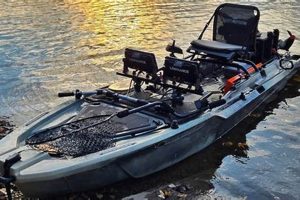
A packaged set of fishing rod and reel specifically designed for use in a kayak typically constitutes a compact and balanced system. These specialized sets often feature shorter rod lengths for easier maneuverability in the confined space of a kayak, and may include features like corrosion-resistant components for saltwater environments. An example might include a 7-foot medium-heavy rod paired with a 3000-size spinning reel pre-spooled with braided fishing line.
The advantages of such a system are numerous. Shorter rods offer improved casting accuracy and control in tight quarters, while balanced rod-and-reel combinations reduce fatigue during long fishing trips. Pre-spooled reels and included accessories can save anglers time and effort in setting up their gear. Historically, kayak anglers often adapted existing fishing equipment, but the increasing popularity of the sport has driven manufacturers to develop purpose-built equipment offering superior performance and convenience.
Further exploration of this topic will cover essential features to consider when selecting these specialized fishing tools, popular rod and reel types best suited for various fish species and fishing techniques, and recommended accessories to enhance the kayak fishing experience.
Tips for Selecting a Kayak Fishing System
Choosing the right equipment is crucial for a successful and enjoyable kayak fishing experience. Several factors should be considered to ensure the chosen system aligns with individual needs and target species.
Tip 1: Consider Rod Length and Action. Shorter rods (typically 6-7 feet) are preferable for kayak fishing due to space constraints. A fast action rod is ideal for techniques requiring precise lure control, while a moderate action rod provides more forgiveness and casting distance.
Tip 2: Choose the Right Reel Type. Spinning reels are generally recommended for beginners due to their ease of use and versatility. Baitcasting reels offer greater accuracy and control for experienced anglers.
Tip 3: Select Appropriate Line and Line Weight. Braided line is favored for its strength, sensitivity, and resistance to abrasion. Line weight should be chosen based on the target species and fishing environment.
Tip 4: Evaluate Rod and Reel Materials. Corrosion-resistant materials like graphite or fiberglass are essential, especially for saltwater fishing. Reel components should be durable and saltwater-resistant.
Tip 5: Prioritize Comfort and Balance. A comfortable grip and balanced rod-reel combination reduce fatigue during long fishing trips, allowing anglers to focus on the task at hand.
Tip 6: Consider Combo Features. Some combos include rod holders, tackle boxes, or other accessories that can enhance the overall fishing experience.
Tip 7: Research and Compare Options. Read reviews and compare different models before making a purchase to ensure the selected combo meets specific needs and budget constraints.
Careful consideration of these factors will result in a well-matched system optimized for performance and enjoyment. A proper setup enables anglers to focus on the sport and maximizes their chances of success on the water.
By understanding the nuances of specialized equipment and selecting the right tools, anglers can significantly enhance their kayak fishing experience and achieve greater success on the water. The following section will provide concluding remarks and reiterate the importance of choosing appropriate gear.
1. Rod Length

Rod length is a critical factor influencing the effectiveness of a kayak fishing rod combo. Kayak anglers operate within a limited space, often amidst obstacles like overhanging branches or fellow anglers. Shorter rods, typically between 6 and 7.5 feet, offer superior maneuverability and casting control in these confined environments. Longer rods, while advantageous for casting distance in open water, become cumbersome and impractical in a kayak. The reduced arc of a shorter rod’s swing minimizes the risk of snagging gear or striking the kayak itself during the casting motion. For example, a 7-foot medium-heavy rod provides sufficient backbone for battling larger fish while remaining manageable within the confines of a kayak cockpit. Conversely, a 9-foot surf rod, while excellent for shore fishing, would be unwieldy and potentially hazardous when used from a kayak.
The relationship between rod length and kayak fishing extends beyond casting. Shorter rods facilitate more precise lure presentations and improved hooksets, especially in close-quarters combat with fish. A shorter rod allows for quicker reactions and more direct control over the line and lure, essential for techniques like flipping and pitching or working lures through tight cover. Furthermore, shorter rods enhance leverage during the fight, making it easier to control and land fish efficiently. Imagine battling a strong fish near a snag-filled shoreline; a shorter rod provides the necessary control to steer the fish away from danger and land it successfully, whereas a longer rod might prove too cumbersome to react effectively.
Selecting the appropriate rod length for a kayak fishing rod combo is fundamental to optimizing performance and enjoyment. While personal preference plays a role, understanding the practical implications of rod length in the context of a kayak’s limited space and the demands of various fishing techniques is paramount. Choosing a rod length that balances casting control, fish-fighting ability, and overall maneuverability ensures a more successful and enjoyable kayak fishing experience. The compromise between casting distance and control necessitates careful consideration based on target species and fishing environment.
2. Rod Action

Rod action, denoting the rod’s bending point and flexibility, significantly influences a kayak fishing rod combo’s performance. Understanding the nuances of rod action is crucial for selecting a setup optimized for specific fishing techniques and target species. Appropriate rod action contributes to casting accuracy, lure presentation, and effective fish fighting from a kayak.
- Fast Action
Fast action rods bend primarily in the top third. This characteristic delivers swift tip recovery, enabling precise casts and enhanced sensitivity for detecting subtle bites. Fast action is ideal for techniques requiring accurate lure manipulation, such as jigging or twitching, and provides ample power for setting hooks quickly. Consider a fast action rod when targeting bass in heavy cover or working a topwater lure with precise movements. This action transmits vibrations directly to the angler’s hand, enabling quick reactions to strikes.
- Moderate Action
Moderate action rods bend in the top half, offering a balance between casting distance and fish-fighting power. This action provides a more forgiving casting stroke, beneficial for longer casts or when using lighter lures. Moderate action rods offer a blend of sensitivity and shock absorption, making them suitable for a variety of techniques and species. A moderate action spinning rod paired with a lighter line is well-suited for targeting trout in open water or casting crankbaits for a variety of species.
- Slow Action
Slow action rods bend throughout their length, providing maximum flex and shock absorption. This action is ideal for fighting larger fish, as the rod’s bend cushions runs and reduces the risk of line breakage. Slow action rods excel with techniques requiring a softer presentation, such as fishing live bait or drifting. Consider a slow action rod when targeting catfish or carp, where the rod’s flexibility helps absorb powerful runs and tire the fish. However, the slower response time may hinder hooksets with fast-striking fish.
- Extra-Fast Action
Extra-fast action rods, a subset of fast action, exhibit even greater stiffness, bending primarily at the tip. This action offers maximum sensitivity and responsiveness, crucial for techniques requiring pinpoint accuracy and immediate hooksets. Extra-fast action is often preferred for finesse fishing applications, such as drop-shotting or shaky head rigging, where detecting subtle bites and reacting quickly is paramount. This action excels when targeting finicky fish in clear water, allowing anglers to feel even the slightest nibble and set the hook with precision.
Selecting the appropriate rod action within a kayak fishing rod combo significantly impacts an angler’s effectiveness and enjoyment on the water. Matching rod action to target species, fishing techniques, and personal preference ensures optimal performance and maximizes the chances of success. Consider the balance between casting distance, lure presentation, sensitivity, and fish-fighting power when choosing a rod action to create a cohesive and effective kayak fishing system.
3. Reel Type

Reel selection significantly impacts the efficacy of a kayak fishing rod combo. The reel’s mechanics directly influence casting distance, line retrieval, and fish-fighting capabilities. Choosing the appropriate reel type hinges on factors such as target species, fishing techniques, and angler experience. Understanding the advantages and disadvantages of various reel types is crucial for creating a balanced and effective kayak fishing system.
- Spinning Reels
Spinning reels, characterized by a fixed spool and open-faced design, are renowned for their ease of use and versatility. Their simple operation makes them ideal for beginners. Spinning reels accommodate various line types and weights, catering to diverse fishing techniques and target species. A lightweight spinning reel paired with a light or medium-light rod effectively targets panfish and trout, while a larger spinning reel combined with a heavier rod handles inshore saltwater species. The open-faced design minimizes line tangles, simplifying casting and retrieval. However, spinning reels can be susceptible to line twist, particularly when using lighter lines.
- Baitcasting Reels
Baitcasting reels, featuring a revolving spool and more complex mechanics, offer greater casting accuracy and control for experienced anglers. Their higher gear ratios enable faster line retrieval, beneficial for techniques requiring quick lure presentations. Baitcasting reels excel when using heavier lines and lures, making them suitable for targeting larger species like bass or pike. A low-profile baitcasting reel combined with a medium-heavy rod provides the power and precision necessary for working heavier lures in thick cover. However, baitcasting reels require practice to master, as improper casting technique can lead to backlash (line tangles).
- Spincast Reels
Spincast reels, also known as closed-faced reels, offer a simplified design that minimizes line tangles, making them suitable for beginners. The enclosed spool protects the line from environmental factors and simplifies casting. Spincast reels are often paired with lighter rods and lines, making them suitable for targeting smaller fish species like panfish or trout in calm waters. However, their closed design limits casting distance and restricts the use of heavier lines and lures, making them less versatile than spinning or baitcasting reels. A spincast reel paired with a light rod offers a straightforward setup for beginners targeting smaller fish.
- Fly Reels
Fly reels, specifically designed for fly fishing, function primarily as line storage and drag systems. Their design facilitates the specialized casting techniques inherent in fly fishing. Fly reels are categorized by weight, correlating to rod weight and line size. A lightweight fly reel paired with a matching fly rod effectively targets trout or panfish in rivers and streams. The delicate presentation and precise casting afforded by fly fishing equipment make them ideal for targeting specific species in moving water. However, fly fishing requires specialized skills and equipment, making it a more technique-specific approach.
The chosen reel type significantly influences a kayak fishing rod combo’s overall performance and suitability for specific fishing scenarios. Matching the reel type to the target species, fishing techniques, and angler experience level ensures a balanced and effective setup. While spinning reels offer versatility and ease of use for beginners, baitcasting reels provide greater control and accuracy for experienced anglers. Spincast reels cater to beginners seeking simplicity, while fly reels fulfill the specialized requirements of fly fishing. Careful consideration of reel characteristics ensures a kayak fishing combo optimized for success on the water.
4. Line Weight

Line weight, denoting the line’s diameter and breaking strength, is a crucial consideration when selecting a kayak fishing rod combo. Appropriate line weight balances casting performance, fish-fighting capability, and overall tackle balance. Incorrect line weight can lead to casting difficulties, increased risk of line breakage, and an inability to effectively handle target species. Understanding the relationship between line weight and other components of a kayak fishing combo is essential for optimizing performance and maximizing success on the water.
- Matching Line to Target Species
Line weight must align with the size and fighting strength of the target species. Lighter lines (2-6 lb test) are suitable for smaller fish like panfish or trout, while heavier lines (10-20 lb test or more) are necessary for larger, more powerful species such as bass, pike, or saltwater fish. Using excessively heavy line with smaller species hinders casting distance and sensitivity, while using too light a line with larger fish increases the risk of break-offs. For example, a 4-lb test line is suitable for small trout, while a 50-lb test line may be necessary for large offshore game fish.
- Balancing Line with Rod and Reel
Line weight should correspond to the rod’s power and the reel’s capacity. Using line too heavy for the rod can overload the rod blank, increasing the risk of breakage. Conversely, using line too light for the reel may limit casting distance and compromise fish-fighting control. A balanced setup ensures that the entire system works in harmony, maximizing performance and minimizing the risk of equipment failure. A medium-heavy rod paired with a 3000-size reel typically handles 10-15 lb test line effectively.
- Considering Fishing Environment
The fishing environment, including water clarity, cover, and potential snags, also influences line weight selection. In clear water with minimal cover, lighter lines offer stealth and enhanced sensitivity. Heavier lines are necessary in murky water, around heavy cover, or when fishing near structures, providing abrasion resistance and increased strength for pulling fish from obstacles. For example, a 12-lb test fluorocarbon line is suitable for clear water finesse fishing, while a 30-lb test braided line is preferable for fishing around heavy cover or rocks.
- Impact on Lure Presentation
Line weight influences lure presentation and action. Lighter lines allow lures to sink more naturally and exhibit a wider range of motion, while heavier lines sink faster and restrict lure action. Choosing the appropriate line weight ensures the lure performs as intended, maximizing its effectiveness in attracting fish. A light line allows a finesse worm to fall more naturally, while a heavier line is necessary to effectively work a deep-diving crankbait.
Selecting the correct line weight is integral to optimizing a kayak fishing rod combo’s performance. Balancing line strength with the target species, rod power, reel capacity, and fishing environment ensures a cohesive and effective setup. Proper line weight selection contributes to improved casting distance and accuracy, enhanced lure presentation, and increased fish-fighting control, ultimately maximizing the angler’s chances of success on the water. Failing to consider these interconnected factors can lead to frustration, lost fish, and potential equipment damage, underscoring the importance of careful line selection within the broader context of kayak fishing.
5. Material & Durability
Material and durability are paramount considerations in a kayak fishing rod combo due to the demanding nature of the sport. Exposure to saltwater, UV radiation, and physical impacts necessitates robust construction. The chosen materials directly influence the combo’s longevity, performance, and overall value. A durable combo withstands the rigors of kayak fishing, ensuring reliable performance over extended periods.
- Rod Blanks
Rod blanks, the core structure of the fishing rod, are typically constructed from graphite or fiberglass composites. Graphite offers sensitivity and lightweight performance, ideal for detecting subtle bites and reducing angler fatigue. Fiberglass, while heavier, provides greater durability and affordability, making it suitable for beginners or anglers targeting larger, more powerful fish. Composite blends combine both materials to achieve a balance of strength, sensitivity, and weight. A high-modulus graphite rod offers exceptional sensitivity for finesse fishing, while a fiberglass rod provides the durability needed for heavy cover or battling large fish. The choice depends on the target species and fishing style.
- Reel Components
Reel components, including the frame, spool, gears, and drag system, significantly impact durability and performance. Corrosion-resistant materials like aluminum, stainless steel, and high-strength plastics are essential, especially for saltwater environments. Sealed bearings and drag systems prevent water and debris intrusion, ensuring smooth operation and prolonged lifespan. A reel with a sealed drag system and stainless steel components withstands the corrosive effects of saltwater, ensuring reliable performance over time. Conversely, a reel with lower-quality components may corrode or malfunction, compromising its functionality and longevity.
- Guides and Ferrules
Guides, the rings along the rod that facilitate line flow, and ferrules, the joints connecting rod sections, are critical points of wear. Durable guides made from materials like stainless steel, titanium, or ceramic minimize friction and line wear, contributing to longer casting distances and smoother retrieves. Reinforced ferrules ensure secure connections between rod sections, preventing breakage under stress. High-quality guides, such as those made from zirconium or titanium, dissipate heat efficiently, reducing line damage during prolonged fights with strong fish.
- Handle and Grip Materials
Handle and grip materials influence comfort, durability, and grip security. Cork, EVA foam, and composite materials offer varying degrees of comfort, grip, and resistance to moisture and wear. Cork provides a classic feel and excellent grip, even when wet, while EVA foam offers durability and cushioning. A comfortable and secure grip enhances angler control, reduces fatigue during long fishing trips, and improves overall handling of the rod and reel. High-density EVA foam provides a comfortable and non-slip grip, even in wet conditions.
The choice of materials directly impacts a kayak fishing rod combo’s durability, performance, and longevity. Selecting corrosion-resistant components, high-quality guides, and durable handle materials ensures the combo withstands the harsh conditions inherent in kayak fishing. Investing in a well-constructed combo built with durable materials contributes to a more enjoyable and productive fishing experience, minimizing maintenance and maximizing the lifespan of the equipment. Prioritizing material and durability ensures that the combo remains a reliable tool, enabling anglers to focus on the pursuit of fish rather than equipment concerns.
6. Portability & Storage

Portability and efficient storage are critical considerations for kayak fishing rod combos due to the inherent space limitations within a kayak. A cumbersome or poorly designed combo hinders maneuverability and compromises safety within the confined cockpit environment. Optimal portability hinges on factors such as rod length, reel design, and the presence of travel-friendly features. Compact, easily disassembled combos maximize storage space and minimize the risk of entanglement or damage during transport and on-the-water maneuvering.
Consider a two-piece rod design, which significantly reduces transport length compared to a one-piece rod. Such a design facilitates storage within the kayak’s hull or dedicated rod holders without compromising casting performance. A low-profile baitcasting reel, with its compact form factor, minimizes snag points and improves overall balance within the kayak’s limited space. Conversely, a large, bulky spinning reel with an extended handle increases the likelihood of entanglement with gear or the kayak’s structure, hindering efficient operation. Similarly, telescopic rods, which collapse into a compact form, offer excellent portability for anglers traversing longer distances or utilizing smaller watercraft. However, the multiple sections of a telescopic rod can compromise sensitivity and casting performance compared to a traditional two-piece or one-piece rod. The trade-off between portability and performance requires careful evaluation based on individual needs and fishing style.
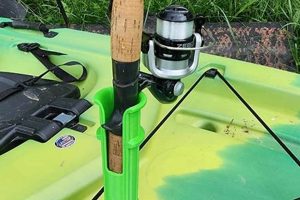
Efficient storage systems, such as dedicated rod holders and tackle compartments within the kayak, further enhance portability and on-the-water organization. Securing rods during transit prevents damage and frees up valuable cockpit space for paddling and fish fighting. A well-organized tackle system allows for quick and easy access to lures and accessories, minimizing time spent searching for gear and maximizing fishing time. Understanding the interplay between portability, storage, and overall kayak fishing efficiency is paramount for a successful and enjoyable experience. Prioritizing these factors contributes to a streamlined and organized setup, allowing anglers to focus on the task at hand catching fish rather than managing cumbersome equipment.
7. Target Species

Target species significantly influences kayak fishing rod combo selection. The species’ size, fighting strength, and habitat dictate the required rod power, action, and length, as well as the appropriate reel type and line weight. Aligning the combo with the target species ensures effective presentation of lures, successful hooksets, and efficient retrieval, maximizing the angler’s chances of a successful catch. Mismatched gear results in lost opportunities, increased risk of break-offs, and a less enjoyable fishing experience.
For example, targeting small panfish in a calm pond necessitates a different combo than pursuing large, powerful saltwater species offshore. Panfish require a lighter, more sensitive combo with a light line and smaller hooks, enabling delicate presentations and detection of subtle bites. A light action rod paired with a 1000-2500 size spinning reel spooled with 2-6 lb test line is ideal for such applications. This setup allows for precise casting and maximizes sensitivity, crucial for detecting the light taps of these smaller fish. Conversely, targeting large saltwater species like tuna or marlin demands a heavier, more robust combo capable of handling powerful runs and aggressive fights. A heavy action rod paired with a large capacity offshore reel spooled with 50-80 lb test line or more is essential for these demanding scenarios. Such a setup provides the strength and durability needed to withstand the immense pressure exerted by these powerful fish, maximizing the chances of a successful landing.
Understanding the target species’ habitat also plays a crucial role in combo selection. Fishing in tight quarters, such as mangrove forests or shallow creeks, necessitates a shorter rod for maneuverability and precise casting. Open water environments, conversely, allow for longer rods, maximizing casting distance and facilitating broader coverage of the fishing area. Furthermore, specific fishing techniques, dictated by the target species’ behavior, further refine combo choices. Techniques like jigging for bottom-dwelling species require a fast action rod for direct lure control and effective hooksets, while trolling necessitates a slower action rod with a higher line capacity reel. Therefore, a thorough understanding of the target species’ characteristics and behavior is essential for selecting a kayak fishing rod combo optimized for success. Careful consideration of these factors ensures a balanced and effective setup, maximizing angling efficiency and enjoyment on the water. Ignoring these crucial elements leads to a frustrating and potentially unproductive fishing experience.
Frequently Asked Questions
This section addresses common inquiries regarding kayak fishing rod combos, providing concise and informative responses to facilitate informed purchasing decisions and enhance on-the-water experiences.
Question 1: What rod length is optimal for kayak fishing?
Rods between 6 and 7.5 feet generally offer the best balance of maneuverability and casting control within a kayak’s confined space. Longer rods, while advantageous for casting distance, become cumbersome and difficult to manage.
Question 2: Which reel type is recommended for beginners?
Spinning reels are generally recommended for novice kayak anglers due to their user-friendly design and versatility. Their open-faced design simplifies casting and reduces the risk of line tangles, facilitating a smoother learning curve.
Question 3: How does one select the appropriate line weight?
Line weight selection depends on the target species, fishing environment, and the rod and reel combination. Heavier lines are necessary for larger species and challenging environments, while lighter lines are preferred for smaller fish and finesse techniques.
Question 4: What materials contribute to a durable kayak fishing rod combo?
Corrosion-resistant materials such as graphite or fiberglass for rod blanks, aluminum or stainless steel for reel components, and durable guides made from materials like stainless steel or ceramic contribute to a combo’s longevity, especially in saltwater environments.
Question 5: What features enhance portability and storage?
Two-piece or telescopic rod designs, coupled with compact reel profiles and dedicated storage solutions within the kayak, enhance portability and maximize available space.
Question 6: How does target species influence combo choice?
The target species dictates the necessary rod power and action, reel type and capacity, and appropriate line weight. Matching these elements to the target species ensures optimal performance and maximizes the chances of a successful fishing trip.
Careful consideration of these frequently asked questions empowers anglers to make informed decisions when selecting a kayak fishing rod combo. Prioritizing factors such as rod length, reel type, line weight, materials, portability, and target species compatibility contributes to a more enjoyable and productive kayak fishing experience.
The subsequent section will delve into advanced techniques and strategies for maximizing success while kayak fishing.
Kayak Fishing Rod Combo
Careful selection of a kayak fishing rod combo is paramount for optimizing performance and enjoyment on the water. This exploration has highlighted key factors influencing combo choice, including rod length and action, reel type, line weight, material durability, portability considerations, and the profound impact of target species. Each element contributes significantly to the overall effectiveness and suitability of the combo for specific fishing scenarios. A balanced and well-matched system empowers anglers to effectively target desired species within the unique constraints of a kayak fishing environment.
The pursuit of a suitable kayak fishing rod combo represents an investment in both equipment and the overall angling experience. A thoughtful approach to selection, informed by the principles and considerations outlined herein, yields significant dividends on the water. Appropriate gear translates to enhanced casting accuracy, improved fish-fighting capabilities, and increased comfort and efficiency, ultimately fostering a more rewarding and successful kayak fishing journey. The evolution of specialized fishing equipment continues to drive innovation, promising even greater performance and specialized tools tailored to the unique demands of kayak angling.