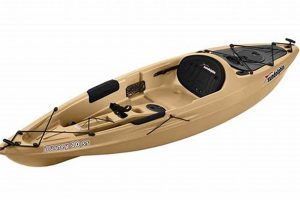
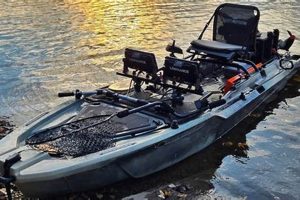
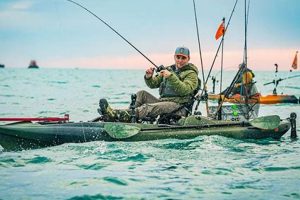
A two-person kayak designed specifically for angling in ocean environments typically features specialized seating, rod holders, and storage for fishing gear. These vessels often incorporate design elements for stability and handling in offshore conditions, such as increased length and width compared to recreational kayaks.
Sharing the experience with a companion enhances safety and allows for collaborative fishing strategies. The increased capacity for gear and supplies compared to a single-person kayak extends potential fishing range. This type of watercraft opens up opportunities for anglers to access more challenging fishing grounds and target larger species further offshore. The evolution from traditional single-person fishing kayaks to this shared platform reflects the growing popularity of kayak fishing and the desire for enhanced social and practical benefits.
Further exploration will cover key aspects of selection, use, and maintenance, including design variations, essential equipment, safety considerations, and responsible angling practices.
Tips for Two-Person Ocean Kayak Fishing
Successful angling from a two-person kayak in the ocean environment requires careful planning and execution. The following tips offer guidance for a safe and productive experience.
Tip 1: Pre-Trip Planning & Communication: Establish clear communication protocols before embarking. Discuss fishing locations, target species, and emergency procedures. Shared navigational responsibilities and designated roles improve efficiency.
Tip 2: Weight Distribution & Balance: Distribute gear and passenger weight evenly throughout the vessel for optimal stability. Consider the impact of weight shifts during casting and landing fish. Practice entering and exiting the kayak in shallow water to understand balance dynamics.
Tip 3: Specialized Gear Selection: Choose appropriate fishing rods, reels, and tackle for the target species and anticipated conditions. Prioritize compact and easily stowed equipment designed for kayak fishing. Consider rod leashes and tackle organizers to prevent loss or entanglement.
Tip 4: Navigation & Safety Equipment: Carry essential safety gear, including personal flotation devices, a VHF radio, signaling devices, and a first-aid kit. Familiarize oneself with navigational charts and local regulations. Monitor weather conditions and adjust plans accordingly.
Tip 5: Efficient Paddling Techniques: Employ synchronized paddling techniques to maximize speed and minimize effort. Communicate paddle strokes and course adjustments clearly. Practice maneuvering in various wind and current conditions.
Tip 6: Respectful Angling Practices: Adhere to local fishing regulations and practice catch-and-release principles when appropriate. Minimize environmental impact by properly disposing of fishing line and other waste. Respect wildlife and other boaters.
Tip 7: Post-Trip Maintenance: Thoroughly rinse the kayak and all fishing gear with fresh water after each trip, especially after exposure to saltwater. Inspect the hull for damage and address any necessary repairs promptly. Proper storage prolongs the lifespan of the kayak.
Adhering to these guidelines contributes to a safe, productive, and enjoyable experience on the water, maximizing the advantages of this collaborative angling platform.
This foundational knowledge facilitates informed decision-making regarding equipment selection, safety procedures, and responsible fishing practices.

Shared paddling forms the foundational principle of a tandem sea fishing kayak. Efficient propulsion requires synchronized effort and clear communication between paddlers. The distribution of physical exertion across two individuals reduces fatigue, particularly during long expeditions or challenging conditions. This shared responsibility extends the potential range and duration of fishing trips. For instance, one paddler can maintain a consistent course while the other focuses on casting or reeling in a fish. This coordinated approach optimizes both boat control and fishing effectiveness.
Synchronization is crucial in navigating currents, wind, and waves. Varied paddling techniques can be employed depending on the conditions. For example, alternating strokes provide continuous propulsion, while simultaneous strokes deliver bursts of speed for short distances or when encountering challenging waves. Effective communication between paddlers minimizes wasted effort and maintains directional stability. Mismatched paddling rhythms or inadequate communication can compromise maneuverability, particularly in challenging seas, highlighting the importance of pre-trip practice and established communication protocols.
Mastery of shared paddling techniques elevates the tandem sea fishing kayak from a simple vessel to a high-performance platform. The ability to cover greater distances with reduced individual exertion expands access to fishing grounds and enhances the overall experience. This collaborative aspect not only improves efficiency but also fosters a shared sense of accomplishment and reinforces the social dimension of the activity. This intricate balance between physical coordination and effective communication underpins successful tandem kayak fishing expeditions.
2. Increased Capacity

Increased capacity distinguishes tandem sea fishing kayaks from their single-person counterparts, significantly impacting their functionality and suitability for various fishing scenarios. This enhanced capacity encompasses both gear storage and passenger weight allowance, broadening the scope of fishing expeditions and enabling diverse angling strategies.
- Gear Storage:
The expanded storage space accommodates a wider array of fishing equipment, including larger tackle boxes, additional rods, and specialized gear for diverse target species. This enhanced capacity eliminates the limitations often encountered with single kayaks, where space constraints restrict equipment choices. Anglers can carry an assortment of lures, rigs, and tools, facilitating adaptation to changing conditions and maximizing fishing versatility. This proves invaluable when targeting multiple species or exploring unfamiliar fishing grounds.
- Passenger Weight Allowance:
Tandem kayaks accommodate the combined weight of two anglers and their gear, enabling shared expeditions and collaborative fishing strategies. The higher weight capacity also allows for the inclusion of heavier equipment, such as larger coolers for preserving catches or specialized electronics like fish finders. This combined weight-bearing capability expands the possibilities for longer trips and more ambitious angling pursuits, particularly in offshore environments.
- Safety and Stability:
While increased capacity allows for more weight, it’s crucial to distribute weight evenly for optimal stability. Proper weight distribution minimizes the risk of capsizing, especially in challenging sea conditions. The larger size and broader beam of tandem kayaks inherently contribute to greater stability compared to single kayaks, further enhancing safety, even with the added weight of two anglers and their gear.
- Extended Range and Duration:
The ability to carry ample supplies, including food, water, and safety equipment, coupled with the shared paddling effort, allows for extended fishing trips further offshore. This extended range grants access to potentially richer fishing grounds and diverse habitats, expanding angling opportunities. The shared workload reduces individual fatigue, allowing for longer periods on the water, maximizing fishing time and increasing the potential for successful catches.
The increased capacity of tandem sea fishing kayaks directly correlates with enhanced versatility, safety, and the potential for successful offshore angling. This expanded capacity, when managed effectively through proper weight distribution and mindful packing, unlocks a broader range of fishing experiences and contributes to a more rewarding and productive time on the water.
3. Enhanced Stability

Enhanced stability represents a critical advantage of tandem sea fishing kayaks, directly influencing angler safety and fishing effectiveness in challenging offshore environments. The inherent design characteristics of these kayaks contribute to improved stability compared to single-person kayaks, allowing anglers to confidently navigate rough waters and focus on fishing.
- Hull Design:
The wider beam and longer hull length typical of tandem kayaks provide a larger footprint on the water, enhancing primary stability, which refers to the initial resistance to tipping. This broader base reduces the likelihood of capsizing, particularly when encountering waves or wakes. The longer hull also tracks more effectively in currents and reduces the tendency to yaw, providing a more predictable and stable platform for casting and reeling.
- Weight Distribution:
The distribution of weight across two paddlers and their gear contributes to secondary stability, which refers to the kayak’s ability to recover from a tilted position. Proper weight distribution, with heavier items placed lower and centrally, enhances stability. The combined weight of two individuals can create a lower center of gravity, further improving stability, particularly when encountering uneven water surfaces.
- Lower Center of Gravity:
The design of tandem sea fishing kayaks often incorporates lower seating positions, bringing the combined center of gravity of the paddlers and gear closer to the waterline. This lower center of gravity significantly reduces the likelihood of capsizing, especially in rough seas or when encountering unexpected movements, such as a sudden shift in weight during a hookup with a large fish.
- Specialized Features:
Features such as outriggers or stabilizers can further enhance stability, particularly for anglers venturing into more challenging offshore conditions. These additions provide extra support and buoyancy, increasing the kayak’s resistance to tipping. While not standard on all tandem fishing kayaks, these features offer added security and peace of mind for anglers exploring exposed waters or encountering unpredictable weather.
The enhanced stability inherent in tandem sea fishing kayaks fosters angler confidence and safety, allowing for a more focused and productive fishing experience in offshore environments. This stability, coupled with the other advantages of tandem kayaks, contributes to their popularity among anglers seeking to explore challenging waters and target larger game fish. The improved stability ultimately translates to a safer, more comfortable, and ultimately more successful angling experience.
4. Offshore Capability

Offshore capability distinguishes tandem sea fishing kayaks from recreational models, enabling access to deeper waters and expanding angling opportunities. This capability arises from a combination of design features and operational advantages, allowing anglers to confidently venture further from shore and target a wider range of species.
- Seaworthiness:
The inherent design characteristics of tandem fishing kayaks, including their length, beam, and hull shape, contribute to enhanced seaworthiness. The longer hull provides better tracking in currents and waves, while the wider beam increases stability, reducing the likelihood of capsizing in rough conditions. These features allow the kayak to handle larger swells and chop, enabling safer navigation in offshore waters.
- Storage Capacity:
The increased storage capacity of tandem kayaks allows for the carriage of essential safety equipment, including flares, VHF radios, and first-aid kits, crucial for offshore ventures. Additional storage space accommodates extra tackle, food, water, and other provisions necessary for longer expeditions further from shore. This self-sufficiency enhances safety and expands the potential range of fishing trips.
- Stability and Handling:
The combined weight of two paddlers and their gear contributes to a lower center of gravity, enhancing stability in offshore conditions. The wider beam also provides a more stable platform for casting and fighting fish, even in rough seas. These features enable anglers to maintain control and balance in challenging environments, increasing safety and fishing effectiveness.
- Range and Endurance:
The shared paddling effort in a tandem kayak reduces individual fatigue, allowing for longer expeditions and greater distances covered. This increased range and endurance enable anglers to access fishing grounds further offshore, expanding opportunities to target pelagic species and explore diverse habitats. The combined paddling power also proves advantageous when navigating strong currents or challenging wind conditions often encountered in offshore environments.
The offshore capability of tandem sea fishing kayaks significantly broadens the scope of angling experiences. This capability, derived from a combination of design features and operational advantages, allows anglers to confidently explore deeper waters, target a wider variety of species, and extend their fishing adventures beyond the limitations of nearshore environments. This expanded access to offshore fishing grounds enhances the overall angling experience and presents opportunities for more challenging and rewarding fishing pursuits.
5. Specialized Features

Specialized features distinguish tandem sea fishing kayaks from recreational models, optimizing their functionality for angling in diverse environments. These purpose-built additions enhance fishing effectiveness, improve safety, and contribute to a more comfortable and productive experience on the water. Careful consideration of these features is essential when selecting a tandem kayak for specific fishing needs and target species.
- Rod Holders:
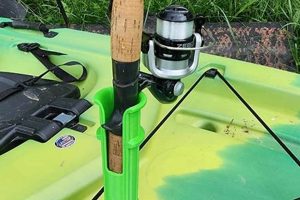
Integrated rod holders secure fishing rods, freeing hands for paddling, navigating, and other tasks. Flush-mounted or adjustable rod holders accommodate various rod lengths and angling styles. Multiple rod holders allow anglers to employ diverse fishing techniques simultaneously. Secure rod storage minimizes the risk of equipment loss or damage during transit or while maneuvering in challenging conditions.
- Tackle Storage:
Dedicated compartments and storage wells organize fishing tackle, ensuring easy access to lures, hooks, lines, and other essential gear. Watertight hatches protect sensitive equipment from the elements. Well-designed storage systems maximize space utilization, minimizing clutter and optimizing the kayak’s layout for efficient fishing practices. Organized tackle storage enhances efficiency and reduces time spent searching for gear, allowing anglers to focus on fishing.
- Anchor Systems:
Anchor trolleys or anchor systems allow for precise positioning in specific fishing locations. Controlling drift in currents or wind enhances fishing effectiveness. Quick deployment and retrieval mechanisms facilitate efficient repositioning. A secure anchoring system improves stability and allows anglers to focus on fishing without constantly adjusting position, particularly in challenging conditions.
- Specialized Seating:
Adjustable and ergonomically designed seats enhance comfort during long fishing trips. Elevated seating positions improve visibility and casting range. Supportive seating reduces fatigue and enhances overall comfort, allowing anglers to remain focused and productive throughout the day. Comfortable seating contributes to a more enjoyable and less physically demanding fishing experience, especially during extended expeditions.
These specialized features, tailored for angling, transform the tandem sea fishing kayak into a versatile and efficient fishing platform. The thoughtful integration of these features enhances the overall angling experience, allowing for greater focus on fishing techniques, strategic positioning, and ultimately, increased success on the water. The combination of these features directly contributes to a more comfortable, productive, and enjoyable tandem kayak fishing experience.
6. Collaborative Angling
Collaborative angling represents a defining characteristic of the tandem sea fishing kayak experience, distinguishing it from solo kayaking. The shared nature of this activity fosters teamwork, enhances safety, and creates opportunities for diverse fishing strategies. Two anglers working in concert can effectively cover more water, experiment with different lures and techniques, and assist each other in landing larger fish. For example, one angler might paddle while the other trolls a lure, or one angler could focus on casting near-shore while the other targets deeper waters. This collaborative approach increases the likelihood of success, especially in challenging environments or when pursuing specific species.
Effective communication forms the cornerstone of successful collaborative angling. Sharing observations about water conditions, fish activity, and potential hazards enhances situational awareness and improves decision-making. Pre-determined signals or verbal cues facilitate coordinated maneuvers, such as turning, paddling, and deploying anchors. In critical situations, such as encountering rough seas or assisting a hooked fish, effective communication becomes paramount for safety and success. The shared responsibility inherent in collaborative angling contributes to a more informed and adaptable approach to fishing, maximizing efficiency and responsiveness to changing conditions. Shared decision-making regarding navigation, fishing techniques, and responses to unexpected events enhances safety and overall success.
The synergy inherent in collaborative angling amplifies the advantages of tandem sea fishing kayaks. Shared experiences enhance camaraderie and create lasting memories. The combined knowledge and skill sets of two anglers contribute to a more versatile and adaptable approach to fishing, maximizing opportunities for success. The inherent support system provided by collaborative angling also enhances safety, particularly in remote locations or challenging sea conditions. Understanding the dynamics of collaborative angling unlocks the full potential of tandem sea fishing kayaks, transforming a simple fishing trip into a shared adventure with tangible benefits for both effectiveness and safety. The social dimension of shared experience strengthens bonds and creates a more enriching experience overall, emphasizing the unique value of tandem kayak fishing.
Frequently Asked Questions
Addressing common inquiries regarding tandem sea fishing kayaks provides clarity for prospective purchasers and enhances the overall understanding of these specialized vessels. The following questions and answers offer practical insights into key aspects of selection, use, and maintenance.
Question 1: What are the key advantages of a tandem sea fishing kayak over a single kayak for offshore fishing?
Enhanced stability, increased carrying capacity for gear and supplies, and shared paddling effort reducing fatigue during long expeditions are primary advantages. The collaborative nature of tandem kayaking also enhances safety.
Question 2: How does one choose the right tandem sea fishing kayak for specific needs and target species?
Consider factors such as hull design (sit-on-top vs. sit-inside), length, width, weight capacity, storage options, and specialized features like rod holders and anchor systems. Match these features to the anticipated fishing environment and target species.
Question 3: What safety precautions are essential when using a tandem sea fishing kayak in offshore environments?
Always wear personal flotation devices (PFDs). Carry essential safety equipment, including a VHF radio, flares, signaling devices, and a first-aid kit. Check weather forecasts before embarking and inform someone of the planned route and estimated return time. Practice self-rescue techniques and understand local regulations.
Question 4: How does weight distribution affect the performance and stability of a tandem sea fishing kayak?
Proper weight distribution is crucial for stability and efficient paddling. Distribute weight evenly throughout the kayak, placing heavier items lower and centrally. Uneven weight distribution can compromise stability, making the kayak more susceptible to tipping, particularly in rough conditions.
Question 5: What maintenance procedures are recommended for prolonging the lifespan of a tandem sea fishing kayak?
Rinse the kayak thoroughly with fresh water after each use, especially after exposure to saltwater. Inspect the hull for damage and address any necessary repairs promptly. Store the kayak in a protected environment away from direct sunlight and extreme temperatures. Regular cleaning and maintenance prevent material degradation and prolong the lifespan of the vessel.
Question 6: What are the key considerations for effective communication and teamwork when fishing from a tandem sea fishing kayak?
Establish clear communication protocols before embarking. Discuss fishing locations, target species, and emergency procedures. Designate roles and responsibilities for navigation, paddling, and fishing tasks. Synchronized paddling and coordinated maneuvers enhance efficiency and safety.
Understanding these fundamental aspects of tandem sea fishing kayaks facilitates informed decision-making, promotes safe practices, and enhances the overall fishing experience. Appropriate selection, responsible use, and diligent maintenance ensure optimal performance and longevity of these specialized vessels.
Further sections will explore advanced techniques for maneuvering, fishing strategies specific to tandem kayaks, and recommendations for essential accessories.
Conclusion
Tandem sea fishing kayaks offer distinct advantages for anglers seeking to explore offshore environments. Their enhanced stability, increased capacity, and collaborative nature create opportunities for extended fishing trips, diverse angling strategies, and enhanced safety. Careful consideration of design features, specialized equipment, and paddling techniques optimizes performance and maximizes the potential for a successful and rewarding fishing experience. Proper maintenance ensures the longevity of these versatile vessels, allowing for continued exploration of coastal waters and beyond.
The evolving landscape of recreational fishing continues to embrace advancements in kayak design and technology. Tandem sea fishing kayaks represent a significant step forward, providing anglers with a stable, efficient, and collaborative platform for exploring the ocean’s bounty. As anglers seek new challenges and expand their fishing horizons, these specialized vessels will undoubtedly play an increasingly important role in the future of offshore angling.