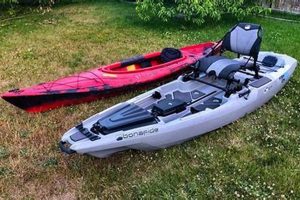
Proper methods for storing fishing kayaks encompass a variety of solutions tailored to individual needs and available space. These range from simple ceiling hoists and wall-mounted racks for indoor storage to purpose-built vertical or horizontal freestanding racks for garages or sheds. Outdoor storage options include specialized kayak covers and stands to protect against the elements. Choosing the right storage solution hinges on factors like kayak size and weight, storage location, and budget.
Effective kayak storage preserves the vessel’s condition and extends its lifespan by minimizing exposure to harmful elements like UV radiation and extreme temperatures. Well-designed storage also prevents warping and damage that can occur from improper support. Furthermore, secure storage deters theft and keeps kayaks readily accessible for the next fishing trip. Historically, kayaks were stored using traditional methods such as suspending them from trees or resting them on simple wooden racks. Modern advancements have led to more sophisticated and space-saving storage options that cater to the growing popularity of kayak fishing.
This article will explore various storage solutions in detail, offering practical guidance on selecting the most suitable method for individual circumstances. Topics covered will include different types of storage systems, materials used, installation procedures, and cost considerations. Additional information on maintenance practices related to kayak storage will also be provided.
Fishing Kayak Storage Tips
Proper storage is crucial for maintaining a kayak’s condition and longevity. These tips offer practical guidance for selecting and implementing effective storage solutions.
Tip 1: Assess Available Space: Carefully measure the intended storage area, considering both kayak dimensions and available clearance. This ensures sufficient space for maneuvering and prevents damage during storage and retrieval.
Tip 2: Choose Appropriate Storage Method: Indoor storage typically involves ceiling hoists, wall racks, or freestanding racks. Outdoor storage requires weatherproof covers and stands. Select a method compatible with the location, kayak size, and weight.
Tip 3: Prioritize Kayak Support: Ensure the kayak is adequately supported to prevent warping or deformation. Use cradles or padded supports that distribute weight evenly along the hull.
Tip 4: Protect from the Elements: Outdoor storage necessitates a UV-resistant, waterproof cover. This protects the kayak from sun damage, rain, and snow, preserving its appearance and structural integrity.
Tip 5: Secure Against Theft: Utilize locks and cables to secure kayaks, especially in outdoor or shared storage areas. This deters theft and provides peace of mind.
Tip 6: Regularly Inspect and Maintain: Periodically inspect the kayak and storage system for signs of wear or damage. Clean the kayak and cover before storage to prevent mildew and maintain its condition.
Tip 7: Consider Weight Capacity: When using racks or hoists, verify their weight capacity exceeds the kayak’s weight, including any installed fishing accessories.
Implementing these tips ensures proper kayak storage, maximizing its lifespan and maintaining its readiness for future fishing expeditions. Appropriate storage methods safeguard against damage, theft, and environmental degradation, preserving the kayak’s value and performance.
By following these guidelines, kayak anglers can confidently protect their investment and enjoy countless fishing adventures for years to come.
1. Location (Indoor/Outdoor)

Kayak storage location significantly impacts the choice of storage method and the long-term preservation of the vessel. Indoor storage offers superior protection from environmental factors like UV radiation, temperature fluctuations, and precipitation. This protection minimizes fading, material degradation, and the potential for mold or mildew growth. Garages, sheds, and basements offer suitable indoor locations, allowing for the utilization of space-saving solutions such as ceiling hoists, wall-mounted racks, or freestanding storage racks. Indoor storage also enhances security against theft. Conversely, outdoor storage exposes kayaks to the elements, necessitating specialized protective measures. Durable, waterproof, and UV-resistant covers are essential to mitigate potential damage. Outdoor storage often involves freestanding racks or cradles designed to withstand weather exposure. Factors like prevailing weather conditions and security concerns should influence the decision between indoor and outdoor storage.
Choosing between indoor and outdoor storage necessitates careful consideration of available space and environmental conditions. A climate with harsh winters or intense sun exposure necessitates prioritizing indoor storage whenever possible. Limited indoor space might require utilizing vertical storage solutions or exploring alternative indoor locations. Outdoor storage necessitates investing in robust weatherproof covers and ensuring adequate security measures are in place. For example, kayaks stored outdoors in coastal regions face increased exposure to salt spray and humidity, requiring more frequent cleaning and maintenance compared to kayaks stored in a dry, inland climate. Assessing local conditions allows for informed decisions that prioritize kayak longevity and minimize potential damage.
The selection of an appropriate storage location forms the foundation of effective kayak storage practices. Prioritizing protection from the elements, maximizing available space, and ensuring security safeguards the kayak investment. Choosing a suitable location, coupled with appropriate storage methods, ensures the kayak remains in optimal condition for years of enjoyable fishing expeditions. Failure to account for environmental factors or security risks can lead to premature wear and tear, potentially compromising the vessel’s structural integrity and overall performance.
2. Storage System (Racks/Hoists)
The selection of an appropriate storage system forms the cornerstone of effective fishing kayak storage. Racks and hoists offer diverse solutions tailored to varying spatial constraints, kayak sizes, and budgetary considerations. Choosing the right system optimizes space utilization, safeguards the kayak’s structural integrity, and ensures convenient access.
- Wall-Mounted Racks
Wall-mounted racks offer space-saving solutions for garages, sheds, or even indoor living spaces. These racks typically utilize J-hooks or cradles to support the kayak horizontally or vertically, minimizing floor space usage. Examples include heavy-duty steel racks for heavier fishing kayaks equipped with gear tracks and lighter, foldable options for smaller recreational kayaks. Proper installation and weight capacity considerations are crucial for secure storage.
- Ceiling Hoists
Ceiling hoists provide an ideal solution for maximizing vertical space. These systems utilize pulleys and straps to lift the kayak overhead, clearing valuable floor space for other equipment. Hoists are suitable for garages, basements, or other areas with sufficient ceiling height. Weight capacity and lifting mechanisms vary, catering to different kayak sizes and weights. Automated hoist systems offer enhanced convenience.
- Freestanding Racks
Freestanding racks offer versatile storage solutions for both indoor and outdoor applications. These racks typically support kayaks horizontally on cradles or vertically in slots. Portable freestanding racks facilitate transport and temporary storage, while heavier-duty, stationary models offer greater stability for long-term storage. Material selection, weight capacity, and design influence stability and durability.
- Specialized Kayak Storage Systems
Beyond standard racks and hoists, specialized systems cater to specific needs and kayak types. Stacker racks maximize vertical space by allowing multiple kayaks to be stored on top of each other. Modular systems adapt to changing storage needs, accommodating varying kayak sizes and quantities. Specialized cradles designed for fishing kayaks with intricate hull designs ensure proper support and weight distribution, preventing deformation.
The chosen storage system directly impacts the longevity and accessibility of a fishing kayak. Careful consideration of kayak dimensions, weight, available space, and budget ensures optimal selection. Matching the storage system to the specific characteristics of the fishing kayak and its intended storage location maximizes efficiency and safeguards the vessel’s condition.
3. Security (Locks/Cables)

Kayak theft poses a significant risk, necessitating robust security measures as an integral component of comprehensive storage strategies. Implementing appropriate security measures safeguards the investment represented by a fishing kayak and its associated gear. Locks and cables provide effective deterrents against theft, offering peace of mind and protecting against financial loss.
- Cable Locks
Cable locks offer a versatile and cost-effective security solution. These consist of a flexible steel cable coated in protective plastic to prevent scratching the kayak’s hull. The cable loops through the kayak’s grab handles, scupper holes, or other secure points and is then locked with a keyed or combination padlock. Cable locks are readily available in various lengths to accommodate different kayak sizes and storage configurations. Their flexibility allows them to be used in conjunction with other security measures, such as anchoring the kayak to a fixed object.
- Chain Locks
Chain locks provide enhanced security due to their robust construction. Hardened steel chains resist cutting and offer superior protection against theft attempts. Similar to cable locks, chain locks are secured with padlocks and can be used to secure the kayak to fixed points. While heavier and less flexible than cable locks, chain locks offer increased resistance to forced entry. Their weight can be a deterrent in itself.
- Padlocks
Padlocks serve as an essential component of most kayak security systems. High-quality padlocks with hardened shackles and weatherproof construction are crucial for maximizing effectiveness. Keyed padlocks offer greater security than combination locks, as combinations can be susceptible to guessing or manipulation. Disc-style padlocks offer enhanced resistance to picking and tampering. Selecting a padlock appropriate for the intended environment and security risk is essential.
- Ground Anchors/Security Points
Utilizing fixed anchor points significantly enhances kayak security. Ground anchors, wall-mounted D-rings, or sturdy structural elements provide secure points for attaching locks and cables. These anchors prevent thieves from simply carrying the kayak away. Installing dedicated anchor points in storage areas specifically designed for kayak security provides a robust defense against theft.
Integrating these security measures into a comprehensive fishing kayak storage plan minimizes the risk of theft. Selecting appropriate locks and cables based on the storage location, perceived risk level, and budget safeguards the kayak investment. Combining multiple security measures, such as using both a cable lock and a ground anchor, further enhances protection. Properly securing kayaks provides peace of mind, allowing owners to focus on enjoying their time on the water rather than worrying about potential theft.
4. Protection (Covers/Stands)
Protection, achieved through the strategic use of covers and stands, constitutes a critical element within fishing kayak storage solutions. Covers and stands play a crucial role in preserving the kayak’s structural integrity and aesthetic appeal by shielding it from environmental factors that contribute to degradation. Sunlight, specifically ultraviolet (UV) radiation, causes fading and weakening of the kayak’s hull material over time. Covers designed with UV-resistant properties mitigate this damage, extending the kayak’s lifespan. Similarly, weather elements like rain, snow, and temperature fluctuations can cause warping, cracking, and material degradation. Waterproof and weather-resistant covers safeguard against these elements, maintaining the kayak’s condition. Stands, meanwhile, provide essential support, preventing deformation of the hull due to prolonged pressure on a single point. Proper support ensures the kayak retains its shape and functionality over time.
Consider a fishing kayak stored outdoors without a cover. Prolonged exposure to direct sunlight can lead to significant fading and weakening of the hull, particularly in regions with intense solar radiation. Rainwater accumulating inside the kayak can promote mildew growth and accelerate material breakdown. Furthermore, resting the kayak directly on the ground without proper support can cause warping or deformation of the hull. Conversely, utilizing a UV-resistant, waterproof cover shields the kayak from these detrimental factors. A sturdy stand distributes the kayak’s weight evenly, preventing pressure points and maintaining hull integrity. This proactive approach to protection preserves the kayak’s condition, minimizing the need for repairs and extending its usable life.
Effective protection through appropriate covers and stands directly correlates with the long-term viability of fishing kayaks. These measures represent a proactive investment in preserving the kayak’s condition, mitigating potential damage, and reducing the need for costly repairs or replacements. Integrating appropriate covers and stands into a comprehensive storage strategy reflects a commitment to responsible kayak ownership and maximizes the enjoyment derived from this valuable recreational asset. Neglecting these protective measures can lead to premature wear and tear, compromising the kayak’s performance and potentially jeopardizing safety on the water.
5. Accessibility (Ease of Use)

Accessibility plays a crucial role in fishing kayak storage solutions. Efficient storage design prioritizes ease of access, minimizing the effort required to retrieve and store the kayak. Cumbersome or difficult-to-use storage systems can deter frequent usage and lead to neglect. Conversely, well-designed systems promote regular use by simplifying the process. Consider a ceiling hoist requiring complex maneuvering or a wall rack positioned in a tight, inaccessible corner. These scenarios create obstacles that discourage regular kayaking excursions. Alternatively, a well-placed, easily accessible freestanding rack or a smooth-operating ceiling hoist encourages effortless retrieval and storage, promoting frequent enjoyment of the kayak.
The impact of accessibility extends beyond simple convenience. Difficult-to-access storage can increase the risk of damage to the kayak during retrieval or storage. Awkward maneuvering in confined spaces or struggling with a complicated hoist system can lead to accidental drops, scrapes, or impacts. Furthermore, inaccessible storage can discourage proper maintenance. A kayak stored in a difficult-to-reach location is less likely to receive regular cleaning, inspections, and necessary upkeep. This neglect can lead to premature wear and tear, impacting the kayak’s longevity and performance. For instance, a kayak stored on a high shelf without proper access equipment may be prone to damage during retrieval, while a kayak easily accessible on a well-designed rack encourages regular cleaning and maintenance.
Prioritizing accessibility in fishing kayak storage solutions directly contributes to increased usage, reduced risk of damage, and improved maintenance practices. A well-designed storage system considers factors like kayak weight, user physical capabilities, and available space to ensure effortless retrieval and storage. This focus on ease of use fosters a positive user experience, encouraging regular kayaking trips and maximizing the enjoyment derived from this recreational pursuit. Investing in user-friendly storage solutions translates to a more rewarding and sustainable kayaking experience, ensuring the kayak remains in optimal condition for years to come.
6. Space Optimization (Vertical/Horizontal)

Space optimization represents a critical factor in fishing kayak storage, directly influencing storage capacity and overall efficiency. Strategic use of vertical and horizontal space maximizes storage potential within limited areas. Vertical storage, exemplified by ceiling hoists and wall-mounted vertical racks, capitalizes on overhead space. This approach proves particularly effective in garages, sheds, or basements where floor space may be limited. Horizontal storage, utilizing wall-mounted horizontal racks or freestanding racks, efficiently uses wall space or designated floor areas. The choice between vertical and horizontal storage depends on available space dimensions and the number of kayaks requiring storage. For instance, a low-ceilinged garage might benefit from horizontal wall racks, while a high-ceilinged shed could accommodate multiple kayaks using a vertical hoist system. Careful consideration of space dimensions and storage system capabilities ensures optimal space utilization.
Practical application of space optimization principles requires assessment of available space and selection of appropriate storage systems. Measuring ceiling height, wall lengths, and floor dimensions informs decisions regarding vertical versus horizontal storage strategies. Kayak dimensions also play a crucial role; longer kayaks might necessitate horizontal storage, while shorter kayaks could be accommodated vertically. Consider a scenario with multiple kayaks and limited floor space. A vertical stacking rack system optimizes space by storing kayaks vertically, one above the other, minimizing floor space usage. Conversely, if wall space is abundant, horizontal racks arranged along the wall maximize kayak storage capacity. Strategic combination of vertical and horizontal storage methods often yields the most efficient use of available space.
Effective space optimization maximizes kayak storage capacity, contributing to an organized and efficient storage environment. This thoughtful approach to storage minimizes clutter, improves accessibility, and safeguards kayaks from potential damage. Understanding the interplay between vertical and horizontal storage options empowers informed decisions tailored to individual needs and spatial constraints. Failure to optimize space can lead to inefficient storage practices, increasing the risk of damage and hindering accessibility. Prioritizing space optimization ensures a well-organized and functional storage area, maximizing the lifespan and enjoyment of fishing kayaks.
7. Cost-Effectiveness (Budget)

Budgetary considerations play a significant role in selecting fishing kayak storage solutions. Cost-effectiveness involves balancing functionality, durability, and affordability. Storage solutions range from simple DIY options to more sophisticated commercially available systems. Evaluating features, materials, and installation costs against available budget ensures informed decision-making.
- DIY Solutions
Do-it-yourself (DIY) storage options offer cost-effective alternatives to commercially produced systems. Constructing storage racks from readily available materials like wood or PVC piping can significantly reduce expenses. Online resources provide numerous DIY plans and tutorials, catering to various skill levels and budgets. However, DIY solutions require time, tools, and some construction expertise. Improperly constructed DIY systems may compromise kayak safety and security.
- Entry-Level Commercial Products
Entry-level commercial kayak storage products provide pre-fabricated solutions at affordable price points. These often include basic wall-mounted racks, freestanding cradles, or simpler hoist systems. While generally less robust than higher-end models, entry-level options offer adequate functionality for basic storage needs. Evaluating weight capacity, material durability, and installation requirements ensures suitability for specific kayak types and storage locations. Compromises on features or materials may impact long-term durability.
- High-End Storage Systems
High-end kayak storage systems prioritize premium materials, advanced features, and enhanced durability. These systems often incorporate specialized cradles, automated hoist mechanisms, or modular designs catering to specific kayak types and storage environments. While more expensive, high-end systems offer superior protection, increased security, and enhanced convenience. Investing in premium storage solutions reflects a commitment to long-term kayak preservation and user experience. The higher initial cost may be offset by extended kayak lifespan and reduced maintenance expenses.
- Long-Term Cost Considerations
Long-term cost considerations extend beyond initial purchase price. Factors like maintenance requirements, replacement costs, and potential damage due to inadequate storage influence overall cost-effectiveness. Inexpensive, poorly constructed storage solutions may require frequent repairs or replacements, ultimately exceeding the initial cost savings. Investing in durable, well-designed storage systems minimizes long-term expenses by protecting the kayak from damage and extending its lifespan. Evaluating the total cost of ownership, including potential repair or replacement costs, ensures informed budgetary decisions.
Balancing initial investment with long-term cost considerations ensures prudent financial decisions. Aligning budget constraints with storage needs and kayak value optimizes resource allocation. Prioritizing long-term protection and functionality over short-term cost savings safeguards the kayak investment and maximizes its usable life. Failing to account for long-term cost implications can lead to greater expenses in the future, diminishing the overall value proposition of the chosen storage solution.
Frequently Asked Questions about Fishing Kayak Storage
This section addresses common inquiries regarding fishing kayak storage, providing concise and informative responses to facilitate informed decision-making.
Question 1: What are the primary considerations when choosing a fishing kayak storage solution?
Key factors include available space (indoor/outdoor), kayak dimensions and weight, budget, desired level of security, and accessibility requirements. Balancing these factors ensures selection of the most suitable storage method.
Question 2: How can kayaks be protected from damage during outdoor storage?
Utilizing a high-quality, UV-resistant, and waterproof cover is crucial. Additionally, employing a sturdy stand prevents hull deformation and ensures proper weight distribution. Regular cleaning and maintenance further protect against environmental degradation.
Question 3: What security measures are recommended to prevent kayak theft?
Employing robust locks, such as cable or chain locks, and securing the kayak to fixed anchor points deters theft. Consider using multiple security measures and storing kayaks in well-lit or monitored areas.
Question 4: How can space be maximized when storing multiple kayaks?
Vertical storage solutions, such as ceiling hoists or vertical stacking racks, maximize space utilization. Alternatively, horizontal racks can be strategically positioned along walls to accommodate multiple kayaks efficiently.
Question 5: What are the cost-effective storage solutions for fishing kayaks?
DIY storage racks constructed from readily available materials offer cost-effective alternatives. Entry-level commercial racks or hoists provide pre-fabricated solutions at affordable price points. Long-term cost considerations should account for potential maintenance or replacement expenses.
Question 6: How does proper storage contribute to kayak longevity?
Appropriate storage protects kayaks from environmental damage, preventing UV degradation, warping, and material breakdown. Secure storage also deters theft. These factors contribute significantly to extending the kayak’s usable lifespan.
Addressing these common inquiries provides a foundational understanding of essential considerations for effective fishing kayak storage. Implementing these strategies ensures the kayak remains in optimal condition for years of enjoyable fishing expeditions.
This information provides a comprehensive overview of crucial aspects to consider when selecting and implementing fishing kayak storage solutions. Consult specific product documentation and manufacturer recommendations for detailed guidance regarding individual storage systems.
Fishing Kayak Storage Ideas
Effective fishing kayak storage solutions constitute a critical aspect of responsible kayak ownership. This exploration has highlighted the multifaceted nature of proper storage, encompassing considerations of location, security, protection from the elements, accessibility, space optimization, and budgetary constraints. Choosing appropriate storage methods, whether utilizing wall-mounted racks, ceiling hoists, freestanding racks, or specialized systems, directly impacts kayak longevity, performance, and overall user experience. Prioritizing security measures safeguards against theft, while protective covers and stands shield kayaks from environmental degradation. Efficient space utilization maximizes storage capacity, and careful budget allocation ensures cost-effectiveness.
Proper implementation of these storage strategies preserves the significant investment represented by a fishing kayak, ensuring its readiness for countless future fishing expeditions. Investing time and resources in appropriate storage solutions translates to extended kayak lifespan, enhanced performance, and increased enjoyment on the water. Neglecting these essential considerations can lead to premature wear and tear, compromised functionality, and potential safety risks. Therefore, prioritizing informed decision-making regarding fishing kayak storage is paramount for responsible kayak ownership and sustained enjoyment of this rewarding recreational activity.