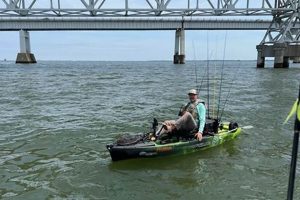
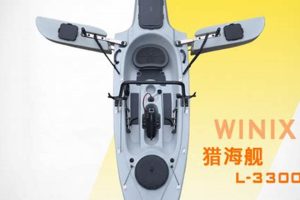
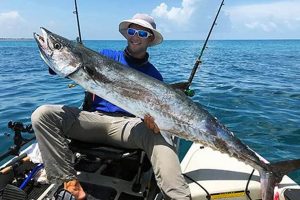
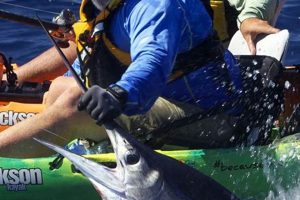
Specialized kayaks designed for angling often target larger game fish. These vessels prioritize stability, storage, and specialized features like rod holders and livewells to accommodate the demands of pursuing substantial catches. For example, an angler might choose a wide, sit-on-top kayak with ample deck space for battling a powerful saltwater fish.
The pursuit of trophy-sized specimens with specialized equipment contributes significantly to the sport fishing industry. It fuels innovation in kayak design and manufacturing, drives demand for related gear and accessories, and promotes tourism in prime fishing locations. This specialized segment of kayak fishing provides a challenging and rewarding experience for anglers seeking larger-than-average catches, contributing to conservation efforts through catch-and-release practices and data collection.
This article will further explore the nuances of selecting appropriate kayaks for large fish, effective angling techniques, responsible fishing practices, and popular destinations known for their trophy-sized catches. It will also delve into the specific gear and accessories essential for success in this exciting pursuit.
Tips for Landing Large Fish from a Kayak
Successfully landing large fish from a kayak requires careful planning and execution. These tips offer guidance for maximizing success and ensuring angler safety.
Tip 1: Choose the Right Kayak: Kayak selection hinges on the target species and fishing environment. Wider, more stable kayaks are recommended for larger fish, particularly in offshore conditions. Consider sit-on-top models for easier maneuverability and re-entry after a potential capsize.
Tip 2: Utilize Heavy-Duty Tackle: Rods, reels, and lines should be appropriately sized for the target species. Heavier tackle provides the necessary strength and control when battling powerful fish. High-quality, corrosion-resistant components are crucial in saltwater environments.
Tip 3: Employ Effective Fish-Fighting Techniques: Proper angling techniques, such as using the kayak’s leverage and maintaining appropriate line tension, are essential. Patience and controlled movements prevent line breakage and ensure a successful landing.
Tip 4: Prioritize Safety Gear: A personal flotation device (PFD) is mandatory. A leash connecting the angler to the paddle prevents loss in the event of a capsize. A well-stocked first-aid kit and communication device are crucial for emergencies.
Tip 5: Understand Local Regulations: Familiarize oneself with local fishing regulations, including licensing requirements, size and catch limits, and permitted fishing areas. Adhering to these regulations contributes to sustainable fisheries management.
Tip 6: Practice Proper Catch and Release: When practicing catch and release, minimize handling time and use appropriate tools for hook removal. Revive exhausted fish before release to ensure their survival.
Tip 7: Plan for Weather Conditions: Check weather forecasts before heading out. Avoid fishing in adverse conditions such as strong winds, lightning storms, or rough seas. Be prepared to adjust plans if conditions deteriorate unexpectedly.
Implementing these strategies significantly increases the likelihood of a successful and safe fishing experience when targeting large fish from a kayak. Preparation and adherence to best practices contribute to both angler satisfaction and the long-term health of fish populations.
The following section will delve into specific techniques for targeting popular game fish species from a kayak.
1. Stable Kayak Platform

A stable kayak platform is fundamental to successful angling for large fish. Kayak stability directly influences casting accuracy, effective fish-fighting techniques, and overall angler safety. A stable platform allows for powerful hooksets and controlled maneuvering during a fight, minimizing the risk of capsizing, especially when battling strong currents or aggressive fish. Consider the scenario of hooking a large tarpon from a narrow, unstable kayak; the angler’s ability to maintain balance and leverage becomes severely compromised, increasing the likelihood of losing the fish or even capsizing. Conversely, a wider, more stable platform provides a secure base, increasing the angler’s control over the fish and enhancing the overall fishing experience.
The importance of stability is amplified when dealing with larger species. The force exerted by a large fish can easily destabilize a narrow or tippy kayak. A stable platform allows the angler to effectively counter the fish’s power, apply appropriate pressure, and maintain a balanced position throughout the fight. This stability also facilitates the use of specialized equipment, such as longer rods and heavier tackle, often required for targeting larger fish. For example, landing a large muskie requires precise boat control and the ability to exert considerable pressure, maneuvers that are significantly more challenging in an unstable kayak.
In conclusion, kayak stability forms a cornerstone of successful big-game angling. It directly contributes to angler safety and the effectiveness of fish-fighting techniques. Selecting a kayak with appropriate stability for the target species and fishing environment significantly enhances the probability of a successful and safe fishing experience. Neglecting this crucial element can compromise an angler’s ability to land large fish and potentially lead to dangerous situations. Understanding the relationship between stability and angling success allows anglers to make informed decisions about kayak selection and optimize their approach for targeting trophy-sized fish.
2. Robust Fishing Gear

Robust fishing gear is integral to the pursuit of large fish from a kayak. The stresses exerted by powerful fish necessitate equipment capable of withstanding substantial strain. This includes rods, reels, lines, and terminal tackle designed to handle the weight and fight of trophy-sized specimens. For example, braided fishing line offers superior strength and abrasion resistance compared to monofilament, proving crucial when battling large, powerful fish around structure. Heavy-duty rods provide the backbone needed to exert significant pressure, while robust reels with smooth drag systems manage the intense runs of large fish. The interconnectedness of these components forms a system capable of withstanding the rigors of big-game angling from a kayak.
The selection of robust fishing gear directly impacts the likelihood of landing a large fish. A heavy-duty rod and reel combination allows for greater control during the fight, minimizing the risk of line breakage or equipment failure. Strong hooks and appropriately sized leaders ensure a secure connection to the fish, preventing loss during critical moments. Consider the scenario of hooking a large offshore fish like a tuna; a lightweight rod and reel setup would be inadequate for the task, likely resulting in lost fish and damaged equipment. Conversely, robust tackle provides the necessary strength and durability to withstand the powerful runs and aggressive headshakes characteristic of large pelagic species. This underscores the practical significance of selecting appropriate gear tailored to the specific challenges of targeting large fish from a kayak.
In summary, the relationship between robust fishing gear and successful big-game kayak angling is paramount. The ability to withstand substantial forces and maintain control during a fight hinges on the strength and reliability of the equipment. Choosing appropriate tackle significantly increases the angler’s chances of landing a trophy fish while minimizing the risk of equipment failure. Understanding these principles empowers anglers to make informed decisions regarding gear selection and enhances their preparedness for the demanding pursuit of large fish from a kayak.
3. Effective Fighting Techniques
Effective fighting techniques are crucial for landing large fish from a kayak, bridging the gap between hooking a fish and successfully bringing it onboard. These techniques leverage angler skill and knowledge to manage the power and unpredictability of large fish, minimizing the risk of line breakage, hook pulls, and equipment failure. Mastering these techniques significantly increases the angler’s chances of success while promoting ethical fish handling practices.
- Rod Angle and Leverage
Maintaining the correct rod angle is paramount. Angling the rod too high can overstress the line and equipment, while angling it too low reduces leverage and control. Optimal rod angles vary depending on the fish’s behavior and the kayak’s position relative to the fish. For instance, during a powerful run, a higher rod angle might be necessary to absorb the shock, while a lower angle is preferable during the later stages of the fight when applying steady pressure. Utilizing the kayak’s inherent mobility to adjust positioning further enhances leverage and control.
- Drag Management
Proper drag setting is essential for controlling large, powerful fish. The drag system allows line to be released under pressure, preventing line breaks and absorbing the shock of sudden runs. Drag settings must be carefully calibrated to the target species and fishing conditions. A drag that is set too tight risks snapping the line, while a drag that is too loose may prolong the fight unnecessarily, increasing the risk of tiring the fish. Precise drag management is crucial for maintaining a balanced tension throughout the fight, increasing the likelihood of a successful outcome.
- Line Control and Retrieval
Maintaining appropriate line tension and retrieving line efficiently are critical skills. Keeping a taut line prevents slack, which can lead to lost fish. Controlled line retrieval, often referred to as “pumping and reeling,” maximizes pressure on the fish while minimizing strain on the angler and equipment. This technique involves lifting the rod to gain line and then reeling while lowering the rod, maintaining consistent tension. Mastering this technique reduces the duration of the fight, minimizing stress on both the fish and the angler.
- Kayak Positioning and Maneuvering
The inherent mobility of a kayak offers unique advantages during a fight. Strategic repositioning allows anglers to leverage currents and angles to their advantage. For example, maneuvering the kayak to create a downstream pull on the fish can help tire it more quickly. Similarly, adjusting the kayak’s position relative to structure or obstacles can prevent the fish from gaining leverage and breaking the line. Effective kayak maneuvering becomes especially crucial when battling large fish in challenging environments such as swift rivers or dense cover.
These interconnected techniques, when executed proficiently, significantly increase the chances of landing large fish from a kayak. They represent a combination of skill, knowledge, and experience that empowers anglers to manage the challenges posed by powerful fish in a dynamic environment. Mastery of these techniques not only improves landing rates but also contributes to ethical fish handling and conservation by minimizing stress on the fish and reducing fight times. By integrating these skills, anglers can elevate their kayak fishing experience and pursue trophy-sized fish with confidence and responsibility.
4. Comprehensive Safety Equipment

Comprehensive safety equipment is paramount when pursuing large fish from a kayak. The dynamic nature of kayak fishing, combined with the challenges posed by powerful fish, necessitates a proactive approach to safety. This involves equipping oneself with appropriate safety gear and understanding its proper usage. Consider the scenario of battling a large fish offshore; a sudden change in weather or an unexpected equipment failure can create a hazardous situation. Comprehensive safety equipment provides crucial resources for mitigating such risks, ensuring angler well-being and enabling a safe return to shore.
Several key components contribute to a comprehensive safety kit for kayak anglers targeting large fish. A personal flotation device (PFD) is non-negotiable, providing essential buoyancy in the event of a capsize. A reliable communication device, such as a VHF radio or satellite phone, enables communication with emergency services or other boaters in case of distress. A well-stocked first-aid kit addresses immediate medical needs, while signaling devices, like flares or a whistle, attract attention in emergencies. Navigation tools, including a GPS and compass, are crucial for maintaining orientation, especially in offshore or unfamiliar waters. Finally, a bilge pump and paddle leash prevent water accumulation and paddle loss, respectively, further enhancing safety and preparedness. For instance, when fishing for large marlin from a kayak, a self-inflating PFD with integrated harness and emergency locator beacon becomes essential for mitigating the increased risks associated with offshore pursuits.
The practical implications of prioritizing comprehensive safety equipment are substantial. Adequate preparation equips anglers to respond effectively to unforeseen circumstances, minimizing the potential consequences of accidents or emergencies. While landing a trophy fish represents a rewarding achievement, angler safety remains the ultimate priority. Understanding the inherent risks associated with kayak fishing, particularly when targeting large, powerful fish, underscores the critical importance of comprehensive safety equipment. This proactive approach safeguards angler well-being and allows for a more confident and responsible pursuit of trophy catches.
5. Proper Fish Handling Practices

Proper fish handling practices are integral to the ethical and sustainable pursuit of large fish from a kayak. Targeting trophy-sized specimens carries a heightened responsibility for their well-being, particularly when practicing catch and release. Minimizing stress and injury during handling contributes to the long-term health of fish populations and the overall sustainability of the fishery. For instance, using a rubberized landing net minimizes scale damage and reduces the risk of infection, while wet hands or specialized gloves prevent the removal of the fish’s protective slime coat. These seemingly small actions significantly impact a fish’s post-release survival, especially for larger, older individuals that contribute significantly to breeding populations.
Several key practices contribute to proper fish handling in the context of kayak fishing. Minimizing air exposure reduces stress and prevents damage to sensitive gill tissues. Supporting the fish horizontally minimizes strain on its internal organs. Using appropriate tools, such as dehookers and pliers, facilitates quick and efficient hook removal, reducing handling time and potential injury. Reviving exhausted fish by gently moving them back and forth in the water ensures they regain sufficient strength before release. In the case of deep-hooked fish, cutting the line close to the hook minimizes further trauma and increases the likelihood of the hook eventually dislodging naturally. These combined practices demonstrate a commitment to responsible angling and contribute to the conservation of valuable fish stocks.
In conclusion, proper fish handling practices are inseparable from the ethical dimensions of fishing for large fish from a kayak. Respectful handling techniques minimize stress and maximize post-release survival rates, contributing to the sustainability of the fishery and the continued opportunity to pursue trophy-sized specimens. Understanding and implementing these practices reinforces the angler’s role as a steward of the environment and ensures the long-term health and vitality of fish populations. This commitment to ethical angling elevates the pursuit of large fish beyond mere sport and transforms it into a responsible and sustainable interaction with the natural world.
6. Thorough Pre-Trip Planning
Thorough pre-trip planning is essential for successful and safe kayak fishing expeditions targeting large fish. These excursions often involve navigating challenging waters and handling powerful fish, necessitating careful preparation to mitigate risks and maximize the chances of a positive outcome. Pre-trip planning transforms potential hazards into manageable challenges, increasing the likelihood of a safe and rewarding fishing experience. Neglecting this crucial step can compromise angler safety and diminish the overall success of the trip.
- Weather Assessment
Weather conditions significantly impact kayak fishing, particularly when targeting large fish. Strong winds, waves, and storms can create dangerous situations, especially in open water or offshore environments. Checking weather forecasts before embarking on a trip allows anglers to make informed decisions about launch locations, fishing areas, and trip duration. Monitoring real-time weather updates during the trip enables proactive adjustments to changing conditions. For example, strong offshore winds can quickly push a kayak far from shore, while lightning storms pose a serious threat to angler safety. Thorough weather assessment allows for informed decision-making and timely responses to dynamic conditions, minimizing potential risks.
- Fishing Location Research
Researching potential fishing locations is crucial for maximizing angling success. Identifying areas known for holding large fish, understanding local regulations, and assessing potential hazards within the chosen area contribute to a more productive and safe experience. Consulting nautical charts, online resources, and local fishing reports provides valuable insights into water depth, currents, bottom structure, and the presence of potential obstacles. This knowledge allows anglers to select appropriate tackle, plan effective fishing strategies, and navigate safely within the chosen environment. For example, understanding the tidal patterns in an estuary can significantly impact fishing success, while knowledge of submerged rocks or reefs helps prevent damage to the kayak and ensures angler safety.
- Equipment Preparation and Maintenance
Proper equipment preparation and maintenance are crucial for ensuring functionality and reliability during the trip. Inspecting rods, reels, lines, and other tackle for damage and addressing any necessary repairs or replacements beforehand prevents equipment failures at critical moments. Organizing and securing gear within the kayak maximizes efficiency and minimizes clutter, facilitating smooth operation during the fishing trip. For instance, ensuring a sharp hook on a lure can be the difference between landing a trophy fish and losing it, while a properly functioning drag system on a reel is essential for managing the powerful runs of large fish. Careful equipment preparation enhances angler preparedness and maximizes the chances of success.
- Safety Planning and Communication
Safety planning and communication are fundamental aspects of pre-trip preparation, especially when fishing for large fish from a kayak. Informing someone about the planned trip details, including the intended fishing location, estimated return time, and emergency contact information, is essential. Carrying appropriate safety gear, such as a PFD, communication device, and first-aid kit, and knowing how to use them effectively, are crucial for responding to emergencies. Establishing communication protocols with fishing partners or shore contacts enhances coordination and provides an additional layer of safety. For example, in the event of a capsize or medical emergency, a VHF radio or satellite phone becomes invaluable for summoning assistance. Thorough safety planning empowers anglers to respond effectively to unforeseen events, minimizing potential risks.
By diligently addressing these aspects of pre-trip planning, kayak anglers significantly enhance their safety, preparedness, and likelihood of success when targeting large fish. This proactive approach mitigates potential risks associated with challenging environments and powerful fish, ensuring a more rewarding and responsible fishing experience. Thorough planning transforms potential hazards into manageable challenges, allowing anglers to focus on the pursuit of trophy fish with confidence and peace of mind.
Frequently Asked Questions
This section addresses common inquiries regarding kayak fishing for large fish, providing concise and informative responses to clarify potential uncertainties and enhance angler understanding.
Question 1: What type of kayak is best suited for targeting large fish?
Kayak selection depends on the target species and fishing environment. Wider, more stable platforms, particularly sit-on-top models, are generally recommended for larger fish, offering increased stability and maneuverability during a fight. Offshore fishing necessitates seaworthy kayaks designed for challenging conditions.
Question 2: What fishing gear is recommended for large fish from a kayak?
Heavy-duty rods, reels, and lines designed for the target species are essential. Strong hooks, appropriate leader material, and specialized terminal tackle further enhance the angler’s ability to land large, powerful fish. Gear selection should align with the specific demands of the target species and fishing environment.
Question 3: What safety precautions should be taken when kayak fishing for large fish?
Wearing a personal flotation device (PFD) is mandatory. Carrying a communication device, signaling devices, a first-aid kit, and navigation tools further enhances safety. Informing someone of trip plans and estimated return time is crucial. Adhering to safe fishing practices and respecting weather conditions are paramount.
Question 4: How does one effectively fight and land a large fish from a kayak?
Effective fish-fighting techniques involve maintaining proper rod angles, managing drag settings, controlling line tension, and utilizing the kayak’s maneuverability to gain leverage. Patience and controlled movements are crucial for preventing line breakage and ensuring a successful landing.
Question 5: What are the best practices for handling large fish caught from a kayak?
Minimizing air exposure, supporting the fish horizontally, using appropriate tools for hook removal, and reviving exhausted fish before release are essential for promoting fish health and conservation. Adhering to catch-and-release guidelines ensures the long-term sustainability of fish populations.
Question 6: What are the essential elements of pre-trip planning for kayak fishing excursions targeting large fish?
Thorough pre-trip planning includes assessing weather conditions, researching fishing locations, preparing and maintaining equipment, and establishing safety protocols. Informing someone of trip plans and carrying appropriate safety gear are crucial for mitigating risks and ensuring a safe return.
Understanding these key aspects of kayak fishing for large fish enhances angler preparedness, promotes safe fishing practices, and contributes to the conservation of valuable fish stocks.
The following section will explore popular destinations renowned for their trophy-sized fish populations.
Fishing Kayak Big Fish
This exploration of specialized kayak angling for large fish has highlighted the multifaceted nature of this pursuit. From the selection of a stable and appropriately equipped kayak to the mastery of effective fighting techniques and adherence to ethical handling practices, each element contributes significantly to the overall success and sustainability of this specialized angling discipline. The importance of comprehensive safety measures and thorough pre-trip planning further underscores the commitment required for responsible and rewarding experiences. This discussion has emphasized the interconnectedness of these elements, demonstrating how their synergistic application contributes to positive outcomes for both anglers and the targeted fish populations.
The pursuit of large fish from a kayak presents unique challenges and rewards. It demands a combination of skill, knowledge, and respect for the natural environment. As this specialized segment of the sport fishing industry continues to evolve, anglers must prioritize responsible practices and contribute to the conservation of valuable fish stocks. The future of this pursuit rests on the collective commitment to ethical angling, ensuring that future generations can experience the thrill and challenge of targeting trophy-sized fish from the unique perspective of a kayak.